
 English
 Español
 中文
中文 हिन्दी
 Français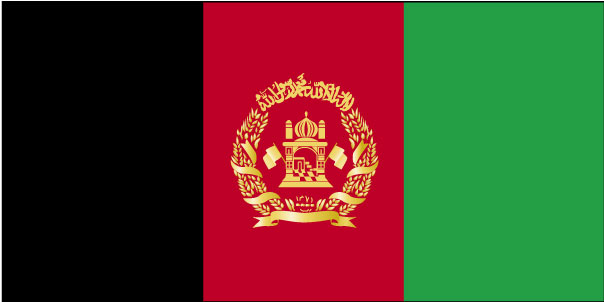
Afghanistan
Afghanestan
Declare Your Relationship to Afghanistan
CountryReports Community
- Studying3
- From Afghanistan1
- Afghanistan heritage2
- Visited1
- Want to visit1
Customs and Culture
Customs and Culture
Cultural Attributes
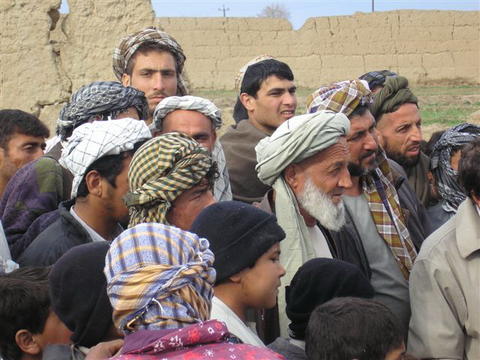
Afghanistan has a rich cultural heritage, covering more than 5,000 years. The mode of living for Afghans who live outside of the city can be described as that of a peasant tribal society.
Kinship is the basis of social life and determines the patriarchal character of the community. Religion plays a very important role in people’s lives. Afghans are expressive and emotional and are well known for their hospitality.

Land of the Hindu Kush and Timeless Hospitality
Get More Customs and Culture
5 more cultural topics for members
Social Customs & Etiquette · Diet · Family · Dating Customs · Recreation
Holidays
Independence Day
8/19Independence Day
Now Ruz (New Year’s)
3/21Other
The national Now Ruz festival marks the first day of spring, also considered the beginning of the New Year. This ancient celebration comes from Zoroastrianism, the religion that was widely practised in areas of the Middle East before the rise of Islam. On New Year’s Day in Kabul, families usually serve a drink made of seven dried fruits (haft mewa).
Christmas
12/25Christmas
Christmas is an unknown festival in Afghanistan. The people in the country are predominantly Islamic. Any Christians living in the country celebrate the occasion in their homes as privately as possible.
Dates of Interest
- August 19th
Commemorates the adoption of Afghanistan's national flag in 2013. The day is marked with flag-raising ceremonies and patriotic activities.
How do people greet each other in Afghanistan?
A handshake is customary, often with a slight bow or nod to show respect, and people typically ask about each other's family and health.
Do
- Add a slight bow or nod when shaking hands to show respect
- Ask about the other person's family and health
- Stand when an older or prominent person enters or leaves the room
- Use professional titles when addressing others formally
Don’t
- Don't shake a woman's hand unless she offers it first
Good to know
- People of the same sex often kiss each other on the cheek as a greeting
What are the dining customs in Afghanistan?
Afghans traditionally eat while seated on the floor around a communal dish, sharing platters of rice with side dishes of stew and fresh naan, and eat with the fingers of the right hand.
Do
- Sit on the floor cushions (toshak) around the shared platter
- Eat with the fingers of your right hand or a piece of nan
- Participate in the hand-washing ceremony before and after meals
- Use spoons for puddings and teaspoons for tea
Don’t
- Don't consume pork or alcohol, which are forbidden by Islamic law
- Don't expect business talk before refreshments—it comes afterward
Good to know
- Rice, lamb, and nan bread are the mainstays; tea is the most popular drink
- Haft miwa, a soup of seven fruits and nuts, is served only on Nawruz (Persian New Year)
What should I know about hospitality and etiquette in Afghanistan?
Afghans are famous for their hospitality and treat a guest as a gift from Allah, offering the best food and the place of honor.
Do
- Accept the place of honor at the head of the room if offered
- Decline gifts, refreshments, or invitations a few times before graciously accepting
- Thank your host several times
- Remove your shoes before entering carpeted areas of a home
Don’t
- Don't open a gift in front of the person who gave it
Good to know
- Tea is served first to guests to quench their thirst
- Shoe removal is not often practiced in larger cities
How should I dress in Afghanistan?
Western-style clothing is worn in urban areas, while traditional dress such as the peran-n-tunban is common in rural areas and on national or religious days.
Good to know
- Men often wear baggy drawstring pants with a loose long-sleeve shirt
- Most women completely cover their hair and body with a cloth called chadari
- Each ethnic group has its own national dress for men and women
What gestures should I be careful about in Afghanistan?
Body language matters greatly: use the right hand, keep the soles of your feet hidden, and avoid public displays of affection.
Do
- Pass objects with the right hand or both hands
Don’t
- Don't pass objects with the left hand alone
- Don't point the soles of your feet at any person
- Don't slouch or stretch your legs in a group
- Don't display affection in public, even if married
Good to know
- Men and women may avoid eye contact to maintain proper distance between genders
What is family life like in Afghanistan?
The family unit is strong and patriarchal, with the father as the undisputed head, large families preferred, and the elderly respected and cared for by the extended family.
Good to know
- Dating as practiced in the West is not common, and unmarried opposite-sex members are rarely alone together
- Marriage is viewed as a union of two families and is usually contracted by a Muslim holy man
- Polygamy is permitted under Islamic law with conditions
What do people do for fun in Afghanistan?
Afghans are fond of sports and games, from the horseback game buzkashi and wrestling (pahlwani) to children's games like kite flying, soccer, and snowball fights.
Good to know
- Buzkashi ("grab the goat") is played on horseback with specially trained horses
- Wrestling (pahlwani) and the rural hopping game gursai are also popular
- Children enjoy tag, kite flying, hopscotch, and buzul-bazi (played with sheep knuckle bones)
- Some people ski near Kabul in winter
Last updated: 2026-07-12 · Sources: CountryReports
Photos of Afghanistan
Photos of Afghanistan


Travel and Tourism
Travel and Tourism
- Travel Alert Status
- Level 4: Do Not Travel
- Currency
- 7.87
- Time Difference
- UTC+4.5 (9.5 hours ahead of Washington, DC, during Standard Time)
- Climate
- Afghanistan's climate compromises a cold, snowy winter and hot, dry summer. Extreme temperature changes occur from night to day, season to season, and from place to place. During summer in Kabul (altitude 5,800 feet) the temperature may be 50°F at sunrise but reach 100°F by noon. In the Jalalabad Plains (1,800 feet and 90 miles from Kabul) and southwestern parts of the country, summer temperatures can reach 115°F. The chief characteristic of Afghanistan's climate is a blue cloudless sky with over 300 days of sunshine yearly. Even during the winter, skies usually remain clear between snowfalls. Since rainfall is scarce from May to November, this period can be extremely dry and dusty. In recent years, drought has impaired agricultural production in some areas.
- Airports
- 47
- Recommended Vaccinations
- How important is it to do your research about vaccinations? It might just save your life! Make yourself aware of the different types of vaccinations and which ones you may need to travel to your destination. Schedule an appointment with your doctor at least four to six weeks before you travel to ensure you receive all important shots. Be sure that you and your family are up to date on your routine vaccinations.. Which vaccinations you need will depend on a number of factors including your destination, whether you will be spending time in rural areas, the season of the year you are traveling, your age, health status, and previous immunizations.
Read the full travel guide — health, safety, vaccinations, disease risk, sanitation, and transit details.
View full travel guideRecipes
Recipes
History
History
Historical Eras
Ancient Crossroads
3000 BCE – 652
For millennia, the region now known as Afghanistan served as a nexus of conquest and cultural exchange. Achaemenid Persia incorporated it as the satrapies of Bactria and Arachosia, Alexander the Great marched through in 329 BCE founding Alexandria-on-the-Oxus, and subsequent Greco-Bactrian, Mauryan, Kushan, and Sasanian powers all left deep imprints on its art, religion, and urban life.
Islamic Dynasties
652 – 1747
Arab armies introduced Islam in the seventh century, initiating a succession of powerful Muslim dynasties centered on Afghan territory. The Ghaznavids rose in the tenth century to check the spread of Shiism eastward, ensuring Sunni predominance across the region; the Ghurids, Timurids, and Mughals followed, making cities such as Ghazni, Herat, and Kabul renowned centers of Islamic scholarship and architecture. The Mongol invasion under Genghis Khan in the thirteenth century devastated urban centers, yet within two generations his successors had converted to Islam.
Durrani Empire
1747 – 1826
Ahmad Shah Durrani unified the region's diverse tribal confederacies in 1747, founding the monarchy that would define Afghan statehood and ruling from Kandahar over a realm stretching from eastern Persia to northern India. His successors, including Timur Shah who relocated the capital to Kabul, struggled to maintain cohesion amid dynastic rivalry and external pressure. Chronic civil war among Timur Shah's sons ultimately fractured central authority, paving the way for Dost Mohammad Khan's seizure of Kabul in 1826.
Great Game Era
1826 – 1919
Afghanistan became the contested buffer state between expanding British and Russian imperial power throughout the nineteenth century. Britain fought two Anglo-Afghan Wars (1839–1842 and 1878–1880), suffering catastrophic losses in the first and imposing the Durand Line boundary in 1893. Amir Abdur Rahman Khan, the Iron Amir, consolidated internal authority and built modern state institutions while ceding control of foreign affairs to Britain, a constraint that endured until the Third Anglo-Afghan War secured full independence in 1919.
Independent Monarchy
1919 – 1973
Full sovereignty gained after the Third Anglo-Afghan War ushered in decades of modernizing monarchical rule, most notably under King Mohammad Zahir Shah, who reigned from 1933 to 1973. Amanullah Khan's ambitious Westernizing reforms in the 1920s provoked tribal revolt and his abdication, but subsequent rulers pursued more gradual development. Zahir Shah's era brought constitutional reform and relative stability until his cousin Daoud Khan ousted him in a bloodless coup, ending over two centuries of Durrani dynastic rule.
Conflict & Fragmentation
1973 – 2001
Daoud Khan's republic gave way to a Communist coup in 1978, triggering the Soviet invasion of 1979 and a decade-long guerrilla war in which US- and Pakistani-backed mujahidin forces eventually compelled Soviet withdrawal in 1989. The Communist government collapsed in 1992, but ensuing mujahidin infighting produced catastrophic warlordism, from which the Taliban emerged to seize Kabul in 1996 and impose a severe theocratic order until the US-led intervention following the September 11, 2001 attacks dismantled their regime.
Post-2001 Period
2001 – present
The Bonn Agreement of late 2001 established a framework for a new Afghan state, leading to the election of Hamid Karzai and two decades of NATO-supported republic-building alongside persistent insurgency. The withdrawal of US and NATO forces in 2021 enabled the Taliban to rapidly retake the country, reasserting their Islamic Emirate and plunging Afghanistan back into international isolation and humanitarian crisis.
Overview
AFGHANISTAN’S HISTORY, internal political development, foreign
Timeline of Key Events
1747 – 1773
Rule of Ahmad Shah Abdali (Durrani).
Rule of Ahmad Shah Abdali (Durrani). Ahmad Shah consolidates and enlarges Afghanistan. He defeats the Moghuls in the west of the Indus, and he takes Herat away from the Persians. Ahmad Shah Durrani’s empire extended from Central Asia to Delhi, from Kashmir to the Arabian sea. It became the greatest Muslim empire in the second half of the 18th century.
1773 – 1793
Rule of Timur Shah Capital of Afghanistan transferred from Kandahar to Kabul.
Rule of Timur Shah Capital of Afghanistan transferred from Kandahar to Kabul because of tribal opposition. Constant internal revolts
1801 – 1803
Rule of Mahmood. Constant internal revolts.
Rule of Mahmood. Constant internal revolts.
1803 – 1809
Rule of Shah Shujah (1805) Persian attack on Herat fails. Internal fighting.
Rule of Shah Shujah (1805) Persian attack on Herat fails. Internal fighting.
1819 – 1826
Sons of Timur Shah struggle for the throne; Civil War.
Sons of Timur Shah struggle for the throne; Civil War. Afghans lose Sind permanently.
1826
Dost Mohammad Khan takes Kabul, and establishes control.
Dost Mohammad Khan takes Kabul, and establishes control.
1832 – 1833
Persia moves into Khurasan (province), and threatens Herat.
Persia moves into Khurasan (province), and threatens Herat. Afghans defend Herat successfully.
Read the full history profile — narrative overview, defining eras, and the complete timeline in one place.
View expanded historyInteresting Facts
Interesting Facts
When Afghan children lose their teeth, they drop their tooth inside a mouse hole, saying, "Take my dirty old tooth and give me your small clean one instead."
In the Qunduz area of northern Afghanistan, wild tulips bloom in the spring.
The historic Khyber Pass joins Afghanistan and Pakistan. Running through the mountains between Kabul, Afghanistan, and Peshawar in Pakistan, the narrow pass climbs to 1,066 meters (3,510 feet). The pass offers both a paved road and a caravan track.
Afghans traditionally celebrate the birth of a child on its sixth day. On this day the baby is given a name, and guests visit with gifts.
See every fact — trivia, oddities, and curious tidbits gathered from across the country.
View all interesting factsGeography and Environment
Geography and Environment
- Terrain
- mostly rugged mountains; plains in north and southwest
- Climate
- Afghanistan's climate compromises a cold, snowy winter and hot, dry summer. Extreme temperature changes occur from night to day, season to season, and from place to place. During summer in Kabul (altitude 5,800 feet) the temperature may be 50° F at sunrise but reach 100° F by noon. In the Jalalabad Plains (1,800 feet and 90 miles from Kabul) and southwestern parts of the country, summer temperatures can reach 115° F. The chief characteristic of Afghanistan's climate is a blue cloudless sky with over 300 days of sunshine yearly. Even during the winter, skies usually remain clear between snowfalls. Since rainfall is scarce from May to November, this period can be extremely dry and dusty. In recent years, drought has impaired agricultural production in some areas.
- Natural Hazards
- damaging earthquakes occur in Hindu Kush mountains; flooding; droughts
- Current Environmental Issues
- limited natural fresh water resources; inadequate supplies of potable water; soil degradation; overgrazing; deforestation (much of the remaining forests are being cut down for fuel and building materials); desertification; air and water pollution
Read the full geography and environment profile — terrain, climate, natural resources, hazards, land use, and international agreements.
View full geographyPeople & Demographics
People & Demographics
Religion
Languages Spoken
Pashtu (official) 35%, Afghan Persian (Dari) 50%, Turkic languages (primarily Uzbek and Turkmen) 11%, 30 minor languages (primarily Balochi and Pashai) 4%, much bilingualism
- Pashtu
- Afghan Persian (Dari)
- Farsi
- Ubzek
- Uzbek
Population
- Population
- 43,884,000
- Population: Male/Female
- male: 20,301,066 female: 19,820,486
- Population Distribution
- populations tend to cluster in the foothills and periphery of the rugged Hindu Kush range; smaller groups are found in many of the country's interior valleys; in general, the east is more densely settled, while the south is sparsely populated
- Urban Population
- urban population: 26.9% of total population rate of urbanization: 3.34% annual rate of change
- Population in Major Urban Areas
- 4.589 million KABUL (capital)
- Nationality Noun
- noun: Afghan(s) adjective: Afghan
- Ethnic Groups
- current, reliable statistical data on ethnicity in Afghanistan are not available; Afghanistan's 2004 Constitution cited Pashtun, Tajik, Hazara, Uzbek, Turkman, Baluch, Pashaie, Nuristani, Aymaq, Arab, Qirghiz, Qizilbash, Gujur, and Brahwui ethnicities; Afghanistan has dozens of other small ethnic groups
- Language Note
- Afghan Persian or Dari (official, lingua franca) 77%, Pashto (official) 48%, Uzbeki 11%, English 6%, Turkmani 3%, Urdu 3%, Pashaie 1%, Nuristani 1%, Arabic 1%, Balochi 1%, other <1%
Demographic Profile
Afghanistan has one of the youngest and fastest-growing populations in the world, with an estimated population of approximately 41–43 million people as of the mid-2020s. The population is characterized by a high fertility rate, historically around 4.5 to 5 births per woman, though ongoing conflict, displacement, and deteriorating healthcare access continue to affect demographic trends. Life expectancy at birth hovers around 63–65 years, reflecting persistent challenges in healthcare infrastructure, nutrition, and security.
The country is ethnically diverse, with Pashtuns forming the largest group at roughly 42 percent of the population. Tajiks account for approximately 27 percent, Hazaras around 9 percent, and Uzbeks roughly 9 percent, with smaller communities of Aimaks, Turkmens, Balochs, and others making up the remainder. This ethnic diversity is closely tied to linguistic diversity: Dari (a variety of Persian) and Pashto are both official languages and are spoken as first languages by the majority of the population.
Afghanistan remains overwhelmingly rural, with only about 26–30 percent of the population living in urban areas. Kabul is by far the largest city, with a metropolitan population exceeding 4 million, followed by Kandahar, Herat, and Mazar-i-Sharif. Decades of conflict have driven massive internal and external displacement, with millions of Afghans living as refugees or displaced persons in Pakistan, Iran, and elsewhere. The collapse of the internationally recognized government in August 2021 triggered a new wave of displacement and emigration.
The population is predominantly Muslim, with Sunni Islam practiced by an estimated 80–90 percent of the population and Shia Islam followed by roughly 10–15 percent, primarily among the Hazara and some other communities.
Literacy rates remain among the lowest in the world, particularly for women. Male literacy stands at roughly 55 percent, while female literacy has historically lagged significantly behind, though gains were made between 2000 and 2021. Since the Taliban's return to power, restrictions on girls' education beyond sixth grade have threatened to reverse those improvements substantially.
Education
- Literacy Definition
- age 15 and over can read and write
Health Information
- Life Expectancy at Birth
- total population: 65.4 years male: 63.9 years female: 67.0 years
- Major Infectious Diseases — degree of risk
- degree of risk: intermediate food or waterborne diseases: bacterial diarrhea, hepatitis A, and typhoid fever vectorborne diseases: Crimea-Congo hemorrhagic fever note: Afghanistan is one of two countries with endemic wild polio virus (the other is Pakistan) and considered high risk for international spread of the disease; before any international travel, anyone unvaccinated, incompletely vaccinated, or with an unknown polio vaccination status should complete the routine polio vaccine series; before travel to any high-risk destination, the US Centers for Disease Control and Prevention (CDC) recommends that adults who previously completed the full, routine polio vaccine series receive a single, lifetime booster dose of polio vaccine
- Alcohol consumption per capita
- total: 0.01 liters of pure alcohol beer: 0 liters of pure alcohol wine: 0 liters of pure alcohol spirits: 0.01 liters of pure alcohol other alcohols: 0 liters of pure alcohol
- Tobacco Use
- total: 23.3% male: 39.4% female: 7.2%
- Child Marriage
- women married by age 15: 4.2% women married by age 18: 28.3%
- Infant Mortality Rate
- total: 101.3 deaths/1,000 live births male: 109.7 deaths/1,000 live births female: 92.5 deaths/1,000 live births
Life Expectancy
- Life Expectancy at Birth
- total population: 65.4 years male: 63.9 years female: 67.0 years
- Median Age
- total: 20 years male: 20 years female: 20.1 years
- Age Structure
- 0-14 years: 39.6% (male 8,062,407/female 7,818,897) 15-64 years: 57.5% (male 11,702,734/female 11,372,249) 65 years and over: 2.9% (male 535,925/female 629,340)
- Infant Mortality Rate
- total: 101.3 deaths/1,000 live births male: 109.7 deaths/1,000 live births female: 92.5 deaths/1,000 live births
Read the full people and society profile — demographics, health, education, religion, languages, and notable people.
View full people and societyGovernment & Politics
Government & Politics
Country Identity
- Country Name
- Afghanistan
- Full Country Name
- Islamic Republic of Afghanistan
- Local - Long
- Jomhuri-ye Eslami-ye Afghanestan
- Local - Short
- Afghanestan
- Former Name
- Republic of Afghanistan
Government Structure
- Government Type
- Islamic republic
- Legal System
- according to the new constitution, no law is contrary to Islam; the state is obliged to create a prosperous and progressive society based on social justice, protection of human dignity, protection of human rights, realization of democracy, and to ensure national unity and equality among all ethnic groups and tribes; the state shall abide by the UN charter, international treaties, international conventions that Afghanistan signed, and the Universal Declaration of Human Rights
- Executive Branch
- chief of state: Supreme Leader Hibatullah AKHUNDZADA (since 15 August 2021); note - the Taliban takeover on 15 August 2021 dissolved the Islamic Republic of Afghanistan and established the Islamic Emirate of Afghanistan; Akhundzada serves as the paramount authority over all governmental, religious, and military affairs, though he rarely appears in public and governs largely from Kandahar head of government: Acting Prime Minister Mohammad Hassan AKHUND (since 7 September 2021); note - the Taliban-led government has not been formally recognized by any sovereign nation; all cabinet positions are held on an acting basis, as the Taliban have not convened a formal governing body to ratify appointments cabinet: A council of ministers was announced in September 2021, composed entirely of Taliban figures; women are excluded from all cabinet positions; the international community has broadly withheld recognition of the cabinet due to its lack of inclusivity and the Taliban's record on human rights elections: No elections have been held since the Taliban's return to power in August 2021; the Taliban have given no indication of plans to hold democratic elections; under the previous Islamic Republic, the president and two vice presidents were elected by direct vote for a five-year term, with a runoff required if no candidate received more than 50% of the vote in the first round election results: The last recognized presidential election was held on 28 September 2019; Ashraf GHANI was declared the winner with approximately 50.64% of the vote in the first round, defeating Abdullah ABDULLAH, who received approximately 39.52%; Ghani fled the country on 15 August 2021 as Taliban forces entered Kabul
- Legislative Branch
- Following the Taliban's takeover of Afghanistan in August 2021, the country's legislative branch effectively ceased to function. The bicameral National Assembly, which had consisted of the Wolesi Jirga or House of People (no more than 249 seats, directly elected for five-year terms) and the Meshrano Jirga or House of Elders (102 seats, divided among provincial council electees, district council electees, and presidential appointees), was dissolved. The Taliban suspended the constitution and disbanded all existing governmental institutions, including the legislature. Under the Taliban-led Islamic Emirate of Afghanistan, no functioning parliament exists. The Taliban administration is governed through a Supreme Leader and a council of ministers, operating outside any constitutional or elected framework. No national elections have been held since the Taliban takeover, and there are no announced plans for restoring a legislative body or holding elections. Note: Prior to the Taliban takeover, the government could on rare occasions convene a Loya Jirga (Grand Council) on issues of independence, national sovereignty, and territorial integrity. This body had the authority to amend constitutional provisions and was composed of members of the National Assembly along with chairpersons of provincial and district councils. This institution, along with all other constitutional mechanisms, is no longer operational under the current Taliban administration.
- Judicial Branch
- the new constitution establishes a nine-member Stera Mahkama or Supreme Court (its nine justices are appointed for 10-year terms by the president with approval of the Wolesi Jirga) and subordinate High Courts and Appeals Courts; there is also a Minister of Justice; a separate Afghan Independent Human Rights Commission established by the Bonn Agreement is charged with investigating human rights abuses and war crimes
- Suffrage
- 18 years of age; universal
- Constitution
- new constitution drafted 14 December 2003 - 4 January 2004; signed 16 January 2004
- Independence
- 19 August 1919 (from UK control over Afghan foreign affairs)
- National Holiday
- Coral Sea Islands
Capital City
- Capital Name
- Kabul
- Capital - geographic coordinate
- 34 31 N, 69 11 E
- Capital Time Difference
- UTC+4.5 (9.5 hours ahead of Washington, DC, during Standard Time)
named for the Kabul River, but the river's name is of unknown origin
Military
Branches: Afghan Armed Forces: Afghan National Army (ANA, includes Afghan Air Force (AAF))
Embassy / Diplomatic Mission
The U.S. Embassy in Kabul
Great Massoud (Airport) Road
Telephone: 93 (0)700-108-001 or 93 (0)700-108-002
Emergency after-hours telephone: 93 (0)700-108-001
E-mail: KabulACS@state.gov
Read the full government profile — flag symbolism, national anthem, and other national symbols.
View full government detailsEconomy
Economy
Afghanistan's economic situation has deteriorated sharply since the Taliban's return to power in August 2021, reversing decades of fragile but hard-won development gains.
Snapshot
- Currency Name and Code
- Afghan Afghani (AFN)
- GDP — official exchange rate
- $8,800,000,000 (USD)
- GDP Real Growth Rate
- -26%
- GDP by Sector
- agriculture: 60% industry: 20% services: 20%
News & Weather
News & Weather
Current Weather
Latest News
War Against Taliban Has Entered A New Phase, Says Freedom Front - افغانستان اینترنشنال
افغانستان اینترنشنال · 3d ago
Missing Teen Found Dead in Afghanistan's Nangarhar province After Disappearing from Kunar - KabulNow
KabulNow · 2h ago
Opposition Lacks Will & Ability To Fight, Says Taliban Culture Minister - افغانستان اینترنشنال
افغانستان اینترنشنال · 26m ago
Federal agency seeks to interview Afghan immigrants, alarming refugee groups - The Washington Post
The Washington Post · 2d ago
Trump’s Approval Rating on Iran War Compared to Libya, Iraq and Afghanistan - Newsweek
Newsweek · 2d ago
The Taliban's Trojan horse: What really happened after Afghanistan's opium ban - The Times of India
The Times of India · 1d ago
Afghanistan showcases digital ambitions as major tech exhibition opens in Kabul - The Express Tribune
The Express Tribune · 23h ago
BBC Buys ‘Kabul’ Drama Series About American Withdrawal From Afghanistan Starring The Late Eric Dane - Deadline
Deadline · 3d ago
News via Google News
Climate Overview
Afghanistan's climate compromises a cold, snowy winter and hot, dry summer. Extreme temperature changes occur from night to day, season to season, and from place to place. During summer in Kabul (altitude 5,800 feet) the temperature may be 50°F at sunrise but reach 100°F by noon. In the Jalalabad Plains (1,800 feet and 90 miles from Kabul) and southwestern parts of the country, summer temperatures can reach 115°F.
The chief characteristic of Afghanistan's climate is a blue cloudless sky with over 300 days of sunshine yearly. Even during the winter, skies usually remain clear between snowfalls. Since rainfall is scarce from May to November, this period can be extremely dry and dusty. In recent years, drought has impaired agricultural production in some areas.
Videos
Videos
2 curated YouTube videos.
Source: YouTube
Source: YouTube
Frequently Asked Questions
Frequently Asked Questions
What is the population of Afghanistan?
How do people greet each other in Afghanistan?
What are the dining customs in Afghanistan?
What should I know about hospitality and etiquette in Afghanistan?
How should I dress in Afghanistan?
What gestures should I be careful about in Afghanistan?
What is family life like in Afghanistan?
What do people do for fun in Afghanistan?
What is the capital of Afghanistan?
Where is Afghanistan located?
What countries border Afghanistan?
What religion is practiced in Afghanistan?
What is the currency of Afghanistan?
What languages are spoken in Afghanistan?
What is Afghanistan known for?
Last reviewed 2026