
 English
 Español
 中文
中文 हिन्दी
 Français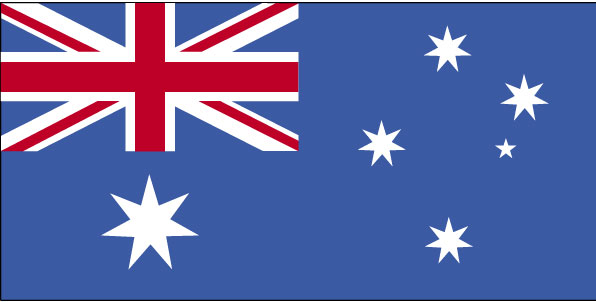
Australia
Australia
Declare Your Relationship to Australia
CountryReports Community
- Studying13
- From Australia6
- Australia heritage2
- Visited3
- Want to visit4
Customs and Culture
Customs and Culture
Cultural Attributes
Australians have a good sense of humor and anything is a topic for humor. Australians have a sense of national pride, especially on Anzac day (April 25th National Holiday) where in most towns you will find men and boys wearing the traditional Digger slouch hat. “Digger” is the name for the Australian soldier.
Most people are working for leisure opportunities with increasing amounts working for investment opportunities - real estate etc. Most people regard wealth in terms of real estate. Owning more than one house seems to put you into the “well off” category. Most households have plenty of spare cash for cars and entertainment.

Land of the Great Barrier Reef
Get More Customs and Culture
6 more cultural topics for members
Social Customs & Etiquette · Diet · Family · Dating Customs · Recreation · Student Life
Holidays
Australia Day
1/26Independence
Birth date - Pamela Lyndon (P.L.) Travers
8/9Birthday
Birth date - Pamela Lyndon (P.L.) Travers, the author of Mary Poppins series, was born Helen Lyndon Goff in Maryborough, Queensland, on 9th August, 1899.
Christmas
12/25Christmas
Australia observed its first Christmas in 1788 in Sydney.
Christmas arrives at the beginning of summer vacation with figures of Santa and Father Christmas clad in shorts and T-Shirts. Children write letters to Santa and gifts are exchanged on Christmas. Local tradition has Swag Man, a figure like Santa who lives under Uluru (Ayers Rock, the largest monolith in the world) and comes out at Christmastime with his dingoes to deliver gifts.
Some Australians have Christmas trees from the cuttings of native eucaluptus or gum trees, but most have Artificial christmas trees decorated with western ornaments or natural elements such as seed pods, gum nuts or berries.
Costal Australians have recently replaced the traditional indoor sit-down Christmas dinner with an outdoor dinner at the seaside or an outdoor buffet with a menu of cold meats, seafood, salads, chocolates and the traditional mince pie or plum pudding. The mince pie or plum pudding is usually served with a coin, a ring, or a thimble inside and whoever finds the item will have wealth, marriage or spinsterhood in the coming year. For those living in the remote interior of Australia Santa usually appears via small aircraft or by train.
Dates of Interest
- April 25
Australian and New Zealand Army Corps (ANZAC) Day marks the day when Australian and New Zealand troops arrived on Turkey's Gallipoli Peninsula during World War I on April 25, 1915.
How do people greet each other in Australia?
Common greetings are "Hi," "Hello," "Good Morning" or just "'Morning," and "Gday" during the day; a handshake usually accompanies greetings, especially between males.
Do
- Shake hands, especially with males or if you haven't met in a few weeks
- Kiss on the cheek when a woman is leaving
Good to know
- "Gday" is more or less restricted to the working class and males
- Catchphrases include "G'day mate!", "no worries", "not a problem" and "Good on yer!"
What is eating like in Australia?
Food ("tucker") reflects British heritage with European and Asian influences; meals range from light lunches like sandwiches and meat pies to dinners of meat, potatoes and vegetables, often barbecued.
Good to know
- The unofficial national dish is the Great Australian Meat Pie
- In Adelaide try the "Pie Floater" (meat pie in split pea soup)
- Toast may be spread with Vegemite, a concentrated yeast extract
- Well-known desserts include pavlova, lamingtons, pikelets and custard
- Seafood is abundant: lobsters, Sydney rock oysters, barramundi, mud crabs, crayfish, prawns and snapper
What should I know about visiting and social etiquette in Australia?
Impromptu visits are common but be mindful of timing; the most popular way to socialize is at a pub or club, often over beer and gambling.
Do
- Cover your mouth and say "Excuse me" when yawning
- Show good sportsmanship, such as congratulating a good performance or being a good loser
- When first invited to join an impromptu visit, decline or answer with "are you sure" before accepting
Don’t
- Don't call on people shortly before "Tea" (the evening meal), as the atmosphere can tense up
Good to know
- Older homes might have the bathroom outside in a shed or "Dunny"
- Good sportsmanship is highly respected
How should I dress in Australia?
Australians dress in styles popular in Europe and other western countries, with practical seasonal clothing.
Good to know
- In winter, jumpers or sweaters are common indoors due to a lack of central heating
- In summer, shorts and a T-shirt are popular for both males and females
- Females often wear running shoes or sandals with skirts
What gestures should I be careful about in Australia?
Australians value personal space and reserved body language; some gestures are considered rude or vulgar.
Do
- Point with an open hand
- Maintain good eye contact without staring
- Stand back and give people personal space
- Sit back without folding your arms
Don’t
- Don't point at someone with your index finger
- Don't form a "V" with index and middle fingers, palm facing in (considered vulgar)
- Don't touch people during conversation
- Don't be overly physically demonstrative, which can be seen as unmanly
What are families and society like in Australia?
More than 85% of Australians live in urban areas, mostly on the east coast, though some live on isolated rural sheep stations; women now enjoy expanded career opportunities and political influence.
Good to know
- A typical home is a one-story brick dwelling with a tile roof; a two-story home is considered a luxury
- In warm northern areas homes are built on stilts for airflow and flood protection
- Aborigines live in every state and territory, in both urban and rural areas
- Elderly people receive government pensions after age 65
What do Australians do for recreation?
Australians love sports and the outdoors, with Australian-rules football, cricket and netball among the most popular, plus abundant beach and mountain activities.
Don’t
- Don't swim unsupervised—strong coastal currents make swimming dangerous, so stay near patrolling lifesavers
Good to know
- "Aussie Rules" football attracts more spectators than any other sport
- Cricket is popular, with the Test trophy nicknamed the "Ashes"
- Netball is the most popular women's sport
- Beaches like Bondi and Surfer's Paradise offer surfing, swimming, sailing, scuba diving and fishing
Last updated: 2026-07-12 · Sources: CountryReports
Photos of Australia
Photos of Australia
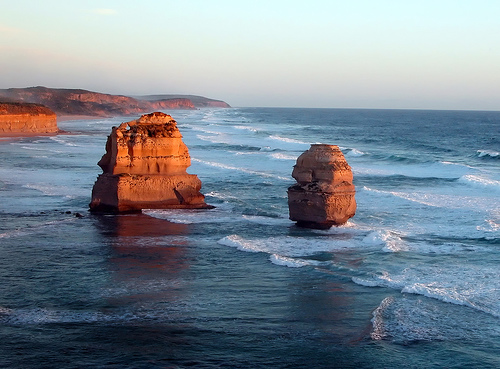
The Twelve Apostles, Australia
Black Cockatoo
Koala on Kangaroo Island
Seal Bay, Kangaroo Island
Glenelg, South Australia
Sydney Harbour
Wallabys in South Australia
Le Bon Cake Shop Melbourne Australia
The Twelve Apostles beach, Australia
Flinders Street Station, Melbourne
Melbourne, Austrlia
Weekend market in Manly, Australia


Travel and Tourism
Travel and Tourism
- Travel Alert Status
- Level 1: Exercise Normal Precautions
- Currency
- 1.352
- Time Difference
- UTC+10 (14 hours ahead of Washington, DC, during Standard Time) time zone note: Australia has four time zones, including Lord Howe Island (UTC+10:30)
- Climate
- Australia is a large, comparatively dry, and sparsely inhabited continent, almost as large as the 48 contiguous U.S. states. Australia, the only continent that consists of a single nation, is also the only inhabited continent that is isolated from all others (total coastline exceeds 22,000 miles). The average elevation is about 985 feet, which makes it the flattest continent on earth. This is among the prime reasons for sparse annual rainfall--16.5 inches, which is less than two-thirds of the world average (26 inches). Further, the rain falls mainly on coastal regions: forty percent of the surface gets less than 10 inches per year, and annual evaporation exceeds annual rainfall on about three-quarters of the land. Overall runoff is less than half that of the Mississippi basin; Australia has no navigable rivers of any commercial significance. In general, the country is warmer than the U.S. (the northern one-third is in the Tropics, the rest in the Temperate Zone). Temperature extremes are much less pronounced. Sydney's average daytime temperature in the coldest month (July) is 59°F; in the warmest month (January), 81°F.
- Airports
- 444
- Recommended Vaccinations
- How important is it to do your research about vaccinations? It might just save your life! Make yourself aware of the different types of vaccinations and which ones you may need to travel to your destination. Schedule an appointment with your doctor at least four to six weeks before you travel to ensure you receive all important shots. Be sure that you and your family are up to date on your routine vaccinations. Which vaccinations you need will depend on a number of factors including your destination, whether you will be spending time in rural areas, the season of the year you are traveling, your age, health status, and previous immunizations.
Read the full travel guide — health, safety, vaccinations, disease risk, sanitation, and transit details.
View full travel guideRecipes
Recipes
Fruit Cordial
Beverage
Main Dish
Fruity Seafood
Main Dish
Australian Meat Pie
Main Dish
Kangaroo Tail Soup
Main Dish
Beef Nambour
Side Dish
Roseville Tea Sandwiches
Side Dish
Potato Salad
Side Dish
PremiumPasta Salad
Side Dish
PremiumPatio Salad
Side Dish
PremiumCream of Carrot and Honey Soup
History
History
Historical Eras
Aboriginal Australia
40000 BCE – 1770
For over 40,000 years, Aboriginal peoples inhabited the Australian continent, developing hundreds of distinct languages, rich spiritual traditions, and sophisticated land management practices. Arriving from Southeast Asia in successive migrations, these communities built enduring cultures tied to the land through the concept of the Dreamtime. Portuguese, Spanish, and Dutch navigators made contact with the coastline before sustained European engagement began.
Colonial Era
1770 – 1901
Captain James Cook claimed the eastern coastline for Great Britain in 1770, and in January 1788 the First Fleet under Captain Arthur Phillip established the Colony of New South Wales at Sydney Cove, initially populated largely by transported convicts. Six separate colonies were founded across the continent through the 19th century, and the gold rush of 1851 dramatically accelerated population growth, wealth, and demands for self-governance. By the 1850s most colonies had achieved responsible government, laying the groundwork for federation.
Federation & Early Commonwealth
1901 – 1945
The Commonwealth of Australia was proclaimed on January 1, 1901, uniting the six colonies under a federal parliament that opened in Melbourne before relocating to the purpose-built capital of Canberra in 1927. Australia fought alongside Britain in both World Wars, suffering enormous losses at Gallipoli in 1915 that forged a distinct national identity. The Statute of Westminster Adoption Act of 1942 formally confirmed Australia's full legislative autonomy from Britain.
Post-War & Migration
1945 – 1983
Following World War II, Australia launched an ambitious mass immigration program under the slogan "populate or perish," dramatically reshaping the country's demographics with arrivals from Britain, southern Europe, and later Asia. Economic expansion fueled rapid urbanization and industrialization, while the White Australia Policy was progressively dismantled between the 1950s and its formal abolition in 1973 under Prime Minister Gough Whitlam. This era also saw significant advances in Aboriginal rights, culminating in the 1967 referendum granting the federal government power to legislate for Indigenous Australians.
Modern Australia
1983 – present
The Hawke and Keating Labor governments of the 1980s and 1990s floated the Australian dollar, deregulated the economy, and introduced compulsory superannuation, transforming Australia into a globally integrated market economy. The Australia Act of 1986 severed the last formal British legal ties, and a 1999 republican referendum, though defeated, signaled ongoing debate over national identity. Australia entered the 21st century as a prosperous, multicultural nation grappling with Indigenous reconciliation, climate change, and its strategic role in the Asia-Pacific.
Overview
Australia was
Timeline of Key Events
4000 BCE
The first Aborigines arrive
The first Aborigines arrive from south-east Asia. By 20,000 BC they have spread throughout the mainland and Tasmania.
1770
Lieutenant James Cook charts the easter coastline
Lieutenant James Cook charts the Easter coastline of the continent aboard the Endeavour and claims the land as a British possession.
1787
New South Wales Courts Act
New South Wales Courts Act established. An Act to keep the convicts on the straight and narrow.
1788
Britain establishes the Colony of New South Wales at Sydney Cove
Britain establishes the Colony of New South Wales at Sydney Cove.
1801
Lieutenant John Murray lands at bay he names Port Phillip
Lieutenant John Murray lands at bay he names Port Phillip.
1804
David Collins establishes convict settlement at Hobart on the Derwent River
David Collins establishes convict settlement at Hobart on the Derwent River in Van Diemen’s Land. William Paterson establishes second settlement in Van Diemen’s Land, named Gworge Town on Tamar River.
1810
Governor Lachlan Macquarie takes office, Ellis Bent becomes deputy judge advocate
Governor Lachlan Macquarie takes office and Ellis Bent becomes the Colony’s third deputy judge advocate.
Read the full history profile — narrative overview, defining eras, and the complete timeline in one place.
View expanded historyInteresting Facts
Interesting Facts
When a child loses a tooth they put their tooth under thier pillow and wait for the Tooth Fairy to take their tooth and bring them money.
When an Aborigianl child loses a tooth thier family helps them put their tooth inside the shoot of a pandanus plant so that when the pandanus grows into a tree, their tooth will grow too. There are spirits in the pandanus leaves that will look after them while their tooth is growing.
The Great Barrier Reef is the longest coral reef in the world. It lies beneath the shallow ocean waters of Australia's east coast.
The roof of the Sydney Opera House looks like sails on a boat.
See every fact — trivia, oddities, and curious tidbits gathered from across the country.
View all interesting factsGeography and Environment
Geography and Environment
- Terrain
- mostly low plateau with deserts; fertile plain in southeast
- Climate
- Australia is a large, comparatively dry, and sparsely inhabited continent, almost as large as the 48 contiguous U.S. states. Australia, the only continent that consists of a single nation, is also the only inhabited continent which is isolated from all others (total coastline exceeds 22,000 miles). Average elevation is about 985 feet, which makes it the flattest continent on earth. This is among the prime reasons for sparse annual rainfall—16.5 inches, which is less than two-thirds the world average (26 inches). Further, the rain falls mainly on coastal regions: forty percent of the surface gets less than 10 inches per year, and annual evaporation exceeds annual rainfall on about three quarters of the land. Overall runoff is less than half that of the Mississippi basin; Australia has no navigable rivers of any commercial significance. In general, the country is warmer than the U.S. (the northern one-third is in the Tropics, the rest in the Temperate Zone). Temperature extremes are much less pronounced. Sydney’s average daytime temperature in the coldest month (July) is 59°F; in the warmest month (January), 81°F.
- Natural Hazards
- cyclones along the coast; severe droughts; forest fires
- Current Environmental Issues
- soil erosion from overgrazing, industrial development, urbanization, and poor farming practices; soil salinity rising due to the use of poor quality water; desertification; clearing for agricultural purposes threatens the natural habitat of many unique animal and plant species; the Great Barrier Reef off the northeast coast, the largest coral reef in the world, is threatened by increased shipping and its popularity as a tourist site; limited natural fresh water resources
Read the full geography and environment profile — terrain, climate, natural resources, hazards, land use, and international agreements.
View full geographyPeople & Demographics
People & Demographics
Religion
Languages Spoken
English, native languages
- English
Population
- Population
- 26,768,598
- Population: Male/Female
- male: 13,305,110 female: 13,463,488
- Population Distribution
- population is primarily located on the periphery, with the highest concentration of people residing in the east and southeast; a secondary population center is located in and around Perth in the west; of the States and Territories, New South Wales has, by far, the largest population; the interior, or "outback", has a very sparse population
- Urban Population
- urban population: 86.6% of total population rate of urbanization: 1.27% annual rate of change note: data include Christmas Island, Cocos Islands, and Norfolk Island
- Population in Major Urban Areas
- 5.235 million Melbourne, 5.121 million Sydney, 2.505 million Brisbane, 2.118 million Perth, 1.367 million Adelaide, 472,000 CANBERRA (capital)
- Nationality Noun
- noun: Australian(s) adjective: Australian
- Ethnic Groups
- English 33%, Australian 29.9%, Irish 9.5%, Scottish 8.6%, Chinese 5.5%, Italian 4.4%, German 4%, Indian 3.1%, Australian Aboriginal 2.9%, Greek 1.7%, unspecified 4.7%
- Language Note
- English 72%, Mandarin 2.7%, Arabic 1.4%, Vietnamese 1.3%, Cantonese 1.2%, other 15.7%, unspecified 5.7%
Education
- Literacy Definition
- Age 15 and over can read and write
Education is a priority in Australia and is regulated by each state or territory. The teaching tends to be interactive and challenging, with much student participation. The schools place much emphasis on technology, ensuring access for students and teachers to multimedia materials, Internet access, and general computer usage.
An average school lunch costs no more than US$3-4. Traditional lunches include meat pies, sausage rolls, and hotdogs, although health-conscious menus are tending more toward foods such as sushi, noodles with vegetables, sandwiches, and watermelon slices. School lunch shops are run by the Parents and Citizens’ Association, whose volunteers create menus and prepare the food.
Health Information
- Life Expectancy at Birth
- total population: 83.8 years male: 81.6 years female: 85.9 years
- Alcohol consumption per capita
- total: 9.51 liters of pure alcohol beer: 3.71 liters of pure alcohol wine: 3.67 liters of pure alcohol spirits: 1.32 liters of pure alcohol other alcohols: 0.81 liters of pure alcohol
- Tobacco Use
- total: 13.6% male: 15.6% female: 11.5%
- Infant Mortality Rate
- total: 2.9 deaths/1,000 live births male: 3.2 deaths/1,000 live births female: 2.7 deaths/1,000 live births
Life Expectancy
- Life Expectancy at Birth
- total population: 83.8 years male: 81.6 years female: 85.9 years
- Median Age
- total: 38.1 years male: 36.9 years female: 39.2 years
- Age Structure
- 0-14 years: 18.3% (male 2,526,772/female 2,369,425) 15-64 years: 64.7% (male 8,688,023/female 8,640,671) 65 years and over: 17% (male 2,090,315/female 2,453,392)
- Infant Mortality Rate
- total: 2.9 deaths/1,000 live births male: 3.2 deaths/1,000 live births female: 2.7 deaths/1,000 live births
Read the full people and society profile — demographics, health, education, religion, languages, and notable people.
View full people and societyGovernment & Politics
Government & Politics
Country Identity
- Country Name
- Australia
- Full Country Name
- Commonwealth of Australia
- Local - Long
- Commonwealth of Australia
- Local - Short
- Australia
Government Structure
- Government Type
- democratic, federal-state system recognizing the British monarch as sovereign
- Legal System
- based on English common law; accepts compulsory ICJ jurisdiction, with reservations
- Executive Branch
- chief of state: King of Australia CHARLES III (since 8 September 2022), represented by Governor General Sam MOSTYN (since 1 July 2024) head of government: Prime Minister Anthony ALBANESE (since 23 May 2022); Deputy Prime Minister Richard MARLES (since 23 May 2022) cabinet: prime minister nominates, from among members of Parliament, candidates who are subsequently sworn in by the governor general to serve as government ministers elections: none; the monarch is hereditary; governor general appointed by the monarch on the recommendation of the prime minister; following legislative elections, the leader of the majority party or leader of a majority coalition is sworn in as prime minister by the governor general note: the ruling government coalition consists of the Australian Labor Party, which holds a majority in the House of Representatives
- Legislative Branch
- Bicameral Federal Parliament consists of the Senate (76 seats — 12 from each of the six states and 2 from each of the two mainland territories; one-half of state members are elected every three years by popular vote to serve six-year terms, while all territory members are elected every three years by popular vote to serve three-year terms) and the House of Representatives (151 seats; members elected by preferential voting to serve terms of up to three years; no state can have fewer than 5 representatives). Elections: Senate — last held 21 May 2022 (next to be held no later than May 2025); House of Representatives — last held 21 May 2022 (next to be held no later than May 2025). Election results: Senate — seats by party — Australian Labor Party 26, Liberal Party 24, Australian Greens 11, National Party 6, One Nation 2, Liberal Democratic Party 1, Jacqui Lambie Network 2, United Australia Party 1, independents 3; House of Representatives — seats by party — Australian Labor Party 77, Liberal Party 38, National Party 16, Australian Greens 4, independents and others 16.
- Judicial Branch
- High Court (the chief justice and six other justices are appointed by the governor general)
- Suffrage
- 18 years of age; universal and compulsory
- Constitution
- 9 July 1900, effective 1 January 1901
- Independence
- 1 January 1901 (federation of UK colonies)
- National Holiday
- Australia Day, 26 January (1788)
Capital City
- Capital Name
- Canberra
- Capital - geographic coordinate
- 35 16 S, 149 08 E
- Capital Time Difference
- UTC+10 (14 hours ahead of Washington, DC, during Standard Time) time zone note: Australia has four time zones, including Lord Howe Island (UTC+10:30)
the name is claimed to derive from either Kambera or Camberry, which are names corrupted from the original native designation for the area "Nganbra" or "Nganbira"
Military
Branches: Australian Defense Force (ADF): Australian Army; Royal Australian Navy (includes Naval Aviation Force); Royal Australian Air Force; Joint Operations Command (JOC)
Embassy / Diplomatic Mission
Australian Capital Territory (ACT) or Queanbeyan:
U.S. Embassy in Canberra
Moonah Place
Yarralumla, ACT 2600
Telephone: (61) (2) 6214- 5600
Emergency after-hours telephone: (61) (2) 411-424-608
Facsimile: (61) (2) 6214-5970
NOTE: The U.S. Embassy in Canberra only provides emergency assistance for U.S. citizens in the ACT. The U.S. Embassy does not issue U.S. passports or visas. Passports and other routine citizen services for Canberra and the rest of the ACT are provided by the U.S. Consulate General in Sydney (see contact information below).
New South Wales, Norfolk Island, Lord Howe Island, and Queensland:
U.S. Consulate General Sydney
Level 10, MLC Centre, 19-29 Martin Place, Sydney, NSW 2000
Telephone: (61) (2) 9373-9200
Emergency after-hours telephone: (61) (2) 4422-2201
Facsimile: (61) (2) 9373-9184
Email: SydneyACS@state.gov
NOTE: The Consulate General offers an online appointment system for U.S. citizens seeking routine non-emergency services such as registration, passport, and other consular services. To make an appointment, visit their website. Hours open to the public: 8:00 a.m. to 11:30 a.m., Monday to Friday (except U.S. and Australian holidays and the first Wednesday of each month). For emergency services (e.g., the arrest, death, or serious injury of a U.S. citizen) after 5:00 p.m. on weekdays, holidays and weekends, please call (61) (2) 4422-2201.
Victoria, Tasmania, South Australia, and the Northern Territory:
U.S. Consulate General Melbourne
553 St. Kilda Road, Melbourne, VIC 3004
Telephone: (61) (3) 9526-5900
Emergency after-hours telephone: (61) (3) 9389-3601
Facsimile: (61) (3) 9525-0769
Email: MelbourneACS@state.gov
NOTE: The U.S. Consulate General offers an online appointment system for U.S. citizens seeking routine non-emergency services such as registration, passport, and other consular services. To make an appointment, visit their website. Hours open to the public: 8:00 am – 3:30 pm Monday to Friday. All services other than emergencies require an appointment. For emergency services (e.g., the arrest, death, or serious injury of a U.S. citizen) after 4:30 p.m. or on holidays and weekends, please call (61) (3) 9389-3601.
Western Australia:
U.S. Consulate General Perth
16 St. Georges Terrace, Perth WA 6000
Telephone: (61)(8) 6144- 5100
Emergency after-hours telephone: (61) (8) 9476-0081
Facsimile: (61)(8) 9231-9444
Email: PerthACS@state.gov
NOTE: The Consulate General offers an online appointment system for U.S. citizens seeking routine non-emergency services such as registration, passport, and other consular services. To make an appointment, please visit the Consulate's website. Hours open to the public for American Citizen Services: 8:30 to 11:30 a.m., Monday through Thursday. For emergency services (e.g., the arrest, death, or serious injury of a U.S. citizen) outside of business hours, please call (61) (8) 9476-0081.
Read the full government profile — flag symbolism, national anthem, and other national symbols.
View full government detailsEconomy
Economy
Australia has a prosperous, open-market economy and one of the most resilient in the developed world, consistently ranking among the top nations for GDP per capita.
Snapshot
- Currency Name and Code
- Australian Dollar (AUD)
- GDP — official exchange rate
- $612,800,000,000 (USD)
- GDP Real Growth Rate
- 1.96%
- GDP by Sector
- agriculture: 3% industry: 25% services: 72%
- Gini Index
- 35.2
News & Weather
News & Weather
Current Weather
Latest News
Israeli siblings who fear breaking law in Gaza under IDF owed protection by Australia, tribunal finds - The Guardian
The Guardian · 18h ago
King Gizzard Announce Australian Tour, a Rave Set, and a Block Party They Curated - Billboard
Billboard · 7h ago
SYSTEM OF A DOWN and FAITH NO MORE announce Australia/New Zealand tour - Revolver Magazine
Revolver Magazine · 16m ago
System Of A Down and Faith No More announce 2027 Australia and New Zealand tour - Louder
Louder · 19h ago
Two Scots charged in Australia over 107kg ketamine raids - BBC
BBC · 56m ago
The dangerous climate driving California's wildfires—and a warning for Australia - Phys.org
Phys.org · 18m ago
AJA warns Royal Commission of lawfare and antisemitism in Australia - The Jerusalem Post
The Jerusalem Post · 36m ago
Duchess Meghan makes TV return. Inside her 'MasterChef Australia' debut - USA Today
USA Today · 15h ago
News via Google News
Climate Overview
Australia is a large, comparatively dry, and sparsely inhabited continent, almost as large as the 48 contiguous U.S. states. Australia, the only continent that consists of a single nation, is also the only inhabited continent that is isolated from all others (total coastline exceeds 22,000 miles). The average elevation is about 985 feet, which makes it the flattest continent on earth. This is among the prime reasons for sparse annual rainfall--16.5 inches, which is less than two-thirds of the world average (26 inches). Further, the rain falls mainly on coastal regions: forty percent of the surface gets less than 10 inches per year, and annual evaporation exceeds annual rainfall on about three-quarters of the land. Overall runoff is less than half that of the Mississippi basin; Australia has no navigable rivers of any commercial significance.
In general, the country is warmer than the U.S. (the northern one-third is in the Tropics, the rest in the Temperate Zone). Temperature extremes are much less pronounced. Sydney's average daytime temperature in the coldest month (July) is 59°F; in the warmest month (January), 81°F.
Videos
Videos
2 curated YouTube videos.
Source: YouTube
Source: YouTube
Frequently Asked Questions
Frequently Asked Questions
What is the population of Australia?
How do people greet each other in Australia?
What is eating like in Australia?
What should I know about visiting and social etiquette in Australia?
How should I dress in Australia?
What gestures should I be careful about in Australia?
What are families and society like in Australia?
What do Australians do for recreation?
What is the capital of Australia?
Where is Australia located?
What are Australia's ocean and sea borders?
What is the primary religion in Australia?
What currency does Australia use?
What language is spoken in Australia?
What is the geography of Australia like?
What is Australia known for?
Last reviewed 2026