
 English
 Español
 中文
中文 हिन्दी
 Français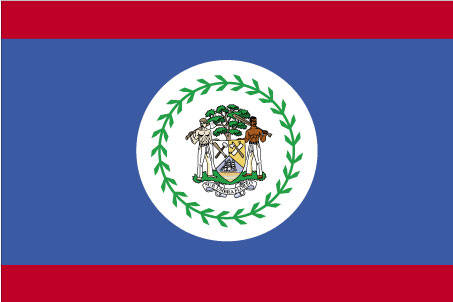
Belize
Declare Your Relationship to Belize
CountryReports Community
- Studying1
- From Belize0
- Belize heritage0
- Visited0
- Want to visit0
Customs and Culture
Customs and Culture
Cultural Attributes
Belizeans are informal and friendly and non-confrontational. A simple nod or wave is acceptable when passing but it is considered rude not to greet someone. Among friends, one might shake hands by clasping the palms and locking thumbs. Men might pat each other on the back. Belizeans take care to make guests feel at home. People value honesty.

Reef, Jungle, and Caribbean Soul
Get More Customs and Culture
5 more cultural topics for members
Social Customs & Etiquette · Diet · Family · Dating Customs · Recreation
Holidays
Independence Day
9/21Independence Day
Christmas
12/25Christmas
Christmas decorations and carols reflect American and European influences, and Santa Claus brings gifts to the children on Christmas day. Mestizos observe Las Posadas (the Lodgings) as in Mexico, the Garifuna follow the rituals of Jonkonnu as found in the West Indies. Nativity scenes are missing the Christ child until Christmas eve when the Christ child is placed in a manger representing his birth.
The Christmas meal consists of beans, rice, potato salad, turkey with stuffing, tortillas, fish, ham, yams, black cake (dark fruitcake) and rompope (eggnog with rum).
Dates of Interest
- September
Go to Belize in September and you are sure to find a party. Celebrations of history, culture, and patriotism lead to carnivals, parades, pageants, and competitions. And lots and lots of music. It begins with traditional music playing on every radio, getting people ready for the month-long celebration. Soon every street and building and many of the people are decorated in the red, white, and blue of the Belize flag. St. George's Caye Day is the first national holiday on September 10th, commemorating the defeat of a Spanish incursion by British colonists. There are speeches and a Citizens Parade. A highlight of the day is the crowning of the Queen of the Bay who then leads the people as they dance through the streets. Independence Day (September 21st) renews the celebration with another parade, more fireworks, more food, more costumes, and of course, more music.
How do people greet each other in Belize?
Belizeans are informal and friendly, and while a simple nod or wave is acceptable when passing, failing to greet someone at all is considered rude. Handshakes, pats on the back, and a kiss on the cheek (to show great appreciation) are common.
Do
- Always acknowledge people with at least a nod or wave
- Use handshakes or pats on the back among friends
- Among close friends, clasp palms and lock thumbs
Don’t
- Don't ignore someone when passing by
- Don't use first names unless you know the person well
What are dining customs like in Belize?
Rice and beans are a staple, and the main meal is eaten at midday. Creoles call dinner "tea".
Good to know
- Creoles and Garifuna eat fish boiled or stewed in coconut milk
- Garifuna make cassava fritters from cooked cassava in coconut milk
- Nache is a sweet alcoholic drink made from crabou fruit
- Local rum is often mixed with condensed milk
What should I know about visiting and hospitality in Belize?
Belizeans take care to make guests feel at home and appreciate diplomatic honesty and a sense of humor. When visiting a home, hail the occupants from the gate or street until they come out.
Do
- Hail occupants from the gate or street when visiting
- Offer guests refreshments, at least a drink
- Bring the host a small gift such as sweets
- Value honesty and keep a sense of humor
Good to know
- The pace of life is regulated by events or people, not the clock
How should I dress in Belize?
The way a person is dressed is considered a mark of taste and status in Belize. Belizeans take pride in wearing clean, pressed clothing, especially in the workplace.
Do
- Wear clean, pressed clothing
- Dress well in the workplace
What gestures should I be aware of in Belize?
Hand and facial gestures vary; Creoles and Garinagu are especially animated, while Mestizos are very reserved among unfamiliar people.
Don’t
- Don't stare, as it is considered rude
What is family life like in Belize?
Most marriages are common-law, and adult children usually remain at home until they marry or have a child. In Creole villages, a female head of the household is common.
Good to know
- Among the Garifuna, physical violence is rare
What do people do for recreation in Belize?
Soccer is the most popular sport, followed by basketball.
Good to know
- An International Cross-Country cycle race is held every Easter Monday, from Belize City to Sylvestre Stadium in Burrell Boom, followed by horse races, food, and music
- Among Creoles, national celebrations feature open-air dancing called jump-up
Last updated: 2026-07-12 · Sources: CountryReports
Photos of Belize
Photos of Belize
Street
Beach volleyball net in Belize
Belize City
Fishing boats in Belize
Sunset Point, Belize
Ferry boat sign at the Belize City waterfront.
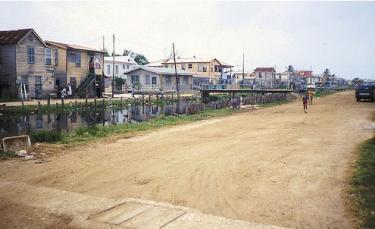
Street scene in Belize City, Belize
Private school in Belize City, Belize
Streetside marketplace in Belize City, Belize
Streetside marketplace in Belize City, Belize
Waterfront in Belize City, Belize
Sunset at Turneffe Islands, Belize


Travel and Tourism
Travel and Tourism
- Travel Alert Status
- Level 2: Exercise Increased Caution
- Currency
- 2
- Time Difference
- UTC-6 (1 hour behind Washington, DC during Standard Time)
- Climate
- Belize's subtropical climate is hot and humid most of the year. In Belize City, the average daily temperature is 85°F, but the daytime high is often in the 90s between May and October, with uncomfortably high humidity. The dry season runs from January through April. Heavy rains begin in June and can continue through December. Mosquito outbreaks are a perennial result. From March to November, a fairly steady breeze makes the heat in Belize City less intolerable. The coolest period is December to February when the average daily temperature is only 75°F. During this period, night temperatures can drop into the upper 50s. Tropical storms and hurricanes can occur from June through November. In 1931 and 1961, hurricanes devastated Belize City.
- Airports
- 43
- Recommended Vaccinations
- How important is it to do your research about vaccinations? It might just save your life! Make yourself aware of the different types of vaccinations and which ones you may need to travel to your destination. Schedule an appointment with your doctor at least four to six weeks before you travel to ensure you receive all important shots. Be sure that you and your family are up to date on your routine vaccinations. Which vaccinations you need will depend on a number of factors including your destination, whether you will be spending time in rural areas, the season of the year you are traveling, your age, health status, and previous immunizations.
Read the full travel guide — health, safety, vaccinations, disease risk, sanitation, and transit details.
View full travel guideRecipes
Recipes
History
History
Historical Eras
Ancient Maya
2000 BCE – 1000
Belize formed a core part of the ancient Maya world, with major ceremonial and urban centers such as Caracol, Lamanai, and Xunantunich flourishing between roughly 200 and 800 CE. Maya society in the region developed sophisticated agriculture, trade networks, monumental architecture, and hieroglyphic writing. A gradual cultural and political decline affected southern and central lowland cities around 900–1000 CE, though some northern communities persisted well beyond this period.
Spanish Contact
1000 – 1650
Spanish explorers made early incursions into Belizean territory, with Hernán Cortés crossing the south in 1520 and Francisco de Montejo entering the north in 1528, but the region was largely bypassed due to its perceived lack of gold and silver. Spanish colonial efforts focused elsewhere in Mesoamerica, leaving Belize a contested frontier zone. Indigenous populations nonetheless suffered severe disruption and decline through disease, conflict, and displacement during this period.
Baymen & Early Settlement
1650 – 1798
British buccaneers and woodcutters, known as the Baymen, began settling the Belizean coast around 1650, exploiting the region's valuable logwood and later mahogany forests. African slaves were introduced by 1720 to supply labor for the timber trade. Spain repeatedly contested British presence, driving out settlers in 1717 and 1754 and capturing Belize outright in 1779, before the Treaty of Paris (1783) and later agreements formalized limited British cutting rights.
British Honduras
1798 – 1964
The Battle of St. George's Caye in 1798 cemented British dominance, and the territory was declared the Crown Colony of British Honduras in 1862. Slavery was abolished throughout British territories in 1838, prompting planters to seek new labor sources. The colony's society grew increasingly complex ethnically, and the mid-nineteenth century War of the Castes (1847) spilled refugees across the Mexican border into Belize; the twentieth century saw a rising nonwhite middle class and growing calls for self-governance.
Self-Governance
1964 – 1981
Britain granted British Honduras full internal self-government in 1964, with George Price and the People's United Party leading the push toward independence. The territory was officially renamed Belize in 1973 as a symbolic break from its colonial identity. Progress toward full independence was complicated by Guatemala's longstanding territorial claim to the entire country, requiring a British military guarantee before independence could safely proceed.
Independent Belize
1981 – present
Belize achieved full independence on September 21, 1981, with George Price as its first Prime Minister, though Guatemala withheld diplomatic recognition until 1992. The nation developed tourism as its primary economic engine, leveraging its barrier reef, Maya archaeological sites, and biodiversity. Ongoing challenges include high unemployment, narcotics trafficking linked to South American drug networks, rising urban crime, and the need to balance development with environmental conservation.
Overview
Although Belize is located on the mainland of the Americas, the country more closely
Timeline of Key Events
200 – 800
Maya cities flourish all through Belize.
Maya cities flourish all through Belize.
900 – 1000
Maya cultural decline in Southern and Central America .
Maya cultural decline in Southern and Central America.
1520
The Spanish Conquistador, Hernan Cortez, crossed southern Belize.
The Spanish Conquistador, Hernan Cortez, crossed southern Belize.
1528
Francisco de Montejo, the Adelanto arrives in Corozal, northern Belize.
Francisco de Montejo, the Adelanto arrives in Corozal, northern Belize.
1650
British buccaneers begin to settle the coast of Belize
British buccaneers begin to settle the coast of Belize.
1655
The census around the cacao orchards near current day Belmopan is about 450.
The census around the cacao orchards near current day Belmopan is about 450.
1660
Bartholomew Sharpe, famous British pirate, makes Belize his base.
Bartholomew Sharpe, famous British pirate, makes Belize his base and begins to harvest logwood for sale to U.K.
Read the full history profile — narrative overview, defining eras, and the complete timeline in one place.
View expanded historyInteresting Facts
Interesting Facts
About 1/3 of the country's population lives in Belize City.
Belize is home to the second longest barrier reef in the world second only to that of Australia.
See every fact — trivia, oddities, and curious tidbits gathered from across the country.
View all interesting factsGeography and Environment
Geography and Environment
- Terrain
- flat, swampy coastal plain; low mountains in south
- Climate
- Belize’s subtropical climate is hot and humid most of the year. In Belize City, the average daily temperature is 85°F, but the daytime high is often in the 90s between May and October, with uncomfortably high humidity. Dry season runs from January through April. Heavy rains begin in June and can continue through December. Mosquito outbreaks are a perennial result. From March to November, a fairly steady breeze makes the heat in Belize City less intolerable. The coolest period is December to February, when the average daily temperature is only 75°F. During this period, night temperatures can drop into the upper 50s. Tropical storms and hurricanes can occur from June through November. In 1931 and 1961, hurricanes devastated Belize City;
- Natural Hazards
- frequent, devastating hurricanes (June to November) and coastal flooding (especially in south)
- Current Environmental Issues
- deforestation; water pollution from sewage, industrial effluents, agricultural runoff; solid and sewage waste disposal
Read the full geography and environment profile — terrain, climate, natural resources, hazards, land use, and international agreements.
View full geographyPeople & Demographics
People & Demographics
Religion
Languages Spoken
English (official), Spanish, Mayan, Garifuna (Carib), Creole
- Creole
- English
- Garifuna
- Mayan
- Spanish
Population
- Population
- 405,272
- Population in Major Urban Areas
- BELMOPAN (capital) 14,000
- Nationality Noun
- Belizean(s)
- Ethnic Groups
- Mestizo 48.7%, Creole 24.9%, Maya 10.6%, Garifuna 6.1%, other 9.7%
Education
- Literacy Definition
- Age 15 and over can read and write
Health Information
- Life Expectancy at Birth
- Life expectancy at birth in Belize stands at approximately 74 years overall, with women typically outliving men by several years. Female life expectancy is estimated at around 76 to 77 years, while male life expectancy falls closer to 71 to 72 years. These figures place Belize in a mid-range position compared to other Central American and Caribbean nations, reflecting both progress in public health infrastructure and ongoing challenges in healthcare access and chronic disease management. Over the past few decades, Belize has made meaningful gains in life expectancy, driven by improvements in maternal and child health services, expanded access to basic medical care, and reductions in infant mortality rates. The infant mortality rate has declined considerably, now sitting at roughly 12 to 14 deaths per 1,000 live births, which has contributed positively to overall life expectancy calculations. Despite these advances, Belize faces persistent health challenges that temper further gains. Non-communicable diseases such as diabetes, hypertension, and cardiovascular conditions are among the leading causes of death in the country. Diabetes in particular poses a significant burden, with rates notably higher than regional averages. HIV/AIDS has also historically been a health concern in Belize, with prevalence rates higher than in many neighboring countries, though treatment programs have improved outcomes in recent years. Geographic and economic factors also influence health outcomes. Rural and indigenous communities, particularly in the Toledo and Cayo districts, often have more limited access to hospitals, specialists, and preventive care compared to urban residents in Belize City or Belmopan. This disparity contributes to uneven health outcomes across the population. The Ministry of Health and Wellness in Belize, supported by partnerships with the Pan American Health Organization and other international bodies, continues to work toward expanding primary healthcare coverage and addressing the lifestyle and dietary factors driving chronic disease. As these efforts progress, life expectancy is expected to gradually improve, though bridging the urban-rural healthcare gap remains a critical priority for long-term population health in the country.
- Major Infectious Diseases — degree of risk
- High
Life Expectancy
- Life Expectancy at Birth
- Life expectancy at birth in Belize stands at approximately 74 years overall, with women typically outliving men by several years. Female life expectancy is estimated at around 76 to 77 years, while male life expectancy falls closer to 71 to 72 years. These figures place Belize in a mid-range position compared to other Central American and Caribbean nations, reflecting both progress in public health infrastructure and ongoing challenges in healthcare access and chronic disease management. Over the past few decades, Belize has made meaningful gains in life expectancy, driven by improvements in maternal and child health services, expanded access to basic medical care, and reductions in infant mortality rates. The infant mortality rate has declined considerably, now sitting at roughly 12 to 14 deaths per 1,000 live births, which has contributed positively to overall life expectancy calculations. Despite these advances, Belize faces persistent health challenges that temper further gains. Non-communicable diseases such as diabetes, hypertension, and cardiovascular conditions are among the leading causes of death in the country. Diabetes in particular poses a significant burden, with rates notably higher than regional averages. HIV/AIDS has also historically been a health concern in Belize, with prevalence rates higher than in many neighboring countries, though treatment programs have improved outcomes in recent years. Geographic and economic factors also influence health outcomes. Rural and indigenous communities, particularly in the Toledo and Cayo districts, often have more limited access to hospitals, specialists, and preventive care compared to urban residents in Belize City or Belmopan. This disparity contributes to uneven health outcomes across the population. The Ministry of Health and Wellness in Belize, supported by partnerships with the Pan American Health Organization and other international bodies, continues to work toward expanding primary healthcare coverage and addressing the lifestyle and dietary factors driving chronic disease. As these efforts progress, life expectancy is expected to gradually improve, though bridging the urban-rural healthcare gap remains a critical priority for long-term population health in the country.
Read the full people and society profile — demographics, health, education, religion, languages, and notable people.
View full people and societyGovernment & Politics
Government & Politics
Country Identity
- Country Name
- Belize
- Full Country Name
- Belize
- Former Name
- British Honduras
Government Structure
- Government Type
- parliamentary democracy
- Legal System
- English law
- Executive Branch
- Chief of state: King CHARLES III (since 8 September 2022), represented by Governor General Froyla TZALAM (since 6 May 2021) Head of government: Prime Minister John BRICENO (since 12 November 2020); Deputy Prime Minister Cordel HYDE (since 12 November 2020) Cabinet: Cabinet appointed by the governor general on the advice of the prime minister Elections/appointments: The monarchy is hereditary; the governor general is appointed by the monarch; following legislative elections, the leader of the majority party or the leader of the majority coalition is typically appointed prime minister by the governor general; the prime minister recommends the deputy prime minister
- Legislative Branch
- Belize's bicameral National Assembly consists of the Senate and the House of Representatives. The Senate has 13 members appointed by the governor general — 6 on the advice of the prime minister, 3 on the advice of the leader of the opposition, and 1 each on the advice of the Belize Council of Churches and Evangelical Association of Churches, the Belize Chamber of Commerce and Industry and the Belize Better Business Bureau, and the National Trade Union Congress and the Civil Society Steering Committee. Senators are appointed for five-year terms. The House of Representatives has 31 seats, with members elected by direct popular vote to serve five-year terms. Elections: House of Representatives — last held on 11 November 2020 (next to be held in November 2025). Election results: percent of vote by party — PUP 59.6%, UDP 38.8%, other 1.6%; seats by party — PUP 26, UDP 5.
- Judicial Branch
- Supreme Court (the chief justice is appointed by the governor general on the advice of the prime minister)
- Suffrage
- 18 years of age; universal
- Constitution
- 21-Sep-81
- Independence
- 21 September 1981 (from UK)
- National Holiday
- Independence Day, 21 September (1981)
Capital City
- Capital Name
- Belmopan
- Capital - geographic coordinate
- 17 15 N, 88 46 W
- Capital Time Difference
- UTC-6 (1 hour behind Washington, DC during Standard Time)
the decision to move the capital of the country inland to higher and more stable land was made in the 1960s; the name chosen for the new city was formed from the union of two words: "Belize," the name of the longest river in the country, and "Mopan," one of the rivers in the area of the new capital that empties into the Belize River
Military
Branches: Belize Defense Force (BDF): Army, BDF Air Wing (includes Special Boat Unit), BDF Volunteer Guard
Embassy / Diplomatic Mission
U.S. Embassy Belmopan
# 4 Floral Park Road
Belmopan, Cayo District
Belize, Central America
Telephone: 011-501-822-4011
Emergency after-hours telephone: 011-501-610-5030
Facsimile: 011-501-822-4050
Read the full government profile — flag symbolism, national anthem, and other national symbols.
View full government detailsEconomy
Economy
Belize maintains a small, open economy oriented primarily toward private enterprise, with tourism serving as the leading source of foreign exchange earnings.
Snapshot
- Currency Name and Code
- Belizean dollars (BZD)
- GDP — official exchange rate
- $908,000,000 (USD)
- GDP Real Growth Rate
- 6.3%
News & Weather
News & Weather
Current Weather
Latest News
Belize - World Population Review
World Population Review · 3d ago
Men’s Basketball’s Ian Parham Jr. Set to Compete for Belize at XXV Central American & Caribbean Games - UTRGV Athletics
UTRGV Athletics · 4d ago
A wave of new US flights turns Belize into the Caribbean’s easiest reef-and-ruins trip - The Seattle Times
The Seattle Times · 7d ago
Belize Achieves Full Membership in the WHO Programme for International Drug Monitoring with PAHO Support - Pan American Health Organization (PAHO)
Pan American Health Organization (PAHO) · 3d ago
New flight routes to Belize make it easier to explore reefs, rainforests, and Maya ruins this winter - Yahoo Creators
Yahoo Creators · 5d ago
Exploring Belize: Historical sites, rich cuisine, and a wellness sanctuary - TheGrio
TheGrio · 13d ago
Costa Rica vs Belize – Why I Sometimes Tell People Not to Buy Property in Belize - The Tico Times
The Tico Times · 16d ago
Belize’s best combination: A welcome Caribbean escape – with a sustainable soul - Travelweek
Travelweek · 3d ago
News via Google News
Climate Overview
Belize's subtropical climate is hot and humid most of the year. In Belize City, the average daily temperature is 85°F, but the daytime high is often in the 90s between May and October, with uncomfortably high humidity. The dry season runs from January through April. Heavy rains begin in June and can continue through December. Mosquito outbreaks are a perennial result. From March to November, a fairly steady breeze makes the heat in Belize City less intolerable. The coolest period is December to February when the average daily temperature is only 75°F. During this period, night temperatures can drop into the upper 50s. Tropical storms and hurricanes can occur from June through November. In 1931 and 1961, hurricanes devastated Belize City.
Videos
Videos
1 curated YouTube videos.
Source: YouTube
Frequently Asked Questions
Frequently Asked Questions
What is the population of Belize?
How do people greet each other in Belize?
What are dining customs like in Belize?
What should I know about visiting and hospitality in Belize?
How should I dress in Belize?
What gestures should I be aware of in Belize?
What is family life like in Belize?
What do people do for recreation in Belize?
What is the capital of Belize?
Where is Belize located?
What countries border Belize?
What is the predominant religion in Belize?
What is the currency of Belize?
What languages are spoken in Belize?
What is Belize known for?
Last reviewed 2026