
 English
 Español
 中文
中文 हिन्दी
 Français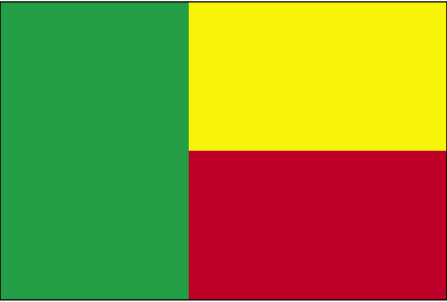
Benin
Benin
Declare Your Relationship to Benin
CountryReports Community
- Studying2
- From Benin1
- Benin heritage1
- Visited1
- Want to visit1
Customs and Culture
Customs and Culture
Cultural Attributes
A proper greeting always precedes conversation. Benin has a mix of animist, Muslim, Christian, and secular holidays. Beninese place great importance on rites of passage. Their families, society, and traditions depend on them. Traditional weddings can last weeks.

Land of Dahomey's Legacy
Get More Customs and Culture
5 more cultural topics for members
Social Customs & Etiquette · Diet · Family · Dating Customs · Recreation
Holidays
National Day
8/1Independence
Dates of Interest
- August 1st
How do people greet each other in Benin?
A proper greeting always precedes conversation, and people usually greet each other even if they are strangers. Men shake right hands, with the oldest person initiating the handshake.
Do
- Greet before starting any conversation
- Let the oldest person initiate the handshake
- Kneel in front of older family members as a sign of respect
- As a man, offer your hand first if you wish to shake hands with a woman
Good to know
- Muslims will ask about the other person's family
- Women shake hands with men only if the man offers his hand first
What are dining customs like in Benin?
Beninese prefer hot and spicy foods, with staples like corn meal and La Pate (bread made from various flours) dipped into sauces. Visitors are always offered a glass of water and expected to eat if it is mealtime.
Do
- Eat La Pate and dip it into sauces using your right hand
- Taste the food you are offered
- Accept the glass of water offered to visitors
Don’t
- Don't refuse to taste the food, as this is rude
Good to know
- You can politely decline the entire meal
- French cuisine is eaten in the north; fresh seafood is plentiful in the south
- Try tropical fruits, porridge, gari, or street-vendor deep-fried dumplings
What should I know about gestures and physical contact in Benin?
Public displays of affection are unacceptable, though friends often hold hands or touch while talking or walking.
Don’t
- Don't engage in public displays of affection
Good to know
- Hand-holding and touching between friends is normal
How should I dress in Benin?
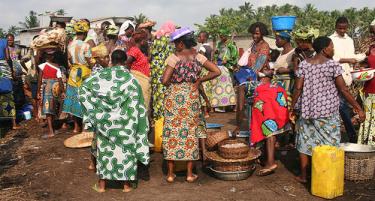
Urban residents wear both western and traditional clothing, while rural women often wear a pagne. The boubou is popular with men and women but usually reserved for special occasions.
Good to know
- The boubou is typically worn only for special occasions
What is family life like in Benin?
Marriage is considered an alliance of two families, and rites of passage are highly important. In rural areas, extended families live in a compound of separate houses sharing a common courtyard.
Good to know
- Polygamy is legal but not widely practiced
- Women play leading roles in the home and make most decisions about home economics and child care
- Traditional weddings can last weeks
What do people do for recreation in Benin?
Soccer is the national sport, and Beninese also enjoy traditional dancing.
Good to know
- In villages without widely available electricity, people make their own form of fun
Last updated: 2026-07-12 · Sources: CountryReports
Photos of Benin
Photos of Benin


Travel and Tourism
Travel and Tourism
- Travel Alert Status
- Level 2: Exercise Increased Caution
- Currency
- 605.7
- Time Difference
- UTC+1 (6 hours ahead of Washington, DC, during Standard Time)
- Climate
- Benin's climate is hot and humid. Annual rainfall in the coastal area averages 36 centimeters (14 inches), not particularly high for coastal West Africa. Benin has two rainy and two dry seasons. The principal rainy season is from April to late July, with a shorter less intense rainy period from late September to November. The main dry season is from December to April with a short cooler dry season from late July to early September. Temperatures and humidity are high along the tropical coast. In Cotonou, the average maximum temperature is 31°C (89°F); the minimum is 24°C (75°F). Variations in temperature increase when moving north through a savanna and plateau toward the Sahel. A dry wind from the Sahara called the harmattan blows from December to March. Grass dries up, the vegetation turns reddish-brown, and a veil of fine dust hangs over the country, causing the skies to be overcast.
- Airports
- 5
- Recommended Vaccinations
- How important is it to do your research about vaccinations? It might just save your life! Make yourself aware of the different types of vaccinations and which ones you may need to travel to your destination. Schedule an appointment with your doctor at least four to six weeks before you travel to ensure you receive all important shots. Be sure that you and your family are up to date on your routine vaccinations. Which vaccinations you need will depend on a number of factors including your destination, whether you will be spending time in rural areas, the season of the year you are traveling, your age, health status, and previous immunizations.
Read the full travel guide — health, safety, vaccinations, disease risk, sanitation, and transit details.
View full travel guideRecipes
Recipes
History
History
Historical Eras
Dahomey Kingdom
1600 – 1894
The Kingdom of Dahomey, centered at Abomey, rose as one of West Africa's most powerful states, expanding aggressively under kings such as Ghezo and Glele. The kingdom built its wealth partly through the Atlantic slave trade, exchanging captives with Portuguese, Dutch, and French merchants at coastal ports including Ouidah and Porto-Novo. King Behanzin led fierce resistance against French encroachment before being defeated and deported to Martinique in 1894.
French Colonial Era
1894 – 1960
Following the conquest of Dahomey, France consolidated the territory into French West Africa, extending administrative control northward to absorb the kingdoms of Parakou, Nikki, and Kandi. A French governor ruled from Cotonou, and the colony's economy was oriented toward export agriculture and labor extraction. On December 4, 1958, it became the self-governing République du Dahomey within the French Community, a transitional status preceding full independence.
Independence & Instability
1960 – 1972
Full independence was achieved on August 1, 1960, with Hubert Maga as the first president, but the new republic proved highly unstable. Between 1960 and 1972, a succession of at least six military coups cycled power among competing regional and ethnic factions, making sustained democratic governance impossible. No civilian government managed to complete a full term, reflecting deep structural tensions inherited from the colonial period.
Marxist-Leninist State
1972 – 1990
Major Mathieu Kérékou seized power in October 1972 and by 1975 had renamed the country the People's Republic of Benin, establishing a single-party state under the Parti de la Révolution Populaire du Bénin (PRPB). The government nationalized key industries, pursued socialist development programs, and maintained authoritarian control throughout the late Cold War period. Economic deterioration and pressure from France and international creditors ultimately forced Kérékou to abandon Marxism-Leninism by 1989.
Democratic Transition
1990 – 2006
A landmark national conference in 1990 produced a new democratic constitution and restored the name Republic of Benin. The 1991 elections brought former Prime Minister Nicéphore Soglo to the presidency, marking the first successful peaceful transfer of power from a dictatorship to a democracy on the African continent. Kérékou subsequently returned to power through elections in 1996 and 2001, while Soglo served as Mayor of Cotonou, reflecting a competitive if sometimes contentious democratic system.
Modern Benin
2006 – present
The 2006 election of Thomas Boni Yayi, a political outsider and former regional bank president, signaled a generational shift away from the Kérékou-Soglo era and demonstrated the consolidation of Benin's democratic institutions. Benin has since been regarded as one of West Africa's more stable multiparty democracies, though challenges of poverty, corruption, and youth unemployment persist. Patrice Talon, a cotton magnate, won the presidency in 2016 and again in 2021, overseeing contentious political reforms that critics argue have narrowed democratic space.
Overview
Benin was the seat of one of the great medieval African kingdoms called Dahomey. Europeans began arriving in the area in the 18th century, as the kingdom of Dahomey was expanding its territory. The Portuguese, the French, and the Dutch established trading posts along the coast (Porto-Novo, Ouidah, Cotonou), and traded weapons for slaves. Slave trade ended in 1848.
Timeline of Key Events
1851
Treaty of friendship and trade
France signed a treaty of friendship and trade with the ruler of Porto-Novo, who was a vassal of Dahomey’s King Glélé
1899
French West Africa
Dahomey is incorporated into French West Africa
1946
Overseas Territory of France
Dahomey becomes an overseas territory of France.
1958
Self Governing
Dahomey becomes self-governing, within the French Community.
1960
President Hubert Maga
Elections won by the Parti Dahomeen de L’Unite. Party leader Hubert Maga becomes country’s first president.
1960
French West Africa
Independence is proclaimed and the following month Dahomey was admitted to the United Nations (UN).
1963
Four Coups in six years
The first president, Hubert Maga, was ousted in 1963 by the army commander Chief of Staff, Colonel Christophe Soglo, and a series of four coups followed in the next six years.
Read the full history profile — narrative overview, defining eras, and the complete timeline in one place.
View expanded historyInteresting Facts
Interesting Facts
When a child loses a tooth , if they lose an upper tooth, they throw it on the roof. If they lose a lower tooth, they dig a hole and bury it in the ground. Their grandmother says that if a lizard sees their tooth, a new one will not grow, so they are carful to keep it hidden until it is burried.
Benin has the world's fewest hospitals per capita with three per 10,000 people.
See every fact — trivia, oddities, and curious tidbits gathered from across the country.
View all interesting factsGeography and Environment
Geography and Environment
- Terrain
- mostly flat to undulating plain; some hills and low mountains
- Climate
- Benin's climate is hot and humid. Annual rainfall in the coastal area averages 36 centimeters (14 inches), not particularly high for coastal West Africa. Benin has two rainy and two dry seasons. The principal rainy season is from April to late July, with a shorter less intense rainy period from late September to November. The main dry season is from December to April with a short cooler dry season from late July to early September. Temperatures and humidity are high along the tropical coast. In Cotonou, the average maximum temperature is 31°C (89°F); the minimum is 24°C (75°F). Variations in temperature increase when moving north through a savanna and plateau toward the Sahel. A dry wind from the Sahara called the harmattan blows from December to March. Grass dries up, the vegetation turns reddish brown, and a veil of fine dust hangs over the country, causing the skies to be overcast.
- Natural Hazards
- hot, dry, dusty harmattan wind may affect north from December to March
- Current Environmental Issues
- inadequate supplies of potable water; poaching threatens wildlife populations; deforestation; desertification
Read the full geography and environment profile — terrain, climate, natural resources, hazards, land use, and international agreements.
View full geographyPeople & Demographics
People & Demographics
Religion
Languages Spoken
French (official), Fon and Yoruba (most common vernaculars in the south), tribal languages (at least six major ones in the north)
- French
- Yoruba
Population
- Population
- 13,712,828
- Population in Major Urban Areas
- COTONOU (seat of government) 924,000; PORTO-NOVO (capital) 314,000
- Nationality Noun
- Beninese (singular and plural)
- Ethnic Groups
- African 99% (42 ethnic groups, most important being Fon, Adja, Yoruba, Bariba), Europeans 5,500
Education
- Literacy Definition
- Age 15 and over can read and write
Health Information
- Life Expectancy at Birth
- Life expectancy at birth in Benin stands at approximately 60 to 62 years overall, with women typically outliving men by a modest margin. Female life expectancy hovers around 62 to 63 years, while male life expectancy falls closer to 59 to 61 years. These figures reflect significant improvements over the past several decades but still place Benin below the global average, which exceeds 70 years. Several interconnected factors shape these numbers. Access to clean drinking water remains inconsistent in rural areas, contributing to preventable waterborne illnesses. Malaria is one of the leading causes of death, particularly among children under the age of five, and it continues to place a heavy burden on the country's health system. Maternal mortality is also a concern, though rates have declined as more women gain access to skilled birth attendants and prenatal care services. Benin has made measurable progress in extending life expectancy over recent decades. In the early 1980s, life expectancy at birth was closer to 47 to 48 years, meaning the country has added more than a decade of average lifespan within a generation. This improvement is linked to expanded vaccination programs, investments in primary health care infrastructure, and international health initiatives targeting infectious diseases. The country faces ongoing challenges, including a relatively young and rapidly growing population that strains healthcare resources, limited numbers of trained medical professionals per capita, and geographic disparities between urban centers like Cotonou and more isolated northern regions. Poverty also plays a direct role, as lower-income households have reduced access to preventive care, medications, and nutritious food. Despite these challenges, Benin's trajectory shows a pattern of gradual improvement. Continued investment in public health infrastructure, maternal and child health programs, and disease prevention efforts will be essential in sustaining and accelerating gains in life expectancy in the years ahead.
- Major Infectious Diseases — degree of risk
- Very high
Life Expectancy
- Life Expectancy at Birth
- Life expectancy at birth in Benin stands at approximately 60 to 62 years overall, with women typically outliving men by a modest margin. Female life expectancy hovers around 62 to 63 years, while male life expectancy falls closer to 59 to 61 years. These figures reflect significant improvements over the past several decades but still place Benin below the global average, which exceeds 70 years. Several interconnected factors shape these numbers. Access to clean drinking water remains inconsistent in rural areas, contributing to preventable waterborne illnesses. Malaria is one of the leading causes of death, particularly among children under the age of five, and it continues to place a heavy burden on the country's health system. Maternal mortality is also a concern, though rates have declined as more women gain access to skilled birth attendants and prenatal care services. Benin has made measurable progress in extending life expectancy over recent decades. In the early 1980s, life expectancy at birth was closer to 47 to 48 years, meaning the country has added more than a decade of average lifespan within a generation. This improvement is linked to expanded vaccination programs, investments in primary health care infrastructure, and international health initiatives targeting infectious diseases. The country faces ongoing challenges, including a relatively young and rapidly growing population that strains healthcare resources, limited numbers of trained medical professionals per capita, and geographic disparities between urban centers like Cotonou and more isolated northern regions. Poverty also plays a direct role, as lower-income households have reduced access to preventive care, medications, and nutritious food. Despite these challenges, Benin's trajectory shows a pattern of gradual improvement. Continued investment in public health infrastructure, maternal and child health programs, and disease prevention efforts will be essential in sustaining and accelerating gains in life expectancy in the years ahead.
Read the full people and society profile — demographics, health, education, religion, languages, and notable people.
View full people and societyGovernment & Politics
Government & Politics
Country Identity
- Country Name
- Benin
- Full Country Name
- Republic of Benin
- Local - Long
- Republique du Benin
- Local - Short
- Benin
- Former Name
- Dahomey
Government Structure
- Government Type
- republic under multiparty democratic rule; dropped Marxism-Leninism December 1989; democratic reforms adopted February 1990; transition to multiparty system completed 4 April 1991
- Legal System
- based on French civil law and customary law; has not accepted compulsory ICJ jurisdiction
- Executive Branch
- chief of state: President Patrice TALON (since 6 April 2016); note - the president is both the chief of state and head of government head of government: President Patrice TALON (since 6 April 2016); note - the president is both the chief of state and head of government cabinet: Council of Ministers appointed by the president elections: president elected by popular vote for a five-year term (eligible for a second term); election last held 11 April 2021 (next to be held in 2026) election results: Patrice TALON reelected president in the first round; percent of vote - Patrice TALON 86.3%, Alassane SOUMANOU 11.4%, Corentin KOHOUE 2.3%
- Legislative Branch
- Unicameral National Assembly or Assemblee Nationale (109 seats; members are elected by direct popular vote to serve four-year terms) Elections: last held on 8 January 2023 (next to be held in 2027) Election results: percent of vote by party - Union Progressiste le Renouveau (UP le Renouveau) 37.6%, Bloc Republicain (BR) 29.2%, Les Democrates 23.8%, other parties 9.4%; seats by party - Union Progressiste le Renouveau 53, Bloc Republicain 28, Les Democrates 28
- Judicial Branch
- Constitutional Court or Cour Constitutionnelle; Supreme Court or Cour Supreme; High Court of Justice
- Suffrage
- 18 years of age; universal
- Constitution
- Dec-90
- Independence
- 1 August 1960 (from France)
- National Holiday
- National Day, 1 August (1960)
Capital City
- Capital Name
- Porto-Novo (constitutional capital); Cotonou (seat of government)
- Capital - geographic coordinate
- 6 29 N, 2 37 E
- Capital Time Difference
- UTC+1 (6 hours ahead of Washington, DC, during Standard Time)
the name Porto-Novo is Portuguese for "new port"; Cotonou means "by the river of death" in the native Fon language
Military
Branches: Benin Armed Forces (Forces Armees Beninoises, FAB): Army (l'Arme de Terre), Benin Navy (Forces Navales Beninois, FNB), Benin Air Force (Force Aerienne du Benin, FAB)
Embassy / Diplomatic Mission
Embassy Cotonou
Address: The Embassy is located at Rue Caporal Bernard Anani in Cotonou. The Embassy's mailing address is B.P. 2012, Cotonou, Benin.
Telephone: The 24-hour telephone numbers are (229) 21-30-06-50, 21-30-05-13, and 21-30-17-92.
Facsimile: (229) 21-30-66-82.
Read the full government profile — flag symbolism, national anthem, and other national symbols.
View full government detailsEconomy
Economy
Benin's economy remains largely dependent on subsistence agriculture, cotton production, and regional trade, particularly with neighboring Nigeria.
Snapshot
- Currency Name and Code
- Communaute Financiere Africaine francs (XOF)
- GDP — official exchange rate
- $4,340,000,000 (USD)
- GDP Real Growth Rate
- 6.4%
News & Weather
News & Weather
Current Weather
Latest News
Underwater drones find Benin coral reef long presumed dead, and it's teeming with life - Yahoo
Yahoo · 1d ago
Thousands gather in Benin for Mask Festival, celebrating heritage and identity - Yahoo
Yahoo · 7h ago
APTOPIX Benin Mask Festival - dailyrecordnews.com
dailyrecordnews.com · 16h ago
China is transforming historic African slave port into waterfront tourism magnet - South China Morning Post
South China Morning Post · 51d ago
Long Presumed Dead, a West African Reef Is Found Thriving - Yale E360
Yale E360 · 6d ago
Underwater drones discover coral reefs off Benin, long presumed dead, teeming with life - Frontiers
Frontiers · 7d ago
Benin and Nigeria catch smugglers in first-of-its-kind geospatial intelligence-led Customs operation - World Border Security Congress
World Border Security Congress · 5h ago
Video. Masked performers fill Porto-Novo streets in Benin festival - Euronews.com
Euronews.com · 2h ago
News via Google News
Climate Overview
Benin's climate is hot and humid. Annual rainfall in the coastal area averages 36 centimeters (14 inches), not particularly high for coastal West Africa. Benin has two rainy and two dry seasons. The principal rainy season is from April to late July, with a shorter less intense rainy period from late September to November. The main dry season is from December to April with a short cooler dry season from late July to early September.
Temperatures and humidity are high along the tropical coast. In Cotonou, the average maximum temperature is 31°C (89°F); the minimum is 24°C (75°F). Variations in temperature increase when moving north through a savanna and plateau toward the Sahel. A dry wind from the Sahara called the harmattan blows from December to March. Grass dries up, the vegetation turns reddish-brown, and a veil of fine dust hangs over the country, causing the skies to be overcast.
Videos
Videos
1 curated YouTube videos.
Source: YouTube
Frequently Asked Questions
Frequently Asked Questions
What is the population of Benin?
How do people greet each other in Benin?
What are dining customs like in Benin?
What should I know about gestures and physical contact in Benin?
How should I dress in Benin?
What is family life like in Benin?
What do people do for recreation in Benin?
What is the capital of Benin?
Where is Benin located?
What countries border Benin?
What religions are practiced in Benin?
What is the currency of Benin?
What language is spoken in Benin?
What is Benin known for?
What are some distinctive cultural traditions in Benin?
Last reviewed 2026