
 English
 Español
 中文
中文 हिन्दी
 Français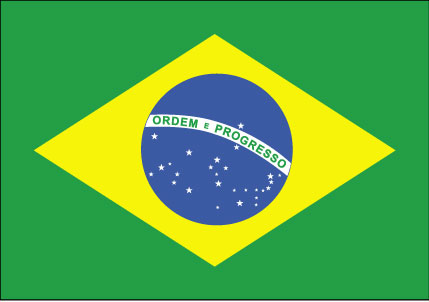
Brazil
Brasil
Declare Your Relationship to Brazil
CountryReports Community
- Studying12
- From Brazil4
- Brazil heritage2
- Visited1
- Want to visit1
Customs and Culture
Customs and Culture
Cultural Attributes
Brazilians often have strong opinions and will argue for their conviction with a vigor that may seem like anger, but is not. Brazilians tend to view time more as a sequence of events rather than hours and minutes. People are polite in crowds and shoving is considered discourteous.
Most Middle and Lower class Brazilians feel the work ”to survive” Middle-class members usually wish they could give their children a fair education (which in most cases is a guarantee of entering the best public universities. The lower classes worry about having food to eat and having a car or some other facilities which would make living easier.
The government has official standards for classifying who is poor and who is to be considered rich. Families who own houses, apartments, land, or have a company are usually seen as “rich” by others.

Rhythm of the Amazon
Get More Customs and Culture
6 more cultural topics for members
Social Customs & Etiquette · Diet · Family · Dating Customs · Recreation · Student Life
Holidays
Independence Day
9/7Independence Day
Birth date - Edson Arantes do Nascimento (Pelé)
10/23Birthday
Birth date - Edson Arantes do Nascimento (Pelé), soccer great, was born on Oct. 23, 1940 in Tres Coracoes, Brazil
Christmas
12/25Christmas
Presbres (Nativity scenes) are the focus of Christmas and the season begins with children making the figures from brightly colored sawdust. The figures move forward each day to commemorate the journey to Bethlehem.
Sometime in mid-December Papai Noel (Santa Clause) arrives. He travels to Brazil by helicopter and lands in Rio de Janeiro’s Maracanã stadium amid a jubilant crowd. During the following days he may be seen in other cities or at many of the town’s shopping centers.
Christmas dinner is eaten late in the evening around 10 or 11 pm on Christmas Eve. The meal often features roast turkey with farofa (stuffing), dried cod, and rabanada (French-toast like dessert). After dinner many attend Midnight Mass held in Roman Catholic churches or in large outdoor stadiums setup for the occasion. The warm weather allows for mass services to be held outdoors. Other Brazilians stay home and watch the Pope’s service from Rome on television. Much of the Brazilian population is Catholic which is a reason for the tradition of helping the poor by giving white gifts at the Christmas Eve Midnight Mass.
Many Brazilian children receive gifts on Christmas Eve or Christmas day from Papai Noel (Santa Clause) as well as additional treats on Epiphany (Baptism of Jesus). Children from poorer families receive clothes and shoes as Christmas gifts, while more wealthy children will receive toys and other less essential items.
Dates of Interest
- December 25th
Presbres (Nativity scenes) are the focus of Christmas and the season begins with children making the figures from brightly colored sawdust. The figures move forward each day to commemorate the journey to Bethlehem. Sometime in mid-December Papai Noel (Santa Clause) arrives. He travels to Brazil by helicopter and lands in Rio de Janeiro's Maracanã Stadium amid a jubilant crowd. During the following days, he may be seen in other cities or at many of the town's shopping centers. Christmas dinner is eaten late in the evening around 10 or 11 pm on Christmas Eve. The meal often features roast turkey with farofa (stuffing), dried cod, and rabanada (French-toast like dessert). After dinner, many attend Midnight Mass held in Roman Catholic churches.
How do people greet each other in Brazil?
Brazilians greet with a handshake, while good friends embrace and women often kiss on alternating cheeks. Common verbal greetings include "Bom dia," "Boa tarde," "Como vai," "Tudo bem," and "Oi."
Do
- Shake hands with everyone present when joining or leaving a small group
- Use greetings like "Bom dia" or "Oi"
Good to know
- Good friends may embrace, and women often exchange kisses on alternating cheeks
What are the dining customs in Brazil?
Brazilians eat continental style, with lunch and dinner as the main meals, typically including rice, beans, meat, and salad. After-meal conversation often happens over strong black coffee.
Do
- Wash your hands before eating
- Wipe your mouth each time before drinking
- Use utensils rather than touching food
Good to know
- Try pão de queijo, a famous snack found on most street corners in large cities
- Breakfast is usually café com leite, bread, cheese or marmalade, and butter
- Coffee, mate, and herbal tea are widely enjoyed
What etiquette should I know when visiting a Brazilian home?
Guests are generally expected to arrive a few minutes late and stay at least two hours. Bringing a small gift is appreciated when invited to dinner.
Do
- Arrive several minutes late when invited to a home
- Bring candy, wine, or a small figurine if invited to dinner
- Plan to stay at least two hours
- Be polite in crowds
Don’t
- Don't ask personal questions such as age or salary
- Don't shove in crowds — it is considered discourteous
Good to know
- Strong opinions expressed with vigor may seem like anger but usually are not
- If a host turns you away when you arrive impromptu, it is not considered impolite
How should I dress in Brazil?
Brazilians are very fashion conscious, especially in cities where European (Italian and French) styles are preferred. Well-kept, polished shoes and neat grooming are valued.
Do
- Wear current, well-kept styles
- Keep shoes clean and polished
Good to know
- Manicures and pedicures are popular
- Each region, state, or city has its own way of dressing
Which gestures should I use or avoid in Brazil?
The "thumbs-up" sign shows approval, but the "OK" sign is considered offensive. People tend to stand closer during conversation than in European cultures.
Do
- Use the thumbs-up sign to show approval
- Beckon with all fingers waving, palm facing down
- Say "Pssssst" to get someone's attention from a distance
- Cover the hand holding a toothpick with your other hand if using one in public
Don’t
- Don't use the "OK" sign — it is offensive
- Don't whistle at people — it is rude
Good to know
- Expect people to stand close during conversation
- Poorer people may look down when speaking to someone of higher social standing
What is family life like in Brazil?
Families are traditionally large and often include the extended family, led by the father with strong influence from the mother in home matters. Members rely on each other and enjoy being together.
Good to know
- The elderly typically live with their children rather than in nursing homes
- Children usually leave home only when they marry; unmarried men may stay until around 30
- Group dating starts around age fourteen and engagements may last two to three years
- Weddings may include a legal civil ceremony and an optional religious ceremony
What do people do for recreation in Brazil?
Soccer, swimming, and volleyball are common activities, though sports are generally played casually rather than seriously.
Good to know
- Those wanting to dedicate themselves seriously to a sport or dance go to special training centers
- In less privileged communities, people often organize their own sport practice centers
Last updated: 2026-07-12 · Sources: CountryReports
Photos of Brazil
Photos of Brazil
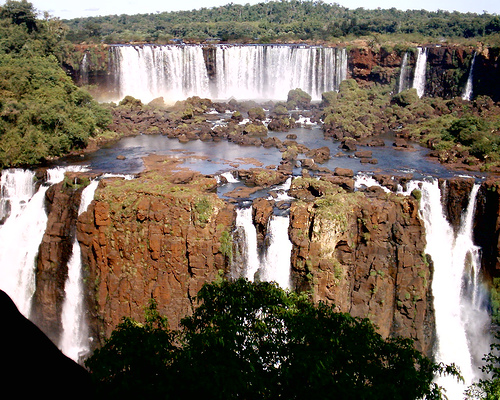
Iguassu Falls, Brazil
People play on a Brazil beach.
People play on the Brazilian coastline.
Bus terminal in Cascavel, Brazil
Lago Muncipal De Cascavel, Brazil
Centro de Cascavel, Brazil
Golden Trumpet Tree, Cascavel, Brazil
Brazilian stop sign.
Sunset in Cascavel, Brazil
JD Home Center, Cascavel, Brazil
Universidade do Parana, Curitiba, Brazil
A disused railway station in Curitiba is not a shopping cent


Travel and Tourism
Travel and Tourism
- Travel Alert Status
- Level 2: Exercise Increased Caution
- Currency
- 3.483
- Time Difference
- UTC-3 (2 hours ahead of Washington, DC, during Standard Time) time zone note: Brazil has four time zones, including one for the Fernando de Noronha Islands
- Climate
- Although Brazil is immense in size and varies in topography from the sweeping sea-level Amazon basin in the north to the mountainous areas of São Paulo and Porto Alegre in the south, the temperature range is slight. Summer runs from December to February. The rainy season runs from October to March but varies greatly by region.
- Airports
- 4,105
- Recommended Vaccinations
- How important is it to do your research about vaccinations? It might just save your life! Make yourself aware of the different types of vaccinations and which ones you may need to travel to your destination. Schedule an appointment with your doctor at least four to six weeks before you travel to ensure you receive all important shots. Be sure that you and your family are up to date on your routine vaccinations. Which vaccinations you need will depend on a number of factors including your destination, whether you will be spending time in rural areas, the season of the year you are traveling, your age, health status, and previous immunizations.
Read the full travel guide — health, safety, vaccinations, disease risk, sanitation, and transit details.
View full travel guideRecipes
Recipes
Maracujá Mousse (Passion Fruit Mousse)
Dessert
Appetizer
Bolinhas de Frango e Amendoas (Almond Chicken Balls)
Main Dish
Almondegas (Meatballs)
Main Dish
Vatapa do Frango (Chicken Vatapa)
Main Dish
Costelata de Porco com Abacaxi (Pork Chops with Pineapple)
Main Dish
Moqueca de Peixe (Flounder)
Main Dish
Panquecas (Dinner Crêpes)
Side Dish
PremiumPão de Queijo (Cheeseballs)
Side Dish
PremiumVinagrete (Provincial Vinagrette)
Side Dish
PremiumFeijoada (Baked Beans and Pork)
History
History
Historical Eras
Pre-Colonial Period
10000 BCE – 1500
For millennia before European contact, Brazil was home to hundreds of distinct indigenous peoples speaking diverse languages and organized in a wide range of societies, from semi-nomadic coastal Tupi groups to complex inland chiefdoms. These populations numbered in the millions and developed rich oral traditions, agricultural practices, and trade networks. Their civilizations would be catastrophically disrupted by Portuguese arrival and the diseases, violence, and enslavement that followed.
Colonial Brazil
1500 – 1822
Portuguese explorer Pedro Álvares Cabral claimed Brazil for the Portuguese Crown in 1500, initiating over three centuries of colonial rule defined by extractive export economies — brazilwood, sugar, gold, and diamonds — and the mass enslavement of indigenous peoples and millions of Africans. The Dutch briefly seized Recife and Salvador in the seventeenth century before being expelled. The arrival of the Portuguese royal court fleeing Napoleon in 1808 transformed Rio de Janeiro into an imperial capital and set the stage for independence.
Empire of Brazil
1822 – 1889
Prince Pedro declared Brazilian independence on September 7, 1822, becoming Emperor Pedro I of a constitutional monarchy — the only stable empire in post-colonial Latin America. His son, Pedro II, presided over a long reign of relative stability, territorial consolidation, and economic growth driven by coffee exports. Brazil fought the devastating Paraguayan War (1864–1870) and abolition of slavery in 1888 critically undermined planter support for the monarchy, precipitating its fall.
Old Republic
1889 – 1930
A military coup overthrew Pedro II in 1889, establishing a federal republic dominated by a rotating oligarchy of powerful coffee and dairy states — the so-called 'café com leite' politics of São Paulo and Minas Gerais. The period saw rapid immigration, early industrialization, and persistent social inequality, but political power remained concentrated among landed elites. The collapse of coffee prices during the Great Depression and elite political fractures triggered Getúlio Vargas's revolution in 1930.
Vargas Era & Populism
1930 – 1964
Getúlio Vargas seized power in 1930 and dominated Brazilian politics for the next quarter-century, ruling as a populist authoritarian under the Estado Novo dictatorship from 1937 to 1945 before returning democratically elected in 1950. Brazil joined the Allied powers in World War II in 1942 and sent troops to Italy. The era saw rapid industrialization and urban labor reforms, but chronic political instability — including Vargas's 1954 suicide and the populist presidency of João Goulart — culminated in a military coup in 1964.
Military Rule & Democracy
1964 – present
A military dictatorship governed Brazil from 1964 to 1985, overseeing rapid industrial growth and the controversial development of the Amazon interior, while suppressing political opposition and human rights. Civilian democracy was restored in 1985 and the 1988 constitution established a modern federal republic. Brazil emerged as South America's largest economy, navigating periods of hyperinflation, landmark social programs under President Lula, and ongoing challenges of inequality, corruption, and environmental policy.
Overview
EXPORTS, SLAVERY, AND PATRIARCHY have been the three constants of Brazilian history. The export orientation of the colonial economy shaped Brazil’s society. Even the name "Brazil," like the country itself, is suggestive of commerce and the pursuit of wealth. Brazil’s name derives from the brazilwood trees from which Europeans sought in the sixteenth century to make valuable red dyes. However, the central fact of the country’s history was the exploitation of cheap labor, first as slaves, then as wage-earners.
Timeline of Key Events
1500
Portuguese land in the area and claim it to the Portuguese crown.
Portuguese land in the area and claim it to the Portuguese crown.
1550
African slaves were shipped to Brazil to work sugar plantations.
African slaves were shipped to Brazil to work sugar plantations.
1624
The Dutch conquered Salvador.
The Dutch conquered Salvador.
1810
Overthrow of the king of Spain by Napoleon.
Overthrow of the king of Spain by Napoleon.
1822
Prince Pedro declared Brazil independence.
Prince Pedro declared Brazil independence and received title of emperor 1824 Pedro promulgated the first constitution; US recognition.
1852
Brazil intervened in Argentina to help overthrow Rosas .
Brazil intervened in Argentina to help overthrow Rosas.
1873 – 1875
Conflict of Church and State over privileges of regalism .
Conflict of Church and State over privileges of regalism.
Read the full history profile — narrative overview, defining eras, and the complete timeline in one place.
View expanded historyInteresting Facts
Interesting Facts
When a child loses a tooth the mother tells me to throw my tooth outside and say “Lovely birds, dear birda, take away this tooth of mine and bring another one to me.” The birds only take clean teeth so they must brush their teeth every day.
When a child loses a tooth they may throw their tooth out of the window onto the roof and say “St. John, St. John, take this rotten tooth and give me a healthy one.”
The first European expedition to explore the length of the Amazon took place in 1541.
There are 12 million abandonados, children without parents or homes, in Brazil.
See every fact — trivia, oddities, and curious tidbits gathered from across the country.
View all interesting factsGeography and Environment
Geography and Environment
- Terrain
- mostly flat to rolling lowlands in north; some plains, hills, mountains, and narrow coastal belt
- Climate
- Although Brazil is immense in size and varies in topography from the sweeping sea-level Amazon basin in the north to the mountainous areas of São Paulo and Porto Alegre in the south, the temperature range is slight. Summer runs from December to February. The rainy season runs from October to March, but varies greatly by region.
- Natural Hazards
- recurring droughts in northeast; floods and occasional frost in south
- Current Environmental Issues
- deforestation in Amazon Basin destroys the habitat and endangers a multitude of plant and animal species indigenous to the area; there is a lucrative illegal wildlife trade; air and water pollution in Rio de Janeiro, Sao Paulo, and several other large cities; land degradation and water pollution caused by improper mining activities; wetland degradation; severe oil spills
Read the full geography and environment profile — terrain, climate, natural resources, hazards, land use, and international agreements.
View full geographyPeople & Demographics
People & Demographics
Religion
Languages Spoken
Portuguese (official and most widely spoken language)
Note: less common languages include Spanish (border areas and schools), German, Italian, Japanese, English, and a large number of minor Amerindian languages
- Portuguese
- French
- Spanish
Population
- Population
- 216,422,446
- Population: Male/Female
- male: 108,166,491 female: 111,885,021
- Population Distribution
- the vast majority of people live along, or relatively near, the Atlantic coast in the east; the population core is in the southeast, anchored by the cities of São Paolo, Brasília, and Rio de Janeiro
- Urban Population
- urban population: 87.8% of total population rate of urbanization: 0.87% annual rate of change
- Population in Major Urban Areas
- 22.620 million São Paulo, 13.728 million Rio de Janeiro, 6.248 million Belo Horizonte, 4.873 million BRASÍLIA (capital), 4.264 million Recife, 4.212 million Porto Alegre
- Nationality Noun
- noun: Brazilian(s) adjective: Brazilian
- Ethnic Groups
- mixed 45.3%, White 43.5%, Black 10.2%, Indigenous 0.6%, Asian 0.4%
- Language Note
- Portuguese (official and most widely spoken language); note - less common languages include Spanish (border areas and schools), German, Italian, Japanese, English, and a large number of minor Amerindian languages
Demographic Profile
Brazil's rapid fertility decline since the 1960s is the main factor behind the country's slowing population growth rate, aging population, and fast-paced demographic transition. Brasilia has not taken full advantage of its large working-age population to develop its human capital and strengthen its social and economic institutions but is funding a study abroad program to bring advanced skills back to the country. The current favorable age structure will begin to shift around 2025, with the labor force shrinking and the elderly starting to compose an increasing share of the total population. Well-funded public pensions have nearly wiped out poverty among the elderly, and Bolsa Familia and other social programs have lifted tens of millions out of poverty. More than half of Brazil's population is considered middle class, but poverty and income inequality levels remain high; the Northeast, North, and Center-West, women, and black, mixed race, and indigenous populations are disproportionately affected. Disparities in opportunities foster social exclusion and contribute to Brazil's high crime rate, particularly violent crime in cities and favelas (slums).
Brazil has traditionally been a net recipient of immigrants, with its southeast being the prime destination. After the importation of African slaves was outlawed in the mid-19th century, Brazil sought Europeans (Italians, Portuguese, Spaniards, and Germans) and later Asians (Japanese) to work in agriculture, especially coffee cultivation. Recent immigrants come mainly from Argentina, Chile, and Andean countries (many are unskilled illegal migrants) or are returning Brazilian nationals. Since Brazil's economic downturn in the 1980s, emigration to the United States, Europe, and Japan has been rising but is negligible relative to Brazil's total population. The majority of these emigrants are well-educated and middle-class. Fewer Brazilian peasants are emigrating to neighboring countries to take up agricultural work.
Education
- Literacy Definition
- age 15 and over can read and write
Primary schools are run by the cities, secondary schools are under the control of Brazilian states, and the national government operates the universities. At all levels, there is not enough money in the public school system to properly educate students. There are not enough books and other materials, and teachers are paid poorly. The buildings themselves are usually made of brick, but may not have windows, and the only teaching materials are usually a blackboard and chalk. Schools are often run down and not well maintained; however, they usually do have electricity, running water, and a bathroom.
A related problem is the lack of properly trained teachers. As many as a quarter of a million teaching positions remain unfilled each year, which means that many people are hired to teach without any training besides their desire to help where they can. Too often, that is not enough.
Most students in both public and private schools are required to wear a school uniform, which usually includes a simple T-shirt with the school’s name printed on it.
Interestingly, part of the reason for the overcrowding is that the government has been working to increase the number of children who attend school. In 2000, 94 percent of primary-aged children attended school, as opposed to only 84 percent nearly a decade earlier and 50 percent in 1960. More children, fewer funds—the result is an educational failure for hundreds of thousands of children. It is not surprising that there is a very high dropout rate as the children get older.
Health Information
- Life Expectancy at Birth
- total population: 75.9 years male: 72.3 years female: 79.6 years
- Major Infectious Diseases — degree of risk
- degree of risk: very high food or waterborne diseases: bacterial diarrhea and hepatitis A vectorborne diseases: dengue fever, malaria, sexually transmitted diseases: hepatitis B (2024) water contact diseases: schistosomiasis
- Alcohol consumption per capita
- total: 6.12 liters of pure alcohol beer: 3.84 liters of pure alcohol wine: 0.24 liters of pure alcohol spirits: 2 liters of pure alcohol other alcohols: 0.04 liters of pure alcohol
- Tobacco Use
- total: 12.8% male: 16.2% female: 9.4%
- Infant Mortality Rate
- total: 12.9 deaths/1,000 live births male: 14.6 deaths/1,000 live births female: 11.1 deaths/1,000 live births
Life Expectancy
- Life Expectancy at Birth
- total population: 75.9 years male: 72.3 years female: 79.6 years
- Median Age
- total: 35.1 years male: 34 years female: 36.1 years
- Age Structure
- 0-14 years: 19.6% (male 22,025,593/female 21,088,398) 15-64 years: 69.5% (male 75,889,089/female 77,118,722) 65 years and over: 10.9% (male 10,251,809/female 13,677,901)
- Infant Mortality Rate
- total: 12.9 deaths/1,000 live births male: 14.6 deaths/1,000 live births female: 11.1 deaths/1,000 live births
Read the full people and society profile — demographics, health, education, religion, languages, and notable people.
View full people and societyGovernment & Politics
Government & Politics
Country Identity
- Country Name
- Brazil
- Full Country Name
- Federative Republic of Brazil
- Local - Long
- Republica Federativa do Brasil
- Local - Short
- Brasil
Government Structure
- Government Type
- federative republic
- Legal System
- based on Roman codes; has not accepted compulsory ICJ jurisdiction
- Executive Branch
- chief of state: President Luiz Inacio LULA DA SILVA (since 1 January 2023); Vice President Geraldo ALCKMIN (since 1 January 2023); note - the president is both the chief of state and head of government head of government: President Luiz Inacio LULA DA SILVA (since 1 January 2023); Vice President Geraldo ALCKMIN (since 1 January 2023); note - the president is both the chief of state and head of government cabinet: Cabinet appointed by the president elections: president and vice president elected on the same ticket by popular vote for four-year terms; election last held 2 October 2022 (next to be held in October 2026, with a runoff in late October 2026 if necessary); runoff election held 30 October 2022 election results: in runoff election 30 October 2022, Luiz Inacio LULA DA SILVA (PT) elected with 50.9% of the vote; Jair BOLSONARO (PL) 49.1%
- Legislative Branch
- Bicameral National Congress or Congresso Nacional consists of the Federal Senate or Senado Federal (81 seats; 3 members from each state and the federal district elected according to the principle of majority to serve eight-year terms; one-third elected after a four-year period, two-thirds elected after the next four-year period) and the Chamber of Deputies or Câmara dos Deputados (513 seats; members are elected by proportional representation to serve four-year terms). Elections: Federal Senate - last held on 2 October 2022 for one-third of the Senate (next to be held in October 2026 for two-thirds of the Senate); Chamber of Deputies - last held on 2 October 2022 (next to be held in October 2026). Election results: Federal Senate - seats by party following the 2022 elections - PSD 14, MDB 10, PT 9, Progressistas 7, Podemos 6, União Brasil 6, PSDB 4, PDT 4, PRD 4, Republicans 3, PL 3, Solidariedade 3, PSB 3, PSOL 1, Rede 1, Avante 1, PPS 1, Cidadania 1; Chamber of Deputies - seats by party - PL 99, União Brasil 59, PT 68, PP 47, MDB 42, PSD 42, Republicanos 41, PDT 17, Podemos 14, PSDB 13, Solidariedade 10, Avante 7, PSB 14, PSOL 12, PCdoB 6, Patriota 4, others 18; note - party affiliations and coalition alignments frequently shift between elections.
- Judicial Branch
- Supreme Federal Tribunal (11 ministers are appointed for life by the president and confirmed by the Senate); Higher Tribunal of Justice; Regional Federal Tribunals (judges are appointed for life); note - though appointed “for life,” judges, like all federal employees, have a mandatory retirement age of 70
- Suffrage
- voluntary between 16 and 18 years of age and over 70; compulsory over 18 and under 70 years of age
- Constitution
- 5-Oct-88
- Independence
- 7 September 1822 (from Portugal)
- National Holiday
- Independence Day, 7 September (1822)
Capital City
- Capital Name
- Brasília
- Capital - geographic coordinate
- 15 47 S, 47 55 W
- Capital Time Difference
- UTC-3 (2 hours ahead of Washington, DC, during Standard Time) time zone note: Brazil has four time zones, including one for the Fernando de Noronha Islands
name bestowed on the new capital of Brazil upon its inauguration in 1960; previous Brazilian capitals had been Salvador from 1549 to 1763 and Rio de Janeiro from 1763 to 1960
Military
Branches: Brazilian Army (Exercito Brasileiro, EB), Brazilian Navy (Marinha do Brasil (MB), includes Naval Air and Marine Corps (Corpo de Fuzileiros Navais)), Brazilian Air Force (Forca Aerea Brasileira, FAB)
Embassy / Diplomatic Mission
U.S. Embassy Brasilia
SES 801 - Avenida das Nacoes, Lote 3
Telephone: 011-55-61-3312-7000
Emergency after-hours telephone: 011-55-61-3312-7400
Facsimile: 011-55-61-3312-7676
Consular Agency in Brasilia's Consular District:
Manaus Consular Agency
Edificio Atrium, Suite 306
Rua Franco de Sá, 310
69.079-210 Manuas AM Brazil
Telephone: 011-55-92-3611-3333
U.S. Consulate General Recife
Rua Goncalves Maia, 163, Boa Vista
Telephone: 011-55-81-3416-3050 or 011-55-81-3416-3080
Emergency after-hours telephone: 011-55-81-3416-3060 (guard booth) or
011-55-81-9916-9470 (after hours duty phone) Facsimile: 011-55-81-3231-1906
Consular Agency in Recife's Consular District:
U.S. Consular Agency Fortaleza
Avenida Santos Dumont 2828, Aldeota, Suite 708
Telephone 011-55-85-3021-5200
Fascimile: 011-55-85-3021-3888
U.S. Consulate General Rio de Janeiro
Avenida Presidente Wilson, 147, Castelo
Telephone: 011-55-21-3823-2000
Emergency after-hours telephone: 011-55-21-3823-2000
Facsimile: 011-55-21-3823-2093
Consular Agency in Rio de Janeiro's Consular District:
U.S. Consular Agency Salvador da Bahia
Avenida Tancredo Neves, 1632, Caminho das Arvores,
Salvador Trade Center - Torre Sul, Room 1401
Telephone: 011-55-71-3113-2090/2091/2092
U.S. Consulate General Sao Paulo
Rua Henri Dunant, 500, Chacara Santo AntonioTelephone: 011-55-11-3250-5000
Emergency after hours telephone: 011-55-11-3250-5373
Facsimile: 011-55-11-3250-5159
Consular Agency in Sao Paulo's Consular District:
U.S. Consular Agency Porto Alegre
Avenida Assis Brasil 4320 Store 84 (Boulevard Strip Mall)
Parque Sao Sebastiao 91110-000 Porto Alegre, RS
Telephone 011-55-51-3226-3344
Read the full government profile — flag symbolism, national anthem, and other national symbols.
View full government detailsEconomy
Economy
Brazil possesses a large and well-developed agricultural, mining, manufacturing, and service sector, and its economy remains the largest in Latin America and among the ten largest in the world by GDP.
Snapshot
- Currency Name and Code
- Brazilian Real (BRL)
- GDP — official exchange rate
- $619,700,000,000 (USD)
- GDP Real Growth Rate
- 3.2%
- Gini Index
- 59.7
News & Weather
News & Weather
Current Weather
Latest News
Javier Milei calls Brazilian president Lula a 'thief' and 'convict' - BBC
BBC · 5h ago
Opinion | Lula to Trump: ‘No one will defeat us through lies’ - The Washington Post
The Washington Post · 22h ago
Trump, tariffs and ties with China at stake in Brazilian presidential race - South China Morning Post
South China Morning Post · 42m ago
Durigan says Brazil will press US on tariffs, expects solution after election - Reuters
Reuters · 2h ago
Presidents of Brazil and China hold telephone conversation - TV BRICS
TV BRICS · 1h ago
Brazil Blocks Visit by U.S. Delegation Seeking to Question Election System - The New York Times
The New York Times · 1d ago
'Shouting like a madman': Argentina's president angers Brazil - Politico
Politico · 17h ago
Milei enrages Brazil after calling government ‘thieving socialists’ - The Telegraph
The Telegraph · 19h ago
News via Google News
Climate Overview
Although Brazil is immense in size and varies in topography from the sweeping sea-level Amazon basin in the north to the mountainous areas of São Paulo and Porto Alegre in the south, the temperature range is slight.
Summer runs from December to February. The rainy season runs from October to March but varies greatly by region.
Videos
Videos
2 curated YouTube videos.
Source: YouTube
Source: YouTube
Frequently Asked Questions
Frequently Asked Questions
What is the population of Brazil?
How do people greet each other in Brazil?
What are the dining customs in Brazil?
What etiquette should I know when visiting a Brazilian home?
How should I dress in Brazil?
Which gestures should I use or avoid in Brazil?
What is family life like in Brazil?
What do people do for recreation in Brazil?
What is the capital of Brazil?
Where is Brazil located?
What countries border Brazil?
What is the main religion in Brazil?
What is the currency of Brazil?
What language is spoken in Brazil?
How large is Brazil and what is its terrain like?
What is Brazil known for?
Last reviewed 2026