
 English
 Español
 中文
中文 हिन्दी
 Français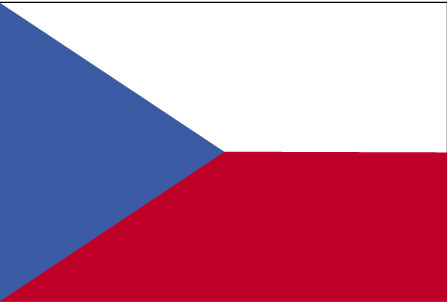
Czech Republic
Ceska Republika
Declare Your Relationship to Czech Republic
CountryReports Community
- Studying1
- From Czech Republic0
- Czech Republic heritage1
- Visited1
- Want to visit0
Customs and Culture
Customs and Culture
Cultural Attributes
Professionals are respected. The long tradition of highly industrialized nation formed a skilled nation of manual workers. This brought a very individualistic approach to life, forming strong opinion and wishes. But society's emphasis is still on conformity and cooperation.
Historically the nation always adopted new trends, and encouraged arts, music, and sport, pursuing ties to Western European culture. Czechs are avid theater and art goers, and pride themselves on participation. Czech migrants therefore join in and adapt easily into local society and activities.

Land of Bohemian Spires and Unbending Spirit
Get More Customs and Culture
5 more cultural topics for members
Social Customs & Etiquette · Diet · Family · Dating Customs · Recreation
Holidays
Czech Founding Day
10/28Independence
Vánoce -- Christmas
12/25Christmas
Celebrations for Christmas begin with the visit of St. Nicholas on December 6th and end with the visit of the Three Kings.
Svaty Mikalas (St. Nicholas) is believed to climb to earth down from heaven on a golden rope along with his companions: an angel and a whip-carrying devil.
A girl can tell her future, it is said that according to tradition, by putting a cherry twig in water on December 4th. If the twig blossoms before Christmas Eve, the girl will marry sometime during the year.
The famous King Wenceslas of the Christmas Carol was a real King in this country. His goodness and his beliefs in Christianity infuriated his mother, and his brother murdered him on the Church steps. Before he died he asked for God’s mercy for his brother’s evil act. He became the patron saint of the Czech Republic.
Christmas is a quiet and peaceful religious time in the Czech Republic. They fast for one day, and have baked carp for Christmas dinner. St Nicholas visits, and brings good children gifts, and for those children who are bad, the devil is said to come with switches.
At midnight, most families go to Pasterka (Holy Mass). On Christmas Day, the churches are filled with evergreens and Christmas Trees. Celebrations go on for three days.
Czechs eat a soup made of cod roe and tempt each other with tales of a mythical golden pig.
Dates of Interest
- December 25th
Celebrations for Christmas begin with the visit of St. Nicholas on December 6th and end with the visit of the Three Kings. Svaty Mikalas (St. Nicholas) is believed to climb to earth down from heaven on a golden rope along with his companions: an angel and a whip-carrying devil. A girl can tell her future, it is said that according to tradition, by putting a cherry twig in water on December 4th. If the twig blossoms before Christmas Eve, the girl will marry sometime during the year. The famous King Wenceslas of the Christmas Carol was a real King in this country. His goodness and his beliefs in Christianity infuriated his mother, and his brother murdered him on the Church steps. Before he died he asked for God’s mercy for his brother’s evil act. He became the patron saint of the Czech Republic. Christmas is a quiet and peaceful religious time in the Czech Republic. They fast for one day, and have baked carp for Christmas d
How do people greet each other in the Czech Republic?
Acquaintances and friends shake hands firmly along with a verbal greeting, and respect is shown by using professional titles for both men and women.
Do
- Shake hands firmly with a verbal greeting
- Address men and women by their professional titles to show respect
- Have younger people greet older people politely
- Men should politely acknowledge women
Don’t
- Don't use first or Christian names except among friends
What are dining and eating customs like in the Czech Republic?
Dinner is the main meal, and people eat continental style; a typical lunch begins with a hearty soup, followed by meat with potato or bread dumplings, and ends with sweets.
Do
- Eat in continental style
- Keep hands, but not elbows, above the table
- Try vepro-knedlo-zelo (pork roast, dumplings, and sauerkraut)
Good to know
- Beer is the number one beverage, followed by soft drinks and bottled water
- Breakfast is usually rolls, coffee cake, butter, jam, and coffee
- Kuba (barley casserole) is traditionally served on Christmas Eve
- Fruit desserts like Koláče are served at tea time or after the main meal
What etiquette should I know when visiting a Czech home?
Being invited to a home for a meal is an honor and usually formal; guests are expected to bring a gift and remove their shoes.
Do
- Bring flowers for the hostess
- Remove your shoes and leave them in the hall entrance
- Accept that a first-time invitation is often a more formal coffee visit
Good to know
- Friends visit frequently for coffee, drinks, and small talk
- Coffee houses and pubs are common places to socialize
How should I dress in the Czech Republic?
European fashions and formal dress are common on the streets, at work, and in shops, with two-piece suits for women and suits for men.
Good to know
- Youth wear the latest styles
- Jeans, T-shirts, and sportswear are popular even with older people
What should I know about gestures and body language in the Czech Republic?
About half of Czechs gesture with their hands while talking, and they often beckon and point with the index finger.
Don’t
- Don't speak too noisily or laugh too loudly, considered impolite by about half of society
- Don't expect hugs, which are very unusual and mainly among females
Good to know
- Handshakes are common at introductions and sometimes during meetings
What is family life like in the Czech Republic?
Both parents usually work outside the home, though women also manage the household and children, and generations support one another.
Good to know
- Grandparents often help with child care, especially for young couples starting out
- Parents feel responsible for adult children until they are financially independent
- Adult children expect to care for their parents if needed
What do people do for recreation in the Czech Republic?
Soccer is the most popular sport, followed by ice hockey, and there is a strong tradition of gymnastics and outdoor activities.
Good to know
- Watch soccer with huge crowds at the Letná stadium in Prague
- Spartakiade, an eight-day national sports event, is held every five years
- In late summer and autumn, people pick mushrooms in the forests on weekends
- Cycling in the countryside is a popular summer pastime
Last updated: 2026-07-12 · Sources: CountryReports
Photos of Czech Republic
Photos of Czech Republic
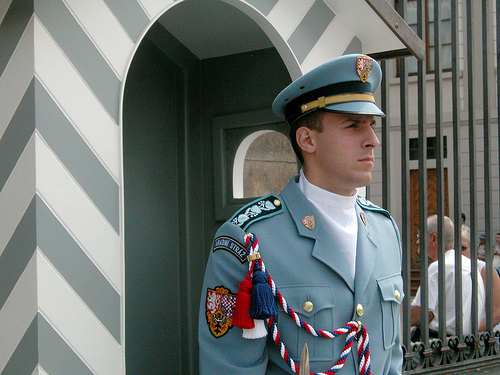
Government soldier on guard, Prague
Charles Bridge from Cathedral Tower
Old town square, Prague
Goulash meal
Bohemian Mixed Grill. Prague
Clock tower in Prague.
Prazsky hrad, Prague
Steps below Prague Castle
Orchard in Prague, Czech Republic
St. Nicholas Cathedral, Prague
Prague, Czech Republic
Downtown Prague, Czech Republic


Travel and Tourism
Travel and Tourism
- Travel Alert Status
- Level 1: Exercise Normal Precautions
- Currency
- 25.02
- Time Difference
- UTC+1 (6 hours ahead of Washington, DC, during Standard Time)
- Climate
- Prague has a humid, continental climate, with warm summers and cold winters. Temperatures range from January's average daily high of 32°F (0°C) and low of 22°F (-4°C) to July's average daily high of 76°F (24.5°C) and low of 56°F (14°) Average annual rainfall is about 30 inches, distributed throughout the year. Humidity averages about 80 percent. During the winter months, high humidity makes the winter cold penetrating. Light to moderately heavy snow can be expected during January and February. Pollution can be severe during the winter months because of soft-burning coal and frequent temperature inversions. Reduced hours of daylight from November through March combined with smog and raw weather create a gloomy atmosphere. In fact, from mid-October when Daylight Savings Time ends until early April when it begins again, Czech law requires drivers to drive with their headlights on at all times.
- Airports
- 120
Read the full travel guide — health, safety, vaccinations, disease risk, sanitation, and transit details.
View full travel guideRecipes
Recipes
Vánočká (Czech Christmas Bread)
Bread
Main Dish
Dušená Kachna Brusinkámim (Braised Duck with Cranberries)
Dessert
Ovocné Knĕdliky (Fruit Dumplings)
Main Dish
Vepřove, Knĕdlik a Zeli (Roasted Pork, Dumpling and Cabbage)
Main Dish
Svičkova (Pickled-Sour Cream Roast)
Main Dish
Mushrooms with Eggs
Side Dish
Polevka s zelimi (Cabbage Soup)
Side Dish
PremiumDill Gravy
Side Dish
PremiumKuba (Barley Christmas Casserole)
Side Dish
PremiumPolevka s Jatrovymi Knĕdliky Soup with Liver Dumplings
History
History
Historical Eras
Early Slavic & Moravian
550 – 1085
Slavic tribes settled the Bohemian and Moravian basins from the 6th century onward, eventually forming the Great Moravian Empire around 830. Christianity spread through the missions of Cyril and Methodius, and the Přemyslid dynasty emerged to consolidate rule over Bohemia. The Moravian Empire collapsed under Magyar invasion in 907, but Bohemia persisted as a distinct political entity within the broader Holy Roman Empire.
Přemyslid & Medieval Kingdom
1085 – 1420
Vratislav II received the first royal crown in 1085, elevating Bohemia to a kingdom within the Holy Roman Empire. The Přemyslid dynasty presided over significant economic and cultural growth, founding Prague as a major European center before the line ended with the assassination of Wenceslas III in 1306. The Luxemburg dynasty succeeded them, with Charles IV making Prague the imperial capital and founding Central Europe's first university there in 1348.
Hussite Revolution
1420 – 1526
The execution of reformer Jan Hus in 1415 ignited the Hussite Wars (1420–1434), a series of fierce religious and military conflicts that challenged both Catholic orthodoxy and Holy Roman imperial authority. Hussite forces under Jan Žižka repeatedly repelled crusading armies, and in 1458 the Bohemian estates elected the Protestant George of Poděbrady as king. This era established a distinctly Czech religious identity and a tradition of resistance to external religious and political domination.
Habsburg Rule
1526 – 1918
The Habsburg dynasty assumed the Bohemian crown in 1526, drawing the Czech lands into a vast Central European empire. Czech Protestant resistance was decisively crushed at the Battle of White Mountain in 1620, after which forced re-Catholicization and Germanization suppressed Czech language and culture for nearly two centuries. Nationalist revival movements gained strength in the 19th century under figures such as František Palacký, laying the intellectual groundwork for eventual independence.
Czechoslovakia
1918 – 1993
The collapse of Austria-Hungary in 1918 enabled Tomáš Masaryk and Edvard Beneš to found Czechoslovakia, the only Central European parliamentary democracy to survive intact until 1938. Nazi occupation (1939–1945) was followed by a Communist coup in 1948 and decades of Soviet-aligned rule, briefly interrupted by the Prague Spring reform movement of 1968, which was crushed by Warsaw Pact invasion. The peaceful Velvet Revolution of 1989 restored democracy, leading to the amicable dissolution of the federation on 1 January 1993.
Czech Republic
1993 – present
The independent Czech Republic emerged from the so-called Velvet Divorce as a stable, export-driven economy with strong industrial and technological sectors centered on Prague and Brno. The country joined NATO in 1999 and the European Union in 2004, firmly anchoring itself within Western political and economic institutions. It has navigated challenges including political fragmentation, corruption reform, and debates over EU integration while maintaining one of the highest standards of living in post-communist Europe.
Overview
The Czech Republic was the western part of the Czech and Slovak
Timeline of Key Events
550
Slavs begin settling in eastern Alps
Slavs begin settling in eastern Alps.
700
The rule of Charlemagne who was the King of the Franks
The rule of Charlemagne who was the King of the Franks.
750
The spread of Christianity in the Slovene lands
The spread of Christianity in the Slovene lands.
830
The Great Moravian Empire was established
The Great Moravian Empire was established.
907
The Moravian Empire collapsed with the Hungarian invasion
The Moravian Empire collapsed with the Hungarian invasion.
962
Holy Roman Empire established
Holy Roman Empire established.
1085
Vratislav II was granted the royal crown
Vratislav II was granted the royal crown and become the first Czech king starting the Premyslid dynasty.
Read the full history profile — narrative overview, defining eras, and the complete timeline in one place.
View expanded historyInteresting Facts
Interesting Facts
The Roma, often known as Gypsies, are thought to be descendants of people who migrated from India in the 15th century. In 1997, about 1,500 Roma from the Czech Republic applied for refugee status in Canada.
More than 70,000 Czechs have made Canada their home, including Thomas Bata, founder of Bata Shoes, Yuri Dojc, one of Canada's top photographers, Karel Ancerl, a former conductor of the Toronto Symphony Orchestra, and Josef Skvorecký, novelist and winner of the Governor General's award for fiction in 1984.
Bohemia is sometimes called “ the roof of Europe” because no rivers or streams flow into the country, but many rivers flow out of it.
There are several natural hot springs in the country, including the famous spas Karlovy Vary (known as Karlsbad in German) and Mariánské Lázne (Marienbad). In the 19th century, kings, nobles and famous artists came to enjoy the mineral waters in these resorts.
See every fact — trivia, oddities, and curious tidbits gathered from across the country.
View all interesting factsGeography and Environment
Geography and Environment
- Terrain
- Bohemia in the west consists of rolling plains, hills, and plateaus surrounded by low mountains; Moravia in the east consists of very hilly country
- Climate
- Prague has a humid, continental climate, with warm summers and cold winters. Temperatures range from January’s average daily high of 32º F (0º C) and low of 22º F (-4º C) to July’s average daily high of 76º F (24.5º C) and low of 56º F (14º) Average annual rainfall is about 30 inches, distributed throughout the year. Humidity averages about 80 percent. During the winter months, high humidity makes the winter cold penetrating. Light to moderately heavy snow can be expected during January and February. Pollution can be severe during the winter months because of soft-burning coal and frequent temperature inversions. Reduced hours of daylight from November through March combined with smog and raw weather create a gloomy atmosphere. In fact, from mid-October when Daylight Savings Time ends until early April when it begins again, Czech law requires drivers to drive with their headlights on at all times.
- Natural Hazards
- flooding
- Current Environmental Issues
- air and water pollution in areas of northwest Bohemia and in northern Moravia around Ostrava present health risks; acid rain damaging forests; efforts to bring industry up to EU code should improve domestic pollution
Read the full geography and environment profile — terrain, climate, natural resources, hazards, land use, and international agreements.
View full geographyPeople & Demographics
People & Demographics
Religion
Languages Spoken
Czech
- Czech
Population
- Population
- 10,900,555
- Population in Major Urban Areas
- PRAGUE (capital) 1.276 million
- Nationality Noun
- Czech(s)
- Ethnic Groups
- Czech 81.2%, Moravian 13.2%, Slovak 3.1%, Polish 0.6%, German 0.5%, Silesian 0.4%, Roma 0.3%, Hungarian 0.2%, other 0.5%
- Language Note
- Czech belongs to the Slavic group of languages. The central European nation is ethnically quite homogeneous. The only noticeable minority is Roms (Gypsies), who are bilingual. Many Czechs speak German, French, Russian or English as a second language, depending on their generation. Younger Czechs generally use English as a second language. The Czech Republic came into existence first in 1918, and then on 1 January 1993 the division of the Czech and Slovak Republics. In their language days, months, season and lots of other words are wrote with non-capitalized first letters.
Education
- Literacy Definition
- NA
Health Information
- Life Expectancy at Birth
- Life expectancy at birth in the Czech Republic stands among the higher figures in Central and Eastern Europe, reflecting the country's well-developed healthcare system, rising living standards, and strong public health infrastructure. As of the most recent data, the average life expectancy at birth is approximately 78 to 79 years overall, with notable differences between men and women. Czech women can expect to live to around 82 years, while Czech men have an average life expectancy of roughly 76 years — a gap that mirrors patterns seen across much of Europe and is influenced by behavioral factors such as smoking rates, alcohol consumption, and occupational hazards historically more prevalent among men. Life expectancy in the Czech Republic has improved substantially over the past several decades. In the early 1990s, following the transition from communist rule, average life expectancy lagged behind Western European nations by several years. Since then, investments in healthcare reform, expanded access to preventive medicine, improved nutrition, and reduced cardiovascular disease mortality have driven steady gains. The country experienced a notable setback during the COVID-19 pandemic, which placed significant pressure on the Czech healthcare system and led to a temporary decline in life expectancy figures between 2020 and 2021. However, post-pandemic recovery has seen the numbers begin to rebound toward pre-pandemic trends. Cardiovascular disease remains the leading cause of death in the Czech Republic, followed by cancer, which together account for the majority of mortality. Chronic conditions linked to diet, physical inactivity, and tobacco use continue to pose public health challenges, though government initiatives and EU-aligned health strategies have targeted these risk factors in recent years. Compared to its regional neighbors, the Czech Republic performs well, generally ranking above countries like Hungary, Slovakia, and Poland in overall life expectancy, though it still trails leading EU nations such as Spain, Italy, and Sweden, where averages regularly exceed 83 years. Continued investment in preventive care and healthy lifestyle promotion remains central to further extending healthy life expectancy across all age groups.
Life Expectancy
- Life Expectancy at Birth
- Life expectancy at birth in the Czech Republic stands among the higher figures in Central and Eastern Europe, reflecting the country's well-developed healthcare system, rising living standards, and strong public health infrastructure. As of the most recent data, the average life expectancy at birth is approximately 78 to 79 years overall, with notable differences between men and women. Czech women can expect to live to around 82 years, while Czech men have an average life expectancy of roughly 76 years — a gap that mirrors patterns seen across much of Europe and is influenced by behavioral factors such as smoking rates, alcohol consumption, and occupational hazards historically more prevalent among men. Life expectancy in the Czech Republic has improved substantially over the past several decades. In the early 1990s, following the transition from communist rule, average life expectancy lagged behind Western European nations by several years. Since then, investments in healthcare reform, expanded access to preventive medicine, improved nutrition, and reduced cardiovascular disease mortality have driven steady gains. The country experienced a notable setback during the COVID-19 pandemic, which placed significant pressure on the Czech healthcare system and led to a temporary decline in life expectancy figures between 2020 and 2021. However, post-pandemic recovery has seen the numbers begin to rebound toward pre-pandemic trends. Cardiovascular disease remains the leading cause of death in the Czech Republic, followed by cancer, which together account for the majority of mortality. Chronic conditions linked to diet, physical inactivity, and tobacco use continue to pose public health challenges, though government initiatives and EU-aligned health strategies have targeted these risk factors in recent years. Compared to its regional neighbors, the Czech Republic performs well, generally ranking above countries like Hungary, Slovakia, and Poland in overall life expectancy, though it still trails leading EU nations such as Spain, Italy, and Sweden, where averages regularly exceed 83 years. Continued investment in preventive care and healthy lifestyle promotion remains central to further extending healthy life expectancy across all age groups.
Read the full people and society profile — demographics, health, education, religion, languages, and notable people.
View full people and societyGovernment & Politics
Government & Politics
Country Identity
- Country Name
- CzechRepublic
- Full Country Name
- Czech Republic
- Local - Long
- Ceska Republika
- Local - Short
- Ceska Republika
Government Structure
- Government Type
- parliamentary democracy
- Legal System
- civil law system based on Austro-Hungarian codes; has not accepted compulsory ICJ jurisdiction; legal code modified to bring it in line with Organization on Security and Cooperation in Europe (OSCE) obligations and to expunge Marxist-Leninist legal theory
- Executive Branch
- chief of state: President Petr PAVEL (since 9 March 2023) note: Petr PAVEL, a retired general and former chairman of the NATO Military Committee, won the presidential runoff election on 28 January 2023, defeating former Prime Minister Andrej BABIS; he succeeded Milos ZEMAN, who served two five-year terms from 2013 to 2023; prior to ZEMAN, Vaclav KLAUS served from 2003 to 2013, and the Czech Republic's founding president Vaclav HAVEL served from 1993 to 2003 head of government: Prime Minister Petr FIALA (since 17 December 2021); Deputy Prime Ministers Vit RAKUSAN (since 17 December 2021), Ivan BARTOS (since 17 December 2021), Marian JURECKA (since 17 December 2021), and Vlastimil VALEK (since 17 December 2021) cabinet: Cabinet appointed by the president on the recommendation of the prime minister elections: president elected by direct popular vote for a five-year term, eligible for a second term; election last held on 13–14 January 2023 with a runoff on 27–28 January 2023 (next election to be held in January 2028); prime minister appointed by the president election results: Petr PAVEL elected president in the second round on 28 January 2023; Petr PAVEL received 58.3% of the vote, Andrej BABIS received 41.7%; note that direct presidential elections were introduced in 2013, replacing the previous system under which the president was elected by parliament
- Legislative Branch
- bicameral Parliament or Parlament consists of the Senate or Senat (81 seats; members are elected by popular vote to serve six-year terms; one-third elected every two years) and the Chamber of Deputies or Poslanecka Snemovna (200 seats; members are elected by popular vote to serve four-year terms) elections: Senate - last held in two rounds in October 2024; Chamber of Deputies - last held 8-9 October 2021 (next to be held by October 2025) election results: Senate - percent of vote by party - NA; seats by party - ODS 28, KDU-CSL 13, STAN 12, TOP 09 4, ANO 4, CSSD 1, Pirates 1, independents and others 18; Chamber of Deputies - percent of vote by party - SPOLU coalition (ODS, KDU-CSL, TOP 09) 27.8%, ANO 27.1%, Pirates and STAN 15.6%, SPD 9.6%, KSCM 3.6%, CSSD 4.7%, Trikolora 2.8%, other 8.8%; seats by party - SPOLU 71, ANO 72, Pirates and STAN 37, SPD 20
- Judicial Branch
- Supreme Court; Constitutional Court; chairman and deputy chairmen are appointed by the president for a 10-year term
- Suffrage
- 18 years of age; universal
- Constitution
- ratified 16 December 1992; effective 1 January 1993
- Independence
- 1 January 1993 (Czechoslovakia split into the Czech Republic and Slovakia)
- National Holiday
- Czech Founding Day, 28 October (1918)
Capital City
- Capital Name
- Prague
- Capital - geographic coordinate
- 50 05 N, 14 28 E
- Capital Time Difference
- UTC+1 (6 hours ahead of Washington, DC, during Standard Time)
the name may derive from an old Slavic root "praga" or "prah", meaning "ford", and refer to the city's origin at a crossing point of the Vltava (Moldau) River
Military
Branches: Army of the Czech Republic (Armada Ceske Republiky): Joint Forces Command (Spolocene Sily; includes Land Forces (Pozemni Sily) and Air Forces (Vzdusne Sily))
Embassy / Diplomatic Mission
The U.S. Embassy in Prague
Trziste 15, 118 01 Prague 1, Czech Republic
Telephone: (420) 257 022 000
Emergency after-hours telephone: (420) 257 022 000
Fax: (420) 257 022 809
Read the full government profile — flag symbolism, national anthem, and other national symbols.
View full government detailsEconomy
Economy
The Czech Republic is one of the most stable and prosperous of the post-Communist states, with a developed, high-income economy that joined the European Union in 2004.
Snapshot
- Currency Name and Code
- koruny (CZK)
- GDP — official exchange rate
- $109,400,000,000 (USD)
- GDP Real Growth Rate
- 2.4%
- Gini Index
- 25.4
News & Weather
News & Weather
Current Weather
Latest News
Czech Republic president attends Hungarian GP... as a photographer - Motorsport.com
Motorsport.com · 23h ago
2026 MXGP of Czech Republic: MXGP MXGP Results - Racer X
Racer X · 1d ago
Widespread bomb threat targets 400 Czech government offices and shopping centers - Expats.cz
Expats.cz · 1h ago
WORLDWIDE TV COVERAGE – HOW TO WATCH THE MXGP OF CZECH REPUBLIC - Home | MXGP
Home | MXGP · 2d ago
After Berlin attack, Prague Pride organizers reassure visitors over safety - Expats.cz
Expats.cz · 4h ago
South Korea 2-1 Czech Republic LIVE: FIFA World Cup 2026 Group A: South Korea come from behind to win - BBC
BBC · 45d ago
World Cup 2026: South Korea 2-1 Czech Republic - In-Beom Hwang inspires comeback win after Ladislav Krejci goal - Sky Sports
Sky Sports · 45d ago
South Korea beats Czech Republic but why all the empty seats at World Cup’s second game? - The Athletic - The New York Times
The New York Times · 46d ago
News via Google News
Climate Overview
Prague has a humid, continental climate, with warm summers and cold winters. Temperatures range from January's average daily high of 32°F (0°C) and low of 22°F (-4°C) to July's average daily high of 76°F (24.5°C) and low of 56°F (14°) Average annual rainfall is about 30 inches, distributed throughout the year. Humidity averages about 80 percent. During the winter months, high humidity makes the winter cold penetrating. Light to moderately heavy snow can be expected during January and February. Pollution can be severe during the winter months because of soft-burning coal and frequent temperature inversions. Reduced hours of daylight from November through March combined with smog and raw weather create a gloomy atmosphere. In fact, from mid-October when Daylight Savings Time ends until early April when it begins again, Czech law requires drivers to drive with their headlights on at all times.
Videos
Videos
2 curated YouTube videos.
Source: YouTube
Source: YouTube
Frequently Asked Questions
Frequently Asked Questions
What is the population of Czech Republic?
How do people greet each other in the Czech Republic?
What are dining and eating customs like in the Czech Republic?
What etiquette should I know when visiting a Czech home?
How should I dress in the Czech Republic?
What should I know about gestures and body language in the Czech Republic?
What is family life like in the Czech Republic?
What do people do for recreation in the Czech Republic?
What is the capital of the Czech Republic?
Where is the Czech Republic located?
What countries border the Czech Republic?
What religion is practiced in the Czech Republic?
What is the currency of the Czech Republic?
What language is spoken in the Czech Republic?
What is the Czech Republic known for?
Last reviewed 2026