
 English
 Español
 中文
中文 हिन्दी
 Français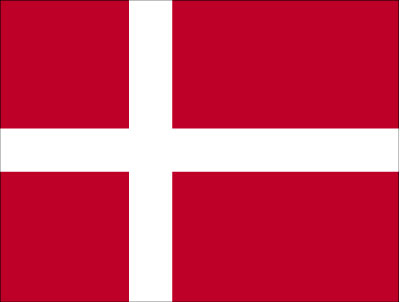
Denmark
Danmark
Declare Your Relationship to Denmark
CountryReports Community
- Studying0
- From Denmark0
- Denmark heritage1
- Visited0
- Want to visit0
Customs and Culture
Customs and Culture
Cultural Attributes
Danish people are informal and friendly. They appreciate courtesy in all interactions. Danes live very much "by the clock." They expect you to arrive at the agreed time, neither before nor after. This applies to work and private appointments alike, as well as appointments with doctors, dentists, and public authorities. Turning up late—or not at all—without a good reason is guaranteed to make you unpopular.
In Denmark, humor is an important vehicle for communication, and irony is also widely used.This is why the tone in many workplaces may sometimes seem quite direct. People may say things to each other that sound rude and may startle people who are unaccustomed to this form of communication. However, it is often just a way of showing that you like and respect each other, and a little teasing should be accepted among friends.

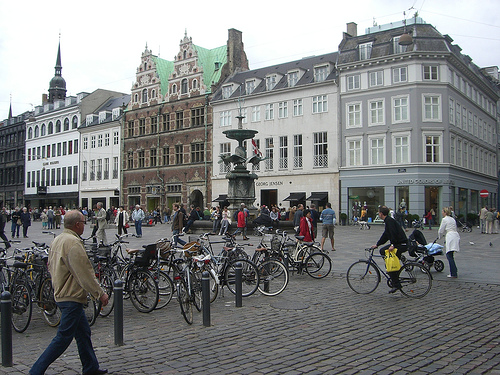
Land of the Bicycle and the Good Life
Get More Customs and Culture
5 more cultural topics for members
Social Customs & Etiquette · Diet · Family · Dating Customs · Recreation
Holidays
Constitution Day
6/5Independence
none designated; Constitution Day, 5 June is generally viewed as the National Day
Birthdate - Hans Christian Andersen
4/2Birthday
Birthdate - Hans Christian Andersen, Danish author of Fairy Tales, was born in Odense, Denmark.
Christmas
12/25Christmas
The Danes have enjoyed Christmas since the tenth century, when Viking King Harald Bluetooth introduced Christianity to his kingdom. Since Denmark experiences only six hours of daylight on Christmas cities and villages light thousands of candles.
Tradition says all holiday guests must receive sweets or refreshments or the Christmas spirit departs from the house. Sweets may include brune kager (round brown cookies topped with half an almond), klejner (fried cookies twisted into knots), pebernødder (peppernuts or spiced cookies), marzipan (almond fondant molded into the shapes of fruits, or animals), vanillekranse (vanilla wreaths), julekage (coffee cake) and kringle (a pastry with raisins and almonds). On lille juleaften (little Christmas Eve December 23rd) families invite friends over for glögg
Two world wide holiday traditions originated in Denmark, the collectible Christmas plates and Christmas Seals.
Juleaften (Christmas eve) dinner usually includes risengrød (rice porridge) containing a single almond. The person who finds the almond in his/her serving receives an extra little treat. Other courses include roast goose, turkey, duck potatoes, rødkål (red Cabbage), rombudding (rum pudding), æblekage (apple crumb cake) and Christmas beers.
Dates of Interest
- June 23rd
A cultural festival held in Aarhus in late summer, featuring music, art, theater, and other cultural events.
How do people greet each other in Denmark?
A handshake is the most common greeting among adults, and Danes commonly address people using professional titles, though first names are increasingly common.
Do
- Shake hands when greeting adults
- Maintain eye contact while conversing
- Offer the toast 'skål' when drinking together
Don’t
- Avoid excessive hand gestures while talking
Good to know
- Traditionally only close friends and family used first names, but most people now use them
What are the dining customs in Denmark?
Danes eat continental style, with the fork in the left hand and the knife in the right, and everyone is seated and served before anyone begins to eat.
Do
- Wait until everyone is served before eating
- Say 'Vœr så god' and 'Tak' when passing and receiving food
- Wait for the hostess to rise before leaving the table
- Thank the hostess with 'Tak for mad!' when leaving
Don’t
- Don't leave directly after a meal, as it is impolite
- Don't start eating before everyone is served
Good to know
- A parent may say 'Vœr så god' to begin the meal
- On formal occasions, guests of honor are served first and sit at the head of the table
- A service charge is included in restaurant bills, but some people leave a small tip
What etiquette should travelers know in Denmark?
Danes are informal and friendly but value courtesy and punctuality, expecting you to arrive exactly at the agreed time—neither early nor late.
Do
- Arrive punctually for all appointments
- Wait to be invited before entering a home
- Sit where the host suggests
- Bring a small gift such as wine, flowers, or chocolate when invited to a party or dinner
Don’t
- Don't turn up late or not at all without good reason
- Don't enter a home until invited
- Don't follow a host into other rooms unless invited
- Don't dwell on questions about personal life
Good to know
- Humor and irony are important in communication, so a direct tone and teasing among friends is common
- Danes celebrate many occasions with parties for food, drinks, and sometimes dancing
How should travelers dress in Denmark?
Danes follow general European fashion trends, and while casual dress is fashionable and appropriate, sloppy dress is not.
Do
- Bring coats and woolens for the cool, rainy, windy climate
- Wear suits and dresses for business and formal situations
Don’t
- Avoid sloppy dress
What gestures matter in Denmark?
Eye contact is important while conversing, and hand gestures are usually avoided.
Do
- Keep eye contact during conversation
- Cover your mouth when yawning
Don’t
- Avoid excessive hand gestures
- Don't yawn without covering your mouth
What is family life like in Denmark?
Danish society is built on respect for the individual and shared responsibility, with men and women having equal rights, duties, and opportunities.
Good to know
- In most families, both spouses work almost equal hours
- Most young children are cared for in daycare, and many school-age children attend after-school care
What do people do for recreation in Denmark?
Football (soccer) is the most popular activity among schoolchildren, and Danes enjoy spending leisure time with their families.
Good to know
- Popular activities include rugby, tennis, cycling, skiing, and rifle shooting
- Bridge and chess are also popular
- Legoland in Billund is an amusement park with over 40 million Lego bricks
- Athletic awards sponsored by the Queen are given for passing age-based qualifying tests
Last updated: 2026-07-12 · Sources: CountryReports
Photos of Denmark
Photos of Denmark
Local scene in Copenhagen, Denmark
Copenhagen
Copenhagen
Copenhagen City Streets
Bosrup Shcool
Building in downtown Copenhagen.
Tivoli Gardens
Amalienborg Palace, retreat for the royal family.
Soldiers march in Copenhagen, Denmark
People gather for a rock concert, Copenhagen.
Denmark Creche
Rugby Christianshavn Field


Travel and Tourism
Travel and Tourism
- Travel Alert Status
- Level 2: Exercise Increased Caution
- Currency
- 6.865
- Time Difference
- UTC+1 (6 hours ahead of Washington, DC, during Standard Time)
- Climate
- Because Denmark is almost entirely surrounded by the sea, it has a moderate, maritime climate. This, however, produces changeable weather, which makes forecasting an imperfect art. The average temperatures range from 32°F in February to 61°F in July. Temperatures vary slightly from day to night. Average rainfall is 24 inches. August and October are the wettest months. Days are short in winter, with about 6 hours of daylight in December and January. Daylight in summer lasts 18-20 hours.
- Airports
- 99
Read the full travel guide — health, safety, vaccinations, disease risk, sanitation, and transit details.
View full travel guideRecipes
Recipes
History
History
Historical Eras
Germanic & Viking Age
500 – 1060
Gothic-Germanic peoples settled the Jutland Peninsula and surrounding islands, gradually coalescing into a distinct Danish identity. The Viking Age (9th–11th centuries) saw Danish raiders and traders expand across Europe; King Canute the Great united Denmark, England, and Norway under a single crown by 1028. English missionaries introduced Christianity, which became firmly established alongside growing royal and ecclesiastical authority.
Medieval Kingdom
1060 – 1397
The Danish church was organized under Svend II, and crown power alternately rose and waned against an assertive nobility that forced a constitutional charter in the late 13th century. The Black Death devastated the population around 1350, weakening both economy and central authority. Nevertheless, Denmark remained the dominant Scandinavian power, laying the groundwork for broader Nordic unification.
Kalmar Union Era
1397 – 1536
Queen Margrethe I forged the Union of Kalmar in 1397, bringing Denmark, Norway, Sweden, Finland, Iceland, the Faroe Islands, and Greenland under the Danish crown. The union was marked by persistent tension with Sweden, which finally broke away definitively by 1524. Copenhagen was declared the capital in 1445, signaling Denmark's consolidation as a centralized northern European state.
Early Modern Denmark
1536 – 1814
Denmark adopted Lutheranism as the state religion in 1536, reshaping its cultural and institutional life. The kingdom engaged in costly conflicts, including the Seven Years' War with Sweden (1563–1570) and the Thirty Years' War, suffering a significant military defeat in 1626. Denmark lost its southwestern Swedish provinces in 1658, and following alliance with Napoleon, was forced to cede Norway to Sweden in 1814.
Constitutional & Liberal Era
1814 – 1914
A growing liberal movement culminated in the Constitution of 1849, transforming Denmark into a constitutional monarchy. Defeat in the 1864 war against Prussia and Austria cost Denmark the Schleswig-Holstein territories and enforced a policy of neutrality. In compensation, late 19th-century governments pursued landmark social and labor market reforms that established the foundations of Denmark's modern welfare state.
Modern Denmark
1914 – present
Denmark remained neutral in World War I but was occupied by Nazi Germany from 1940 to 1945, during which Danish citizens and resistance fighters famously rescued nearly the entire Jewish population to neutral Sweden. After liberation, Denmark became a founding member of NATO in 1949 and joined the European Economic Community in 1973, while maintaining selective opt-outs from deeper EU integration. Today Denmark is recognized as one of the world's most prosperous and socially advanced nations.
Overview
The Danes, a homogenous Gothic-Germanic people, have inhabited Denmark since prehistoric times. Danish is the principal language. English is a required school subject, and fluency is high. A small German-speaking minority lives in southern Jutland; a mostly Inuit population inhabits Greenland; and the Faroe Islands have a Nordic population with its own language. Education is compulsory from ages seven to 16 and is free through the university level.
Timeline of Key Events
500
First Danes arrive from Sweden
First Danes arrive from Sweden.
690
English missionaries enter Denmark
English missionaries enter Denmark. Kingdom of Denmark unified and Christianity introduced.
1028
King Canute is declared rules of Denmark, England and Norway .
King Canute is declared ruler of Denmark, England and Norway.
1060
Svend II forms Danish church
Svend II forms Danish church.
1350
Plague ravished Denmark and Sweden
Plague ravished Denmark and Sweden.
1397
The Union of Kalmar unites Denmark, Sweden and Norway
The Union of Kalmar unites Denmark, Sweden and Norway.
1445
Copenhagen declared capital city
Copenhagen declared capital city.
Read the full history profile — narrative overview, defining eras, and the complete timeline in one place.
View expanded historyInteresting Facts
Interesting Facts
When a child loses a tooth they put their tooth under their pillow at night and wait for the Tooth Fairy called Tand Feen to take their tooth and leave some money.
The world's top calorie consuming country is Denmark at 3,808 daily calories per person per day. The world average is 2,745 calories.
Denmark has the world's youngest Queen. Queen Margrethe II was 31 years old when her coronation took place on Jan. 14, 1972.
A flag is flown outside a window to designate that someone who lives in that house is having a birthday. Presents are placed around the child's bed while they are sleeping so they will see them immediately upon awakening.
See every fact — trivia, oddities, and curious tidbits gathered from across the country.
View all interesting factsGeography and Environment
Geography and Environment
- Terrain
- low and flat to gently rolling plains
- Climate
- Because Denmark is almost entirely surrounded by the sea, it has a moderate, maritime climate. This, however, produces changeable weather, which makes forecasting an imperfect art. The average temperatures range from 32°F in February to 61°F in July. Temperatures vary slightly from day to night. Average rainfall is 24 inches. August and October are the wettest months. Days are short in winter, with about 6 hours of daylight in December and January. Daylight in summer lasts 18–20 hours.
- Natural Hazards
- flooding is a threat in some areas of the country (e.g., parts of Jutland, along the southern coast of the island of Lolland) that are protected from the sea by a system of dikes
- Current Environmental Issues
- air pollution, principally from vehicle and power plant emissions; nitrogen and phosphorus pollution of the North Sea; drinking and surface water becoming polluted from animal wastes and pesticides
Read the full geography and environment profile — terrain, climate, natural resources, hazards, land use, and international agreements.
View full geographyPeople & Demographics
People & Demographics
Religion
Languages Spoken
Danish, Faroese, Greenlandic (an Inuit dialect), German (small minority)
note: English is the predominant second language
- Danish
- Faroese
- Greenlandic
Population
- Population
- 5,935,619
- Population in Major Urban Areas
- COPENHAGEN (capital) 1.206 million
- Nationality Noun
- Dane(s)
- Ethnic Groups
- Scandinavian, Inuit, Faroese, German, Turkish, Iranian, Somali
- Language Note
- The Danish alphabet has a total of 29 letters: 9 vowels (a,e,i,o,u,y,æ,ø,å) and 20 consonant.
Education
- Literacy Definition
- age 15 and over can read and write
Health Information
- Life Expectancy at Birth
- Denmark consistently ranks among the countries with the highest life expectancy in the world, reflecting the nation's strong public health infrastructure, high standard of living, and universal healthcare system. As of the most recent available data, the average life expectancy at birth in Denmark is approximately 81.6 years overall, with women living to around 83.9 years and men to approximately 79.4 years. These figures place Denmark well above the global average of roughly 73 years and in line with its Nordic neighbors, including Sweden, Norway, and Finland. The country's long life expectancy is closely tied to its comprehensive welfare state, which guarantees all residents access to free healthcare services, including preventive care, hospital treatment, and prescription medications at subsidized rates. Several factors contribute to Denmark's strong longevity outcomes. The Danish diet, while historically heavy in meat and dairy products, has shifted in recent decades toward greater consumption of vegetables, whole grains, and fish — a transition encouraged by both public health campaigns and changing cultural preferences. Physical activity is deeply embedded in Danish daily life, with a large portion of the population cycling regularly for commuting and recreation. Denmark also maintains relatively low rates of poverty and income inequality compared to global standards, both of which are strongly correlated with better health outcomes. Smoking rates, which were once notably high in Denmark, have declined significantly since the 1970s as a result of taxation policies, public awareness campaigns, and restrictions on tobacco advertising. This decline has contributed meaningfully to improvements in cardiovascular health and cancer outcomes over the past several decades. Despite these positive trends, Denmark does face some health challenges that moderately affect life expectancy. Alcohol consumption remains above the European Union average, and obesity rates have climbed in recent years, mirroring trends seen across much of the Western world. Danish health authorities continue to address these issues through national prevention strategies and public education programs. Overall, Denmark's life expectancy statistics reflect a society that has invested heavily and consistently in the health and well-being of its population across generations.
Life Expectancy
- Life Expectancy at Birth
- Denmark consistently ranks among the countries with the highest life expectancy in the world, reflecting the nation's strong public health infrastructure, high standard of living, and universal healthcare system. As of the most recent available data, the average life expectancy at birth in Denmark is approximately 81.6 years overall, with women living to around 83.9 years and men to approximately 79.4 years. These figures place Denmark well above the global average of roughly 73 years and in line with its Nordic neighbors, including Sweden, Norway, and Finland. The country's long life expectancy is closely tied to its comprehensive welfare state, which guarantees all residents access to free healthcare services, including preventive care, hospital treatment, and prescription medications at subsidized rates. Several factors contribute to Denmark's strong longevity outcomes. The Danish diet, while historically heavy in meat and dairy products, has shifted in recent decades toward greater consumption of vegetables, whole grains, and fish — a transition encouraged by both public health campaigns and changing cultural preferences. Physical activity is deeply embedded in Danish daily life, with a large portion of the population cycling regularly for commuting and recreation. Denmark also maintains relatively low rates of poverty and income inequality compared to global standards, both of which are strongly correlated with better health outcomes. Smoking rates, which were once notably high in Denmark, have declined significantly since the 1970s as a result of taxation policies, public awareness campaigns, and restrictions on tobacco advertising. This decline has contributed meaningfully to improvements in cardiovascular health and cancer outcomes over the past several decades. Despite these positive trends, Denmark does face some health challenges that moderately affect life expectancy. Alcohol consumption remains above the European Union average, and obesity rates have climbed in recent years, mirroring trends seen across much of the Western world. Danish health authorities continue to address these issues through national prevention strategies and public education programs. Overall, Denmark's life expectancy statistics reflect a society that has invested heavily and consistently in the health and well-being of its population across generations.
Read the full people and society profile — demographics, health, education, religion, languages, and notable people.
View full people and societyGovernment & Politics
Government & Politics
Country Identity
- Country Name
- Denmark
- Full Country Name
- Kingdom of Denmark
- Local - Long
- Kongeriget Danmark
- Local - Short
- Danmark
Government Structure
- Government Type
- constitutional monarchy
- Legal System
- civil law system; judicial review of legislative acts; accepts compulsory ICJ jurisdiction, with reservations
- Executive Branch
- chief of state: King FREDERIK X (since 14 January 2024); Heir Apparent Crown Prince CHRISTIAN, elder son of the monarch (born 15 October 2005) head of government: Prime Minister Mette FREDERIKSEN (since 27 June 2019) cabinet: Council of State appointed by the monarch elections: none; the monarch is hereditary; following legislative elections, the leader of the majority party or the leader of the majority coalition is usually appointed prime minister by the monarch
- Legislative Branch
- Unicameral People's Assembly or Folketinget (179 seats, including 2 from Greenland and 2 from the Faroe Islands; members are elected by popular vote on the basis of proportional representation to serve four-year terms) Elections: last held on 1 November 2022 (next to be held by November 2026) Election results: percent of vote by party - Social Democrats 27.5%, Liberal Party 13.3%, Denmark Democrats 8.1%, Socialist People's Party 8.3%, Moderates 9.3%, Conservative People's Party 5.5%, Red-Green Alliance 5.1%, Social Liberal Party 4.6%, Danish People's Party 2.6%, Liberal Alliance 7.9%, Alternative 3.3%; seats by party - Social Democrats 50, Liberal Party 23, Denmark Democrats 14, Socialist People's Party 15, Moderates 16, Conservative People's Party 10, Red-Green Alliance 9, Social Liberal Party 7, Danish People's Party 0, Liberal Alliance 14, Alternative 6; note - does not include the 2 seats from Greenland and the 2 seats from the Faroe Islands
- Judicial Branch
- Supreme Court (judges are appointed by the monarch for life)
- Suffrage
- 18 years of age; universal
- Constitution
- 1849 was the original constitution; there was a major overhaul 5 June 1953, allowing for a unicameral legislature and a female chief of state
- Independence
- first organized as a unified state in 10th century; in 1849 became a constitutional monarchy
- National Holiday
- none designated; Constitution Day, 5 June is generally viewed as the National Day
Capital City
- Capital Name
- Copenhagen
- Capital - geographic coordinate
- 55 40 N, 12 35 E
- Capital Time Difference
- UTC+1 (6 hours ahead of Washington, DC, during Standard Time)
name derives from the city's Danish appellation Kobenhavn, meaning "Merchant's Harbor"
Military
Branches: Defense Command: Army Operational Command, Admiral Danish Fleet, Arctic Command, Tactical Air Command, Home Guard
Embassy / Diplomatic Mission
United States Embassy in Denmark
Dag Hammarskjölds Allé 24
2100 Copenhagen
Telephone: 45 3341 7100
Emergency after-hours telephone: 45 3341 7400
Fax: 45 3538 9616
Read the full government profile — flag symbolism, national anthem, and other national symbols.
View full government detailsEconomy
Economy
Denmark has a thoroughly modern market economy that combines high-tech agriculture, advanced small-scale and corporate industry, extensive government welfare measures, comfortable living standards, a stable currency, and a strong dependence on foreign trade.
Snapshot
- Currency Name and Code
- Danish kroner (DKK)
- GDP — official exchange rate
- $243,400,000,000 (USD)
- GDP Real Growth Rate
- 1.7%
- Gini Index
- 23.2
News & Weather
News & Weather
Current Weather
Latest News
Ehlers rides in Lamborghini with Stanley Cup, receives warm welcome in Denmark - NHL.com
NHL.com · 3d ago
Teesside blacksmiths head to Denmark to forge Viking anchor - BBC
BBC · 1d ago
While Germany and Denmark lower 73,500-ton concrete boxes onto the Baltic and watch the schedule slip, Norway is blasting a deeper road under worse rock on time, two roundabouts 820 feet below the sea already carved from the stone - Autonocion.com
Autonocion.com · 16h ago
Video. Armoured fighters storm Denmark’s Spøttrup Castle for IMCF world championship - Euronews.com
Euronews.com · 2d ago
Laurits Bomholt - Denmark - Player Profile - FIBA U18 EuroBasket 2026 - FIBA Basketball
FIBA Basketball · 1d ago
Christian Eriksen: Denmark friendly with Ukraine abandoned after midfielder collapses on pitch - Sky Sports
Sky Sports · 49d ago
Denmark issues wolf warning to tourists after ‘reduced shyness’ in pups - the-independent.com
the-independent.com · 4d ago
‘Ugly in a beautiful way’: Denmark’s mullet championship celebrates divisive hairstyle - The Guardian
The Guardian · 50d ago
News via Google News
Climate Overview
Because Denmark is almost entirely surrounded by the sea, it has a moderate, maritime climate. This, however, produces changeable weather, which makes forecasting an imperfect art. The average temperatures range from 32°F in February to 61°F in July.
Temperatures vary slightly from day to night. Average rainfall is 24 inches. August and October are the wettest months. Days are short in winter, with about 6 hours of daylight in December and January. Daylight in summer lasts 18-20 hours.
Videos
Videos
1 curated YouTube videos.
Source: YouTube
Frequently Asked Questions
Frequently Asked Questions
What is the population of Denmark?
How do people greet each other in Denmark?
What are the dining customs in Denmark?
What etiquette should travelers know in Denmark?
How should travelers dress in Denmark?
What gestures matter in Denmark?
What is family life like in Denmark?
What do people do for recreation in Denmark?
What is the capital of Denmark?
Where is Denmark located?
What countries border Denmark?
What is the predominant religion in Denmark?
What currency does Denmark use?
What language is spoken in Denmark?
What is Denmark known for?
What is the geography of Denmark like?
Last reviewed 2026