
 English
 Español
 中文
中文 हिन्दी
 Français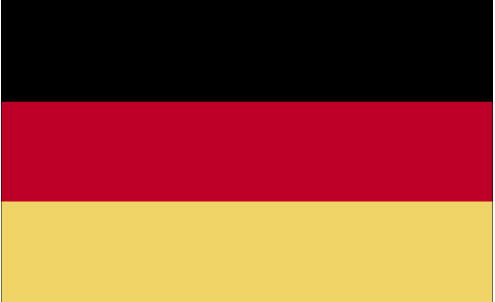
Germany
Deutschland
Declare Your Relationship to Germany
CountryReports Community
- Studying8
- From Germany1
- Germany heritage3
- Visited4
- Want to visit3
Customs and Culture
Customs and Culture
Cultural Attributes
Germans have a reputation for being industrial, thrifty, and methodical. They are characterized by a strong sense of regional pride, an aspect that the federal government recognizes and takes into account. Most of them have a solid traditional education due to the enormous cultural heritage that the country has in areas such as music, history, and other branches of art, and therefore they expect others to appreciate such heritage.
While German is the official language spoken in Germany, the German language taught in schools and used in the media is often not the German spoken in everyday life. In many places, the various dialects have a strong influence on the language. English is widely understood, and many Germans from the former East Germany speak Russian.

Precision Crafted, Deeply Rooted
Get More Customs and Culture
6 more cultural topics for members
Social Customs & Etiquette · Diet · Family · Dating Customs · Recreation · Student Life
Holidays
Unity Day
10/3Birth date - George Frideric Handel
2/23Birthday
Birth date - George Frideric Handel, English composer, was born in Halle, Germany on Feb. 23, 1685.
Birth date - Wilhelm Carl Grimm
2/24Birthday
Birth date - Wilhelm Carl Grimm, collector of fairy tales, was born in Hanau, Germany on Feb. 24, 1786.
Birth date - Albert Einstein
3/14Birthday
Birth date - Albert Einstein, physicist, was born in Ulm, Germany on March 14, 1879.
Birth date - Johann Sebastian Bach
3/21Birthday
Birth date - Johann Sebastian Bach was born in Eisenach, Thuringia (Now Germany) on March 21, 1685.
Birth date - Wilhelm Konrad Roentgen
3/27Birthday
Birth date - Wilhelm Konrad Roentgen, inventor of the x/ray, was born in Remscheid-Lennep, Germany on March 27, 1845.
Birth date - Johannes Brahms
5/7Birthday
Birth date - Johannes Brahms, German composer, was born in the State of Hamburg, German Confederation. [now Hamburg, Germany] on May 7, 1833.
Birth date - Anne Frank
6/12Birthday
Birth date - Anne Frank, author of Anne Frank: The Diary of a Young Girl, was born in Frankfurt am Main, Germany on June 12, 1929.
Birth date - Jacob Ludwig Carl Grimm
1/3Birthday
Birth date - Jacob Ludwig Carl Grimm, German collector of fairy tales, was born in Hanau, Germany on Jan 3, 1785.
Birth date - Peter Paul Rubens
6/29Birthday
Birth date - Peter Paul Rubens, Flemish artist, was born June 29, 1577 in Siegen, Westphalia (Germany).
Christmas
12/25Christmas
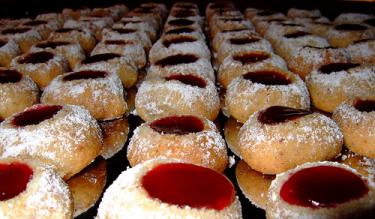
As in many other European countries, on the eve of Dec. 6th children place a shoe or boot by the fireplace. During the night, St. Nicholas, the patron saint of children, hops from house to house carrying a book of sins in which all of the misdeeds of the children are written. If they have been good, he fills the shoe or boot with delicious holiday edibles. If they have not been good, their shoe is filled with twigs. December 21st, supposedly the shortest day (longest night) of the year, is dubbed St. Thomas Day. In parts of the Sauerland, whoever wakes up late or arrives late to work on that day is issued the title "Thomas Donkey." They are given a cardboard donkey and are the subject of numerous jokes throughout the day. But this gentle abuse ends deliciously with round, iced currant buns called "Thomasplitzchen."
Dates of Interest
- December 25th
As in many other European countries, on the eve of Dec. 6th children place a shoe or boot by the fireplace. During the night, St. Nicholas, the patron saint of children, hops from house to house carrying a book of sins in which all of the misdeeds of the children are written. If they have been good, he fills the shoe or boot with delicious holiday edibles. If they have not been good, their shoe is filled with twigs. December 21st, supposedly the shortest day (longest night) of the year, is dubbed St. Thomas Day. In parts of the Sauerland, whoever wakes up late or arrives late to work on that day is issued the title "Thomas Donkey." They are given a cardboard donkey and are the subject of numerous jokes throughout the day. But this gentle abuse ends deliciously with round, iced currant buns called "Thomasplitzchen."
How do people greet each other in Germany?
The handshake is the most common greeting, and titles with surnames are used except among close friends and family.
Do
- Shake hands when greeting
- Let the woman extend her hand first before shaking hands
- In mixed groups, shake hands with women before men
- Use titles and surnames unless you are close friends or family
Don’t
- Don't have many people shake hands at once in large groups, as crossing arms over others is improper
- Don't address people by first name unless they are close friends or family
Good to know
- Addressing by first name is changing among the young
What are dining customs like in Germany?
Germans use the continental eating style, with the main meal traditionally at noon and a lighter evening meal (Abendbrot) of open-faced sandwiches.
Do
- Keep hands above the table with wrists resting on the edge
- Finish the food on your plate
Don’t
- Don't cut potatoes or fish with a knife, as this implies they are not fully cooked
- Don't leave food on your plate, as it's considered wasteful
- Don't expect ice in your drinks, as cold drinks aren't considered healthy
Good to know
- Common foods include potatoes, noodles, dumplings, sauces, cakes, and pastries
- Every region has its own kind of wurst (sausage)
- Turkish, Greek, Italian, and fast foods are popular
What etiquette should I know when visiting a German home?
Punctuality is appreciated and visits are arranged in advance; guests often bring flowers to their hosts.
Do
- Arrive on time when invited
- Bring an odd number of flowers for the hosts
- Unwrap flowers before giving them
- Stand when the host or a woman enters the room until offered a seat
Don’t
- Don't drop by spontaneously, even on neighbors
- Don't be insulted if guests arrive a few minutes late
Good to know
- Arrangements are usually made in advance
How should I dress in Germany?
Clothing styles resemble those in the United States with a European flavor, and untidy attire is inappropriate in public.
Don’t
- Don't wear sloppy or untidy attire in public
Good to know
- Cosmetics are worn sparingly
- Traditional regional costumes are often worn during festivals and celebrations
Which gestures matter in Germany?
Some gestures that seem harmless can be offensive, so be mindful of hand signals and displays of affection.
Do
- To wish luck, squeeze the thumb between the index and middle fingers, keeping only the tip enclosed
Don’t
- Don't point your index finger to your own head, as it insults another person
- Don't let the thumb tip protrude when making the luck gesture, as it's offensive
- Don't show public affection in some areas where it's inappropriate
Good to know
- Germans wear their wedding rings on the right hand, not the left
What is family life like in Germany?
The father is generally the head of the family, families are small with one or two children, and many young people move out once they earn wages or attend university.
Good to know
- Both parents often work, more so in the east than the west
- Order, responsibility, and achievement remain traditional family values
- People usually marry in their late twenties, and living together before or instead of marriage is common
What do people do for recreation in Germany?
Soccer (Fussball) is the national sport, and Germans enjoy a wide range of activities including swimming, tennis, skiing, hiking, and cycling.
Good to know
- Swimming is very popular and almost every town has a public Schwimmbad
- In winter, skiers flock to the German Alps and its many resorts
- Mountainous areas have hundreds of kilometers of hiking trails
- Windsurfing and sailing are enjoyed on lakes and rivers
Last updated: 2026-07-12 · Sources: CountryReports
Photos of Germany
Photos of Germany


Travel and Tourism
Travel and Tourism
- Travel Alert Status
- Level 2: Exercise Increased Caution
- Currency
- 0.94
- Time Difference
- UTC+1 (6 hours ahead of Washington, DC during Standard Time)
- Climate
- Germany is in the Temperate Zone and enjoys frequent weather changes, sometimes daily. The country has four distinct seasons with rainfall frequent in most months, especially in the autumn. Winter temperatures and snowfall tend to be more extreme in the southern part of the country where the average elevation is higher, but even low-lying Berlin has snowfalls and winter temperatures that occasionally dip below 10°F.
- Airports
- 541
- Recommended Vaccinations
- How important is it to do your research about vaccinations? It might just save your life! Make yourself aware of the different types of vaccinations and which ones you may need to travel to your destination. Schedule an appointment with your doctor at least four to six weeks before you travel to ensure you receive all important shots. Be sure that you and your family are up to date on your routine vaccinations. Which vaccinations you need will depend on a number of factors including your destination, whether you will be spending time in rural areas, the season of the year you are traveling, your age, health status, and previous immunizations.
Read the full travel guide — health, safety, vaccinations, disease risk, sanitation, and transit details.
View full travel guideRecipes
Recipes
Lebkuchen (Gingerbread)
Bread
Main Dish
Bratwurst (German)
Main Dish
Sauerbraten (Easy Sauer Roast)
Main Dish
Gegrillte Bratwurst (Grilled Bratwurst)
Main Dish
Slow-Cooked Pork and Sauerkraut
Main Dish
Kartoffelsalat (German Potato Salad)
Main Dish
Grune Bohnen mit Zwiebel und Speck (Green Beans with Onion and Bacon)
Main Dish
PremiumSauer und Suss Gedampfter Kohl (Sweet and Sour Cabbage)
Main Dish
PremiumRotkohl (Red Cabbage)
Side Dish
PremiumHerring Salad
History
History
Historical Eras
Germanic Antiquity
500 BCE – 843
Germanic tribes inhabited the territories east of the Rhine and north of the Danube, resisting Roman expansion — most famously when Arminius (Hermann) annihilated three Roman legions at the Battle of Teutoburg Forest in 9 CE. The Franks eventually unified much of the region under Charlemagne, who was crowned Holy Roman Emperor in 800. The Treaty of Verdun in 843 divided the Carolingian Empire, establishing the foundations of a distinct East Frankish realm that would become Germany.
Holy Roman Empire
843 – 1648
The medieval German kingdom coalesced under Saxon, Salian, and Hohenstaufen dynasties, with Otto I crowned the first Holy Roman Emperor in 962. Power struggles between emperors and popes, the Crusades, the Hanseatic League's commercial dominance, and Rudolf of Habsburg's rise in 1273 shaped the era. The Protestant Reformation, ignited by Martin Luther in 1517, shattered religious unity and culminated in the devastating Thirty Years' War, ended by the Peace of Westphalia in 1648.
German Confederation
1648 – 1871
Following Westphalia, hundreds of fragmented German states operated under loose imperial structures until Napoleon dissolved the Holy Roman Empire in 1806. The Congress of Vienna (1814–1815) replaced it with the German Confederation, a weak alliance of sovereign states. Prussia's ascendancy under Frederick the Great, the War of Austrian Succession, wars against Denmark and Austria, and Otto von Bismarck's shrewd diplomacy progressively consolidated German territories toward national unification.
Imperial Germany
1871 – 1918
Bismarck's wars of unification culminated in the proclamation of the German Empire at Versailles in 1871, with Prussian King Wilhelm I as Kaiser. Rapid industrialization made Germany one of the world's foremost economic and military powers, while Bismarck's dismissal by Kaiser Wilhelm II in 1890 ushered in more aggressive foreign policies. Germany's role in World War I (1914–1918), triggered by the assassination of Archduke Franz Ferdinand, ended in catastrophic defeat and the Kaiser's abdication.
Weimar, Third Reich & Division
1918 – 1990
The Weimar Republic struggled against economic collapse and political extremism before Adolf Hitler's Nazi regime seized power in 1933, unleashing World War II and the Holocaust. Defeat in 1945 left Germany occupied and divided: the democratic Federal Republic in the West and the Soviet-backed German Democratic Republic in the East, separated after 1961 by the Berlin Wall. Decades of Cold War division ended when mass protests and the Wall's opening in November 1989 led to formal reunification on October 3, 1990.
Unified Germany
1990 – present
Reunified Germany rapidly became the cornerstone of European integration, deepening its commitment to the European Union and NATO while absorbing the substantial economic and social costs of rebuilding the former East. Helmut Kohl, Gerhard Schröder, and Angela Merkel — Europe's longest-serving modern leader — guided Germany through the euro's adoption, the 2008 financial crisis, the eurozone debt crisis, and the 2015 refugee surge. Today Germany stands as Europe's largest economy and a central pillar of the postwar liberal international order.
Overview
GERMANY WAS UNITED on October 3, 1990. Unification brought together a people separated for more than four decades by the division of Europe into two hostile blocs in the aftermath of World War II. The line that divided the continent ran through a defeated and occupied Germany.
Timeline of Key Events
9
Hermann defeats Varus
Hermann (Arminius) of the tribe Cherusci defeats the Roman governor Varus and 3 Roman legions in the Teutoburg Forest.
870
Formation of the duchies of Franconia, Saxony, Bavaria and Lorraine
Formation of the duchies of Franconia, Saxony, Bavaria and Lorraine.
919 – 1024
The Saxon dynasty rule Germany
The Saxon dynasty rule Germany.
962
Otto I -- first emperor
Otto I -- first emperor of the “Holy Roman Empire of the German Nation” crowned in Rome.
1039 – 1125
Salian dynasty
Salian dynasty.
1096
The first Crusade
The first Crusade.
1138 – 1254
The Hohenstaufen dynasty
The Hohenstaufen dynasty.
Read the full history profile — narrative overview, defining eras, and the complete timeline in one place.
View expanded historyInteresting Facts
Interesting Facts
Nearly half of all Germans are fluent in English, but only 3% of Germans speak French fluently.
Most Germans take environmental issues seriously. Public recycling bins can be found in all towns and cities. This attitude is also reflected in the policies of the Green Party, a political party that stresses environmental issues.
The Hanseatic League was established in northern Germany in the 14th century by trading companies (hansas) to combat piracy in the North and Baltic Seas. Bremen, Hamburg and Lübeck are still known as Hanseatic cities.
Germans value punctuality. In Germany, if guests are invited for dinner at 8 p.m., they will arrive at 8 p.m., whereas in Canada it is considered polite to arrive a few minutes after the hour.
See every fact — trivia, oddities, and curious tidbits gathered from across the country.
View all interesting factsGeography and Environment
Geography and Environment
- Terrain
- lowlands in north, uplands in center, Bavarian Alps in south
- Climate
- Germany is in the Temperate Zone and enjoys frequent weather changes, sometimes daily. The country has four distinct seasons with rainfall frequent in most months, especially in the autumn. Winter temperatures and snowfall tend to be more extreme in the southern part of the country where the average elevation is higher, but even low-lying Berlin has snowfalls and winter temperatures which occasionally dip below 10°F.
- Natural Hazards
- flooding
- Current Environmental Issues
- emissions from coal-burning utilities and industries contribute to air pollution; acid rain, resulting from sulfur dioxide emissions, is damaging forests; pollution in the Baltic Sea from raw sewage and industrial effluents from rivers in eastern Germany; hazardous waste disposal; government established a mechanism for ending the use of nuclear power over the next 15 years; government working to meet EU commitment to identify nature preservation areas in line with the EU's Flora, Fauna, and Habitat directive
Read the full geography and environment profile — terrain, climate, natural resources, hazards, land use, and international agreements.
View full geographyPeople & Demographics
People & Demographics
Religion
Languages Spoken
German
- German
Population
- Population
- 84,607,016
- Population: Male/Female
- male: 41,572,702 female: 42,546,398
- Population Distribution
- second most populous country in Europe; a fairly even distribution throughout most of the country, with urban areas attracting larger and denser populations, particularly in the far western part of the industrial state of North Rhine-Westphalia
- Urban Population
- urban population: 77.8% of total population rate of urbanization: 0.13% annual rate of change
- Population in Major Urban Areas
- 3.574 million BERLIN (capital), 1.788 million Hamburg, 1.576 million Munich, 1.144 million Cologne, 796,000 Frankfurt
- Nationality Noun
- noun: German(s) adjective: German
- Ethnic Groups
- German 85.4%, Turkish 1.8%, Ukrainian 1.4%, Syrian 1.1%, Romanian 1%, Poland 1%, other/stateless/unspecified 8.3%
- Language Note
- German (official); note - Danish, Frisian, Sorbian, and Romani are official minority languages; Low German, Danish, North Frisian, Sater Frisian, Lower Sorbian, Upper Sorbian, and Romani are recognized as regional languages under the European Charter for Regional or Minority Languages
Education
- Literacy Definition
- age 15 and over can read and write
School buildings themselves may range from classic old buildings with great traditions and heritage to newly constructed buildings with the latest architecture. But they are always kept clean and are viewed as an important part of the local culture. Because of the cultural and governmental support given to schools, educational issues, in general, are not treated lightly.
In the classrooms, teachers are highly regarded, but the teacher-student and teacher-parent relationship can be somewhat casual and relaxed.
Computers play a big role in German education. Students are expected to use them to do homework, conduct research on the Internet, and may even learn to write their own programs in classes called “Informatics.”
Health Information
- Life Expectancy at Birth
- total population: 81.1 years male: 78.7 years female: 83.4 years
- Alcohol consumption per capita
- total: 10.56 liters of pure alcohol beer: 5.57 liters of pure alcohol wine: 3.02 liters of pure alcohol spirits: 1.97 liters of pure alcohol other alcohols: 0 liters of pure alcohol
- Tobacco Use
- total: 22% male: 24.1% female: 19.9%
- Infant Mortality Rate
- total: 3.1 deaths/1,000 live births male: 3.5 deaths/1,000 live births female: 2.7 deaths/1,000 live births
Life Expectancy
- Life Expectancy at Birth
- total population: 81.1 years male: 78.7 years female: 83.4 years
- Median Age
- total: 46.8 years male: 45.5 years female: 48.3 years
- Age Structure
- 0-14 years: 13.8% (male 5,925,800/female 5,688,603) 15-64 years: 62.5% (male 26,705,657/female 25,875,865) 65 years and over: 23.7% (male 8,941,245/female 10,981,930)
- Infant Mortality Rate
- total: 3.1 deaths/1,000 live births male: 3.5 deaths/1,000 live births female: 2.7 deaths/1,000 live births
Read the full people and society profile — demographics, health, education, religion, languages, and notable people.
View full people and societyGovernment & Politics
Government & Politics
Country Identity
- Country Name
- Germany
- Full Country Name
- Federal Republic of Germany
- Local - Long
- Bundesrepublik Deutschland
- Local - Short
- Deutschland
- Former Name
- German Empire, German Republic, German Reich
Government Structure
- Government Type
- federal republic
- Legal System
- civil law system with indigenous concepts; judicial review of legislative acts in the Federal Constitutional Court; has not accepted compulsory ICJ jurisdiction
- Executive Branch
- chief of state: President Frank-Walter STEINMEIER (since 19 March 2017; reelected 13 February 2022 for a second term beginning 19 March 2022) head of government: Chancellor Friedrich MERZ (since 6 May 2025) cabinet: Cabinet or Bundesminister (Federal Ministers) appointed by the president on the recommendation of the chancellor elections: president elected for a five-year term by a Federal Convention, comprising all members of the Federal Assembly (Bundestag) and an equal number of delegates elected by the state parliaments (Landtage); chancellor elected by an absolute majority of the Federal Assembly for a four-year term following federal elections election results: Frank-Walter STEINMEIER reelected president on 13 February 2022; received 1,045 votes of the Federal Convention against 96 for Max OTTE; Friedrich MERZ elected chancellor on 6 May 2025 following the February 2025 federal elections, in which his CDU/CSU alliance secured a plurality; voted in by the Federal Assembly on the first ballot with 325 votes in favor
- Legislative Branch
- Bicameral Parliament or Parlament consists of the Federal Assembly or Bundestag (736 seats; elected by popular vote under a system combining direct and proportional representation; a party must win 5% of the national vote or three direct mandates to gain representation; members serve four-year terms) and the Federal Council or Bundesrat (69 votes; state governments are directly represented by votes; each has three to six votes depending on population and are required to vote as a block) Elections: Federal Assembly - last held 23 February 2025 (next to be held by 2029); note - there are no elections for the Bundesrat; composition is determined by the composition of the state-level governments; the composition of the Bundesrat has the potential to change any time one of the 16 states holds an election Election results: Federal Assembly - percent of vote by party - CDU/CSU 28.5%, AfD 20.8%, SPD 16.4%, Greens 11.6%, FDP 4.3%, Left 8.8%, BSW 4.9%; seats by party - CDU/CSU 208, AfD 152, SPD 120, Greens 85, Left 64, BSW 0 (failed to clear the threshold); note - final seat allocations are subject to adjustment pending official certification
- Judicial Branch
- Federal Constitutional Court or Bundesverfassungsgericht (half the judges are elected by the Bundestag and half by the Bundesrat)
- Suffrage
- 18 years of age; universal
- Constitution
- 23 May 1949, known as Basic Law; became constitution of the united German people 3 October 1990
- Independence
- 18 January 1871 (German Empire unification); divided into four zones of occupation (UK, US, USSR, and later, France) in 1945 following World War II; Federal Republic of Germany (FRG or West Germany) proclaimed 23 May 1949 and included the former UK, US, a
- National Holiday
- Unity Day, 3 October (1990)
Capital City
- Capital Name
- Berlin
- Capital - geographic coordinate
- 52 31 N, 13 24 E
- Capital Time Difference
- UTC+1 (6 hours ahead of Washington, DC during Standard Time)
the origin of the name is unclear but may be related to the old West Slavic (Polabian) word "berl" or "birl," meaning "swamp"
Military
Branches: Federal Armed Forces (Bundeswehr): Army (Heer); Navy (Deutsche Marine, includes naval air arm); Air Force (Luftwaffe); Joint Support Services (Streitkraeftebasis, SKB); Central Medical Service (Zentraler Sanitaetsdienst, ZSanDstBw)
Embassy / Diplomatic Mission
U.S. Embassy Berlin
Clayallee 170, 14191 Berlin
Tel. (49) (30) 8305-0 (emergency services only)
Tel. (49) (30) 8305-1200 (routine calls, 2-4 p.m. Monday-Thursday)
Fax (49) (30) 8305-1215
American Citizen Services e-mail: ACSBerlin@state.gov
U.S. Consulate General Frankfurt
Giessener Str. 30, 60435 Frankfurt am Main
Tel. (49) (69) 7535-0 (emergency services only)
Tel. (49) (69) 7535-2102 (routine calls, 2-4 p.m. Monday-Friday)
Fax (49) (69) 7535-2252
American Citizen Services e-mail: GermanyACS@state.gov
Passport Inquiries e-mail: FrankfurtPassports@state.gov
U.S. Consulate General Munich
Koeniginstrasse 5, 80539 Munich
Tel. (49) (89) 2888-0 (emergency services only, after hours)
Tel. (49) (89) 2888-580 (emergency services only, 8 a.m.-5 p.m. Monday-Friday)
Tel. (49) (89) 2888-575 (routine calls, 8 a.m.-5 p.m. Monday-Friday)
Fax (49) (89) 280-9998
American Citizen Services e-mail: ConsMunich@state.gov
There is also a U.S. Consular Agency in Bremen at:
Flughafenallee 18, 28199 Bremen
Tel. (49) (421) 301-5860
Fax: (49) (421) 301-5861
Consular services are only provided at the Consulates General in Hamburg and Dusseldorf through periodic visits by consular staff from Berlin and Frankfurt, respectively.
Read the full government profile — flag symbolism, national anthem, and other national symbols.
View full government detailsEconomy
Economy
Germany boasts the largest economy in Europe and ranks as the third-largest in the world by nominal GDP, behind only the United States and China.
Snapshot
- Currency Name and Code
- Euro (EUR)
- GDP — official exchange rate
- $2,730,000,000,000 (USD)
- GDP Real Growth Rate
- -0.2%
- GDP by Sector
- agriculture: 1% industry: 31% services: 68%
- Gini Index
- 28.3
News & Weather
News & Weather
Current Weather
Latest News
France, Germany seek grand bargain on cars and ‘Made in Europe’ - politico.eu
politico.eu · 3d ago
Police shoot dead Berlin Pride van and knife rampage suspect, officials say - The Guardian
The Guardian · 20h ago
Germany’s restful Sundays under scrutiny as Chinese imports pile on pressure - South China Morning Post
South China Morning Post · 1h ago
In a German forest, 2 brothers keep the ancient tradition of charcoal burning alive - AP News
AP News · 7h ago
German arms export licences for Israel surge with focus on sub project - Al Jazeera
Al Jazeera · 4h ago
Germany’s Business Outlook Improves Despite Iran Uncertainty - Bloomberg.com
Bloomberg.com · 3h ago
Inside Jurgen Klopp’s Germany appointment, a move 20 years in the making - The Athletic - The New York Times
The New York Times · 3d ago
World Cup 2026: Jurgen Klopp must sway doubters in Germany rebuild - BBC
BBC · 3d ago
News via Google News
Climate Overview
Germany is in the Temperate Zone and enjoys frequent weather changes, sometimes daily. The country has four distinct seasons with rainfall frequent in most months, especially in the autumn. Winter temperatures and snowfall tend to be more extreme in the southern part of the country where the average elevation is higher, but even low-lying Berlin has snowfalls and winter temperatures that occasionally dip below 10°F.
Videos
Videos
1 curated YouTube videos.
Source: YouTube
Frequently Asked Questions
Frequently Asked Questions
What is the population of Germany?
How do people greet each other in Germany?
What are dining customs like in Germany?
What etiquette should I know when visiting a German home?
How should I dress in Germany?
Which gestures matter in Germany?
What is family life like in Germany?
What do people do for recreation in Germany?
What is the capital of Germany?
Where is Germany located?
What countries border Germany?
What religion is practiced in Germany?
What currency does Germany use?
What language is spoken in Germany?
What is the geography of Germany like?
What is Germany known for?
Last reviewed 2026