
 English
 Español
 中文
中文 हिन्दी
 Français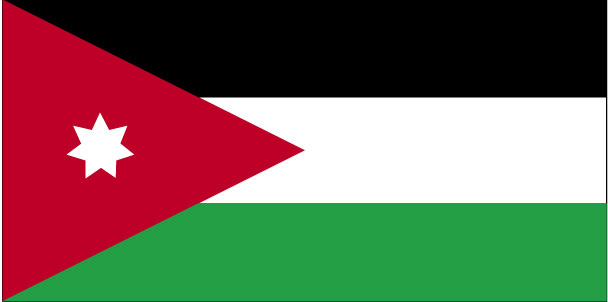
Jordan
Al Urdun
Declare Your Relationship to Jordan
CountryReports Community
- Studying1
- From Jordan0
- Jordan heritage0
- Visited0
- Want to visit0
Customs and Culture
Customs and Culture
Cultural Attributes
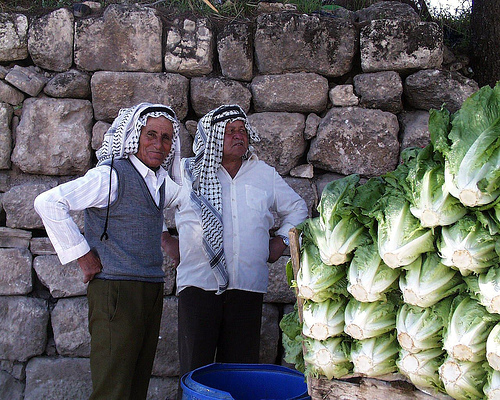
Time is not as important in Jordan as it is in Western countries. People are more important than a regimented schedule. Jordanians place great worth on the family. Jordanians are proud of their rich cultural heritage and the country’s accomplishments. Certain political topics are sensitive and should be avoided by foreign visitors.

Rose-red stone, timeless trade routes, desert wisdom
Get More Customs and Culture
5 more cultural topics for members
Social Customs & Etiquette · Diet · Family · Dating Customs · Recreation
Holidays
Independence Day
10/25Independence Day
Christmas
12/25Christmas
Jordan is a predominantly Islamic country. It is one of the few Arab countries who have opened their doors to accepting and celebrating the Christian holiday of Christmas. This is because it is one of the primary sites of the Christian history since the River Jordan was the place where Jesus Christ was baptized.
The Jordan government has made is possible for Christians to celebrate the holiday. Muslims have come to accept and respect the Christmas season in their country. Muslims have the belief that Muhammad has opened his doors and led the protection of other religions by allowing them to celebrate their own religious events.
The Christmas holiday in Jordan has gained a minority group of celebrators in the country of Jordan. A traditional greeting of the Jordanians is ‘IdahSaidanWaSanahJaidah,’ pronounced ‘eee-duh sigh-danwa-sa-naja-ee-dah, which means Happy Christmas to you.
The Christian minority in the country has tried to develop the belief of Father Christmas who is known in Jordan as Santa Claus. Traditionally in Jordan, the children must become aware of their behavior. Good behavior will lead to good gifts like toys and chocolates that will be given to them under their Christmas tree on Christmas Eve.
Christmas season starts when the weather begins to get cold. The season is also indicated to have begun when the local shops start to decorate their windows with glittering lights and stars that depict the coming birth of Christ. Glittering lights of red and green appear in the store windows which fill the Jordan air with a festive atmosphere. Christmas trees are also placed in the stores and shops and decorated with icicles, bells, and Christmas balls. Porcelain Jordanian decors and figurines with Christmas designs are also placed in the trees. However, the tendency of the local shops is not to over-exaggerate the occasion so the Islam religion will still be respected. The Christmas season ends with the celebration of the New Year.
Christmas Day and Christmas Eve celebrations of the minority Christians are celebrated in a more solemn and private ritual and mass. Christmas is practically a children’s event Midnight Mass is held in Christian churches in the country and a traditional Christmas dinner is served for the family. Roast turkey, vegetable salads like Jalapeno Poppers Salad, Jordan Seafood Salad Treat with Macaroni and Ratatoullie Salad are favorites and the traditional dish of Mansaf is the favorite family dish during Christmas dinners. Mansaf is a lamb seasoned with aromatic herbs and spices that is cooked in yogurt and served with rice.
Dates of Interest
- July - August
Ramadan, the greatest religious observance in Islam, is an annual month of fasting. The exact dates of Islamic holidays cannot be determined in advance, due to the nature of the Islamic lunar calender. Estimates are based on expected visibility of the hilal (waxing crescent moon following a new moon) and may vary according to location.
How do people greet each other in Jordan?
Greetings are important, warm, and often extended; a handshake with verbal greetings and inquiries about health is most common, and same-sex friends often exchange a kiss on each cheek.
Do
- Shake hands with each person when entering or leaving a room (except at large gatherings)
- Use greetings like 'Mar-haba' (hello) or 'Ahlan wa sahalan' (welcome)
- Ask about the other person's health as part of greeting
Don’t
- Don't use first names with strangers when greeting
Good to know
- To get someone's attention, say 'ya azizi' (my dear), 'ya akhey' (my brother), or 'ya sadiki' (my friend)
What are the dining customs in Jordan?
Meals are generous affairs centered on meat and bread; the national dish, mansaf (rice with stewed lamb and yogurt sauce), is eaten by hand from a shared tray. Coffee is important at all meals.
Do
- Eat with your right hand
- Leave a little food on your plate to show you've eaten well
- Drink Bedouin coffee slowly from small cups
Don’t
- Don't eat with your left hand
- Don't consume pork or alcohol, which Islamic law prohibits
- Don't stir Arabic or Turkish coffee (to keep the grains at the bottom)
Good to know
- Utensils are usually provided at functions with international guests
- Meals are 'fotoor' (breakfast ~7 AM), 'ghada' (~3 PM), and 'asha' (~8 PM)
What etiquette should I know when visiting a Jordanian home?
Hospitality is central: guests are greeted by both husband and wife, offered coffee or tea no matter how short the visit, and often pressed to stay for meals.
Do
- Bring gifts of flowers or sweets if invited
- Initially decline an offer before accepting it
- Shake your empty cup back and forth when you've had enough to drink
- Wait until the departing coffee is served before leaving
Don’t
- Never bring alcohol as a gift
- Don't immediately accept a gift when it is given
- Don't excessively praise children, as it's considered bad luck
- Don't discuss sensitive political topics
Good to know
- Some hosts may repeat an invitation up to three times before you accept
- Time is flexible; people matter more than a strict schedule
How should I dress in Jordan?
Clothing is always conservative and never revealing; both Western and traditional Islamic styles are worn, but modesty is expected at all times.
Do
- Dress well and modestly at all times
Don’t
- Don't wear shorts (adults and teens only wear them for athletic events)
- Don't wear revealing clothing
Are there gestures I should avoid in Jordan?
Gestures are used heavily in conversation, but the left hand and displays of affection are considered improper.
Do
- Use your right hand or both hands to pass or accept objects
Don’t
- Don't use the left hand alone to pass or accept objects
- Don't point the sole of your foot or shoe at someone (avoid crossing legs)
- Don't be affectionate in public
What is family life like in Jordan?
The extended family is close-knit and highly valued; the father heads the family and provides financially, while the mother cares for the children and household.
Good to know
- Helping another family member is considered a duty and an honor
- Marriage is the norm and families often help arrange it
- Parents often support their children after marriage
What do people do for recreation in Jordan?
Football (soccer) is popular among children, played in parks and streets, and horse and camel racing are also enjoyed.
Good to know
- The Royal family supports car racing
Last updated: 2026-07-12 · Sources: CountryReports
Photos of Jordan
Photos of Jordan


Travel and Tourism
Travel and Tourism
- Travel Alert Status
- Level 2: Exercise Increased Caution
- Currency
- Jordanian dinar (JOD)
- Time Difference
- UTC+3 (8 hours ahead of Washington, DC, during Standard Time)
- Climate
- Jordan's countryside offers a diversity of climate and scenery. Within easy driving distance of the capital city of Amman, one can visit Irbid's temperate highlands, Ajlun's majestic hills, the fertile Jordan Valley, the southern sandstone mountains, and the arid desert of the eastern plateau. Inadequate rainfall is a chronic problem. Rainfall usually occurs only from November to April; the rest of the year has bright sunshine daily and low humidity. In the spring, a desert wind brings higher temperatures; daytime summer temperatures can be hot, but nights are usually pleasant, cool, and dry. Autumn is long and pleasant; winter can sometimes bring light snow to the mountains and to Amman; and spring carpets the country's grazing lands with beautiful wildflowers.
- Airports
- 17
Read the full travel guide — health, safety, vaccinations, disease risk, sanitation, and transit details.
View full travel guideRecipes
Recipes
History
History
Historical Eras
Ancient & Classical
3000 BCE – 636
The territory of present-day Jordan was home to early Semitic peoples, the Nabataean Kingdom with its capital at Petra, and successive imperial overlords including Alexander the Great, Rome, and Byzantium. Rome incorporated Nabataea as the province of Arabia Petraea in 106 CE under Trajan. The region hosted crucial early Christian and Jewish communities, and the Dead Sea Scrolls were produced at Qumran during this era.
Islamic Caliphates
636 – 1250
Arab Muslim forces under Khalid ibn al-Walid conquered the region in 636 CE, integrating it into the expanding Islamic caliphates — Umayyad, then Abbasid. The Crusaders briefly controlled parts of Transjordan in the 12th century until Saladin's decisive victory at the Battle of Hattin in 1187 reversed their gains. The area served as a transit corridor between Arabia, Syria, and Egypt throughout this period.
Mamluk & Ottoman Rule
1250 – 1921
Mamluk slave-soldiers governed the region from Cairo from 1250 until the Ottoman Turks conquered Jordan in 1517, incorporating it into the sprawling empire for four centuries. Ottoman rule was largely decentralized, with Transjordan remaining sparsely populated and administered loosely through Damascus. The Arab Revolt of 1916, led in part by Hashimite prince Abdullah ibn Hussein, helped dismantle Ottoman authority during World War I.
British Mandate & Amirate
1921 – 1946
Following the 1921 Cairo Conference, Britain established the Amirate of Transjordan under Hashimite prince Abdullah ibn Hussein, formally recognizing him as ruler in 1923. The territory was administered under British patronage as a mandate, distinct from Palestine to the west. Abdullah built foundational institutions, including the Arab Legion, which would become the backbone of the future Jordanian state.
Hashimite Kingdom
1946 – 1999
Full independence was granted in 1946, and Abdullah proclaimed the Hashimite Kingdom of Jordan in 1949 after annexing the West Bank following the first Arab-Israeli War. His grandson King Hussein, who reigned from 1953 to 1999, navigated Cold War pressures, the loss of the West Bank in the 1967 Six-Day War, and the 1970–71 Black September conflict with Palestinian fighters. Hussein signed a landmark peace treaty with Israel in 1994 and initiated parliamentary liberalization in 1989.
Modern Jordan
1999 – present
King Abdullah II assumed the throne in February 1999 following Hussein's death and pursued aggressive economic reforms, including accession to the World Trade Organization in 2000 and engagement with the European Free Trade Association. Jordan has managed significant regional instability — including the Iraq War, the Syrian refugee crisis, and the rise of ISIS — while maintaining its role as a moderate stabilizing force in the Middle East. Ongoing challenges include water scarcity, unemployment, and balancing democratic reform with monarchical governance.
Overview
Mosaic of a man in a boat, from the Byzantine Church
Timeline of Key Events
300 BCE – 68 BCE
The Dead Sea Scrolls of Qumran, Jordan, date to this period.
The Dead Sea Scrolls of Qumran, Jordan, date to this period.
63 BCE
Rome conquers the region
Rome, led by Pompey, conquers the region. In 106 A.D., it becomes part of the Roman province of Arabia.
106
Nabatae, whose capital was Petra, became a Roman province under Trajan.
Nabatae, whose capital was Petra, became a Roman province under Trajan.
333
Alexander the Great destroyed Jordan on his way to Egypt
Alexander the Great destroyed Jordan on his way to Egypt.
363
A devastating earthquake leveled half the city of Petra, the principal city of Nabatea.
A devastating earthquake leveled half the city of Petra, the principal city of Nabatea.
636
Khalid ibnal-Walid brings the region under Muslim rule.
Khalid ibnal-Walid brings the region under Muslim rule.
1037
Seljuk Turks begin to rule Jordan
Seljuk Turks begin to rule Jordan.
Read the full history profile — narrative overview, defining eras, and the complete timeline in one place.
View expanded historyInteresting Facts
Interesting Facts
Petra (lit. Rock) was the capital city of the Nabataeans, a tribe of pre-Roman Arabs who dominated the region around the Sixth century BC. Located at the crossroads of ancient trade routes, the city survived on toll and taxes collected from traders. Despite several attempts to conquer their capital, the Nabataeans remained practically independent until the defeat of Antony and Cleopatra and the reunification of the Roman Empire by Octavian in 31 BC. In 106, the Romans under Trajan finally captured Petra to mark the beginning of the decline of the city. The city remained unknown to the Western World for hundreds of years until a Swiss explorer, J.L. Burckhardt, heard about its existence from the local Bedouins in 1812. The Nabataeans carved their Capital in the canyons and hills of sandstone of Wadi Araba in Jordan. The entrance to the city is through The Alley (Al-Siq), a winding trail at the bottom of the canyon. Most famous is The Treasury (Al Khazneh), which fascinating façade was featured in many movies. Carved in the pink sandstone, the structure is 40 m high and about 30x30 m wide. Its architecture has been certainly strongly influenced by the Romans, which suggests it was built around the First century AD. The city includes other fascinating monuments and structures, such as Urn Tomb and the Royal Tombs, the Colonnade Street, the Temples of Dushara and Al-Uzza, and the High Place of Sacrifice.
Jordan has the world's lowest suicide rate at 0.04 per 1,000 people.
In 1978 King Hussein married an American of Syrian heritage, Lisa Halaby. She took the name Noor al-Hussein (Light of Hussein) when she converted to Islam.
The concept of privacy is alien to Jordanians; the closest word in Arabic translates into the English word &@8220;loneliness.” An old proverb says, “Where there are no people, there is hell.”
See every fact — trivia, oddities, and curious tidbits gathered from across the country.
View all interesting factsGeography and Environment
Geography and Environment
- Terrain
- mostly desert plateau in east, highland area in west; Great Rift Valley separates East and West Banks of the Jordan River
- Climate
- Jordan's countryside offers a diversity of climate and scenery. Within easy driving distance of the capital city of Amman, one can visit Irbid's temperate highlands, Ajlun's majestic hills, the fertile Jordan Valley, the southern sandstone mountains, and the arid desert of the eastern plateau. Inadequate rainfall is a chronic problem. Rainfall usually occurs only from November to April; the rest of the year has bright sunshine daily and low humidity. In the spring, a desert wind brings higher temperatures; daytime summer temperatures can be hot, but nights are usually pleasant, cool, and dry. Autumn is long and pleasant; winter can sometimes bring light snow to the mountains and to Amman; and spring carpets the country's grazing lands with beautiful wildflowers.
- Natural Hazards
- droughts; periodic earthquakes
- Current Environmental Issues
- limited natural fresh water resources; deforestation; overgrazing; soil erosion; desertification
Read the full geography and environment profile — terrain, climate, natural resources, hazards, land use, and international agreements.
View full geographyPeople & Demographics
People & Demographics
Religion
Languages Spoken
Arabic (official), English widely understood among upper and middle classes
- Arabic
Population
- Population
- 10,820,644
- Population in Major Urban Areas
- AMMAN (capital) 1.179 million
- Nationality Noun
- Jordanian(s)
- Ethnic Groups
- Arab 98%, Circassian 1%, Armenian 1%
Education
- Literacy Definition
- age 15 and over can read and write
Health Information
- Life Expectancy at Birth
- Life expectancy at birth in Jordan stands at approximately 75 years overall, with women living slightly longer than men — around 77 years for females compared to roughly 73 years for males. These figures place Jordan among the higher-performing countries in the Middle East and North Africa region when it comes to population health outcomes. Jordan's relatively strong life expectancy reflects decades of investment in healthcare infrastructure, expanded access to medical services, and improvements in maternal and child health. The country has developed a network of public hospitals, primary care centers, and specialized medical facilities, and it has long been recognized as a regional hub for medical tourism, attracting patients from neighboring countries seeking quality care. Key drivers of improved longevity include reductions in infant and child mortality rates, better management of communicable diseases, and increased access to clean water and sanitation in both urban and rural areas. Jordan has also made meaningful progress in immunization coverage, which has helped control diseases that historically contributed to early death. At the same time, Jordan faces growing pressure from non-communicable diseases, which are now the leading cause of death in the country. Cardiovascular disease, diabetes, and cancer account for a significant share of mortality, driven in part by rising rates of obesity, sedentary lifestyles, and dietary changes associated with urbanization. These chronic conditions represent the primary challenge to further extending life expectancy in the coming decades. Jordan's healthcare system has also been tested by large waves of refugees, particularly from Syria and Iraq, placing additional strain on services and resources. Despite this pressure, the country has managed to maintain relatively stable health indicators for its population. Ongoing investment in preventive care, health education, and chronic disease management will be critical to sustaining and improving life expectancy trends in the years ahead.
Life Expectancy
- Life Expectancy at Birth
- Life expectancy at birth in Jordan stands at approximately 75 years overall, with women living slightly longer than men — around 77 years for females compared to roughly 73 years for males. These figures place Jordan among the higher-performing countries in the Middle East and North Africa region when it comes to population health outcomes. Jordan's relatively strong life expectancy reflects decades of investment in healthcare infrastructure, expanded access to medical services, and improvements in maternal and child health. The country has developed a network of public hospitals, primary care centers, and specialized medical facilities, and it has long been recognized as a regional hub for medical tourism, attracting patients from neighboring countries seeking quality care. Key drivers of improved longevity include reductions in infant and child mortality rates, better management of communicable diseases, and increased access to clean water and sanitation in both urban and rural areas. Jordan has also made meaningful progress in immunization coverage, which has helped control diseases that historically contributed to early death. At the same time, Jordan faces growing pressure from non-communicable diseases, which are now the leading cause of death in the country. Cardiovascular disease, diabetes, and cancer account for a significant share of mortality, driven in part by rising rates of obesity, sedentary lifestyles, and dietary changes associated with urbanization. These chronic conditions represent the primary challenge to further extending life expectancy in the coming decades. Jordan's healthcare system has also been tested by large waves of refugees, particularly from Syria and Iraq, placing additional strain on services and resources. Despite this pressure, the country has managed to maintain relatively stable health indicators for its population. Ongoing investment in preventive care, health education, and chronic disease management will be critical to sustaining and improving life expectancy trends in the years ahead.
Read the full people and society profile — demographics, health, education, religion, languages, and notable people.
View full people and societyGovernment & Politics
Government & Politics
Country Identity
- Country Name
- Jordan
- Full Country Name
- Hashemite Kingdom of Jordan
- Local - Long
- Al Mamlakah al Urduniyah al Hashimiyah
- Local - Short
- Al Urdun
- Former Name
- Transjordan
Government Structure
- Government Type
- constitutional monarchy
- Legal System
- based on Islamic law and French codes; judicial review of legislative acts in a specially provided High Tribunal; has not accepted compulsory ICJ jurisdiction
- Executive Branch
- chief of state: King ABDALLAH II (since 7 February 1999); Crown Prince HUSSEIN (born 28 June 1994), eldest son of King ABDALLAH II, was designated Crown Prince in July 2009 and is first in line to inherit the throne head of government: Prime Minister Jafar HASSAN (since October 2024); the Prime Minister oversees the day-to-day functions of government and chairs the Cabinet cabinet: Cabinet appointed by the prime minister in consultation with the monarch elections: none; the monarch is hereditary; prime minister appointed by the monarch
- Legislative Branch
- Bicameral National Assembly or Majlis al-'Umma consists of the Senate, also called the House of Notables (Majlis al-Ayan) (65 seats; members appointed by the monarch from designated categories of public figures; members serve four-year terms) and the House of Representatives, also called the House of Deputies (Majlis al-Nuwaab) (138 seats; members elected by popular vote on the basis of proportional representation to serve four-year terms); note - a quota system reserves seats for women, Christians, and Circassians/Chechens. Elections: House of Representatives - last held on 10 September 2024 (next to be held in 2028). Election results: House of Representatives - the Islamic Action Front (IAF) and its allies made significant gains, winning approximately 31 seats and emerging as the largest single bloc in parliament; independent candidates and tribal-affiliated members secured the majority of remaining seats; women won 18 seats, surpassing the minimum quota threshold. Note: The House of Representatives has been convened and dissolved by the monarch several times since 1974. In November 1989, the first parliamentary elections in 22 years were held, and political parties were not legalized until 1992. The 2024 elections were conducted under a revised electoral law that expanded the size of the House from 130 to 138 seats and strengthened party-based representation, reflecting ongoing efforts by King ABDALLAH II to encourage a more structured and party-oriented political landscape.
- Judicial Branch
- Court of Cassation; Supreme Court (court of final appeal)
- Suffrage
- 18 years of age; universal
- Constitution
- 8-Jan-52
- Independence
- 25 May 1946 (from League of Nations mandate under British administration)
- National Holiday
- Independence Day, 25 May (1946)
Capital City
- Capital Name
- Amman
- Capital - geographic coordinate
- 31 57 N, 35 56 E
- Capital Time Difference
- UTC+3 (8 hours ahead of Washington, DC, during Standard Time)
in the 13th century B.C., the Ammonites named their main city "Rabbath Ammon"; "rabbath" designated "capital," so the name meant "The Capital of [the] Ammon[ites]"; over time, the "Rabbath" came to be dropped and the city became known simply as "Ammon" and then "Amman"
Military
Branches: Jordanian Armed Forces (JAF): Royal Jordanian Land Force (RJLF), Royal Jordanian Navy, Royal Jordanian Air Force (Al-Quwwat al-Jawwiya al-Malakiya al-Urduniya, RJAF), Special Operations Command (Socom); Public Security Directorate (normally falls under Ministry of Interior, but comes under JAF in wartime or crisis)
Embassy / Diplomatic Mission
U.S. Embassy in Amman
Al-Umawyeen Street, Abdoun neighborhood, PO Box 354, Amman 11118
Telephone: [962] (6) 590-6950
Emergency after-hours telephone: [962] (6) 590-6500
Facsimile: [962] (6) 592-0163
E-mail: Amman-ACS@state.gov
The U.S. Embassy is open Sunday through Thursday, and is closed on all U.S. and Jordanian holidays as well as the last Thursday of every month.
Read the full government profile — flag symbolism, national anthem, and other national symbols.
View full government detailsEconomy
Economy
Jordan is a small Arab country with limited supplies of water, oil, and other natural resources, making it heavily dependent on external assistance and remittances.
Snapshot
- Currency Name and Code
- Jordanian Dollar (JOD)
- GDP — official exchange rate
- $11,510,000,000 (USD)
- GDP Real Growth Rate
- 2.6%
- Gini Index
- 36.4
News & Weather
News & Weather
Current Weather
Latest News
Trump calls LeBron James 'maybe a racist' compared to Michael Jordan - USA Today
USA Today · 2d ago
Air Jordan 9 Retro Boot NRG 'Wheat' Gum Lug Sole, AJ Timberlands, Cold-Weather Build: Where to Buy - Men's Journal
Men's Journal · 1d ago
Jordan parliament erupts over proposal to honour dead US troops - The New Arab
The New Arab · 1h ago
Former NFL guard Jordan Devey, 38, died by suicide, family says - ESPN
ESPN · 2d ago
Big Grass Fire forces evacuations in Jordan Valley along Idaho border - KTVB
KTVB · 17h ago
Saudi Arabia, Jordan and Iraq hit by drones as US pauses strikes - NewsNation
NewsNation · 1h ago
Michael Jordan hugs David Beckham during luxurious Ibiza vacation with their wives - New York Post
New York Post · 1h ago
Saints' Cam Jordan gives the inspiration behind new blonde hair he's rocking this season - NOLA.com
NOLA.com · 2d ago
News via Google News
Climate Overview
Jordan's countryside offers a diversity of climate and scenery. Within easy driving distance of the capital city of Amman, one can visit Irbid's temperate highlands, Ajlun's majestic hills, the fertile Jordan Valley, the southern sandstone mountains, and the arid desert of the eastern plateau.
Inadequate rainfall is a chronic problem. Rainfall usually occurs only from November to April; the rest of the year has bright sunshine daily and low humidity. In the spring, a desert wind brings higher temperatures; daytime summer temperatures can be hot, but nights are usually pleasant, cool, and dry. Autumn is long and pleasant; winter can sometimes bring light snow to the mountains and to Amman; and spring carpets the country's grazing lands with beautiful wildflowers.
Videos
Videos
2 curated YouTube videos.
Source: YouTube
Source: YouTube
Frequently Asked Questions
Frequently Asked Questions
What is the population of Jordan?
How do people greet each other in Jordan?
What are the dining customs in Jordan?
What etiquette should I know when visiting a Jordanian home?
How should I dress in Jordan?
Are there gestures I should avoid in Jordan?
What is family life like in Jordan?
What do people do for recreation in Jordan?
What is the capital of Jordan?
Where is Jordan located?
What countries border Jordan?
What is the main religion practiced in Jordan?
What currency does Jordan use?
What language is spoken in Jordan?
What is Jordan known for?
Who rules Jordan and how is the country governed?
Last reviewed 2026