
 English
 Español
 中文
中文 हिन्दी
 Français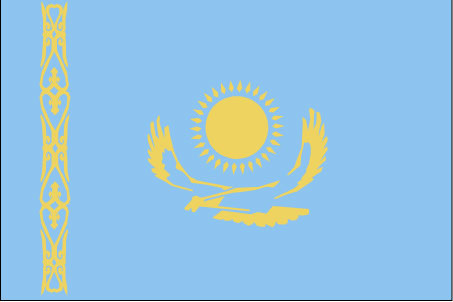
Kazakhstan
Declare Your Relationship to Kazakhstan
CountryReports Community
- Studying0
- From Kazakhstan0
- Kazakhstan heritage0
- Visited0
- Want to visit0
Customs and Culture
Customs and Culture
Cultural Attributes
Hospitality is an important part of Kazak culture. A traveler will be put up for the night in any Kazak's home. Kazaks traditionally have large birthday parties. The traditional wedding is called the toi and is an important event for honoring the married couple and assembling extended family.

Steppe of Boundless Horizons
Get More Customs and Culture
5 more cultural topics for members
Social Customs & Etiquette · Diet · Family · Dating Customs · Recreation
Holidays
Republic Day
12/12Independence
Christmas
12/25Christmas
Kazakhstan is a country whose religion is predominantly Islamic in nature. However, the presence of a large number of Russian Orthodox Christians has led the nation to celebrate Christmas. Although Christmas may be celebrated by the Kazakhs, the New Year holiday is a festival and celebration that is more grand and festive.
The traditional greeting of the people is S Rozhdestvom which is Russian, a language that is still commonly used in the country. The New Year greeting S novym godom is more common as the locals are more excited about the New Year Celebrations than Christmas celebrations.
Santa Claus is known as Grandfather Frost and is called Dyed Moroz pronounced “Dead Morose.” by the local Kazakhs. Traditions say that he is accompanied by his granddaughter named Snegurochka (Snow Maiden). The description for Santa Claus is not of the fat and huggable figure that has been known for centuries. Instead he is of slender build and wears long lavish robes and a long white beard. Traditions for the country state that Santa does not give gifts during Christmas Eve but rather during New Year’s Eve. Customs say that he brings gifts and places them under the Christmas tree.
Christmas is usually on the January the 7th as the country still observes the Julian calendar which is 13 days later than the Gregorian calendar. Kazakhstan New Years day is not only on December 31st but usually is January 14th which is considered the Old New Year’s Day Celebration.
The New Year’s Day celebration is more vibrant and festive with gifts like clothes, jewelry and native products exchanged on this day. The little children expect their gifts on this day rather than Christmas. It has also been a tradition that Santa places gifts under their pillows during New Year’s Eve rather than Christmas Eve. The Christmas festivities usually end on the Old New Year’s Day Celebrations.
On Christmas Day and Eve, traditions set that midnight masses and ceremonies are to be held in churches and cathedrals and are attended by the Christian community. Masses are held in honor of the solemnity of the occasion. A tradition of some families is to also prepare a feast for the midnight dinner. Roast turkey, cakes and salads are prepared to meet the advent of the savior Jesus Christ. Dishes like Lamb dumplings, lemon chicken and Kazakh rice are served during dinner. The Lemon Chicken dish has ingredients like Olive oil, whole chicken, ground ginger, Paprika, cloves of garlic, onions, saffron, salt, black pepper, chicken stock, green olives and lemon rinds. Traditions during dinner also state that the family says the Troparion chant or prayer in honor of the child Jesus who was born that night.
Dates of Interest
- December 25th
Kazakhstan is a country whose people are predominantly Islamic. However, the presence of a large number of Russian Orthodox Christians has led the nation to celebrate Christmas. Although Christmas may be celebrated by the Kazakhs, the New Year holiday is a festival and celebration that is more grand and festive. The traditional greeting of the people is S Rozhdestvom. The New Year greeting S novym godom is more common as the locals are more excited about the New Year Celebrations than Christmas celebrations. Santa Claus is known as Grandfather Frost and is called Dyed Moroz pronounced “Dead Morose.” by the local Kazakhs. Traditions say that he is accompanied by his granddaughter named Snegurochka (Snow Maiden). The description for Santa Claus is not of the fat and huggable figure that has been known for centuries.
How do people greet each other in Kazakhstan?
Friends usually embrace when meeting and then talk about the well-being of each other's livestock.
Do
- Embrace friends when you meet them
- Ask about the health of their livestock
What are dining customs like in Kazakhstan?
Meals often begin with tea (chai) served alongside breads, nuts and sweets, followed by a main dish that may be boiled mutton, and the oldest family member has the honor of serving.
Do
- Accept offers of refreshments, as a host is offended if you refuse
- Try traditional dishes like besbarmak, kuyrdak, pulau and qazy
- Enjoy milky drinks such as koumyss (fermented mare's milk) and shubat (fermented camel milk)
Don’t
- Don't decline offers of food or drink from your host
Good to know
- At a dastarkhan feast an entire sheep may be slaughtered, with parts given to family members as symbols of desired traits (e.g., the tongue for better speaking)
- Guests may be given fermented mare's milk to drink
What etiquette should visitors know in Kazakhstan?
Hospitality is central to Kazak culture; guests are welcomed warmly, made comfortable, and even a traveler will be put up for the night in any Kazak's home.
Do
- Accept invitations such as "Come to my dastarkhan"
- Allow yourself to rest as a guest
Don’t
- Don't ask your host questions, as it is considered bad manners
- Don't take off your shoes in someone's home
How do people dress in Kazakhstan?
Urban Kazaks wear Western-style clothes, while traditionally Kazaks liked to wear boots with a pair of felt stockings in winter.
Are there gestures to avoid in Kazakhstan?
Pointing and taking off one's shoes are considered impolite.
Don’t
- Don't point
- Don't take off your shoes
What is family life like in Kazakhstan?
Just over half of Kazakhstanis live in cities, mostly in apartments, and due to a housing shortage many families live in small spaces or with relatives.
Good to know
- By tradition, the youngest son looks after his parents in old age and lives with or near them
- Women who marry into a Kazakh family are expected to show special respect for their husband's parents
- Some traditional herders live in felt tents called yurtas that can be packed up in an hour
What sports and games are popular in Kazakhstan?
Kazakhs created many games played on horseback, sometimes at wild speeds, along with other traditional pastimes.
Good to know
- Kokpar is like polo, with horseback teams competing to drag a headless goat carcass into the opponent's goal
- Kumis alu ("pick up the coin") involves galloping riders bending to grab a coin or handkerchief
- Kyz kuu ("overtake the girl") is a galloping chase game between a girl and a male rider
- Boys play assyk, tossing a small sheep bone toward a pile of bones
Last updated: 2026-07-12 · Sources: CountryReports
Photos of Kazakhstan
Photos of Kazakhstan


Travel and Tourism
Travel and Tourism
- Travel Alert Status
- Level 2: Exercise Increased Caution
- Currency
- tenge (KZT)
- Time Difference
- UTC+6 (11 hours ahead of Washington, DC, during Standard Time) time zone note: Kazakhstan has two time zones
- Climate
- The climate throughout Kazakhstan is continental and dry, and there are four distinct seasons. The weather in Almaty is very moderate, and consecutive rainy days are rare. Winter temperatures and snowfall are rarely extreme (i.e., rarely below 0°F), and the wind is light. During the 4-5-month summer average high temperatures are usually in the low to mid-80's F. "Golden Fall," is perhaps the most pleasant season, particularly in Almaty, with brilliantly clear, dry days, colorful autumn leaves, and pleasant temperatures. In Astana strong winds, long winters, and December-January temperatures periodically fall below 0°F. The summers are generally dry and sunny, but the weather changes rapidly and it is not uncommon to have a rainy morning followed by a sunny afternoon. Average summer highs in Astana are in the low 80's.
- Airports
- 392
Read the full travel guide — health, safety, vaccinations, disease risk, sanitation, and transit details.
View full travel guideRecipes
Recipes
History
History
Historical Eras
Ancient Nomadic Steppe
100 BCE – 1219
Nomadic tribes inhabited the vast Kazakh steppe from at least the first century BC, with successive confederations — including the Huns, Göktürks, and Kipchaks — dominating the region through the early 13th century. Major Silk Road cities such as Taraz and Turkestan flourished along northern trade routes, blending sedentary and nomadic cultures. This era established the pastoral, livestock-based way of life that would define Kazakh identity for centuries.
Mongol Rule & Kazakh Khanate
1219 – 1600
Genghis Khan's forces swept through the region between 1219 and 1224, incorporating it into the Mongol Empire and its successor Chagatai and White Horde khanates. From this Mongol substrate, a distinct Kazakh people crystallized by the 15th century, formally establishing the Kazakh Khanate around 1465. By the mid-16th century, the Kazakhs had consolidated a shared language, culture, and economy, reaching the zenith of their unified political power by the early 18th century.
Three Hordes Era
1600 – 1731
In the early 17th century, the Kazakh Khanate fractured into three tribal confederations — the Great, Middle, and Little Hordes — each governing distinct territories through extended kin networks. Political disunion and devastating raids by the Dzungar (Oirat) confederation from the east gravely weakened Kazakh resistance, culminating in the catastrophic 'Great Disaster' of the 1720s. The inability to mount a unified defense ultimately pushed the Little Horde to seek Russian protection in 1731.
Russian Imperial Rule
1731 – 1920
The Little Horde's 1731 treaty with Russia began a gradual absorption of Kazakh lands; by the 1860s, tsarist forces had seized territories belonging to all three hordes and imposed a formal administrative system. Mass settlement of Russian and Ukrainian peasants from the 1860s onward disrupted traditional nomadic pastures and provoked sustained resistance, culminating in the major uprising of 1916. A brief experiment in Kazakh autonomy under the Alash Orda movement collapsed with Bolshevik victory in the ensuing civil war.
Soviet Kazakhstan
1920 – 1991
Kazakhstan became an autonomous Soviet republic in 1920 and a full union republic in 1936; forced collectivization in the late 1920s and early 1930s triggered a catastrophic famine that killed an estimated 1.5 million Kazakhs. Stalin's deportations swelled the population with exiled Koreans, Volga Germans, Chechens, and others, while Khrushchev's Virgin Lands campaign of the 1950s–60s brought further Slavic settlers, reducing ethnic Kazakhs to a minority. The republic also hosted the Semipalatinsk nuclear test site and the Baikonur Cosmodrome, from which Yuri Gagarin launched in 1961.
Independent Kazakhstan
1991 – present
Kazakhstan declared independence on December 16, 1991, and was admitted to the United Nations in 1992; Nursultan Nazarbayev dominated politics as president until 2019, overseeing a resource-driven economic transformation anchored by vast oil, gas, and mineral wealth. Major pipeline agreements with China in 1997 and the opening of the Caspian Pipeline Consortium in 2001 integrated Kazakhstan into global energy markets, while the capital was relocated to Astana in 1997 to anchor development of the steppe interior. The country continues to navigate nation-building, governance reform, and economic diversification beyond the extractive sector.
Overview
The majority of Kazakhstanis are ethnic Kazakh; other ethnic groups include Russian, Ukrainian, Uzbek, German, and Uyghur. Religions are Sunni Muslim, Russian Orthodox, Protestant, and other. Kazakhstan is a bilingual country. The Kazakh language has the status of the "state" language, while Russian is declared the "official" language. Russian is used routinely in business; 64.4% of the population speaks the Kazakh language. Education is universal and mandatory through the secondary level, and the literacy rate is 98.8%.
Timeline of Key Events
1219 – 1224
Mongol tribes led by Genghis Khan invade Kazakhstan.
Mongol tribes led by Genghis Khan invade Kazakhstan and Central Asia. Later they become assimilated by Turkic tribes that make up the majority in their empire.
1601 – 1700
Kazakhs split into three tribal unions.
Kazakhs split into three tribal unions, the Elder, Middle and Lesser Zhuzes, or Hordes, which were led by Khans.
1868 – 1916
Thousands of Russian and Ukrainian peasants are brought in to settle Kazakh lands.
Thousands of Russian and Ukrainian peasants are brought in to settle Kazakh lands; first industrial enterprises set up.
1917
Civil war breaks out following the Bolshevik revolution in Russia.
Civil war breaks out following the Bolshevik revolution in Russia.
1920
Kazakhstan becomes an autonomous republic of the USSR.
Kazakhstan becomes an autonomous republic of the USSR. Until 1925 it is called the Kyrgyz Autonomous Province to distinguish its people from the Cossacks.
1932 – 1933
Stalin imposed terror and famine on the Ukraine, Kuban and Kazakhstan.
Stalin imposed terror and famine on the Ukraine, Kuban and Kazakhstan that was carried out by Lazar Kaganovich.
1936
Kazakhstan becomes a full union republic of the USSR.
Kazakhstan becomes a full union republic of the USSR.
Read the full history profile — narrative overview, defining eras, and the complete timeline in one place.
View expanded historyInteresting Facts
Interesting Facts
When a child loses a tooth they drop their tooth under the bathtub and say “Mouse, mouse, bring me a new tooth, please.”
For many years, the capital of Kazakhstan was Almaty, the largest city in the country. In 1998, the capital was moved to Astana. Almaty remains an important business centre.
Lake Balkash in eastern Kazakhstan contains two kinds of water: salt water in the east and fresh water in the west.
Almaty was once a stop on the Silk Road - an overland trade route between China and Europe from the 1st century to the 16th century. Caravans regularly travelled the route across Asia until the Dutch, Portuguese and English established sea routes to the East.
See every fact — trivia, oddities, and curious tidbits gathered from across the country.
View all interesting factsGeography and Environment
Geography and Environment
- Terrain
- extends from the Volga to the Altai Mountains and from the plains in western Siberia to oases and desert in Central Asia
- Climate
- The climate throughout Kazakhstan is continental and dry, and there are four distinct seasons. The weather in Almaty is very moderate, and consecutive rainy days are rare. Winter temperatures and snowfall are rarely extreme (i.e., rarely below 0°F), and the wind is light. During the 4-5-month summer average high temperatures are usually in the low to mid-80's F. "Golden Fall," is perhaps the most pleasant season, particularly in Almaty, with brilliantly clear, dry days, colorful autumn leaves, and pleasant temperatures. In Astana strong winds, long winters, and December-January temperatures periodically fall below 0°F. The summers are generally dry and sunny, but the weather changes rapidly and it is not uncommon to have a rainy morning followed by a sunny afternoon. Average summer highs in Astana are in the low 80's.
- Natural Hazards
- earthquakes in the south, mudslides around Almaty
- Current Environmental Issues
- radioactive or toxic chemical sites associated with former defense industries and test ranges scattered throughout the country pose health risks for humans and animals; industrial pollution is severe in some cities; because the two main rivers which flowed into the Aral Sea have been diverted for irrigation, it is drying up and leaving behind a harmful layer of chemical pesticides and natural salts; these substances are then picked up by the wind and blown into noxious dust storms; pollution in the Caspian Sea; soil pollution from overuse of agricultural chemicals and salination from poor infrastructure and wasteful irrigation practices
Read the full geography and environment profile — terrain, climate, natural resources, hazards, land use, and international agreements.
View full geographyPeople & Demographics
People & Demographics
Religion
Languages Spoken
Kazakh (Qazaq, state language) 64.4%, Russian (official, used in everyday business, designated the "language of interethnic communication") 95%
- Kazakh
- Russian
Population
- Population
- 19,900,000
- Population in Major Urban Areas
- Almaty 1.426 million; ASTANA (capital) 664,000
- Nationality Noun
- Kazakhstani(s)
- Ethnic Groups
- Kazakh (Qazaq) 53.4%, Russian 30%, Ukrainian 3.7%, Uzbek 2.5%, German 2.4%, Uygur 1.4%, other 6.6% (1999 census)
- Language Note
- Kazakhstan is in the process of changing the alphabet from Cyrillic to Latin.
Education
- Literacy Definition
- age 15 and over can read and write
Health Information
- Life Expectancy at Birth
- Life expectancy at birth in Kazakhstan has shown notable improvement over recent decades, reflecting advances in healthcare infrastructure, public health initiatives, and rising living standards across the country. As of the most recent available data, the overall life expectancy at birth in Kazakhstan stands at approximately 74 years, with women living significantly longer than men. Female life expectancy is estimated at around 78 years, while male life expectancy lags behind at roughly 70 years — a gap that is common across Central Asian and post-Soviet nations but remains a point of focus for health policymakers. This gender disparity is influenced by several factors, including higher rates of cardiovascular disease among men, greater alcohol consumption, occupational hazards, and lower rates of preventive healthcare utilization among the male population. Cardiovascular disease remains the leading cause of death in Kazakhstan overall, accounting for a substantial share of mortality across all age groups. During the Soviet era, life expectancy in the region experienced both growth and setbacks, and the economic turmoil following the dissolution of the USSR in 1991 contributed to a temporary decline in health outcomes. However, Kazakhstan's oil-driven economic growth in the 2000s helped fund significant investments in hospitals, medical training, and health promotion programs. The government has also pursued national health programs aimed at reducing non-communicable diseases, improving maternal and child health, and expanding access to primary care in rural and remote areas. Infant and child mortality rates have declined considerably, contributing positively to overall life expectancy figures. Maternal health services have also improved, with higher rates of skilled birth attendance and prenatal care compared to earlier decades. Despite these gains, Kazakhstan still faces challenges including environmental health concerns — particularly in regions affected by the legacy of Soviet-era industrial and nuclear activity — as well as high rates of smoking and alcohol use that continue to suppress life expectancy, especially among men. Continued investment in preventive medicine and lifestyle health education is considered essential to closing remaining gaps with higher-income nations.
Life Expectancy
- Life Expectancy at Birth
- Life expectancy at birth in Kazakhstan has shown notable improvement over recent decades, reflecting advances in healthcare infrastructure, public health initiatives, and rising living standards across the country. As of the most recent available data, the overall life expectancy at birth in Kazakhstan stands at approximately 74 years, with women living significantly longer than men. Female life expectancy is estimated at around 78 years, while male life expectancy lags behind at roughly 70 years — a gap that is common across Central Asian and post-Soviet nations but remains a point of focus for health policymakers. This gender disparity is influenced by several factors, including higher rates of cardiovascular disease among men, greater alcohol consumption, occupational hazards, and lower rates of preventive healthcare utilization among the male population. Cardiovascular disease remains the leading cause of death in Kazakhstan overall, accounting for a substantial share of mortality across all age groups. During the Soviet era, life expectancy in the region experienced both growth and setbacks, and the economic turmoil following the dissolution of the USSR in 1991 contributed to a temporary decline in health outcomes. However, Kazakhstan's oil-driven economic growth in the 2000s helped fund significant investments in hospitals, medical training, and health promotion programs. The government has also pursued national health programs aimed at reducing non-communicable diseases, improving maternal and child health, and expanding access to primary care in rural and remote areas. Infant and child mortality rates have declined considerably, contributing positively to overall life expectancy figures. Maternal health services have also improved, with higher rates of skilled birth attendance and prenatal care compared to earlier decades. Despite these gains, Kazakhstan still faces challenges including environmental health concerns — particularly in regions affected by the legacy of Soviet-era industrial and nuclear activity — as well as high rates of smoking and alcohol use that continue to suppress life expectancy, especially among men. Continued investment in preventive medicine and lifestyle health education is considered essential to closing remaining gaps with higher-income nations.
Read the full people and society profile — demographics, health, education, religion, languages, and notable people.
View full people and societyGovernment & Politics
Government & Politics
Country Identity
- Country Name
- Kazakhstan
- Full Country Name
- Republic of Kazakhstan
- Local - Long
- Qazaqstan Respublikasy
- Former Name
- Kazakh Soviet Socialist Republic
Government Structure
- Government Type
- republic
- Legal System
- based on civil law system
- Executive Branch
- chief of state: President Kassym-Jomart TOKAYEV (since 20 March 2019); note: Nursultan NAZARBAYEV, who ruled Kazakhstan from independence in 1991 until his resignation on 19 March 2019, retains significant influence as the former head of state and longtime chairman of the ruling Nur Otan party; TOKAYEV won a snap presidential election held on 9 June 2019 and was reelected on 20 November 2022 with approximately 81.3% of the vote head of government: Prime Minister Olzhas BEKTENOV (since 6 February 2024); First Deputy Prime Minister Roman SKLYAR (since 2024) cabinet: Council of Ministers appointed by the president elections: president elected by popular vote for a seven-year term, with a two-term limit introduced under constitutional reforms adopted in 2022; election last held on 20 November 2022 (next to be held in 2029); prime minister appointed by the president with approval of the Mazhilis (lower house of Parliament) election results: Kassym-Jomart TOKAYEV reelected president; percent of vote - Kassym-Jomart TOKAYEV 81.3%, Zhiguli DAYRABAEV 3.4%, Nurlan AUHANOV 2.3%, other candidates received the remainder note: Following widespread protests in January 2022, President TOKAYEV initiated a series of constitutional and political reforms aimed at reducing the concentration of executive power. A constitutional referendum held in June 2022 introduced significant changes, including presidential term limits, the re-legalization of opposition parties, and adjustments to the balance of power between the executive and legislative branches. These reforms were widely seen as an effort to distance the government from the NAZARBAYEV era and shift Kazakhstan toward a more pluralistic political model, though critics note that meaningful independent oversight remains limited.
- Legislative Branch
- Bicameral Parliament consists of the Senate (50 seats; 10 senators are appointed by the president; 40 members are indirectly elected by regional representative bodies — 2 from each of the 17 regions, the capital Astana, and the cities of Almaty and Shymkent — to serve six-year terms, with half of the elected members up for election every three years) and the Mazhilis (98 seats; 98 members elected to five-year terms, with 69 elected from single-member constituencies and 29 elected from party lists by proportional representation). Elections: Senate — last indirect elections held in January 2023; Mazhilis — last held on 19 March 2023, following the dissolution of parliament and early elections called by President Kassym-Jomart Tokayev as part of broader political reforms. Election results: Senate — seats held by regional representatives and presidential appointees; party affiliation largely reflects pro-government alignment. Mazhilis — percent of vote by party: Amanat (formerly Nur Otan) approximately 53.9%, Auyl 10.9%, Respublica 8.6%, Ak Zhol 8.4%, QHP (People's Party of Kazakhstan) 6.8%; seats by party: Amanat 62, Auyl 8, Respublica 6, Ak Zhol 6, QHP 5, independents and others 11; note — the 2023 elections were the first under reformed electoral rules intended to broaden political competition and reduce single-party dominance.
- Judicial Branch
- Supreme Court (44 members); Constitutional Council (7 members)
- Suffrage
- 18 years of age; universal
- Constitution
- adopted by national referendum 30 August 1995; first post-independence constitution was adopted 28 January 1993
- Independence
- 16 December 1991 (from the Soviet Union)
- National Holiday
- Republic Day, 25 October (1990)
Capital City
- Capital Name
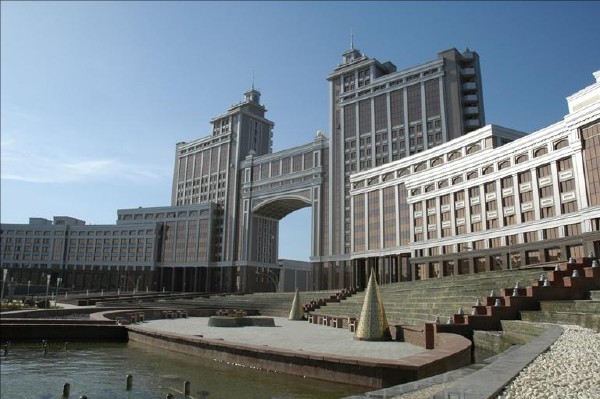
- Astana
- Capital - geographic coordinate
- 51 10 N, 71 25 E
- Capital Time Difference
- UTC+6 (11 hours ahead of Washington, DC, during Standard Time) time zone note: Kazakhstan has two time zones
the name means "capital city" in Kazakh
note: on 17 September 2022, Kazakhstan changed the name of its capital city from Nur-Sultan back to Astana; this was not the first time the city had its name changed; founded in 1830 as Akmoly, it became Akmolinsk in 1832, Tselinograd in 1961, Akmola (Aqmola) in 1992, Astana in 1998, and Nur-Sultan in 2019; the latest name change occurred just three and a half years after the city was renamed to honor a long-serving (28-year) former president, who subsequently fell out of favor
Military
Branches: Kazakhstan Armed Forces: Ground Forces, Navy, Air Mobile Forces, Air Defense Forces
Embassy / Diplomatic Mission
U.S. Embassy Astana
Rakhymzhan Koshkarbayev Avenue, No. 3.
Astana, Kazakhstan, 010010
Telephone: 7-7172-70-21-00
Facsimile: 7-7172-70-22-80
Emergency after-hours telephone: 8-7172-70-22-00
E-mail: USAKZ@state.gov
U.S. Consulate General Almaty
97 Zholdasbekov Street
Samal-2
Almaty, Kazakhstan 050059
Telephone: 7-727-250-76-12/17
Emergency after-hours telephone: 7-727-250-76-12/17
Facsimile: 7-727-250-48-84
E-mail: USAKZ@state.gov
Read the full government profile — flag symbolism, national anthem, and other national symbols.
View full government detailsEconomy
Economy
Kazakhstan, the largest of the former Soviet republics in territory excluding Russia, possesses enormous fossil fuel reserves as well as plentiful supplies of other minerals and metals. It is also a major agricultural producer, with significant livestock and grain output.
Snapshot
- Currency Name and Code
- Tennge (KZT)
- GDP — official exchange rate
- $47,390,000,000 (USD)
- GDP Real Growth Rate
- 3.9%
- Gini Index
- 31.5
News & Weather
News & Weather
Current Weather
Latest News
Kazakhstan’s president urges Putin to ‘freeze’ the war in Ukraine - Financial Times
Financial Times · 1d ago
Booted from Malaysia, tech guru Balaji Srinivasan finds a new patron for his ‘nomad’ commune: Kazakhstan - Fortune
Fortune · 1d ago
A US-Russian space crew lands safely in Kazakhstan after an 8-month stint on the ISS - ABC News - Breaking News, Latest News and Videos
ABC News - Breaking News, Latest News and Videos · 21h ago
Kazakhstan freezes assets of Kashagan operator over disputed $5 bln environmental fine - Reuters
Reuters · 2d ago
NASA astronauts and Roscosmos cosmonauts return to Earth, landing in Kazakhstan - Yahoo
Yahoo · 4h ago
Huizenga Warns Kyiv Further Strikes on CPC “Will Not Be Tolerated” - The Times Of Central Asia
The Times Of Central Asia · 3d ago
Project Sapphire: The Secret US Operation To Airlift Soviet Uranium Out Of Kazakhstan - Radio Free Europe/Radio Liberty
Radio Free Europe/Radio Liberty · 51d ago
TV camera falls on pitch during Hungary vs Kazakhstan game at Nagyerdei Stadium - BBC
BBC · 48d ago
News via Google News
Climate Overview
The climate throughout Kazakhstan is continental and dry, and there are four distinct seasons. The weather in Almaty is very moderate, and consecutive rainy days are rare. Winter temperatures and snowfall are rarely extreme (i.e., rarely below 0°F), and the wind is light. During the 4-5-month summer average high temperatures are usually in the low to mid-80's F. "Golden Fall," is perhaps the most pleasant season, particularly in Almaty, with brilliantly clear, dry days, colorful autumn leaves, and pleasant temperatures.
In Astana strong winds, long winters, and December-January temperatures periodically fall below 0°F. The summers are generally dry and sunny, but the weather changes rapidly and it is not uncommon to have a rainy morning followed by a sunny afternoon. Average summer highs in Astana are in the low 80's.
Videos
Videos
1 curated YouTube videos.
Source: YouTube
Frequently Asked Questions
Frequently Asked Questions
What is the population of Kazakhstan?
How do people greet each other in Kazakhstan?
What are dining customs like in Kazakhstan?
What etiquette should visitors know in Kazakhstan?
How do people dress in Kazakhstan?
Are there gestures to avoid in Kazakhstan?
What is family life like in Kazakhstan?
What sports and games are popular in Kazakhstan?
What is the capital of Kazakhstan?
Where is Kazakhstan located?
What countries border Kazakhstan?
What is the main religion practiced in Kazakhstan?
What is the currency of Kazakhstan?
What languages are spoken in Kazakhstan?
What is Kazakhstan known for?
What is the geography of Kazakhstan like?
Last reviewed 2026