
 English
 Español
 中文
中文 हिन्दी
 Français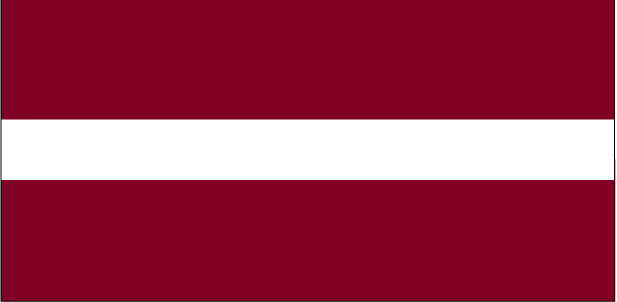
Latvia
Latvija
Declare Your Relationship to Latvia
CountryReports Community
- Studying0
- From Latvia0
- Latvia heritage1
- Visited0
- Want to visit0
Customs and Culture
Customs and Culture
Cultural Attributes
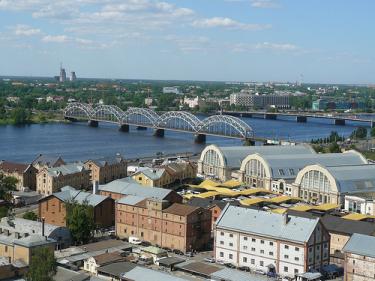
Latvians are kinds and trusting with friends and networks that exist through friends and family. Latvians are reserved and have a preference for formality in public. The pride in their cultural heritage, for example the architecture in Riga, has helped Latvians build a sense of purpose and patriotism that is conveyed to their children. Lively discussion and dialog is now a strong part of the everyday life.

Baltic Soul, Medieval Spirit
Get More Customs and Culture
6 more cultural topics for members
Social Customs & Etiquette · Diet · Family · Dating Customs · Recreation · Student Life
Holidays
Independence Day
11/18Independence Day
18 November 1918 is the date Latvia declared itself independent from Soviet Russia; 4 May 1990 is when it declared the renewal of independence; 21 August 1991 is the date of de facto independence from the Soviet Union
Christmas
12/25Christmas
Ziemassvetki (Winter Festival, Christmas) extends four days, symbolized by the Brothers Ziemassvetki, four mythical celestial beings who are believed to bring prosperity and gifts. This time is also celebrated as the birth of Dievs (God). In addition to Christmas trees, homes are decorated with sun symbols made from straw, which are hung from the ceiling and corners, along with birds’ feathers and dried flowers.
During the Christmas season, families pull an oak log around the exterior of the house in the belief that all the year’s evil is transferred to the log. The log is then burned that night amid carols to clean the house and fields from the evil trapped therein.
The Christmas Eve meal consists of smoked pig’s head, grey beans for maturity and strength, peas to shed fewer tears, piagi (dumplings stuffed with bacon and ham) for sunny days, breads, baked apples, and beer. Those men who consume the greatest quantity of sausages are considered the strongest.
Dates of Interest
- December 25th
Ziemassvetki (Winter Festival, Christmas) extends four days, symbolized by the Brothers Ziemassvetki, four mythical celestial beings who are believed to bring prosperity and gifts. This time is also celebrated as the birth of Dievs (God). In addition to Christmas trees, homes are decorated with sun symbols made from straw, which are hung from the ceiling and corners, along with birds' feathers and dried flowers. During the Christmas season,families pull an oak log around the exterior of the house in the belief that all the year's evil is transferred to the log. The log is then burned that night amid carols to clean the house and fields from the evil trapped therein. The Christmas Eve meal consists of smoked pig's head, grey beans for maturity and strength, peas to shed fewer tears, piagi (dumplings stuffed with bacon and ham) for sunny days, breads, baked apples, and beer.
How do people greet each other in Latvia?
Latvians introduce themselves with their name and surname, and greet with a firm handshake and strong eye contact; good friends may exchange a light kiss.
Do
- Offer a firm handshake with direct eye contact
- Introduce yourself with your first and last name
- Use first names with friends
Good to know
- Say "Labrit" in the morning, "Labdien" in the afternoon, and "Labvakar" in the evening
- Young people who know each other say "Chau" for hello
What are the dining customs in Latvia?
Lunch, taken between 1 and 3 PM, is usually the main meal, and eating together as a family is highly valued. Bread accompanies every meal.
Do
- Hold the fork in your left hand and the knife in your right
- Leave your napkin on the table
Don’t
- Don't place your napkin on your lap
- Don't expect chilled drinks — beer and soft drinks are served at room temperature, as cold drinks are seen as unhealthy
Good to know
- A light dinner is eaten after 6 PM
- Try balzams, a thick herbal/alcohol mixture poured over ice cream or into coffee
- Common dishes include karbonade (pork steak), cabbage soup and beet soup
What should I know about visiting a Latvian home?
Latvians are reserved and formal in public but warm and trusting with friends; they appreciate guests bringing a gift, especially flowers.
Do
- Remove your shoes at the door
- Bring a gift such as flowers, given in odd numbers
Don’t
- Don't give flowers in even numbers, as these are reserved for funerals
Good to know
- Refreshments may include liquor, apples, small sandwiches or maizites (meat-filled pastries)
- After a meal the gathering often breaks into song
How should I dress in Latvia?
Latvians dress with an eye to recent European fashion; men wear suits, shirts and ties to work while women wear dresses, and casual wear is neat slacks and sweaters.
Do
- Wear neat, fashionable clothing
- Wear multiple layers in winter
Good to know
- Young people dress formally for special occasions, and even at school
- Women often wear jewelry, especially locally found amber
What gestures should I be aware of in Latvia?
Direct eye contact indicates sincerity and respect, and hand gestures are often used in conversation.
Don’t
- Don't rely on waving as a greeting — it is uncommon
- Don't eat or drink in the street, except for ice cream
What is family life like in Latvia?
Several generations may share a single living space, with grandparents caring for children and the elderly looked after in return.
Good to know
- Extended family members help each other financially
- A person's place of birth is important
What do people do for recreation in Latvia?
Children start playing many sports at an early age, including badminton, football, hockey, basketball, swimming and skiing.
Good to know
- School games include "national ball," basketball, hide-and-seek, ping pong and "salt columns"
Last updated: 2026-07-12 · Sources: CountryReports
Photos of Latvia
Photos of Latvia


Travel and Tourism
Travel and Tourism
- Travel Alert Status
- Level 1: Exercise Normal Precautions
- Currency
- Latvian lat (LVL)
- Time Difference
- UTC+2 (7 hours ahead of Washington, DC, during Standard Time)
- Climate
- Only three European countries-Estonia, Finland, and Iceland-are farther north in their entirety than Latvia, which has latitude of between 55° and 58° and a longitude of between 20° and 28°. During most of December and January, the sun does not rise until after 9 a.m. and sets as early as 3 p.m. On the other hand, to compensate, the longest day of summer lasts almost 18 hours. In spite of its northern location, daytime winter temperatures average only slightly below freezing because of the Baltic Sea and the Gulf Stream. Daytime summer temperatures average about 70°F. The maritime climate also accounts for the country's frequent cloud cover and considerable precipitation (average per year is about 25 inches).
- Airports
- 51
Read the full travel guide — health, safety, vaccinations, disease risk, sanitation, and transit details.
View full travel guideRecipes
Recipes
History
History
Historical Eras
Ancient Baltic Tribes
2500 BCE – 1201
Finno-Ugric and proto-Baltic peoples settled the eastern Baltic shores over millennia, developing distinct tribal kingdoms. By around 1300, Latvian ancestors lived in roughly half a dozen independent polities including the Latgalians, Semigallians, Selonians, and Couronians, alongside the indigenous Livonians. This fragmentation, combined with the absence of centralized military organization, left the region vulnerable to outside conquest.
German & Crusader Rule
1201 – 1561
German crusaders of the Livonian Order and the Bishopric of Riga systematically conquered the Baltic tribes beginning with the founding of Riga in 1201 by Bishop Albert of Buxhoeveden. Over the following century, the entire territory of present-day Latvia was subjugated, and a Baltic German feudal aristocracy — the so-called Baltic barons — came to dominate land, culture, and commerce for centuries. Native Latvians were reduced to serfdom under this German-led ecclesiastical and military order.
Polish-Swedish Contest
1561 – 1710
The collapse of the Livonian Confederation triggered a prolonged struggle among Poland-Lithuania, Sweden, and Russia for control of Latvian territory. Most of Latvia fell under the Polish-Lithuanian Commonwealth as the Duchy of Courland emerged as a semi-autonomous vassal state, while Sweden seized Vidzeme in 1629 during the Polish-Swedish wars. Despite shifting overlords, the Baltic German nobility adeptly maintained their feudal privileges and cultural dominance throughout this turbulent period.
Russian Imperial Era
1710 – 1918
Peter the Great's victories in the Great Northern War brought Estland and Livland under Russian imperial control by 1710, with Courland absorbed following the partitions of Poland in 1795. Russian rule introduced a dual elite structure — German barons controlling local economic and social life while Russian bureaucrats managed high politics — yet also spurred rapid industrialization along the Baltic coast. The late 19th century saw the First Latvian National Awakening, a cultural renaissance that fostered modern Latvian identity and laid the groundwork for demands for self-determination.
First Independence
1918 – 1940
Latvia proclaimed independence on November 18, 1918, and successfully defended it in wars against both German Freikorps and Soviet Russian forces, securing international recognition and League of Nations membership by 1921. Parliamentary democracy flourished initially, but mounting political instability led Prime Minister Kārlis Ulmanis to declare a state of emergency and assume authoritarian rule in 1934. The Nazi-Soviet Nonaggression Pact of 1939 sealed Latvia's fate, and the Red Army occupied the country in June 1940, extinguishing two decades of sovereignty.
Soviet Era & Independence
1940 – present
Soviet annexation brought mass deportations, Nazi German occupation from 1941 to 1944, and then renewed Soviet reoccupation, decimating Latvia's population through war, Holocaust killings, and Stalinist purges. Latvia declared the restoration of independence on May 4, 1990, which was fully recognized internationally following the failed Moscow coup of August 1991; the last Russian troops withdrew in 1994. Latvia joined both NATO and the European Union in 2004, anchoring itself firmly in the Western community of nations while managing the enduring social tensions of a large Russian-speaking minority.
Overview
Early History
Timeline of Key Events
2500 BCE – 1500 BCE
Finno-Ugric and proto-Baltic tribes settle on Baltic shores.
Finno-Ugric and proto-Baltic tribes settle on Baltic shores.
1 – 100
Early Baltic peoples experience rapid cultural progress.
Early Baltic peoples experience rapid cultural progress and expansion of trade with Roman Empire and Germanic tribes.
701 – 1300
Scandinavian Vikings and, subsequently, Slavic tribes engage in trade and war with Baltic peoples.
Scandinavian Vikings and, subsequently, Slavic tribes engage in trade and war with Baltic peoples.
1201
Northern Estonia conquered by Danes and rest of Estonia and Latvia by Germans.
Northern Estonia conquered by Danes and rest of Estonia and Latvia by Germans.
1710
Russian tsar Peter I (the Great) succeeds in wresting control of Estland and Livland.
Russian tsar Peter I (the Great) succeeds in wresting control of Estland and Livland (southern Estonia and northern Latvia) from Sweden
1905
Tsarist Russian authorities respond with violence and repression.
Tsarist Russian authorities respond with violence and repression to Baltic demands for radical political change during Revolution of 1905.
1918 – 1920
Baltic states engage in war to defend independence.
Baltic states engage in war to defend independence; Bolshevik, White Russian, German, Polish, and other forces struggle for control of territories.
Read the full history profile — narrative overview, defining eras, and the complete timeline in one place.
View expanded historyInteresting Facts
Interesting Facts
Latvia is one of three countries known as the "Baltic States". The other Baltic State countries are Estonia and Lithuania. Latvia is also known as Lettland, named after the "Letts" or Lettish people.
Riga Castle was originally built in 1330 for the Livonian Order of Knights. Today Riga Castle is the official home of the President of Latvia.
See every fact — trivia, oddities, and curious tidbits gathered from across the country.
View all interesting factsGeography and Environment
Geography and Environment
- Terrain
- low plain
- Climate
- Only three European countries-Estonia, Finland, and Iceland-are farther north in their entirety than Latvia, which has latitude of between 55° and 58° and a longitude of between 20° and 28. ° During most of December and January, the sun does not rise until after 9 am and sets as early as 3 pm. On the other hand, to compensate, the longest day of summer lasts almost 18 hours. In spite of its northern location, daytime winter temperatures average only slightly below freezing because of the Baltic Sea and the Gulf Stream. Daytime summer temperatures average about 70 °F. The maritime climate also accounts for the country's frequent cloud cover and considerable precipitation (average per year is about 25 inches).
- Natural Hazards
- NA
- Current Environmental Issues
- Latvia's environment has benefited from a shift to service industries after the country regained independence; the main environmental priorities are improvement of drinking water quality and sewage system, household and hazardous waste management, and reduction of air pollution; in 2001, Latvia closed the EU accession negotiation chapter on environment committing to full enforcement of EU environmental directives by 2010
Read the full geography and environment profile — terrain, climate, natural resources, hazards, land use, and international agreements.
View full geographyPeople & Demographics
People & Demographics
Religion
Languages Spoken
Latvian (official), Lithuanian, Russian, other
- Latvian
- Lithuanian
- Russian
Population
- Population
- 1,850,650
- Population in Major Urban Areas
- RIGA (capital) 701,000
- Nationality Noun
- Latvian(s)
- Ethnic Groups
- Latvian 57.7%, Russian 29.6%, Belarusian 4.1%, Ukrainian 2.7%, Polish 2.5%, Lithuanian 1.4%, other 2% (2002)
- Language Note
- Latvian (official) 56.3%, Russian 33.8%, other 0.6% (includes Polish, Ukrainian, and Belarusian), unspecified 9.4%; note - data represent language usually spoken at home.
Education
- Literacy Definition
- age 15 and over can read and write
School in Latvia consists of 12 years: 4 years of primary school, 5 years of secondary school and 3 years of high school. It is a general practice that pupils of all 12 grades study in the same building. Schools in Riga and other major cities of Latvia are bigger than those in rural areas. On average a school in a city has 500 pupils, while a typical town or village school has around 200 pupils. There are approximately 200 schools in Latvia, from which 100 are located in Riga, as half of the Latvian population lives in its capital. Schools in Riga are constantly renovated and improved both by private and public funding. Schools in rural areas are generally older.
A typical classroom of a primary school has fifteen desks (each desk for two pupils). There is a big blackboard on the wall, a teacher’s table with a chair, several green flowers and a cupboard where some books are located. On a wall, generally near the entrance, there is an announcement board, where some of children’s drawings, announcements and Birthday congratulations may be placed. Generally, there are no toys, puzzles and TVs in a classroom. Every school has one specific classroom with computers, which, however, is available starting with secondary school for IT lessons.
Classrooms are spacious and light. Even in old schools parents are often happy to volunteer for repainting floors and walls during summer holidays, in order to improve their children’s school experience. Not all the schools have enough study books and manuals to distribute to pupils. Therefore, they are forced to share one book for every two students or they are asked to acquire it by themselves. Books are comparatively expensive and not all the parents can afford buying them. Schools in Riga and other major cities usually have a well-equipped computer class, while schools in rural areas might not have computers at all or have very old computers. Gyms for physical education classes are well-equipped. Schools have enough staff to ensure children’s education. Quality of food in school canteens (cafeterias) is usually poor. While some children have lunch in a school canteen, many parents prefer to prepare a lunch box at home, as a sandwich prepared by parents is much tastier and healthier than a school canteen soup. However, generally a school is a well-equipped and secure place for children.
Health Information
- Life Expectancy at Birth
- Life expectancy at birth in Latvia stands at approximately 75 years overall, though this figure masks a significant gap between men and women. Latvian women can expect to live to around 79–80 years, while men have a considerably shorter average lifespan of approximately 70–71 years. This gender gap of nearly a decade is one of the more pronounced disparities seen among European Union member states and reflects broader patterns of health behavior, lifestyle, and healthcare engagement between the sexes. Latvia's overall life expectancy places it somewhat below the EU average, which hovers around 81 years. The country has made meaningful progress over recent decades — life expectancy was notably lower during the early post-Soviet transition period of the 1990s, when economic hardship, social instability, and deteriorating public health infrastructure took a measurable toll on population health. Several factors contribute to Latvia's comparatively lower life expectancy. High rates of cardiovascular disease remain the leading cause of death and are closely linked to dietary habits, smoking, alcohol consumption, and insufficient physical activity — all of which are more prevalent among Latvian men. Latvia has historically had elevated rates of alcohol-related mortality compared to other EU countries, a factor that disproportionately affects male life expectancy. Access to healthcare has improved substantially since EU accession in 2004, with investment in medical infrastructure and preventive care programs. However, challenges remain, including regional disparities in healthcare access between the capital Riga and rural areas, as well as relatively high rates of late-stage cancer diagnoses due to inconsistent participation in screening programs. Latvia's aging population and ongoing emigration of younger working-age residents — a trend that accelerated after EU accession — also create demographic pressures that indirectly affect national health statistics. The government continues to implement public health initiatives aimed at reducing preventable deaths, improving lifestyle habits, and narrowing the life expectancy gap with wealthier EU neighbors.
- Major Infectious Diseases — degree of risk
- intermediate
Life Expectancy
- Life Expectancy at Birth
- Life expectancy at birth in Latvia stands at approximately 75 years overall, though this figure masks a significant gap between men and women. Latvian women can expect to live to around 79–80 years, while men have a considerably shorter average lifespan of approximately 70–71 years. This gender gap of nearly a decade is one of the more pronounced disparities seen among European Union member states and reflects broader patterns of health behavior, lifestyle, and healthcare engagement between the sexes. Latvia's overall life expectancy places it somewhat below the EU average, which hovers around 81 years. The country has made meaningful progress over recent decades — life expectancy was notably lower during the early post-Soviet transition period of the 1990s, when economic hardship, social instability, and deteriorating public health infrastructure took a measurable toll on population health. Several factors contribute to Latvia's comparatively lower life expectancy. High rates of cardiovascular disease remain the leading cause of death and are closely linked to dietary habits, smoking, alcohol consumption, and insufficient physical activity — all of which are more prevalent among Latvian men. Latvia has historically had elevated rates of alcohol-related mortality compared to other EU countries, a factor that disproportionately affects male life expectancy. Access to healthcare has improved substantially since EU accession in 2004, with investment in medical infrastructure and preventive care programs. However, challenges remain, including regional disparities in healthcare access between the capital Riga and rural areas, as well as relatively high rates of late-stage cancer diagnoses due to inconsistent participation in screening programs. Latvia's aging population and ongoing emigration of younger working-age residents — a trend that accelerated after EU accession — also create demographic pressures that indirectly affect national health statistics. The government continues to implement public health initiatives aimed at reducing preventable deaths, improving lifestyle habits, and narrowing the life expectancy gap with wealthier EU neighbors.
Read the full people and society profile — demographics, health, education, religion, languages, and notable people.
View full people and societyGovernment & Politics
Government & Politics
Country Identity
- Country Name
- Latvia
- Full Country Name
- Republic of Latvia
- Local - Long
- Latvijas Republika
- Local - Short
- Latvija
- Former Name
- Latvian Soviet Socialist Republic
Government Structure
- Government Type
- parliamentary democracy
- Legal System
- based on civil law system
- Executive Branch
- chief of state: President Edgars RINKEVICS (since 8 July 2023) head of government: Prime Minister Evika SILINA (since 15 September 2023) cabinet: Council of Ministers nominated by the prime minister and appointed by the Parliament elections: president elected by Parliament for a four-year term; prime minister appointed by the president and confirmed by Parliament election results: Edgars RINKEVICS elected president in the third round of voting; parliamentary vote - Edgars RINKEVICS 52 of 100 votes cast
- Legislative Branch
- Unicameral Parliament or Saeima (100 seats; members are elected by direct, popular vote to serve four-year terms) Elections: last held on 1 October 2022 (next to be held in October 2026) Election results: percent of vote by party - JV 18.9%, AS 12.4%, ZZS 12.3%, NA 9.4%, LPV 6.9%, PRO 6.8%, KPV/LKS 6.3%, others; seats by party - JV 26, AS 15, ZZS 16, NA 13, LPV 9, PRO 10, KPV/LKS 11
- Judicial Branch
- Supreme Court (judges' appointments are confirmed by Parliament)
- Suffrage
- 18 years of age; universal for Latvian citizens
- Constitution
- the 1991 Constitutional Law, which supplements the 1922 constitution, provides for basic rights and freedoms
- Independence
- 21 August 1991 (from Soviet Union)
- National Holiday
- Independence Day, 18 November (1918); note - 18 November 1918 is the date Latvia declared itself independent from Soviet Russia; 4 May 1990 is when it declared the renewal of independence; 21 August 1991 is the date of de facto independence from the Soviet Union
Capital City
- Capital Name
- Riga
- Capital - geographic coordinate
- 56 57 N, 24 06 E
- Capital Time Difference
- UTC+2 (7 hours ahead of Washington, DC, during Standard Time)
of the several theories explaining the name's origin, the one relating to the city's role in Baltic and North Sea commerce is the most probable; the name is likely related to the Latvian word "rija," meaning "warehouse," where the 'j' became a 'g' under the heavy German influence in the city from the late Middle Ages to the early 20th century
Military
Branches: National Armed Forces (Nacionalo Brunoto Speku): Land Forces (Latvijas Sauszemes Speki), Navy (Latvijas Juras Speki; includes Coast Guard (Latvijas Kara Flotes)), Latvian Air Force (Latvijas Gaisa Speki), Latvian Home Guard (Latvijas Zemessardze)
Embassy / Diplomatic Mission
U.S. Embassy Riga
1 Samnera Velsa Street
Riga, LV-1510
Telephone: 371 6710-7000
Emergency After-hours telephone: 371 6710-7000
Facsimile: 371 6710-7001
E-mail: askconsular@USRiga.lv
Read the full government profile — flag symbolism, national anthem, and other national symbols.
View full government detailsEconomy
Economy
Latvia has developed into a modern, high-income economy and a fully integrated member of the European Union, which it joined in 2004, along with NATO.
Snapshot
- Currency Name and Code
- Euro (EUR)
- GDP — official exchange rate
- $14,430,000,000 (USD)
- GDP Real Growth Rate
- 2%
- Gini Index
- 32
News & Weather
News & Weather
Current Weather
Latest News
Latvia to ban books, newspapers and video games from Russia and Belarus - Euronews
Euronews · 2d ago
Rihards Cernevskis - Latvia - Player Profile - FIBA U18 EuroBasket 2026 - FIBA Basketball
FIBA Basketball · 1d ago
‘Barbaric’ Russian guided bomb destroys Latvian honorary consulate in eastern Ukraine - TVP World
TVP World · 2d ago
Latvia moves its Eurovision pre-selection to an arena for 2027 - eurovision.com
eurovision.com · 3d ago
Russian Airstrike Kills 5 in Sloviansk, Damages Latvian Consulate and Injures 9 Civilians - Kyiv Post
Kyiv Post · 3d ago
Latvian foreign minister confirms consulate in Ukraine was hit by deadly Russian attack - Euronews
Euronews · 3d ago
French jet on NATO mission shoots down drone in Latvian airspace - Reuters
Reuters · 48d ago
Concern of Ukraine war spreading as Latvia says drone shot as "result of Russian electronic warfare" - CBS News
CBS News · 49d ago
News via Google News
Climate Overview
Only three European countries-Estonia, Finland, and Iceland-are farther north in their entirety than Latvia, which has latitude of between 55° and 58° and a longitude of between 20° and 28°. During most of December and January, the sun does not rise until after 9 a.m. and sets as early as 3 p.m. On the other hand, to compensate, the longest day of summer lasts almost 18 hours. In spite of its northern location, daytime winter temperatures average only slightly below freezing because of the Baltic Sea and the Gulf Stream. Daytime summer temperatures average about 70°F. The maritime climate also accounts for the country's frequent cloud cover and considerable precipitation (average per year is about 25 inches).
Videos
Videos
1 curated YouTube videos.
Source: YouTube
Frequently Asked Questions
Frequently Asked Questions
What is the population of Latvia?
How do people greet each other in Latvia?
What are the dining customs in Latvia?
What should I know about visiting a Latvian home?
How should I dress in Latvia?
What gestures should I be aware of in Latvia?
What is family life like in Latvia?
What do people do for recreation in Latvia?
What is the capital of Latvia?
Where is Latvia located?
What countries border Latvia?
What is the predominant religion in Latvia?
What is the currency of Latvia?
What language is spoken in Latvia?
What is Latvia known for?
What form of government does Latvia have?
Last reviewed 2026