
 English
 Español
 中文
中文 हिन्दी
 Français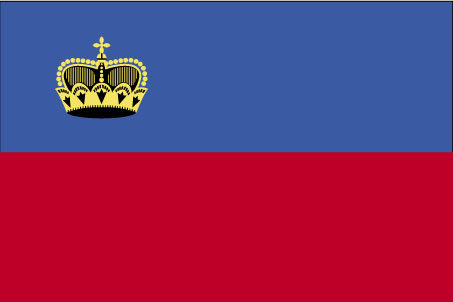
Liechtenstein
Liechtenstein
Declare Your Relationship to Liechtenstein
CountryReports Community
- Studying1
- From Liechtenstein0
- Liechtenstein heritage1
- Visited0
- Want to visit4
Customs and Culture
Customs and Culture
Cultural Attributes
Liechtensteiners have a strong musical tradition. Brass bands and vocal ensembles are common in rural ares while the cities have operetta companies. Liechtenstein has a high literacy rate. Both primary and secondary education are administered by the central government and children must attend until the age of 16. Students then either receive vocational training or prepare for the Matura or university entrance exam.

Alpine Crown Between Two Giants
Get More Customs and Culture
5 more cultural topics for members
Social Customs & Etiquette · Diet · Family · Dating Customs · Recreation
Holidays
Assumption Day
8/15Religious
Dates of Interest
- August 15th
How do people greet each other in Liechtenstein?
Liechtensteiners typically greet each other with a handshake, along with common spoken greetings.
Do
- Shake hands when greeting
- Use "Gruezi" or "Grüss Gott" as common greetings
- Use "Hoi!" as an informal greeting
What are dining customs like in Liechtenstein?
The midday meal (Zmittag) is the main meal of the day, while breakfast (Zmorga) and the evening meal (Znacht) are lighter.
Good to know
- Breakfast (Zmorga) is coffee with bread and jam
- Zmittag typically includes soup, salad, a main dish, and dessert
- Znacht is usually a light open-faced sandwich with meats
- Try Käsknöfle: noodles baked with grated cheese and fried onions, served with applesauce or salad
- Other favorites include Hafaläb and Törkarebl
How should travelers dress in Liechtenstein?
Neat, conservative, Western-style clothing is common, with traditional Trachten costumes reserved for festivals and special occasions.
Do
- Wear neat, conservative Western-style clothing
Good to know
- Traditional costumes (Trachten) are only worn for festivals or special occasions
- Women's costume: gathered waist, full-length skirt, and apron
- Men's costume: knee-length breeches, flat black hat, and a loden woolen jacket
What is family life like in Liechtenstein?
Most Liechtensteiners marry in their late twenties after completing their schooling, and the average family has two children.
Good to know
- Many people finish schooling before marrying
- The average family has two children
- Many married women work outside the home
What do people do for fun in Liechtenstein?
Sports are hugely popular, with over a third of the population belonging to the National Sports Union, alongside cultural pursuits like bands and choirs.
Good to know
- Winter: nighttime skiing
- Summer: soccer, hiking, and bicycling
- Cultural activities include brass bands, vocal ensembles, and choirs
- Cities host operetta companies
Last updated: 2026-07-12 · Sources: CountryReports
Photos of Liechtenstein
Photos of Liechtenstein


Travel and Tourism
Travel and Tourism
- Travel Alert Status
- Level 1: Exercise Normal Precautions
- Currency
- Swiss franc (CHF)
- Time Difference
- UTC+1 (6 hours ahead of Washington, DC, during Standard Time)
- Climate
- continental; cold, cloudy winters with frequent snow or rain; cool to moderately warm, cloudy, humid summers
Read the full travel guide — health, safety, vaccinations, disease risk, sanitation, and transit details.
View full travel guideRecipes
Recipes
History
History
Historical Eras
Early Feudal Roots
1342 – 1719
The County of Vaduz and the Lordship of Schellenberg, the two fiefs that would form Liechtenstein, existed as minor territories within the Holy Roman Empire. The Austrian House of Liechtenstein acquired Schellenberg in 1699 and Vaduz in 1712, consolidating holdings that enabled the family to attain the status of an imperial prince. This period laid the dynastic and territorial foundations for the principality.
Holy Roman Principality
1719 – 1815
Emperor Charles VI elevated the united territories to the Imperial Principality of Liechtenstein in 1719, granting the Liechtenstein dynasty a seat in the Imperial Diet. Napoleonic France occupied the territory briefly in the early nineteenth century, dissolving the Holy Roman Empire in 1806 and making Liechtenstein formally sovereign. The Congress of Vienna in 1815 then incorporated the principality into the German Confederation.
German Confederation Era
1815 – 1866
As a member of the German Confederation, Liechtenstein navigated the tensions of German nationalism and the rivalry between Austria and Prussia. The principality maintained a token army of 80 men and remained closely aligned with Austrian interests. When the Confederation dissolved following the Austro-Prussian War of 1866, Liechtenstein seized the opportunity to declare full independence and permanent neutrality, disbanding its military entirely.
Neutrality & Swiss Alignment
1866 – 1945
Following independence, Liechtenstein pursued a policy of strict neutrality, respected by all belligerents in both World Wars. Economic devastation after World War I severed longstanding ties with Austria, prompting a customs and monetary union with Switzerland in 1923 and the entrustment of foreign affairs to Bern in 1919. Women remained without the vote until 1984, reflecting the principality's slow pace of democratic reform during this period.
Financial Center & Integration
1945 – 1990
Post-war Liechtenstein leveraged low corporate taxes and favorable banking laws to transform itself into one of Europe's wealthiest states per capita. The principality joined the Council of Europe in 1978, signaling greater engagement with European institutions. Concerns over banking secrecy and money laundering began to emerge alongside the remarkable economic prosperity, setting the stage for later regulatory reforms.
Modern Liechtenstein
1990 – present
Liechtenstein joined the United Nations in 1990, EFTA in 1991, and the European Economic Area and WTO in 1995, fully integrating into the global order while retaining its non-EU status. Prince Hans-Adam II, who ascended in 1989, pursued constitutional reforms that expanded princely powers in 2003, and transferred day-to-day governance to Crown Prince Alois in 2004. The country has since strengthened anti-money-laundering legislation and concluded legal assistance treaties, modernizing its financial sector.
Overview
The Austrian Liechtenstein family acquired the fiefs of Vaduz and Schellenberg in 1699 and 1713 respectively, and they became an independent principality under the Holy Roman Empire in 1719 under the name Liechtenstein. The French, under Napoleon, occupied the country for a few years, but Liechtenstein regained its independence in 1815 within the new German Confederation.
Timeline of Key Events
1719
Principality of Liechtenstein was created within the Holy Roman Empire.
Principality of Liechtenstein was created within the Holy Roman Empire.
1815
Liechtenstein becomes a member of the German Confederation until 1866.
Liechtenstein becomes a member of the German Confederation until 1866.
1866
Liechtenstein becomes fully independent.
Liechtenstein becomes fully independent.
1939 – 1945
Outbreak of World War II. Liechtenstein remains neutral.
Outbreak of World War II. Liechtenstein remains neutral.
1984
In Lichtenstein women gained the right to vote.
In Lichtenstein women gained the right to vote.
1990
Liechtenstein joins the United Nations.
Liechtenstein joins the United Nations.
2004
Crown Prince Hans-Adam hands over day-to-day running of Liechtenstein to his son Prince Alois.
Crown Prince Hans-Adam hands over day-to-day running of Liechtenstein to his son Prince Alois while remaining head of state.
Read the full history profile — narrative overview, defining eras, and the complete timeline in one place.
View expanded historyInteresting Facts
Interesting Facts
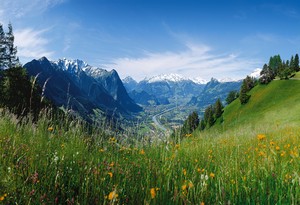
Liechtenstein lies on the east bank of the Rhine River south of Lake Constance between Austria and Switzerland. It consists of low valley land and Alpine peaks.
Liechtenstein is situated in the Upper Rhine valley of the European Alps.
See every fact — trivia, oddities, and curious tidbits gathered from across the country.
View all interesting factsGeography and Environment
Geography and Environment
- Terrain
- mostly mountainous (Alps) with Rhine Valley in western third
- Climate
- continental; cold, cloudy winters with frequent snow or rain; cool to moderately warm, cloudy, humid summers
- Natural Hazards
- NA
- Current Environmental Issues
- NA
Read the full geography and environment profile — terrain, climate, natural resources, hazards, land use, and international agreements.
View full geographyPeople & Demographics
People & Demographics
Religion
Languages Spoken
German (official), Alemannic dialect
- German
Population
- Population
- 38,749
- Population in Major Urban Areas
- VADUZ (capital) 5,000
- Nationality Noun
- Liechtensteiner(s)
- Ethnic Groups
- Alemannic 86%, Italian, Turkish, and other 14%
Education
- Literacy Definition
- age 10 and over can read and write
Health Information
- Life Expectancy at Birth
- Life expectancy at birth in Liechtenstein ranks among the highest in the world, reflecting the principality's exceptional standard of living, advanced healthcare infrastructure, and stable socioeconomic conditions. The average life expectancy across the total population sits at approximately 82 to 83 years, with women generally outliving men by several years — women living to around 85 years on average, while men can expect to live to approximately 80 to 81 years. These figures place Liechtenstein consistently at or near the top of global life expectancy rankings, comparable to neighboring Switzerland and other wealthy European nations such as Japan, Sweden, and Norway. The principality benefits from a comprehensive, high-quality healthcare system that emphasizes preventive care, early diagnosis, and access to specialist treatment. Residents enjoy easy access to medical facilities both within Liechtenstein and across the border in Switzerland, with whom Liechtenstein maintains close cooperation on health services. Several factors contribute to these favorable outcomes. Liechtenstein has one of the lowest poverty rates in the world and virtually no unemployment, meaning residents experience relatively low levels of economic stress — a well-documented contributor to long-term health. Air quality in the country is consistently good, and the Alpine environment encourages active outdoor lifestyles. The population has access to clean drinking water, excellent sanitation, and nutritious food. The country's small population — hovering around 38,000 to 39,000 people — makes healthcare management more straightforward and allows for a highly personalized approach to medical services. Chronic diseases such as cardiovascular illness remain manageable due to proactive health campaigns and regular medical check-ups encouraged by national health policy. For travelers and students researching Liechtenstein, these statistics serve as an indicator of the overall quality of life in the principality. Long life expectancy, when paired with low infant mortality rates and high educational attainment, paints a picture of a society in which residents thrive across every stage of life.
Life Expectancy
- Life Expectancy at Birth
- Life expectancy at birth in Liechtenstein ranks among the highest in the world, reflecting the principality's exceptional standard of living, advanced healthcare infrastructure, and stable socioeconomic conditions. The average life expectancy across the total population sits at approximately 82 to 83 years, with women generally outliving men by several years — women living to around 85 years on average, while men can expect to live to approximately 80 to 81 years. These figures place Liechtenstein consistently at or near the top of global life expectancy rankings, comparable to neighboring Switzerland and other wealthy European nations such as Japan, Sweden, and Norway. The principality benefits from a comprehensive, high-quality healthcare system that emphasizes preventive care, early diagnosis, and access to specialist treatment. Residents enjoy easy access to medical facilities both within Liechtenstein and across the border in Switzerland, with whom Liechtenstein maintains close cooperation on health services. Several factors contribute to these favorable outcomes. Liechtenstein has one of the lowest poverty rates in the world and virtually no unemployment, meaning residents experience relatively low levels of economic stress — a well-documented contributor to long-term health. Air quality in the country is consistently good, and the Alpine environment encourages active outdoor lifestyles. The population has access to clean drinking water, excellent sanitation, and nutritious food. The country's small population — hovering around 38,000 to 39,000 people — makes healthcare management more straightforward and allows for a highly personalized approach to medical services. Chronic diseases such as cardiovascular illness remain manageable due to proactive health campaigns and regular medical check-ups encouraged by national health policy. For travelers and students researching Liechtenstein, these statistics serve as an indicator of the overall quality of life in the principality. Long life expectancy, when paired with low infant mortality rates and high educational attainment, paints a picture of a society in which residents thrive across every stage of life.
Read the full people and society profile — demographics, health, education, religion, languages, and notable people.
View full people and societyGovernment & Politics
Government & Politics
Country Identity
- Country Name
- Liechtenstein
- Full Country Name
- Principality of Liechtenstein
- Local - Long
- Fuerstentum Liechtenstein
- Local - Short
- Liechtenstein
Government Structure
- Government Type
- hereditary constitutional monarchy on a democratic and parliamentary basis
- Legal System
- local civil and penal codes; accepts compulsory ICJ jurisdiction, with reservations
- Executive Branch
- chief of state: Prince HANS-ADAM II (since 13 November 1989, assumed executive powers 26 August 1984); Heir Apparent Prince ALOIS (born 11 June 1968); note - on 15 August 2004, HANS-ADAM II transferred the day-to-day official duties of the ruling prince to ALOIS, but HANS-ADAM II retains the status of chief of state head of government: Head of Government Daniel RISCH (since 25 March 2021) and Deputy Head of Government Sabine MONAUNI (since 25 March 2021) cabinet: Cabinet elected by the Parliament (Landtag), confirmed by the monarch elections: none; the monarch is hereditary; following legislative elections, the leader of the majority party in the Landtag is usually appointed head of government by the monarch, and the leader of the largest minority party in the Landtag is usually appointed deputy head of government by the monarch
- Legislative Branch
- Unicameral Parliament or Landtag (25 seats; members are elected by direct popular vote under proportional representation to serve four-year terms) Elections: last held on 7 February 2021 (next to be held in February 2025) Election results: percent of vote by party - VU 35.9%, FBP 35.9%, FL 12.9%, DU 11.1%, independent 4.2%; seats by party - VU 10, FBP 10, FL 3, DU 2
- Judicial Branch
- Supreme Court or Oberster Gerichtshof; Court of Appeal or Obergericht
- Suffrage
- 18 years of age; universal
- Constitution
- 5-Oct-21
- Independence
- 23 January 1719 Imperial Principality of Liechtenstein established; 12 July 1806 established independence from the Holy Roman Empire
- National Holiday
- Assumption Day, 15 August
Capital City
- Capital Name
- Vaduz
- Capital - geographic coordinate
- 47 08 N, 9 31 E
- Capital Time Difference
- UTC+1 (6 hours ahead of Washington, DC, during Standard Time)
may be a conflation from the Latin vallis (valley) and the High German diutisk (meaning "German") to produce Valdutsch ("German valley"), which over time simplified and came to refer specifically to Vaduz, the town
Military
Branches: no regular military forces; National Police maintains close relations with neighboring forces
Embassy / Diplomatic Mission
United States Embassy Bern
Sulgeneckstrasse 19, 3007 Bern, Switzerland
Telephone: (41) (31) 357-7011 (2 p.m. – 4 p.m.)
Emergency phone: after-hours/weekends: (41) (31) 357-7777
Facsimile: (41) (31) 357-7280
United States Consular Agency Zurich
Dufourstrasse 101, 8008 Zurich, Switzerland
Telephone: (41) (43) 499-2960 (10 a.m. – 1 p.m.)
Facsimile: (41) (43) 499-2961
Email: zurich-ca@state.gov
United States Consular Agency Geneva
Rue Versonnex 7, 1207 Geneva, Switzerland
Telephone: (41) (22) 840 -5160 (10 a.m. – 1 p.m.)
Facsimile: (41) (22) 840-5162.
Email: geneva-CA@state.gov
Mailing address: U.S. Consular Agency, c/o U.S. Mission, 11, Rte.de Pregny, 1292 Chambesy, Switzerland
Read the full government profile — flag symbolism, national anthem, and other national symbols.
View full government detailsEconomy
Economy
Despite its small size and limited natural resources, Liechtenstein has developed into a prosperous, highly industrialized, free-enterprise economy with a vital financial services sector and living standards on a par with its large European neighbors.
Snapshot
- Currency Name and Code
- Swiss Franc (CHF)
- GDP Real Growth Rate
- 1.8%
News & Weather
News & Weather
Current Weather
Latest News
Lasting peace is impossible with the Tehran regime - GIS Reports
GIS Reports · 5d ago
Liechtenstein Court Decision Is Wake-Up Call For Baby Boomers, Wealth Managers - Family Wealth Report
Family Wealth Report · 108d ago
Music Academy in Liechtenstein: a place where young musicians can truly develop - The Strad
The Strad · 105d ago
Liechtenstein 1-8 Bosnia-Herz (Sep 7, 2012) Final Score - ESPN
ESPN · 103d ago
Liechtenstein: Freedom in the World 2026 Country Report - Freedom House
Freedom House · 115d ago
Liechtenstein - Mergers & Acquisitions Laws and Regulations 2026 - ICLG
ICLG · 143d ago
Liechtenstein vs Cyprus: How to Watch, Prediction, Odds, Friendly Preview - FOX Sports
FOX Sports · 47d ago
This Tiny European Country Is Less Than 16 Miles Long—but It’s Home to Medieval Castles, Alpine Villages, and More - Travel + Leisure
Travel + Leisure · 60d ago
News via Google News
Climate Overview
continental; cold, cloudy winters with frequent snow or rain; cool to moderately warm, cloudy, humid summers
Frequently Asked Questions
Frequently Asked Questions
What is the population of Liechtenstein?
How do people greet each other in Liechtenstein?
What are dining customs like in Liechtenstein?
How should travelers dress in Liechtenstein?
What is family life like in Liechtenstein?
What do people do for fun in Liechtenstein?
What is the capital of Liechtenstein?
Where is Liechtenstein located?
What countries border Liechtenstein?
What is the religion of Liechtenstein?
What currency is used in Liechtenstein?
What language is spoken in Liechtenstein?
What is the geography of Liechtenstein like?
What is Liechtenstein known for?
Last reviewed 2026