
 English
 Español
 中文
中文 हिन्दी
 Français
Norway
Norge
Declare Your Relationship to Norway
CountryReports Community
- Studying3
- From Norway0
- Norway heritage2
- Visited3
- Want to visit0
Customs and Culture
Customs and Culture
Cultural Attributes
Norwegians cherish their freedom and independence. Although the country has a king, his role is mainly ceremonial. Norway's love of liberty stems from its long history of domination by Sweden and Denmark.
Most people's lifestyles include sufficient money for food, leisure activities, and to find fulfillment in life. Norway is a wealthy country, and many Norwegians spend money on housing, including refurbishing older homes
Most Norwegians have blond hair, blue eyes and the same ethnic origins. The largest minority group in Norway is the Sami. The Sami were Norway's first inhabitants. Norway is ranked as having the highest standard of living in the world.
Norwegian cities are very clean. Many parks are found within the cities, and wilderness areas are nearby. Oslo is Norway's busiest city. Because Norway is mountainous, some areas are isolated from each other. The distances between people have caused many different communities and dialects to develop. Some people living in the Norwegian countryside still lead a traditional way of life and farm for a living.

Land of the Midnight Sun and Free Spirit
Get More Customs and Culture
6 more cultural topics for members
Social Customs & Etiquette · Diet · Family · Dating Customs · Recreation · Student Life
Holidays
Constitution Day
5/17Independence
Christmas
12/25Christmas
Dates of Interest
- February 6th
Sami National Day commemorates the first Sami National Assembly held in 1917 and celebrates Sami culture, language, and heritage. It is observed with cultural events, reindeer races, traditional joik singing, and exhibitions in Sami communities across Norway.
How do people greet each other in Norway?
Shaking hands is the normal greeting in any situation, and hugging after a handshake is common.
Do
- Shake hands when meeting someone
- Say "god morgen" in the morning
Good to know
- A hug is also appropriate when guests leave
- Bokmål is the more popular of the two official forms of Norwegian; the alphabet has three extra letters: æ, ø, å
What are the dining customs in Norway?
Norwegians typically eat four meals a day, with dinner (middag) being the only hot meal, usually eaten at home around four in the afternoon.
Do
- Expect open-faced sandwiches, often with salted herring, brown goat cheese, cold meats, or spreads
- Try flatbrød (thin, crisp bread) with stews
Good to know
- Breakfast (frokost) is eaten at home; lunch (lunsj) is usually at school or work
- Dinner often includes soup, bread, and a seafood main course
- Some people eat a late meal called kveldsmat with tea or coffee
- Gomme is a popular sweet milk dish eaten with waffles, and rømmegrøt is often served at weddings
What etiquette should I know when visiting Norwegians?
Norwegians value personal space, keeping an "intimate zone" of about three feet around them during conversation. They often visit each other at home rather than dining out.
Don’t
- Don't stand too close during conversation; respect the roughly three-foot personal space
Good to know
- Norwegians take vacation during Easter week, often camping, hiking, staying in cabins, or skiing
- Christmas (Jul) is celebrated on Christmas Eve with a traditional dinner followed by exchanging gifts
- Church bells ring at five o'clock on Christmas Eve to signal the start of Christmas
- Christmas trees are sometimes decorated with small Norwegian flags
How should I dress in Norway?
Norwegians generally prefer a casual, comfortable, and practical style, favoring minimalist designs, neutral colors, and clothing suited to the weather and outdoor activities.
Do
- Dress in layers with waterproof outerwear and sturdy footwear for the variable climate
- Bring warm clothing like wool sweaters, scarves, hats, and gloves in winter
- Opt for lighter, breathable layers in summer, especially in coastal areas
Good to know
- Everyday wear often includes jeans, sweaters, t-shirts, and sneakers in neutral colors
- Outdoor gear brands like Norrøna, Bergans, and Helly Hansen are popular
- Traditional clothing like the bunad is worn for special occasions such as weddings, confirmations, and national holidays
- Sustainability matters; second-hand shopping and clothing swaps are popular
What gestures are common in Norway?
A hug is an appropriate gesture when guests leave.
Good to know
- Be mindful of personal space during conversation
What is family life like in Norway?
Family relationships are very important, and families are usually small, often with just two children, with both parents commonly working.
Good to know
- High taxes fund a welfare system that includes programs for families and children
What do Norwegians do for recreation?
Norwegians love the outdoors, enjoying skiing, hiking, swimming, fishing, and sailing, and often spend time with friends at home.
Good to know
- Kids play soccer, handball, and gymnastics on sports teams, and enjoy swimming and skiing
- Many people own cabins in remote places reached by hiking
- The Holmenkollen Ski Jump is one of the world's most difficult ski jumps
- The Birkebeiner is a 58K endurance ski race near Lillehammer, first held in 1932
- Norwegians often visit each other at home since eating at restaurants can be expensive
Last updated: 2026-07-12 · Sources: CountryReports
Photos of Norway
Photos of Norway
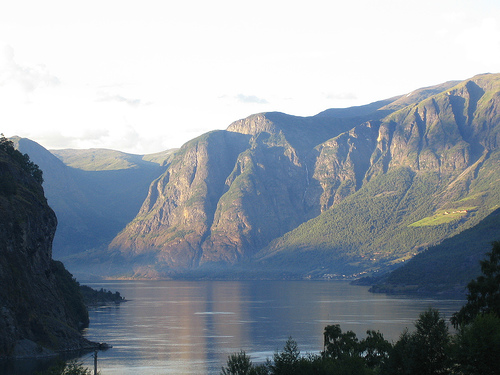
Sunset at Aurlandsfjord, Norway
Ringebu stave church 12th-century
Sunrise over gudbrandsdalen valley
Farms on hillside by Ringebu
Glacier near Styggevatnet, Norway
Glacier near Styggevatnet, Norway
View from the Breheimsenter, Jostedal
Building along the Norwegian coastline
Marina in Balestrand, Norway
Kvikne&rsquos Hotel in Balestrand, the Norwegian coast.
View of mountains near Balestrand, Norway
Boat in Aurlandsfjord


Travel and Tourism
Travel and Tourism
- Travel Alert Status
- Level 1: Exercise Normal Precautions
- Currency
- Norwegian krone (NOK)
- Time Difference
- UTC+1 (6 hours ahead of Washington, DC, during Standard Time)
- Climate
- Many people expect Norway's climate to be bitterly cold. The latitude of the country certainly suggests this would be true. The Arctic Circle cuts through Norway about halfway up the length of the country. Oslo lies in the southern part of the country but is at the same latitude as Anchorage, Alaska. Hammerfest, on the northern tip of the Norwegian mainland, is the world's most northerly town. Still, the climate of cities along the Norwegian coast is much milder than might be expected at such northerly latitudes, even during midwinter, because of the warming effect of the Gulf Stream. Summer in the southern part of the country can last from early May to late August or, in a bad year, for only a week in late June. There are about 20 hours of daylight during June and July in Oslo. (Note: In northern Norway, the midnight sun shines for nearly two months during this period!) Summer days rarely get warmer than 80 F and can be quite cool in the 50s and 60s. Winter brings only about six hours of daylight in Oslo and none in areas north of the Arctic Circle. Snow brightens the landscape considerably, even during the shortest days. However, some people find the darkness oppressive. Norwegians seem to have found numerous ways to combat the depression of winter such as utilizing the many (often lit) cross-country trails and downhill slopes within the Oslo city limits or keeping things cozy and bright inside, using lots of candlelight for cheer and warmth.
- Airports
- 101
Read the full travel guide — health, safety, vaccinations, disease risk, sanitation, and transit details.
View full travel guideRecipes
Recipes
History
History
Historical Eras
Viking Age
793 – 1066
Harald Fairhair unified the Norwegian petty kingdoms around 872, establishing the first Norwegian monarchy. Norse seafarers raided, traded, and settled across Europe, the North Atlantic, and as far as North America, reached by Leif Erikson around 1000. King Olav Tryggvason's conversion to Christianity in 994 and Olav II's subsequent evangelization reshaped Norwegian society, culminating in Olav's martyrdom at Stiklestad in 1030.
Medieval Kingdom
1066 – 1397
Norway consolidated as a Christian kingdom under a succession of Scandinavian rulers, reaching its medieval apex under Haakon IV and Magnus VI in the 13th century, when Norwegian law was codified and Iceland and Greenland came under the crown. The catastrophic Black Death of 1350 killed roughly half the population, decimating the nobility and administrative capacity and severely weakening the kingdom's independence.
Danish Union
1397 – 1814
The Union of Kalmar in 1397 brought Norway, Denmark, and Sweden under one crown; after Sweden's departure in 1523, Norway remained firmly subordinated to Denmark. By 1536–37, Norway was formally reduced to a Danish province, its church reformed to Evangelical Lutheranism under Christian III. Four centuries of Danish rule reshaped Norwegian language, culture, and governance, ending only when the Napoleonic-era Treaty of Kiel ceded Norway to Sweden in 1814.
Swedish Union & Constitution
1814 – 1905
Norwegian patriots drafted a liberal constitution at Eidsvoll on May 17, 1814, asserting self-governance before a Swedish invasion forced a compromise union under the Swedish crown. Norway retained its constitution and Storting, fostering growing national consciousness throughout the 19th century. A peaceful referendum in 1905 dissolved the union, and Danish Prince Carl ascended as King Haakon VII, restoring full Norwegian sovereignty.
World Wars & NATO
1905 – 1949
Independent Norway maintained neutrality during World War I but was nonetheless drawn into the conflict through its large merchant fleet. Nazi Germany invaded in April 1940 despite a declared neutrality; Haakon VII and the government fled into exile while resistance movements fought a five-year occupation. The trauma of occupation extinguished faith in neutrality, leading Norway to become a founding member of NATO in 1949 and of the United Nations, whose first Secretary-General was Norwegian Trygve Lie.
Modern Norway
1949 – present
Post-war Norway rebuilt rapidly under a social democratic model, developing one of the world's most comprehensive welfare states. The discovery of North Sea oil and gas in the late 1960s transformed the economy, with petroleum revenues channeled into the Government Pension Fund to secure long-term prosperity. Norway today ranks consistently among the highest nations in human development and quality of life, while maintaining a prominent role in international diplomacy and the awarding of the Nobel Peace Prize.
Overview
The Viking period (9th to 11th centuries) was one of national unification and expansion. The Norwegian royal line died out in 1387, and the country entered a period of union with Denmark. By 1586, Norway had become part of the Danish Kingdom. In 1814, as a result of the Napoleonic wars, Norway was separated from Denmark and combined with Sweden. The union persisted until 1905, when Sweden recognized Norwegian independence.
Timeline of Key Events
700 – 800
Vikings began arriving to the Orkney Islands
Vikings began arriving to the Orkney Islands.
850 – 870
Viking King Harold Fairhair united Norway into one Kingdom
Viking King Harold Fairhair united Norway into one Kingdom.
1000
Leif Erikson discovered North America
Leif Erikson discovered North America.
1015
Olaf II Haraldsson, declared himself King of Norway
Olaf II Haraldsson, declared himself King of Norway after returning from war with the Danes. In time, he converted his people to Christianity.
1028
King Olav II forced to flee Norway
King Olav II forced to flee Norway by Canute, King of England and Denmark; thus Canute the Great became King of Norway.
1030
King Olav II killed at battle of Stiklestad
King Olav II killed at battle of Stiklestad.
1066
Battle of Stampford Bridge
King Harold Godwinson II marched north and attacked the Vikings at the Battle of Stampford Bridge in Yorkshire.
Read the full history profile — narrative overview, defining eras, and the complete timeline in one place.
View expanded historyInteresting Facts
Interesting Facts
When a child loses a tooth they put their tooth in a glass of water when they go to bed. The next morning there are coins in the glass of water.
Olav Haraldsson's body was taken to Trondheim where a cathedral was built over his grave. Trondheim became an important place of pilgrimage.
In the middle of the fourteenth century the Plague (Black Death) swept through Norway killing over a third of the population.
One birthday tradition is the birthday child stands out in front of their class and chooses a friend to share a little dance while the rest of the class sings a happy birthday song.
See every fact — trivia, oddities, and curious tidbits gathered from across the country.
View all interesting factsGeography and Environment
Geography and Environment
- Terrain
- glaciated; mostly high plateaus and rugged mountains broken by fertile valleys; small, scattered plains; coastline deeply indented by fjords; arctic tundra in north
- Climate
- Many people expect Norway's climate to be bitterly cold. The latitude of the country certainly suggests this would be true. The Arctic Circle cuts through Norway about halfway up the length of the country. Oslo lies in the southern part of the country but is at the same latitude as Anchorage, Alaska. Hammerfest, on the northern tip of the Norwegian mainland, is the world's most northerly town. Still, the climate of cities along the Norwegian coast is much milder than might be expected at such northerly latitudes, even during midwinter, because of the warming effect of the Gulf Stream. Summer in the southern part of the country can last from early May to late August or, in a bad year, for only a week in late June. There are about 20 hours of daylight during June and July in Oslo. (Note: In northern Norway, the midnight sun shines for nearly 2 months during this period!) Summer days rarely get warmer than 80°F and can be quite cool—in the 50s and 60s. Winter brings only about 6 hours of daylight in Oslo and none in areas north of the Arctic Circle. Snow brightens the landscape considerably, even during the shortest days. However, some people find the darkness oppressive. Norwegians seem to have found numerous ways to combat the depression of winter such as utilizing the many (often lit) cross-country trails and downhill slopes within the Oslo city limits or keeping things cozy and bright inside, using lots of candlelight for cheer and warmth.
- Natural Hazards
- rockslides, avalanches
- Current Environmental Issues
- water pollution; acid rain damaging forests and adversely affecting lakes, threatening fish stocks; air pollution from vehicle emissions
Read the full geography and environment profile — terrain, climate, natural resources, hazards, land use, and international agreements.
View full geographyPeople & Demographics
People & Demographics
Religion
Languages Spoken
Bokmal Norwegian (official), Nynorsk Norwegian (official)
- Norwegian
Population
- Population
- 5,474,000
- Population in Major Urban Areas
- OSLO (capital) 915,000
- Nationality Noun
- Norwegian(s)
- Ethnic Groups
- Norwegian, Sami 20,000
Education
- Literacy Definition
- age 15 and over can read and write
Health Information
- Life Expectancy at Birth
- Norway consistently ranks among the top countries in the world for life expectancy, reflecting the nation's strong healthcare infrastructure, high standard of living, and deeply embedded culture of wellness. As of the most recent available data, the average life expectancy at birth in Norway is approximately 83 years, with women typically living to around 85 years and men to approximately 81 years. These figures place Norway well above the global average of roughly 73 years. Several interconnected factors contribute to Norway's exceptional longevity. The country operates a universal healthcare system funded through taxation, ensuring that all residents have access to medical care regardless of income. Preventive health services, routine screenings, and mental health support are integrated into the national health framework, helping to detect and manage illnesses early. Lifestyle factors also play a significant role. Norwegians tend to maintain active lifestyles, with outdoor recreation such as skiing, hiking, and cycling deeply embedded in the national culture. Dietary habits, while increasingly influenced by global trends, have traditionally emphasized fish, whole grains, and fresh produce — foods associated with cardiovascular health and longevity. Norway also benefits from extremely low rates of poverty, strong social safety nets, and some of the highest levels of gender equality in the world. Research consistently links these social determinants of health to longer, healthier lives. Air quality across most of Norway is excellent, and clean drinking water is universally accessible. Smoking rates in Norway have declined significantly over recent decades due to sustained public health campaigns, tobacco taxes, and indoor smoking bans — contributing to lower rates of lung cancer and chronic respiratory disease compared to many other nations. Infant mortality in Norway is among the lowest globally, recorded at fewer than 2 deaths per 1,000 live births, which positively impacts the overall life expectancy at birth calculation. The combination of advanced neonatal care, prenatal health programs, and broad access to maternal healthcare supports these outcomes. Norway's life expectancy figures have shown a steady upward trend over the past several decades and are projected to continue rising as medical technology advances and public health programs are refined.
Life Expectancy
- Life Expectancy at Birth
- Norway consistently ranks among the top countries in the world for life expectancy, reflecting the nation's strong healthcare infrastructure, high standard of living, and deeply embedded culture of wellness. As of the most recent available data, the average life expectancy at birth in Norway is approximately 83 years, with women typically living to around 85 years and men to approximately 81 years. These figures place Norway well above the global average of roughly 73 years. Several interconnected factors contribute to Norway's exceptional longevity. The country operates a universal healthcare system funded through taxation, ensuring that all residents have access to medical care regardless of income. Preventive health services, routine screenings, and mental health support are integrated into the national health framework, helping to detect and manage illnesses early. Lifestyle factors also play a significant role. Norwegians tend to maintain active lifestyles, with outdoor recreation such as skiing, hiking, and cycling deeply embedded in the national culture. Dietary habits, while increasingly influenced by global trends, have traditionally emphasized fish, whole grains, and fresh produce — foods associated with cardiovascular health and longevity. Norway also benefits from extremely low rates of poverty, strong social safety nets, and some of the highest levels of gender equality in the world. Research consistently links these social determinants of health to longer, healthier lives. Air quality across most of Norway is excellent, and clean drinking water is universally accessible. Smoking rates in Norway have declined significantly over recent decades due to sustained public health campaigns, tobacco taxes, and indoor smoking bans — contributing to lower rates of lung cancer and chronic respiratory disease compared to many other nations. Infant mortality in Norway is among the lowest globally, recorded at fewer than 2 deaths per 1,000 live births, which positively impacts the overall life expectancy at birth calculation. The combination of advanced neonatal care, prenatal health programs, and broad access to maternal healthcare supports these outcomes. Norway's life expectancy figures have shown a steady upward trend over the past several decades and are projected to continue rising as medical technology advances and public health programs are refined.
Read the full people and society profile — demographics, health, education, religion, languages, and notable people.
View full people and societyGovernment & Politics
Government & Politics
Country Identity
- Country Name
- Norway
- Full Country Name
- Kingdom of Norway
- Local - Long
- Kongeriket Norge
- Local - Short
- Norge
Government Structure
- Government Type
- constitutional monarchy
- Legal System
- mixture of customary law, civil law system, and common law traditions; Supreme Court renders advisory opinions to legislature when asked; accepts compulsory ICJ jurisdiction, with reservations
- Executive Branch
- chief of state: King HARALD V (since 17 January 1991); Heir Apparent Crown Prince HAAKON MAGNUS, son of the monarch (born 20 July 1973) head of government: Prime Minister Jonas Gahr STØRE (since 14 October 2021) cabinet: State Council appointed by the monarch with the approval of parliament elections: none; the monarch is hereditary; following parliamentary elections, the leader of the majority party or the leader of the majority coalition is usually appointed prime minister by the monarch with the approval of the parliament
- Legislative Branch
- Unicameral Parliament or Storting (169 seats; members are elected by popular vote through proportional representation to serve four-year terms) Elections: last held 13 September 2021 (next to be held September 2025) Election results: percent of vote by party - Labor Party 26.3%, Conservative Party 20.4%, Center Party 13.6%, Progress Party 11.7%, Socialist Left Party 7.6%, Red Party 4.7%, Liberal Party 4.6%, Green Party 3.9%, Christian Democratic Party 3.8%, other 3.4%; seats by party - Labor Party 48, Conservative Party 36, Center Party 28, Progress Party 21, Socialist Left Party 13, Red Party 8, Liberal Party 8, Green Party 3, Christian Democratic Party 3, Patient Focus 1 Note: The Storting was fully unicameral as of 2009, when the former division into the Odelsting and Lagting was abolished by constitutional amendment. The parliament no longer divides itself into two chambers for legislative purposes.
- Judicial Branch
- Supreme Court or Hoyesterett (justices appointed by the monarch)
- Suffrage
- 18 years of age; universal
- Constitution
- 17 May 1814, modified in 1884
- Independence
- 7 June 1905 Norway declared the union with Sweden dissolved; 26 October 1905 Sweden agreed to the repeal of the union
- National Holiday
- Constitution Day, 17 May (1814)
Capital City
- Capital Name
- Oslo
- Capital - geographic coordinate
- 59 55 N, 10 45 E
- Capital Time Difference
- UTC+1 (6 hours ahead of Washington, DC, during Standard Time)
the medieval name was spelt "Aslo"; the as component refered either to the Ekeberg ridge southeast of the town ("as" in modern Norwegian), or to the Aesir (Norse gods); lo refered to "meadow," so the most likely interpretations would have been either "the meadow beneath the ridge" or "the meadow of the gods"; both explanations are considered equally plausible
Military
Branches: Norwegian Army (Haeren), Royal Norwegian Navy (Kongelige Norske Sjoeforsvaret, RNoN; includes Coastal Rangers and Coast Guard (Kystvakt)), Royal Norwegian Air Force (Kongelige Norske Luftforsvaret, RNoAF), Home Guard (Heimevernet, HV)
Embassy / Diplomatic Mission
U.S. Embassy Oslo
Henrik Ibsensgate 48
Telephone: (47) 2244-8550 (24 hours)
Fax: (47) 2256-2751
Read the full government profile — flag symbolism, national anthem, and other national symbols.
View full government detailsEconomy
Economy
The Norwegian economy is a prosperous bastion of welfare capitalism, featuring a combination of free market activity and government intervention. The government controls key areas, such as the vital petroleum sector, through large-scale state enterprises like Equinor.
Snapshot
- Currency Name and Code
- Norwegian Krone (NOK)
- GDP — official exchange rate
- $246,900,000,000 (USD)
- GDP Real Growth Rate
- 1.8%
- Gini Index
- 25.8
News & Weather
News & Weather
Current Weather
Latest News
Why Norway and Finland Should Preserve Two of Europe's Most Important Security Arrangements - War on the Rocks
War on the Rocks · 9h ago
Norway struck oil in 1969 and did the opposite of what most countries do with sudden money. It settled who controlled the resource before the revenue arrived in volume, and the fund it built now owns a piece of nearly every major company on earth, about 3.7 - Space Daily
Space Daily · 8h ago
How To Visit Norway Like A Viking: Fjords, Feasts And Longhouses - Forbes
Forbes · 2h ago
Norway Tested a Chinese Bus Inside a Mountain and Found a Foreign SIM Card Holding the Kill Switch - Yahoo Autos
Yahoo Autos · 23h ago
A roadside hair salon stall in China made us Norway’s Haaland for US$1, and warmed out hearts too - SoraNews24
SoraNews24 · 16h ago
While Germany and Denmark lower 73,500-ton concrete boxes onto the Baltic and watch the schedule slip, Norway is blasting a deeper road under worse rock on time, two roundabouts 820 feet below the sea already carved from the stone - Autonocion.com
Autonocion.com · 1d ago
Norway man shoots wife, who he thought was an intruder, police say - Lewiston Sun Journal
Lewiston Sun Journal · 1h ago
Orlando Pirates complete signing of Norway striker in shock move for league champions - Flashscore.com
Flashscore.com · 6h ago
News via Google News
Climate Overview
Many people expect Norway's climate to be bitterly cold. The latitude of the country certainly suggests this would be true. The Arctic Circle cuts through Norway about halfway up the length of the country.
Oslo lies in the southern part of the country but is at the same latitude as Anchorage, Alaska. Hammerfest, on the northern tip of the Norwegian mainland, is the world's most northerly town. Still, the climate of cities along the Norwegian coast is much milder than might be expected at such northerly latitudes, even during midwinter, because of the warming effect of the Gulf Stream.
Summer in the southern part of the country can last from early May to late August or, in a bad year, for only a week in late June. There are about 20 hours of daylight during June and July in Oslo. (Note: In northern Norway, the midnight sun shines for nearly two months during this period!) Summer days rarely get warmer than 80 F and can be quite cool in the 50s and 60s.
Winter brings only about six hours of daylight in Oslo and none in areas north of the Arctic Circle. Snow brightens the landscape considerably, even during the shortest days. However, some people find the darkness oppressive. Norwegians seem to have found numerous ways to combat the depression of winter such as utilizing the many (often lit) cross-country trails and downhill slopes within the Oslo city limits or keeping things cozy and bright inside, using lots of candlelight for cheer and warmth.
Videos
Videos
1 curated YouTube videos.
Source: YouTube
Frequently Asked Questions
Frequently Asked Questions
What is the population of Norway?
How do people greet each other in Norway?
What are the dining customs in Norway?
What etiquette should I know when visiting Norwegians?
How should I dress in Norway?
What gestures are common in Norway?
What is family life like in Norway?
What do Norwegians do for recreation?
What is the capital of Norway?
Where is Norway located?
What countries border Norway?
What is the predominant religion in Norway?
What currency does Norway use?
What languages are spoken in Norway?
What is the geography of Norway like?
What is Norway known for?
Last reviewed 2026