
 English
 Español
 中文
中文 हिन्दी
 Français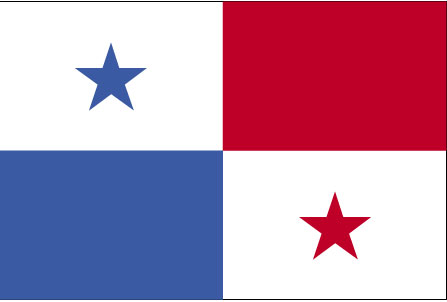
Panama
Panama
Declare Your Relationship to Panama
CountryReports Community
- Studying1
- From Panama2
- Panama heritage2
- Visited1
- Want to visit2
Customs and Culture
Customs and Culture
Cultural Attributes
Panamanians consider their family to be important, it is their support and their responsibility and the ultimate recipient of their loyalty. Along with loyalty to family members, Panamanians value their friendships. Nationalism is strong in Panama. The people of Panama want to solve their problems They look to the future with excitement. Ethnicity is an important social distinction in Panama, yet the Panamanian subcultures have merged to the point that individuals are often difficult to classify as belonging to a particular ethnic group.
The Panamanian social system began in Spanish colonial times and has continued until today. Most citizens, even interior campesinos, are well-informed on topics relating to national and international politics. Panamanians are also aware of their association with the United States. Many resent the relationship as unequal. Panamanians appreciate their Spanish heritage and, to a lesser extent, their indigenous roots.
Panama's social system has three main tiers: the elite, the middle class the lower class. Class structure divides citizens based on wealth, occupation, education, family background, culture, and race. Panamanians are an eclectic group of immigrants from many countries and they readily accept other groups, cultures, and combine them with their own. The Panamanian lifestyle demonstrates a Caribbean rather than South American influence.

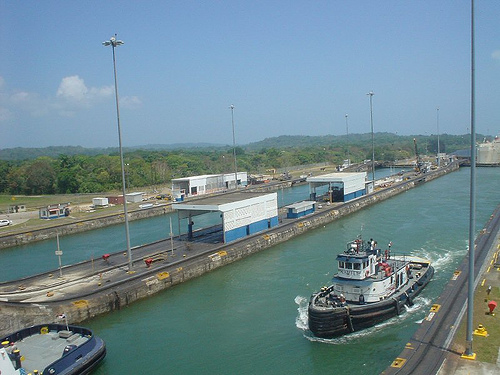
Bridge Between Two Worlds
Get More Customs and Culture
6 more cultural topics for members
Social Customs & Etiquette · Diet · Family · Dating Customs · Recreation · Student Life
Holidays
Independence Day
11/3Independence Day
Christmas
12/25Christmas
Christmas dinner consists of seafood, rice with beans, arroz con pollo (chicken with rice, saffron, and vegetables), arroz con piña (rice with pineapple) and rom ponche (rum punch)
Instead of writing letters to Santa Claus children address them to Baby Jesus care of St Peter in Heaven. Gifts are placed either under the Christmas tree or under the children’s bed.
Dates of Interest
- November
While Semana Santa is celebrated in many countries, Panama has its own unique customs and traditions during this time, including religious processions, reenactments of the Passion of Christ, and special church services.
How do people greet each other in Panama?
Panamanians are gracious and polite, greeting with handshakes; two men always shake hands, women friends kiss on one cheek, and men and women sometimes kiss on the cheek. Small talk to learn about someone personally comes before any business discussion.
Do
- Shake hands when meeting (American handshake or palm-to-palm with thumb facing the person)
- Make personal small talk before discussing business
- Say por favor (please), gracias (thank you), and de nada (you're welcome)
- Ask permission to join a group by saying con permiso
Don’t
- Don't start a business conversation before getting to know the other party personally
- Don't discuss personal possessions
- Don't bring up the building of the canal or U.S. intervention
- Don't discuss local politics or race in social settings
Good to know
- Panamanians have two surnames: the father's first, then the mother's
- Favorite conversation topics are family, mutual friends, hobbies, interests, and sports
- To beckon someone, raise a hand with the palm facing them
What are dining customs like in Panama?
Panamanians eat three hearty meals a day and serve rice with nearly every meal; the national dish is sancocho, a spicy chicken-and-vegetable stew. Families usually eat together with a big breakfast and the main meal at midday.
Do
- Eat everything on your plate as a sign of good manners
- Signal you've finished by placing your knife and fork vertically and parallel on the plate
- Try ceviche, tamales, sancocho, arroz con pollo, and sopa borracha
Good to know
- The father sits at the head of the table; a guest of honor sits at the opposite end
- Tip servers about 15% of the bill
- Chicha (fresh fruit, water, sugar) is a popular drink, and coffee is usual at breakfast
- A panadería sells bread, a pastelería sells pastries, and a cantina is a drinking establishment
What social etiquette should I know when visiting?
Guests follow specific customs at social gatherings, including introducing themselves and bringing a small gift for the host. Punctuality expectations vary by the size of the event.
Do
- Introduce yourself to other guests at large gatherings
- Bring a small gift for the host or hostess at any party
- Arrive within a half-hour at a small party
Don’t
- Don't arrive later than a half-hour at a smaller party
Good to know
- Arriving up to two hours late is acceptable at large gatherings
- In the interior, friends exchange modest gifts like food or seedlings, not expensive items
How should I dress in Panama?
Panamanians are fairly conservative and formal in dress, and they frown on wearing shorts in public regardless of the heat. Many wear North American styles, though men may wear a loose guayabera shirt.
Do
- Dress conservatively; wear lightweight suits in professions like banking and law
- Abide by the local dress code even as a foreigner
Don’t
- Don't wear shorts in public, especially women, for whom shorts or pants in public are considered inappropriate
Good to know
- Traditional women's dress is the pollera with a peineta headpiece; men's is the montuno with a pintado straw hat and sandals
- Tourists are granted some leniency for wearing shorts, but locals prefer you follow their dress code
What is family life like in Panama?
Family is essential to Panamanians and receives their ultimate loyalty, often with three generations living under one roof, especially in rural areas. Members support each other through life and love celebrating holidays together.
Good to know
- Panamanians are often more loyal to parents and siblings than to spouses
- Godparents are chosen with great care and play an integral role in a child's life
- In Cuna society men dominate; women inherit land from their fathers and make molas
- Urban girls have more freedom than those in the interior, where dating is more restricted
What do people do for fun in Panama?
Baseball is the most popular sport, learned from Americans who worked on the canal, and soccer is the national sport. The pleasant weather and rich wildlife make outdoor activities popular.
Good to know
- Popular activities include swimming, diving, deep-sea fishing, snorkeling, and scuba diving
- Other sports include volleyball, cycling, hiking, basketball, boxing, tennis, softball, and horse racing
- With over 940 bird species, bird watching is popular
- Sailing and mountain fitness activities are also enjoyed
Last updated: 2026-07-12 · Sources: CountryReports
Photos of Panama
Photos of Panama


Travel and Tourism
Travel and Tourism
- Travel Alert Status
- Level 2: Exercise Increased Caution
- Currency
- balboa (PAB); US dollar (USD)
- Time Difference
- UTC-5 (same time as Washington, DC, during Standard Time)
- Climate
- tropical maritime; hot, humid, cloudy; prolonged rainy season (May to January), short dry season (January to May)
- Airports
- 103
Read the full travel guide — health, safety, vaccinations, disease risk, sanitation, and transit details.
View full travel guideRecipes
Recipes
Hojaldres
Dessert
Main Dish
Plantain Cereal
Main Dish
Sancocho (Chicken Soup)
Main Dish
Arroz con Pollo (Chicken and Rice)
Main Dish
Tortilla de Maiz con Queso Blanco (Corn Tortilla with Farmer’s Cheese)
Main Dish
Rice with Guandu
Main Dish
Ceviche De Garbanzos
Dessert
PremiumHojaldres
Beverage
PremiumChicha de Arroz con Pina (Fresh Pineapple Drink)
History
History
Historical Eras
Pre-Columbian Era
11000 BCE – 1501
Panama's isthmus was inhabited for millennia by diverse indigenous peoples, including the Cuna, Ngäbe, and Guna, who developed sophisticated cultures, trade networks, and goldworking traditions. These societies flourished as a natural land bridge connecting North and South America before European contact dramatically disrupted their populations through disease, conquest, and enslavement.
Spanish Colonial Era
1501 – 1821
Following Rodrigo de Bastidas's arrival in 1501 and Balboa's famous crossing to the Pacific in 1513, Panama became the crossroads of the Spanish Empire — the third-wealthiest colony in the New World. Gold and silver from Peru flowed through Panama City toward Spain, attracting buccaneers such as Henry Morgan, who sacked and burned Panama City in 1671. By the 18th century the colony had declined due to piracy, competing trade routes, and imperial neglect.
Colombian Department
1821 – 1903
Panama declared independence from Spain in 1821 and voluntarily joined Gran Colombia, later remaining part of Colombia as a department. Throughout the 19th century, American interest surged with the California gold rush, prompting the construction of a trans-isthmian railroad completed in 1855. A failed French canal venture under Ferdinand de Lesseps (1880–1889) and persistent Panamanian separatist sentiment set the stage for a decisive break from Bogotá.
Canal Zone Republic
1903 – 1968
With active U.S. naval support, Panama seceded from Colombia in 1903 and immediately signed the Hay–Bunau-Varilla Treaty, granting the United States perpetual sovereignty over the Canal Zone. The U.S. Army Corps of Engineers completed the 50-mile canal in 1914, transforming Panama's economy but making the republic a virtual American protectorate. Growing nationalist resentment culminated in deadly riots in January 1964, when Panamanian students attempted to raise their flag in the Canal Zone.
Military Dictatorship
1968 – 1989
General Omar Torrijos seized power in a 1968 coup, establishing military dominance over Panamanian politics and successfully negotiating the 1977 Carter–Torrijos Treaties, which set a timetable for full Panamanian control of the canal by 1999. After Torrijos's death in 1981, General Manuel Noriega rose to control the Panama Defense Force and effectively the state, but his regime became increasingly authoritarian and linked to drug trafficking. A U.S. military invasion in December 1989, Operation Just Cause, deposed Noriega and restored civilian government.
Democratic Modern Era
1989 – present
Following Noriega's removal, Panama restored democratic governance and on 31 December 1999 assumed full sovereignty over the Panama Canal under President Mireya Moscoso, fulfilling the promise of the 1977 treaties. The canal has been expanded and modernized, most notably with a $5.25 billion third set of locks inaugurated in 2016, cementing Panama's role as a global maritime hub. The country has maintained civilian rule and sustained strong economic growth, though inequality and corruption remain persistent challenges.
Overview
Cuna Indian mola design of a Panamanian coin
Timeline of Key Events
1501
Rodrigo de Bastidas, sailing westward from Venezuela, arrives in search of gold.
Rodrigo de Bastidas, sailing westward from Venezuela, arrives in search of gold.
1502
Christopher Columbus establishes a short-lived settlement on the isthmus.
Christopher Columbus establishes a short-lived settlement on the isthmus.
1510
The Spanish establish Santa María la Antigua del Darien.
The Spanish establish Santa María la Antigua del Darien, the first mainland settlement in the Americas.
1513
Vasco Núnez de Balboa marches from the Atlantic to the Pacific.
Vasco Núnez de Balboa marches from the Atlantic to the Pacific, proving that crossing the isthmus is the shortest route between the oceans.
1821
Panama declares independence from Spain.
Panama declares independence from Spain.
1846
Panama signs treaty with US allowing it to build a railway across the isthmus.
Panama signs treaty with US allowing it to build a railway across the isthmus.
1855
Panamanian workers completed a railroad across the isthmus.
Panamanian workers completed a railroad across the isthmus.
Read the full history profile — narrative overview, defining eras, and the complete timeline in one place.
View expanded historyInteresting Facts
Interesting Facts
The idea of building a canal on the isthmus to connect the Atlantic and Pacific Oceans dates back to the 1840s. France, Britain and the USA were all interested in a canal linking the oceans.
Ferdinand de Lesseps, a Frenchman who built the Suez Canal, made an unsuccessful attempt to construct a canal linking the Atlantic and Pacific Oceans (1879-1889).
Birthday traditions iclude piñatas and large parties. The piñata is the most important item. They are usually made to resemble a character to correspond with a theme. It is filled with candy and confetti and is either hit with a stick or there are ribbons on it to pull. When the cake is served, the happy birthday song is often performed in two languages, Spanish and English. The cake is served with ice cream. The extended family is invited and sometimes up to 100 children are invited.
See every fact — trivia, oddities, and curious tidbits gathered from across the country.
View all interesting factsGeography and Environment
Geography and Environment
- Terrain
- interior mostly steep, rugged mountains and dissected, upland plains; coastal areas largely plains and rolling hills
- Climate
- tropical maritime; hot, humid, cloudy; prolonged rainy season (May to January), short dry season (January to May)
- Natural Hazards
- occasional severe storms and forest fires in the Darien area
- Current Environmental Issues
- water pollution from agricultural runoff threatens fishery resources; deforestation of tropical rain forest; land degradation and soil erosion threatens siltation of Panama Canal; air pollution in urban areas; mining threatens natural resources
Read the full geography and environment profile — terrain, climate, natural resources, hazards, land use, and international agreements.
View full geographyPeople & Demographics
People & Demographics
Religion
Languages Spoken
Spanish (official), English 14%
- Spanish
Population
- Population
- 4,351,757
- Population in Major Urban Areas
- PANAMA CITY (capital) 1.426 million
- Nationality Noun
- Panamanian(s)
- Ethnic Groups
- mestizo (mixed Amerindian and white) 70%, Amerindian and mixed (West Indian) 14%, white 10%, Amerindian 6%
- Language Note
- Spanish is the official language although many Panamanians in business and the professions speak English.
Education
- Literacy Definition
- age 15 and over can read and write
Health Information
- Life Expectancy at Birth
- Life expectancy at birth in Panama stands at approximately 78 years overall, with women living to around 81 years and men to approximately 75 years. These figures place Panama among the healthiest nations in Latin America and reflect decades of investment in public health infrastructure, sanitation, and medical services. Panama's relatively strong life expectancy is closely tied to its economic development. As one of the fastest-growing economies in the region, Panama has been able to channel revenues — particularly from the Panama Canal — into healthcare systems, hospitals, and social programs. The country maintains a mixed healthcare system that includes public institutions managed by the Social Security Fund (Caja de Seguro Social) and the Ministry of Health, alongside a robust private sector that attracts medical tourists from across Central America and the Caribbean. Urban areas, especially Panama City, benefit from modern hospitals equipped with advanced technology and well-trained medical professionals. However, a notable disparity exists between urban and rural populations. Indigenous communities in regions such as the Darién, Ngäbe-Buglé, and Guna Yala often have significantly reduced access to healthcare, clean water, and sanitation, which contributes to lower life expectancy and higher infant mortality rates in those areas. The leading causes of death in Panama mirror those of other middle- and upper-middle-income countries, including cardiovascular disease, cancer, and diabetes. The country has made measurable progress in reducing childhood mortality and infectious disease through vaccination campaigns and expanded prenatal care programs. Panama also benefits from a relatively healthy diet in many parts of the country, rooted in fresh fruits, vegetables, rice, and seafood. Urbanization, however, has brought rising rates of obesity and non-communicable diseases that present ongoing public health challenges. Overall, Panama's life expectancy trajectory has been steadily improving over recent decades, reflecting gains in education, income levels, and access to medical care. Continued efforts to close the gap between wealthy urban centers and underserved rural and indigenous communities will be critical in sustaining and improving these health outcomes for all Panamanians.
- Major Infectious Diseases — degree of risk
- intermediate
Life Expectancy
- Life Expectancy at Birth
- Life expectancy at birth in Panama stands at approximately 78 years overall, with women living to around 81 years and men to approximately 75 years. These figures place Panama among the healthiest nations in Latin America and reflect decades of investment in public health infrastructure, sanitation, and medical services. Panama's relatively strong life expectancy is closely tied to its economic development. As one of the fastest-growing economies in the region, Panama has been able to channel revenues — particularly from the Panama Canal — into healthcare systems, hospitals, and social programs. The country maintains a mixed healthcare system that includes public institutions managed by the Social Security Fund (Caja de Seguro Social) and the Ministry of Health, alongside a robust private sector that attracts medical tourists from across Central America and the Caribbean. Urban areas, especially Panama City, benefit from modern hospitals equipped with advanced technology and well-trained medical professionals. However, a notable disparity exists between urban and rural populations. Indigenous communities in regions such as the Darién, Ngäbe-Buglé, and Guna Yala often have significantly reduced access to healthcare, clean water, and sanitation, which contributes to lower life expectancy and higher infant mortality rates in those areas. The leading causes of death in Panama mirror those of other middle- and upper-middle-income countries, including cardiovascular disease, cancer, and diabetes. The country has made measurable progress in reducing childhood mortality and infectious disease through vaccination campaigns and expanded prenatal care programs. Panama also benefits from a relatively healthy diet in many parts of the country, rooted in fresh fruits, vegetables, rice, and seafood. Urbanization, however, has brought rising rates of obesity and non-communicable diseases that present ongoing public health challenges. Overall, Panama's life expectancy trajectory has been steadily improving over recent decades, reflecting gains in education, income levels, and access to medical care. Continued efforts to close the gap between wealthy urban centers and underserved rural and indigenous communities will be critical in sustaining and improving these health outcomes for all Panamanians.
Read the full people and society profile — demographics, health, education, religion, languages, and notable people.
View full people and societyGovernment & Politics
Government & Politics
Country Identity
- Country Name
- Panama
- Full Country Name
- Republic of Panama
- Local - Long
- Republica de Panama
- Local - Short
- Panama
Government Structure
- Government Type
- constitutional democracy
- Legal System
- based on civil law system; judicial review of legislative acts in the Supreme Court of Justice; accepts compulsory ICJ jurisdiction, with reservations
- Executive Branch
- chief of state: President Jose Raul MULINO Carrizo (since 1 July 2024); Vice President Raisa BANFIELD Porcell (since 1 July 2024); note - the president is both the chief of state and head of government head of government: President Jose Raul MULINO Carrizo (since 1 July 2024); Vice President Raisa BANFIELD Porcell (since 1 July 2024); note - the president is both the chief of state and head of government cabinet: Cabinet appointed by the president elections: president and vice president elected on the same ticket by popular vote for five-year terms; election last held 5 May 2024 (next to be held May 2029); note - Panama has one vice president election results: Jose Raul MULINO Carrizo elected president; percent of vote - Jose Raul MULINO Carrizo 34.3%, Ricardo LOMBANA 24.0%, Martin TORRIJOS Espino 15.8%, Romulo ROUX 11.4%, others 14.5% note: ruling party - RM (Realizando Metas)
- Legislative Branch
- Unicameral National Assembly or Asamblea Nacional (71 seats; members are elected by popular vote to serve five-year terms). Elections: last held on 5 May 2024 (next to be held in May 2029). Election results: seats by party — Realizando Metas (RM) 11, Partido Revolucionario Democrático (PRD) 10, Partido Panameñista (PP) 8, Movimiento Liberal Republicano Nacionalista (MOLIRENA) 7, Alianza (alliance grouping) 6, Vamos (VAM) 5, Cambio Democrático (CD) 5, others 19. Note: legislators from outlying rural districts are chosen on a plurality basis, while districts located in more populous towns and cities elect multiple legislators by means of a proportion-based formula. The number of seats was reduced from 78 to 71 following reforms that took effect ahead of the 2009 elections.
- Judicial Branch
- Supreme Court of Justice or Corte Suprema de Justicia (nine judges appointed for 10-year terms); five superior courts; three courts of appeal
- Suffrage
- 18 years of age; universal and compulsory
- Constitution
- 11 October 1972; major reforms adopted 1978, 1983 and 1994
- Independence
- 3 November 1903 (from Colombia; became independent from Spain 28 November 1821)
- National Holiday
- Independence Day, 3 November (1903)
Capital City
- Capital Name
- Panama City
- Capital - geographic coordinate
- 8 58 N, 79 32 W
- Capital Time Difference
- UTC-5 (same time as Washington, DC, during Standard Time)
according to tradition, the name derives from a former fishing area near the present capital - an indigenous village and its adjacent beach - that were called "panama" meaning "an abundance of fish"
Military
Branches: no regular military forces; Panamanian Public Security Forces (subordinate to the Ministry of Public Security), comprising the National Police (PNP), National Air-Naval Service (SENAN), National Border Service (SENAFRONT)
Embassy / Diplomatic Mission
U.S. Embassy Panama
Physical location: Avenida Demetrio Basilio Lakas, Building No.783 in the Clayton section of Panama City.
International mailing address: Apartado 0816-02561, Zona 5, Panama, Republic of Panama.
U.S. mailing address: U.S. Embassy Panama, 9100 Panama City Place, Washington, DC 20521-9100.
Telephone: (011) 507-317-5000 or (011) 507-317-5030 from the U.S., 317-5000 or 317-5030 from Panama
Emergency after-hours telephone: (011) 507-317-5000 from the U.S., 317-5000 from Panama
Facsimile: (011) 507-317-5568 or (011) 507-317-5303 (317-5568 or 317-5303)
You may also send the Embassy inquiries by e-mail to panama-acs@state.gov
Read the full government profile — flag symbolism, national anthem, and other national symbols.
View full government detailsEconomy
Economy
Panama's dollarized economy is anchored by a robust services sector, which accounts for roughly three-quarters of GDP.
Snapshot
- Currency Name and Code
- Panamanian Balboa (PAB) and US Dollar (USD)
- GDP — official exchange rate
- $14,890,000,000 (USD)
- GDP Real Growth Rate
- 2.5%
- Gini Index
- 56.4
News & Weather
News & Weather
Current Weather
Latest News
Israeli charged with tax fraud extradited from Panama after global manhunt - The Jerusalem Post
The Jerusalem Post · 11h ago
Panama Canal Advances Energy Corridor Bid Process as Prequalification Phase Moves Forward - gCaptain
gCaptain · 2d ago
As Jet Fuel Prices Rose, Southwest Used Panama Canal - Newser
Newser · 17h ago
Panama City Beach man gets life for meth trafficking - mypanhandle.com
mypanhandle.com · 3d ago
Panama City Beach woman facing several charges following a traffic stop in Eufaula - WRBL
WRBL · 3d ago
Coroner confirms methamphetamine toxicity killed man found in East Panama Lane field - KBAK
KBAK · 2d ago
4 swimmers caught in rip current in PCB; all rescued safely - WJHG
WJHG · 3d ago
Panama City Beach man sentenced to life in prison - WJHG
WJHG · 3d ago
News via Google News
Climate Overview
tropical maritime; hot, humid, cloudy; prolonged rainy season (May to January), short dry season (January to May)
Videos
Videos
1 curated YouTube videos.
Source: YouTube
Frequently Asked Questions
Frequently Asked Questions
What is the population of Panama?
How do people greet each other in Panama?
What are dining customs like in Panama?
What social etiquette should I know when visiting?
How should I dress in Panama?
What is family life like in Panama?
What do people do for fun in Panama?
What is the capital of Panama?
Where is Panama located?
What countries border Panama?
What is the main religion practiced in Panama?
What currency is used in Panama?
What language is spoken in Panama?
What is Panama known for?
What is the geography of Panama like?
Last reviewed 2026