
 English
 Español
 中文
中文 हिन्दी
 Français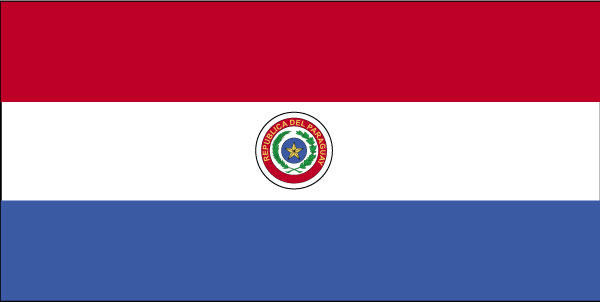
Paraguay
Paraguay
Declare Your Relationship to Paraguay
CountryReports Community
- Studying2
- From Paraguay0
- Paraguay heritage2
- Visited0
- Want to visit1
Customs and Culture
Customs and Culture
Cultural Attributes
Paraguayan culture has been heavily shaped by its Spanish Colonial past, creating a modern culture. This is a unique blend of European and indigenous heritages. Paraguayans are deeply proud of their heritage.
The system of social classes roughly follows the Spanish system. In general, town people are considered to have higher status than country folk, and people who have been married in the church may look down on those whose matrimony has been a less formal affair. Those who live in Asuncion think of themselves as better than those in smaller towns.

Land of Guaraní Spirit and Spanish Soul
Get More Customs and Culture
6 more cultural topics for members
Social Customs & Etiquette · Diet · Family · Dating Customs · Recreation · Student Life
Holidays
Independence Day
5/14Independence Day
Christmas
12/25Christmas
The Christmas season begins with the Feast of the Immaculate Conception. Papa Noel (Father Christmas) is the one who brings gifts to the children.
Christmas dinner often features duck, lamb, chicken and turkey, beer and cider.
Dates of Interest
- September 30th
The city of Encarnación hosts one of Paraguay's most vibrant carnivals, featuring colorful parades, music, dancing, and elaborate costumes. The Encarnación Carnival typically takes place in February, attracting locals and tourists alike.
How do people greet each other in Paraguay?
Handshakes with eye contact are standard in formal settings, while cheek kisses and hugs are common among friends and family. Verbal greetings in Spanish are important and often include asking about someone's well-being.
Do
- Offer a firm handshake with eye contact in formal or business settings
- Exchange one or two cheek kisses with friends and family (touching cheeks and making a kissing sound)
- Use 'Hola', 'Buenos días', 'Buenas tardes', or 'Buenas noches' as appropriate
- Add a title like 'Señor' or 'Señora' to show respect
Good to know
- '¿Cómo estás?' (How are you?) and '¿Cómo va?' (How's it going?) are casual friendly greetings
- Close friends and family may greet with hugs, especially after time apart
What should I know about eating in Paraguay?
The national dish is sopa paraguaya, a corn bread with cheese and onions, and maize and cassava are staples at most meals. Grilled meat (parrillada) is a popular restaurant item.
Good to know
- Try sopa paraguaya, the national dish
- Look for parrillada (grilled meat) at restaurants
How should I dress in Paraguay?
In urban areas people wear Western or European styles of clothing, while rural attire is more traditional.
Good to know
- Rural women wear a shawl called a rebozo with a simple dress or skirt and blouse
- Rural men wear loose pants (bomachas), a shirt or jacket, a neck scarf, and a poncho
What is family life like in Paraguay?
Women carry a heavy domestic workload—housework, cooking, childcare, marketing, and carrying water—and have limited job opportunities outside the home. In lower-income families marriage is often informal, and spouses may change frequently.
Good to know
- Church marriage carries higher social status than informal unions
- Women's outside work is often limited to roles like needle work, lace making, laundry, cigar making, small storekeeping, or cotton picking
What do people do for fun in Paraguay?
Fútbol is the most popular sport, played everywhere from town fields to formal clubs, followed by basketball. Hunting, fishing, and horseback riding are also popular pastimes.
Good to know
- Fútbol is played in every town
- Horseback riding, once a ranch necessity, is now a widely practiced pastime in the capital and major towns
What should I know before visiting Paraguay?
Paraguayan culture is a proud blend of European and indigenous heritages shaped by its Spanish Colonial past, with a social class system roughly following the Spanish model.
Good to know
- Drinking maté is a social ritual shared among friends
- Town people are often considered higher status than country folk, and Asunción residents may see themselves as above those from smaller towns
- All Guaraní speak a secular language, with sacred and secret languages used in religious contexts
Last updated: 2026-07-12 · Sources: CountryReports
Photos of Paraguay
Photos of Paraguay


Travel and Tourism
Travel and Tourism
- Travel Alert Status
- Level 1: Exercise Normal Precautions
- Currency
- guarani (PYG)
- Time Difference
- UTC-4 (1 hour ahead of Washington, DC, during Standard Time)
- Climate
- Paraguay's climate is seasonal and subject to abrupt changes. It is subtropical, with summer and winter seasons opposite those in the United States. Winds are generally moderate, but high winds accompanied by thunder and electrical storms are common, especially in summer. The long, hot summer lasts from October through March, with January average maximum temperature 91ºF and mean temperature 81øF. Severe hot spells with very high humidity are common. Temperatures often exceed 100ºF during the day from December to February (the official record high temperature is 109ºF), with little relief at night. Winter extends from June through August. Cold snaps of 4 or 5 days with temperatures in the low 40s and high 30s are interspersed with several days in the upper 70s and low 80s. Frosts occur rarely. The official record low in Asuncion is 32ºF, although the damp air make it seem much colder. With frequent and abrupt changes, from winter to summer-like weather and back again (temperature changes of 20ºF-50ºF are common), Relative humidity ranges between 67% and 78% (monthly averages) year round and is particularly high in summer. Asuncion's average 59-inch annual rainfall is well distributed seasonally. Slightly greater amounts fall in hotter months. Torrential rains cause annual floods in riverside communities. The Chaco, which receives little rainfall, becomes semiarid in its westernmost reaches. During rainy periods, however, water covers large areas due to the impermeable clay subsoil.
- Airports
- 880
Read the full travel guide — health, safety, vaccinations, disease risk, sanitation, and transit details.
View full travel guideRecipes
Recipes
History
History
Historical Eras
Pre-Colonial Era
10000 BCE – 1537
Indigenous Guaraní peoples inhabited the region for millennia before European contact, organizing in semi-sedentary communities along river systems. Portuguese explorer Alejo García traversed the territory around 1525, becoming one of the first Europeans to encounter the Paraguayan interior. The Guaraní's social structures, language, and agricultural practices would profoundly shape the character of the colony that followed.
Colonial Period
1537 – 1811
Spanish settlers founded Asunción in 1537, establishing it as the administrative hub of the Río de la Plata region. Intermarriage between Spanish colonists and Guaraní women was actively encouraged, producing a predominantly mestizo society with a distinctive bilingual culture. The Jesuit missions, established from 1609 onward, created autonomous reductions that evangelized and organized tens of thousands of Guaraní until the order's expulsion in 1767.
Early Republic
1811 – 1865
Paraguay declared independence from Spain in 1811, becoming one of South America's earliest independent states. José Gaspar Rodríguez de Francia ruled as dictator for life from 1816 until his death in 1840, sealing the country's borders, dismantling the criollo elite, and instituting a form of state socialism to preserve sovereignty. His successors Carlos Antonio López and Francisco Solano López modernized the country's infrastructure and military while steering it toward catastrophic regional conflict.
War & Reconstruction
1865 – 1904
The War of the Triple Alliance (1865–1870) pitted Paraguay against Brazil, Argentina, and Uruguay, resulting in the death of roughly two-thirds of the male population and the loss of significant territory. President Francisco Solano López died in battle in 1870, ending the conflict, and subsequent peace treaties with Brazil (1872), Argentina (1876), and Uruguay (1882) formalized Paraguay's diminished borders. War hero General Bernardino Caballero founded the Colorado Party in 1874, which came to dominate Paraguayan politics for generations.
Chaco Era & Instability
1904 – 1954
The Liberal Party ousted the Colorados in 1904, ushering in decades of political turbulence marked by frequent coups and presidential turnover. The Chaco War (1932–1935) against Bolivia ended in a Paraguayan military victory that secured the vast Chaco Boreal region, delivering a rare moment of national pride. The postwar period nonetheless remained deeply unstable, culminating in a civil war in 1947 and the Colorado Party's return to power, setting the stage for authoritarian consolidation.
Stroessner Dictatorship
1954 – 1989
General Alfredo Stroessner seized power in 1954 and ruled Paraguay for 35 years, making his regime one of the longest-lasting dictatorships in Latin American history. His government maintained control through the Colorado Party apparatus, systematic repression, and close alliance with the United States during the Cold War. Stroessner was overthrown in a military coup led by General Andrés Rodríguez in February 1989, opening the path to democratic transition.
Democratic Era
1989 – present
Paraguay adopted a new democratic constitution in 1992 and has held regular presidential elections since 1989, though political instability, corruption, and Colorado Party dominance have repeatedly tested democratic consolidation. The country experienced its first peaceful transfer of power to an opposition candidate in 2008, when Fernando Lugo defeated the Colorados after six decades of uninterrupted rule. Paraguay continues to navigate challenges including land inequality, organized crime, and economic dependence on agriculture, particularly soybeans and hydroelectric exports.
Overview
Ruins of the Jesuit mission at Trinidad,
Timeline of Key Events
1525
Portuguese explorer Alejo Garcia visits Paraguay.
Portuguese explorer Alejo Garcia visits Paraguay.
1537
Spanish settlers established the first successful colony in the Río de la Plata area at Asunción.
Spanish settlers established the first successful colony in the Río de la Plata area at Asunción.
1537
Spanish begin colonising the interior plains of Paraguay.
Spanish begin colonizing the interior plains of Paraguay.
1588
Members of the Roman Catholic Society of Jesus, known as Jesuits arrived in Paraguay.
Members of the Roman Catholic Society of Jesus, known as Jesuits arrived in Paraguay.
1609
Spanish Jesuits begin converting the local population to Roman Catholicism.
Spanish Jesuits begin converting the local population to Roman Catholicism.
1811
Paraguay declares its independence from Spain.
Paraguay declares its independence from Spain.
1865
Paraguay is reduced to half its population
Paraguay is reduced to half its population, looses 55,000 square miles, and is saddled with huge debt as a result of the War of the Triple Alliance where Brazil, Argentina and Uruguay fight against Paraguay.
Read the full history profile — narrative overview, defining eras, and the complete timeline in one place.
View expanded historyInteresting Facts
Interesting Facts
The Guarani are one of the indigenous groups which inhabited Paraguay before the arrival of Europeans. In August 2004 over four hundred and twenty people died in a fire at a shopping centre in Asuncion.
See every fact — trivia, oddities, and curious tidbits gathered from across the country.
View all interesting factsGeography and Environment
Geography and Environment
- Terrain
- grassy plains and wooded hills east of Rio Paraguay; Gran Chaco region west of Rio Paraguay mostly low, marshy plain near the river, and dry forest and thorny scrub elsewhere
- Climate
- Paraguay's climate is seasonal and subject to abrupt changes. It is subtropical, with summer and winter seasons opposite those in the United States. Winds are generally moderate, but high winds accompanied by thunder and electrical storms are common, especially in summer. The long, hot summer lasts from October through March, with January average maximum temperature 91ºF and mean temperature 81øF. Severe hot spells with very high humidity are common. Temperatures often exceed 100ºF during the day from December to February (the official record high temperature is 109ºF), with little relief at night. Winter extends from June through August. Cold snaps of 4 or 5 days with temperatures in the low 40s and high 30s are interspersed with several days in the upper 70s and low 80s. Frosts occur rarely. The official record low in Asuncion is 32ºF, although the damp air make it seem much colder. With frequent and abrupt changes, from winter to summer-like weather and back again (temperature changes of 20ºF-50ºF are common), Relative humidity ranges between 67% and 78% (monthly averages) year round and is particularly high in summer. Asuncion's average 59-inch annual rainfall is well distributed seasonally. Slightly greater amounts fall in hotter months. Torrential rains cause annual floods in riverside communities. The Chaco, which receives little rainfall, becomes semiarid in its westernmost reaches. During rainy periods, however, water covers large areas due to the impermeable clay subsoil.
- Natural Hazards
- local flooding in southeast (early September to June); poorly drained plains may become boggy (early October to June)
- Current Environmental Issues
- deforestation; water pollution; inadequate means for waste disposal present health risks for many urban residents; loss of wetlands
Read the full geography and environment profile — terrain, climate, natural resources, hazards, land use, and international agreements.
View full geographyPeople & Demographics
People & Demographics
Religion
Languages Spoken
Spanish (official), Guarani (official)
- Guarani
- Spanish
Population
- Population
- 7,356,409
- Population in Major Urban Areas
- ASUNCION (capital) 2.139 million
- Nationality Noun
- Paraguayan(s)
- Ethnic Groups
- mestizo (mixed Spanish and Amerindian) 95%
Education
- Literacy Definition
- age 15 and over can read and write
Most schools require a uniform. To make the most of the school buildings and facilities, some schools will begin at 7:30 and go until 11:30. A second session for other students will run from 1:30 until 5:30. Some schools will also offer a third session in the evening. Children only attend school four hours a day, and the multiple school sessions help them because they must often work most of the rest of the day, either on a farm in rural areas or selling goods on the streets in the cities. Children can make up most street vendors in the cities, which is quite a change from North American and European cultures.
Most children go to school with only a notebook and a pencil. Textbooks are hard to come by, and teachers usually teach from a barely adequate blackboard.
In Paraguay, the big meal of the day is usually at noon. Families return home for lunch and then take a little nap (siesta) after eating and returning to their day’s activities. This is becoming more difficult to do in large cities such as Asuncion, so the tradition is changing to a more American-like work and school schedule. Still, most of the country continues as it has for many, many years.
Health Information
- Life Expectancy at Birth
- Life expectancy at birth in Paraguay stands at approximately 74 to 75 years overall, with women typically outliving men by several years. Female life expectancy averages around 77 to 78 years, while male life expectancy falls closer to 71 to 73 years. These figures place Paraguay in a mid-range position among Latin American nations, reflecting both meaningful health gains over recent decades and persistent challenges that continue to affect the population's wellbeing. Over the past half century, Paraguay has made substantial progress in extending the lives of its citizens. In the 1960s, life expectancy hovered around 60 years, meaning the country has added well over a decade to the average lifespan through improvements in sanitation, access to clean water, vaccination programs, and maternal and child healthcare. Infant mortality rates have declined considerably during this period, which has been one of the most significant drivers of increased life expectancy at birth. Despite these gains, regional and socioeconomic disparities remain notable. Rural populations, particularly those in remote Chaco communities and among indigenous groups, face considerably shorter life expectancies due to limited access to healthcare facilities, higher rates of infectious disease, and lower incomes. Urban centers such as Asunción and Ciudad del Este generally support better health outcomes, with more accessible hospitals, specialists, and preventive care programs. The leading causes of death in Paraguay include cardiovascular diseases, cancers, and diabetes, reflecting a broader epidemiological shift from communicable to non-communicable diseases as the country develops economically. Respiratory illnesses and complications related to poverty still affect vulnerable segments of the population disproportionately. Paraguay's public health infrastructure has been growing, with government investment in the Ministry of Public Health and Social Welfare expanding primary care networks throughout the country. International partnerships and health initiatives have also contributed to immunization coverage and disease prevention efforts. However, healthcare spending as a percentage of GDP remains modest by regional standards, which places a ceiling on how quickly health outcomes can improve across all demographics. Overall, the trajectory for life expectancy in Paraguay is positive, with continued urbanization, rising education levels, and ongoing public health investment expected to push average lifespans higher in the coming decades.
- Major Infectious Diseases — degree of risk
- intermediate
Life Expectancy
- Life Expectancy at Birth
- Life expectancy at birth in Paraguay stands at approximately 74 to 75 years overall, with women typically outliving men by several years. Female life expectancy averages around 77 to 78 years, while male life expectancy falls closer to 71 to 73 years. These figures place Paraguay in a mid-range position among Latin American nations, reflecting both meaningful health gains over recent decades and persistent challenges that continue to affect the population's wellbeing. Over the past half century, Paraguay has made substantial progress in extending the lives of its citizens. In the 1960s, life expectancy hovered around 60 years, meaning the country has added well over a decade to the average lifespan through improvements in sanitation, access to clean water, vaccination programs, and maternal and child healthcare. Infant mortality rates have declined considerably during this period, which has been one of the most significant drivers of increased life expectancy at birth. Despite these gains, regional and socioeconomic disparities remain notable. Rural populations, particularly those in remote Chaco communities and among indigenous groups, face considerably shorter life expectancies due to limited access to healthcare facilities, higher rates of infectious disease, and lower incomes. Urban centers such as Asunción and Ciudad del Este generally support better health outcomes, with more accessible hospitals, specialists, and preventive care programs. The leading causes of death in Paraguay include cardiovascular diseases, cancers, and diabetes, reflecting a broader epidemiological shift from communicable to non-communicable diseases as the country develops economically. Respiratory illnesses and complications related to poverty still affect vulnerable segments of the population disproportionately. Paraguay's public health infrastructure has been growing, with government investment in the Ministry of Public Health and Social Welfare expanding primary care networks throughout the country. International partnerships and health initiatives have also contributed to immunization coverage and disease prevention efforts. However, healthcare spending as a percentage of GDP remains modest by regional standards, which places a ceiling on how quickly health outcomes can improve across all demographics. Overall, the trajectory for life expectancy in Paraguay is positive, with continued urbanization, rising education levels, and ongoing public health investment expected to push average lifespans higher in the coming decades.
Read the full people and society profile — demographics, health, education, religion, languages, and notable people.
View full people and societyGovernment & Politics
Government & Politics
Country Identity
- Country Name
- Paraguay
- Full Country Name
- Republic of Paraguay
- Local - Long
- Republica del Paraguay
- Local - Short
- Paraguay
Government Structure
- Government Type
- constitutional republic
- Legal System
- based on Argentine codes, Roman law, and French codes; judicial review of legislative acts in Supreme Court of Justice
- Executive Branch
- chief of state: President Santiago PEÑA Palacios (since 15 August 2023); Vice President Pedro ALLIANA (since 15 August 2023); note - the president is both the chief of state and head of government head of government: President Santiago PEÑA Palacios (since 15 August 2023); Vice President Pedro ALLIANA (since 15 August 2023); note - the president is both the chief of state and head of government cabinet: Council of Ministers nominated by the president elections: president and vice president elected on the same ticket by popular vote for five-year terms; election last held 30 April 2023 (next to be held in April 2028) election results: Santiago PEÑA Palacios elected president; percent of vote - Santiago PEÑA Palacios (ANR-Colorado Party) 42.7%, Efraín ALEGRE (GANAR Alliance) 27.5%, Paraguayo CUBAS (Cruzada Nacional) 22.9%, other 6.9%
- Legislative Branch
- Bicameral Congress or Congreso consists of the Chamber of Senators or Camara de Senadores (45 seats; members are elected by popular vote to serve five-year terms) and the Chamber of Deputies or Camara de Diputados (80 seats; members are elected by popular vote to serve five-year terms) Elections: Chamber of Senators - last held 30 April 2023 (next to be held April 2028); Chamber of Deputies - last held 30 April 2023 (next to be held April 2028) Election results: Chamber of Senators - percent of vote by party - NA; seats by party - ANR 23, PLRA 12, Hagamos 4, PPQ 2, PEN 1, others 3; Chamber of Deputies - percent of vote by party - NA; seats by party - ANR 49, PLRA 17, Hagamos 5, PPQ 3, others 6 Note: The Colorado Party (ANR) has maintained a dominant position in both chambers following the 2023 elections, continuing a pattern of legislative control that has persisted for much of Paraguay's modern democratic era. Smaller parties and coalitions hold the remaining seats, reflecting a competitive but ANR-leaning legislative landscape.
- Judicial Branch
- Supreme Court of Justice or Corte Suprema de Justicia (judges appointed on the proposal of the Council of Magistrates or Consejo de la Magistratura)
- Suffrage
- 18 years of age; universal and compulsory up to age 75
- Constitution
- promulgated 20 June 1992
- Independence
- 14 May 1811 (from Spain)
- National Holiday
- Independence Day, 14 May (1811) (observed 15 May annually)
Capital City
- Capital Name
- Asunción
- Capital - geographic coordinate
- 25 16 S, 57 40 W
- Capital Time Difference
- UTC-4 (1 hour ahead of Washington, DC, during Standard Time)
the name means "assumption" and derives from the original name given to the city at its founding in 1537, Nuestra Senora Santa Maria de la Asuncion (Our Lady Saint Mary of the Assumption)
Military
Branches: Armed Forces Command (Commando de las Fuerzas Militares): Army, National Navy (Armada Nacional, includes Marine Corps, Naval Aviation, and Coast Guard), Paraguayan Air Force (Fuerza Aerea Paraguay, FAP), Logistics Command, War Materiel Directorate
Embassy / Diplomatic Mission
U.S. Embassy Asuncion
1776 Mariscal Lopez Avenue, Asuncion, Paraguay.
Telephone: 595-21-213-715
Emergency after-hours telephone: 595-21-213-715 then press 0 to be connected to the Operator
Facsimile: 595-21-228-603
E-mail: ParaguayConsular@state.gov
Read the full government profile — flag symbolism, national anthem, and other national symbols.
View full government detailsEconomy
Economy
Paraguay has a market economy distinguished by a large informal sector, substantial agricultural production, and a sizable hydroelectric power industry.
Snapshot
- Currency Name and Code
- Paraguayan Guarani (PYG)
- GDP — official exchange rate
- $7,281,000,000 (USD)
- GDP Real Growth Rate
- 4.7%
- Gini Index
- 86.8
News & Weather
News & Weather
Current Weather
Latest News
FC Cincinnati loan Gilberto Flores to Paraguayan club - MLSsoccer.com
MLSsoccer.com · 2d ago
Paraguay Soccer Payne - Bluefield Daily Telegraph
Bluefield Daily Telegraph · 3d ago
USMNT vs Paraguay in World Cup 2026: TV channel, how to watch, kick-off time, live stream, referee, predicted line-ups - ESPN
ESPN · 45d ago
Paraguayan Senator Who Made Racist Comment About Mbappé Claims Her Instagram Was Hacked - Forbes
Forbes · 18d ago
Paraguay’s Julio Enciso suffers injury one week before World Cup opener vs. USMNT - The Athletic - The New York Times
The New York Times · 51d ago
'A joke' - how a 'terrible' VAR disallowed goal cost Germany - BBC
BBC · 27d ago
World Cup 2026: USA 4-1 Paraguay - Ex-Arsenal striker Folarin Balogun scores twice as Mauricio Pochettino's hosts deliver statement victory - Sky Sports
Sky Sports · 44d ago
Canale and Gill the heroes as Paraguay hand Germany first World Cup shootout defeat - The Guardian
The Guardian · 27d ago
News via Google News
Climate Overview
Paraguay's climate is seasonal and subject to abrupt changes. It is subtropical, with summer and winter seasons opposite those in the United States. Winds are generally moderate, but high winds accompanied by thunder and electrical storms are common, especially in summer. The long, hot summer lasts from October through March, with January average maximum temperature 91ºF and mean temperature 81øF. Severe hot spells with very high humidity are common. Temperatures often exceed 100ºF during the day from December to February (the official record high temperature is 109ºF), with little relief at night.
Winter extends from June through August. Cold snaps of 4 or 5 days with temperatures in the low 40s and high 30s are interspersed with several days in the upper 70s and low 80s. Frosts occur rarely. The official record low in Asuncion is 32ºF, although the damp air make it seem much colder. With frequent and abrupt changes, from winter to summer-like weather and back again (temperature changes of 20ºF-50ºF are common), Relative humidity ranges between 67% and 78% (monthly averages) year round and is particularly high in summer.
Asuncion's average 59-inch annual rainfall is well distributed seasonally. Slightly greater amounts fall in hotter months. Torrential rains cause annual floods in riverside communities. The Chaco, which receives little rainfall, becomes semiarid in its westernmost reaches. During rainy periods, however, water covers large areas due to the impermeable clay subsoil.
Videos
Videos
1 curated YouTube videos.
Source: YouTube
Frequently Asked Questions
Frequently Asked Questions
What is the population of Paraguay?
How do people greet each other in Paraguay?
What should I know about eating in Paraguay?
How should I dress in Paraguay?
What is family life like in Paraguay?
What do people do for fun in Paraguay?
What should I know before visiting Paraguay?
What is the capital of Paraguay?
Where is Paraguay located?
What countries border Paraguay?
What is the main religion in Paraguay?
What is the currency of Paraguay?
What languages are spoken in Paraguay?
What is Paraguay known for?
Last reviewed 2026