
 English
 Español
 中文
中文 हिन्दी
 Français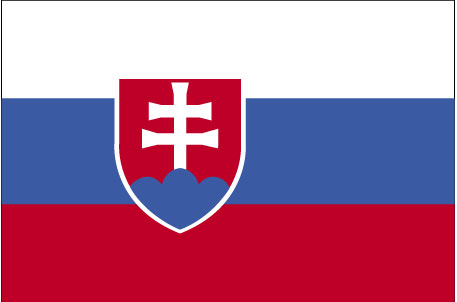
Slovakia
Slovensko
Declare Your Relationship to Slovakia
CountryReports Community
- Studying2
- From Slovakia0
- Slovakia heritage2
- Visited0
- Want to visit0
Customs and Culture
Customs and Culture
Cultural Attributes
Slovaks are proud of their rich cultural heritage. Slovaks are usually outgoing and value good humor and hard work. They are also generous. Education, modesty, and honesty are admired.

Land of the Double Cross and Three Mountains
Get More Customs and Culture
5 more cultural topics for members
Social Customs & Etiquette · Diet · Family · Dating Customs · Recreation
Holidays
Constitution Day
9/1Independence Day
Christmas
12/25Christmas
Slovakia was part of Czechoslovakia and under Soviet rule until 1993. Since that time holiday customs and begun to incorporate Christian traditions. On St Nicholas Day, Sväty Mikuláš (St. Nicholas), an angel, and a devil parade about giving treats and quizzing youngsters about their catechism. Children usually set out their shoes by the window sill on St Nicholas’s Eve to receive treats.
Central to Christmas Eve is Holy Supper at which all family members gather after having fasted all day. The table center piece is usually a small crèche. The meal commences upon the sighting of the first star of the night symbolic of the Star of Bethlehem. The meal traditionally consists of 12 meatless dishes symbolic of Christ’s 12 apostles. Along with oplatky and honey, there may be porridge, bobalky (small, baked biscuits with a topping of milk, honey and poppy seeds), Christmas cake, fruit compote, mushroom soup, sauerkraut soup, pirohy (boiled pastries filled with mash potatoes, cheeses, dried fruit or sauerkraut) beans, peas, fish, breads, rolls and nuts.
On Tri Krále (Epiphany or Three Kings Day) which ends the holiday season, the clergy travel about, blessing the homes.
Dates of Interest
- September
Modra, known for its wine, hosts an annual grape harvest festival in September. The event includes a parade, traditional music, wine tasting, and the crowning of the "Grape King."
How do people greet each other in Slovakia?
Shaking hands is the most common greeting, and formal titles are important, with people addressed as Pan (Mr) or Pani (Mrs) followed by any professional title and surname.
Do
- Shake hands when greeting
- As a man, wait for a woman to extend her hand first
- Use Pan or Pani with the surname and any professional title
Don’t
- Don't use first names until mutual consent among friends or the young
What are the dining customs in Slovakia?
Slovaks eat continental style with three meals a day, and meals often end with a small cup of Turkish coffee.
Do
- Keep both hands above the table
- Use napkins on the table
- Try bryndzove halusky, the national dish of small dumplings with sheep cheese
- Expect soup and fresh-baked bread as staples
Don’t
- Don't rest your elbows on the table
- Don't put napkins in your lap
Good to know
- The main meal is at midday with meat, dumplings or potatoes, and a vegetable
- When guests are present, women typically serve the meal but may not eat at the table
- Mid-morning and mid-afternoon snacks are common
What etiquette should I follow when visiting a Slovak home?
Impromptu visits happen only among close friends and family; guests remove hats and shoes and often bring a small gift.
Do
- Remove your hat and shoes indoors (hosts often provide slippers)
- Wait for the host to invite you to sit
- Bring a gift such as flowers, wine, or liquor
- Politely decline offers before eventually accepting
Good to know
- Modesty and honesty are admired, and generosity is valued
How should I dress in Slovakia?
Urban dress is fashionable while older rural people are more conservative; businessmen wear suits and women wear dresses and skirts.
Good to know
- Jeans and T-shirts are popular
- Short pants are increasingly common in summer
Are there gestures I should be aware of in Slovakia?
Hand gestures are frequently used to emphasize speech, and smiling is considered courteous.
Don’t
- Don't yawn in public
- Don't chew gum during polite social interaction
What is family life like in Slovakia?
Typical families have two or three children, and while most women work, they are usually also responsible for the home and children.
Good to know
- Some men are beginning to share household duties
- Popular dating activities include dancing and going to the movies and theater
What do Slovaks do for recreation?
Ice hockey and soccer are the most popular team sports, with winter sports in the mountains and water sports in summer.
Good to know
- Winter activities include skiing, snowboarding, and ice skating
- The Poprad-Tatry region is a longtime winter sports venue
- Summer water sports include swimming, sailing, canoeing, rafting, and fishing
- Basketball, volleyball, baseball, and tennis are also enjoyed
Last updated: 2026-07-12 · Sources: CountryReports
Photos of Slovakia
Photos of Slovakia
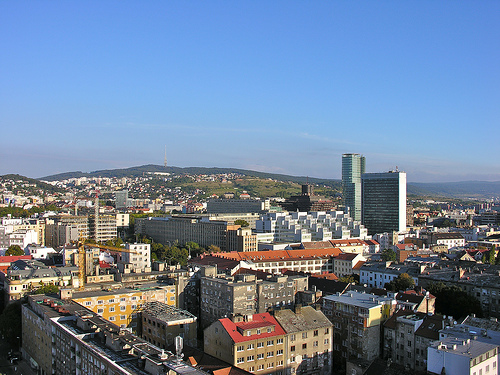
Bratislava, Slovakia
Electric train tracks in Bratislava, Slovakia
View of Bratislava, Slovakia
Buildings in Bratislava, Slovakia
Street artist in Bratislava, Slovakia
Tram in Bratislava, Slovakia
Streetside restaurant in Bratislava, Slovakia
Church in Bratislava, Slovakia
Slovakia VS Norway hockey
Christmas decorations for sale
Church at Christmastime


Travel and Tourism
Travel and Tourism
- Travel Alert Status
- Level 1: Exercise Normal Precautions
- Currency
- euro (EUR)
- Time Difference
- UTC+1 (6 hours ahead of Washington, DC,. during Standard Time)
- Climate
- The climate in Slovakia is a mixture of continental and ocean climates and has four distinct seasons. The mountain regions affect the weather much more than the geographical location of the country. The warmest and driest regions are the southern Slovak plains and the Eastern Slovak lowlands where the average temperature is 10 degrees C and average annual precipitation is approximately 500 mm. In the High Tatras the average temperature is 3 degrees C and annual precipitation is 2,000 mm. The coldest month is January; the warmest is July. During winter the temperatures in the mountain valleys are substantially lower than on the mountain peaks, and temperature inversions are quite common. Bratislava is moderately dry with average temperatures ranging from –1 degree C to –4 degrees C in January and from 19.5 degrees C to 20.5 degrees C in July. The maximum daily temperature in July is approximately 32 degrees C. Annual rainfall varies from 61 to 101 cm. Bratislava ranks among the warmest places in Slovakia. During the winters in Bratislava the sun rises at 7:30 and sets about 16:00. The skies are often overcast, and snow and ice storms occur. During the summer, sunrise is before 5:00 and sunset is about 21:00.
- Airports
- 34
Read the full travel guide — health, safety, vaccinations, disease risk, sanitation, and transit details.
View full travel guideRecipes
Recipes
History
History
Historical Eras
Great Moravia
833 – 907
The Great Moravian Empire united Slovak and Czech lands under a single Slavic polity, encompassing present-day Slovakia, the Czech Republic, and portions of Poland, Hungary, and Germany. Byzantine missionaries Saints Cyril and Methodius arrived in 863, introducing a Slavic liturgy and the Glagolitic script. The empire collapsed within roughly eighty years under pressure from Magyar invasions and internal political strife.
Hungarian Kingdom
907 – 1918
Following the Magyar conquest, Slovak lands were absorbed into the Kingdom of Hungary, where they remained for approximately one thousand years. Bratislava served as the Hungarian capital for nearly two and a half centuries after Ottoman forces overran the Hungarian heartland in the 1520s. The 19th century brought rising Slovak nationalism, the codification of the Slovak literary language by Ľudovít Štúr in 1846, and intensifying Magyarization policies under the Austro-Hungarian dual monarchy formed in 1867.
Czechoslovakia
1918 – 1939
Following the collapse of Austria-Hungary, Slovaks and Czechs united to form Czechoslovakia in October 1918, with Tomáš Masaryk as its first president after signing the Pittsburgh Agreement. The new democratic republic brought significant modernization and civil liberties to Slovakia, though tensions over Slovak autonomy within the centralized state persisted throughout the interwar decades. The 1938 Munich Agreement forced territorial cessions to Nazi Germany and effectively ended the first republic.
War & Communist Rule
1939 – 1989
Slovakia declared autonomy and became a Nazi puppet state under the Catholic priest Jozef Tiso, during which thousands of Slovak Jews and Roma were deported to concentration camps. The Slovak National Uprising of 1944, a broad armed resistance involving Slovaks, Soviet-aligned forces, and Jews, was ultimately suppressed by the Wehrmacht. After liberation and reunification with Czechoslovakia in 1945, the Communist Party seized power in February 1948, imposing Soviet-style rule interrupted only by Alexander Dubček's brief Prague Spring reforms of 1968, which were crushed by a Warsaw Pact invasion.
Velvet Revolution
1989 – 1993
Mass public protests beginning on November 17, 1989 — known as the Velvet Revolution — brought down communist rule in Czechoslovakia without violence. Dissident movements including Public Against Violence in Slovakia helped form a transitional government and oversee the first free elections since 1948. Growing Slovak demands for autonomy, championed by Vladimír Mečiar's Movement for a Democratic Slovakia after the 1992 elections, led the Slovak parliament to declare sovereignty and the federation to dissolve peacefully on January 1, 1993.
Independent Slovakia
1993 – present
The Slovak Republic emerged as a fully independent state on January 1, 1993, navigating an early period of authoritarian tendencies under Prime Minister Mečiar before consolidating democratic governance in the late 1990s. Slovakia joined NATO and the European Union in 2004, cementing its Euro-Atlantic orientation, and adopted the euro in 2009. The country has since developed as a significant Central European industrial economy while managing ongoing challenges of regional development, rule of law, and geopolitical positioning.
Overview
Slovak history can find its roots in the Great Moravian Empire, founded in the early ninth century. The territory of Great Moravia included all of present western and central Slovakia, the Czech Republic, and parts of neighboring Poland, Hungary, and Germany. Saint Cyril and Methodius, known for the creation of a Cyrillic alphabet, came to Great Moravia in the early tenth century as missionaries to spread Christianity upon the invitation of the king.
Timeline of Key Events
1918
Slovakia asked for the creation of Czechoslovakian state.
Slovakia asked for the creation of Czechoslovakian state. Slovaks joined the Czechs to form Czechoslovakia. During World War II, Slovakia existed as puppet state of Nazi-run Germany.
1944
The Slovak National Uprising broke out against the Germans.
The Slovak National Uprising broke out against the Germans.
1945
Slovakia reunited with the Czechs.
Slovakia reunited with the Czechs.
1993
Independence after Czechoslovakia splits.
Independence after Czechoslovakia splits.
1995
Treaty of Friendship and Cooperation with Hungary signed.
Treaty of Friendship and Cooperation with Hungary signed, guaranteeing the existing border and ethnic minority rights.
1999
A new law allowing for president to be directly elected by the people.
Parliament ends nearly a year of constitutional crisis by passing a new law allowing for president to be directly elected by the people.
2004
Slovakia admitted to Nato.
Slovakia admitted to Nato.
Read the full history profile — narrative overview, defining eras, and the complete timeline in one place.
View expanded historyInteresting Facts
Interesting Facts
Slovak violin virtuoso Charles (Karol) Dobias has been concertmaster with the Royal Winnipeg Ballet orchestra, the Stratford Festival orchestra and the National Ballet orchestra.
The national emblem of Slovakia is a red Gothic shield with a silver double cross mounted on the central peak of three blue mountains, which represent the three ranges of the Carpathian mountains (Tatra, Fatra, Matra).
The hill known as Krahule near the town of Kremnica, Slovakia, is the geographic centre of Europe.
Svätopluk I, Ruler of Great Moravia from 871 to 894, is considered the greatest leader of the first western Slavic state. Under his reign, Great Moravia reached the peak of its power and territorial expansion.
See every fact — trivia, oddities, and curious tidbits gathered from across the country.
View all interesting factsGeography and Environment
Geography and Environment
- Terrain
- rugged mountains in the central and northern part and lowlands in the south
- Climate
- The climate in Slovakia is a mixture of continental and ocean climates and has four distinct seasons. The mountain regions affect the weather much more than the geographical location of the country. The warmest and driest regions are the southern Slovak plains and the Eastern Slovak lowlands where the average temperature is 10 degrees C and average annual precipitation is approximately 500 mm. In the High Tatras the average temperature is 3 degrees C and annual precipitation is 2,000 mm. The coldest month is January; the warmest is July. During winter the temperatures in the mountain valleys are substantially lower than on the mountain peaks, and temperature inversions are quite common. Bratislava is moderately dry with average temperatures ranging from –1 degree C to –4 degrees C in January and from 19.5 degrees C to 20.5 degrees C in July. The maximum daily temperature in July is approximately 32 degrees C. Annual rainfall varies from 61 to 101 cm. Bratislava ranks among the warmest places in Slovakia. During the winters in Bratislava the sun rises at 7:30 and sets about 16:00. The skies are often overcast, and snow and ice storms occur. During the summer, sunrise is before 5:00 and sunset is about 21:00.
- Natural Hazards
- NA
- Current Environmental Issues
- air pollution from metallurgical plants presents human health risks; acid rain damaging forests
Read the full geography and environment profile — terrain, climate, natural resources, hazards, land use, and international agreements.
View full geographyPeople & Demographics
People & Demographics
Religion
Languages Spoken
Slovak (official), Hungarian
- Hungarian
- Slovak
Population
- Population
- 5,795,199
- Population in Major Urban Areas
- BRATISLAVA (capital) 434,000
- Nationality Noun
- Slovak(s)
- Ethnic Groups
- Slovak 85.7%, Hungarian 10.6%, Roma 1.6% (the 1992 census figures underreport the Gypsy/Romany community, which is about 500,000), Czech, Moravian, Silesian 1.1%, Ruthenian and Ukrainian 0.6%, German 0.1%, Polish 0.1%, other 0.2% (1996)
- Language Note
- Slovaks speak Slovak. Hungarian is the second most commonly spoken language, especially in the south. German is widely understood, while English is the language of choice to study in school. The Slovak Republic was formed at the time of the division of the Czech Republic in 1993.
Education
- Literacy Definition
- NA
Health Information
- Life Expectancy at Birth
- Life expectancy at birth in Slovakia stands at approximately 77 years overall, with notable differences between men and women. Slovak women can expect to live to around 80–81 years, while men have a life expectancy closer to 73–74 years. This gender gap of roughly seven years is consistent with broader trends observed across Central and Eastern Europe. Slovakia's life expectancy figures place it in a mid-range position among European Union member states. While the country has made significant health improvements since transitioning from a communist-era centrally planned system to a modern market economy in the early 1990s, it still lags behind Western European nations such as Spain, Switzerland, and Italy, where life expectancy often exceeds 83 years. Several factors influence life expectancy outcomes in Slovakia. Cardiovascular disease remains the leading cause of death, accounting for a substantial share of premature mortality in the country. High rates of smoking, alcohol consumption, and obesity — particularly among working-age men — contribute significantly to the gap between male and female longevity. Dietary habits, historically featuring high fat and caloric intake, have gradually shifted in urban areas but remain a concern in rural regions. Slovakia's healthcare system, which provides universal coverage, has undergone considerable reform over the past two decades. Access to medical care has improved, and infant mortality rates have declined sharply, now sitting below 6 deaths per 1,000 live births. These improvements have contributed positively to overall life expectancy trends. Environmental factors also play a role. Air quality challenges, particularly in industrial regions of the country, have been associated with respiratory conditions and related health burdens. Government and EU-level initiatives aim to address pollution and encourage healthier lifestyles through public health campaigns. Over the longer term, life expectancy in Slovakia has trended upward, reflecting improved nutrition, expanded medical technology, and greater health awareness. Continued investment in preventive care and chronic disease management is expected to support further gains in the coming decades.
Life Expectancy
- Life Expectancy at Birth
- Life expectancy at birth in Slovakia stands at approximately 77 years overall, with notable differences between men and women. Slovak women can expect to live to around 80–81 years, while men have a life expectancy closer to 73–74 years. This gender gap of roughly seven years is consistent with broader trends observed across Central and Eastern Europe. Slovakia's life expectancy figures place it in a mid-range position among European Union member states. While the country has made significant health improvements since transitioning from a communist-era centrally planned system to a modern market economy in the early 1990s, it still lags behind Western European nations such as Spain, Switzerland, and Italy, where life expectancy often exceeds 83 years. Several factors influence life expectancy outcomes in Slovakia. Cardiovascular disease remains the leading cause of death, accounting for a substantial share of premature mortality in the country. High rates of smoking, alcohol consumption, and obesity — particularly among working-age men — contribute significantly to the gap between male and female longevity. Dietary habits, historically featuring high fat and caloric intake, have gradually shifted in urban areas but remain a concern in rural regions. Slovakia's healthcare system, which provides universal coverage, has undergone considerable reform over the past two decades. Access to medical care has improved, and infant mortality rates have declined sharply, now sitting below 6 deaths per 1,000 live births. These improvements have contributed positively to overall life expectancy trends. Environmental factors also play a role. Air quality challenges, particularly in industrial regions of the country, have been associated with respiratory conditions and related health burdens. Government and EU-level initiatives aim to address pollution and encourage healthier lifestyles through public health campaigns. Over the longer term, life expectancy in Slovakia has trended upward, reflecting improved nutrition, expanded medical technology, and greater health awareness. Continued investment in preventive care and chronic disease management is expected to support further gains in the coming decades.
Read the full people and society profile — demographics, health, education, religion, languages, and notable people.
View full people and societyGovernment & Politics
Government & Politics
Country Identity
- Country Name
- Slovakia
- Full Country Name
- Slovak Republic
- Local - Long
- Slovenska Republika
- Local - Short
- Slovensko
Government Structure
- Government Type
- parliamentary democracy
- Legal System
- civil law system based on Austro-Hungarian codes; has not accepted compulsory ICJ jurisdiction; legal code modified to comply with the obligations of Organization on Security and Cooperation in Europe (OSCE) and to expunge Marxist-Leninist legal theory
- Executive Branch
- chief of state: President Peter PELLEGRINI (since 15 June 2024) head of government: Prime Minister Robert FICO (since 25 October 2023); Deputy Prime Ministers Robert KALINAK, Tomas TARABA, and Peter SZIJJARTO (since October 2023) cabinet: Cabinet appointed by the president on the recommendation of the prime minister elections: president elected by direct, popular vote for a five-year term; election last held 23 March and 6 April 2024 (next to be held in 2029); following National Council elections, the leader of the majority party or the leader of a majority coalition is usually appointed prime minister by the president election results: Peter PELLEGRINI elected president in runoff; percent of vote - Peter PELLEGRINI 53.1%, Ivan KORCOK 46.9%; Robert FICO appointed prime minister in October 2023 following parliamentary elections the previous month note: government coalition - SMER-SSD, SNS, HLAS-SD
- Legislative Branch
- unicameral National Council of the Slovak Republic or Narodna Rada Slovenskej Republiky (150 seats; members are elected on the basis of proportional representation to serve four-year terms) elections: last held 30 September 2023 (next to be held in 2027) election results: percent of vote by party - Smer-SD 22.9%, Progressive Slovakia 17.9%, Hlas-SD 14.7%, Ordinary People and Independent Personalities (OLaNO) 8.9%, Slovak National Party (SNS) 5.6%, KDH 6.8%, SaS 5.0%; seats by party - Smer-SD 42, Progressive Slovakia 32, Hlas-SD 27, OLaNO 16, KDH 12, SNS 10, SaS 11; the government coalition is formed by Smer-SD, Hlas-SD, and SNS, with Robert Fico serving as Prime Minister following the election (2024)
- Judicial Branch
- Supreme Court (judges are elected by the National Council); Constitutional Court (judges appointed by president from group of nominees approved by the National Council); Special Court (judges elected by a council of judges and appointed by president)
- Suffrage
- 18 years of age; universal
- Constitution
- ratified 1 September 1992, fully effective 1 January 1993; changed in September 1998 to allow direct election of the president; amended February 2001 to allow Slovakia to apply for NATO and EU membership
- Independence
- 1 January 1993 (Czechoslovakia split into the Czech Republic and Slovakia)
- National Holiday
- Constitution Day, 1 September (1992)
Capital City
- Capital Name
- Bratislava
- Capital - geographic coordinate
- 48 09 N, 17 07 E
- Capital Time Difference
- UTC+1 (6 hours ahead of Washington, DC,. during Standard Time)
the name was adopted in 1919 after Czechoslovakia gained its independence and may derive from later transliterations of the 9th century military commander, Braslav, or the 11th century Bohemian Duke BRETISLAV I; alternatively, the name may derive from the Slovak words brat (brother) and slava (glory)
Military
Branches: Armed Forces of the Slovak Republic (Ozbrojene Sily Slovenskej Republiky): Land Forces (Pozemne Sily), Air Forces (Vzdusne Sily)
Embassy / Diplomatic Mission
U.S. Embassy, Bratislava
Address: Hviezdoslavovo námestie 4, 811 02 Bratislava
Mailing address: U.S. Embassy, P.O. Box 309, 814 99 Bratislava, Slovakia
Telephone: (421)(2)5443 0861 or (421)(2) 5443 3338
Emergency after-hours telephone: (421) 903 703 666
Facsimile: (421)(2) 5441 8861
Email: consulbratislava@state.gov
Read the full government profile — flag symbolism, national anthem, and other national symbols.
View full government detailsEconomy
Economy
Slovakia has successfully completed its transition from a centrally planned economy to a modern market-based system and is now a member of the European Union, the eurozone, the OECD, and NATO.
Snapshot
- Currency Name and Code
- Euro (EUR)
- GDP — official exchange rate
- $43,070,000,000 (USD)
- GDP Real Growth Rate
- 1.2%
- Gini Index
- 25.8
News & Weather
News & Weather
Current Weather
Latest News
News - Roman Military Camp Excavated in Slovakia - Archaeology Magazine
Archaeology Magazine · 2d ago
From visa-free travel to cultural exchanges, China and Slovakia deepen people-to-people ties - news.cgtn.com
news.cgtn.com · 14h ago
Polish hiker dies in 150-metre Tatra fall - TVP World
TVP World · 21h ago
'Extremely rare' Roman military camp found in Slovakia holds hastily buried remains of Marcus Aurelius' sol... - Yahoo
Yahoo · 3d ago
Matus Rybar - Slovakia - Player Profile - FIBA U18 EuroBasket 2026 - FIBA Basketball
FIBA Basketball · 1d ago
Lukas Kubala - Slovakia - Player Profile - FIBA U18 EuroBasket 2026 - FIBA Basketball
FIBA Basketball · 14h ago
Ditch full of 7,000-year-old headless human skeletons discovered in Slovakia, baffling archaeologists - Live Science
Live Science · 47d ago
Cole Reschny, Keaton Verhoeff and Carson Carels looking to return to Canada's World Junior team - Grand Forks Herald
Grand Forks Herald · 16h ago
News via Google News
Climate Overview
The climate in Slovakia is a mixture of continental and ocean climates and has four distinct seasons. The mountain regions affect the weather much more than the geographical location of the country. The warmest and driest regions are the southern Slovak plains and the Eastern Slovak lowlands where the average temperature is 10 degrees C and average annual precipitation is approximately 500 mm. In the High Tatras the average temperature is 3 degrees C and annual precipitation is 2,000 mm. The coldest month is January; the warmest is July. During winter the temperatures in the mountain valleys are substantially lower than on the mountain peaks, and temperature inversions are quite common. Bratislava is moderately dry with average temperatures ranging from –1 degree C to –4 degrees C in January and from 19.5 degrees C to 20.5 degrees C in July. The maximum daily temperature in July is approximately 32 degrees C. Annual rainfall varies from 61 to 101 cm. Bratislava ranks among the warmest places in Slovakia.
During the winters in Bratislava the sun rises at 7:30 and sets about 16:00. The skies are often overcast, and snow and ice storms occur. During the summer, sunrise is before 5:00 and sunset is about 21:00.
Videos
Videos
1 curated YouTube videos.
Source: YouTube
Frequently Asked Questions
Frequently Asked Questions
What is the population of Slovakia?
How do people greet each other in Slovakia?
What are the dining customs in Slovakia?
What etiquette should I follow when visiting a Slovak home?
How should I dress in Slovakia?
Are there gestures I should be aware of in Slovakia?
What is family life like in Slovakia?
What do Slovaks do for recreation?
What is the capital of Slovakia?
Where is Slovakia located?
What countries border Slovakia?
What is the predominant religion in Slovakia?
What currency does Slovakia use?
What language is spoken in Slovakia?
What is Slovakia known for?
What is the geography of Slovakia like?
Last reviewed 2026