
 English
 Español
 中文
中文 हिन्दी
 Français
Turkmenistan
Turkmenistan
Declare Your Relationship to Turkmenistan
CountryReports Community
- Studying0
- From Turkmenistan0
- Turkmenistan heritage0
- Visited0
- Want to visit0
Customs and Culture
Customs and Culture
Cultural Attributes
Turkmens follow three codes of conduct. Adat (Turkman customary law) sherigat (Islamic law) and edep (rules of proper etiquette and behavior), The combination of these three codes of conduct is known as turkmenchilik meaning Turkmenness. The codes define ways of greeting, hospitality toward guests, respect towards elders, and a sense of tribal identity.

Home of the Golden Horse
Get More Customs and Culture
5 more cultural topics for members
Social Customs & Etiquette · Diet · Family · Dating Customs · Recreation
Holidays
Independence Day
10/27Independence Day
Christmas
12/25Christmas
The nation is mostly Islamic in religion and has only a small percent of its population as Christians. Christmas is celebrated among the local Christian communities in the privacy of their homes. In some areas, certain churches and cathedrals celebrate the occasion by holding Midnight Mass. After Mass Christians hold simple feasts to celebrate the occasion within the confines of their homes.
Dates of Interest
- October 27th
This holiday, celebrated on October 27th, honors the life and work of Magtymguly Pyragy, a revered Turkmen poet and philosopher. It is a day of cultural events, poetry readings, and traditional music performances.
How do greetings and the calendar work in Turkmenistan?
Greetings are shaped by turkmenchilik, the combination of adat (customary law), sherigat (Islamic law) and edep (proper etiquette). Note that Turkmenistan uses renamed months and weekdays alongside the world calendar.
Good to know
- Months were renamed, e.g. January is Turkmenbashi, March is Novruz, September is Rukhnama
- Weekdays were renamed, e.g. Monday is Bash Gyun (main day) and Sunday is Dynch Gyun (rest day); Friday (Anna Gyun) is unchanged
What is dining like in Turkmenistan?
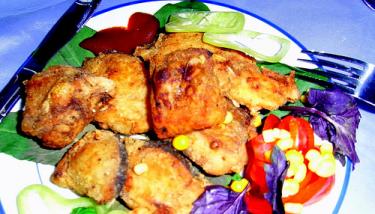
Meals center on meat from camels, cows, goats and sheep, along with dairy products, and round flatbread is a staple at most meals.
Good to know
- Try dograma, a thick soup of diced bread, lamb, onions, tomatoes and spices
- Expect butters, creams and yogurts made from animal milk
What etiquette should travelers know in Turkmenistan?
Conduct is guided by turkmenchilik, which emphasizes hospitality toward guests and respect toward elders.
Do
- Show respect toward elders
- Expect and honor generous hospitality when hosted
Good to know
- When visiting, food such as fruits, vegetables, nuts, sweets and tea is spread on a sachak (large cloth) on the floor before the meal
How should you dress in Turkmenistan?
Traditional clothing is worn mostly in rural areas, while urban men often wear western-style clothing; western-style clothing is considered immodest for most women.
Good to know
- Traditional male dress includes the telpek (high, hairy sheepskin hat in brown, black or white) and long deep-red robes with wide sleeves
- Traditional female dress includes a long dress, a long head scarf and a red robe called a kurte
What is family life like in Turkmenistan?
Extended families are the norm and many families have five or more children, with the youngest son responsible for his parents' welfare.
Good to know
- Many marriages are still arranged, though the couple usually knows each other
- A galyng (bride price) is paid from the groom's family to the bride's family
What do people do for fun in Turkmenistan?
Soccer (fotbal) is the most popular sport among young men, horse racing is very popular, and visiting friends is a favorite pastime.
Good to know
- The horse symbolizes the Turkmen spirit and appears on the state seal
- Many urban Turkmen own summer houses for vacations
Last updated: 2026-07-12 · Sources: CountryReports
Photos of Turkmenistan
Photos of Turkmenistan
Travel and Tourism
Travel and Tourism
- Travel Alert Status
- Level 2: Exercise Increased Caution
- Currency
- Turkmen manat (TMM)
- Time Difference
- UTC+5 (10 hours ahead of Washington, DC, during Standard Time)
- Climate
- Precipitation in the inhabited regions averages 19 centimeters per year. Most of this falls between December and April. As you would expect in a desert climate, it does get very hot. In June, July, and August it is often uncomfortable to be outside during the day, as the temperatures consistently exceed 40°C (over 100°F), although with very low humidity. At times in August, the "Afghan Winds" come from the east, and the temperature can soar into the high 40s. However, by late September the temperatures cool, and pleasant, autumn-like weather prevails. The winter, which begins in late November, can be chilly, wet, and muddy, with temperatures between 0°C and 15°C in the daytime, with occasional light snow. Turkmenistan is in one of the world's high seismic regions. During the past 100 years, there have been four disastrous earthquakes with intensities of 6+ on the Richter scale, each one resulting in great loss of life and property. In 1948, Ashgabat suffered a quake of tremendous strength. All but six buildings were destroyed, and the entire city shifted 2 meters to the north. More than 30,000 of the 130,000 residents died, and an additional 85,000 were injured.
- Airports
- 69
Read the full travel guide — health, safety, vaccinations, disease risk, sanitation, and transit details.
View full travel guideHistory
History
Historical Eras
Ancient & Persian Era
600 BCE – 600
The territory of present-day Turkmenistan formed part of the Achaemenid Persian Empire under Cyrus the Great before being swept into Alexander the Great's Macedonian conquests around 330 BCE. The region, known in antiquity as Margiana and Parthia, later became the heartland of the Parthian Empire and subsequently fell under Sasanian Persian rule. These centuries established deep Iranian cultural and linguistic influences that would shape the region's subsequent development.
Islamic & Seljuk Period
600 – 1220
Arab conquest in the seventh century introduced Islam to Central Asia, fundamentally transforming the religious and cultural landscape. The Oghuz Turkic tribes migrated into the region from the steppe, and by the eleventh century the Seljuk dynasty — founded by the clan leader Seljuk — built an empire stretching from the Amu Darya to Baghdad and Anatolia. Sultan Sanjar ruled from Merv as the last great Seljuk sovereign until Turkmen tribal revolts and external pressures fragmented the empire by the mid-twelfth century.
Mongol & Khanate Rule
1220 – 1881
Genghis Khan's Mongol forces devastated the region in the 1220s, destroying major cities including Merv, one of the great urban centers of the medieval Islamic world. Following Mongol fragmentation, Turkmen tribes came under the successive dominance of Timurid rulers and then the Uzbek khanates of Khiva and Bukhara, which exerted political control over the indigenous Turkmen clans for centuries. This prolonged era of fragmented rule reinforced the tribal structure and nomadic pastoralism that defined Turkmen society into the modern period.
Russian Conquest
1881 – 1924
Imperial Russia completed its conquest of Turkmen territory with the decisive Battle of Gok Tepe in 1881, in which General Mikhail Skobelev's forces stormed the Tekke Turkmen fortress after a prolonged siege. Incorporated into Russian Turkestan, the region was subjected to colonial administration, cotton cultivation, and railroad construction. Turkmen resistance persisted, culminating in fierce fighting against Bolshevik forces during the Russian Civil War of 1918–1920 before Soviet power was ultimately consolidated.
Soviet Turkmenistan
1924 – 1991
The Turkmen Soviet Socialist Republic was formally established in 1924 and became a full constituent republic of the USSR in 1925, undergoing forced collectivization, sedentarization of nomadic populations, and mass cotton production that drastically expanded from the 1960s onward. Soviet industrial and agricultural policies, particularly large-scale irrigation from the Karakum Canal, transformed the landscape but caused severe environmental degradation, including the shrinking of the Aral Sea. The republic's vast natural gas reserves were exploited primarily for Soviet benefit, laying the infrastructure that would define the post-independence economy.
Independent Turkmenistan
1991 – present
Turkmenistan declared independence upon the dissolution of the Soviet Union in 1991, with former Communist Party leader Saparmurat Niyazov — who assumed the title Turkmenbashi — establishing one of the world's most authoritarian and personality-driven regimes until his death in 2006. A new constitution was adopted in 1992, the manat introduced as national currency in 1993, and natural gas export infrastructure expanded with pipelines to Iran and Russia. Under President Gurbanguly Berdimuhamedow, who succeeded Niyazov, limited reforms were introduced alongside the continuation of an authoritarian single-party state built on hydrocarbon wealth.
Overview
Like the other Central Asian republics, Turkmenistan underwent the
Timeline of Key Events
600 BCE
Area of what is now Turkmenistan forms part of the Persian Empire of Cyrus the Great.
Area of what is now Turkmenistan forms part of the Persian Empire of Cyrus the Great.
400 BCE
Alexander the Great of Macedonia conquers Central Asia, including Turkmenistan.
Alexander the Great of Macedonia conquers Central Asia, including Turkmenistan.
601
Arabs conquer Central Asia, including Turkmenistan, and introduce Islam.
Arabs conquer Central Asia, including Turkmenistan, and introduce Islam.
901 – 1300
Genghis Khan conquers the region, including Turkmenistan.
Nomadic Oghuz Seljuk tribes, the ancestors of present-day Turkmens, and Mongol immigrate from northeast; Genghis Khan conquers the region, including Turkmenistan.
1881
Incorporated into Russian Turkestan after Battle of Gok Tepe.
Area of present-day Turkmenistan incorporated into Russian Turkestan after Battle of Gok Tepe.
1918 – 1920
Turkmens fight against Bolshevik forces during Russian civil war.
Turkmens fight against Bolshevik forces during Russian civil war.
1925
Turkmenistan becomes a fully-fledged constituent republic of the USSR.
Turkmenistan becomes a fully-fledged constituent republic of the USSR.
Read the full history profile — narrative overview, defining eras, and the complete timeline in one place.
View expanded historyInteresting Facts
Interesting Facts
Turkmenistan is famous for breeding horses. The Akhal-Teke horse is reared in the southern region of Turkmenistan.
Originally a war-horse, the Akhal-Teke horse is bred as a race-horse.
It is believed that horse mummies found in the permafrost grave of a Scythian king, in Russia, were those of the Akhal-Teke breed. This discovery points to the early origins of the Akhal-Teke horse.
An Akhal-Teke horse forms part of the State Emblem of Turkmenistan. Merv was an important trading centre on the Silk Road, the trade route between China and Europe.
See every fact — trivia, oddities, and curious tidbits gathered from across the country.
View all interesting factsGeography and Environment
Geography and Environment
- Terrain
- flat-to-rolling sandy desert with dunes rising to mountains in the south; low mountains along border with Iran; borders Caspian Sea in west
- Climate
- Precipitation in the inhabited regions averages 19 centimeters per year. Most of this falls between December and April. As you would expect in a desert climate, it does get very hot. In June, July, and August it is often uncomfortable to be outside during the day, as the temperatures consistently exceed 40°C (over 100°F), although with very low humidity. At times in August, the "Afghan Winds" come from the east, and the temperature can soar into the high 40s. However, by late September the temperatures cool, and pleasant, autumn-like weather prevails. The winter, which begins in late November, can be chilly, wet, and muddy, with temperatures between 0°C and 15°C in the daytime, with occasional light snow. Turkmenistan is in one of the world's high seismic regions. During the past 100 years, there have been four disastrous earthquakes with intensities of 6+ on the Richter scale, each one resulting in great loss of life and property. In 1948, Ashgabat suffered a quake of tremendous strength. All but six buildings were destroyed, and the entire city shifted 2 meters to the north. More than 30,000 of the 130,000 residents died, and an additional 85,000 were injured.
- Natural Hazards
- NA
- Current Environmental Issues
- contamination of soil and groundwater with agricultural chemicals, pesticides; salination, water-logging of soil due to poor irrigation methods; Caspian Sea pollution; diversion of a large share of the flow of the Amu Darya into irrigation contributes to that river's inability to replenish the Aral Sea; desertification
Read the full geography and environment profile — terrain, climate, natural resources, hazards, land use, and international agreements.
View full geographyPeople & Demographics
People & Demographics
Religion
Languages Spoken
Turkmen 72%, Russian 12%, Uzbek 9%, other 7%
- Russian
- Turkmen
Population
- Population
- 6,117,924
- Population in Major Urban Areas
- ASHGABAT (capital) 683,000
- Nationality Noun
- Turkmen(s)
- Ethnic Groups
- Turkmen 85%, Uzbek 5%, Russian 4%, other 6%
Education
- Literacy Definition
- age 15 and over can read and write
Health Information
- Life Expectancy at Birth
- Life expectancy at birth in Turkmenistan stands at approximately 68 to 70 years, placing the country in the lower-to-middle range among Central Asian nations and below the global average of around 73 years. Males in Turkmenistan tend to have a notably shorter life expectancy than females, with men averaging roughly 65 to 66 years and women averaging closer to 72 to 73 years — a gap of around seven years that reflects broader patterns seen across post-Soviet states in the region. Several factors influence these figures. Turkmenistan's healthcare system, while nominally free and state-controlled, has faced persistent challenges related to infrastructure quality, access to modern medical equipment, and the availability of trained specialists, particularly in rural and remote areas. The country's highly centralized government has at times restricted independent health reporting, which means official statistics may not fully capture the on-the-ground reality of public health conditions. Non-communicable diseases, including cardiovascular illness, respiratory conditions, and cancers, are leading contributors to premature mortality. Environmental factors also play a role — Turkmenistan's proximity to the dried Aral Sea basin has introduced elevated levels of dust, salt, and pollutants into parts of the population's air and water supply, contributing to chronic health issues. Additionally, high rates of tobacco use among men and limited public health education campaigns have contributed to the gender disparity in life expectancy. In recent decades, there has been modest improvement in overall life expectancy compared to the difficult years following the collapse of the Soviet Union in the early 1990s, when economic disruption severely strained healthcare systems across the region. Maternal and child health indicators have shown gradual improvement, which has contributed incrementally to rising average life expectancy over time. Despite these gains, Turkmenistan continues to lag behind many of its neighbors and faces ongoing pressure to modernize its healthcare sector, expand health literacy, and address environmental health risks in order to achieve more meaningful long-term improvements in population health and longevity.
Life Expectancy
- Life Expectancy at Birth
- Life expectancy at birth in Turkmenistan stands at approximately 68 to 70 years, placing the country in the lower-to-middle range among Central Asian nations and below the global average of around 73 years. Males in Turkmenistan tend to have a notably shorter life expectancy than females, with men averaging roughly 65 to 66 years and women averaging closer to 72 to 73 years — a gap of around seven years that reflects broader patterns seen across post-Soviet states in the region. Several factors influence these figures. Turkmenistan's healthcare system, while nominally free and state-controlled, has faced persistent challenges related to infrastructure quality, access to modern medical equipment, and the availability of trained specialists, particularly in rural and remote areas. The country's highly centralized government has at times restricted independent health reporting, which means official statistics may not fully capture the on-the-ground reality of public health conditions. Non-communicable diseases, including cardiovascular illness, respiratory conditions, and cancers, are leading contributors to premature mortality. Environmental factors also play a role — Turkmenistan's proximity to the dried Aral Sea basin has introduced elevated levels of dust, salt, and pollutants into parts of the population's air and water supply, contributing to chronic health issues. Additionally, high rates of tobacco use among men and limited public health education campaigns have contributed to the gender disparity in life expectancy. In recent decades, there has been modest improvement in overall life expectancy compared to the difficult years following the collapse of the Soviet Union in the early 1990s, when economic disruption severely strained healthcare systems across the region. Maternal and child health indicators have shown gradual improvement, which has contributed incrementally to rising average life expectancy over time. Despite these gains, Turkmenistan continues to lag behind many of its neighbors and faces ongoing pressure to modernize its healthcare sector, expand health literacy, and address environmental health risks in order to achieve more meaningful long-term improvements in population health and longevity.
Read the full people and society profile — demographics, health, education, religion, languages, and notable people.
View full people and societyGovernment & Politics
Government & Politics
Country Identity
- Country Name
- Turkmenistan
- Local - Short
- Turkmenistan
Government Structure
- Government Type
- republic
- Legal System
- based on civil law system
- Executive Branch
- chief of state: President Serdar BERDIMUHAMEDOW (since 19 March 2022); note - the president is both the chief of state and head of government head of government: President Serdar BERDIMUHAMEDOW (since 19 March 2022); note - the president is both the chief of state and head of government; Raşit MEREDOW serves as Deputy Chairman of the Cabinet of Ministers cabinet: Cabinet of Ministers appointed by the president note: Serdar BERDIMUHAMEDOW, son of longtime ruler Gurbanguly BERDIMUHAMEDOW, won the February 2022 presidential election and assumed office in March 2022. Gurbanguly BERDIMUHAMEDOW, who had led the country since 2006 following the death of Saparmurat NIYAZOV, subsequently assumed the role of Chairman of the upper house of parliament (Halk Maslahaty), retaining significant political influence. The Halk Maslahaty was reconstituted as the upper chamber of a bicameral legislature in 2021, expanding the formal structures of government while power continues to remain highly centralized. elections: president elected by popular vote for a seven-year term; election last held on 12 March 2022 election results: Serdar BERDIMUHAMEDOW elected president; percent of vote - Serdar BERDIMUHAMEDOW approximately 72.97%, with several other candidates appearing on the ballot in an election widely regarded by international observers as lacking genuine political competition
- Legislative Branch
- Turkmenistan's legislative structure has undergone significant changes since the country's post-Soviet constitution was first adopted. Following a series of constitutional reforms, the parliament was reorganized into a bicameral system. The upper chamber, the Halk Maslahaty (National Council), consists of 56 seats, with 48 members elected by popular vote and 8 members appointed by the president, serving five-year terms. The lower chamber, the Mejlis (Assembly), consists of 125 seats, with members elected by popular vote to serve five-year terms. Elections: Halk Maslahaty - last held on 26 March 2021; Mejlis - last held on 26 March 2021, with the next elections due in 2026. Election results: Mejlis - seats by party - Democratic Party of Turkmenistan 55, Agrarian Party of Turkmenistan 11, Party of Industrialists and Entrepreneurs 11, independent candidates and others 48. All elected officials operate within a political environment tightly controlled by the ruling authority, and genuine political competition remains severely restricted. Note: Constitutional amendments adopted in 2021 formalized the bicameral structure, replacing the previous arrangement in which the Halk Maslahaty functioned as a supreme non-standing body above the Mejlis. Under the current system, the president retains dominant authority over both chambers. Gurbanguly Berdimuhamedov, who succeeded longtime leader Saparmurat Niyazov in 2007, ruled until 2022, when his son Serdar Berdimuhamedov assumed the presidency. Gurbanguly Berdimuhamedov subsequently became Chairman of the Halk Maslahaty, continuing to wield substantial political influence. The ruling Democratic Party of Turkmenistan remains the dominant political force, and independent political activity is not meaningfully permitted.
- Judicial Branch
- Supreme Court (judges are appointed by the president)
- Suffrage
- 18 years of age; universal
- Constitution
- adopted 18 May 1992
- Independence
- 27 October 1991 (from the Soviet Union)
- National Holiday
- Independence Day, 27 October (1991)
Capital City
- Capital Name
- Ashgabat (Ashkhabad)
- Capital - geographic coordinate
- 37 57 N, 58 23 E
- Capital Time Difference
- UTC+5 (10 hours ahead of Washington, DC, during Standard Time)
derived from the Persian words eshq meaning "love" and abad meaning "inhabited place" or "city," and so loosely translates as "the city of love"
Military
Branches: Turkmen Armed Forces: Ground Forces, Navy, Air and Air Defense Forces
Embassy / Diplomatic Mission
United States Embassy Ashgabat
9 1984 Street (formerly Pushkin Street)
Ashgabat, Turkmenistan
Telephone: (993-12) 94 00 45
Consular Information Line: (993-12) 94 00 49
Facsimile: (993-12) 94 26 14
Read the full government profile — flag symbolism, national anthem, and other national symbols.
View full government detailsEconomy
Economy
Turkmenistan operates one of the most state-controlled economies in the world, with the government retaining ownership of major industries and tightly managing foreign exchange, prices, and trade.
Snapshot
- Currency Name and Code
- Manat (TMM)
- GDP — official exchange rate
- $13,990,000,000 (USD)
- GDP Real Growth Rate
- 6.2%
- Gini Index
- 40.8
News & Weather
News & Weather
Current Weather
Latest News
Turkmenistan calls attack on Iranian commercial vessel in Caspian Sea ‘unacceptable’ - Anadolu Ajansı
Anadolu Ajansı · 2h ago
Turkmenistan Calls Caspian Sea a “Sea of Peace” after Vessel Attack - Caspian Post
Caspian Post · 4h ago
Washington rejects Iraq’s deal with Turkmenistan to import gas - Iraqi News
Iraqi News · 22h ago
Turkmenistan rejects maritime attacks in Caspian Sea, defends peaceful status - Caliber.Az
Caliber.Az · 4h ago
Turkmenistan condemns attacks on Ships in Caspian Sea following drone strike - Apa.az
Apa.az · 3h ago
UN General Assembly adopts resolution 'Year of International Law, 2028' initiated by Turkmenistan - AKIpress News Agency
AKIpress News Agency · 13h ago
Influential US senator holds talks with leaders of Azerbaijan, Kazakhstan and Turkmenistan - Eurasianet
Eurasianet · 17d ago
The Secret Mission of the World's Weirdest Regime to Trump's Backyard - Politico
Politico · 31d ago
News via Google News
Climate Overview
Precipitation in the inhabited regions averages 19 centimeters per year. Most of this falls between December and April. As you would expect in a desert climate, it does get very hot. In June, July, and August it is often uncomfortable to be outside during the day, as the temperatures consistently exceed 40°C (over 100°F), although with very low humidity. At times in August, the "Afghan Winds" come from the east, and the temperature can soar into the high 40s. However, by late September the temperatures cool, and pleasant, autumn-like weather prevails.
The winter, which begins in late November, can be chilly, wet, and muddy, with temperatures between 0°C and 15°C in the daytime, with occasional light snow.
Turkmenistan is in one of the world's high seismic regions. During the past 100 years, there have been four disastrous earthquakes with intensities of 6+ on the Richter scale, each one resulting in great loss of life and property. In 1948, Ashgabat suffered a quake of tremendous strength. All but six buildings were destroyed, and the entire city shifted 2 meters to the north. More than 30,000 of the 130,000 residents died, and an additional 85,000 were injured.
Videos
Videos
1 curated YouTube videos.
Source: YouTube
Frequently Asked Questions
Frequently Asked Questions
What is the population of Turkmenistan?
How do greetings and the calendar work in Turkmenistan?
What is dining like in Turkmenistan?
What etiquette should travelers know in Turkmenistan?
How should you dress in Turkmenistan?
What is family life like in Turkmenistan?
What do people do for fun in Turkmenistan?
What is the capital of Turkmenistan?
Where is Turkmenistan located?
What countries border Turkmenistan?
What is the main religion practiced in Turkmenistan?
What is the currency of Turkmenistan?
What language is spoken in Turkmenistan?
What is Turkmenistan known for?
Last reviewed 2026