
 English
 Español
 中文
中文 हिन्दी
 Français
उत्तरी अमेरिका
3 देश
उत्तरी अमेरिका का अवलोकन और भूगोल
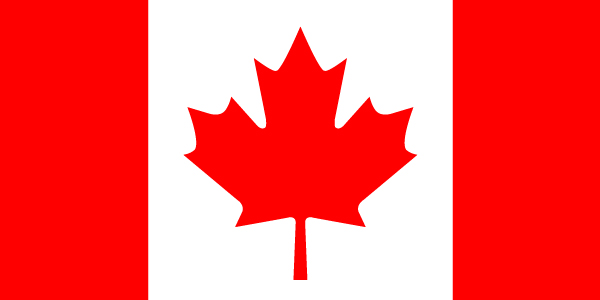
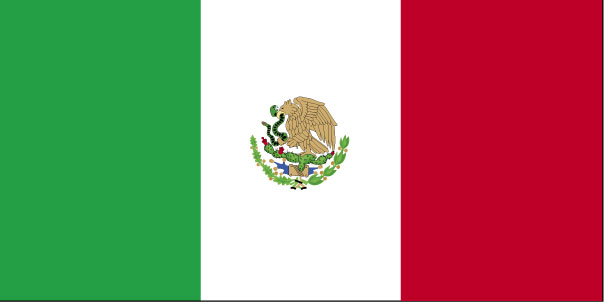
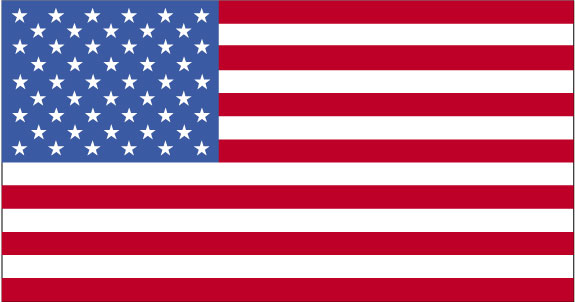
North America comprises three major sovereign nations: the United States of America, Canada, and Mexico. This continent spans from the Arctic waters of northern Canada to the tropical regions of southern Mexico, covering an area of approximately 24.7 million square kilometers. The three nations share diverse landscapes, climates, and natural features that have shaped their development and continue to define their identities.
The Rocky Mountains form a massive spine running through western North America, extending from British Columbia in Canada through the United States to New Mexico. This mountain range has historically served as a geographic barrier and a source of natural resources including minerals, timber, and water. The Great Plains stretch across the central portion of the continent, providing vast expanses of fertile agricultural land that became crucial to the economic development of both the United States and Canada. These plains experience continental climates with hot summers and cold winters, supporting cattle ranching and grain production on an enormous scale.
The Great Lakes, shared between the United States and Canada, represent the world's largest freshwater system by surface area. Lakes Superior, Michigan, Huron, Erie, and Ontario have been vital for transportation, commerce, and settlement patterns for centuries. The Mississippi River, North America's second-longest river, drains the vast interior of the continent and has served as a crucial transportation corridor and economic lifeline for the United States, connecting the agricultural heartland to the Gulf of Mexico and the Atlantic Ocean.
The Atlantic and Pacific coastlines offer dramatically different environments. The Atlantic coast features deep harbors that facilitated early European colonization and remain important commercial centers. The Pacific coast, with its rugged terrain and temperate rainforests in the north, transitions to Mediterranean climates in California and arid regions in the southwest. The Arctic north, particularly in Canada, encompasses vast tundra regions with unique ecosystems and indigenous populations adapted to extreme conditions. The desert southwest, spanning from Arizona through New Mexico and into northern Mexico, contains some of the continent's most dramatic landscapes including the Grand Canyon. Southern Mexico transitions into tropical regions with lush forests, warm climates, and rich biodiversity that contrasts sharply with northern landscapes.
उत्तरी अमेरिका का इतिहास
Indigenous civilizations flourished across North America long before European contact. In what is now Mexico, the Aztec Empire built Tenochtitlan, one of the world's largest cities of its era, with sophisticated agricultural systems and architectural achievements. The Maya civilization, centered in what is now Mexico and Central America, developed advanced mathematics, astronomy, and writing systems. In the territories of present-day United States and Canada, hundreds of distinct Native American and First Nations peoples developed complex societies adapted to diverse environments, from the Pacific Northwest's advanced fishing cultures to the agricultural pueblos of the Southwest.
European colonization began in the late 15th century when Christopher Columbus reached the Caribbean in 1492. Spanish conquistadors, led by Hernán Cortés, conquered the Aztec Empire between 1519 and 1521, establishing New Spain and eventually claiming vast territories. The Spanish established a colonial system that lasted nearly three centuries, creating a unique blend of European and indigenous cultures. French explorers arrived in North America in the early 1600s, establishing settlements along the St. Lawrence River and the Mississippi River valley, creating New France. English colonists began establishing settlements along the Atlantic coast, particularly in Virginia in 1607 and the Massachusetts Bay area in 1620.
The founding of the United States emerged from thirteen British colonies that declared independence in 1776. The American Revolution established a new nation based on Enlightenment principles and a federal system of government. The United States expanded rapidly westward, acquiring territories through purchase, negotiation, and conflict with Native American peoples. This westward expansion, often framed as Manifest Destiny, displaced indigenous populations and extended American territory from the Atlantic to the Pacific by the mid-19th century.
Canadian Confederation occurred in 1867 when the British North America Act unified four colonies: Ontario, Quebec, Nova Scotia, and New Brunswick. This gradual path to independence contrasted sharply with American revolutionary separation. Canada expanded territorially through the acquisition of Rupert's Land and the Pacific territories, eventually stretching from the Atlantic to the Pacific. French Canadians maintained their cultural identity in Quebec while participating in the broader Canadian nation.
Mexico's path to independence came in 1821 after eleven years of revolutionary conflict against Spanish rule. The newly independent Mexico initially controlled vast territories extending into the present-day southwestern United States. The Mexican-American War from 1846 to 1848 resulted in Mexico ceding approximately half its territory to the United States. This loss profoundly shaped Mexican national identity and regional relationships. The Mexican Revolution from 1910 to 1920 dramatically transformed Mexican society, redistributing land and establishing new political institutions. Revolutionary leaders including Emiliano Zapata and Pancho Villa fought for peasant rights and land reform.
The relationships between the three nations evolved significantly through the 20th century. The United States emerged as a global superpower following World Wars I and II. Canada participated as a significant Allied power in both world wars, establishing its distinct identity. Mexico experienced American military intervention and economic influence throughout the 20th century. The North American Free Trade Agreement, signed in 1994 and replaced by the United States-Mexico-Canada Agreement in 2020, formally integrated the three economies, creating one of the world's largest trading blocs. This trade relationship reflects the deep interdependence of the three nations in the modern era.
सांस्कृतिक विशेषताएँ
The cultural landscape of North America reflects the diverse populations, histories, and traditions of three distinct nations united by geography. The United States culture blends influences from British colonial heritage, hundreds of Native American traditions, African American contributions emerging from slavery and the subsequent African diaspora, European immigration waves, and Asian immigration. American culture has profoundly influenced global entertainment, technology, and consumer practices through its film industry, music, and popular culture exports.
Canada's culture reflects its bicultural English and French heritage alongside growing multicultural communities. First Nations cultures maintain distinct traditions and artistic practices across the country. Canadian cultural identity emphasizes multiculturalism, politeness, and regional diversity. The nation has produced significant contributions to literature, film, and performing arts while maintaining stronger ties to British and European cultural traditions than the United States.
Mexico's culture represents a profound fusion of indigenous Mesoamerican traditions and Spanish colonial heritage. Mexican culture emphasizes family, community, and traditions with deep roots in indigenous cosmology and Spanish Catholicism. The artistic traditions include pre-Columbian architectural styles, colonial baroque aesthetics, and modern Mexican muralism. Indigenous cultures remain vibrant in many Mexican regions, maintaining languages, clothing, and practices.
Art traditions vary significantly across the three nations. Mexico has a particularly strong tradition of muralism and visual arts, exemplified by artists like Diego Rivera, whose works combine indigenous themes with modern techniques. The United States developed distinctive art movements including Abstract Expressionism and contemporary digital media arts. Canada contributed important Group of Seven landscape painters and contemporary Indigenous artists.
Music reflects the continent's diversity. The United States produced jazz, blues, rock and roll, hip-hop, and country music that influenced global popular music. Mexico contributed ranchero music, mariachi traditions, and contemporary regional Mexican styles. Canada produced folk, rock, and pop artists who achieved international recognition. All three nations maintain vibrant indigenous music traditions.
Food cultures are distinctive and influential. Mexican cuisine, recognized by UNESCO as intangible cultural heritage, features corn, beans, chilies, and chocolate as foundational ingredients with regional variations reflecting local indigenous traditions. American cuisine evolved from colonial influences, Southern traditions, Native American practices, and immigrant contributions, now characterized by hamburgers, barbecue, and regional specialties. Canadian cuisine reflects British and French influences with distinctive preparations and indigenous ingredients.
Sports differ in emphasis across the three nations. Ice hockey is Canada's national obsession and is also popular in the northern United States. American sports include baseball, American football, and basketball, which the United States has exported globally. Mexico emphasizes soccer, with the sport deeply integrated into national identity and culture.
Religion across North America is predominantly Christian, though the specific denominations vary. The United States has high religious diversity with significant Protestant, Catholic, and Jewish populations. Canada similarly features religious pluralism with growing secularization. Mexico remains predominantly Catholic due to Spanish colonial heritage, though evangelical Christianity has grown significantly in recent decades. Indigenous spiritual traditions persist in many communities across all three nations.
Immigration has shaped all three nations profoundly. The United States received the largest immigrant populations, including Europeans, Africans, Asians, and Latin Americans, establishing itself as a nation of immigrants. Canada pursued multiculturalism as official policy, accepting diverse immigrant communities and emphasizing integration. Mexico experienced significant emigration, particularly to the United States, while also maintaining indigenous populations with distinct cultural practices.
उत्तरी अमेरिका की भाषाएँ
English dominates as the primary language in the United States and much of Canada, though it exists alongside hundreds of indigenous languages that predate European colonization. In Canada, French maintains official co-equal status with English at the federal level and is the primary language in Quebec and New Brunswick. Spanish is the dominant language in Mexico and is increasingly spoken in the United States due to Mexican and Central American immigration.
Hundreds of indigenous languages continue to be spoken across North America, though many face endangerment. In the United States, Native American languages include Navajo, Cherokee, Sioux, Apache, and many others, collectively spoken by hundreds of thousands of indigenous people. Canada recognizes many First Nations languages including Cree, Inuit languages, Haida, and others. Mexico maintains dozens of indigenous languages including Nahuatl, Maya languages, Zapotec, and Mixtec, spoken by millions of indigenous Mexicans.
Immigrant languages add further diversity, particularly in urban centers. The United States hears Chinese, Vietnamese, Korean, Arabic, and numerous European languages in immigrant communities. Canada similarly features diverse immigrant languages reflecting its multicultural immigration policy. Mexico's immigrant communities are smaller but include English speakers and Central American migrants speaking indigenous Mesoamerican languages.
प्रसिद्ध पर्यटन स्थल
The United States offers extraordinary natural and cultural attractions. Niagara Falls, shared with Canada, remains one of the world's most visited natural wonders. Yellowstone National Park, the Grand Canyon, the Statue of Liberty, the Golden Gate Bridge, and the Washington Monument represent iconic American landmarks. The Grand Canyon showcases millions of years of geological history in stunning visual form. American cities like New York, Los Angeles, and Chicago offer world-class museums, architecture, and entertainment.
Canada's attractions feature dramatic natural landscapes. Niagara Falls, Banff National Park, Lake Louise, the Canadian Rockies, and Whistler Blackcomb ski resort attract international visitors. The Athabasca Glacier, Moraine Lake, and the Okanagan region showcase Canada's natural beauty. Historic sites including Parliament Hill in Ottawa and the CN Tower in Toronto reflect Canadian architecture and urban development. The Northern Lights visible in Canada's Arctic regions provide unique natural phenomena.
Mexico offers pre-Columbian archaeological sites, colonial architecture, beaches, and cultural experiences. Chichén Itzá and Tulum showcase Mayan civilization's architectural achievements. Tenochtitlan's ruins, now within Mexico City, reveal Aztec grandeur. Colonial cities like Guanajuato, Oaxaca, and San Miguel de Allende feature stunning architecture and vibrant cultural traditions. Mexican beaches including Cancun, Playa del Carmen, and Puerto Vallarta attract international tourism. The Day of the Dead celebrations represent Mexico's unique cultural traditions blending indigenous and Catholic elements.
उत्तरी अमेरिका के बारे में अक्सर पूछे जाने वाले प्रश्न
देशों, संस्कृति, यात्रा और इतिहास के बारे में सामान्य प्रश्नों के उत्तर।