
 English
 Español
 中文
中文 हिन्दी
 Français
América del Sur
12 países
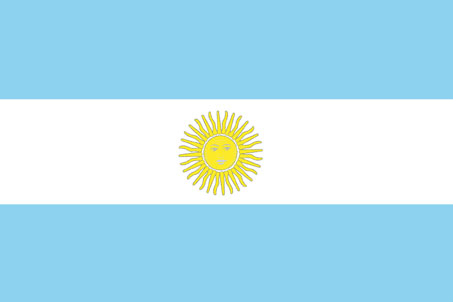
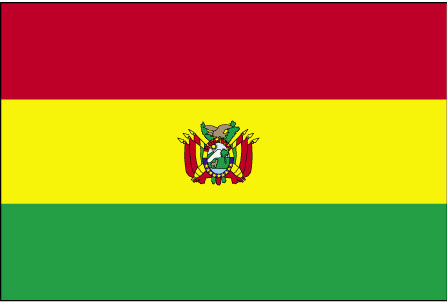
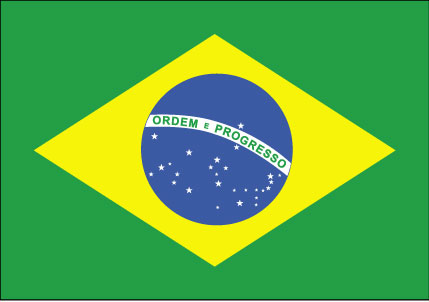
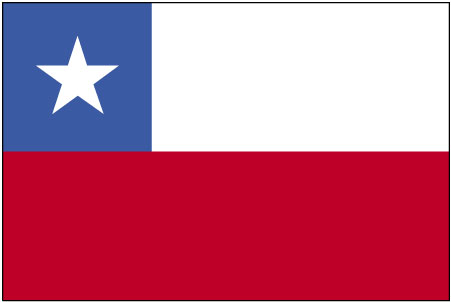
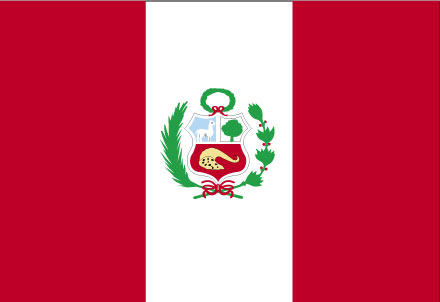
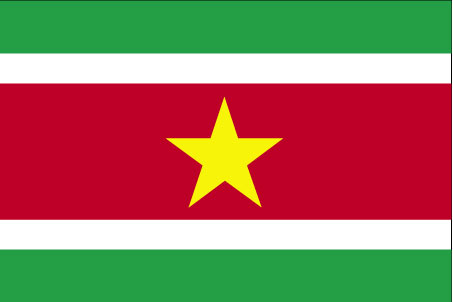
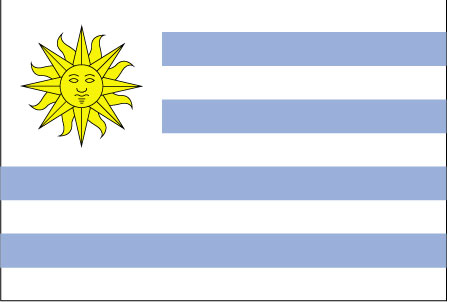
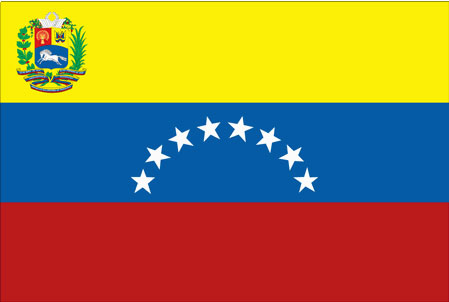
Resumen y geografía de América del Sur
South America is the fourth largest continent on Earth, covering approximately 17.8 million square kilometers and stretching from the tropical Caribbean coast in the north to the windswept tip of Patagonia near Antarctica in the south. It is a continent of extraordinary contrasts: the world's largest tropical rainforest, the world's longest mountain range, the world's highest navigable lake, the world's driest non-polar desert, and some of the world's most biodiverse ecosystems all exist within its borders. Home to approximately 440 million people spread across 12 countries, South America is a place where ancient indigenous traditions, centuries of colonial history, African heritage, and waves of European immigration have combined to create cultures of remarkable richness and complexity.
The Andes Mountains run along the entire western edge of the continent for approximately 7,000 kilometers, making them the longest continental mountain range on Earth. The range was formed by the subduction of the Nazca Plate beneath the South American Plate and contains many of the highest peaks in the Western Hemisphere, including Aconcagua in Argentina at 6,961 meters, the highest point outside of Asia. The Andes are geologically active, with numerous volcanoes and frequent earthquakes along their length.
East of the Andes lie the vast lowlands of the continent, dominated by the Amazon Basin. The Amazon River, the world's largest by water volume, drains an area of approximately 7 million square kilometers and carries roughly 20 percent of all freshwater that flows into the world's oceans. The Amazon rainforest, covering approximately 5.5 million square kilometers, is the largest tropical forest on Earth and home to an estimated 10 percent of all species on the planet.
South of the Amazon Basin are the cerrado, a vast tropical savanna, and further south the grasslands of the Pampas in Argentina and Uruguay, some of the most fertile agricultural land in the world. In the far south, Patagonia stretches across both Argentina and Chile as a cold, windswept plateau of steppes, glaciers, and fjords. The Atacama Desert along the Pacific coast of Chile and Peru is the driest non-polar desert on Earth, with some weather stations having never recorded rainfall.
The Galapagos Islands, a volcanic archipelago belonging to Ecuador and located about 900 kilometers off the Pacific coast, are one of the world's most remarkable ecosystems, famous for the unique wildlife that inspired Charles Darwin's theory of evolution by natural selection.
Historia de América del Sur
South America has been inhabited for at least 15,000 years, and possibly much longer. The earliest inhabitants crossed into the Americas from Asia via the Bering land bridge and gradually spread southward across the continent. Over thousands of years, hundreds of distinct cultures developed, ranging from small hunter-gatherer bands to sophisticated urban civilizations.
The Norte Chico civilization, which flourished along the coast of present-day Peru between approximately 3000 and 1800 BCE, is one of the oldest complex societies in the world. Contemporary with ancient Mesopotamia and Egypt, Norte Chico developed monumental architecture and complex social organization without a writing system. Later pre-Columbian cultures in the Andes included the Chavín, Tiwanaku, Wari, and Chimú civilizations, each leaving significant architectural and artistic legacies.
The Inca Empire, known as Tawantinsuyu or the Four Quarters of the World, was the largest empire in pre-Columbian America. At its height in the early sixteenth century, it stretched from present-day Colombia in the north to central Chile in the south, encompassing a population of perhaps 12 million people. The Incas governed this vast territory through a sophisticated administrative system, an extensive road network of about 40,000 kilometers, and the labor tax system known as mit'a. Their capital, Cusco, was one of the great cities of its time, and their achievements in architecture, agriculture, and engineering were extraordinary.
The arrival of Spanish and Portuguese colonizers in the late fifteenth and early sixteenth centuries transformed the continent with devastating speed. Spanish forces under Francisco Pizarro conquered the Inca Empire between 1532 and 1572, using firearms, steel weapons, horses, and the catastrophic impact of European diseases to defeat a civilization that had no immunity to smallpox, measles, and other illnesses. The indigenous population of South America collapsed by an estimated 90 percent in the first century of European contact, one of the greatest demographic catastrophes in human history.
The colonial period that followed lasted nearly three centuries. Spain controlled most of the continent, while Portugal controlled the vast territory that became Brazil. The colonial economy was based on the extraction of silver and gold, plantation agriculture, and the forced labor of both indigenous peoples and enslaved Africans. The transatlantic slave trade brought an estimated 4.9 million enslaved Africans to South America, primarily to Brazil, where the sugar and later coffee economies depended on their labor.
The independence movements of the early nineteenth century swept through South America in a remarkable wave between approximately 1810 and 1826. Inspired by the American and French Revolutions and fueled by resentment of Spanish colonial rule, independence fighters led by figures such as Simón Bolívar in the north and José de San Martín in the south liberated most of the continent within fifteen years. Brazil achieved independence from Portugal in 1822 under a different model, becoming a monarchy under the Portuguese royal family rather than a republic.
The post-independence period was turbulent throughout the continent. Newly formed nations struggled with political instability, economic dependence on commodity exports, and sharp inequalities between small landowning elites and large impoverished majorities. The twentieth century brought periods of democracy alternating with military dictatorship across much of the continent. The 1970s and 1980s saw particularly brutal authoritarian regimes in Argentina, Chile, Brazil, and Uruguay, supported in many cases by the United States as part of Cold War strategy. The return to democracy across most of the continent in the 1980s and 1990s was followed by a period sometimes called the Pink Tide, when left-leaning governments won elections in Venezuela, Brazil, Argentina, Bolivia, Ecuador, and other countries in the early twenty-first century.
Atributos culturales
South American culture is a synthesis of indigenous, European, and African influences that varies significantly from country to country and region to region. The result is a continent of extraordinary cultural diversity and creativity.
Music is one of South America's most significant cultural exports. Argentina gave the world the tango, a dance and musical form of profound emotional intensity that developed in the working-class neighborhoods of Buenos Aires in the late nineteenth century among immigrants from Europe and Africa. Brazil produced samba, bossa nova, and later baile funk and pagode, musical forms of global influence. Colombia contributed cumbia and vallenato. Bolivia and Peru maintain strong traditions of Andean music using instruments such as the charango, pan pipes, and various traditional drums. The continent's musical traditions have influenced music worldwide.
Literature is another area of extraordinary achievement. South American writers have produced some of the most celebrated literature of the twentieth century. Gabriel García Márquez of Colombia, winner of the Nobel Prize in Literature in 1982, popularized magic realism, a literary style that blends realistic narrative with fantastical elements drawn from Latin American folklore and culture. Jorge Luis Borges of Argentina transformed world literature with his intricate philosophical short stories. Pablo Neruda of Chile, winner of the Nobel Prize in Literature in 1971, was one of the most influential poets of the twentieth century. Isabel Allende, Mario Vargas Llosa, Julio Cortázar, and many others have contributed to a literary tradition of global significance.
Food traditions reflect the continent's diverse heritage. Ceviche, raw fish cured in citrus juice with chili and onion, is a dish of ancient Peruvian origin now recognized worldwide. Asado, the Argentine and Uruguayan tradition of slow-cooking meat over open coals, is both a cuisine and a social institution. Brazilian feijoada, a rich stew of black beans and various cuts of pork, has African origins and is considered the national dish of Brazil. Ajiaco in Colombia, locro in the Andes, and moqueca in Brazil are among the many regional dishes that reflect local ingredients and cultural heritage.
Football, or soccer, is a cultural force of extraordinary power across the continent. Brazil and Argentina are among the most successful football nations in history, and the sport's hold on South American culture is difficult to overstate. Major tournaments and matches are treated as near-religious events, and the continent has produced many of the greatest players in the history of the sport.
Idiomas de América del Sur
Spanish is the dominant language of South America, spoken as the official or primary language in nine of the twelve countries. Portuguese is the language of Brazil, the continent's largest country, and is spoken by approximately half the continent's population.
Beyond Spanish and Portuguese, South America has remarkable linguistic diversity. An estimated 400 to 450 indigenous languages are still spoken across the continent, though many are endangered. Quechua, the language of the Inca Empire, is the most widely spoken indigenous language, with approximately 8 to 10 million speakers across Peru, Bolivia, Ecuador, and neighboring countries. Guaraní is the co-official language of Paraguay alongside Spanish, and is spoken by the majority of the population, making it one of the few indigenous languages in the Americas with strong official status.
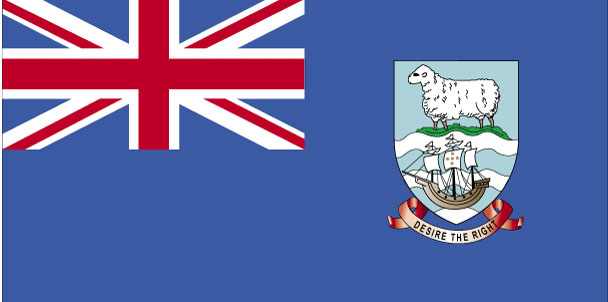
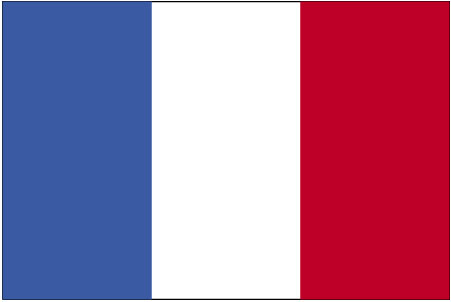
Aymara is spoken by several million people in Bolivia, Peru, and Chile. Mapudungun is spoken by the Mapuche people of Chile and Argentina. Dutch is the official language of Suriname. English is spoken in Guyana and on the Falkland Islands. French is spoken in French Guiana, an overseas department of France. Various creole languages blend European and African linguistic elements in coastal regions throughout the continent.
Atracciones turísticas famosas
Machu Picchu in Peru is perhaps the most iconic archaeological site in the Western Hemisphere. The fifteenth-century Inca citadel sits on a ridge at 2,430 meters above sea level in the Andes mountains, surrounded by cloud forest. It was built around 1450 and abandoned roughly a century later during the Spanish conquest. The site was largely unknown to the outside world until American historian Hiram Bingham visited in 1911. It was declared a UNESCO World Heritage Site in 1983 and named one of the New Seven Wonders of the World in 2007.
Iguazu Falls, on the border of Argentina and Brazil, is one of the world's largest waterfall systems, with 275 individual falls spreading across 2.7 kilometers. The falls are set within lush subtropical rainforest and are dramatically wider than Niagara Falls and taller than Victoria Falls.
The Galapagos Islands of Ecuador are one of the world's premier wildlife destinations, famous for their extraordinary biodiversity and the tameness of animals that evolved with no natural predators. Giant tortoises, marine iguanas, blue-footed boobies, and Darwin's finches are among the iconic species found there.
The Atacama Desert in Chile and Peru is one of the most visually dramatic landscapes on Earth, with salt flats, geysers, lagoons filled with flamingos, and night skies of extraordinary clarity due to the high altitude and near-total absence of moisture.
Patagonia, shared between Argentina and Chile, offers some of the world's most spectacular mountain and glacial scenery. Torres del Paine National Park in Chile is renowned for its dramatic granite towers, glaciers, and wildlife. The Perito Moreno Glacier in Argentina is one of the world's few advancing glaciers and a site of extraordinary natural spectacle.
Angel Falls in Venezuela, with a total drop of 979 meters, is the world's highest uninterrupted waterfall. The Amazon River basin offers unique ecotourism opportunities, including river cruises through pristine rainforest, wildlife observation, and visits to indigenous communities.
Preguntas frecuentes sobre América del Sur
Respuestas a preguntas comunes sobre países, cultura, viajes e historia.