
 English
 Español
 中文
中文 हिन्दी
 Français
Antarctica
Declare Your Relationship to Antarctica
CountryReports Community
- Studying0
- From Antarctica0
- Antarctica heritage0
- Visited0
- Want to visit0
Customs and Culture
Customs and Culture
Cultural Attributes
Antarctica stands apart from every other place on Earth in that it has no indigenous population, no permanent civilian residents, and no native culture rooted in centuries of human habitation. The continent's "culture," such as it is, has been entirely shaped by the scientific and exploratory communities that have established a presence there since the early twentieth century. Today, Antarctica is home to roughly 1,000 to 5,000 people at any given time, depending on the season, nearly all of whom are scientists, support staff, and logistics personnel stationed at one of approximately 70 research stations operated by around 30 nations. These individuals typically rotate through on contracts lasting several months to over a year, creating a transient, internationally diverse community rather than a settled society. The culture that has emerged from this environment is pragmatic and collaborative by necessity. Life on the ice demands teamwork, resilience, and adaptability in the face of extreme isolation, months of polar darkness, and temperatures that can plunge below minus 70 degrees Celsius. Station life tends to foster close-knit communities where shared meals, film nights, and small celebrations of holidays from many different nations become meaningful social rituals. A spirit of international cooperation is perhaps the continent's defining cultural attribute. The Antarctic Treaty of 1959, signed initially by 12 nations and now counting over 50 signatories, established Antarctica as a zone of peace and science, free from territorial claims and military activity. This framework has cultivated an ethos of shared scientific purpose that transcends national identity, a rare quality anywhere in the world. Exploration heritage also plays an important role in shaping the cultural identity of those who live and work there. Historic huts belonging to early expeditioners such as Ernest Shackleton and Robert Falcon Scott are preserved as heritage sites and serve as powerful symbols of human endurance. Many researchers describe their time in Antarctica as profoundly life-changing, marked by a heightened sense of responsibility toward environmental stewardship and a deep appreciation for the continent's stark, unmatched beauty.

The Last Continent

Dates of Interest
- January 20th
Although not an official holiday, Penguin Awareness Day aims to raise awareness about penguins and their conservation. It is observed globally, including by researchers and visitors in Antarctica, where several penguin species reside.
What is mealtime like in Antarctica?
Shared meals are a meaningful social ritual in station life, helping bind the close-knit communities together.
Good to know
- Meals, film nights, and holiday celebrations are central social events at research stations
What social values matter in Antarctica?
Life on the ice is pragmatic and collaborative, demanding teamwork, resilience, and adaptability amid extreme isolation and polar darkness. International cooperation is the continent's defining cultural attribute.
Do
- Embrace teamwork and a shared scientific purpose that transcends national identity
- Show a heightened sense of environmental stewardship
- Respect preserved historic huts of early explorers like Shackleton and Scott as heritage sites
Good to know
- The community is transient and internationally diverse, made up of scientists and support staff on contracts
- Small celebrations of holidays from many nations are common social rituals
What should I know before going to Antarctica?
Antarctica has no indigenous population or permanent civilian residents; its population of roughly 1,000 to 5,000 people are mostly scientists and support staff at around 70 research stations run by about 30 nations.
Good to know
- Prepare for extreme conditions, including months of polar darkness and temperatures below minus 70 degrees Celsius
- Under the Antarctic Treaty of 1959, the continent is a zone of peace and science, free from territorial claims and military activity
- Many describe their time there as life-changing, marked by appreciation for the continent's stark beauty
Last updated: 2026-07-12 · Sources: CountryReports
Photos of Antarctica
Photos of Antarctica


Travel and Tourism
Travel and Tourism
- Travel Alert Status
- Level 2: Exercise Increased Caution
- Climate
- Severe low temperatures vary with latitude, elevation, and distance from the ocean; East Antarctica is colder than West Antarctica because of its higher elevation; Antarctic Peninsula has the most moderate climate; higher temperatures occur in January also
- Airports
- There are no developed public access airports or landing facilities; 30 stations, operated by 16 national governments party to the Antarctic Treaty, have restricted aircraft landing facilities for either helicopters and/or fixed-wing aircraft; commercial enterprises operate two additional aircraft landing facilities; helicopter pads are available at 27 stations; runways at 15 locations are gravel, sea-ice, blue-ice, or compacted snow suitable for landing wheeled, fixed-wing aircraft; of these, 1 is greater than 3 km in length, 6 are between 2 km and 3 km in length, 3 are between 1 km and 2 km in length, 3 are less than 1 km in length, and 2 are of unknown length; snow surface skiways, limited to use by ski-equipped, fixed-wing aircraft, are available at another 15 locations; of these, 4 are greater than 3 km in length, 3 are between 2 km and 3 km in length, 2 are between 1 km and 2 km in length, 2 are less than 1 km in length, and 4 are of unknown length; aircraft landing facilities generally subject to severe restrictions and limitations resulting from extreme seasonal and geographic conditions; aircraft landing facilities do not meet ICAO standards; advance approval from the respective governmental or nongovernmental operating organization required for landing; landed aircraft are subject to inspection in accordance with Article 7, Antarctic Treaty
- Recommended Vaccinations
- How important is it to do your research about vaccinations? It might just save your life! Make yourself aware of the different types of vaccinations and which ones you may need to travel to your destination. Schedule an appointment with your doctor at least four to six weeks before you travel to ensure you receive all important shots. Be sure that you and your family are up to date on your routine vaccinations. Which vaccinations you need will depend on a number of factors including your destination, whether you will be spending time in rural areas, the season of the year you are traveling, your age, health status, and previous immunizations.
Read the full travel guide — health, safety, vaccinations, disease risk, sanitation, and transit details.
View full travel guideHistory
History
Historical Eras
Ancient Speculation
350 BCE – 1772
Greek philosophers, notably Aristotle, theorized that a great southern landmass must exist to balance the known northern continents — a concept termed Terra Australis Incognita. This idea persisted through the medieval and early modern periods, appearing on maps by cartographers such as Ortelius, though no confirmed sighting had ever been made.
Early Exploration
1773 – 1840
James Cook's second voyage (1772–1775) crossed the Antarctic Circle for the first time but encountered impenetrable pack ice. British, American, and Russian expeditions in the early 1820s — including those of Bellingshausen, Bransfield, and Palmer — made the first confirmed sightings of the continent. It was not until Wilkes's U.S. Exploring Expedition of 1840 that Antarctica was definitively established as a continental landmass.
Heroic Age
1899 – 1922
The Heroic Age of Antarctic Exploration saw intense national rivalry and extraordinary feats of endurance. Carsten Borchgrevink's team made the first confirmed winter-over in 1899, Robert Falcon Scott and Ernest Shackleton led successive British expeditions, and Roald Amundsen's Norwegian team reached the South Pole on 14 December 1911 — beating Scott by five weeks. Shackleton's ill-fated Endurance expedition (1914–1916) became one of history's most celebrated survival stories.
Territorial Claims Era
1922 – 1957
Following World War I, several nations — including Britain, Norway, Australia, France, New Zealand, Chile, and Argentina — formalized overlapping territorial claims over Antarctic sectors. Richard Byrd's American expeditions in the late 1920s and 1940s introduced aviation and large-scale logistical operations to the continent. Military-style operations such as the U.S. Operation Highjump (1946–1947) underscored growing strategic and geopolitical interest in the region.
International Geophysical Year
1957 – 1961
The International Geophysical Year (IGY) of 1957–1958 brought twelve nations together in an unprecedented cooperative scientific effort on the continent, establishing over 50 research stations. The United States completed its permanent Amundsen–Scott South Pole Station in 1956, and the Soviet Union established Vostok Station. The success of the IGY directly catalyzed negotiations for the Antarctic Treaty, signed in Washington in 1959.
Antarctic Treaty Era
1961 – present
The Antarctic Treaty entered into force on 23 June 1961, designating the continent as a zone of peace and science, freezing all territorial claims, and banning military activity and nuclear testing. The treaty system has since expanded through additional protocols, most notably the 1991 Protocol on Environmental Protection (Madrid Protocol), which designated Antarctica a natural reserve. Today, over 30 nations operate year-round or seasonal research stations, making Antarctica a unique model of international scientific governance.
Timeline of Key Events
350 BCE
http://www.coolantarctica.com/Antarctica%20fact%20file/History/exploration%20and%20history.htm
It was the ancient Greeks who first came up with the idea of Antarctica. They knew about the Arctic - named Arktos - The Bear, from the constellation the great bear and decided that in order to balance the world, there should be a similar cold Southern landmass that was the same but the opposite “Ant - Arktos” - opposite The Bear. They never actually went there, it was just a lucky guess!
1773
http://www.coolantarctica.com/Antarctica%20fact%20file/History/exploration%20and%20history.htm
In January, James Cook crosses the Antarctic circle and circumnavigates Antarctica, though he doesn't sight land, deposits of rock seen in icebergs showed that a southern continent exists. His comment - “I make bold to declare that the world will derive no benefit from it”.
1819
http://www.coolantarctica.com/Antarctica%20fact%20file/History/exploration%20and%20history.htm
Captain Thaddeus Bellingshausen a Russian naval officer in the Vostok and Mirny circumnavigates the Antarctic, first to cross the Antarctic circle since Cook. He made the first sighting of the continent, reaching 69? 21'S, 2? 14'W - describing an “icefield covered with small hillocks.” on Jan 27th 1820. For some considerable time, exactly who and when first set eyes on Antarctica were in dispute as British naval officers, William Smith and Edward Bransfield also saw Antarctica on Jan 30th the same year - followed by American sealer Nathaniel Palmer on Nov 16th. This was the first time a continent had truly been “discovered” (i.e. there weren't any native peoples living there who'd known about it for ages already). All sightings are of the Antarctic Peninsula.
1821
http://www.coolantarctica.com/Antarctica%20fact%20file/History/exploration%20and%20history.htm
First known landing by American sealer Capt. John Davis
1899
http://www.coolantarctica.com/Antarctica%20fact%20file/History/exploration%20and%20history.htm
Carsten Borchgrevink leads a British expedition that landed men at Cape Adare and built huts
1902
http://www.coolantarctica.com/Antarctica%20fact%20file/History/exploration%20and%20history.htm
Captain Scott, UK, leads his first Antarctic expedition to reach the South Pole, with Ernest Shackleton and Edward Wilson. They are forced to turn back two months later having reached 82 degrees south, suffering from snow blindness and scurvy.
1909
http://www.coolantarctica.com/Antarctica%20fact%20file/History/exploration%20and%20history.htm
January, Australian Douglas Mawson reaches the South Magnetic Pole.
Read the full history profile — narrative overview, defining eras, and the complete timeline in one place.
View expanded historyInteresting Facts
Interesting Facts
Vostok, Antarctica holds the world's record for coldest temperature: -129°F (7/21/83)
The coldest place on the planet is Vostok. A temperature of 129 degrees F below zero was recorded. It is so cold at the South Pole that the average summer temperature is -58 °F.
The South Pole is the southern most point on the earth. It is marked by flags and a pole.
The coasts of Antarctica are some of the windiest places in the world, with gusts reaching nearly 200 miles per hour.
The Adelie penguin was named after Jules-Sébastien-César Dumont d'Urville's wife. D'Urville was the first man to set foot in Antarctica.
The British explorer Captain James Cook first circumnavigated the Antarctic continent in 1773-1775.
See every fact — trivia, oddities, and curious tidbits gathered from across the country.
View all interesting factsGeography and Environment
Geography and Environment
- Terrain
- about 98% thick continental ice sheet and 2% barren rock, with average elevations between 2,000 and 4,000 meters; mountain ranges up to nearly 5,000 meters; ice-free coastal areas include parts of southern Victoria Land, Wilkes Land, the Antarctic Peninsu
- Climate
- severe low temperatures vary with latitude, elevation, and distance from the ocean; East Antarctica is colder than West Antarctica because of its higher elevation; Antarctic Peninsula has the most moderate climate; higher temperatures occur in January alo
- Natural Hazards
- katabatic (gravity-driven) winds blow coastward from the high interior; frequent blizzards form near the foot of the plateau; cyclonic storms form over the ocean and move clockwise along the coast; volcanism on Deception Island and isolated areas of West Antarctica; other seismic activity rare and weak; large icebergs may calve from ice shelf
- Current Environmental Issues
- in 1998, NASA satellite data showed that the antarctic ozone hole was the largest on record, covering 27 million square kilometers; researchers in 1997 found that increased ultraviolet light coming through the hole damages the DNA of icefish, an antarctic fish lacking hemoglobin; ozone depletion earlier was shown to harm one-celled antarctic marine plants; in 2002, significant areas of ice shelves disintegrated in response to regional warming
Read the full geography and environment profile — terrain, climate, natural resources, hazards, land use, and international agreements.
View full geographyPeople & Demographics
People & Demographics
Religion
Population
- Population
- 0
- Population: Male/Female
- no indigenous inhabitants, but staff is present at year-round and summer-only research stations
Read the full people and society profile — demographics, health, education, religion, languages, and notable people.
View full people and societyGovernment & Politics
Government & Politics
Country Identity
- Country Name
- Antarctica
Government Structure
- Government Type
- Antarctic Treaty Summary - the Antarctic Treaty, signed on 1 December 1959 and entered into force on 23 June 1961, establishes the legal framework for the management of Antarctica; the 26th Antarctic Treaty Consultative Meeting was held in Madrid, Spain
- Legal System
- Antarctica is administered through meetings of the consultative member nations; decisions from these meetings are carried out by these member nations (with respect to their own nationals and operations) in accordance with their own national laws; US law, including certain criminal offenses by or against US nationals, such as murder, may apply extra-territorially; some US laws directly apply to Antarctica; for example, the Antarctic Conservation Act, 16 U.S.C. section 2401 et seq., provides civil and criminal penalties for the following activities, unless authorized by regulation of statute: the taking of native mammals or birds; the introduction of nonindigenous plants and animals; entry into specially protected areas; the discharge or disposal of pollutants; and the importation into the US of certain items from Antarctica; violation of the Antarctic Conservation Act carries penalties of up to $10,000 in fines and one year in prison; the National Science Foundation and Department of Justice share enforcement responsibilities; Public Law 95-541, the US Antarctic Conservation Act of 1978, as amended in 1996, requires expeditions from the US to Antarctica to notify, in advance, the Office of Oceans, Room 5805, Department of State, Washington, DC 20520, which reports such plans to other nations as required by the Antarctic Treaty; for more information, contact Permit Office, Office of Polar Programs, National Science Foundation, Arlington, Virginia 22230; telephone: (703) 292-8030, or visit their website at www.nsf.gov
- Executive Branch
- Antarctica has no government in the traditional sense and therefore no executive branch, head of state, or head of government. The continent is not a sovereign nation and is not governed by any single country or international body with executive authority over the territory as a whole. Instead, Antarctica is administered through the Antarctic Treaty System, a multilateral framework that came into force on June 23, 1961. The original treaty was signed by 12 nations on December 1, 1959, and as of the most recent count, 56 countries are party to the agreement. Of these, 29 hold Consultative Party status, meaning they have the right to participate in decision-making at Antarctic Treaty Consultative Meetings, which are held annually and serve as the primary forum for governance of the continent. No permanent human population lives on Antarctica. The people present at any given time are scientists, support staff, and researchers stationed at national research facilities operated by individual member nations. Each of these stations falls under the jurisdiction of the country that operates it, rather than under any unified Antarctic authority. Seven nations — Argentina, Australia, Chile, France, New Zealand, Norway, and the United Kingdom — have made territorial claims to portions of Antarctica, some of which overlap. However, the Antarctic Treaty effectively freezes these claims; no new claims may be made, and existing claims are neither recognized nor denied under the treaty framework. The Secretariat of the Antarctic Treaty, headquartered in Buenos Aires, Argentina, provides administrative support to the treaty system but holds no executive governmental power. Its role is logistical and organizational rather than legislative or executive. As a result, Antarctica remains one of the few places on Earth governed entirely through international cooperation rather than by a traditional executive authority, making it a unique case in the study of global governance.
Read the full government profile — flag symbolism, national anthem, and other national symbols.
View full government detailsEconomy
Economy
Tourism and fishing, both largely operated from outside the continent, account for Antarctica's limited economic activity. Commercial fishing in Antarctic waters targets several species, with Antarctic krill representing by far the largest catch by volume. Patagonian and Antarctic toothfish (marketed commercially as Chilean sea bass) remain high-value targets, and illegal, unreported, and unregulated fishing continues to pose a conservation challenge, though enforcement efforts have substantially reduced its scale in recent years. The Commission for the Conservation of Antarctic Marine Living Resources (CCAMLR) sets and enforces catch limits for marine species across the Southern Ocean and operates a catch documentation scheme to help combat illegal toothfish harvesting.
Tourism has grown substantially in recent decades. In the 2019-20 season, approximately 74,000 tourists visited Antarctica, though the COVID-19 pandemic brought activity to a near halt in 2020-21. Numbers rebounded strongly thereafter, with the 2023-24 season recording more than 122,000 visitors, a new high. The vast majority arrive as passengers aboard expedition cruise ships, with smaller numbers traveling by private yacht or air. Visits are concentrated in the Antarctic Peninsula region during the austral summer months of November through March, and typical tourist trips last approximately one to two weeks. The International Association of Antarctica Tour Operators (IAATO) oversees most commercial tourism activity and promotes environmentally responsible travel to the region.
Snapshot
- Currency Name and Code
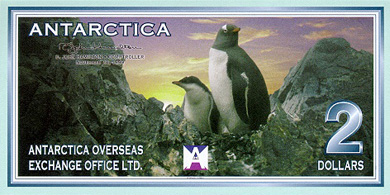
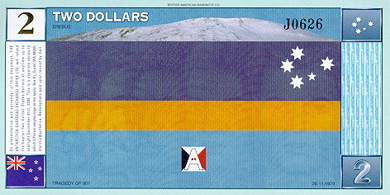
- No universal currency
Banknotes
Energy
- Oil Production
- 0 bbl/day
- Natural Gas Reserves
- 0 cu m
Communications
- Telephone System
- General Assessment: Local systems at some research stations Domestic: Commercial cellular networks operating in a small number of locations International: Country code - none allocated; via satellite (including mobile Inmarsat and Iridium systems) to and from all research stations, ships, aircraft, and most field parties
- Internet Country Code
- .aq
News & Weather
News & Weather
Latest News
Scientists discovered an underwater city of 60-million fish nests beneath Antarctica's ice shelf - The Times of India
The Times of India · 1d ago
Antarctica breaks decade-long cold record with Earth's lowest temperature - Yahoo
Yahoo · 17h ago
It’s the largest, yet most remote, continent in the world. But who’s responsible for it? - BBC Wildlife Magazine
BBC Wildlife Magazine · 1d ago
Resin Lenin presides over Antarctica's Pole of Inaccessibility - Boing Boing
Boing Boing · 16h ago
Antarctic Meltwater Is Making Glaciers Slide Faster Toward the Ocean - SciTechDaily
SciTechDaily · 8h ago
Shocking Revelations Out of West Antarctica - Countercurrents
Countercurrents · 2d ago
What lies beneath Antarctica's ice? Scientists discover 60 million fish nests, mystery revealed - Moneycontrol.com
Moneycontrol.com · 22h ago
How a small, underwater creature in Antarctica could help fight skin cancer in Florida - Yahoo
Yahoo · 9h ago
News via Google News
Climate Overview
Severe low temperatures vary with latitude, elevation, and distance from the ocean; East Antarctica is colder than West Antarctica because of its higher elevation; Antarctic Peninsula has the most moderate climate; higher temperatures occur in January also
Videos
Videos
1 curated YouTube videos.
Source: YouTube
Frequently Asked Questions
Frequently Asked Questions
What is the main religion in Antarctica?
What is mealtime like in Antarctica?
What social values matter in Antarctica?
What should I know before going to Antarctica?
Does Antarctica have a capital city or governing seat?
Where is Antarctica located, and how is it defined geographically?
What countries border or claim territory in Antarctica?
What currency is used in Antarctica?
What language is spoken in Antarctica?
What is the geography and size of Antarctica?
What is Antarctica known for?
Who governs Antarctica and how does the Antarctic Treaty System work?
Last reviewed 2026