
 English
 Español
 中文
中文 हिन्दी
 Français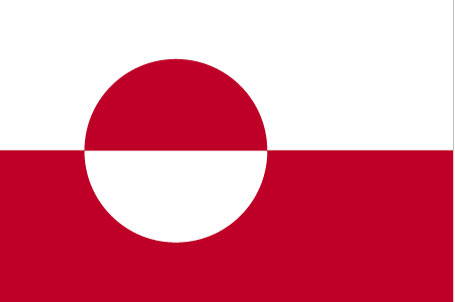
Greenland
Kalaallit Nunaat
Declare Your Relationship to Greenland
CountryReports Community
- Studying1
- From Greenland0
- Greenland heritage0
- Visited0
- Want to visit1
Customs and Culture
Customs and Culture
Cultural Attributes
Greenland's culture is deeply shaped by its Inuit heritage, Arctic environment, and its long political relationship with Denmark. The majority of the population identifies as Greenlandic Inuit, and the Kalaallisut language — a West Greenlandic Inuit dialect — serves as the official language alongside Danish. This linguistic identity is central to cultural pride and has been actively promoted through education and public life since Greenland gained Home Rule from Denmark in 1979 and expanded Self-Rule in 2009. Traditional Inuit practices remain a meaningful part of daily life, particularly in smaller settlements. Hunting and fishing are not only economic activities but cultural cornerstones. Seal hunting, in particular, carries deep cultural significance, providing food, materials for clothing, and a connection to ancestral ways of life. The kayak, originally developed by Greenlandic Inuit, is still used and celebrated as a symbol of indigenous ingenuity and skill. Greenlandic arts reflect the landscape and spiritual traditions of the Arctic. Drum dancing, one of the oldest Inuit art forms, is performed at cultural festivals and community gatherings. Throat singing, stone carving, and the creation of traditional garments known as national costumes — worn proudly during celebrations such as Greenland's National Day on June 21 — are visible expressions of cultural identity. The national costume, called the kalaallisuut, features intricate beadwork and is considered a mark of cultural distinction. Christianity, specifically Lutheranism introduced by Danish missionaries in the 18th century, is the predominant religion and has become interwoven with local traditions. The Greenlandic Lutheran Church conducts services in Kalaallisut, reinforcing the language's role in spiritual life. Storytelling, known as oqaatsit, has historically served as the primary means of transmitting knowledge, moral values, and history across generations. Contemporary Greenlandic artists and writers increasingly blend these oral traditions with modern media, contributing to a cultural renaissance that seeks to preserve indigenous identity while engaging with the wider world.

The World's Largest Island, Untamed and Pure
Greetings, Gestures & Visiting
Greetings in Greenland reflect the island's dual cultural identity, rooted in the indigenous Greenlandic (Kalaallisut) language and heavily influenced by Danish, the co-official language used in government, education, and business. The most common everyday greeting in Kalaallisut is "Aluu," a friendly, informal salutation used much like "hi" or "hello" in English. A more traditional and formal greeting is "Inuiaqatigiissitsisoqataanissaminnik pillugit nalunaarusiorfigissavagut," though in daily life, shortened and casual expressions dominate conversation. When meeting someone, Greenlanders typically say "Kutaa?" which functions similarly to "How are you?" or "What's up?" among friends and acquaintances. Danish greetings are equally common, particularly in urban centers like Nuuk, Sisimiut, and Ilulissat. "Hej" (informal hello), "Goddag" (good day), and "Hvordan har du det?" (How are you?) are widely understood and used, especially in professional or official settings. Physical greetings tend to be warm but modest. A handshake is standard for first meetings and formal introductions. Among close friends and family, embraces or cheek kisses, influenced by Danish customs, are also common. Traditional Inuit communities historically used a greeting known as the "kunik," often described as pressing one's nose and upper lip against another person's cheek or forehead and inhaling — a deeply personal gesture reserved for close family members and loved ones rather than casual acquaintances. Greenlandic society places a strong value on humility and respect in social interactions. It is generally considered polite to speak in measured tones and to avoid overly boastful or aggressive behavior when introducing oneself. Eye contact is appreciated as a sign of sincerity, though extended or intense staring can be perceived as confrontational. Visitors to Greenland will find that even a small effort to greet locals in Kalaallisut is warmly received and often sparks genuine appreciation and conversation, as the language holds great cultural pride among Greenlandic people.
Greenland's gesture culture is deeply rooted in Inuit traditions, where communication has historically balanced spoken language with subtle physical expression suited to life in small, close-knit communities. Because Greenlandic society places high value on social harmony and avoiding direct confrontation, many gestures reflect restraint and understatement rather than dramatic expression. One of the most distinctive traditional gestures is the use of eyebrow raises to indicate "yes" or agreement, and a slight nose wrinkle or downward expression to signal "no." These minimal facial movements, common across many Inuit cultures throughout the Arctic, allowed quiet communication in close quarters, such as during hunting or inside small dwellings, without drawing unnecessary attention. Physical greetings in Greenland tend to be more reserved compared to many European cultures. Handshakes are the standard greeting in formal and professional contexts, particularly in urban centers like Nuuk. Among close friends and family, a brief hug or a light touch on the arm is common. The traditional kunik — a greeting where one person presses their nose and upper lip against another's cheek or forehead and inhales — is a deeply intimate gesture reserved for close family members, especially between parents and young children. It is not a casual greeting between strangers or acquaintances. Because Greenland is an autonomous territory within the Kingdom of Denmark, Danish cultural influences are present, particularly in Nuuk and other larger towns. Danes tend to greet with handshakes and occasionally cheek kisses in social settings, and this has blended into urban Greenlandic social norms to varying degrees. Pointing directly at someone can be considered impolite, particularly in traditional communities, and it is more common to gesture toward something with an open hand or a nod of the head. Maintaining calm and measured body language is generally regarded as a sign of maturity and good character. Loud or exaggerated gestures may be viewed as unnecessary or even disrespectful, particularly among older generations. Travelers to Greenland are generally advised to observe local cues, remain patient in social interactions, and avoid overbearing physical contact with people they do not know well.
Greenland, the world's largest island, offers a striking and remote travel experience unlike almost anywhere else on Earth. Located between the Arctic and North Atlantic oceans, it draws adventurous travelers with its dramatic landscapes of glaciers, fjords, icebergs, and the vast Greenland Ice Sheet, which covers roughly 80 percent of the island's total land area. The best time to visit depends on what travelers hope to experience. Summer months, from June through August, bring the midnight sun, milder temperatures ranging from 10 to 15 degrees Celsius on the coast, and opportunities for hiking, boat tours, and whale watching. Winter visits, from November through February, offer the chance to witness the northern lights (aurora borealis) dancing across dark skies and to experience dog sledding and ice fishing. Nuuk, the capital and largest city, serves as the main entry point and home to around 20,000 people. It offers the Greenland National Museum, colorful colonial-era architecture, and access to nearby fjords. Other popular destinations include Ilulissat, a UNESCO World Heritage Site famous for the Ilulissat Icefjord, where massive icebergs calved from the Sermeq Kujalleq glacier drift into Disko Bay. The town of Qaqortoq in the south is known for Norse ruins and a milder climate, while Tasiilaq on the east coast provides a more isolated, traditional Greenlandic cultural experience. Travel within Greenland is primarily by small aircraft or helicopter operated by Air Greenland, as the island has no road connections between towns. Ferries run along the west coast during ice-free summer months. Accommodation options range from hotels in larger towns to small guesthouses in remote settlements. Visitors must plan carefully, as costs are high due to Greenland's remoteness and import dependency. Most international flights connect through Copenhagen, Denmark, or Reykjavik, Iceland. Travelers should be aware that weather conditions can change rapidly and significantly affect transportation schedules. A valid passport is required, and citizens of most countries do not need a visa, as Greenland falls under Danish immigration rules.
Personal appearance in Greenland reflects a blend of traditional Inuit heritage and modern Scandinavian influence, shaped by the island's Arctic climate and its close cultural and political ties to Denmark. In everyday settings, particularly in the larger towns of Nuuk, Sisimiut, and Ilulissat, residents dress much like people in northern Europe. Practical, weather-appropriate clothing dominates daily life. Heavy parkas, insulated boots, wool layers, and waterproof outerwear are essential given temperatures that can plunge well below freezing for much of the year. International and Scandinavian fashion brands are available in larger towns, and younger Greenlanders, especially in urban areas, tend to follow contemporary Western fashion trends. Traditional Greenlandic dress, known as the national costume or "Kalaallit Nunaat" attire, holds great cultural pride and is worn on special occasions such as national holidays, weddings, and celebrations of Greenlandic culture. The traditional women's costume, called the "kalaallisut," is among the most distinctive in the Arctic world. It features elaborately beaded collars, high boots called "kamik" made from sealskin, and colorfully embroidered anoraks. The designs and color combinations can indicate a woman's regional origin and marital status. Men's traditional dress is somewhat simpler, typically featuring sealskin trousers and a decorated anorak. Sealskin remains an important material in Greenlandic culture, used in both traditional garments and contemporary fashion. Local artisans and designers have worked to revitalize and modernize the use of sealskin in clothing, drawing international attention to Greenlandic craftsmanship. Tattooing has historical roots in Inuit culture, where women's facial tattoos were traditionally tied to coming-of-age ceremonies and identity. While this practice largely faded during the colonial era, there has been a modest cultural revival of interest in traditional Inuit tattoo art in recent decades, particularly among younger generations reconnecting with their indigenous heritage. Overall, personal appearance in Greenland balances functional necessity with deep cultural expression, representing a living connection between the island's indigenous past and its modern present.

Family
Family life in Greenland is deeply shaped by the island's Indigenous Inuit heritage, its small and widely dispersed population, and the practical realities of living in one of the world's most remote and climatically challenging environments. The total population of Greenland hovers around 56,000 people, with roughly a quarter living in the capital, Nuuk. This geographic isolation has historically reinforced close-knit community bonds, where extended family networks play a central role in daily life, child-rearing, and elder care.
The Greenlandic family structure has undergone significant change over the past several decades. Traditional multigenerational households, once common among Inuit communities, have increasingly given way to smaller nuclear families, particularly in urban centers. However, community interdependence remains strong, especially in smaller towns and villages where families rely on shared resources, collective hunting, and fishing traditions.
Greenland has one of the youngest populations in the Arctic region, with children and youth making up a notable share of residents. The average fertility rate is approximately 2.0 births per woman, slightly above the European average. Children typically begin school at age six and attend the Danish-modeled Folkeskole system, with Kalaallisut (Greenlandic) and Danish both taught as core languages. Education is compulsory through age fifteen.
Despite strong community values, Greenlandic families face serious social challenges. Rates of domestic violence, alcohol abuse, and suicide — particularly among young men — are among the highest in the world relative to population size. These issues are linked in part to the rapid cultural and economic transitions Greenland experienced during the twentieth century, including forced resettlement policies and the disruption of traditional ways of life. The Greenlandic government and social service organizations have implemented ongoing programs to address mental health, family support, and youth welfare.
Children are highly valued in Greenlandic culture, and traditional practices such as naming children after deceased relatives remain meaningful in many families, reflecting the Inuit belief in a spiritual continuity between generations. This cultural connection to ancestry continues to anchor family identity even as modern life transforms daily routines.
Dating Customs
Dating and marriage customs in Greenland reflect a blend of traditional Inuit cultural values and modern Scandinavian influences, shaped by the island's close ties to Denmark. Greenland is an autonomous territory within the Kingdom of Denmark, and Danish family law broadly applies, meaning same-sex marriage has been legally recognized since 2015 when Danish legislation was extended to cover Greenlandic residents. Relationships in Greenland tend to be relatively informal in their early stages, with couples often living together before marriage or choosing cohabitation as a long-term arrangement rather than formalizing through legal marriage. This pattern mirrors broader Nordic trends, where cohabiting partnerships are socially accepted and common. As a result, marriage rates in Greenland are relatively low compared to global averages, and a significant proportion of children are born outside of formal marriage — a norm that carries little social stigma. Traditional Inuit customs historically placed great importance on community and family bonds, with marriage serving practical purposes of survival and cooperation in a harsh Arctic environment. Extended family networks, known in Greenlandic as "iliorput," continue to play a meaningful role in social life, with relatives often sharing responsibilities for child-rearing and household support. The average age of first marriage in Greenland has risen over recent decades, consistent with trends seen across Denmark and Scandinavia more broadly, as younger generations prioritize education and career opportunities before settling down. Greenland's small and dispersed population — approximately 56,000 people spread across remote settlements — means that social circles can be tight, and relationships sometimes develop within close-knit community contexts. Domestic violence has been identified as a significant social challenge in Greenland, with governmental and non-governmental organizations working to address the issue through awareness campaigns and support services. The Greenlandic government has invested in programs to strengthen family stability and improve conditions for women and children across the territory. Overall, dating and marriage in Greenland represent a dynamic mix of indigenous tradition, Nordic modernity, and the unique social realities of life in one of the world's most remote and sparsely populated regions.
Recreation
Sports and recreation in Greenland are deeply shaped by the island's dramatic Arctic environment, where vast ice sheets, rugged coastlines, and extreme seasonal conditions define both traditional pursuits and modern athletic culture. Hunting and fishing remain central to Greenlandic life and serve as both subsistence activities and recreational traditions. Dog sledding, practiced for thousands of years by Inuit communities, continues as both a practical mode of winter transportation and a cherished cultural sport. Competitive dog sledding races are held across the country, with some spanning hundreds of kilometers across the ice. The Avannaata Qimussersua, one of the world's longest dog sled races at approximately 1,000 kilometers, draws participants from across Greenland and international observers. Football (soccer) is the most popular organized team sport in Greenland. The Greenland Football Association has been part of Greenlandic sporting life since 1971, though Greenland is not a member of FIFA or UEFA, which prevents its national team from competing in World Cup or European Championship qualifying. Efforts to gain FIFA membership have been ongoing, with infrastructure and pitch quality in the permafrost climate presenting technical challenges. Kayaking has deep historical roots in Greenland, as the qajaq — the original design from which the modern kayak descends — was developed by Greenlandic Inuit for hunting on open Arctic waters. Traditional kayak rolling competitions and demonstrations continue to celebrate this heritage. Rock climbing and hiking attract adventure tourists to areas such as the Tasermiut Fjord in southern Greenland, where towering granite walls have become internationally recognized destinations for experienced climbers. Cross-country skiing is popular during the long winters, and Greenland has produced competitive Nordic skiers who have represented the country at the Arctic Winter Games, a biennial multi-sport event that Greenland regularly participates in. The Arctic Winter Games are among the most significant competitive platforms for Greenlandic athletes, featuring both traditional Inuit games and mainstream winter sports.
Holidays
Christmas
12/25Christmas
Dates of Interest
- December 25th
How do people greet each other in Greenland?
Everyday greetings mix Kalaallisut and Danish, with a modest handshake standard for first meetings and warmer embraces or cheek kisses among close friends and family.
Do
- Try a friendly "Aluu" (hi) or ask "Kutaa?" (how are you?) with friends
- Use Danish greetings like "Hej" or "Goddag" in urban centers such as Nuuk, Sisimiut, and Ilulissat
- Offer a handshake for formal introductions
- Make eye contact as a sign of sincerity
Don’t
- Don't use the intimate kunik greeting with strangers or acquaintances
- Avoid boastful or aggressive self-introductions
- Don't hold an intense or extended stare, which can seem confrontational
Good to know
- Even a small effort to greet locals in Kalaallisut is warmly received
- Speak in measured tones; humility and respect are valued
What should I wear in Greenland?
Everyday dress is practical and weather-appropriate, resembling northern European style, while the traditional national costume is reserved for special occasions.
Do
- Wear heavy parkas, insulated boots, wool layers, and waterproof outerwear for the Arctic climate
Good to know
- Larger towns stock international and Scandinavian fashion brands
- The women's kalaallisut costume features beaded collars, sealskin kamik boots, and embroidered anoraks, worn for holidays, weddings, and celebrations
- Sealskin remains an important material in both traditional and contemporary Greenlandic clothing
What gestures should I know in Greenland?
Greenlandic communication favors restraint and subtle facial cues, reflecting a strong value on social harmony and avoiding confrontation.
Do
- Gesture toward things with an open hand or a nod
- Keep calm, measured body language
- Observe local cues and remain patient
Don’t
- Don't point directly at people, especially in traditional communities
- Avoid loud or exaggerated gestures, seen as disrespectful by older generations
- Don't use overbearing physical contact with people you don't know well
Good to know
- An eyebrow raise can mean "yes" and a slight nose wrinkle can mean "no"
- The kunik (nose-and-lip press with an inhale) is reserved for close family, especially parents and young children
What is family life like in Greenland?
Family life centers on close-knit community bonds and extended networks, though smaller nuclear families are increasingly common in urban centers.
Good to know
- Children are highly valued, and naming babies after deceased relatives remains meaningful
- Community interdependence stays strong in smaller towns through shared resources, hunting, and fishing
- Children start school at age six in the Danish-modeled Folkeskole, learning both Kalaallisut and Danish
What do people do for recreation in Greenland?
Recreation blends traditional Arctic pursuits like hunting, fishing, dog sledding, and kayaking with modern sports such as football and cross-country skiing.
Good to know
- Dog sledding is both winter transport and sport, including the ~1,000 km Avannaata Qimussersua race
- Football is the most popular organized team sport, run by the Greenland Football Association since 1971
- Traditional qajaq (kayak) rolling competitions celebrate Inuit heritage
- Tasermiut Fjord in the south draws international rock climbers and hikers
- Greenland regularly competes in the Arctic Winter Games
What should I know before visiting Greenland?
Greenland is a remote Arctic destination reached mainly by air, with high costs and rapidly changing weather; a valid passport is required and most travelers need no visa under Danish rules.
Do
- Plan carefully, as costs are high due to remoteness and import dependency
- Bring a valid passport
Good to know
- Summer (June–August) offers the midnight sun, milder temperatures, hiking, boat tours, and whale watching
- Winter (November–February) offers the northern lights, dog sledding, and ice fishing
- Travel between towns is by small aircraft or helicopter with Air Greenland, plus summer ferries on the west coast
- Most international flights connect through Copenhagen or Reykjavik
- Weather can change rapidly and disrupt transportation
- Highlights include Nuuk, the Ilulissat Icefjord (a UNESCO site), Qaqortoq, and Tasiilaq
Last updated: 2026-07-12 · Sources: CountryReports
Photos of Greenland
Photos of Greenland
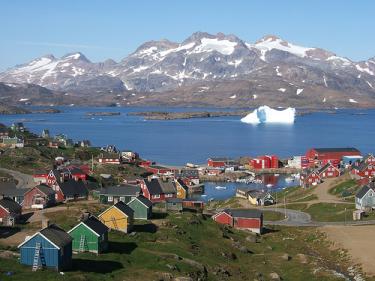
Tasiilaq and Iceberg
Tasiilaq
Iceberg in the Bay at Tasiilaq
Iceberg
Soccer
Greenlandic Buffet by the Kangerlussuaq Tourism Board
Greenlandic Buffet by the Kangerlussuaq Tourism Board
Santa - Christmas decoration
Santa bringing presents to the sick kids at hospital
Santa visitng a hospital and orphanage.
Christmas tree in a Nuuk roundabout.


Travel and Tourism
Travel and Tourism
- Currency
- Danish krone (DKK)
- Time Difference
- UTC-2 (3 hours ahead of Washington, DC, during Standard Time) Time zone note: Greenland has four time zones
- Climate
- Arctic to subarctic; cool summers, cold winters
- Airports
- 14
Read the full travel guide — health, safety, vaccinations, disease risk, sanitation, and transit details.
View full travel guideHistory
History
Historical Eras
Paleo-Eskimo Cultures
2500 BCE – 986
Greenland's earliest inhabitants arrived from the Canadian Arctic in successive waves, including the Saqqaq, Dorset, and Independence cultures. These Paleo-Eskimo peoples developed sophisticated adaptations to the Arctic environment over millennia. The last of these pre-Norse cultures had largely disappeared by the time Viking settlers arrived in the late 10th century.
Norse Settlement
986 – 1500
Erik the Red, exiled from Iceland, discovered and named Greenland around 982 CE and led the first permanent Norse settlements beginning in 986, establishing the Eastern and Western Settlements. At its peak, the Norse population numbered several thousand and maintained trade ties with Europe. By approximately 1400–1500, all Norse colonies had vanished, likely due to a combination of climate cooling, economic decline, and conflict with Inuit peoples.
Inuit Dominance
1500 – 1721
Following the collapse of Norse settlements, Greenland was inhabited solely by Thule culture Inuit, ancestors of the modern Greenlandic people, who had migrated from the northwest from around 1200 onward. European whalers and explorers made sporadic contact during this period, including English expeditions under Martin Frobisher and John Davis. Greenland remained beyond effective European colonial control until the 18th century.
Danish Colonial Era
1721 – 1953
In 1721, Norwegian-Danish missionary Hans Egede established a Lutheran mission and trading post, inaugurating formal Danish colonization. The Danish crown assumed a full trade monopoly in 1776, tightly controlling Greenland's economy. During World War II the United States assumed protective custody of the island, and in 1953 a constitutional amendment formally made Greenland an integral county of the Kingdom of Denmark, ending its colonial status.
Danish County & EEC
1953 – 1979
As a Danish county from 1953, Greenland gained representation in the Folketing but saw significant social disruption, including the forced relocation of Inuit hunters from ancestral lands in the far north. Greenland joined the European Community alongside Denmark in 1973, though fishing quota disputes quickly generated public resentment. Growing Greenlandic political consciousness and demands for self-determination laid the groundwork for home rule.
Home Rule & Self-Government
1979 – present
Greenland was granted home rule on May 1, 1979, establishing the Landsting parliament and the Landsstyre government with broad domestic policy authority. Greenlanders voted to withdraw from the European Community in 1982, completing the exit in 1985. Expanded self-government was granted in 2009, transferring additional powers to Nuuk while Denmark retained control over foreign affairs, defense, and currency, amid ongoing discussions about full independence.
Overview
In 1721, with the aid of the Danish king, a Norwegian priest called Hans Egede successfully mounted an expedition to Greenland, where he wished to rechristianize the Northerners. At that time, no-one knew that they had long since disappeared. Instead, the outcome was a Lutheran mission and a trading post among the Greenlanders. Thus was ushered in the colonial age, which lasted until the constitutional amendment of 1953. It joined the European Community (now the EU) with Denmark in 1973 but withdrew in 1985 over a dispute over stringent fishing quotas.
On May 1st 1979, Greenland was granted home rule within the Danish Commonwealth. The former National Council was abolished, instead creating the basis for a parliament proper, the Landsting. The Greenland Home Rule Parliament, as it is officially called, has policy-making authority and appoints a Landsstyre, the rough equivalent of a government.
There are elections to the Landsting at least every fourth year, and today the Landsting consists today of 31 MPs spread over four political parties, representing all constituencies from north to east by power of the Election Act. The Landsstyre also elects its own officers, in the form of a Premier, prime minister, and a number of members of the Home Rule Government, who enjoy ministerial status.
The Greenland Home Rule has gradually assumed more and more areas of responsibility since 1979, and the Danish government thus has legislative competence only within foreign policy, defense, the judiciary and currency matters. Also, under the Danish constitution, Greenland is guaranteed two representatives in the Danish parliament, The Folketing.
Timeline of Key Events
982
Eric the Red (Eiric Rauthornpi), father of Leif Ericson, discovered Greenland.
Eric the Red (Eiric Rauthornpi), father of Leif Ericson, discovered Greenland.
986
Eric the Red and his followers began to settle Greenland.
Eric the Red and his followers began to settle Greenland.
986 – 1000
Eric the Red and his followers began to settle Greenland.
More settlers arrive from Scandinavia and they gradually settle the Southwest coast of Greenland from Cape Farewell to present-day Nuuk. The Norse population center around two major settlements, the Western and the Eastern.
1000
Eric the Red and his followers began to settle Greenland.
Leif Eriksson, son of Erik the Red, returns to Greenland from Norway, bringing along the first Christian missionary. Soon hereafter, the first Christian church on the North American continent, Thjódhildur’s Church, is built at Brattahlid.
1350 – 1360
Eric the Red and his followers began to settle Greenland.
Ivar Bardarsson, an Icelandic clerical official, reports the Western Settlement abandoned. Inuit begin to appear near the Norse areas, settling along the coastline.
1600
By this time all Norse settlements in Greenland have vanished.
By this time all Norse settlements in Greenland have vanished. The only inhabitants are Inuit.
1776
Danish government assumes a full monopoly of trade with Greenland.
Danish government assumes a full monopoly of trade with Greenland.
Read the full history profile — narrative overview, defining eras, and the complete timeline in one place.
View expanded historyInteresting Facts
Interesting Facts
The world's largest island is Greenland which is 840,000 square miles. The coastline is 24,4000 miles long and the island stretches about 1,660 miles long
Greenland is one of the least inhabited areas of the world. There are only about 150 towns and villages in all of Greenland. There are no railroads, few roads, and not many cars. People usually travel by plane, helicopter or dog sled.
See every fact — trivia, oddities, and curious tidbits gathered from across the country.
View all interesting factsGeography and Environment
Geography and Environment
- Terrain
- flat to gradually sloping icecap covers all but a narrow, mountainous, barren, rocky coast
- Climate
- arctic to subarctic; cool summers, cold winters
- Natural Hazards
- continuous permafrost over northern two-thirds of the island
- Current Environmental Issues
- protection of the arctic environment; preservation of the Inuit traditional way of life, including whaling and seal hunting
Read the full geography and environment profile — terrain, climate, natural resources, hazards, land use, and international agreements.
View full geographyPeople & Demographics
People & Demographics
Languages Spoken
Greenlandic (East Inuit), Danish, English
- Danish
- Greenlandic
Population
- Population
- 57,637
- Population in Major Urban Areas
- NUUK (capital) 16,000
- Nationality Noun
- Greenlander(s)
- Ethnic Groups
- Greenlander 88% (Inuit and Greenland-born whites), Danish and others 12%
Read the full people and society profile — demographics, health, education, religion, languages, and notable people.
View full people and societyGovernment & Politics
Government & Politics
Country Identity
- Country Name
- Greenland
- Local - Short
- Kalaallit Nunaat
Government Structure
- Government Type
- parliamentary democracy within a constitutional monarchy
- Legal System
- Danish
- Executive Branch
- chief of state: King FREDERIK X of Denmark (since 14 January 2024), represented by High Commissioner Julie Praest WILCHE (since 2022) head of government: Prime Minister Mute B. EGEDE (since 23 April 2021) cabinet: Naalakkersuisut (Government of Greenland) is appointed by the prime minister and is accountable to the parliament (Inatsisartut) elections: the monarchy is hereditary; high commissioner appointed by the monarch; prime minister is elected by the Inatsisartut (usually the leader of the majority party or coalition); election last held on 6 April 2021 election results: Mute B. EGEDE elected prime minister following his party's victory in the April 2021 parliamentary election note: government coalition led by Inuit Ataqatigiit (IA); Greenland exercises self-rule under the 2009 Act on Greenland Self-Government, granting broad autonomy from Denmark while remaining part of the Kingdom of Denmark
- Legislative Branch
- unicameral Parliament or Landstinget (31 seats; members are elected by popular vote on the basis of proportional representation to serve four-year terms) elections: last held on 15 November 2005 (next to be held by December 2009) election results: percent of vote by party - Siumut 30.7%, Demokratiit 22.8%, Inuit Ataqatigiit 22.6%, Atassut Party 19.1%; Katusseqatigiit 4.1%, other 0.7%; seats by party - Siumut 10, Demokratiit 7, Inuit Ataqatigiit 7, Atassut 6, Katusseqatigiit 1 note: two representatives were elected to the Danish Parliament or Folketing on 8 February 2005 (next to be held February 2009); percent of vote by party - NA; seats by party - Siumut 1, Inuit Ataqatigiit 1
- Judicial Branch
- High Court or Landsret (appeals can be made to the Ostre Landsret or Eastern Division of the High Court or Supreme Court in Copenhagen)
- Suffrage
- 18 years of age; universal
- Constitution
- 5 June 1953 (Danish constitution)
- Independence
- none (part of the Kingdom of Denmark; self-governing overseas administrative division of Denmark since 1979)
- National Holiday
- June 21 (longest day)
Capital City
- Capital Name
- Nuuk (Godthaab)
- Capital - geographic coordinate
- 64 11 N, 51 45 W
- Capital Time Difference
- UTC-2 (3 hours ahead of Washington, DC, during Standard Time) Time zone note: Greenland has four time zones
"Nuuk" is the Inuit word for "cape" and refers to the city's position at the end of the Nuup Kangerlua fjord
Military
Branches: No regular military forces
Read the full government profile — flag symbolism, national anthem, and other national symbols.
View full government detailsEconomy
Economy
Greenland's economy is small, open, and heavily dependent on a few key sectors, with fishing serving as the dominant industry. The fisheries sector accounts for more than 90 percent of the country's exports, with cold-water shrimp, Greenland halibut, and cod being the most valuable catches. Royal Greenland, owned by the Government of Greenland, is one of the largest seafood companies in the North Atlantic and a major employer.
The public sector plays an unusually large role in the economy, employing roughly 40 percent of the workforce and accounting for a significant share of GDP. An annual block grant from Denmark, amounting to approximately 3.9 billion Danish kroner, provides about half of government revenue and remains essential to maintaining public services, infrastructure, and social welfare programs across the sparsely populated territory.
Greenland's GDP is estimated at around 20 billion Danish kroner, with a population of approximately 56,000 producing one of the highest per capita incomes in the Arctic region. However, the economy faces structural challenges including a narrow export base, high transportation costs, limited infrastructure, and a shrinking and aging population in many settlements.
Tourism has emerged as a growing sector, with cruise ship visits, adventure tourism, and interest in Arctic landscapes driving expansion. New international airports under construction in Nuuk, Ilulissat, and Qaqortoq are expected to significantly increase visitor capacity and reduce dependence on transit through Kangerlussuaq.
Mining and mineral resources represent a long-discussed avenue for economic diversification. Greenland holds substantial deposits of rare earth elements, uranium, zinc, gold, and iron ore, and melting ice has improved access to previously unreachable areas. Several projects have advanced, including anorthosite and ruby mining operations, though large-scale extraction has been slowed by environmental concerns, fluctuating commodity prices, and a 2021 ban on uranium mining.
The currency is the Danish krone (DKK), and Greenland remains outside the European Union despite Denmark's EU membership, having withdrawn in 1985 primarily over fisheries policy. The country maintains a special association with the EU through the Overseas Countries and Territories arrangement.
Snapshot
- Currency Name and Code
- Danish Krone (DKK)
- GDP Real Growth Rate
- 1.8%
Banknotes
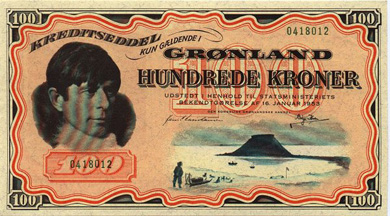
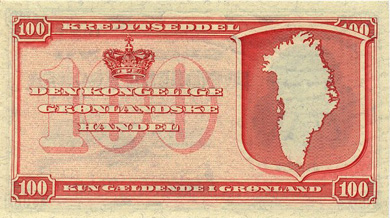
Budget & Public Finance
- Fiscal Year
- calendar year
- Annual Budget
- $629,000,000 (USD)
- External Debt
- $25,000,000 (USD)
Labor, Industry & Trade
- Industries
- fish processing (mainly shrimp and Greenland halibut), handicrafts, hides and skins, small shipyards, mining
- Agriculture Products
- forage crops, garden and greenhouse vegetables; sheep, reindeer; fish
- Export Commodities
- fish and fish products 94% (prawns 63%)
- Export Partners
- Denmark 63.7%, Japan 14.4%, US 5.4%, Thailand 4.6%
- Import Commodities
- machinery and transport equipment, manufactured goods, food, petroleum products
- Import Partners
- Denmark 82.5%, Norway 8.5%, Russia 1.8%
Energy
- Oil Production
- 0 bbl/day
- Oil Consumption
- 3,850 bbl/day
- Oil Reserves
- 0 bbl/day
- Natural Gas Production
- 0 cu m
- Natural Gas Consumption
- 0 cu m
- Natural Gas Imports
- 0 cu m
- Natural Gas Exports
- 0 cu m
- Natural Gas Reserves
- 0 cu m
Communications
- Telephone System
- General assessment: Adequate domestic and international service provided by satellite, cables and microwave radio relay; totally digital since 1995 Domestic: Microwave radio relay and satellite International: Country code - 299; satellite earth stations - 15 (12 Intelsat, 1 Eutelsat, 2 Americom GE-2 (all Atlantic Ocean))
- Internet Country Code
- .gl
News & Weather
News & Weather
Current Weather
Latest News
Even scientists need a doctor sometimes. Colorado physician makes house call to Greenland. - Colorado Public Radio
Colorado Public Radio · 22h ago
Greenland Airports appoints new CEO on back of major deficit - Arctic Today
Arctic Today · 17h ago
The world's tallest waterfall is not Angel Falls — it's a hidden cataract beneath the Atlantic Ocean, between Greenland and Iceland, plunging 11,500 feet through cold and warm water that can never be seen from the surface - ScienceBlog.com
ScienceBlog.com · 15h ago
Trump weighs buying another territory after Greenland fiasco: report - the-independent.com
the-independent.com · 43d ago
Trump allies renew Greenland, Canada takeover talk - Axios
Axios · 48d ago
Denmark gets new government as Greenland crisis persists - Al Jazeera
Al Jazeera · 50d ago
Trump makes fresh threats to Canada and Greenland with provocative photo on his social media platform - The Independent
The Independent · 6d ago
US secretary of state Marco Rubio says Greenland is part of Denmark 'for now' - Sky News
Sky News · 47d ago
News via Google News
Climate Overview
Arctic to subarctic; cool summers, cold winters
Frequently Asked Questions
Frequently Asked Questions
What is the population of Greenland?
How do people greet each other in Greenland?
What should I wear in Greenland?
What gestures should I know in Greenland?
What is family life like in Greenland?
What do people do for recreation in Greenland?
What should I know before visiting Greenland?
What is the capital of Greenland?
Where is Greenland located?
What are Greenland's ocean and sea borders?
What currency is used in Greenland?
What languages are spoken in Greenland?
What is the geography of Greenland like?
What is Greenland known for?
Who governs Greenland?
Last reviewed 2026