
 English
 Español
 中文
中文 हिन्दी
 Français
Tonga
Declare Your Relationship to Tonga
CountryReports Community
- Studying0
- From Tonga0
- Tonga heritage1
- Visited0
- Want to visit0
Customs and Culture
Customs and Culture
About the People
Tongans are understandably proud of their independent nation, their royal heritage and the Polynesian culture. The 'Tongan way of life' is relaxed and unhurried. Tongans place people and relationships, especially with family and village, over Western performance drive. Tongans can be generous, gentle and friendly, valuing respectful behavior toward elders. Men and women who drink or smoke to excess are not regarded as good role models. Young people are drawn to pursuing a Western lifestyle, and are tending to look for jobs outside Tonga.
Cultural Attributes
Tongans are understandably proud of their independent nation, their royal heritage, and the Polynesian culture. The 'Tongan way of life' is relaxed and unhurried. Tongans place people and relationships, especially with family and village, over Western performance drive. Tongans can be generous, gentle, and friendly, valuing respectful behavior toward elders. Men and women who drink or smoke to excess are not regarded as good role models. Young people are drawn to pursuing a Western lifestyle and are tending to look for jobs outside Tonga.

The Friendly Islands, Still Standing
Greetings, Gestures & Visiting
People in Tonga greet each other with a handshake or a warm verbal greeting. Men often hold the handshake for a few seconds while conversing. Hallo (malo e lelei) is the usual form of greeting, with variations for good morning and good evening. Visitors are often greeted with talitali fiefia (welcome!). It is customary to use the first name for acquaintances, but when meeting for the first time the title and family name may be used as a show of respect.
Physical gestures are important in communicating. Raising the eyebrows can indicate agreement. Beckoning is only appropriate for children. A downward arm movement can mean 'come here'. A forward and upward wave means 'goodbye'. Boys and younger men often walk hand in hand to express friendship. Displays of affection between males and females are not encouraged. Crossing the legs at the knee is appropriate when sitting.
Tongan society is close-knit, and social interaction is part of the fabric. People always greet each other when passing. Women usually keep company with other women. Relatives and neighbors often visit each other on Sunday afternoon after Church.
Visits during the week are unplanned. However, if a resident feels their house is not ready for visitors, they may not invite them in.
People remove their shoes at the door, and are shown to the best seats. In a traditional home, men sit cross-legged on the floor, and women have their legs tucked under them to one side. Children stay out of sight as far as possible.
Refreshments such as coconut, otai (a mix of cut fruit) are served. It is common to invite guests to stay for lunch, and to make a speech praising the visitors before they leave. Compliments are enjoyed, but if one admires an object too much, the host may feel obliged to offer it to the visitor. A gift may be offered to a new or honored guest, and it is important to accept this gift.
Women generally avoid wearing short skirts or low-necked dresses, as modesty is valued. It is a law that males over 16 must wear shirts. The word for clothes is valas. Traditional attire is worn on formal occasions. This means a tupenus, a calf-length wrap-around cloth for men, and for women a kiekie (ankle-length skirt). Both men and women wear a ta'ovala. Western dress is commonly worn now.
Diet
The tradition for Tongans includes two meals a day, consisting of yams, taro leaves, sweet potatoes, cassava, fish or pork. The European style is becoming popular, with three meals a day. Roast pig is a favorite for feasts and celebrations. There is an abundant supply of tropical fruit such as mango, guavas, citrus, papaya, watermelon, bananas, avocados, peppers and cabbage.
Whenever possible, families eat meals together. Residents of outer islands sit on woven mats, while urban Tongans use dining tables. Traditionally, the hands are used to eat, but utensils are in common use now. Standing while eating and drinking is frowned upon.
The tradition for Tongans includes two meals a day, consisting of yams, taro leaves, sweet potatoes, cassava, fish or pork. The European style is becoming popular, with three meals a day. Roast pig is a favorite for feasts and celebrations. There is an abundant supply of tropical fruit such as mango, guavas, citrus, papaya, watermelon, bananas, avocados, peppers and cabbage.

Family
Tongan families are very sociable, and they care for one another in every situation. The family unit consists not only of parents and siblings, but grandparents, uncles, aunts, and cousins. Often, many members of the extended family work together to plant, fish, or harvest and cook. A young married couple tends to live with the woman's parents, and the husband is responsible for feeding the family. The average number of children is four.
Traditionally, the head of the family is the father, and the mother is not equal. However, brothers are subordinate to sisters at the same age. The eldest daughter, therefore, receives the first pick of family resources. A father's elder sister is the leader of the nuclear family. While the type of housing varies from coconut leaf and timber to modern framed houses, nearly all Tongans own their own home.
Dating Customs
There is little interaction between boys and girls during adolescence. Teenagers meet at church groups or village activities. Traditionally, a boy is only allowed to date a girl in the girl's home. The boy may ask a girl to share kava (a mild stimulant made from roots) with friends. Marriages are celebrated with great joy for the entire community. The religious affiliation determines the kind of ceremony, but festivities include a feast, singing, and many speeches. The married couple may move in with the bride's parents, but most set themselves up elsewhere.
Recreation
Tonga offers a variety of recreational activities that can cater to all types of travelers. Whether you are looking for a laid-back vacation or an adventurous getaway, Tonga has something to offer.
Beach Activities
One of the top recreational activities in Tonga is spending time on its beautiful beaches. The country's beaches are some of the most stunning in the world, with clear blue waters, white sands, and plenty of marine life. Snorkeling and diving are popular activities in Tonga, as the country boasts some of the best coral reefs in the Pacific. The waters around Tonga are home to over 100 species of fish, including humpback whales, dolphins, and sea turtles.
Surfing is another popular activity in Tonga, with waves that can range from beginner-friendly to expert-only. The best time to surf in Tonga is during the winter months, from June to September when the swells are at their highest.
Land Activities
For those who prefer to stay on land, Tonga has plenty of options as well. The country has a number of hiking trails that wind through lush tropical forests and lead to stunning views of the ocean. The 'Eua National Park is a must-visit destination for hikers and nature lovers, with trails that range from easy to challenging.
Visitors can also explore Tonga's rich cultural heritage by visiting historical sites such as the Ha'amonga 'a Maui Trilithon, a stone archway that is believed to have been built in the 13th century. The Royal Palace in Nuku'alofa, the capital city, is also a popular attraction that showcases Tonga's unique architecture and history.
Water Activities
Tonga's waters offer a wide range of recreational activities, from kayaking and paddleboarding to fishing and whale watching. The country's waters are home to humpback whales, which can be seen during their annual migration from July to October. Whale-watching tours are a popular activity in Tonga, with boats departing from the main island of Tongatapu and Vava'u.
Fishing is another popular activity in Tonga, with a variety of fish species that can be caught throughout the year. Visitors can go on a deep-sea fishing excursion or try their hand at reef fishing. The country also hosts an annual fishing tournament, the Tonga International Billfish Tournament, which attracts anglers from around the world.
Holidays
Independence Day
6/4Independence Day
Dates of Interest
- June 4th
'Umu Festival: Held in June, this festival celebrates the traditional Tongan cooking method of using an underground oven, called an 'umu, to prepare food.
How do people greet each other in Tonga?
Tongans greet with a handshake or a warm verbal greeting, commonly "malo e lelei" (hello). Men often hold the handshake for a few seconds while conversing.
Do
- Use "malo e lelei" as a general greeting, with variations for morning and evening
- Greet people when passing them, as social interaction is valued
- Use the title and family name when meeting someone for the first time as a show of respect
Good to know
- Visitors are often welcomed with "talitali fiefia" (welcome!)
- First names are customary among acquaintances
What are the dining customs in Tonga?
Families eat together whenever possible, traditionally using their hands, though utensils are now common. Meals feature yams, taro leaves, sweet potatoes, cassava, fish or pork, with roast pig a favorite for feasts.
Do
- Sit on woven mats in the outer islands, or at dining tables in urban areas
- Accept refreshments such as coconut or otai (a mix of cut fruit)
- Accept an invitation to stay for lunch if offered
Don’t
- Don't stand while eating or drinking, as this is frowned upon
Good to know
- Traditionally two meals a day are eaten, though the European three-meal style is becoming popular
- Tropical fruit like mango, papaya, watermelon and bananas are abundant
What etiquette should I know when visiting a Tongan home?
Tongan society is close-knit and hospitable; guests are shown to the best seats and often offered refreshments and gifts. Remove your shoes at the door.
Do
- Remove your shoes at the door
- Accept a gift offered to a new or honored guest, as this is important
- Sit appropriately: men cross-legged on the floor, women with legs tucked to one side in a traditional home
Don’t
- Don't admire an object too much, as the host may feel obliged to give it to you
- Don't expect to always be invited in during unplanned weekday visits if the home isn't ready
Good to know
- Sunday afternoon after church is a common time for visiting
- Compliments are enjoyed
How should I dress in Tonga?
Modesty is valued: women generally avoid short skirts or low-necked dresses, and by law males over 16 must wear shirts. Western dress is commonly worn now.
Do
- Males over 16 must wear shirts (it is law)
- Dress modestly, especially women avoiding short skirts and low necklines
- Wear traditional attire on formal occasions if appropriate
Good to know
- Traditional attire includes a tupenus (calf-length wrap) for men and a kiekie (ankle-length skirt) for women, with both wearing a ta'ovala
- The word for clothes is "valas"
What gestures should I be aware of in Tonga?
Physical gestures matter in communication: raising the eyebrows can indicate agreement, and hand movements convey different meanings.
Do
- Use a downward arm movement to mean 'come here'
- Use a forward and upward wave to say 'goodbye'
- Cross the legs at the knee when sitting, which is appropriate
Don’t
- Don't beckon adults; beckoning is only appropriate for children
- Don't display affection between males and females, as this is not encouraged
Good to know
- Boys and younger men often walk hand in hand to express friendship
What is family life like in Tonga?
Tongan families are very sociable and care for one another, with extended family including grandparents, uncles, aunts and cousins often working together. The average family has about four children.
Good to know
- A young married couple often lives with the woman's parents, with the husband responsible for feeding the family
- Traditionally the father is the head, but brothers are subordinate to sisters of the same age
- The eldest daughter gets first pick of family resources, and a father's elder sister leads the nuclear family
- Nearly all Tongans own their own home
What can I do for recreation in Tonga?
Tonga offers beach, land and water activities, from snorkeling, diving and surfing to hiking and whale watching.
Do
- Snorkel or dive at some of the best coral reefs in the Pacific
- Hike in 'Eua National Park, with trails from easy to challenging
- Visit cultural sites like the Ha'amonga 'a Maui Trilithon and the Royal Palace in Nuku'alofa
Good to know
- Surf during winter months (June to September) when swells are highest
- Whale-watching tours run July to October, departing from Tongatapu and Vava'u
- The Tonga International Billfish Tournament attracts anglers from around the world
Last updated: 2026-07-12 · Sources: CountryReports
Photos of Tonga
Photos of Tonga
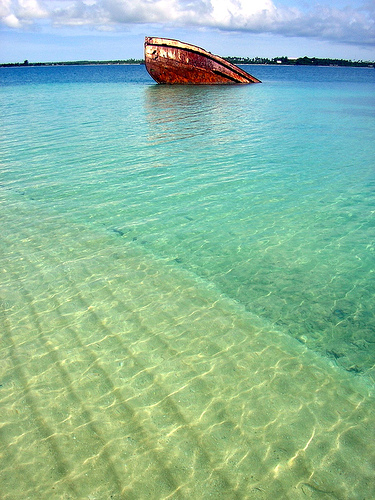
My Lady Lata II shipwreck, Pangimotu, Tonga
Sunset in Tonga.
School kids, Nuku’Alofa II, Tonga
Uninhabited Islands off Pangaimotu, Tonga
Beach at Pangaimotu, Tonga
Abandoned house in Tonga
Unspoiled Kolovai Beach II, Tonga
Traditional Cemetary, Tongatapu, Tonga
Students returning home from school, Nuku’ Alofa, Ton
Coconut plantation, Tongatapu, Tonga
Unspoiled Kolovai Beach, Tonga
Rugby Uganda vs. Tonga


Travel and Tourism
Travel and Tourism
- Travel Alert Status
- Level 1: Exercise Normal Precautions
- Currency
- pa'anga (TOP)
- Time Difference
- UTC+13 (18 hours ahead of Washington, DC, during Standard Time)
- Climate
- tropical; modified by trade winds; warm season (December to May), cool season (May to December)
- Airports
- 6
Read the full travel guide — health, safety, vaccinations, disease risk, sanitation, and transit details.
View full travel guideRecipes
Recipes
'Otai (Tongan Fruit Smoothie)
Beverage
Main Dish
Lu-Pulu (Cooked Taro Leaves with Coconut Cream and Corned Beef)
Main Dish
Lu Sipi (Lamb, Onions and Coconut Cream, Wrapped in Taro Leaves)
Side Dish
Vai Siaine (Boiled Bananas and Coconuts)
Bread
To'okutu (Coconut Balls)
Beverage
'Otai (Tongan Fruit Smoothie)
History
History
Historical Eras
Ancient Polynesian Settlement
500 BCE – 1616
Tonga has been continuously inhabited since at least 500 BCE, with settlers believed to have originated from the Samoan islands. Local oral traditions preserved the names of Tongan sovereigns across roughly a millennium, and the Tu'i Tonga dynasty emerged as a powerful spiritual and political force whose influence extended across much of Polynesia. The kingdom's reach peaked in the 13th century, when Tongan chieftains exercised authority as far as Samoa and Fiji.
European Contact
1616 – 1845
Dutch navigators first sighted Tonga in 1616, followed by Abel Tasman's visit to Tongatapu in 1643, but sustained European engagement began with Captain James Cook's voyages in 1773 and 1777, which gave the archipelago its enduring name, 'the Friendly Islands.' Internal civil wars erupted among the three royal lines — the Tu'i Tonga, Tu'i Ha'atakalaua, and Tu'i Kanokupolu — as missionaries from the London Missionary Society and later the Wesleyan Missionary Society arrived, eventually converting the chieftain Taufa'ahau and setting the stage for national unification.
Tupou Dynasty & Unification
1845 – 1900
In 1845, Taufa'ahau was formally proclaimed King George Tupou I, uniting all of the Tongan islands under a single monarch for the first time in recorded history. He established a constitutional monarchy in 1875, modelling parliamentary governance partly on the British system, and in 1862 abolished semi-serfdom while instituting a novel land tenure system entitling every adult male Tongan to a hereditary plot. These reforms consolidated the modern Tongan state and cemented the dynasty that continues to reign today.
British Protectorate
1900 – 1970
Tonga concluded a treaty of friendship and protection with the United Kingdom in 1900, ceding control of its foreign affairs while retaining internal self-governance — a status that preserved it as the only Pacific monarchy never formally colonized. During World War II, Tonga raised a defense force of roughly 2,000 troops who served in the Solomon Islands campaign, while New Zealand and U.S. forces used Tongatapu as a major staging point. A revised treaty in 1958–59 updated administrative arrangements ahead of the kingdom's eventual full independence.
Independence & Modern Era
1970 – present
Tonga achieved full independence on June 4, 1970, joining the Commonwealth of Nations and later the United Nations in 1999, while remaining the Pacific's sole surviving monarchy. The early 21st century brought significant democratic reforms, culminating in the 2010 constitutional changes that introduced popular elections for the majority of parliamentary seats. Natural disasters, including a deadly 2009 tsunami, and challenges of economic development and emigration have shaped contemporary Tongan society.
Overview
During the 14th century, the King of Tonga delegated much of his temporal power to a brother while retaining the spiritual authority. Sometime later, this process was repeated by the second royal line, thus resulting in three distinct lines: the Tu’i Tonga with spiritual authority, which is believed to have extended over much of Polynesia; the Tu’i Ha’atakalaua; and the Tu’i Kanokupolu. The latter two had temporal authority for carrying out much of the day-to-day administration of the kingdom.
Dutch navigators in 1616 were the first Europeans to sight the Tongan archipelago. The main island of Tongatapu was first visited by the Dutch explorer Abel Tasman in 1643. Continual contact with Europeans, however, did not begin until more than 125 years later. Captain James Cook visited the islands in 1773 and 1777 and gave the archipelago the name "the Friendly Islands" because of the gentle nature of the people he encountered. He, of course, was never aware of the acrimonious debate that raged among contending nobles over who should have the honor of attacking Cook’s tiny fleet and killing its sailors. In 1789, the famous mutiny on the British ship, Bounty, took place in the waters between the Ha’apai and Nomuka island groups.
Shortly after Captain Cook’s last visit, warfare broke out in the islands as the three lines of kings contended for dominance. At about the same time, young Tongan nobles serving as mercenaries took Tongan culture to Fiji’s most eastern island group, the Laus. The first missionaries, attached to the London Missionary Society, arrived in Tonga in 1747. A second missionary group followed in 1822, led by Walter Lawry of the Wesleyan Missionary Society. They converted Taufa’ahau, one of the claimants to the Tu’i Kanokupolu line, and Christianity began to spread throughout the islands.
At the time of his conversion, Taufa’ahau took the name of Siaosi (George) and his consort assumed the name Salote (Charlotte) in honor of King George III and Queen Charlotte of England. In the following years, he united all of the Tongan islands for the first time in recorded history. In 1845, he was formally proclaimed King George Tupou I, and the present dynasty was founded. He established a constitution and a parliamentary government based, in some respects, on the British model. In 1862, he abolished the existing system of semi-serfdom and established an entirely alien system of land tenure. Under this system every male Tongan, upon reaching the age of 16, was entitled to rent -- for life and at a nominal fee -- a plot of bushland (called "api") of 8.25 acres, plus a village allotment of about three-eights of an acre for his home.
Tonga concluded a treaty of friendship and protection with the United Kingdom in 1900 and came under British protection. It retained its independence and autonomy, while the United Kingdom agreed to handle its foreign affairs and protect it from external attack.
During World War II, in close collaboration with New Zealand, Tonga formed a local defense force of about 2,000 troops that saw action in the Solomon Islands. In addition, New Zealand and U.S. troops were stationed on Tongatapu, which became a staging point for shipping.
A new treaty of friendship and protection with the United Kingdom, signed in 1958 and ratified in May 1959, provided for a British Commissioner and consul in Tonga who were responsible to the Governor of Fiji in his capacity as British Chief Commissioner for Tonga. In mid-1965 the British Commissioner and consul became directly responsible to the U.K. Secretary of State for Colonial Affairs. Tonga became fully independent on June 4, 1970, an event officially designated by the King as Tonga’s "reentry into the community of nations."
Timeline of Key Events
1616
Dutch explorers are the first Europeans to visit Tonga.
Dutch explorers are the first Europeans to visit Tonga.
1773 – 1777
British explorer Captain James Cook visits Tonga three times.
British explorer Captain James Cook visits Tonga three times.
1773 – 1777
Taufa’ahau Tupou assumes the name of George Tupou I and establishes Tongan monarchy.
Taufa’ahau Tupou assumes the name of George Tupou I and establishes Tongan monarchy.
1845
Tonga was united into a Polynesian kingdom.
Tonga was united into a Polynesian kingdom.
1970
Tonga becomes fully independent within the British Commonwealth.
Tonga ceases to be a British protectorate and becomes fully independent within the British Commonwealth.
1999
Tonga joined the United Nations.
Tonga joined the United Nations.
2009
At least nine Tongans die in a tsunami.
At least nine Tongans die in a tsunami after an earthquake centerd between the north Tongan island of Niuatoputapu and Samoa.
Read the full history profile — narrative overview, defining eras, and the complete timeline in one place.
View expanded historyInteresting Facts
Interesting Facts
The Kingdom of Tonga consists of over 170 islands.
See every fact — trivia, oddities, and curious tidbits gathered from across the country.
View all interesting factsGeography and Environment
Geography and Environment
- Terrain
- most islands have limestone base formed from uplifted coral formation; others have limestone overlying volcanic base
- Climate
- tropical; modified by trade winds; warm season (December to May), cool season (May to December)
- Natural Hazards
- cyclones (October to April); earthquakes and volcanic activity on Fonuafo'ou
- Current Environmental Issues
- deforestation results as more and more land is being cleared for agriculture and settlement; some damage to coral reefs from starfish and indiscriminate coral and shell collectors; overhunting threatens native sea turtle populations
Read the full geography and environment profile — terrain, climate, natural resources, hazards, land use, and international agreements.
View full geographyPeople & Demographics
People & Demographics
Languages Spoken
Tongan, English
- English
- Tongan
Population
- Population
- 122,580
- Population in Major Urban Areas
- NUKU'ALOFA 25,000
- Nationality Noun
- Tongan(s)
- Ethnic Groups
- Polynesian, Europeans about 300
- Language Note
- Tongan is the language used for everyday communication, while Tongan and English are both official languages. The majority of Tongans are of Polynesian descent. Tongan is spelled with a Latin script, and sounds the way it looks.
Education
- Literacy Definition
- can read and write Tongan and/or English
Read the full people and society profile — demographics, health, education, religion, languages, and notable people.
View full people and societyGovernment & Politics
Government & Politics
Country Identity
- Country Name
- Tonga
- Full Country Name
- Kingdom of Tonga
- Former Name
- Friendly Islands
Government Structure
- Government Type
- hereditary constitutional monarchy
- Legal System
- based on English law
- Executive Branch
- chief of state: King TUPOU VI (since 18 March 2012); note: King Taufa'ahau TUPOU IV passed away on 10 September 2006 and was succeeded by King GEORGE TUPOU V, who reigned until his death on 18 March 2012, at which point his brother TUPOU VI ascended to the throne head of government: Prime Minister Siaosi SOVALENI (since 27 December 2021); Deputy Prime Minister Poasi TAUFA (since December 2021) cabinet: Cabinet is appointed by the monarch and is responsible to the Legislative Assembly; following landmark democratic reforms enacted in 2010 and implemented beginning with the 2010 elections, the prime minister is now elected by the Legislative Assembly rather than appointed by the monarch for life note: there is also a Privy Council that consists of the monarch, the cabinet, and two governors overseeing the island divisions of Vava'u and Ha'apai elections: the monarchy is hereditary; following constitutional reforms, the prime minister is elected by the Legislative Assembly and then formally appointed by the king; the current system reflects Tonga's significant democratic transition, which reduced the political powers of the nobility and expanded the role of popularly elected representatives in governance
- Legislative Branch
- unicameral Legislative Assembly or Fale Alea (30 seats - 12 reserved for cabinet ministers sitting ex officio, 9 for nobles selected by the country's 33 nobles, and 9 elected by popular vote; members serve three-year terms) elections: last held 21 March 2005 (next to be held in 2008) election results: Peoples Representatives: percent of vote - HRDMT 70%; seats - HRDMT 7, independents 2
- Judicial Branch
- Supreme Court (judges are appointed by the monarch); Court of Appeal (consists of the Privy Council with the addition of the chief justice of the Supreme Court)
- Suffrage
- 21 years of age; universal
- Constitution
- 4 November 1875, revised 1 January 1967
- Independence
- 4 June 1970 (from UK protectorate)
- National Holiday
- Independence Day, 4 June (1970)
Capital City
- Capital Name
- Nuku'alofa
- Capital - geographic coordinate
- 21 08 S, 175 12 W
- Capital Time Difference
- UTC+13 (18 hours ahead of Washington, DC, during Standard Time)
composed of the words nuku, meaning "residence or abode," and alofa, meaning "love," to signify "abode of love"
Military
Branches: Tonga Defense Services (TDS): Land Force (Royal Guard), Maritime Force (includes Royal Marines, Air Wing)
Embassy / Diplomatic Mission
U.S. Embassy Suva
158 Princes Road,Suva, Fiji
(679) 331-4466
Emergency after-hours telephone: (679) 772-8049
Facsimile: (679) 330-2267
Read the full government profile — flag symbolism, national anthem, and other national symbols.
View full government detailsEconomy
Economy
Tonga, a small, open, South Pacific island economy, has a narrow export base centered on agricultural goods. Squash, coconuts, root crops, kava, and vanilla beans are among the main products, with agriculture, forestry, and fishing collectively accounting for a significant share of exports and employment. The country imports the majority of its food, fuel, and manufactured goods, primarily from New Zealand, Fiji, China, and the United States. Tourism is a key source of foreign exchange, though it was severely disrupted by the COVID-19 pandemic and the January 2022 Hunga Tonga-Hunga Ha'apai volcanic eruption and tsunami, which caused widespread damage to infrastructure and the economy. Remittances from Tongans living abroad, particularly in New Zealand, Australia, and the United States, remain the largest source of national income, equivalent to roughly 40 percent of GDP and helping to offset a persistent trade deficit.
The economy is heavily reliant on external aid from development partners including Australia, New Zealand, China, Japan, and the Asian Development Bank. The government continues to emphasize private sector development, investment promotion, and increased spending on health, education, and climate resilience. Tonga has reasonably sound basic infrastructure and well-developed social services by regional standards, but it remains highly vulnerable to natural disasters and external shocks. Persistent challenges include youth unemployment, inflation driven by rising global commodity prices, outward migration of skilled workers, and the need for sustained reconstruction following recent disasters.
Snapshot
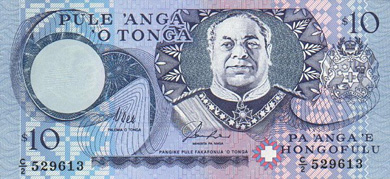
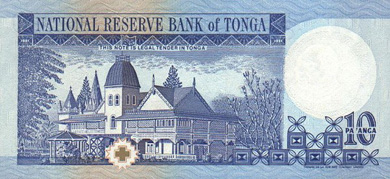
- Currency Name and Code
- Pa'anga (TOP)
- GDP Real Growth Rate
- 1.4%
Banknotes
Budget & Public Finance
- Fiscal Year
- 1 July - 30 June
- Annual Budget
- $52,400,000 (USD)
- External Debt
- $63,400,000 (USD)
- Economic Aid
- $5,500,000 (USD)
Labor, Industry & Trade
- Labor Force by Occupation
- agriculture 65%
- Industries
- tourism, fishing
- Agriculture Products
- squash, coconuts, copra, bananas, vanilla beans, cocoa, coffee, ginger, black pepper; fish
- Export Commodities
- squash, fish, vanilla beans, root crops
- Export Partners
- Japan 40.7%, US 37%, Germany 3.7%
- Import Commodities
- foodstuffs, machinery and transport equipment, fuels, chemicals
- Import Partners
- New Zealand 31.4%, Fiji 20.9%, US 14%, Australia 12.8%, China 5.8%
Energy
- Oil Production
- 0 bbl/day
- Oil Consumption
- 800 bbl/day
- Oil Reserves
- 0 bbl/day
- Natural Gas Production
- 0 cu m
- Natural Gas Consumption
- 0 cu m
- Natural Gas Imports
- 0 cu m
- Natural Gas Exports
- 0 cu m
- Natural Gas Reserves
- 0 cu m
Communications
- Telephone System
- general assessment: competition between Tonga Telecommunications Corporation (TCC) and Shoreline Communications Tonga (SCT) is accelerating expansion of telecommunications; SCT granted approval to introduce high-speed digital service for telephone, Internet, and television while TCC has exclusive rights to operate the mobile-phone network; international telecom services are provided by government-owned Tonga Telecommunications International domestic: combined fixed-line and mobile-cellular teledensity about 80 telephones per 100 persons; fully automatic switched network international: country code - 676; satellite earth station - 1 Intelsat (Pacific Ocean)
- Internet Country Code
- .to
News & Weather
News & Weather
Current Weather
Latest News
Celebrating Women Farmers. Vanilla Growers in Tonga - Food and Agriculture Organization
Food and Agriculture Organization · 12h ago
Pacific Ring of Fire rattled by magnitude 5.8 earthquake off the coast of Tonga - FOX Weather
FOX Weather · 5d ago
Tonga becomes the 100th country to join the UN Nuclear Ban Treaty - ICAN - International Campaign to Abolish Nuclear Weapons
ICAN - International Campaign to Abolish Nuclear Weapons · 14d ago
Finn Bálor battles Talla Tonga - WWE
WWE · 3d ago
Kiwi among three 'dangerous' prisoners on the run after Tonga jail escape - NZ Herald
NZ Herald · 4h ago
Close to Home Ep. 3 | Tonga's Tiktok Titan: Havea676 - Pacific Media Network
Pacific Media Network · 7h ago
Tonga Room and The Heights in Portland: Some Background - Bridgetown Bites
Bridgetown Bites · 54d ago
Khyiris Tonga: 'It was a No-Brainer for Me To Come Here' | Press Conference 3/12 - Chiefs.com
Chiefs.com · 131d ago
News via Google News
Climate Overview
tropical; modified by trade winds; warm season (December to May), cool season (May to December)
Videos
Videos
2 curated YouTube videos.
Source: YouTube
Source: YouTube
Frequently Asked Questions
Frequently Asked Questions
What is the population of Tonga?
How do people greet each other in Tonga?
What are the dining customs in Tonga?
What etiquette should I know when visiting a Tongan home?
How should I dress in Tonga?
What gestures should I be aware of in Tonga?
What is family life like in Tonga?
What can I do for recreation in Tonga?
What is the capital of Tonga?
Where is Tonga located?
What are Tonga's ocean and sea borders?
What currency is used in Tonga?
What languages are spoken in Tonga?
What is the system of government in Tonga?
What is Tonga known for?
What is the geography of Tonga like?
Last reviewed 2026