
 English
 Español
 中文
中文 हिन्दी
 Français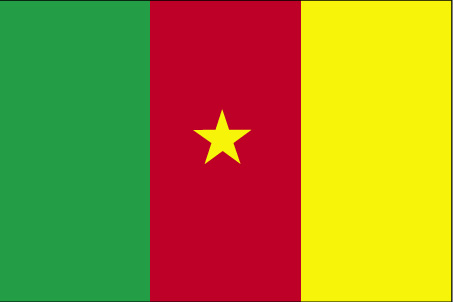
Cameroon
Declare Your Relationship to Cameroon
CountryReports Community
- Studying0
- From Cameroon1
- Cameroon heritage1
- Visited1
- Want to visit1
Customs and Culture
Customs and Culture
About the People
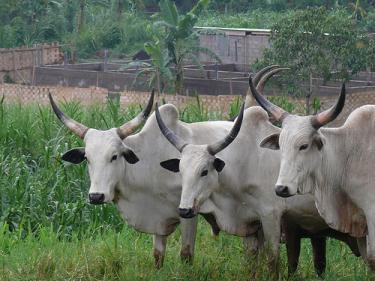
Cameroon has good conditions for farming and oil is an important resource, but many Cameroonian houses are still mad of mud and thatch. Many people camp out in poor areas and travel from place to place.
Music and dance play a very important role in the culture of the people of Cameroon and they have two popular traditional dances known as “makossa” and “bikutsi”. Almost every important occasion is accompanied by an appropriate song and dance. The music is more often than not transmitted orally and may be accompanied by clapping of hands or stamping of feet. In most traditional performances there will be a soloist and the rest of the community members will give back up and the accompaniments will include traditional musical instruments such as drums, talking drums, bells, horns, flutes, scrapers, rattles, whistles and various traditional stringed instruments. Children are taught to appreciate and play these instruments from the earliest possible opportunities and this keeps the tradition moving on from one generation to the next one.
Cultural Attributes
Cameroon has good conditions for farming and oil is an important resource, but many Cameroonian houses are still made of mud and thatch. Many people camp out in poor areas and travel from place to place.
Music and dance play a very important role in the culture of the people of Cameroon and they have two popular traditional dances known as “makossa” and “bikutsi”. Almost every important occasion is accompanied by an appropriate song and dance. The music is more often than not transmitted orally and may be accompanied by clapping of hands or stamping of feet. In most traditional performances there will be a soloist and the rest of the community members will give back up and the accompaniments will include traditional musical instruments such as drums, talking drums, bells, horns, flutes, scrapers, rattles, whistles, and various traditional stringed instruments. Children are taught to appreciate and play these instruments from the earliest possible opportunities and this keeps the tradition moving on from one generation to the next one.

Heartbeat of Africa
Greetings, Gestures & Visiting
The greetings of Cameroonians will differ greatly depending on whether one is in a Francophone or Anglophone area, but generally men shake hands as a greeting in both areas. In the southern area which is basically Francophone people who are close greet by embracing each other as they brush cheeks and kiss the air while in the North which is predominantly Anglophone people have a unique handshake. They pull their hands back as they snap the other person’s middle finger using their thumbs. When you are greeting someone older than yourself you do not look at them in the eye, as a sign of respect and therefore children do not look directly at adults. You must avert eye contact as this is considered the respectful thing for any child to do.
A typical French greeting would be Bonjour (hello).
Most people shake hands, and with close friends they kiss on the cheek. Pointing to a person and crossing legs at the knees is considered rude. People pass objects with their right hand.
Visitors appear without warning and relatives often stay and are fed for long periods of time.
Pagnes (cloth wraps) are worn by women. A turban is usually made from the same fabric that covers the head. In the urban areas people wear Western-style clothing with some women wearing blouses over their pagnes.
Diet
Foods are generally bland, and starchy eaten with spicy sauces. Meat on skewers, fried and roasted fish, curries, and peppery soups are common dishes. In the north corn, millet and peanuts are staples. In the south yams, cassava and plantains are eaten. Food are usually cooked then pounded until they form a stick mass called fufu (foofoo) which is formed into balls then dipped in sauces. Ndole and bobolo are typical dishes of the southern region. Cameroonians eat out of communal bowls using three fingers from their right hand. At mealtime damp towels may be passed out.

Family
Cameroonians typically have large families of 5 or more children; with larger families the head of the house has more than one wife. Women usually do much of the housework including tending the fields.
Recreation
Soccer is the most popular sport. Basketball and handball are also popular. Cameroonian music Mokossa is played ever where and defines the youth culture.
Student Life
The journey to school is usually done on foot because there is no organized school transport, and on average the school could be about 2 or 4 kilometers away from home - but that is considered a normal distance to walk. School begins at 7:30 a.m. in the morning and will generally go until 3:30 p.m. in the afternoon before children walk back to their homes.
Just like their homes most schools are made of packed earth and the roofs are likely to be iron sheets and there are quite a large number of students since primary school is free of charge, the average ratio of teacher to students may be about 1:50. School subjects are taught in either French or English and is not uncommon to also learn Mathematics, Natural Science, Technology, History, Geography, Civics, Physical Education, Household management and Child care, Manual work, Traditional art crafts, Management of personal funds for church work (Stewardship). Generally, classes are held in classrooms, and occasionally outside for Physical Education and sporting activities, Natural Science laboratories, and Technology. The classes are taught by lecture and are the only source of information for students who are financially unable to purchase the text.
There are generally a large number of schools that offer a very good quality of education to the children of this country. Actually Cameroon seems to have one of the best educational systems in most of Africa. There used to be two educational systems, one for the east and the other for the west but they since merged to form one major and stronger educational system. Schooling starts as early as the age of three. This earliest level of school is not necessarily compulsory so a few parents send their children to attend kindergarten. Primary school education, which is mandatory, takes a total of seven years and it is basically free of charge in all public schools. Uniquely and quite different from the rest of Africa, pupils in Cameroon can sit for vocational examinations as well as technical ones quite early in life which can allow them to choose the profession they may want to follow later in their lives as they grow up. When they move on to secondary schools children may get to choose to attend one of the three arms of secondary school education. There are grammar schools, vocational institutions as well as other training institutes. Secondary school education itself is not compulsory and so quite a number of children may not get to proceed beyond the primary level of education.
After-class activities may include clubs as well as any other activities that are meant to help brighten children. A few schools have various clubs which will include theater, dance, or choir. When children are not in school and on weekends and holidays, they work at home to help their parents with domestic chores, and once in a while, they may organize themselves to do homework together. Leisure activities may include taking a walk with friends around the village paths. Children will also organize themselves and do recreational dances in the evenings which sometimes they perform at the end of activities in schools such as sorts and the like. All recreational activities are usually done communally and under the watchful eyes of teachers or parents.
The weekends are usually quite different because school is not run so children must help their parents with work at home and especially in the fields and farms. The activities may include also washing clothes and then later in the evenings some leisure activities and reviewing of school work, especially for those in higher classes. The work in the fields is usually divided according to gender as well as age. Generally, the girls will plow the fields with hoes, and the boys will be working with machetes to clear the land, doing weeding as well as helping to look for firewood for cooking the family meals. Because many Cameroonians live in villages, the family wakes up at about 5:00 a.m. in the morning on weekends and walk to the field where they have some breakfast they carried before they begin the day’s activities. They will usually work nonstop until about 3:00 p.m. when they stop working and begin the journey back home. The journey home is usually a tedious one because everyone will go home loaded with something either on their heads or shoulder. The women and girls will carry home some farm produce on their heads, the fathers may carry home some game if he had set up any traps and they caught anything whereas the boys will carry firewood on their shoulders. Getting home at about 5:00 p.m. means it is time for people to wash up as the mother and daughters prepare the evening dinner while the man and the boys take a rest or wander about in the village as they wait for dinner to be prepared. Dinner is eaten before darkness falls, and after doing the dishes there may be a little time to catch up before people sleep at around 9:00 p.m.
Holidays
Republic Day
5/20Independence
(National Day)
Dates of Interest
- May 20th
How do people greet each other in Cameroon?
Greetings differ between Francophone and Anglophone areas, but men generally shake hands in both. In the south people embrace, brush cheeks and kiss the air, while in the north people use a unique handshake, snapping the other person's middle finger with their thumb.
Do
- Shake hands as a general greeting
- Say Bonjour (hello) in French-speaking areas
- Avert eye contact when greeting someone older, as a sign of respect
Don’t
- Don't look elders directly in the eye
Good to know
- The southern area is basically Francophone; the North is predominantly Anglophone
What are the dining customs in Cameroon?
Cameroonians typically eat from communal bowls using three fingers from the right hand, dipping balls of fufu into spicy sauces.
Do
- Eat using three fingers of your right hand
- Dip fufu balls into the sauces
- Use the damp towels passed out at mealtime
Good to know
- Foods are generally bland and starchy, eaten with spicy sauces
- Common dishes include meat on skewers, fried and roasted fish, curries and peppery soups
- Ndole and bobolo are typical southern dishes
What should I know about everyday etiquette in Cameroon?
Use your right hand to pass objects, and expect a culture of open hospitality where visitors and relatives may stay and be fed for long periods.
Do
- Pass objects with your right hand
Don’t
- Don't point at a person
- Don't cross your legs at the knees
Good to know
- Visitors may appear without warning
- Relatives often stay and are fed for long periods
How should I dress in Cameroon?
Women wear pagnes (cloth wraps), sometimes with a matching turban, while in urban areas people wear Western-style clothing.
Good to know
- Pagnes are cloth wraps worn by women
- Turbans are usually made from the same fabric
- In urban areas some women wear blouses over their pagnes
What gestures should I be aware of in Cameroon?
Handshakes are common, and close friends kiss on the cheek, but pointing and crossing your legs are considered rude.
Do
- Shake hands
- Kiss close friends on the cheek
Don’t
- Don't point at people
- Don't cross your legs at the knees
What is family life like in Cameroon?
Cameroonians typically have large families of five or more children, and in larger families the head of the house has more than one wife.
Good to know
- Women usually do much of the housework, including tending the fields
What do people do for recreation in Cameroon?
Soccer is the most popular sport, and music and dance are central to the culture.
Good to know
- Basketball and handball are also popular
- Makossa music is played everywhere and defines youth culture
- Traditional dances include makossa and bikutsi
- Music is often accompanied by drums, talking drums, bells, horns, flutes and other traditional instruments
Last updated: 2026-07-12 · Sources: CountryReports
Photos of Cameroon
Photos of Cameroon


Travel and Tourism
Travel and Tourism
- Travel Alert Status
- Level 2: Exercise Increased Caution
- Currency
- 605.7
- Time Difference
- UTC+1 (6 hours ahead of Washington, DC, during Standard Time)
- Climate
- Cameroon's climate is as varied as its geography. High humidity and temperatures with little seasonal variations characterize the coast and southern lowlands. In the north, extremely high temperatures and little or no humidity are normal, although seasonal fluctuations occur. In Yaounde, humidity and temperatures are lower but fluctuate daily. Two rainy seasons are interspersed with two relatively dry periods. April and May bring the "mango rains." These moderately heavy rains average 8 inches monthly, then taper off into the drier months of June and July. Rainfall then increases to more than 12 inches monthly from August through November and recedes to as little as 2 inches monthly during the dry season of December through March. During the dry season temperatures may peak above 100°F and dust is a serious problem.
- Airports
- 47
- Recommended Vaccinations
- How important is it to do your research about vaccinations? It might just save your life! Make yourself aware of the different types of vaccinations and which ones you may need to travel to your destination. Schedule an appointment with your doctor at least four to six weeks before you travel to ensure you receive all important shots. Be sure that you and your family are up to date on your routine vaccinations. Which vaccinations you need will depend on a number of factors including your destination, whether you will be spending time in rural areas, the season of the year you are traveling, your age, health status, and previous immunizations.
Read the full travel guide — health, safety, vaccinations, disease risk, sanitation, and transit details.
View full travel guideRecipes
Recipes
History
History
Historical Eras
Pre-colonial Era
500 BCE – 1884
Cameroon's earliest inhabitants included the Baka (Pygmies) and later Bantu-speaking peoples who migrated from the highlands. Phoenician explorer Hanno encountered Mount Cameroon around 500 BCE. From the late 18th century, the Fulani launched Islamic jihads that reshaped northern Cameroon politically and religiously, while Portuguese and later Dutch and British traders established a coastal presence largely defined by the slave trade until its suppression in the mid-19th century.
German Kamerun
1884 – 1916
Germany established a protectorate over Cameroon in July 1884, with Gustav Nachtigal signing treaties with local chiefs, and the colony was formally demarcated under the 1885 Treaty of Berlin. The colonial administration built the first railway in 1907 and developed plantation agriculture, ruling with considerable brutality. German control ended during World War I when Anglo-French forces defeated the German garrison in 1916.
British & French Mandate
1916 – 1960
Following Germany's defeat, the League of Nations mandate of 1919 partitioned Kamerun between Britain and France, with France receiving the larger eastern territory administered from Yaoundé and Britain receiving a narrow western strip governed from Lagos. France invested in infrastructure and established a French-educated elite, while also suppressing political dissent. In 1955, the Union of the Peoples of Cameroon (UPC) launched an armed uprising against French rule, a conflict that caused tens of thousands of deaths.
Independence & Federation
1960 – 1972
French Cameroon achieved independence on January 1, 1960, and in 1961 the southern portion of British Cameroon voted to join it, forming the Federal Republic of Cameroon under President Ahmadou Ahidjo. Ahidjo consolidated power by banning opposition parties in 1966 and relying on an extensive security apparatus to suppress the continuing UPC insurgency, capturing its last major leader in 1970. The federation represented a careful but unequal balance between the formerly French and British territories.
Unitary State & Ahidjo
1972 – 1982
A 1972 referendum replaced the federal structure with a centralized unitary state, renamed the Republic of Cameroon, cementing Ahidjo's authoritarian one-party rule under the Cameroon National Union. The period saw relative political stability and economic growth driven by newly discovered petroleum revenues and agricultural exports. Ahidjo unexpectedly resigned in 1982, constitutionally handing power to Prime Minister Paul Biya.
Biya Era
1982 – present
Paul Biya survived a loyalist coup attempt in 1984 and entrenched his rule under the Cameroon People's Democratic Movement (CPDM), winning successive elections of questionable credibility. Limited multiparty reforms were introduced in the 1990s under international pressure, but political power remained concentrated among a narrow ethnic oligarchy. From the late 2010s, a violent secessionist conflict in the Anglophone regions, known as the Ambazonia crisis, emerged as the country's gravest internal challenge.
Overview
Although the Portuguese arrived on Cameroon’s coast in the 1500s, malaria prevented significant European settlement and conquest of the interior until the late 1870s, when large supplies of the malaria suppressant, quinine, became available. The early European presence in Cameroon was primarily devoted to coastal trade and the acquisition of slaves. The northern part of Cameroon was an important part of the Muslim slave trade network. The slave trade was largely suppressed by the mid-l9th century. Christian missions established a presence in the late 19th century and continue to play a role in Cameroonian life.
Beginning in 1884, all of present-day Cameroon and parts of several of its neighbors became the German colony of Kamerun, with a capital first at Buea and later at Yaounde. After World War I, this colony was partitioned between Britain and France under a June 28, 1919 League of Nations mandate. France gained the larger geographical share, transferred outlying regions to neighboring French colonies, and ruled the rest from Yaounde. Britain’s territory--a strip bordering Nigeria from the sea to Lake Chad, with an equal population--was ruled from Lagos.
In 1955, the outlawed Union of the Peoples of Cameroon (UPC), based largely among the Bamileke and Bassa ethnic groups, began an armed struggle for independence in French Cameroon. This rebellion continued, with diminishing intensity, even after independence. Estimates of death from this conflict vary from tens of thousands to hundreds of thousands.
French Cameroon achieved independence in 1960 as the Republic of Cameroon. The following year the largely Muslim northern two-thirds of British Cameroon voted to join Nigeria; the largely Christian southern third voted to join with the Republic of Cameroon to form the Federal Republic of Cameroon. The formerly French and British regions each maintained substantial autonomy. Ahmadou Ahidjo, a French-educated Fulani, was chosen President of the federation in 1961. Ahidjo, relying on a pervasive internal security apparatus, outlawed all political parties but his own in 1966. He successfully suppressed the UPC rebellion, capturing the last important rebel leader in 1970. In 1972, a new constitution replaced the federation with a unitary state.
Ahidjo resigned as President in 1982 and was constitutionally succeeded by his Prime Minister, Paul Biya, a career official from the Bulu-Beti ethnic group. Ahidjo later regretted his choice of successors, but his supporters failed to overthrow Biya in a 1984 coup. Biya won single-candidate elections in 1984 and 1988 and flawed multiparty elections in 1992 and 1997. His Cameroon People’s Democratic Movement (CPDM) party holds a sizeable majority in the legislature following 2002 elections--149 deputies out of a total of 180.
Timeline of Key Events
500 BCE
Hanno sees Mount Cameroon
The explorer Hanno from Carthage in North Africa (Tunisia) is the first foreigner who reports seeing Mount Cameroon
150 BCE
Bantu Tribes Arrive
The first Bantu-tribes arrive
1472
Fernando Po
A Portuguese expedition lead by Fernando Po are the first Europeans to reach the coast of Cameroon. They reach Douala and then sails up the Wouri River. They name the river Rio dos Camarões, the Prawn River, thus naming the country.
1520
Slave Trade
Portuguese set up sugar plantations and begin slave trade
1600
Dutch take over slave trade
The Dutch take over slave trade from the Portuguese.
1700
British Missionaries Protest Slave Trade
British missionaries protest against the slave trade
1884
German Protectorate
Gustav Nachtigal signs a treaty with the Chiefs of Doula on behalf of the German Kaiser Wilhelm. In return for trade advantages the chiefs accept a German protectorate
Read the full history profile — narrative overview, defining eras, and the complete timeline in one place.
View expanded historyInteresting Facts
Interesting Facts
When a child loses a tooth they throw their tooth over the roof and shout “Take this bad tooth and bring me new one.” Then they hop around their house on one foot and everyone laughs.
Bantu speakers were among the first groups to settle Cameroon, followed by the Muslim Fulani in the 18th and 19th centuries.
See every fact — trivia, oddities, and curious tidbits gathered from across the country.
View all interesting factsGeography and Environment
Geography and Environment
- Terrain
- diverse, with coastal plain in southwest, dissected plateau in center, mountains in west, plains in north
- Climate
- Cameroon’s climate is as varied as its geography. High humidity and temperatures with little seasonal variations characterize the coast and southern lowlands. In the north, extremely high temperatures and little or no humidity are normal, although seasonal fluctuations occur. In Yaounde, humidity and temperatures are lower, but fluctuate daily. Two rainy seasons are interspersed with two relatively dry periods. April and May bring the "mango rains." These moderately heavy rains average 8 inches monthly, then taper off into the drier months of June and July. Rainfall then increases to more than 12 inches monthly for August through November and recedes to as little as 2 inches monthly during the dry season of December through March. During the dry season temperatures may peak above 100 °F and dust is a serious problem.
- Natural Hazards
- volcanic activity with periodic releases of poisonous gases from Lake Nyos and Lake Monoun volcanoes
- Current Environmental Issues
- water-borne diseases are prevalent; deforestation; overgrazing; desertification; poaching; overfishing
Read the full geography and environment profile — terrain, climate, natural resources, hazards, land use, and international agreements.
View full geographyPeople & Demographics
People & Demographics
Religion
Languages Spoken
24 major African language groups, English (official), French (official)
- French
- English
Population
- Population
- 19,294,149
- Population in Major Urban Areas
- Douala 2.449 million; YAOUNDE (capital) 2.432 million
- Nationality Noun
- Cameroonian(s)
- Ethnic Groups
- Cameroon Highlanders 31%, Equatorial Bantu 19%, Kirdi 11%, Fulani 10%, Northwestern Bantu 8%, Eastern Nigritic 7%, other African 13%, non-African less than 1%
Education
- Literacy Definition
- Age 15 and over can read and write
Just like their homes most schools are made of packed earth and the roofs are likely to be iron sheets and there are quite a large number of students since primary school is free of charge, the average ratio of teacher to students may be about 1:50. School subjects are taught in either French or English and is not uncommon to also learn Mathematics, Natural Science, Technology, History, Geography, Civics, Physical Education, Household management and Child care, Manual work, Traditional art crafts, Management of personal funds for church work (Stewardship). Generally, classes are held in classrooms, and occasionally outside for Physical Education and sporting activities, Natural Science laboratories, and Technology. The classes are taught by lecture and are the only source of information for students who are financially unable to purchase the text.
Health Information
- Major Infectious Diseases — degree of risk
- Very high
Read the full people and society profile — demographics, health, education, religion, languages, and notable people.
View full people and societyGovernment & Politics
Government & Politics
Country Identity
- Country Name
- Cameroon
- Full Country Name
- Republic of Cameroon
- Former Name
- French Cameroon
Government Structure
- Government Type
- unitary republic; multiparty presidential regime (opposition parties legalized in 1990)
- Legal System
- based on French civil law system, with common law influence; has not accepted compulsory ICJ jurisdiction
- Executive Branch
- chief of state: President Paul BIYA (since 6 November 1982) head of government: Prime Minister Joseph DION NGUTE (since 4 January 2019) cabinet: Cabinet appointed by the president from proposals submitted by the prime minister elections: president elected by popular vote for a seven-year term; election last held 7 October 2018 (next to be held in October 2025); prime minister appointed by the president election results: President Paul BIYA reelected; percent of vote - Paul BIYA 71.3%, Maurice KAMTO 14.2%, Cabral LIBII 6.3%, other candidates received smaller shares of the remaining vote
- Legislative Branch
- unicameral National Assembly or Assemblee Nationale (180 seats; members are elected by direct popular vote to serve five-year terms); note - the president can either lengthen or shorten the term of the legislature elections: last held 23 June 2002 (next to be held in 2007) election results: percent of vote by party - NA; seats by party - RDCP 133, SDF 21, UDC 5, other 21 note: the constitution calls for an upper chamber for the legislature, to be called a Senate, but it has yet to be established
- Judicial Branch
- Supreme Court (judges are appointed by the president); High Court of Justice (consists of nine judges and six substitute judges, elected by the National Assembly)
- Suffrage
- 20 years of age; universal
- Constitution
- 20 May 1972 approved by referendum; 2 June 1972 formally adopted; revised January 1996
- Independence
- 1 January 1960 (from French-administered UN trusteeship)
- National Holiday
- Republic Day (National Day), 20 May (1972)
Capital City
- Capital Name
- Yaounde
- Capital - geographic coordinate
- 3 52 N, 11 31 E
- Capital Time Difference
- UTC+1 (6 hours ahead of Washington, DC, during Standard Time)
founded as a German colonial settlement of Jaunde in 1888 and named after the local Yaunde (Ewondo) people
Military
Branches: Cameroon Armed Forces (Forces Armees Camerounaises, FAC), Army (L'Armee de Terre), Navy (Marine Nationale Republique (MNR), includes naval infantry), Air Force (Armee de l'Air du Cameroun, AAC), Fire Fighter Corps, Gendarmerie
Embassy / Diplomatic Mission
U.S. Embassy Yaounde
Avenue Rosa Parks in the Mbankolo Quartier, adjacent to the Mount Febe Golf Club
Mailing address: P.O. Box 817, Yaounde, Cameroon
Telephone: 237 2220-1500
Emergency after-hours telephone: 237 2220-1500
Facsimile: 237 2220-1572
Embassy Branch Office, Douala, Cameroon
Corner of Rue Ivy and Rue French in the Ecobank Building in Bonanjo
Telephone: 237 3342-5331
Facsimile: 237 3342-7790.
Read the full government profile — flag symbolism, national anthem, and other national symbols.
View full government detailsEconomy
Economy
Thanks to its oil reserves, favorable agricultural conditions, and diverse natural resources, Cameroon possesses one of the best-endowed primary commodity economies in sub-Saharan Africa. Despite these advantages, the country continues to face significant challenges common to developing economies, including a top-heavy civil service, widespread corruption, weak infrastructure, and a generally unfavorable business climate. Cameroon reached the completion point of the Heavily Indebted Poor Countries (HIPC) initiative in 2006, securing substantial debt relief, and has since pursued successive economic programs with the IMF and World Bank aimed at boosting investment, improving governance, and diversifying the economy.
The government's long-term development blueprint, the National Development Strategy 2020-2030 (SND30), seeks to transform Cameroon into an upper-middle-income, newly industrialized country. Key sectors include oil and gas, cocoa, coffee, cotton, timber, and increasingly liquefied natural gas, with the Kribi deep-water port and related infrastructure projects supporting export growth. However, growth has been constrained by the ongoing Anglophone crisis in the Northwest and Southwest regions, security threats from Boko Haram in the Far North, declining oil production, and the lingering effects of global commodity price swings and the COVID-19 pandemic. GDP growth has hovered around 3–4 percent in recent years, while poverty, unemployment, and regional inequality remain pressing concerns. International prices for oil, cocoa, and other commodities continue to exert a strong influence on the economy.
Snapshot
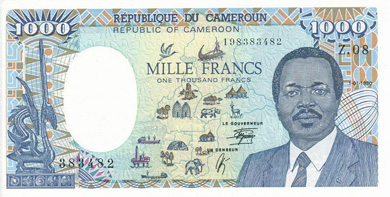
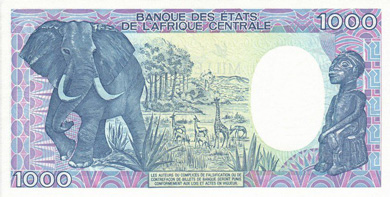
- Currency Name and Code
- Cooperation Financiere en Afrique Centrale francs (XAF)
- GDP — official exchange rate
- $15,350,000,000 (USD)
- GDP Real Growth Rate
- 2.8%
- Gini Index
- 44.6
Banknotes
Budget & Public Finance
- Fiscal Year
- 1 July - 30 June
- Annual Budget
- $2,705,000,000 (USD)
- External Debt
- $9,223,000,000 (USD)
- Investment (% of GDP)
- 17.3%
- Economic Aid
- $1,260,000,000 (USD)
- Current Account Balance
- $159,000,000 (USD)
- Reserves of Foreign Exchange
- $1,092,000,000 (USD)
Labor, Industry & Trade
- Labor Force by Occupation
- agriculture 70%; industry and commerce 13%; other 17%
- Household Income — highest 10%
- 36.6%
- Industries
- petroleum production and refining, food processing, light consumer goods, textiles, lumber
- Agriculture Products
- coffee, cocoa, cotton, rubber, bananas, oilseed, grains, root starches; livestock; timber
- Export Commodities
- crude oil and petroleum products, lumber, cocoa beans, aluminum, coffee, cotton
- Export Partners
- Italy 17.4%, Spain 16.8%, France 13.4%, US 8.7%, Netherlands 8.6%, China 5.4%, UK 4.7%, Germany 4.1%
- Import Commodities
- machinery, electrical equipment, transport equipment, fuel, food
- Import Partners
- France 28%, Nigeria 12.7%, US 7.9%, Belgium 5.7%, Germany 4.8%, Italy 4.3%
Energy
- Oil Production
- 82,300 bbl/day
- Oil Consumption
- 2,300 bbl/day
- Oil Reserves
- 85,000,000 bbl/day
- Natural Gas Production
- 0 cu m
- Natural Gas Consumption
- 0 cu m
- Natural Gas Imports
- 0 cu m
- Natural Gas Exports
- 0 cu m
- Natural Gas Reserves
- 110,400,000,000 cu m
Communications
- Telephone System
- General Assessment: system includes cable, microwave radio relay, and tropospheric scatter; Camtel, the monopoly provider of fixed-line service, provides connections for only about 3 per 100 persons; equipment is old and outdated, and connections with many parts of the country are unreliable Domestic: mobile-cellular usage, in part a reflection of the poor condition and general inadequacy of the fixed-line network, has increased sharply, reaching a subscribership base of 50 per 100 persons International: country code - 237; landing point for the SAT-3/WASC fiber-optic submarine cable that provides connectivity to Europe and Asia; satellite earth stations - 2 Intelsat (Atlantic Ocean)
- Internet Country Code
- .cm
News & Weather
News & Weather
Current Weather
Latest News
Unsdg | Secretary-General appoints Njoya Tikum of Cameroon as the United Nations Resident and Humanitarian Coordinator in Burkina Faso - United Nations Sustainable Development Group
United Nations Sustainable Development Group · 12h ago
The Gold Leak: Inside Cameroon’s Fractured Mining Crackdown - FairPlanet
FairPlanet · 49m ago
Boeing sues Cameroon Airlines over $179M claim tied to 1995 crash - KING5.com
KING5.com · 13h ago
Boeing Sues To Stop Cameroon Airlines' 1995 Crash Claims - Law360
Law360 · 6h ago
The cost of inaction: Cameroon’s humanitarian response under strain - OCHA
OCHA · 1d ago
Anne and Baby Gabrielle’s Story - Unicef
Unicef · 1d ago
UAE trade data exposes hidden gold exports, prompting Cameroon's $524 million tax hunt - Business Insider Africa
Business Insider Africa · 1d ago
Cameroon: How gold worth billions escapes to Dubai - The Africa Report
The Africa Report · 1d ago
News via Google News
Climate Overview
Cameroon's climate is as varied as its geography. High humidity and temperatures with little seasonal variations characterize the coast and southern lowlands. In the north, extremely high temperatures and little or no humidity are normal, although seasonal fluctuations occur.
In Yaounde, humidity and temperatures are lower but fluctuate daily. Two rainy seasons are interspersed with two relatively dry periods. April and May bring the "mango rains." These moderately heavy rains average 8 inches monthly, then taper off into the drier months of June and July. Rainfall then increases to more than 12 inches monthly from August through November and recedes to as little as 2 inches monthly during the dry season of December through March. During the dry season temperatures may peak above 100°F and dust is a serious problem.
Videos
Videos
1 curated YouTube videos.
Source: YouTube
Frequently Asked Questions
Frequently Asked Questions
What is the population of Cameroon?
How do people greet each other in Cameroon?
What are the dining customs in Cameroon?
What should I know about everyday etiquette in Cameroon?
How should I dress in Cameroon?
What gestures should I be aware of in Cameroon?
What is family life like in Cameroon?
What do people do for recreation in Cameroon?
What is the capital of Cameroon?
Where is Cameroon located?
What countries border Cameroon?
What religions are practiced in Cameroon?
What is the currency of Cameroon?
What languages are spoken in Cameroon?
What is Cameroon known for?
What is the geography of Cameroon like?
Last reviewed 2026