
 English
 Español
 中文
中文 हिन्दी
 Français
Iran
Iran
Declare Your Relationship to Iran
CountryReports Community
- Studying4
- From Iran2
- Iran heritage1
- Visited0
- Want to visit1
Customs and Culture
Customs and Culture
About the People
Iranians have a rich cultural heritage, including the great Persian Empire, of which they are proud. The people are hospitable and open to others. They like foreigners although official policy statements sometimes condemn Western society.
Cultural Attributes
Iranians have a rich cultural heritage, including the great Persian Empire, of which they are proud. The people are hospitable and open to others. They like foreigners although official policy statements sometimes condemn Western society.

Land of the Eternal Flame: Ancient Persia, Living Dynasty
Greetings, Gestures & Visiting
A handshake is the customary greeting in Iran. A slight bow or nod while shaking hands shows respect. Generally, a man does not shake a woman's hand. Proper etiquette is essential when greeting another person and one will often ask about the family and the health of the other. A common phrase in departure is "Khoda haftz" (May God protect you). Formal titles and the use of one's last name show respect. Iranians generally stand when someone (especially an older or more prominent person) enters the room for the first time and again when someone leaves. To shake hands with a child shows respect for the parents.
Objects are passed with the right hand or both hands. One should not point the soles of their feet towards anyone. Out of respect and to maintain proper distance between genders, men and women do not make eye contact during conversation. Affection is not shown in public, even if married. However, friendship and affection is often shown between friends of the same sex. To summon another person, one waves with all fingers and leaves the palm facing down.
A guest is considered a gift from Allah, thus showing kindness towards a guest is a way of respecting Allah. Complimenting objects in another's home is not done as the host may feel obligated to give away the object to the guest. When invited to dinner, it is customary for the guest to take a plant, flowers, or candy to the host. If offered something from a friend, it is polite to decline a few times before accepting and thanking the giver several times.
Men often wear Western styles, although traditional robes and turbans or hats are also worn in parts of the North and West, especially by religious leaders. The Kurds wear a type of turban. Women should be covered from head to foot in public although in recent times women have been permitted to wear other clothing as long as it is loose. Islam generally requires men to wear long sleeves, but a bare forearm is permitted.
Personal cleanliness is important. Most men have beards. At home, Iranians often dress in comfortable pajamas. They may also receive guests dressed in pajamas, which are not only for sleeping but relaxing as well.
Diet
The diet varies throughout the country. Muslims do not eat pork or drink alcohol. Under current law, alcohol consumption is forbidden. Rice and wheat bread are the most common staple foods. Rice is often served with a meat and vegetable stew. Yogurt is generally served with rice or other foods. Fresh vegetables are important in the diet, and fresh fruit is a favorite dessert. White cheeses are also popular for breakfast.
During the entire month of Ramadan, devout Muslims do not eat or drink anything from sunrise to sundown; later in the evening, families eat, and visit with friends and relatives.
Devout Muslims do not eat pork or drink alcohol. Under current law, alcohol consumption is forbidden. Rice and wheat bread are the most common foods. Rice is often served with a meat and vegetable stew. Yogurt is generally served with rice and other foods.

Family
It is legal for a man to have up to four wives. However, most men have only one wife. A wife may apply to the court for divorce if her husband does not support her. Unmarried sons and daughters live with their parents until they marry. Most families are able to provide for their own basic necessities, and there is a growing upper class that enjoys many modern amenities. Each man and woman has a surname from their family. The second surname is the official one.
Dating Customs
Daughters are usually "protected" by their families to the point that they often do not speak to male strangers until they are married. Marriage is considered a highly valued institution. Divorce is very rare. Most marriages are arranged by families, but children must give consent to the arrangement. Some prefer having their marriages arranged as it eliminates the stress associated with finding a spouse. In the past, it was not uncommon that girls would marry their cousins. New attitudes have developed in some areas regarding education, work, and freedom in selecting marriage partners.
A couple may elect to have a temporary marriage called a "sigheh" which can last a few days or up to ninety-nine years. A woman marrying for the first time must have parental consent. When a sigheh is terminated a woman may not marry again for about seventy days. When there is a divorce of a traditional married couple, the woman may not marry again for one hundred days. Weddings are typically elaborate celebrations.
Recreation
Iranians enjoy chess and many argue it was invented in Iran. Wrestling, weightlifting and squash are popular among urban Iranians. Camel or horse racing are popular in rural areas. In urban areas men enjoy spending time in teahouses and smoking the hookah or water pipe. Women enjoy entertaining family and friends at home.
Holidays
Republic Day
4/1Independence
note: additional holidays celebrated widely in Iran include Revolution Day, 11 February (1979); Noruz (New Year's Day), 21 March; Constitutional Monarchy Day, 5 August (1925)
Christmas
12/25Christmas
Dates of Interest
- March 20th
Celebrated on the longest night of the year (December 20 or 21), families gather to eat, drink, and read poetry, particularly the works of Hafez.
How do people greet each other in Iran?
A handshake is the customary greeting, often with a slight bow or nod to show respect, and greetings typically include asking about the other person's family and health.
Do
- Add a slight bow or nod while shaking hands to show respect
- Ask about the other person's family and health
- Use formal titles and last names to show respect
- Stand when an older or prominent person enters or leaves the room
Don’t
- Generally, a man should not shake a woman's hand
Good to know
- Shaking hands with a child shows respect for the parents
- A common farewell is "Khoda haftz" (May God protect you)
What are the dining and food customs in Iran?
Rice and wheat bread are staple foods, often served with meat and vegetable stew and yogurt, while pork and alcohol are forbidden.
Do
- Expect rice served with meat and vegetable stew and yogurt
- Enjoy fresh vegetables and fresh fruit for dessert
- Try white cheeses, popular for breakfast
Don’t
- Do not eat pork or drink alcohol; alcohol consumption is forbidden by law
Good to know
- During Ramadan, devout Muslims do not eat or drink from sunrise to sundown, then families eat and visit in the evening
What etiquette should I know when visiting an Iranian home?
A guest is considered a gift from Allah, so hosts show great kindness; bring a small gift and follow polite customs around accepting offers.
Do
- Bring a plant, flowers, or candy when invited to dinner
- Decline an offered gift a few times before accepting
- Thank the giver several times when accepting
Don’t
- Do not compliment objects in the home, as the host may feel obligated to give them to you
What should I wear in Iran?
Men often wear Western styles or traditional robes and turbans, while women should be covered from head to foot in public, though loose clothing is now permitted.
Do
- Women should be covered from head to foot in public
- Women may wear other loose clothing
- Men should generally wear long sleeves, though a bare forearm is permitted
- Maintain personal cleanliness
Good to know
- At home, Iranians often relax in pajamas and may even receive guests dressed in them
- The Kurds wear a type of turban
What gestures and body language matter in Iran?
Use the right hand or both hands to pass objects, and be mindful of gender norms around eye contact and public affection.
Do
- Pass objects with the right hand or both hands
- Summon someone by waving with all fingers, palm facing down
Don’t
- Do not point the soles of your feet toward anyone
- Men and women do not make eye contact during conversation
- Do not show affection in public, even between married couples
Good to know
- Friendship and affection are often shown between friends of the same sex
What is family life like in Iran?
Marriage is highly valued and divorce is rare; unmarried sons and daughters live with their parents until they marry.
Good to know
- Most marriages are arranged by families, but children must give consent
- It is legal for a man to have up to four wives, though most have only one
- Each person has a surname from their family, with the second surname being the official one
What do Iranians do for recreation?
Iranians enjoy chess, and sports like wrestling, weightlifting, and squash are popular in urban areas, while camel or horse racing is popular in rural areas.
Good to know
- In urban areas, men enjoy teahouses and smoking the hookah (water pipe)
- Women enjoy entertaining family and friends at home
- Many Iranians argue chess was invented in Iran
Last updated: 2026-07-12 · Sources: CountryReports
Photos of Iran
Photos of Iran


Travel and Tourism
Travel and Tourism
- Travel Alert Status
- Level 4: Do Not Travel
- Currency
- Iranian rial (IRR)
- Time Difference
- UTC+3.5 (8.5 hours ahead of Washington, DC)
- Climate
- mostly arid or semiarid, subtropical along Caspian coast
- Airports
- 303
Read the full travel guide — health, safety, vaccinations, disease risk, sanitation, and transit details.
View full travel guideRecipes
Recipes
History
History
Historical Eras
Achaemenid & Early Empires
559 BCE – 224
Cyrus the Great founded the Achaemenid Empire in 550 BCE, establishing the ancient world's largest realm, stretching from the Aegean to Central Asia. Alexander the Great's conquest in 330 BCE ended Achaemenid rule, giving way to the Seleucid and then Parthian dynasties. This era defined Iranian imperial tradition, administrative sophistication, and Zoroastrian religious culture.
Sasanian Empire
224 – 642
The Sasanian dynasty restored Iranian imperial grandeur, reviving Zoroastrianism as a state religion and centralizing administration across a vast empire rivaling Rome and Byzantium. Sasanian art, architecture, and governance reached remarkable heights, influencing cultures far beyond Iran's borders. The empire ultimately collapsed under the Arab Muslim conquest in 642 CE, marking a civilizational turning point.
Islamic & Mongol Eras
642 – 1501
The Arab conquest introduced Islam and absorbed Iran into the Abbasid Caliphate, yet Persian language, literature, and administrative traditions proved resilient and enriched Islamic civilization broadly. The Seljuk Turks, Genghis Khan's Mongol invasions of 1220, and Timur's campaigns brought successive waves of destruction and political fragmentation. Local Iranian dynasties periodically reasserted Persian cultural identity throughout this turbulent period.
Safavid Dynasty
1501 – 1736
Shah Ismail I founded the Safavid dynasty in 1501 and declared Twelver Shia Islam the state religion, forging a distinct Iranian religious and national identity that endures today. The Safavids restored Iran as a coherent territorial state within borders broadly resembling modern Iran, with Isfahan as a magnificent imperial capital. The dynasty declined through internal weakness and Afghan invasions, ending with Nadir Shah's seizure of power in 1736.
Qajar & Constitutional Era
1796 – 1925
The Qajar dynasty reunified Iran but struggled against Russian and British imperial encroachment, ceding significant territory and sovereignty through unequal treaties. Popular frustration with misrule and foreign interference culminated in the Constitutional Revolution of 1905–07, which established a parliament and limited royal absolutism. The era ended when Reza Khan, a Cossack officer, seized power and founded the Pahlavi dynasty in 1925.
Pahlavi & Islamic Republic
1925 – present
Reza Shah and his son Mohammad Reza Shah pursued aggressive modernization and Westernization, but mounting authoritarianism and social tensions fueled the 1979 Islamic Revolution that replaced the monarchy with a theocratic republic under Ayatollah Khomeini. The new government faced immediate crises including the U.S. Embassy hostage crisis and the devastating 1980–88 Iran-Iraq War. Since then, Iran has navigated international isolation, internal demands for reform, and ongoing tensions between clerical authority and a restive, demographically young population.
Overview
Timeline of Key Events
559 BCE – 332 BCE
The Achaemenian Dynasty & the Great Persian Empire
The Achaemenian Dynasty & the Great Persian Empire. The Persian Empire became the dominant world power for over two centuries.
550 BCE
Cyrus the Great established the First World Empire
Cyrus the Great established the First World Empire.
525 BCE
Persians conquer Egypt
Persians conquer Egypt.
332 BCE
Alexander the Great conquered Egypt and Persia
Alexander the Great conquered Egypt and Persia.
247 BCE – 224
The Parthians conquered the Seleucids
The Parthians conquered the Seleucids.
224 – 642
The Sasanian Dynasty
The Sasanian Dynasty.
570
The Prophet Mohammad was born
The Prophet Mohammad was born.
Read the full history profile — narrative overview, defining eras, and the complete timeline in one place.
View expanded historyInteresting Facts
Interesting Facts
Founded in the Sixth Century BC by the Kings of the First Persian Empire (the Achaemenids), Persepolis is located 60 km northeast of Shiraz in Iran. The present-day Persian name, Takht-e-Jamshid, means “Throne of Jamshid”, a legendary Iranian King. However, the ancient name of the city was Parsa, or Pars' City, hence the Greek name Persepolis. Construction of the city began under Kings Cyrus the Great (ca. 550 BC) and Darius I (ca. 520 BC) to possibly serve as a ceremonial and spiritual Capital of the Persian Empire. Susa, the administrative Capital, was located 500 km north of Persepolis. The growth of the city continued under later Kings such as Artaxerxes I (ca. 450 BC) who finished the Hall of 100 Columns and Artaxerxes II (ca. 350 BC) who built the Unfinished Palace. However, the most glorious monuments in Persepolis were commissioned by Xerxes I (ca. 470 BC): the Gate of All Nations, and the Throne Hall. Persepolis continued to flourish under the later Achaemenian Kings, until it was burned and destroyed by Alexander the Great in 330 BC. It is not known whether the burning of the city was accidental, or an act of revenge for the destruction of Temples in Athens in 480 BC by the Persians. Modern excavations in Persepolis began in the early 19th Century. The Gate of All Nations is located at the end of two monumental staircases. Between the staircase ramps are symbols of the Zarathustrian God Ahura Mazda, and carvings representing the different Nations of the World, from Egyptians and Armenians, to Babylonians, Assyrians, and Medians. The Gate leads to the Throne Hall, or the Hundred-Column Hall. The Hall contains several doorways adorned with carvings showing the King in military combat. It is believed that the Gate of All Nations and the Throne Hall were used in New Year's celebrations when delegates presented the annual tribute to the Persian King. The city of Persepolis was declared a World Heritage Site by the UNESCO in 1979.
Iran was formerly called Persia, a name which comes from the Fars province where the Aryan tribes lived. In 1934, Reza Shah officially changed the name to Iran, an Aryan word meaning “of noble origin.” However, the word Persia is often still used to refer to the country's arts and architecture.
The Caspian Sea (Darya-ye-Khazar) is actually the world's largest lake, covering an area of 370,000 square kilometers-five times the size of Lake Superior, the world's second largest lake.
Iran contained part of the Silk Road, a 6,400-kilometre ancient trading route linking China to the Mediterranean. Aside from allowing cross-cultural trade, the road inspired the interchange of ideas, technologies and religions.
Iran is a modern country infused with rich traditions. Cities offer fast-food restaurants and international business districts alongside bazaars selling spices and carpets.
The desert city of Yazd has houses built below ground to escape the heat. The houses have special “ wind towers” designed to catch every breath of wind and send it downward to refresh the living areas.
See every fact — trivia, oddities, and curious tidbits gathered from across the country.
View all interesting factsGeography and Environment
Geography and Environment
- Terrain
- rugged, mountainous rim; high, central basin with deserts, mountains; small, discontinuous plains along both coasts
- Climate
- mostly arid or semiarid, subtropical along Caspian coast
- Natural Hazards
- periodic droughts, floods; dust storms, sandstorms; earthquakes
- Current Environmental Issues
- air pollution, especially in urban areas, from vehicle emissions, refinery operations, and industrial effluents; deforestation; overgrazing; desertification; oil pollution in the Persian Gulf; wetland losses from drought; soil degradation (salination); inadequate supplies of potable water; water pollution from raw sewage and industrial waste; urbanization
Read the full geography and environment profile — terrain, climate, natural resources, hazards, land use, and international agreements.
View full geographyPeople & Demographics
People & Demographics
Religion
Languages Spoken
Persian and Persian dialects 58%, Turkic and Turkic dialects 26%, Kurdish 9%, Luri 2%, Balochi 1%, Arabic 1%, Turkish 1%, other 2%
- Arabic
- Farsi
- Kurdish
- Luri
- Persian
- Turkish
Population
- Population
- 67,037,517
- Population in Major Urban Areas
- TEHRAN (capital) 7.304 million; Mashhad 2.713 million; Esfahan 1.781 million; Karaj 1.635 million; Tabriz 1.509 million; Shiraz 1.321 million
- Nationality Noun
- Iranian(s)
- Ethnic Groups
- Persian 51%, Azeri 24%, Gilaki and Mazandarani 8%, Kurd 7%, Arab 3%, Lur 2%, Baloch 2%, Turkmen 2%, other 1%
- Language Note
- The official language in Iran is Persian, but many other languages or dialects are spoken.
Education
- Literacy Definition
- age 15 and over can read and write
Health Information
- Major Infectious Diseases — degree of risk
- intermediate
Read the full people and society profile — demographics, health, education, religion, languages, and notable people.
View full people and societyGovernment & Politics
Government & Politics
Country Identity
- Country Name
- Iran
- Full Country Name
- Islamic Republic of Iran
- Local - Long
- Jomhuri-ye Eslami-ye Iran
- Local - Short
- Iran
- Former Name
- Persia
Government Structure
- Government Type
- theocratic republic
- Legal System
- the Constitution codifies Islamic principles of government
- Executive Branch
- chief of state: Supreme Leader Ayatollah Ali Hoseini-KHAMENEI (since 4 June 1989) head of government: President Masoud PEZESHKIAN (since 30 July 2024); First Vice President Mohammad Reza AREF (since 30 July 2024) cabinet: Council of Ministers selected by the president with legislative approval; the Supreme Leader exercises significant influence over appointments to sensitive ministries, particularly those related to defense, intelligence, and foreign affairs elections: Supreme Leader of the Islamic Revolution appointed for life by the Assembly of Experts; president elected by popular vote for a four-year term; election last held on 28 June 2024, with a two-candidate runoff on 5 July 2024 election results: Masoud PEZESHKIAN elected president in runoff; percent of vote - Masoud PEZESHKIAN 54.8%, Saeed JALILI 44.3%; note - the election was called early following the death of President Ebrahim RAISI in a helicopter crash on 19 May 2024
- Legislative Branch
- unicameral Islamic Consultative Assembly or Majles-e-Shura-ye-Eslami (290 seats - formerly 270 seats; members elected by popular vote to serve four-year terms) elections: last held 20 February 2004 with a runoff held 7 in May 2004 (next to be held in February 2008) election results: percent of vote - NA; seats by party - conservatives/Islamists 190, reformers 50, independents 43, religious minorities 5, and 2 seats unaccounted for
- Judicial Branch
- Supreme Court - above a special clerical court, a revolutionary court, and a special administrative court
- Suffrage
- 15 years of age; universal
- Constitution
- 2-3 December 1979; revised 1989 to expand powers of the presidency and eliminate the prime ministership
- Independence
- 1 April 1979 (Islamic Republic of Iran proclaimed)
- National Holiday
- Republic Day, 1 April (1979)
Capital City
- Capital Name
- Tehran
- Capital - geographic coordinate
- 35 42 N, 51 25 E
- Capital Time Difference
- UTC+3.5 (8.5 hours ahead of Washington, DC)
various explanations of the city's name have been proffered, but the most plausible states that it derives from the Persian words tah meaning "end or bottom" and ran meaning "[mountain] slope" to signify "bottom of the mountain slope"; Tehran lies at the bottom slope of the Elburz Mountains
Military
Branches: Islamic Republic of Iran Regular Forces (Artesh): Ground Forces, Navy, Air Force (IRIAF), Khatemolanbia Air Defense Headquarters; Islamic Revolutionary Guard Corps (Sepah-e Pasdaran-e Enqelab-e Eslami, IRGC): Ground Resistance Forces, Navy, Aerospace Force, Quds Force (special operations); Law Enforcement Forces
Embassy / Diplomatic Mission
The U.S. government does not have diplomatic or consular relations with the Islamic Republic of Iran and therefore cannot provide protection or routine consular services to U.S. citizens in Iran. The Swiss government, acting through its Embassy in Tehran, serves as protecting power for U.S. interests in Iran. If you are going to live in or visit Iran, please take the time to tell the Swiss Embassy about your trip. If you enroll in our Smart Traveler Enrollment Program, we can keep you up to date with important safety and security announcements.
Local embassy information is available below and at the Department of State’s list of embassies and consulates.
Embassy of Switzerland – U.S. Interests Section
No. 39, Shahid Mousavi (Golestan 5th)
Pasdaran Avenue
Tehran, Iran
Telephone: (98) (21) 2254-2178 and (98) (21) 2256-5273
Facsimile: (98) (21) 2258-0432
Contact via e-mail: tie.vertretung@eda.admin.ch
The workweek is Sunday through Thursday. Public service hours are 8:00 am – 12:00 noon. The Interests Section does not issue U.S. visas or accept visa applications.
Read the full government profile — flag symbolism, national anthem, and other national symbols.
View full government detailsEconomy
Economy
Iran's economy is characterized by a large public sector, heavy reliance on oil and gas revenues, and statist policies that create significant market distortions. The state, along with parastatal entities such as religious foundations (bonyads) and enterprises linked to the Islamic Revolutionary Guard Corps, controls much of the country's economic activity. Private sector participation remains concentrated in small-scale workshops, agriculture, and services.
Since 2018, the reimposition of U.S. sanctions following Washington's withdrawal from the Joint Comprehensive Plan of Action (JCPOA) has severely constrained Iran's oil exports, access to global financial systems, and foreign investment. While the economy has shown modest recovery in recent years — driven in part by increased oil sales to China and a weaker but more competitive currency — Iranians continue to face persistent challenges, including inflation that has frequently exceeded 40 percent, youth unemployment above 20 percent, and a sharply depreciated rial.
Efforts at structural reform, including subsidy cuts, tax modernization, and privatization, have produced limited results, often hampered by entrenched interests, sanctions pressure, and political infighting. Non-oil exports, particularly petrochemicals, steel, and agricultural products, have grown in importance, while remittances and informal trade help offset some external pressures. Long-standing issues such as water scarcity, capital flight, and a brain drain of skilled professionals continue to weigh on long-term growth prospects.
Snapshot
- Currency Name and Code
- Iranian Rial (IRR)
- GDP — official exchange rate
- $181,200,000,000 (USD)
- GDP Real Growth Rate
- 6.1%
- Gini Index
- 43
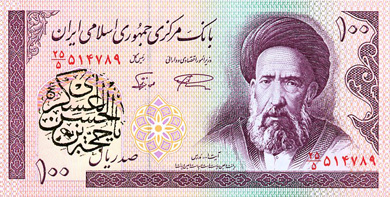
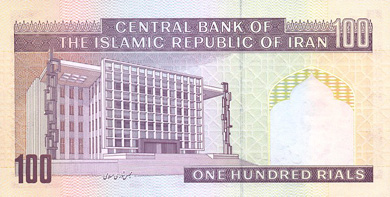
Banknotes
Budget & Public Finance
- Fiscal Year
- 21 March - 20 March
- Annual Budget
- $60,400,000,000 (USD)
- Public Debt (% of GDP)
- 27.5%
- External Debt
- $16,940,000,000 (USD)
- Investment (% of GDP)
- 30.5%
- Economic Aid
- $408,000,000 (USD)
- Current Account Balance
- $8,179,000,000 (USD)
- Reserves of Foreign Exchange
- $2,147,483,647 (USD)
Labor, Industry & Trade
- Labor Force by Occupation
- agriculture 30%; industry 25%; services 45%
- Industries
- petroleum, petrochemicals, textiles, cement and other construction materials, food processing (particularly sugar refining and vegetable oil production), metal fabricating, armaments
- Agriculture Products
- wheat, rice, other grains, sugar beets, fruits, nuts, cotton; dairy products, wool; caviar
- Export Commodities
- petroleum 80%, chemical and petrochemical products, fruits and nuts, carpets
- Export Partners
- Japan 20.1%, China 9.9%, Italy 7.6%, South Korea 5.7%
- Import Commodities
- industrial raw materials and intermediate goods, capital goods, foodstuffs and other consumer goods, technical services, military supplies
- Import Partners
- Germany 17.1%, Switzerland 9.3%, UAE 9.1%, France 5.9%, Italy 5.8%, South Korea 4.8%, China 4.7%, Russia 4.3%
Energy
- Oil Production
- 3,979,000 bbl/day
- Oil Consumption
- 1,425,000 bbl/day
- Oil Reserves
- 133,300,000,000 bbl/day
- Natural Gas Production
- 79,000,000,000 cu m
- Natural Gas Consumption
- 79,000,000,000 cu m
- Natural Gas Imports
- 4,920,000,000 cu m
- Natural Gas Exports
- 3,400,000,000 cu m
- Natural Gas Reserves
- 26,620,000,000,000 cu m
Communications
- Telephone System
- general assessment: currently being modernized and expanded with the goal of not only improving the efficiency and increasing the volume of the urban service but also bringing telephone service to several thousand villages, not presently connected domestic: the addition of new fiber cables and modern switching and exchange systems installed by Iran's state-owned telecom company have improved and expanded the fixed-line network greatly; fixed-line availability has more than doubled to more than 27 million lines since 2000; additionally, mobile-cellular service has increased dramatically serving roughly 56 million subscribers in 2011; combined fixed and mobile-cellular subscribership now exceeds 100 per 100 persons international: country code - 98; submarine fiber-optic cable to UAE with access to Fiber-Optic Link Around the Globe (FLAG); Trans-Asia-Europe (TAE) fiber-optic line runs from Azerbaijan through the northern portion of Iran to Turkmenistan with expansion to Georgia and Azerbaijan; HF radio and microwave radio relay to Turkey, Azerbaijan, Pakistan, Afghanistan, Turkmenistan, Syria, Kuwait, Tajikistan, and Uzbekistan; satellite earth stations - 13 (9 Intelsat and 4 Inmarsat)
- Internet Country Code
- .ir
News & Weather
News & Weather
Current Weather
Latest News
US issues ‘worldwide caution’ for American citizens – as it happened - The Guardian
The Guardian · 2h ago
Southeast Asia Warns of Spillover From US War With Iran as Rubio Arrives - Bloomberg.com
Bloomberg.com · 1h ago
Iran War update: Five things to know after the resumption of hostilities - CNBC
CNBC · 2h ago
Pentagon Withheld Dozens of U.S. Military Injuries in Iran War - The New York Times
The New York Times · 5h ago
Iran War Updates: U.S. carries out 10th night of strikes after 3 U.S. troops killed, nearly 100 injured in recent weeks - CBS News
CBS News · 2h ago
Live updates: Nearly 100 US troops injured in last two weeks, Pentagon says, as strikes continue - CNN
CNN · 2h ago
Iran claims attacks in strait of Hormuz; Houthis announce blockade of Red Sea shipping route – Middle East crisis live - The Guardian
The Guardian · 2h ago
Houthis announce Saudi naval blockade, threatening new front in US-Iran war - Reuters
Reuters · 12h ago
News via Google News
Climate Overview
mostly arid or semiarid, subtropical along Caspian coast
Videos
Videos
2 curated YouTube videos.
Source: YouTube
Source: YouTube
Frequently Asked Questions
Frequently Asked Questions
What is the population of Iran?
How do people greet each other in Iran?
What are the dining and food customs in Iran?
What etiquette should I know when visiting an Iranian home?
What should I wear in Iran?
What gestures and body language matter in Iran?
What is family life like in Iran?
What do Iranians do for recreation?
What is the capital of Iran?
Where is Iran located?
What countries border Iran?
What is the main religion practiced in Iran?
What is the currency of Iran?
What language is spoken in Iran?
What is Iran known for?
What is the historical significance of the name 'Persia' in relation to Iran?
Last reviewed 2026