
 English
 Español
 中文
中文 हिन्दी
 Français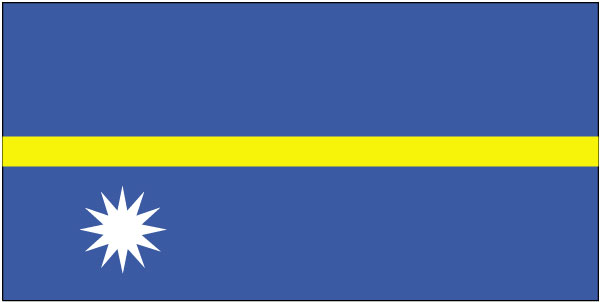
Nauru
Declare Your Relationship to Nauru
CountryReports Community
- Studying3
- From Nauru0
- Nauru heritage0
- Visited1
- Want to visit0
Customs and Culture
Customs and Culture
Cultural Attributes
Nauru is an oval-shaped coral island with an area of only eight (8) square miles. About half of Nauru's population are Nauruans or people of mixed Polynesian, Micronesian, and Melanesian ancestry. They follow Christian religion and most speak the Nauruan language and English. The other half of the people are temporary residents from other pacific islands who come to Nauru for limited periods to work in the phosphate industry.
Most of the people live along the coastline.
The government provided Naurans with free medical care and modern homes at low rents. Children between the ages of 6 and 17 attend school. The government pays for students to attend college in other countries. The government has used the revenues for the phosphate exports to provide these services but the deposits on the island are being depleted. When they are gone the people will have to find other ways to support themselves.
Early Nauruans traced their descent on the female side. They believed in a female deity, Eijebong, and a spirit land, also an island, called Buitani. Because of poor diet, alcohol abuse, and a sedentary lifestyle, Nauru has one of the world's highest levels of diabetes, renal failure and heart disease, exceeding 40% of the population.

The World's Smallest Republic, Rich in Phosphate and Spirit
Get More Customs and Culture
4 more cultural topics for members
Social Customs & Etiquette · Diet · Family · Dating Customs
Every country, every topic, all activities & recipes
✓ Instant access on this device · ✓ No subscription
Holidays
Independence Day
1/31Independence Day
Dates of Interest
- January 31st
What should I know about eating in Nauru?
Most food is now imported, with rice as a basic staple and fish with rice being a standard meal.
Good to know
- Native foods include fish, coconut, shellfish, breadfruit, and pandanus
- Pandanus pulp is preserved as a date-like paste, mixed with coconut cream as a sweet, or made into flour usually served as a drink
How is family life organized in Nauru?
All Nauruans belong to a matrilineal clan, and households center on the mother, who is the decision-making head and manages economic and social affairs.
Do
- Recognize the mother as the central and honored figure in the household
Good to know
- Clan affiliation is traced through the female line and lasts a lifetime, unchanged by marriage
- Children belong to the mother's lineage
- Land is inherited by both sons and daughters, but only daughters can pass on rights without extended family consent
- Marriage today is largely a Christian affair
What gestures and social respect should I be aware of in Nauru?
Children are expected to honor and respect their elders, and mothers are particularly honored.
Do
- Show respect to elders
- Show particular honor to mothers
What should I know before visiting Nauru?
Nauru is a small oval coral island of about eight square miles where most people live along the coastline; the population is mainly Nauruans of mixed Polynesian, Micronesian, and Melanesian ancestry, plus temporary workers in the phosphate industry.
Good to know
- Most Nauruans follow Christianity
- Most people speak the Nauruan language and English
- Nauru has very high rates of diabetes, renal failure, and heart disease, exceeding 40% of the population
Last updated: 2026-07-12 · Sources: CountryReports
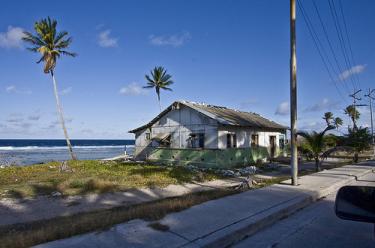
Photos of Nauru
Photos of Nauru


Travel and Tourism
Travel and Tourism
- Travel Alert Status
- Level 1: Exercise Normal Precautions
- Currency
- Australian dollar (AUD)
- Time Difference
- UTC+12 (17 hours ahead of Washington, DC, during Standard Time)
- Airports
- 1
Read the full travel guide — health, safety, vaccinations, disease risk, sanitation, and transit details.
View full travel guideHistory
History
Historical Eras
Prehistoric & Tribal
1000 – 1798
Nauru was settled by Micronesian and Polynesian peoples, likely around 1000 CE, who organized into 12 distinct tribes sharing the small coral island. Society was governed by clan structures and largely peaceful coexistence, with the population reaching approximately 1,400 by the mid-19th century. The island remained almost entirely isolated from outside contact until European navigators arrived in the late 18th century.
European Contact
1798 – 1888
British navigator Captain John Fearn named the island Pleasant Island in 1798, and from the 1830s whalers and traders introduced firearms and alcohol, destabilizing the traditionally peaceful tribal order. A devastating inter-tribal war erupted in 1878 and lasted a decade, reducing the population from roughly 1,400 to around 900. The 1886 Anglo-German Convention assigned Nauru to the German sphere of influence.
German Colonial Rule
1888 – 1914
Germany formally annexed Nauru in 1888 as part of the Marshall Islands Protectorate, imposing colonial administration and ending inter-tribal conflict. Phosphate was discovered around 1900, and by 1906 the Pacific Phosphate Company, operating under an agreement with Germany, had begun systematic extraction of the island's vast phosphate reserves. This resource would define Nauru's economic and political trajectory for over a century.
Mandate Period
1914 – 1968
Australian forces seized Nauru in 1914, and after World War I the League of Nations granted Britain, Australia, and New Zealand a joint trusteeship, with the British Phosphate Commissioners controlling mining revenues. Japan occupied the island from 1942 to 1945, deporting 1,200 Nauruans to the Caroline Islands, of whom 463 perished. After the war Nauru became a UN Trust Territory under Australian administration until independence was achieved in January 1968.
Independence & Phosphate Wealth
1968 – 1995
Nauru became the world's smallest independent republic in 1968, and in 1970 the Nauru Phosphate Corporation assumed full control of mining operations, generating extraordinary per-capita wealth during the 1970s and 1980s. The government invested heavily in overseas assets through the Nauru Phosphate Royalties Trust, though widespread mismanagement eroded these reserves. In 1993 Australia settled Nauru's International Court of Justice claim for mining damages, paying A$107 million in compensation and rehabilitation assistance.
Economic Crisis & Modern Era
1995 – present
Phosphate reserves neared exhaustion by the mid-1990s, and the collapse of trust fund investments plunged Nauru into severe financial crisis. To generate revenue, the government controversially hosted Australian offshore asylum-seeker processing facilities from 2001 onward, a role that drew sustained international scrutiny. Nauru joined the United Nations in 1999 and continues efforts to rehabilitate its mined landscape and diversify its economy amid ongoing environmental and fiscal challenges.
Overview
Nauru had little contact with Europeans until whaling ships and other traders began to visit in the 1830s. The introduction of firearms and alcohol destroyed the peaceful coexistence of the 12 tribes living on the island. A 10-year internal war began in 1878 and resulted in a reduction of the population from 1,400 (1843) to around 900 (1888).
Every country, every topic, all activities & recipes
✓ Instant access on this device · ✓ No subscription
Timeline of Key Events
1798
British navigator Captain John Fearn names it Pleasant Island.
British navigator Captain John Fearn, sailing past Nauru from New Zealand to the China Seas, names it Pleasant Island.
1888
Nauru annexed by Germany as part of the Marshall Islands Protectorate.
Nauru annexed by Germany as part of the Marshall Islands Protectorate.
1900
British company discovers phosphate on the island.
British company discovers phosphate on the island.
1906
Phosphate mining begins. Britain divides profits with German firm.
Phosphate mining begins. Britain divides profits with German firm.
1914
Nauru seized by Australian troops.
Nauru seized by Australian troops.
1942 – 1945
Nauru occupied by the Japanese.
Nauru occupied by the Japanese. Some 1,200 Nauruans - two-thirds of the population - deported to Micronesia to work as forced labourers. Five hundred die from starvation or bombing.
1967
Nauruans gain control of phosphate mining.
Nauruans gain control of phosphate mining.
Read the full history profile — narrative overview, defining eras, and the complete timeline in one place.
View expanded historyInteresting Facts
Interesting Facts
Nauru is one of the three great phosphate rock islands in the Pacific Ocean - the others are Banaba (Ocean Island) in Kiribati and Makatea in French Polynesia.
See every fact — trivia, oddities, and curious tidbits gathered from across the country.
View all interesting factsGeography and Environment
Geography and Environment
- Terrain
- sandy beach rises to fertile ring around raised coral reefs with phosphate plateau in center
- Climate
- tropical with a monsoonal pattern; rainy season (November to February)
- Natural Hazards
- periodic droughts
- Current Environmental Issues
- limited natural fresh water resources, roof storage tanks collect rainwater, but mostly dependent on a single, aging desalination plant; intensive phosphate mining during the past 90 years - mainly by a UK, Australia, and NZ consortium - has left the central 90% of Nauru a wasteland and threatens limited remaining land resources
Read the full geography and environment profile — terrain, climate, natural resources, hazards, land use, and international agreements.
View full geographyPeople & Demographics
People & Demographics
Religion
Languages Spoken
Nauruan (official, a distinct Pacific Island language), English widely understood, spoken, and used for most government and commercial purposes
- Nauruan
Population
- Population
- 10,824
- Nationality Noun
- Nauruan(s)
- Ethnic Groups
- Nauruan 58%, other Pacific Islander 26%, Chinese 8%, European 8%
Education
- Literacy Definition
- NA
Life Expectancy
- Life Expectancy at Birth
- Life expectancy at birth in Nauru is estimated at approximately 63 to 65 years for the overall population, placing it significantly below the global average of around 73 years. This figure reflects a combination of health, dietary, and socioeconomic factors that are characteristic of the small Pacific island nation. Nauru has one of the highest rates of obesity in the world, with a substantial majority of its adult population classified as obese or overweight. This epidemic is closely linked to the widespread prevalence of type 2 diabetes, cardiovascular disease, and kidney disease — all of which are leading causes of premature death on the island. These non-communicable diseases (NCDs) significantly shorten life expectancy compared to regional and global benchmarks. When broken down by sex, women in Nauru generally live longer than men, a pattern consistent with global trends. Female life expectancy is estimated at approximately 67 to 68 years, while male life expectancy falls closer to 61 to 63 years. This gap reflects higher rates of lifestyle-related illness and risk behaviors among men. The dietary transformation that followed phosphate mining wealth in the mid-20th century played a substantial role in shaping the current health crisis. Traditional Pacific foods were largely replaced by imported, processed foods high in sugar, fat, and sodium. This shift contributed to generations of dietary-related illness that continue to suppress life expectancy today. Healthcare infrastructure on Nauru remains limited. The country relies on a single public hospital, the Republic of Nauru Hospital, and must regularly transfer complex medical cases to Australia and other countries for specialized treatment. The small population — roughly 10,000 to 12,000 residents — makes it economically challenging to maintain a comprehensive health system. Efforts by the Nauruan government and international health organizations to address NCDs, improve nutrition, and promote physical activity are ongoing, but reversing deeply entrenched health trends takes generations. Until significant improvements in diet, lifestyle, and healthcare access are achieved, life expectancy in Nauru is likely to remain well below the averages seen in developed Pacific nations such as Australia and New Zealand.
- Infant Mortality Rate
- Nauru's infant mortality rate reflects the broader healthcare challenges facing this small Pacific island nation. According to recent estimates, Nauru's infant mortality rate stands at approximately 7 to 8 deaths per 1,000 live births, a figure that places it in a moderate range compared to other Pacific island nations but still above rates seen in most high-income countries. The country has made measurable progress in reducing infant deaths over the past few decades, largely through improvements in maternal healthcare, vaccination programs, and access to basic medical services. The Republic of Nauru Hospital, the island's primary medical facility, plays a central role in delivering neonatal and maternal care to the population. Despite these gains, Nauru continues to face structural obstacles that complicate further reductions in infant mortality. Geographic isolation is a significant factor — the island's remote location in the central Pacific Ocean makes it difficult and expensive to import medical equipment, attract specialist physicians, and quickly evacuate patients requiring advanced care unavailable locally. Critically ill newborns often need to be airlifted to Australia or New Zealand for treatment, and logistical delays in such transfers can have serious consequences. The high prevalence of non-communicable diseases among the Nauruan adult population — particularly type 2 diabetes and obesity — also has downstream effects on maternal health and birth outcomes. Gestational diabetes and related complications can increase risks for newborns, contributing to elevated neonatal vulnerability. UNICEF and the World Health Organization have worked alongside the Nauruan government to support immunization coverage and child health initiatives across the Pacific region. Vaccination rates for diseases such as measles, polio, and tetanus remain relatively high, which has contributed to keeping preventable infant deaths low. Continued investment in maternal nutrition programs, antenatal care, and strengthening the capacity of local health workers will be essential for Nauru to sustain and build upon the progress it has made in protecting the health of its youngest citizens.
Read the full people and society profile — demographics, health, education, religion, languages, and notable people.
View full people and societyGovernment & Politics
Government & Politics
Country Identity
- Country Name
- Nauru
- Full Country Name
- Republic of Nauru
- Former Name
- Pleasant Island
Government Structure
- Government Type
- republic
- Legal System
- acts of the Nauru Parliament and British common law
- Executive Branch
- chief of state: President David ADEANG (since 30 October 2023); note - the president is both the chief of state and head of government head of government: President David ADEANG (since 30 October 2023); note - the president is both the chief of state and head of government cabinet: Cabinet appointed by the president from among the members of Parliament elections: president elected by Parliament for a three-year term; election last held 24 September 2022 (next to be held in 2025) election results: David ADEANG was elected president by Parliament following the resignation of Russ KUN in October 2023
- Legislative Branch
- Unicameral Parliament (19 seats; members elected by popular vote to serve three-year terms) Elections: last held on 24 September 2022 (next to be held in 2025) Election results: percent of vote - NA%; seats - independents 19 (no formal party representation currently holds seats)
- Judicial Branch
- Supreme Court
- Suffrage
- 20 years of age; universal and compulsory
- Constitution
- 29-Jan-68
- Independence
- 31 January 1968 (from the Australia-, NZ-, and UK-administered UN trusteeship)
- National Holiday
- Independence Day, 31 January (1968)
Capital City
- Capital Name
- no official capital; government offices in the Yaren District
- Capital Time Difference
- UTC+12 (17 hours ahead of Washington, DC, during Standard Time)
Military
Branches: no regular military forces
Embassy / Diplomatic Mission
There is no U.S. Embassy or diplomatic post in Nauru. The U.S. Embassy in Fiji provides assistance for U.S. citizens in Nauru.
U.S. Embassy Suva
158 Princes Road, Suva, Fiji
(679) 331-4466
Emergency after-hours telephone: (679) 772-8049
Facsimile: (679) 330-2267
Read the full government profile — flag symbolism, national anthem, and other national symbols.
View full government detailsEconomy
Economy
Nauru's economy has historically depended on the mining and export of phosphates, but primary reserves were largely depleted by the early 2000s.
Snapshot
- Currency Name and Code
- Australian Dollar (AUD)
- GDP Real Growth Rate
- 0.5%
Every country, every topic, all activities & recipes
✓ Instant access on this device · ✓ No subscription
News & Weather
News & Weather
Current Weather
Latest News
Naoero - Phosphate Mining, WWII, Geopolitics - Britannica
Britannica · 6d ago
One of the World’s Smallest Countries Has a New Name - The New York Times
The New York Times · 83d ago
A nation renamed stands up at the UN: ‘Say our name. Naoero.’ - AP News
AP News · 33d ago
Tiny Pacific island nation Nauru reclaims traditional name 'Naoero' - Reuters
Reuters · 87d ago
Naoero: Government pulls out of ICC while new refugee agreement with Australia made public - Civicus Monitor
Civicus Monitor · 2d ago
Nauru officially changes name to Republic of Naoero - ConstitutionNet
ConstitutionNet · 83d ago
Pacific island nation Nauru officially changes name to ‘Naoero’ - Al Jazeera
Al Jazeera · 86d ago
Nauru, the world's 3rd-smallest country, changes its name to Naoero - Houston Public Media
Houston Public Media · 82d ago
News via Google News
Frequently Asked Questions
Frequently Asked Questions
What is the population of Nauru?
What serves as the capital of Nauru?
Where is Nauru located?
What are the ocean borders of Nauru?
What religion is practiced in Nauru?
What currency is used in Nauru?
What language is spoken in Nauru?
How large is Nauru and what is its terrain like?
What is Nauru known for?
Last reviewed 2026