
 English
 Español
 中文
中文 हिन्दी
 Français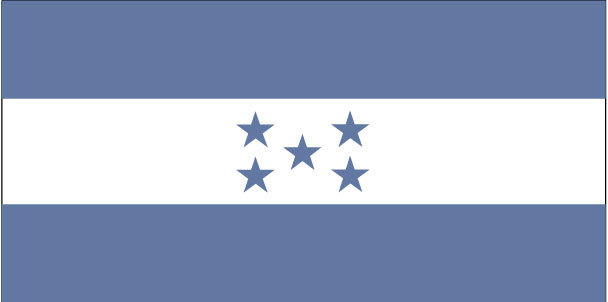
Honduras
Honduras
Declare Your Relationship to Honduras
CountryReports Community
- Studying1
- From Honduras1
- Honduras heritage1
- Visited0
- Want to visit1
Customs and Culture
Customs and Culture
About the People
Hondurans are people who are warm, friendly, courteous, and caring despite many hardships. Hondurans feel a sense of responsibility for family members who need help, and will often support them. If Hondurans are in a position to give someone a job, they will frequently hire a relative.
In Honduras, individual needs are considered more important than schedules, so being late for appointments or social events is common. Hand and body language are important forms of communication.
Cultural Attributes
Hondurans are people who are warm, friendly, courteous, and caring despite many hardships. Hondurans feel a sense of responsibility for family members who need help, and will often support them. If Hondurans are in a position to give someone a job, they will frequently hire a relative.
In Honduras, individual needs are considered more important than schedules, so being late for appointments or social events is common. Hand and body language are important forms of communication.

Land of Silver Hills and Warm Hearts
Greetings, Gestures & Visiting
Hondurans routinely begin conversations with a friendly “Buenos días” (good day). When sitting down to a meal with others, a Honduran will say “Buen provecho” (May it do you good!). Politeness is important, and these gestures are
appreciated.
Hondurans show their respect for education by giving professionals special titles. For example, they would say “Doctor Pérez,” “Teacher Cardona,” “Professor Nuñez,” or “Attorney Amador.” A non-professional man is addressed as Señor, a single adult woman as Señorita, and a married adult woman as Señora. Don and Doña are titles given to particularly well-respected men or women, respectively.
Hondurans usually have four names: two first names and two family names, one to represent the father's side of the family, and the other the mother's side. For example, if a woman's name was Elena María García Lopes, García would be the last name of her father's family, and Lopes her mother's family. When women marry, they may drop the final name and replace it with the name of their husband's family, preceded by “de.” For instance, if Elena María married a man whose father's name was Torrez, she would be known as Elena María García de Torrez.
Hondurans consider it rude to pass someone without a greeting. They also shake hands when they meet. Women may kiss when greeting each other. Waving the index finger is often used to say “no.” Clasping both hands indicates strong approval
Visiting others is commonly done and and appointment is not usually needed. Guests are usually offer light refreshment and refusing such is considered rude.
Men in the larger cities may wear a decorative shirt that hangs just below the waist called a "guayabera" rather then wearing more formal attire.
Western-style clothing is common throughout Honduras. In rural areas, shirts with English slogans are frequently worn even though the wearer probably does not speak English.
Diet
Common foods include plantains (similar to bananas), cassava and peppers. People enjoy tamales (made of ground corn and filled with meat and sauce) and tortillas con quesillo (tortillas filled with melted cheese). Other common dishes include tapado (a stew made from cassava and meat) and baleadas (tortillas folded over and filled with refried beans, crumbled cheese and cream). Street vendors sell crispy tajaditas (fried plantain chips) or sliced green mangoes sprinkled with salt and cumin.
Honduran breakfast foods include fried beans, eggs, cheese and fried bananas. At lunch or dinner, they may eat rice, tortillas, meat, cheese, salad or soup. Portions are smaller at supper, which is a lighter meal.
Children and adults also drink orchata, which is made from rice and seeds. Milk is usually mixed with fruit in a drink called licuados. Soft drinks are common, and frescos (drinks made from fruit, sugar and water) are popular
Common foods include plantains (similar to bananas), cassava and peppers. People enjoy tamales (made of ground corn and filled with meat and sauce) and tortillas con quesillo (tortillas filled with melted cheese). Other common dishes include tapado (a stew made from cassava and meat) and baleadas (tortillas folded over and filled with refried beans, crumbled cheese and cream). Street vendors sell crispy tajaditas (fried plantain chips) or sliced green mangoes sprinkled with salt and cumin.
Honduran breakfast foods include fried beans, eggs, cheese and fried bananas. At lunch or dinner, they may eat rice, tortillas, meat, cheese, salad or soup. Portions are smaller at supper, which is a lighter meal.
Children and adults also drink orchata, which is made from rice and seeds. Milk is usually mixed with fruit in a drink called licuados. Soft drinks are common, and frescos (drinks made from fruit, sugar and water) are popular

Family
Men in Honduras are encouraged to be strong, unemotional and assertive. Traditionally, they earn money to support the family. Today however, many women work outside the home. Many children in Honduras grow up in single-parent families headed by women.
Recreation
The Honduran national sport is soccer. Baseball is another very popular sport. Many girls prefer dancing to sports. Girls learn to dance at a very young age and often go on to take dance classes.
Other pastimes include checkers, chess and cards. Many men like to play billiards. Young girls play hopscotch, boys fly kites, and both boys and girls play marbles and hide-and-seek. Honduran children also play a type of "kick the can" called "cantarito".
In the game of "ldquo;enchute", children hold a stick that has a cup attached to it by a string. They try to catch the cup upside down on the stick by flipping the stick.
Student Life
On a school day the majority of students taking a bath, and have breakfast before going to school . Since schools do not provide lunch, students need to bring their own food. Schools have cafeterias for the children to “buy” what is provided by the Schools for them.
To get to school transportation is not provided by the school. Parents need to make their own arrangements for the students to get to school. The majority of students take public transportation. A small group is brought to school by their parents.
Classes start at 7:00 AM and end at 2:00 PM. Each class lasts 40 minutes and the students have a 20 minute recess break. The lunch time break is a 40 minute break. Students usually bring their own food. There is an average of 35 students per class but in some schools that number can increase to 40 students per class. The average school is about 50 years old and there are about 600 students per building. Students typically have desks, and books for studing however space, updated technology, professional development for teachers, computers and food services are lacking. Students speak Spanish in their classes. English is usually provided as a secondary language class. The Main subjects include Spanish, Social Studies, Math, Science, Spelling, Reading, Art. and Music. There are few opportunities to develop art and drama among students. The majority of students move to the secondary school. Some children dropout of school when they graduate from high school. College is for the more affluent. Generally, when students reach college age they need to begin working to help support their family. Dispciline is important in the schools and the majority of the schools are very strict. Principals have a lot of authority in disciplinary issues. All schools have uniforms and children have to wear them every day.
Some schools provide after school sports programs. Many children participate in these activities, soccer being the number one activity. Others students are involved in basketball. Not many schools provide extra curricular activities. There are many opportunities in the community but these have to be paid for by parents. The most fortunate children attend private lessons. Some afternoon activities include soccer, swimming lessons, ballet, or music. The majority spend the afternoon doing homework at home.
When children return home on a school day, students usually do homework since in most of the cases the work load is huge. They have something to eat first and then begin working on special assignments. They may have some time to play, eat supper, take a bath and go to bed usually around 7:00 PM to 8:00 PM. For the weekend, the communities do not have parks where parents can take their children to play. Some neighborhoods have areas where children can play and ride their bicycles, but these are the wealthier areas. Most children spend time at home.
Holidays
Independence Day
9/15Independence Day
Christmas
12/25Christmas
During Advent, bands of Garifuna women perform dances at various homes for which they receive monetary donations, and sweet liquors, such as guaro. Spanish Children perform pastorelas (nativity plays) employers grant aguinaldos (bonuses) to employees. On Christmas Eve, a masked dancer, the Warini ushers in Christmas by dancing from house to house with an entourage of singers and drummers and a din of firecrachers.
The Christmas dinner usually features turkey with stuffing, lechonitos (suckling pig) and rompope (eggnog with liquor) At Midnight on New Year’s Eve, families burn an effigy of an undesirable person or object, a custom termed La Quema de los Años Viejos (burning the Old Year). The Warini close the season with dances on Epiphany.
Dates of Interest
- December 25th
During Advent, bands of Garifuna women perform dances at various homes for which they receive monetary donations, and sweet liquors, such as guaro. Spanish Children perform pastorelas (nativity plays) employers grant aguinaldos (bonuses) to employees. On Christmas Eve, a masked dancer, the Warini ushers in Christmas by dancing from house to house with an entourage of singers and drummers and a din of firecrachers. The Christmas dinner usually features turkey with stuffing, lechonitos (suckling pig) and rompope (eggnog with liquor) At Midnight on New Year’s Eve, families burn an effigy of an undesirable person or object, a custom termed La Quema de los Años Viejos (burning the Old Year). The Warini close the season with dances on Epiphany.
How do people greet each other in Honduras?
Hondurans greet warmly and politely, often opening with "Buenos días" (good day), and consider it rude to pass someone without a greeting. Handshakes are standard, and women may kiss when greeting each other.
Do
- Say "Buenos días" to start conversations
- Shake hands when you meet someone
- Greet everyone you pass
- Say "Buen provecho" when sitting down to a meal
Good to know
- Show respect for education by using professional titles like "Doctor Pérez," "Teacher Cardona," "Professor Nuñez," or "Attorney Amador"
- Address a non-professional man as Señor, a single woman as Señorita, and a married woman as Señora
- Use Don or Doña for particularly well-respected men or women
- Note that Hondurans usually have two first names and two family names (father's then mother's)
What are dining and food customs like in Honduras?
Meals feature plantains, cassava, peppers, tortillas, beans, cheese and meat, with dishes like tamales, baleadas and tapado; supper is a lighter meal with smaller portions.
Good to know
- Try common dishes such as tamales, tortillas con quesillo, tapado and baleadas
- Look for street vendors selling tajaditas (fried plantain chips) or salted green mangoes
- Sample local drinks like orchata, licuados, frescos and soft drinks
- Expect a lighter meal at supper
What should I know about visiting and social etiquette in Honduras?
Hondurans value politeness and hospitality, and visiting without an appointment is common. Individual needs come before schedules, so lateness to appointments and social events is common.
Do
- Accept light refreshments offered as a guest
- Be polite and courteous
Don’t
- Don't refuse refreshments offered to you, as it is considered rude
- Don't expect strict punctuality
How should I dress in Honduras?
Western-style clothing is common throughout Honduras. In larger cities, men may wear a decorative shirt called a "guayabera" instead of more formal attire.
Good to know
- In rural areas, shirts with English slogans are commonly worn
What gestures should I be aware of in Honduras?
Hand and body language are important forms of communication in Honduras.
Good to know
- Waving the index finger means "no"
- Clasping both hands indicates strong approval
What is family life like in Honduras?
Family is central: Hondurans feel responsible for relatives in need and often hire them when able. Men are traditionally the breadwinners, though many women now work outside the home.
Good to know
- Men are encouraged to be strong, unemotional and assertive
- Many children grow up in single-parent families headed by women
What do people do for recreation in Honduras?
Soccer is the national sport and baseball is also very popular, while many girls prefer dancing and learn it from a young age.
Good to know
- Other pastimes include checkers, chess and cards, and many men play billiards
- Children play hopscotch, kites, marbles, hide-and-seek, "cantarito" (kick the can) and "enchute"
Last updated: 2026-07-12 · Sources: CountryReports
Photos of Honduras
Photos of Honduras
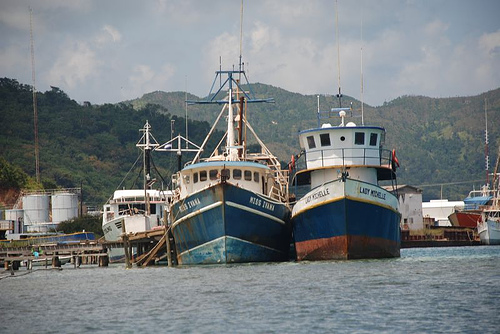
Fishing boats in Guanaja, Honduras
Traditional houses on Miami Beach
Artwork near Bay Island
Atlantic Coast of Honduras
Mayan pyramid at Copan
Island home in Guanaja, Honduras
Alleyway in Guanaja, Honduras
Waterfront in Roatan, Honduras
Beach at Guanaja, Honduras
Fruit and vegatable stand in Guanaja, Honduras
Guanaja, Honduras
Honduras Creche -- Terra Cotta Figures


Travel and Tourism
Travel and Tourism
- Travel Alert Status
- Level 3: Reconsider Travel
- Currency
- Lempira (HNL)
- Time Difference
- UTC-6 (1 hour behind Washington, DC during Standard Time)
- Climate
- The climate in Honduras varies between the mountainous interior and the coastal lowlands and between the Pacific and Caribbean coasts. The interior is much cooler than the humid coast, and temperate Tegucigalpa has maximum temperatures averaging between 77°F and 86°F. The rainy season technically begins in May and lasts until October. This means that the interior and Pacific coast are relatively dry between November and April, but on the Caribbean coast it rains all year. The wettest months on the Caribbean coast are from September/October to January/February.
- Airports
- 115
Read the full travel guide — health, safety, vaccinations, disease risk, sanitation, and transit details.
View full travel guideRecipes
Recipes
History
History
Historical Eras
Pre-Columbian Era
1000 BCE – 1502
Honduras was home to several indigenous civilizations, most notably the Maya, whose ceremonial city of Copán flourished as a major center of art, astronomy, and hieroglyphic writing from roughly 400 to 800 CE. After the Maya decline, diverse peoples including the Lenca, Paya, and Tolupan inhabited the region. These societies maintained complex trade networks and agricultural systems across the rugged terrain.
Spanish Colonial Period
1502 – 1821
Christopher Columbus arrived on the Honduran coast in 1502, and Spanish conquest began in earnest under Hernán Cortés's lieutenants from 1525, completing subjugation by 1539 after fierce indigenous resistance. Honduras became part of the Captaincy General of Guatemala and was exploited for silver mining, particularly around Tegucigalpa. The colonial economy relied on forced indigenous labor, and the population suffered catastrophic decline due to disease and exploitation over three centuries of Spanish rule.
Independence & Federation
1821 – 1840
Following Napoleon's overthrow of the Spanish crown, Honduras declared independence in 1821, briefly joining the Mexican Empire before becoming a founding member of the United Provinces of Central America in 1823. The federation proved unstable, riven by liberal-conservative conflicts, and Honduras emerged as a fully sovereign republic in 1840. These early years established patterns of political fragility and vulnerability to regional interference that would define Honduran governance for generations.
Republican Instability
1840 – 1948
Honduras endured chronic political instability throughout the nineteenth and early twentieth centuries, marked by frequent coups, caudillo rule, and repeated interventions by neighboring states. The economy fell under the overwhelming dominance of U.S. banana companies — chiefly United Fruit and Standard Fruit — whose commercial power often rivaled that of the Honduran government itself. This era of foreign economic control and weak institutions gave Honduras its enduring reputation as the archetypal "banana republic."
Military Era
1948 – 1982
A series of military governments dominated Honduras from the late 1940s onward, punctuated by the brief but damaging Football War with El Salvador in 1969. Generals including Juan Alberto Melgar Castro and Policarpo Paz García cycled through power via coups, while the country remained economically underdeveloped and politically repressed. Paz García's signing of a peace treaty with El Salvador in 1980 helped pave the way for a transition toward civilian rule.
Democratic & Modern Era
1982 – present
Honduras returned to elected civilian government in 1982, though democracy remained fragile amid Cold War pressures that turned the country into a staging ground for U.S.-backed Contra operations against Nicaragua. Hurricane Mitch devastated the nation in 1998, killing approximately 5,600 people and causing some $2 billion in damage, setting back decades of development. Honduras continues to grapple with poverty, migration, gang violence, and political instability, including a contested 2009 coup and ongoing governance challenges into the twenty-first century.
Overview
Timeline of Key Events
1502
Christopher Columbus lands in Honduras.
Christopher Columbus lands in Honduras.
1525
Spain begins conquest of Honduras.
Spain begins conquest of Honduras.
1539
Spain succeeds in the conquest of Honduras.
Spain succeeds in the conquest of Honduras after bitter struggles with the native population.
1810
Overthrow of the king of Spain by Napoleon
Overthrow of the king of Spain by Napoleon.
1821
Honduras gains independence from Spain.
Honduras gains independence from Spain.
1821
Honduras became a part of the Mexican empire.
Honduras became a part of the Mexican empire.
1823
Honduras breaks away from Mexico.
Honduras breaks away from Mexico.
Read the full history profile — narrative overview, defining eras, and the complete timeline in one place.
View expanded historyInteresting Facts
Interesting Facts
The name of the Honduran capital city, Tegucigalpa, comes from two indigenous words: teguz, which means hill, and galpa, which means silver. Tegucigalpa was once a silver mining town.
Honduras was originally known as Higüeras, the name of a native plant. Christopher Columbus named the land Honduras, which means “deep waters,” because he landed in a bay off the north coast of Honduras that was very deep.
The Garífuna or Black Caribs are mixed-race descendants of Africans and Carib Indians from the Caribbean island of St. Vincent, who were deported by the British and sent to Central America in the late 18th century.
In 1830, Francisco Morazán, a Honduran military leader, was elected president of the United Provinces of Central America. He worked to improve education, the justice system and regional economic development. Many streets, parks and towns in Honduras are named after Morazán, who is considered the father of Central America.
Although Honduras is a predominantly Roman Catholic country, many couples do not get married in a church. Some live common-law, and others prefer to have a civil ceremony.
Very few people have cars, because cars and gasoline are expensive. Most people in cities travel by taxi or bus. People in rural areas walk or get a ride in a pick-up truck.
See every fact — trivia, oddities, and curious tidbits gathered from across the country.
View all interesting factsGeography and Environment
Geography and Environment
- Terrain
- mostly mountains in interior, narrow coastal plains
- Climate
- The climate in Honduras varies between the mountainous interior and the coastal lowlands and between the Pacific and Caribbean coasts. The interior is much cooler than the humid coast, and temperate Tegucigalpa has maximum temperatures averaging between 77ºF and 86ºF. The rainy season technically begins in May and lasts until October. This means that the interior and Pacific coast are relatively dry between November and April, but on the Caribbean coast it rains all year. The wettest months on the Caribbean coast are from September/October to January/February.
- Natural Hazards
- frequent, but generally mild, earthquakes; extremely susceptible to damaging hurricanes and floods along the Caribbean coast
- Current Environmental Issues
- urban population expanding; deforestation results from logging and the clearing of land for agricultural purposes; further land degradation and soil erosion hastened by uncontrolled development and improper land use practices such as farming of marginal lands; mining activities polluting Lago de Yojoa (the country's largest source of fresh water), as well as several rivers and streams, with heavy metals
Read the full geography and environment profile — terrain, climate, natural resources, hazards, land use, and international agreements.
View full geographyPeople & Demographics
People & Demographics
Religion
Languages Spoken
Spanish, Amerindian dialects
- Spanish
Population
- Population
- 7,989,415
- Population: Male/Female
- Male: 4,591,247 Female: 4,937,941
- Population Distribution
- Most residents live in the mountainous western half of the country; unlike other Central American nations, Honduras is the only one with an urban population that is distributed between two large centers - the capital of Tegucigalpa and the city of San Pedro Sula; the Rio Ulua valley in the north is the only densely populated lowland area
- Urban Population
- Urban population: 60.2% of total population Rate of urbanization: 2.48% annual rate of change
- Population in Major Urban Areas
- 1.568 million TEGUCIGALPA (capital), 982,000 San Pedro Sula
- Nationality Noun
- Noun: Honduran(s) Adjective: Honduran
- Ethnic Groups
- Mestizo (mixed Indigenous and European) 90%, Indigenous 7%, African descent 2%, White 1%
- Language Note
- Spanish (official), Amerindian dialects
Demographic Profile
Honduras is one of the poorest countries in Latin America and has one of the world's highest murder rates. More than half of the population lives in poverty and per capita income is one of the lowest in the region. Poverty rates are higher among rural and indigenous people and in the south, west, and along the eastern border than in the north and central areas where most of Honduras' industries and infrastructure are concentrated. The increased productivity needed to break Honduras' persistent high poverty rate depends, in part, on further improvements in educational attainment. Although primary-school enrollment is near 100%, educational quality is poor, the drop-out rate and grade repetition remain high, and teacher and school accountability is low.
Honduras' population growth rate has slowed since the 1990s and is now 1.2% annually with a birth rate that averages 2.1 children per woman and more among rural, indigenous, and poor women. Honduras' young adult population - ages 15 to 29 - is projected to continue growing rapidly for the next three decades and then stabilize or slowly shrink. Population growth and limited job prospects outside of agriculture will continue to drive emigration. Remittances represent about a fifth of GDP.
Education
- Literacy Definition
- Age 15 and over can read and write
Classes start at 7:00 AM and end at 2:00 PM. Each class lasts 40 minutes and the students have a 20 minute recess break. The lunch time break is a 40 minute break. Students usually bring their own food. There is an average of 35 students per class but in some schools that number can increase to 40 students per class. The average school is about 50 years old and there are about 600 students per building. Students typically have desks, and books for studing however space, updated technology, professional development for teachers, computers and food services are lacking.
Students speak Spanish in their classes. English is usually provided as a secondary language class. The Main subjects include Spanish, Social Studies, Math, Science, Spelling, Reading, Art. and Music. There are few opportunities to develop art and drama among students. The majority of students move to the secondary school. Some children dropout of school when they graduate from high school. College is for the more affluent. Generally, when students reach college age they need to begin working to help support their family.
Dispciline is important in the schools and the majority of the schools are very strict. Principals have a lot of authority in disciplinary issues. All schools have uniforms and children have to wear them every day.
Health Information
- Life Expectancy at Birth
- Ttotal population: 73.1 years Male: 69.6 years Female: 76.8 years
- Major Infectious Diseases — degree of risk
- Degree of risk: High Food or waterborne diseases: Bacterial diarrhea, hepatitis A, and typhoid fever Vectorborne diseases: Dengue fever
- Alcohol consumption per capita
- Total: 2.73 liters of pure alcohol Beer: 1.6 liters of pure alcohol Wine: 0.04 liters of pure alcohol Spirits: 1.09 liters of pure alcohol Other alcohols: 0 liters of pure alcohol
- Child Marriage
- Women married by age 15: 9.2% Women married by age 18: 34% Men married by age 18: 10%
- Infant Mortality Rate
- Total: 15.4 deaths/1,000 live births Male: 17.5 deaths/1,000 live births Female: 13.2 deaths/1,000 live births
Life Expectancy
- Life Expectancy at Birth
- Ttotal population: 73.1 years Male: 69.6 years Female: 76.8 years
- Median Age
- Total: 25.7 years Male: 24.8 years Female: 26.6 years
- Age Structure
- 0-14 years: 28.7% (male 1,378,026/female 1,353,238) 15-64 years: 65.7% (male 2,980,393/female 3,282,159) 65 years and over: 5.6% (male 232,828/female 302,544)
- Infant Mortality Rate
- Total: 15.4 deaths/1,000 live births Male: 17.5 deaths/1,000 live births Female: 13.2 deaths/1,000 live births
Read the full people and society profile — demographics, health, education, religion, languages, and notable people.
View full people and societyGovernment & Politics
Government & Politics
Country Identity
- Country Name
- Honduras
- Full Country Name
- Republic of Honduras
- Local - Long
- Republica de Honduras
- Local - Short
- Honduras
Government Structure
- Government Type
- democratic constitutional republic
- Legal System
- rooted in Roman and Spanish civil law with increasing influence of English common law; recent judicial reforms include abandoning Napoleonic legal codes in favor of the oral adversarial system; accepts ICJ jurisdiction, with reservations
- Executive Branch
- chief of state: President Xiomara CASTRO de Zelaya (since 27 January 2022); Vice President Salvador NASRALLA (since 27 January 2022); note - the president is both the chief of state and head of government head of government: President Xiomara CASTRO de Zelaya (since 27 January 2022); Vice President Salvador NASRALLA (since 27 January 2022); note - the president is both the chief of state and head of government cabinet: Cabinet appointed by the president elections: president elected by popular vote for a four-year term; election last held on 28 November 2021 (next to be held in November 2025) election results: Xiomara CASTRO de Zelaya (LIBRE) elected president - 51.1%, Nasry ASFURA (PNH) 36.9%, Yani ROSENTHAL (PL) 10.0%, other 2.0%
- Legislative Branch
- unicameral National Congress or Congreso Nacional (128 seats; members are elected proportionally to the number of votes their party's presidential candidate receives to serve four-year terms) elections: last held 27 November 2005 (next to be held November 2009) election results: percent of vote by party - NA; seats by party - PL 62, PN 55, PUD 5, PDC 4, PINU 2
- Judicial Branch
- Supreme Court of Justice or Corte Suprema de Justicia (judges are elected for seven-year terms by the National Congress)
- Suffrage
- 18 years of age; universal and compulsory
- Constitution
- 11 January 1982, effective 20 January 1982; amended 1995
- Independence
- 15 September 1821 (from Spain)
- National Holiday
- Independence Day, 15 September (1821)
Capital City
- Capital Name
- Tegucigalpa; note - article eight of the Honduran constitution states that the twin cities of Tegucigalpa and Comayaguela, jointly, constitute the capital of the Republic of Honduras; however, virtually all governmental institutions are on the Tegucigalpa side, which in practical terms makes Tegucigalpa the capital
- Capital - geographic coordinate
- 14 06 N, 87 13 W
- Capital Time Difference
- UTC-6 (1 hour behind Washington, DC during Standard Time)
hile most sources agree that Tegucigalpa is of Nahuatl derivation, there is no consensus on its original meaning
Military
Branches: Honduran Armed Forces (Fuerzas Armadas de Honduras, FFAA): Army, Navy (includes Naval Infantry), Honduran Air Force (Fuerza Aerea Hondurena, FAH)
Embassy / Diplomatic Mission
U.S. Embassy Tegucigalpa
Avenida La Paz in Tegucigalpa, Honduras
Telephone: 011-504-2236-9320 or 011-504-2238-5114
Emergency after-hours telephone: 011-504-2236-8497
American Citizens Services Unit Fax: 011-504-2238-4357
American Citizens Services Unit Office hours: Monday through Friday from 8 a.m. to 11:30 a.m.
The Consular Section is closed the first Tuesday of every month.
To provide better customer service and reduce wait times, the Consular Section in Tegucigalpa uses an online appointment system for passport renewals for minors (under age 16), first-time passports and Consular Reports of Birth Abroad. Appointments are required to submit your application for these services. You can find more information, including how to schedule an appointment, at the U.S. Embassy’s American Citizen Services website. We accept walk-ins for adult passport renewals, additional passport pages, notaries and general inquiries only from Monday through Friday between 8 a.m. and 11:30 a.m. In case of an emergency involving a U.S. citizens, please call the American Citizen Services unit at 011-504-2238-5114 extension 4400.
Consular Agency in San Pedro Sula
Banco Atlantida Building (across from Central Park) – 11th Floor
San Pedro Sula, Honduras
Telephone: 011-504-2558-1580
Office hours: Mondays, Wednesdays, and Fridays from 12 p.m. to 4 p.m.
The Consular Agent in San Pedro Sula assists the U.S. Embassy in protecting the interests of U.S. citizens in Honduras. The Consular Agent may execute notarials and accept applications for passports and Consular Reports of Birth Abroad. The Consular Agent may also assist U.S. citizens with emergency situations such as arrests and deaths in Honduras. The Consular Agent does not provide visa information or services of any kind.
Read the full government profile — flag symbolism, national anthem, and other national symbols.
View full government detailsEconomy
Economy
Honduras remains one of the poorest and most unequal countries in Latin America, with high rates of poverty, underemployment, and income inequality. Roughly half the population lives below the national poverty line, and the country continues to grapple with persistent emigration pressures, organized crime, and vulnerability to natural disasters, including the devastating impact of Hurricanes Eta and Iota in 2020.
The economy is heavily dependent on remittances, which account for more than a quarter of GDP, as well as on exports of coffee, bananas, palm oil, shrimp, and apparel manufactured in maquiladora free-trade zones. The United States is by far Honduras's largest trading partner under the CAFTA-DR free trade agreement, making the economy highly sensitive to US economic conditions and commodity price fluctuations.
After contracting sharply during the COVID-19 pandemic, the Honduran economy rebounded, with GDP growth averaging around 3 to 4 percent in recent years. However, structural challenges persist, including weak institutions, corruption, limited tax revenues, an underdeveloped energy sector, and one of the highest homicide rates in the region. The government of President Xiomara Castro, who took office in 2022, has pursued social spending increases and renegotiated agreements with the IMF, securing a new financing arrangement in 2023 aimed at supporting macroeconomic stability, climate resilience, and poverty reduction.
Snapshot
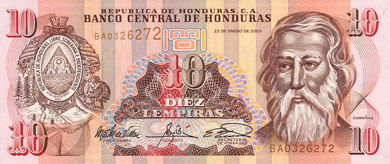
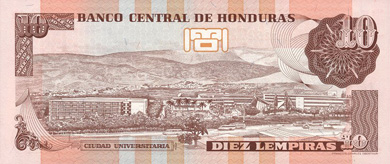
- Currency Name and Code
- Lempira (HNL)
- GDP — official exchange rate
- $7,812,000,000 (USD)
- GDP Real Growth Rate
- 4.2%
- Gini Index
- 55
Banknotes
Budget & Public Finance
- Fiscal Year
- calendar year
- Annual Budget
- $4,938,000,000 (USD)
- Public Debt (% of GDP)
- 70.5%
- External Debt
- $4,675,000,000 (USD)
- Investment (% of GDP)
- 27%
- Economic Aid
- $557,800,000 (USD)
- Current Account Balance
- -$456,000,000 (USD)
- Reserves of Foreign Exchange
- $2,147,483,647 (USD)
Labor, Industry & Trade
- Labor Force by Occupation
- agriculture 34%; industry 21%; services 45%
- Household Income — highest 10%
- 42.7%
- Industries
- sugar, coffee, textiles, clothing, wood products
- Agriculture Products
- bananas, coffee, citrus; beef; timber; shrimp
- Export Commodities
- coffee, bananas, shrimp, lobster, meat; zinc, lumber
- Export Partners
- US 69%, El Salvador 3%, Guatemala 2%
- Import Commodities
- machinery and transport equipment, industrial raw materials, chemical products, fuels, foodstuffs
- Import Partners
- US 53.3%, Mexico 4.3%, El Salvador 4.2%
Energy
- Oil Production
- 0 bbl/day
- Oil Consumption
- 37,000 bbl/day
- Oil Reserves
- 0 bbl/day
- Natural Gas Production
- 0 cu m
- Natural Gas Consumption
- 0 cu m
- Natural Gas Imports
- 0 cu m
- Natural Gas Exports
- 0 cu m
- Natural Gas Reserves
- 0 cu m
Communications
- Telephone System
- General assessment: Fixed-line connections are increasing but still limited; competition among multiple providers of mobile-cellular services is contributing to a sharp increase in subscribership Domestic: Beginning in 2003, private sub-operators allowed to provide fixed-lines in order to expand telephone coverage contributing to a small increase in fixed-line teledensity; mobile-cellular subscribership is roughly 100 per 100 persons International: Country code - 504; landing point for both the Americas Region Caribbean Ring System (ARCOS-1) and the MAYA-1 fiber-optic submarine cable system that together provide connectivity to South and Central America, parts of the Caribbean, and the US; satellite earth stations - 2 Intelsat (Atlantic Ocean); connected to Central American Microwave System
- Internet Country Code
- .hn
News & Weather
News & Weather
Current Weather
Latest News
Louisiana woman hospitalized for genital trauma after cruise accident in Honduras - KTALnews.com
KTALnews.com · 12h ago
IACHR publishes friendly settlement agreement concerning disciplinary removal of judge in Honduras - OAS - Organization of American States
OAS - Organization of American States · 15h ago
Honduras ratifies ICSID Convention - Global Arbitration Review
Global Arbitration Review · 11h ago
Bemus Point 3-on-3 tourney benefits Honduras - Post Journal -
Post Journal - · 19h ago
Shreveport woman hospitalized after cruise accident in Honduras - FOX21 News Colorado
FOX21 News Colorado · 7h ago
UN rights expert demands justice for massacre of Honduran farmworkers - Jurist.org
Jurist.org · 1d ago
Shreveport woman hospitalized after cruise accident in Honduras - WFLA
WFLA · 13h ago
Tegucigalpa, Honduras (018) - Homeland Security (.gov)
Homeland Security (.gov) · 5d ago
News via Google News
Climate Overview
The climate in Honduras varies between the mountainous interior and the coastal lowlands and between the Pacific and Caribbean coasts. The interior is much cooler than the humid coast, and temperate Tegucigalpa has maximum temperatures averaging between 77°F and 86°F. The rainy season technically begins in May and lasts until October. This means that the interior and Pacific coast are relatively dry between November and April, but on the Caribbean coast it rains all year. The wettest months on the Caribbean coast are from September/October to January/February.
Videos
Videos
1 curated YouTube videos.
Source: YouTube
Frequently Asked Questions
Frequently Asked Questions
What is the population of Honduras?
How do people greet each other in Honduras?
What are dining and food customs like in Honduras?
What should I know about visiting and social etiquette in Honduras?
How should I dress in Honduras?
What gestures should I be aware of in Honduras?
What is family life like in Honduras?
What do people do for recreation in Honduras?
What is the capital of Honduras?
Where is Honduras located?
What countries border Honduras?
What is the predominant religion in Honduras?
What is the currency of Honduras?
What language is spoken in Honduras?
What is Honduras known for?
What is the terrain and geography of Honduras like?
Last reviewed 2026