
 English
 Español
 中文
中文 हिन्दी
 Français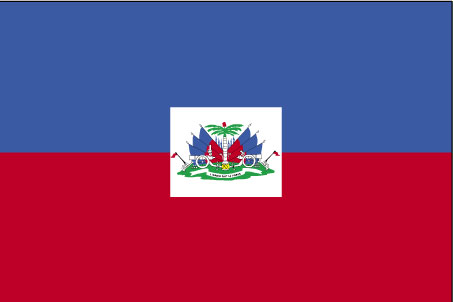
Haiti
Haiti
Declare Your Relationship to Haiti
CountryReports Community
- Studying1
- From Haiti1
- Haiti heritage2
- Visited2
- Want to visit3
Customs and Culture
Customs and Culture
About the People
Haitians are friendly, generous and proud of their history and culture.
Cultural Attributes
Haitians are friendly, generous and proud of their history and culture.

Land of the Mountainous Heart
Greetings, Gestures & Visiting
Haiti has an oral culture. There is a long tradition of proverbs, jokes, riddles and storytelling. Creole is famous for proverbs that voice popular beliefs and that reflect Haiti's social divisions. In rural areas, most serious conversations include at least one proverb
People shake hands in greeting. In communicating with friends, direct eye contact, expressive or animated tone of voice, and expressive hand gestures are common, as is touching the other person. Personal space is often not as pronounced as among some other cultures, and interaction may be very close. Touch by caregivers is often appreciated.
Haitians express their love of music and dance in “bamboches”. Bamboches are social gatherings where the dancing is pou' plaisi' (for pleasure). Haitians also combine work with pleasure through the “combite”. This is a communal working party held when a family or a neighborhood has a big work project. The participants work and afterwords drink “clairin” (a type of alcohol) to the beat of drums. A dance often follows the combite and may run late into the night.
Casual warm weather clothing is traditional in Haiti. Western Style clothing is worn in Urban areas. Tee-Shirts and shorts or pants in the rural area. School children wear uniforms. Men often wear a guayabera (loose fitting shirt). Most women still wear skirts or dresses in rural areas.
The traditional costume for men is a hand embroidered shirt made of cotton or linen. For women it is an embroidered short sleeve blouse. A colorful skirt and a scarf wrapped around their hair.
Diet
Joumou was created in honor of the Haitian Independence day on January 1st.
The main elements of the Haitian diet are corn, cassava, millet, rice and fruit. Tropical fruits such as pineapples, mangoes, oranges and grapefruit are plentiful.
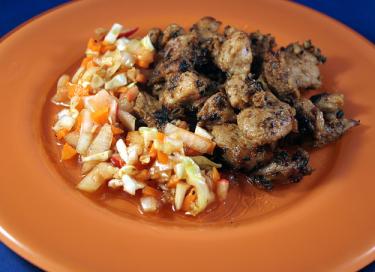
A popular Haitian dish is called “grillot”. This is made of fried marinated pork, served with a very spicy sauce called sauce “ti malice”. “Sauce ti malice” is made from lemons, sour oranges, hot peppers, salt and spices. Another popular Haitian dish is called “lambi”. Lambi is conch meat served grilled or boiled.
A typical Haitian drink served during the holidays is called “crémasse”. It is made of condensed milk, coconut milk and white rum.
Joumou was created in honor of the Haitian Independence day on January 1st.
The main elements of the Haitian diet are corn, cassava, millet, rice and fruit. Tropical fruits such as pineapples, mangoes, oranges and grapefruit are plentiful.
A popular Haitian dish is called “grillot”. This is made of fried marinated pork, served with a very spicy sauce called sauce “ti malice”. “Sauce ti malice” is made from lemons, sour oranges, hot peppers, salt and spices. Another popular Haitian dish is called “lambi”. Lambi is conch meat served grilled or boiled.
A typical Haitian drink served during the holidays is called “crémasse”. It is made of condensed milk, coconut milk and white rum.

Family
Haitian society is matriarchal, especially where child-rearing and family life is concerned. Haitian families consist of parents and children. In rural areas, men are responsible for heavy farming work and women are responsible for performing household tasks and gathering fruits and vegetables to sell at local markets. Parents are authoritarian and the use of force as a means of discipline is common.
Among the poor, the most common relationship between men and women who live together is known as “plasaj”. In a plasaj, the man and the woman make an agreement about their finances and the sharing of work. This arrangement is not recognized as a legal marriage by the government.
Recreation
Soccer is the national sport of Haiti. Cockfighting is also popular.
In the Haitian streets you can watch a version of miniature football. It is played with two teams of five and a goal two feet high. Children's games include "lago" (a form of tag), "marelle" (a form of hopscotch) and "osselets" (a game 2-4 children can play that uses goats' bones as a type of dice).
Holidays
Independence Day
1/1Independence Day
Birthdate - John James Audubon
4/26Birthday
Birthdate - John James Audubon, ornithologist and painter of birdlife, was born Les Cayes, Santo Domingo, Haiti
Christmas
12/25Christmas
Christmas is called Noël, which originates from the French phrase les bonnes nouvelles (the good news), and refers to the gospel. This season is highlighted by the midnight mass where people would then come home to an enticing reveillon, a Christmas or New Year’s Eve supper to “wake them up” as this French word implies.
This usually comes out as a breakfast because it begins very early in the morning and often lasts till dawn. The typical Christmas menu includes fried pork or goat, pikliz(spicy pickled carrots and cabbage), fried plantains , Pain Patate( sweetened potato), fig, and banana pudding, Haitian bread and Pineapple Nog.
Freshly cut Christmas trees brought from the mountains a few days before Christmas occupy a large part of wealthy Haitian homes. The Christmas trees radiate with ornaments and graced by a nativity scene complete with the characters depicted in the first Christmas, all set with intricately designed stable animals and strewn with hay. Young and old alike would place their polished shoes filled with straw on the porch or under the Christmas tree. They believe that Papa Noel, their version of Santa Clause, would move the straw to place the present in or around the shoes.
Christmas day brings lots of eating, drinking, singing and playing with the toys brought by Papa Noel. Children are told to go to bed by midnight to make it easy for Papa Noël to work in his quiet way as he comes into the house usually through a window or down a hall or through a keyhole from his place in the North Pole.
People send gifts to children, relatives, friends, business associates, and the less fortunate ones. Children also have noisemakers and homemade firework to play with. They are allowed freedom to go wherever they want on this night with older children taking charge of younger ones. They are also allowed to drink anisette, a mild alcoholic beverage prepared by soaking the “anise” leaves in rum and sweetening it with sugar.
Christmas in Haiti would not be complete without music. Stations would play a variety of Christmas songs including the three of the well-known and well-loved popular Christmas songs in Haiti as in the rest of the world- the Mon beau sapin, Petit papa Noël, Oh, quand j’entends chanter Noël ! The whole neighborhood is ablaze with lights up until the wee hours of the morning and people gather in groups to go caroling.
Church members perform caroling in public places, aside from the regular worship services and special performances called cantatas. Religious Christmas music which comprise of hymns and songs used in churches, and classical compositions of Bach and Handel, along with popular Christmas carols are the sounds filling the air in this festive time. </p
Dates of Interest
- December 25th
Christmas is called Noël, which originates from the French phrase les bonnes nouvelles (the good news), and refers to the gospel. This season is highlighted by the midnight mass where people would then come home to an enticing reveillon, a Christmas or New Year’s Eve supper to “wake them up” as this French word implies. This usually comes out as a breakfast because it begins very early in the morning and often lasts till dawn. The typical Christmas menu includes fried pork or goat, pikliz(spicy pickled carrots and cabbage), fried plantains , Pain Patate( sweetened potato), fig, and banana pudding, Haitian bread and Pineapple Nog. Freshly cut Christmas trees brought from the mountains a few days before Christmas occupy a large part of wealthy Haitian homes. The Christmas trees radiate with ornaments and graced by a nativity scene complete with the characters depicted in the first Christmas, all set with intric
How do people greet and communicate in Haiti?
People shake hands when greeting, and Haiti has a strong oral culture rich in proverbs, jokes, riddles and storytelling.
Do
- Shake hands when greeting
- Expect proverbs in serious conversations, especially in rural areas
Good to know
- Creole proverbs reflect popular beliefs and social divisions
What foods and drinks should I try in Haiti?
The Haitian diet centers on corn, cassava, millet, rice and plentiful tropical fruits, with popular dishes like grillot and lambi.
Good to know
- Try grillot: fried marinated pork with spicy sauce ti malice
- Try lambi: conch meat served grilled or boiled
- Joumou is eaten in honor of Haitian Independence Day on January 1st
- Crémasse, made of condensed milk, coconut milk and white rum, is served during the holidays
What are common gestures and personal space norms in Haiti?
Among friends, communication is expressive and close, with direct eye contact, animated tone, hand gestures and touching.
Do
- Expect and accept close interaction with friends
- Use expressive hand gestures and direct eye contact
Good to know
- Personal space is less pronounced than in some other cultures
- Touch by caregivers is often appreciated
What should I wear in Haiti?
Casual warm-weather clothing is traditional, with Western-style clothing in urban areas and simpler tee-shirts, shorts or pants in rural areas.
Good to know
- Men often wear a guayabera, a loose-fitting shirt
- Women in rural areas mostly wear skirts or dresses
- School children wear uniforms
- Traditional costumes are hand-embroidered for both men and women
What is family life like in Haiti?
Haitian society is matriarchal in child-rearing and family life, with families typically made up of parents and children.
Good to know
- In rural areas, men do heavy farming and women handle household tasks and selling produce at markets
- Parents are authoritarian, and force as discipline is common
- Among the poor, couples may live together in a 'plasaj' arrangement not recognized as legal marriage
What do people do for fun in Haiti?
Soccer is the national sport, and Haitians love music and dance, gathering at 'bamboches' for dancing purely for pleasure.
Good to know
- Soccer is the national sport; a miniature street version is played 5-on-5
- Cockfighting is also popular
- Bamboches are social gatherings for dancing 'pou' plaisi''
- A 'combite' is a communal working party followed by drinks, drumming and dancing
- Children's games include lago (tag), marelle (hopscotch) and osselets
Last updated: 2026-07-12 · Sources: CountryReports
Photos of Haiti
Photos of Haiti

Travel and Tourism
Travel and Tourism
- Travel Alert Status
- Level 4: Do Not Travel
- Currency
- Gourde (HTG)
- Time Difference
- UTC-5 (same time as Washington, DC, during Standard Time)
- Climate
- Haiti's tropical climate produces seasonal rainfall, although large areas of the country are semiarid. Temperatures year round range from 70°F to 90°F with humidity sometimes high along the coast. Average annual rainfall varies from nearly zero in some areas to 53 inches in Port-au-Prince. The two rainy seasons that Port-au-Prince experiences are from April to June and from August to mid-November. Rain and accompanying thunder/lightning storms usually occur at dusk and at night, but the days remain clear and sunny. There is a crisp dry season from December to April. Surrounding mountains generally protect Port-au-Prince from Caribbean hurricanes.
- Airports
- 12
Read the full travel guide — health, safety, vaccinations, disease risk, sanitation, and transit details.
View full travel guideRecipes
Recipes
Bananes Pesées (Fried Plantains)
Side Dish
Main Dish
Griots (Fried Pork with Shallots in a Hot Sauce)
Main Dish
Joumou (Yellow Squash Soup)
Side Dish
Riz et Pois Collés (Red Beans and Rice)
Side Dish
Riz Djon-djon (Rice with Black Haitian Mushrooms)
Side Dish
Bananes Pesées (Fried Plantains)
History
History
Historical Eras
Spanish Hispaniola
1492 – 1697
Christopher Columbus landed on Hispaniola in 1492, establishing it as Spain's first permanent colony in the Americas. Over two centuries, the indigenous Taíno population was decimated through disease and forced labor, and African slaves were imported to sustain plantation economies. By the late 1600s, Spanish control over the western portion of the island had weakened considerably, inviting French buccaneers and settlers to establish a rival presence.
Saint-Domingue
1697 – 1791
The Treaty of Ryswick formally ceded the western third of Hispaniola to France, which developed Saint-Domingue into the most profitable colony in the Western Hemisphere. Fueled by the brutal exploitation of hundreds of thousands of enslaved Africans, the colony produced vast quantities of sugar, coffee, and indigo. A rigid racial hierarchy divided grands blancs, affranchis, and enslaved people, generating profound social tensions that would eventually ignite revolution.
Haitian Revolution
1791 – 1804
The Bois Caïman ceremony of August 1791 launched the largest and most successful slave revolt in history, inspiring by the ideals of both the American and French revolutions. François-Dominique Toussaint Louverture emerged as the dominant military and political figure, outmaneuvering Spanish, British, and French expeditionary forces before being treacherously captured by Napoleon's forces in 1802. Jean-Jacques Dessalines and Henri Christophe completed the struggle, and on January 1, 1804, Dessalines proclaimed the independent Republic of Haiti.
Early Republic
1804 – 1915
The new republic was immediately burdened by political instability, racial division between black and mixed-race factions, and international isolation. Dessalines' autocratic rule ended with his assassination in 1806, splitting the country between Christophe's northern kingdom and Pétion's southern republic until Boyer reunified Haiti in 1820 and briefly annexed Santo Domingo. France extracted a crippling indemnity of 150 million francs as the price of recognition in 1825, a debt that hobbled Haitian development for well over a century.
U.S. Occupation
1915 – 1934
President Woodrow Wilson ordered the U.S. Marines to occupy Haiti in 1915, citing political instability and fears of European intervention, initiating a nineteen-year military occupation. The occupation modernized infrastructure and restructured state finances but suppressed Haitian sovereignty, dissolved the legislature, and violently quelled peasant resistance movements such as the Cacos. U.S. forces withdrew in 1934 under Franklin Roosevelt's Good Neighbor Policy, leaving a strengthened Haitian military that would dominate politics for decades.
Duvalier Era & Beyond
1934 – present
A succession of military governments culminated in the 1957 election of François 'Papa Doc' Duvalier, who declared himself President-for-Life in 1964 and ruled through terror enforced by the paramilitary Tonton Macoutes. His son Jean-Claude 'Baby Doc' Duvalier inherited power in 1971 and was ousted in 1986, opening a prolonged period of coups, democratic experiments, and crises including the 2010 earthquake that killed over 200,000 people and a devastating 2021 presidential assassination, leaving Haiti still seeking lasting stability.
Overview
Timeline of Key Events
1492
Christopher Columbus lands and claims the island of Hispaniola for Spain.
Christopher Columbus lands and claims the island of Hispaniola for Spain. The Spanish build the New World’s first settlement at La Navidad on Haiti’s north coast.
1697
Spain cedes western part of Hispaniola to France.
Spain cedes western part of Hispaniola to France, and this becomes Haiti, or Land of Mountains.
1791 – 1803
A slave rebellion is launched by the Jamaican-born Boukman.
A slave rebellion is launched by the Jamaican-born Boukman leading to a protracted 13-year war of liberation against St. Domingue’s colonists and later, Napoleon’s army which was also assisted by Spanish and British forces. The slave armies were commanded by General Toussaint Louverture who was eventually betrayed by the French and subsequently exiled to France where he died.
1803
The Haitian blue and red flag is devised at Arcahie.
The Haitian blue and red flag is devised at Arcahie, by taking the French tricolor, turning it in its side and removing the white band. The Battle of Vertières in November marks the ultimate victory of the former slaves over the French.
1804
Haiti becomes independent.
Haiti becomes independent; former slave Jean-Jacques Dessalines declares himself emperor.
1807 – 1820
Civil war racks the country.
Civil war racks the country, which divides into the northern kingdom of Henri Christophe and the southern republic governed by Alexandre Pétion. Faced with a rebellion by his own army, Christophe commits suicide, paving the way for Jean-Pierre Boyer to reunify the country and become President of the entire republic in 1820.
1821
President Boyer invades Santo Domingo following its declaration of independence from Spain.
President Boyer invades Santo Domingo following its declaration of independence from Spain. The entire island is now controlled by Haiti until 1844.
Read the full history profile — narrative overview, defining eras, and the complete timeline in one place.
View expanded historyInteresting Facts
Interesting Facts
When a child loses a tooth they throw the tooth on the roof and say “Rat, Rat, Rat. I give you a beautiful tooth. Send me back an old tooth.” They say the opposite of wht they really mean to trick the crafty Rat into giving them what they really want.
Haiti is the name given to the land by the former Taino-Arawak peoples, an indigenous group who originally inhabited the island. It means “mountainous country.”
The eccentric Henri Christophe ruled northern Haiti between 1806 and 1820. He ordered the construction of the Citadelle Laferrière and other fortresses as a defence against possible re-invasions of Haiti by the French, but these never occurred.
Haiti is a densely populated country, with an average of more than 250 people per square kilometre. About three-quarters of the people live in rural areas. City life is limited to the capital city (Port-au-Prince) and five or six large towns.
Haiti has a small population of Middle Eastern origin, the descendants of traders from Syria, Lebanon and Palestine who settled in Haiti and other Caribbean nations in the late 19th and early 20th centuries.
Soccer is popular with both sexes in Haiti. There are national men's and women's soccer teams.
See every fact — trivia, oddities, and curious tidbits gathered from across the country.
View all interesting factsGeography and Environment
Geography and Environment
- Terrain
- mostly rough and mountainous
- Climate
- Haiti's tropical climate produces seasonal rainfall, although large areas of the country are semiarid. Temperatures year round range from 70°F to 90°F with humidity sometimes high along the coast. Average annual rainfall varies from nearly zero in some areas to 53 inches in Port-au-Prince. The two rainy seasons that Port-au-Prince experiences are from April to June and from August to mid-November. Rain and accompanying thunder/lightning storms usually occur at dusk and at night, but the days remain clear and sunny. There is a crisp dry season from December to April. Surrounding mountains generally protect Port-au-Prince from Caribbean hurricanes.
- Natural Hazards
- lies in the middle of the hurricane belt and subject to severe storms from June to October; occasional flooding and earthquakes; periodic droughts
- Current Environmental Issues
- extensive deforestation (much of the remaining forested land is being cleared for agriculture and used as fuel); soil erosion; inadequate supplies of potable water
Read the full geography and environment profile — terrain, climate, natural resources, hazards, land use, and international agreements.
View full geographyPeople & Demographics
People & Demographics
Religion
Languages Spoken
French (official), Creole (official)
- Creole
- French
Population
- Population
- 9,203,083
- Population in Major Urban Areas
- PORT-AU-PRINCE (capital) 2.207 million
- Nationality Noun
- Haitian(s)
- Ethnic Groups
- Black 95%, mulatto and white 5%
Education
- Literacy Definition
- Age 15 and over can read and write
Health Information
- Major Infectious Diseases — degree of risk
- High
Read the full people and society profile — demographics, health, education, religion, languages, and notable people.
View full people and societyGovernment & Politics
Government & Politics
Country Identity
- Country Name
- Haiti
- Full Country Name
- Republic of Haiti
- Local - Long
- Republique d'Haiti
- Local - Short
- Haiti
Government Structure
- Government Type
- elected government
- Legal System
- based on Roman civil law system; accepts compulsory ICJ jurisdiction
- Executive Branch
- chief of state: President (acting) Edgarnd GOUSSE (2024); note: Haiti has experienced prolonged political instability following the assassination of President Jovenel MOÏSE on 7 July 2021; Ariel HENRY served as prime minister and de facto head of state from July 2021 until his resignation in March 2024 amid a severe security crisis driven by gang violence; a transitional presidential council was subsequently established to guide the country toward new elections head of government: Prime Minister Garry CONILLE (since June 2024), appointed by the Transitional Presidential Council; note: Haiti's transitional governance structure was formed in 2024 with the support of the international community to restore stability and prepare conditions for democratic elections cabinet: Cabinet chosen by the prime minister in consultation with the transitional presidential council elections: Under the 1987 constitution, the president is elected by popular vote for a five-year term and is ineligible for a consecutive second term; no presidential elections have been held since 2016, when Jovenel MOÏSE was elected; elections remain suspended due to ongoing security and political instability; the prime minister is appointed by the president and must be ratified by the National Assembly election results: Jovenel MOÏSE was elected president in the November 2016 election with approximately 55.6% of the vote; he was assassinated in July 2021 before completing his term; Haiti has since operated under transitional governance arrangements
- Legislative Branch
- bicameral National Assembly or Assemblee Nationale consists of the Senate (27 seats; members elected by popular vote to serve six-year terms; one-third elected every two years) and the Chamber of Deputies (83 seats; members are elected by popular vote to serve four-year terms); note - the National Assembly stopped functioning in January 2004 when the terms of all deputies and two-thirds of sitting senators expired; no replacements have been elected; the president is currently ruling by decree elections: Senate - last held for two-thirds of seats 21 May 2000 with runoffs on 9 July boycotted by the opposition; seven seats still disputed; election for remaining one-third held on 26 November 2000 (next to be held in 2005); Chamber of Deputies - last held 21 May 2000 with runoffs on 30 July boycotted by the opposition; one vacant seat rerun 26 November 2000 (next to be held in November 2005) election results: Senate - percent of vote by party - NA; seats by party - FL 26, independent 1; Chamber of Deputies - percent of vote by party - NA; seats by party - FL 73, MOCHRENA 3, PLB 2, OPL 1, vacant 1, other minor parties and independents 3
- Judicial Branch
- Supreme Court or Cour de Cassation
- Suffrage
- 18 years of age; universal
- Constitution
- approved March 1987; suspended June 1988 with most articles reinstated March 1989; in October 1991 government claimed to be observing the constitution; returned to constitutional rule in October 1994
- Independence
- 1 January 1804 (from France)
- National Holiday
- Independence Day, 1 January (1804)
Capital City
- Capital Name
- Port-au-Prince
- Capital - geographic coordinate
- 18 32 N, 72 20 W
- Capital Time Difference
- UTC-5 (same time as Washington, DC, during Standard Time)
According to tradition, in 1706, a Captain de Saint-Andre named the bay and its surrounding area after his ship Le Prince; the name of the town that grew there means, "the Port of The Prince"
Military
Branches: No regular military forces - small Coast Guard; a Ministry of National Defense established May 2012; the regular Haitian Armed Forces (FAdH) - Army, Navy, and Air Force - have been demobilized but still exist on paper until or unless they are constitutionally abolished
Embassy / Diplomatic Mission
Embassy of the United States Port-au-Prince Haiti
Boulevard du 15 October, Tabarre 41, Tabarre, Haiti
Telephone: (509) (2) 229-8000
Facsimile: (509) (2) 229-8027
Email: acspap@state.gov
After hours, weekend & holidays: Please call (509) (2) 229-8000.
American Citizens Services Unit office hours are 7:00 a.m. to 3:30 p.m., Monday through Friday. The Consular Section is closed on U.S. and local holidays.
Read the full government profile — flag symbolism, national anthem, and other national symbols.
View full government detailsEconomy
Economy
Haiti is classified as a low-income country and ranks as the poorest nation in the Western Hemisphere. Its economy is characterized by widespread poverty, significant income inequality, and heavy reliance on the informal sector, which employs the majority of the workforce. Gross domestic product was estimated at approximately 20 billion US dollars in 2023, with per capita GDP around 1,700 US dollars, among the lowest in the Americas.
Agriculture remains a foundational sector, employing close to 40 percent of the labor force, though it contributes a smaller share to GDP. Smallholder farms dominate, producing coffee, mangoes, cocoa, sugarcane, rice, maize, sorghum, and root crops such as cassava. Despite this agricultural base, Haiti is a net food importer, with rice imports from the United States representing a particularly large share of consumption. Soil erosion, deforestation, and recurrent natural disasters have undermined agricultural productivity for decades.
The manufacturing sector centers on apparel and textile assembly, much of it located in industrial parks such as Caracol in the north and SONAPI near Port-au-Prince. These factories export primarily to the United States under the HOPE and HELP trade preference acts, which grant duty-free access for Haitian-made garments. Apparel accounts for the overwhelming majority of merchandise exports.
Services, including trade, telecommunications, and transportation, represent the largest portion of GDP. Tourism, once a modest contributor, has been severely curtailed by gang violence and political instability, particularly following the 2021 assassination of President Jovenel Moïse and the escalating security crisis in Port-au-Prince.
Remittances from the Haitian diaspora, concentrated in the United States, Canada, the Dominican Republic, and France, constitute a vital economic lifeline, equivalent to roughly 20 percent of GDP and exceeding the value of exports. The national currency is the gourde, which has experienced sustained depreciation against the US dollar. Inflation has remained in double digits in recent years, eroding purchasing power.
Key economic challenges include chronic political instability, weak institutions, limited infrastructure, vulnerability to hurricanes and earthquakes, fuel shortages, and the disruption of supply chains by armed groups controlling major roads and the port of Port-au-Prince. International aid and support from multilateral institutions continue to play a substantial role in budget financing.
Snapshot
- Currency Name and Code
- Haitian Gourde (HTG) and US Dollar (USD)
- GDP — official exchange rate
- $4,321,000,000 (USD)
- GDP Real Growth Rate
- 2%
Banknotes
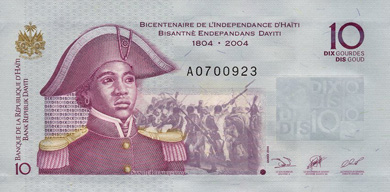
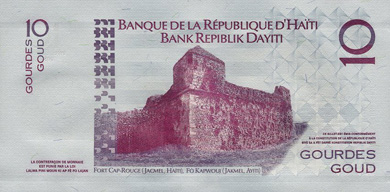
Budget & Public Finance
- Fiscal Year
- 1 October - 30 September
- Annual Budget
- $600,800,000 (USD)
- External Debt
- $1,300,000,000 (USD)
- Investment (% of GDP)
- 27.4%
- Economic Aid
- $120,000,000 (USD)
- Current Account Balance
- $34,080,000 (USD)
- Reserves of Foreign Exchange
- $95,260,000 (USD)
Labor, Industry & Trade
- Labor Force by Occupation
- agriculture 66%; services 25%; industry 9%
- Industries
- sugar refining, flour milling, textiles, cement, light assembly industries based on imported parts
- Agriculture Products
- coffee, mangoes, sugarcane, rice, corn, sorghum, wood
- Export Commodities
- manufactures, coffee, oils, cocoa
- Export Partners
- US 84.5%, Dominican Republic 6.7%, Canada 2.5%0
- Import Commodities
- food, manufactured goods, machinery and transport equipment, fuels, raw materials
- Import Partners
- US 52.5%, Dominican Republic 5.2%, Colombia 3.4%
Energy
- Oil Production
- 0 bbl/day
- Oil Consumption
- 11,800 bbl/day
- Oil Reserves
- 0 bbl/day
- Natural Gas Production
- 0 cu m
- Natural Gas Consumption
- 0 cu m
- Natural Gas Imports
- 0 cu m
- Natural Gas Exports
- 0 cu m
- Natural Gas Reserves
- 0 cu m
Communications
- Telephone System
- General assessment: Telecommunications infrastructure is among the least developed in Latin America and the Caribbean; domestic facilities barely adequate; international facilities slightly better Domestic: Mobile-cellular telephone services are expanding rapidly due, in part, to the introduction of low-cost GSM phones; mobile-cellular teledensity exceeds 40 per 100 persons International: Country code - 509; satellite earth station - 1 Intelsat (Atlantic Ocean)
- Internet Country Code
- .ht
News & Weather
News & Weather
Current Weather
Latest News
US pledges to crack down on Haitian gangs making money off social media - ABC News - Breaking News, Latest News and Videos
ABC News - Breaking News, Latest News and Videos · 6h ago
Haitian children jailed for years without facing judge, UN official says - Reuters
Reuters · 13h ago
LIVE: Haiti endures violence and hunger, but hopes grow for a more secure future - UN News
UN News · 19h ago
Martelly spent three hours with the Haiti judge investigating presidential assassination - Miami Herald
Miami Herald · 4h ago
DHS Deports Criminal Illegal Aliens to Haiti Including Pedophiles, Carjackers, and Drug Traffickers - Homeland Security (.gov)
Homeland Security (.gov) · 13h ago
Haiti UN Gangs - Journal-News.com
Journal-News.com · 14h ago
I’ve never stepped foot in Haiti, but keeping its story alive is on me | Opinion - The Haitian Times
The Haitian Times · 1d ago
Migne hops from Haiti to Gabon - Reuters
Reuters · 2d ago
News via Google News
Climate Overview
Haiti's tropical climate produces seasonal rainfall, although large areas of the country are semiarid. Temperatures year round range from 70°F to 90°F with humidity sometimes high along the coast. Average annual rainfall varies from nearly zero in some areas to 53 inches in Port-au-Prince. The two rainy seasons that Port-au-Prince experiences are from April to June and from August to mid-November. Rain and accompanying thunder/lightning storms usually occur at dusk and at night, but the days remain clear and sunny. There is a crisp dry season from December to April. Surrounding mountains generally protect Port-au-Prince from Caribbean hurricanes.
Videos
Videos
1 curated YouTube videos.
Source: YouTube
Frequently Asked Questions
Frequently Asked Questions
What is the population of Haiti?
How do people greet and communicate in Haiti?
What foods and drinks should I try in Haiti?
What are common gestures and personal space norms in Haiti?
What should I wear in Haiti?
What is family life like in Haiti?
What do people do for fun in Haiti?
What is the capital of Haiti?
Where is Haiti located?
What bodies of water surround Haiti?
What religion is practiced in Haiti?
What currency is used in Haiti?
What languages are spoken in Haiti?
What is Haiti's geography like?
What is Haiti known for?
Last reviewed 2026