
 English
 Español
 中文
中文 हिन्दी
 Français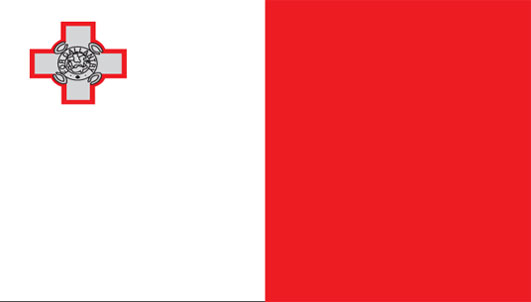
Malta
Malta
Declare Your Relationship to Malta
CountryReports Community
- Studying0
- From Malta0
- Malta heritage0
- Visited0
- Want to visit0
Customs and Culture
Customs and Culture
About the People
The Maltese are known for their hospitality, and generosity. The family is of great importance, and children stay in close contact with the grand-parents. Maltese do not easily tolerate alternative lifestyles. Due to the size of the islands, privacy is rare and it is impossible to be anonymous. Networking oils the wheels of social interaction and resource-sharing. The warm climate ensures that people go out to the piazza to socialize. Strong rivalry between villages can lead to heated exchanges over politics, soccer or village saints.
Cultural Attributes
The Maltese are known for their hospitality, and generosity. The family is of great importance, and children stay in close contact with the grand-parents. Networking oils the wheels of social interaction and resource-sharing. Due to the size of the islands, privacy is rare. The warm climate ensures that people go out to the piazza to socialize.

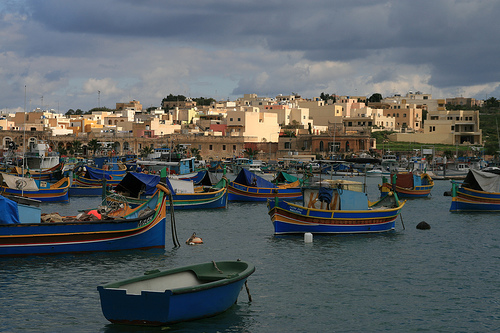
Island of Honey, Harbor of History
Greetings, Gestures & Visiting
Religious and professional titles are used. People from a rural area may pat one another on the back, shoulder or arm in a friendly gesture.
There are many factors in the way people greet each other. These include gender, how well they know each other, social status and age. Formal greetings begin and end with a hand-shake.
Going out to socialize is a favorite activity for most Maltese. It is polite to arrange a visit in advance.
Style and quality of clothing define social status. The Maltese follow European fashions. People pay attention to hairstyle, and avoid being sloppy or untidy, even in informal settings. Dress code usually applies in the service, business and professional sectors, and even in the blue collar sector.
Men often wear a cap, and women dress in dark-colored skirts. School children also wear uniform, though they dress in bright colors at home and on weekends. Older people wear traditional clothing.
Diet
The Maltese diet combines Italian and British cuisine. Breakfast ranges from cereal, toast and tea to full fired breakfast. Roast turkey, baked vegetables, fruit cakes are common at Christmas. The majority of dishes are Mediterranean, with tomatoes, onion and garlic. Fresh bread accompanies every meal, and pasta dishes are served either as entrée or main meal. Fish is on the menu frequently, including aljotta or fish chowder. Pastry is often filled with cheese and spinach as well as anchovies. Many pastries reflect the Arabic heritage, including the almond filled desserts.
The Maltese eat in continental manner, with a fork in the left hand and knife in one's right hand. Hands are kept above the table. After finishing, the utensils and placed parallel on the plate and the person waits till others have finished. Most families like to eat together, depending on school and work commitments. Breakfast and lunch are light meals, with lunch consisting of sandwiches and salad. Dinner is the main meal, usually eaten between 6 and 8 PM. Snacks are common in the mid-morning or afternoon, taken with tea or coffee. In the summer, picnics are common near the sea. In tea shops, cafes and clubs, people eat Maltese sandwiches and pastizzi.
The Maltese diet combines Italian and British cuisine. Breakfast ranges from cereal, toast and tea to full fired breakfast. Roast turkey, baked vegetables, fruit cakes are common at Christmas. The majority of dishes are Mediterranean, with tomatoes, onion and garlic. Fresh bread accompanies every meal, and pasta dishes are served either as entrée or main meal. Fish is on the menu frequently, including aljotta or fish chowder. Pastry is often filled with cheese and spinach as well as anchovies. Many pastries reflect the Arabic heritage, including the almond filled desserts.

Family
The man is the head of the family, but women often exercise power in home. For example, women usually control the family budget. Children often remain at home till they marry, and young people seldom live on their own. Parents often help their children acquire a car or house.
Malta has a relatively low rate of female workplace participation, but more women are seeking employment.
Dating Customs
Dating starts between age fourteen and sixteen, but are only 'going steady' when parents have been formally introduced. Engagements usually comprise of sharing rings and a family dinner. Engagements can last a long time. Marriage usually takes place when the couple have saved enough to live independently. Most do not live together before marriage.
Weddings are very special events, with a fancy dinner followed by a religious Mass. The bride's parents generally pay for the wedding expenses.
Recreation
Soccer is the most popular sport in Malta.
Holidays
Independence Day
9/21Independence Day
Dates of Interest
- September 21st
How do people greet each other in Malta?
Formal greetings begin and end with a handshake, and religious and professional titles are used. How people greet depends on gender, familiarity, social status and age.
Do
- Use religious and professional titles when addressing people
- Begin and end formal greetings with a handshake
Good to know
- People from rural areas may pat one another on the back, shoulder or arm as a friendly gesture
What are dining customs like in Malta?
The Maltese eat continental style, with the fork in the left hand and knife in the right, keeping hands above the table. Dinner is the main meal, usually eaten between 6 and 8 PM, while breakfast and lunch are light.
Do
- Keep your hands above the table while eating
- Place utensils parallel on the plate when finished
- Wait until others have finished eating
Good to know
- Fresh bread accompanies every meal and pasta may be served as entrée or main
- Fish dishes like aljotta (fish chowder) are common
- Try Maltese sandwiches and pastizzi at tea shops, cafes and clubs
- Summer picnics near the sea are common
What social etiquette should I know in Malta?
The Maltese are hospitable and generous, and socializing in the piazza is a favorite activity. Networking is important, and privacy is rare given the small size of the islands.
Do
- Arrange a visit in advance before dropping by
Don’t
- Don't expect anonymity or much privacy on the islands
- Don't assume alternative lifestyles are easily tolerated
Good to know
- Strong village rivalries can spark heated exchanges over politics, soccer or village saints
How should I dress in Malta?
The Maltese follow European fashions, and style and quality of clothing signal social status. People pay attention to grooming and avoid looking sloppy or untidy, even informally.
Do
- Dress neatly and avoid looking untidy, even in informal settings
- Follow dress codes in service, business, professional and even blue-collar sectors
Good to know
- Older people wear traditional clothing; men often wear a cap and women dark-colored skirts
What is family life like in Malta?
Family is of great importance, with children staying in close contact with grandparents and often living at home until they marry. The man is head of the family, though women often control the household budget.
Good to know
- Parents often help children acquire a car or house
- Young people seldom live on their own before marriage
What do people do for recreation in Malta?
Soccer is the most popular sport in Malta.
Last updated: 2026-07-12 · Sources: CountryReports
Photos of Malta
Photos of Malta


Travel and Tourism
Travel and Tourism
- Travel Alert Status
- Level 1: Exercise Normal Precautions
- Currency
- Euro (EUR)
- Time Difference
- UTC+1 (6 hours ahead of Washington, DC, during Standard Time)
- Climate
- The climate is subtropical in the summer, temperate the rest of the year, with occasional fog and rare frosts. Temperatures range from 35°F in winter to 95°F in summer, with brief periods above 100°F in August and early September. The driest months are May and July. Annual rainfall averages 19-22 inches, but fluctuates to less than 10 inches. The rains are heaviest from November to January and ease off slightly in February and March. Summer is hot and humid, with almost cloudless skies. The "scirocco," a warm humid southeast wind, occurs in spring and from mid-September to mid-October. The "gregale," a cold wind from the east and northeast in the winter, occasionally reaches gale forces of 70 miles per hour. Winter is chilly and damp with occasional heavy downpours, but also with many fine sunny days.
- Airports
- 1
Read the full travel guide — health, safety, vaccinations, disease risk, sanitation, and transit details.
View full travel guideRecipes
Recipes
History
History
Historical Eras
Prehistoric & Phoenician
5000 BCE – 218 BCE
Malta's earliest inhabitants erected the Ggantija and Hagar Qim temple complexes around 3600–2500 BCE, predating the monuments of Sumer and Egypt and marking the island as a major centre of earth-mother worship. The Phoenicians subsequently established trading ports, followed by Carthaginian settlers who integrated Malta into Mediterranean commerce. This era laid the linguistic and cultural substratum that would shape Maltese identity for millennia.
Roman & Byzantine
218 BCE – 870
Malta entered the Roman sphere during the Second Punic War in 218 BCE and eventually gained municipium status under Emperor Hadrian. In 60 CE, Saint Paul was shipwrecked at what is now St. Paul's Bay, an event that initiated the island's enduring Christian identity. Following Rome's division, Malta passed to the Byzantine Empire in 533 CE, remaining under Constantinople's administration until the Arab invasion of 870.
Arab & Norman Rule
870 – 1530
Aglabid Arabs from Tunisia conquered Malta in 870, leaving a profound imprint on the Maltese language, agriculture, and customs that persists to the present day. In 1091 the Norman adventurer Count Roger of Hauteville expelled Arab authority, attaching Malta to his kingdom of Sicily; the final expulsion of the Arab population followed in 1224. For the next three centuries Malta was passed among the feudal lords of Swabia, Aragon, Castile, and Spain, functioning largely as a peripheral dependency of Sicily.
Knights of St. John
1530 – 1798
In 1530 Charles V granted sovereignty of Malta to the Knights of St. John of Jerusalem, who transformed the islands into a formidable Christian bastion. The Order's finest hour came during the Great Siege of 1565, when the Knights and the Maltese population repelled the vast Ottoman forces of Suleiman the Magnificent after months of fierce combat. The Knights founded Valletta in 1566, endowing the island with magnificent baroque palaces, churches, and fortifications before their peaceful capitulation to Napoleon Bonaparte in 1798.
British Colonial Era
1798 – 1964
After a brief and resisted French occupation, Malta voluntarily joined the British Empire in 1814, becoming the headquarters of the Royal Navy's Mediterranean Fleet and a strategically vital imperial fortress. During World War II the island endured relentless Axis bombardment between 1940 and 1943; King George VI awarded Malta the George Cross in 1942 in recognition of its extraordinary collective resistance. The postwar period saw growing demands for self-governance, culminating in independence on September 21, 1964.
Independent Republic
1964 – present
Malta became a republic on December 13, 1974, and the last British forces departed in March 1979, completing full sovereignty. The island transitioned from a military economy to a diversified one built on freight transshipment, financial services, and tourism from the mid-1980s onward. Accession to the European Union on May 1, 2004 marked Malta's integration into the broader European political and economic community.
Overview
In 533 A.D. Malta became part of the Byzantine Empire and in 870 came under Arab control. Arab occupation and rule left a strong imprint on Maltese life, customs, and language. The Arabs were driven out in 1090 by a band of Norman adventurers under Count Roger of Normandy, who had established a
kingdom in southern Italy and Sicily. Malta thus became an appendage of Sicily for 440 years. During this period, Malta was sold and resold to various feudal lords and barons and was dominated successively by the rulers of Swabia, Aquitaine, Aragon, Castile, and Spain.
In 1522 Suleiman II drove the Knights of St. John out of Rhodes. They dispersed to their commanderies in Europe and after repeated requests for territory to Charles V, in 1530 the Knights were given sovereignty of Malta under the suzerainty of the Kings of Sicily. In 1523, a key date in Maltese history, the islands were ceded by Charles V of Spain to the Order of the Knights of St. John of Jerusalem. For the next 275 years, these famous "Knights of Malta" made the island their domain. They built towns, palaces, churches, gardens, and fortifications and embellished the island with numerous works of art and enhanced cultural heritage. In 1565 Suleiman the Magnificent laid siege to Malta. After several months the strength of the Knights and the Maltese population prevailed and the Turks were defeated. Over the years, the power of the Knights declined, however, and their rule of Malta ended with their peaceful surrender to Napoleon in 1798.
The people of Malta rose against French rule, which lasted two years, and with the help of the British evicted them in 1800. In 1814, Malta voluntarily became part of the British Empire. Under the United Kingdom, the island became a military and naval fortress, the headquarters of the British Mediterranean fleet. During World War II, Malta survived relentless raids from German and Italian military forces (1940-43). In recognition, King George VI in 1942 awarded the George Cross "to the island fortress of Malta--its people and defenders." President Franklin Roosevelt, describing the wartime period, called Malta "one tiny bright flame in the darkness." Malta obtained independence on September 21, 1964, became a Republic on December 13, 1974, and a member of the European Union on May 1, 2004. The last British forces left in March 1979.
Timeline of Key Events
117 – 138
Islands become municipium under Emperor Hadrian.
Islands become municipium under Emperor Hadrian.
395 – 870
Byzantine rule.
Byzantine rule.
870 – 1090
Arab rule.
Arab rule.
870
Aglabiti (Tunisian) Arabs invade Malta and expel the Byzantine.
Aglabiti (Tunisian) Arabs invade Malta and expel the Byzantine.
1048
First Byzantine attempts to regain islands.
First Byzantine attempts to regain islands.
1091
Count Roger of Hauteville, aka the Norman, takes Malta.
Count Roger of Hauteville, aka the Norman, takes Malta and imposed taxes but leaves Arab rulers.
1224
Final expulsion of Arabs from Sicily and Malta.
Final expulsion of Arabs from Sicily and Malta.
Read the full history profile — narrative overview, defining eras, and the complete timeline in one place.
View expanded historyInteresting Facts
Interesting Facts
At one time there was a land bridge between Malta and Sicily.
Ancient Greeks and Romans called the island "Melita" - the island of honey.
See every fact — trivia, oddities, and curious tidbits gathered from across the country.
View all interesting factsGeography and Environment
Geography and Environment
- Terrain
- mostly low, rocky, flat to dissected plains; many coastal cliffs
- Climate
- The climate is subtropical in the summer, temperate the rest of the year, with occasional fog and rare frosts. Temperatures range from 35° F in winter to 95° F in summer, with brief periods above 100° F in August and early September. The driest months are May and July. Annual rainfall averages 19-22 inches, but fluctuates to less than 10 inches. The rains are heaviest from November to January and ease off slightly in February and March. Summer is hot and humid, with almost cloudless skies. The "scirocco," a warm humid southeast wind, occurs in spring and from mid-September to mid-October. The "gregale," a cold wind from the east and northeast in the winter, occasionally reaches gale forces of 70 miles per hour. Winter is chilly and damp with occasional heavy downpours, but also with many fine sunny days.
- Natural Hazards
- NA
- Current Environmental Issues
- very limited natural fresh water resources; increasing reliance on desalination
Read the full geography and environment profile — terrain, climate, natural resources, hazards, land use, and international agreements.
View full geographyPeople & Demographics
People & Demographics
Religion
Languages Spoken
Maltese (official), English (official)
- English
- Maltese
Population
- Population
- 406,771
- Population in Major Urban Areas
- VALLETTA (capital) 198,000
- Nationality Noun
- Maltese (singular and plural)
- Ethnic Groups
- Maltese (descendants of ancient Carthaginians and Phoenicians, with strong elements of Italian and other Mediterranean stock)
- Language Note
- The Maltese language has a Semitic structure derived from a early form of Arabic. Both Maltese and English are official languages. The written form of Maltese is a Latin script, and it is used in commerce, education and business. However, English is a second language that is taught in school.
Education
- Literacy Definition
- age 10 and over can read and write
Read the full people and society profile — demographics, health, education, religion, languages, and notable people.
View full people and societyGovernment & Politics
Government & Politics
Country Identity
- Country Name
- Malta
- Full Country Name
- Republic of Malta
- Local - Long
- Repubblika ta' Malta
- Local - Short
- Malta
Government Structure
- Government Type
- republic
- Legal System
- based on English common law and Roman civil law; accepts compulsory ICJ jurisdiction, with reservations
- Executive Branch
- chief of state: President Myriam SPITERI DEBONO (since 4 April 2024) head of government: Prime Minister Robert ABELA (since 13 January 2020) cabinet: Cabinet appointed by the president on the advice of the prime minister elections: president elected by the House of Representatives for a five-year term; election last held on 27 March 2024 (next to be held by April 2029); following legislative elections, the leader of the majority party or leader of a majority coalition is usually appointed prime minister by the president for a five-year term; the deputy prime minister is appointed by the president on the advice of the prime minister election results: Myriam SPITERI DEBONO elected president; House of Representatives vote - unanimous approval
- Legislative Branch
- unicameral House of Representatives (usually 65 seats; note - additional seats are given to the party with the largest popular vote to ensure a legislative majority; members are elected by popular vote on the basis of proportional representation to serve five-year terms) elections: last held 12 April 2003 (next to be held by August 2008) election results: percent of vote by party - PN 51.7%, MLP 47.6%, AD 0.7%; seats by party - PN 34, MLP 31
- Judicial Branch
- Constitutional Court; Court of Appeal; judges for both courts are appointed by the president on the advice of the prime minister
- Suffrage
- 18 years of age; universal
- Constitution
- 1964 constitution substantially amended on 13 December 1974 and again in 1987
- Independence
- 21 September 1964 (from UK)
- National Holiday
- Independence Day, 21 September (1964)
Capital City
- Capital Name
- Valletta
- Capital - geographic coordinate
- 35 53 N, 14 30 E
- Capital Time Difference
- UTC+1 (6 hours ahead of Washington, DC, during Standard Time)
named in honor of Jean de VALETTE, the Grand Master of the Order of Saint John (crusader knights), who successfully led a defense of the island from an Ottoman invasion in 1565
Military
Branches: Armed Forces of Malta (AFM; includes land, maritime, and air elements)
Embassy / Diplomatic Mission
U.S. Embassy – Malta
Ta’Qali National Park Street
Attard ATD 4000
MALTA
Telephone: (356) 2561-4000
Email: ConsularMalta@state.gov
The Consular Section is open for American Citizen Services Mondays and Fridays from 8:00-11:00 a.m. and Wednesdays from 1:00-4:00 p.m. All non-emergency services are by appointment only.
Read the full government profile — flag symbolism, national anthem, and other national symbols.
View full government detailsEconomy
Economy
Malta's primary resources include limestone, a strategic geographic location in the central Mediterranean, and a highly skilled, productive labor force. The country produces only about 20% of its food needs, has limited fresh water supplies, and lacks domestic energy resources, making it heavily dependent on imports. The economy relies on foreign trade, tourism, financial services, online gaming, and manufacturing, particularly electronics and pharmaceuticals. Since joining the European Union in 2004 and adopting the euro in 2008, Malta has fully integrated into the European single market and has consistently posted one of the strongest GDP growth rates in the EU. The services sector now dominates the economy, accounting for roughly 80% of output, with tourism alone contributing more than a quarter of GDP. Malta has positioned itself as a hub for fintech, blockchain innovation, and maritime services, though challenges remain, including labor shortages, infrastructure strain from rapid population growth, and scrutiny over its financial regulatory framework and citizenship-by-investment program.
Snapshot
- Currency Name and Code
- Euros (EUR)
- GDP — official exchange rate
- $5,193,000,000 (USD)
- GDP Real Growth Rate
- 1%
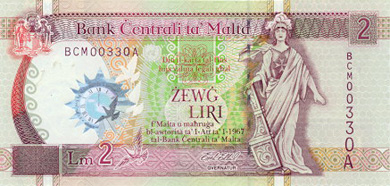
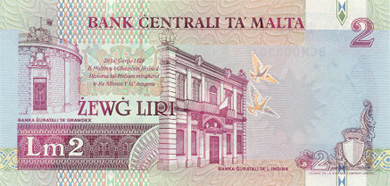
Banknotes
Budget & Public Finance
- Fiscal Year
- calendar year
- Annual Budget
- $2,703,000,000 (USD)
- External Debt
- $188,800,000 (USD)
- Investment (% of GDP)
- 26.1%
- Current Account Balance
- -$593,000,000 (USD)
- Reserves of Foreign Exchange
- $2,147,483,647 (USD)
Labor, Industry & Trade
- Labor Force by Occupation
- industry 24%; services 71%; agriculture 5%
- Industries
- tourism; electronics, ship building and repair, construction; food and beverages, textiles, footwear, clothing, tobacco
- Agriculture Products
- potatoes, cauliflower, grapes, wheat, barley, tomatoes, citrus, cut flowers, green peppers; pork, milk, poultry, eggs
- Export Commodities
- machinery and transport equipment, manufactures
- Export Partners
- Singapore 17.3%, US 11.4%, UK 9.4%, Germany 9.2%, France 7.3%, China 6.5%, Italy 5.9%
- Import Commodities
- machinery and transport equipment, manufactured and semi-manufactured goods; food, drink, and tobacco
- Import Partners
- Italy 18.2%, France 12%, South Korea 11.3%, UK 7.5%, Germany 5.3%, Singapore 5.3%, Japan 4.9%, US 4.6%, Spain 4.2%
Energy
- Oil Production
- 0 bbl/day
- Oil Consumption
- 18,000 bbl/day
- Oil Reserves
- 0 bbl/day
- Natural Gas Production
- 0 cu m
- Natural Gas Consumption
- 0 cu m
- Natural Gas Imports
- 0 cu m
- Natural Gas Exports
- 0 cu m
- Natural Gas Reserves
- 0 cu m
Communications
- Telephone System
- general assessment: automatic system featuring submarine cable and microwave radio relay between islands domestic: combined fixed-line and mobile-cellular subscribership exceeds 180 per 100 persons international: country code - 356; submarine cable connects to Italy; satellite earth station - 1 Intelsat (Atlantic Ocean)
- Internet Country Code
- .mt
News & Weather
News & Weather
Current Weather
Latest News
Enemalta lists power cuts in 19 localities - Times of Malta
Times of Malta · 11h ago
Malta missing from EU push for Israeli settlement trade ban - MaltaToday
MaltaToday · 19h ago
Family identifies teen killed at home owned by Pressley’s husband - Boston Herald
Boston Herald · 11h ago
Malta’s Answer to the Abortion Lobby - First Things
First Things · 18h ago
Italy Stands with Spain, Greece, Malta and Others as Europe Witnesses a Major Shift in Travel Spending as Travellers Turn to Smart Budgeting and Value Driven Experiences Fuelling Luxury Downturn - Travel And Tour World
Travel And Tour World · 2d ago
Manoel Island marina to stay, but no further development – Abela - Times of Malta
Times of Malta · 14h ago
'Irresponsible' works on Msida Creek project blamed for Melita internet outage - Times of Malta
Times of Malta · 1d ago
'We feel like we are from Spain': Fans in Malta celebrate World Cup victory - Times of Malta
Times of Malta · 1d ago
News via Google News
Climate Overview
The climate is subtropical in the summer, temperate the rest of the year, with occasional fog and rare frosts. Temperatures range from 35°F in winter to 95°F in summer, with brief periods above 100°F in August and early September. The driest months are May and July. Annual rainfall averages 19-22 inches, but fluctuates to less than 10 inches. The rains are heaviest from November to January and ease off slightly in February and March. Summer is hot and humid, with almost cloudless skies. The "scirocco," a warm humid southeast wind, occurs in spring and from mid-September to mid-October. The "gregale," a cold wind from the east and northeast in the winter, occasionally reaches gale forces of 70 miles per hour. Winter is chilly and damp with occasional heavy downpours, but also with many fine sunny days.
Frequently Asked Questions
Frequently Asked Questions
What is the population of Malta?
How do people greet each other in Malta?
What are dining customs like in Malta?
What social etiquette should I know in Malta?
How should I dress in Malta?
What is family life like in Malta?
What do people do for recreation in Malta?
What is the capital of Malta?
Where is Malta located?
What are Malta's sea borders?
What is the predominant religion in Malta?
What currency does Malta use?
What languages are spoken in Malta?
What is the geography of Malta like?
What is Malta known for?
Last reviewed 2026