
 English
 Español
 中文
中文 हिन्दी
 Français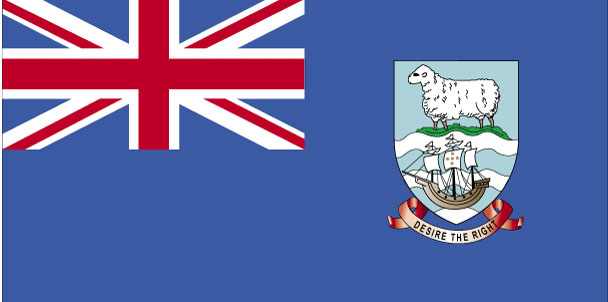
Falkland Islands
Declare Your Relationship to Falkland Islands
CountryReports Community
- Studying0
- From Falkland Islands0
- Falkland Islands heritage0
- Visited0
- Want to visit0
Customs and Culture
Customs and Culture
Cultural Attributes
The culture of the Falkland Islands is deeply rooted in its British heritage, shaped by nearly two centuries of settlement and a strong connection to the sea, land, and livestock farming. The majority of the population, known locally as "Kelpers," descend from British settlers, particularly from the Scottish Highlands, Wales, and various English counties, and this ancestry is reflected in everyday customs, language, and social life. English is the sole official and widely spoken language, and the islands follow British customs in areas ranging from education and law to driving on the left and observing the same public holidays as the United Kingdom. Despite this strong British identity, Islanders also hold a distinct sense of local pride and self-sufficiency forged by their remote location in the South Atlantic, approximately 300 miles east of mainland South America. Sheep farming has historically been the backbone of the economy and culture, and rural life continues to influence attitudes toward hard work, community, and independence. The tradition of gathering — a seasonal mustering of sheep across large farms known as "camp" — remains a significant cultural event that brings communities together. Horseriding is a practical skill passed down through generations and remains part of daily life in the rural areas. The Falkland Islands Museum and National Trust in Stanley preserves artifacts and records relating to the islands' maritime history, wartime past, and pioneering settlers. The 1982 conflict with Argentina holds profound cultural significance; Liberation Day on June 14 is a major annual commemoration, and the war memorial in Stanley serves as a focal point for community remembrance. Music, particularly folk and country styles, features in community gatherings, and horse racing events and sports such as football (soccer) and cricket reflect both British traditions and local adaptations. Religion also plays a community role, with the Christ Church Cathedral in Stanley — the southernmost Anglican cathedral in the world — standing as an iconic landmark and active congregation. Food culture centers on locally sourced produce, including lamb, fish, and shellfish, with traditional British meals remaining common in households and local establishments.

Islands of Windswept Wilderness and Steadfast Spirit

Holidays
Liberation Day
6/14Independence
Dates of Interest
- June 14th
What language do people speak and how do they communicate in the Falkland Islands?
English is the sole official and widely spoken language, reflecting the islands' strong British heritage.
Good to know
- English is used everywhere for daily communication
What is the food culture like in the Falkland Islands?
Food culture centers on locally sourced produce, including lamb, fish, and shellfish, with traditional British meals remaining common in households and local establishments.
Good to know
- Expect locally sourced lamb, fish, and shellfish
- Traditional British meals are common
What should I know about local customs and social life in the Falkland Islands?
The islands follow British customs in areas ranging from education and law to driving on the left, while Islanders (known as "Kelpers") hold a distinct sense of local pride and self-sufficiency.
Do
- Drive on the left, as in Britain
- Respect the deep significance of the 1982 conflict and Liberation Day (June 14)
Good to know
- Locals are known as "Kelpers" and descend from British settlers
- Rural life shapes attitudes toward hard work, community, and independence
- The war memorial in Stanley is a focal point for community remembrance
What role do family and community play in the Falkland Islands?
Community life is central, forged by the islands' remote location, with rural traditions and religion playing a strong role.
Good to know
- The seasonal sheep mustering known as "camp" brings communities together
- Horseriding is a skill passed down through generations in rural areas
- Christ Church Cathedral in Stanley is an active congregation and iconic landmark
What do people do for recreation in the Falkland Islands?
Recreation reflects both British traditions and local adaptations, with music, sports, and horse racing featuring in community life.
Good to know
- Folk and country music feature in community gatherings
- Football (soccer), cricket, and horse racing are popular
- Visit the Falkland Islands Museum and National Trust in Stanley
Last updated: 2026-07-12 · Sources: CountryReports
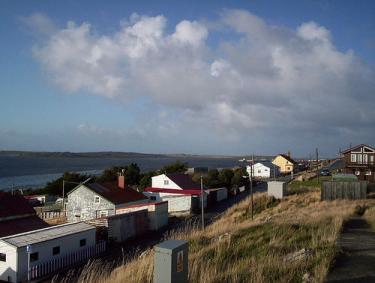
Photos of Falkland Islands
Photos of Falkland Islands


Travel and Tourism
Travel and Tourism
- Currency
- .7836
- Time Difference
- UTC-4 (1 hour ahead of Washington, DC, during Standard Time)
- Climate
- Cold marine; strong westerly winds, cloudy, humid; rain occurs on more than half of days in year; average annual rainfall is 24 inches in Stanley; occasional snow all year, except in January and February, but does not accumulate
- Airports
- 5
Read the full travel guide — health, safety, vaccinations, disease risk, sanitation, and transit details.
View full travel guideHistory
History
Historical Eras
Early Encounters
1592 – 1764
European navigators gradually became aware of the islands, with the first conclusively authenticated sighting made by Dutch sailor Sebald van Weert in 1600 and the first recorded landing by British captain John Strong in 1690, who named them after Viscount Falkland. For over a century the islands remained uninhabited by Europeans, serving only as a waypoint for passing vessels engaged in exploration and trade.
Rival Settlements
1764 – 1833
France established the first permanent settlement at Port Louis in 1764, handing it to Spain two years later for £24,000. Britain simultaneously planted a colony at Port Egmont in 1765, asserting sovereignty for George III, though it withdrew the settlement on economic grounds in 1774 without abandoning its claim. After Spain withdrew in 1811, the newly independent Buenos Aires government made intermittent and contested attempts to assert authority, culminating in the brief and turbulent commandancy of Louis Vernet.
British Crown Colony
1833 – 1982
HMS Clio arrived in January 1833 to reassert British sovereignty, expelling the Buenos Aires garrison and establishing continuous British administration. A civil Lieutenant Governor was appointed in 1841, the first Executive and Legislative Councils were set up in 1845, and universal adult suffrage was introduced to the Legislative Council in 1949. The islands developed a pastoral economy centred on sheep farming, with Stanley as the capital and a small but stable British settler population.
Falklands War
1982 – 1982
Argentine military forces invaded and occupied the islands on 2 April 1982, triggering an international crisis and a swift British military response. A naval task force was dispatched and an expeditionary force landed seven weeks after the invasion, engaging Argentine troops in fierce combat across East and West Falkland. Argentine forces surrendered on 14 June 1982, restoring British administration after 74 days of occupation.
Modern Falklands
1982 – present
Following the war, Britain significantly reinforced the islands' defences and constructed a permanent military base at Mount Pleasant, transforming the strategic landscape. A new constitution in 1985 strengthened self-governance, and the economy diversified substantially through the licensing of fishing rights and oil exploration in surrounding waters. The territorial dispute with Argentina formally persists, but the Falkland Islands have developed a prosperous, self-sufficient community with a strong sense of distinct identity.
Overview
SOVEREIGNTY OF THE ISLANDS
The British Government has no doubt about Britain’s sovereignty over the Falkland Islands. With the exception of the 2 months of illegal occupation in 1982, the Falklands have been continuously, peacefully and effectively inhabited and administered by Britain since 1833. Argentina’s claim to the Falklands is based on the grounds that, at the time of British repossession of the Islands in 1833, Argentina had sovereignty over them thrTimeline of Key Events
1592
First sighting of the Falklands by Captain John Davis in the Desire.
First sighting of the Falklands by Captain John Davis in the Desire.
1684
First recorded landing by Captain John Strong of the Welfare.
First recorded landing by Captain John Strong of the Welfare.
1767
French Colony formally handed over to the Spanish.
French Colony formally handed over to the Spanish.
1770
The Spanish arrive in Port Egmont, and out-numbering the British, order them out.
The Spanish arrive in Port Egmont, and out-numbering the British, order them out.
1774
British leave Port Egmont. Settlement abandoned.
British leave Port Egmont. Settlement abandoned.
1840
Colonial Lands and Emigration Commissioners approve the colonization of the Islands.
Colonial Lands and Emigration Commissioners approve the colonization of the Islands.
1939
Battle of the River Plate. Falklands provide shelter for British war ships.
Battle of the River Plate. Falklands provide shelter for British war ships.
Read the full history profile — narrative overview, defining eras, and the complete timeline in one place.
View expanded historyInteresting Facts
Interesting Facts
Argentina says it has a right to the islands, which it calls the Malvinas, because it inherited them from the Spanish crown in the early 1800s. It has also based its claim on the islands' proximity to the South American mainland.
See every fact — trivia, oddities, and curious tidbits gathered from across the country.
View all interesting factsGeography and Environment
Geography and Environment
- Terrain
- rocky, hilly, mountainous with some boggy, undulating plains
- Climate
- cold marine; strong westerly winds, cloudy, humid; rain occurs on more than half of days in year; average annual rainfall is 24 inches in Stanley; occasional snow all year, except in January and February, but does not accumulate
- Natural Hazards
- strong winds persist throughout the year
- Current Environmental Issues
- overfishing by unlicensed vessels is a problem; reindeer were introduced to the islands in 2001 for commercial reasons; this is the only commercial reindeer herd in the world unaffected by the Chornobyl disaster
Read the full geography and environment profile — terrain, climate, natural resources, hazards, land use, and international agreements.
View full geographyPeople & Demographics
People & Demographics
Languages Spoken
English
- English
Population
- Population
- 3,140
- Population in Major Urban Areas
- STANLEY (capital) 2,000
- Nationality Noun
- Falkland Islander(s)
- Ethnic Groups
- British
Read the full people and society profile — demographics, health, education, religion, languages, and notable people.
View full people and societyGovernment & Politics
Government & Politics
Country Identity
- Country Name
- FalklandIslands
- Full Country Name
- Falkland Islands (Islas Malvinas)
Government Structure
- Government Type
- NA
- Legal System
- English common law
- Executive Branch
- chief of state: King CHARLES III (since 8 September 2022); represented locally by Governor Alison BLAKE (since March 2022) head of government: Governor Alison BLAKE (since March 2022); Chief Executive Andy KEELING (since 2021); Director of Finance Patrick DOYLE (since NA) cabinet: Executive Council; three members elected by the Legislative Assembly, two ex officio members (chief executive and the director of finance), and the governor elections: none; the monarchy is hereditary; governor appointed by the monarch
- Legislative Branch
- unicameral Legislative Council (10 seats - two ex officio, eight elected by popular vote, members serve four-year terms); presided over by the governor elections: last held 17 November 2005 (next to be held November 2009) election results: percent of vote - NA; seats - independents 8
- Judicial Branch
- Supreme Court (chief justice is a nonresident); Magistrates Court (senior magistrate presides over civil and criminal divisions); Court of Summary Jurisdiction
- Suffrage
- 18 years of age; universal
- Constitution
- 3 October 1985; amended 1997 and 1998
- Independence
- none (overseas territory of the UK; also claimed by Argentina)
- National Holiday
- Liberation Day, 14 June (1982)
Capital City
- Capital Name
- Stanley
- Capital - geographic coordinate
- 51 42 S, 57 51 W
- Capital Time Difference
- UTC-4 (1 hour ahead of Washington, DC, during Standard Time)
Named after Edward SMITH-STANLEY (1799-1869), the 14th Earl of Derby, a British statesman and three-time prime minister of the UK who never visited the islands
Military
Branches: No regular military forces
Read the full government profile — flag symbolism, national anthem, and other national symbols.
View full government detailsEconomy
Economy
The economy was historically based on agriculture, primarily sheep farming, but today fishing and related activities generate the majority of economic output. Since 1987, the government has sold fishing licenses to foreign trawlers operating within the Falklands' exclusive economic zone, with license fees and related fisheries revenue contributing tens of millions of pounds annually to support the islands' health, education, and welfare systems. Squid, particularly Loligo and Illex species, accounts for the bulk of the catch by value. Dairy farming and vegetable production support domestic consumption, while exports continue to feature high-grade wool shipped to the UK and Europe, alongside the sale of commemorative postage stamps and coins.
The islands are self-financing in all areas except defense, which remains the responsibility of the United Kingdom. Hydrocarbon exploration has been a long-running prospect since the British Geological Survey designated an exploration zone around the islands in the 1990s. Several offshore discoveries have been confirmed in the North Falkland Basin, most notably the Sea Lion field, where development plans by operators including Rockhopper Exploration and Navitas Petroleum have advanced toward a final investment decision, though first oil has yet to be achieved. Sovereignty disputes with Argentina continue to complicate licensing and investment.
Tourism, especially cruise and eco-tourism focused on the islands' penguin colonies and wildlife, has grown into a significant industry, with more than 60,000 cruise visitors arriving in a typical pre-pandemic season and numbers rebounding strongly in recent years. Additional revenue is generated by interest earned on substantial government reserves, and the permanent British military presence at Mount Pleasant continues to provide a meaningful economic boost.
Snapshot
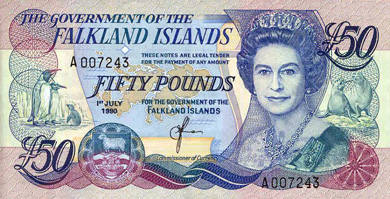
- Currency Name and Code
- Falkland pounds (FKP)
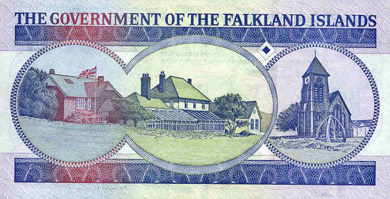
Banknotes
Budget & Public Finance
- Fiscal Year
- 1 April - 31 March
Labor, Industry & Trade
- Labor Force by Occupation
- agriculture 95% (mostly sheepherding and fishing)
- Industries
- fish and wool processing; tourism
- Agriculture Products
- fodder and vegetable crops; sheep, dairy products
- Export Commodities
- wool, hides, meat
- Export Partners
- Spain 73.2%, UK 8.5%, US 7.3%
- Import Commodities
- fuel, food and drink, building materials, clothing
- Import Partners
- UK 54.7%, Spain 18.9%, Italy 15.1%, Czech Republic 7.5%
Energy
- Oil Production
- 0 bbl/day
- Oil Consumption
- 200 bbl/day
- Oil Reserves
- 0 bbl/day
- Natural Gas Production
- 0 cu m
- Natural Gas Consumption
- 0 cu m
- Natural Gas Imports
- 0 cu m
- Natural Gas Exports
- 0 cu m
- Natural Gas Reserves
- 0 cu m
Communications
- Telephone System
- Domestic: Government-operated radiotelephone and private VHF/CB radiotelephone networks provide effective service to almost all points on both islands International: Country code - 500; satellite earth station - 1 Intelsat (Atlantic Ocean) with links through London to other countries
- Internet Country Code
- .fk
News & Weather
News & Weather
Current Weather
Latest News
White House defends Argentina team over Falklands banner - BBC
BBC · 3d ago
'I've lived on the Falkland Islands all my life - this is what it's really like' - Metro.co.uk
Metro.co.uk · 3d ago
The Falklands, Johnny Infantino and an invisible man: A whirlwind review of the World Cup - Politico
Politico · 1d ago
It may look like a wolf, but don't be fooled… DNA reveals Darwin's mysterious Falkland Islands predator was something far stranger - BBC Wildlife Magazine
BBC Wildlife Magazine · 1d ago
Football, Falklands, fascism: The dark soul of Argentina - The Telegraph
The Telegraph · 16h ago
Israel's Bad Bets on Argentina: First the World Cup, Now the Falklands? - Haaretz
Haaretz · 14h ago
What links the South to the Falkland Islands? - BBC
BBC · 3d ago
White House backs Argentina players in Falklands row - The Telegraph
The Telegraph · 3d ago
News via Google News
Climate Overview
Cold marine; strong westerly winds, cloudy, humid; rain occurs on more than half of days in year; average annual rainfall is 24 inches in Stanley; occasional snow all year, except in January and February, but does not accumulate
Videos
Videos
1 curated YouTube videos.
Source: YouTube
Frequently Asked Questions
Frequently Asked Questions
What is the population of Falkland Islands?
What language do people speak and how do they communicate in the Falkland Islands?
What is the food culture like in the Falkland Islands?
What should I know about local customs and social life in the Falkland Islands?
What role do family and community play in the Falkland Islands?
What do people do for recreation in the Falkland Islands?
What is the capital of the Falkland Islands?
Where are the Falkland Islands located?
What bodies of water surround the Falkland Islands?
What currency is used in the Falkland Islands?
What language is spoken in the Falkland Islands?
What is the geography of the Falkland Islands like?
What is the Falkland Islands known for?
Who has sovereignty over the Falkland Islands, and why is it disputed?
Last reviewed 2026