
 English
 Español
 中文
中文 हिन्दी
 Français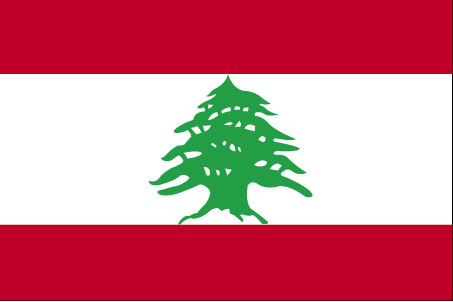
Lebanon
Lubnan
Declare Your Relationship to Lebanon
CountryReports Community
- Studying1
- From Lebanon1
- Lebanon heritage1
- Visited1
- Want to visit1
Customs and Culture
Customs and Culture
About the People
Lebanon has had a long association with the West and has been deeply influenced by it. At the same time, traditional values and attitudes that differ from Western culture remain. Therefore, attitudes vary greatly among the people. Life in Lebanon is still fairly relaxed and slow paced. People tend to care more about personal relationships than time schedules. The Lebanese are very proud of their culture, heritage, and country.
Cultural Attributes
Attitudes vary greatly among the people. Life in Lebanon is still fairly relaxed and slow paced. People tend to care more about personal relationships than time schedules. The Lebanese are very proud of their culture, heritage, and country.

Cedar of the Mediterranean
Greetings, Gestures & Visiting
Handshakes are common for both men and women. Friends and relatives often appear to kiss each other on both cheeks upon meeting or departing. In Arabic, titles are commonly used with a person's first name, but Lebanese often use titles in both French and English. Personal space is more limited compared to Western nations.
Diet
The main meal of the day is eaten between noon and 3.00 pm. This meal may last two or more hours. Various stews are Lebanese specialties. The cuisine is often spicy and hot. But because of the warm climate, many dishes are also light, that is, they are vegetarian. A traditional meal for special occasions is the Meza. Kibbeh is a popular beef dish that can be baked, fried, or eaten raw.

Dating Customs
Traditionally, neither Christians nor Muslims dated each other. Many marriages are arranged by the family. Today, Christians and many urban Muslim families follow Western dating habits. Christians are generally opposed to divorce, although it is allowed by Islamic law for Muslims. Lebanese law provides for each religion to have a separate court system to handle matters of marriage, divorce, inheritance, and other such concerns, according to the different customs.
Recreation
Soccer, basketball and volleyball are popular. Cross-country running in the mountains and martial arts are also enjoyed. Many Lebanese also enjoy swimming and fishing in the lakes, rivers or Mediterranean Sea. Live theater and nightclubs are popular. Lebanese also enjoy playing board games like checkers, chess and backgammon.
Holidays
Independence Day
11/22Independence Day
Christmas
12/25Christmas
About 25 percent of the population celebrates Christmas. The season begins on St Barbara’s day (December 4th) with feasting, charitable acts and masked children soliciting goodies from homes. During the weeks prior to Christmas many shops are decorated with Western Christmas decorations. Christmas Eve is observed as a strict religious holiday and total fasting begins at sundown in preparation for the Midnight Mass and communion. Afterwards families retire to social gatherings where the traditional offering is sugar coated almonds. Christians and Muslims celebrate New Year’s alike with social gatherings and games of chance that predict the future. Children traditionally receive money from their father at this time.
Dates of Interest
- July - August
Ramadan, the greatest religious observance in Islam, is an annual month of fasting. The exact dates of Islamic holidays cannot be determined in advance, due to the nature of the Islamic lunar calender. Estimates are based on expected visibility of the hilal (waxing crescent moon following a new moon) and may vary according to location.
How do people greet each other in Lebanon?
Handshakes are common for both men and women, while friends and relatives often kiss on both cheeks when meeting or departing. Personal space is more limited than in Western nations.
Do
- Shake hands with both men and women
- Use titles with a person's first name, in Arabic, French, or English
- Expect closer personal space than in the West
Good to know
- Close friends and relatives often kiss on both cheeks
What are the dining customs in Lebanon?
The main meal is eaten between noon and 3:00 pm and may last two or more hours. Hosts are very insistent that guests eat, and it's customary to refuse an offer a couple of times before accepting.
Do
- At least try the food offered
- Accept hospitality after politely declining once or twice
- Expect a long, leisurely main meal
Don’t
- Don't discuss business during a meal
- Don't feel obligated to accept a full meal or more refreshments if you politely decline
Good to know
- Meza is a traditional meal for special occasions
- Kibbeh, a popular beef dish, can be baked, fried, or eaten raw
- Cuisine is often spicy and hot, but many light, vegetarian dishes exist too
What should I know about hospitality and visiting etiquette in Lebanon?
Hosts usually serve guests coffee or tea without asking, and hospitality requires that it be accepted. Guests are expected to stay late and should never leave directly after eating.
Do
- Accept the coffee or tea offered, or give a polite explanation if refusing
- Bring flowers, a plant, a special dessert, or something for the home when invited to a meal
- Stay late into the afternoon or evening as a guest
Don’t
- Don't leave directly after eating
What should I wear in Lebanon?
Western-style clothing is common in urban areas, though traditional Muslim clothing such as a woman's chador is also worn. Being neat and clean matters to people of all classes.
Do
- Keep your clothing neat and clean
Good to know
- Western-style clothing is common in urban areas
Which gestures should I use or avoid in Lebanon?
Use the right hand or both hands to pass and receive objects, and keep the soles of your feet pointing toward the ground. Several common Western gestures can cause offense.
Do
- Pass and receive objects with the right hand or both hands
- Keep the soles of shoes or feet facing the earth
- Beckon by waving all fingers with the palm facing down
Don’t
- Don't pass or receive objects with the left hand
- Don't point or beckon with the index finger
- Don't wave a closed fist in the air
- Don't cross an ankle over a knee, which points the sole of the foot at someone
What are family, dating, and marriage customs like in Lebanon?
Many marriages are arranged by the family, and traditionally Christians and Muslims did not date each other, though Christians and many urban Muslim families now follow Western dating habits. Each religion has a separate court system for matters like marriage, divorce, and inheritance.
Good to know
- Christians are generally opposed to divorce, while Islamic law allows it for Muslims
What do people do for recreation in Lebanon?
Popular activities include soccer, basketball, and volleyball, along with cross-country running in the mountains and martial arts. Many also enjoy swimming, fishing, live theater, nightclubs, and board games.
Good to know
- Swimming and fishing take place in lakes, rivers, or the Mediterranean Sea
- Board games like checkers, chess, and backgammon are enjoyed
What should travelers know before visiting Lebanon?
Life is fairly relaxed and slow paced, with people valuing personal relationships over time schedules. Attitudes vary greatly, blending strong Western influence with traditional values, and the Lebanese are very proud of their culture, heritage, and country.
Good to know
- Expect a relaxed pace and emphasis on relationships over schedules
Last updated: 2026-07-12 · Sources: CountryReports
Photos of Lebanon
Photos of Lebanon
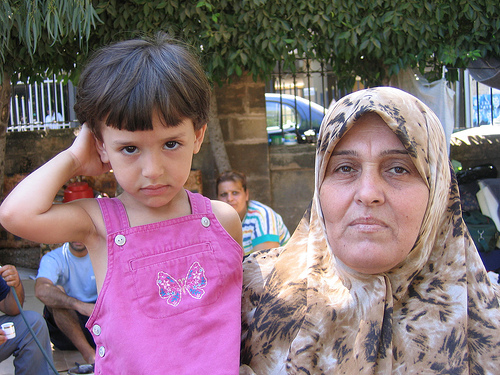
Mother and child in Beirut, Lebanon
Temple of Jupiter
Downtown Beirut, Lebanon
Raouche, Lebanon
Cedar tree near Beirut, Lebanon
Old church in Lebanon
Lebanon mountain range
Lebanon Parliement building
West Beirut, Lebanon
Baalbek, Lebanon
A destroyed bridge in Southern Lebanaon, near Beirut
Family near Zahle, Lebanon


Travel and Tourism
Travel and Tourism
- Travel Alert Status
- Lebanon - Level 4: Do Not Travel
- Currency
- Lebanese pound (LBP)
- Time Difference
- UTC+2 (7 hours ahead of Washington, DC, during Standard Time)
- Climate
- From May through October, sunny weather prevails and rain is infrequent. Temperatures rarely go above 90°F in the summer. Fall and spring are relatively short. Winters are mild (in the city, winter temperatures rarely drop below 40°F and damp. Most of the country's annual rainfall (about 36 inches) occurs from December through March. Winter storms frequently are accompanied by high winds, lightning, and thunder.
- Airports
- 8
Read the full travel guide — health, safety, vaccinations, disease risk, sanitation, and transit details.
View full travel guideRecipes
Recipes
Street vendors in Lebanon often sell fruit juice that is fresh-squeezed on the spot. In Tripoli, a s
Main Dish
Main Dish
Lubee
Main Dish
Tabbouleh (Lebanese Style)
Main Dish
Falafel (Mashed Chickpea Pods with Vegetables)
Main Dish
Kibbeh (Lebanese Beef Dish)
Main Dish
Tabboule (Bulgur Wheat and Parsley Salad)
Main Dish
Cucumber Yogurt Salad
Main Dish
PremiumLebanese Stuffing
Main Dish
PremiumStreet vendors in Lebanon often sell fruit juice that is fresh-squeezed on the spot. In Tripoli, a specialty fruit drink is jellab, which is made from raisins.
Dessert
PremiumLebanese Cookies
History
History
Historical Eras
Phoenician & Ancient
3000 BCE – 332
The coastal city-states of Tyre, Sidon, and Byblos rose as the heart of Phoenician civilization, pioneering maritime trade across the Mediterranean and developing one of the earliest alphabets. Successive empires — Assyrian, Babylonian, and Persian — absorbed the region, yet Phoenician commercial culture persisted. Alexander the Great's conquest in 332 BCE ended Phoenician political independence and opened the Hellenistic era.
Greco-Roman Period
332 BCE – 636
Under Seleucid and later Roman rule, Lebanese cities became prosperous centers of trade, law, and learning; Beirut's law school was among the most renowned in the Roman Empire. The Romans constructed monumental temples at Baalbek, showcasing the region's imperial importance. Christianity spread rapidly through the area during the Byzantine period, establishing religious communities that would shape Lebanon's sectarian landscape for centuries.
Arab & Medieval Rule
636 – 1516
The Arab Muslim conquest in 636 CE integrated Lebanon into the Islamic caliphate, introducing Arabic language and culture while Christian and Druze communities retained distinct identities in the mountain strongholds. The Crusader period (1096–1291) brought Frankish rule to coastal cities and left enduring castles and religious institutions. The Mamluk Sultanate eventually expelled the Crusaders and reasserted Muslim control, setting demographic and sectarian patterns that persisted into the Ottoman era.
Ottoman Era
1516 – 1920
Ottoman conquest in 1516 brought Lebanon under imperial administration for four centuries, though local dynasties — notably the Maan and later the Shihab emirs — exercised considerable autonomous authority in Mount Lebanon. The 19th century saw sectarian violence between Druze and Maronite communities, leading to European intervention and an autonomous Mutasarrifate of Mount Lebanon in 1861. The Ottoman period ended with World War I and the Arab Revolt, after which France assumed mandatory control of the region.
French Mandate
1920 – 1943
France proclaimed the State of Greater Lebanon in 1920 and formalized a republican constitution in 1926, enlarging the country's boundaries to include the Bekaa Valley, Tripoli, Sidon, and Tyre. French rule institutionalized sectarian power-sharing in governance, a legacy that persisted long after independence. Following the fall of France in 1940 and occupation by Vichy authorities, Free French and British forces entered in 1941 and Lebanon declared independence, which was fully realized in 1943 through the unwritten National Covenant.
Independence & Civil War
1943 – 1990
Lebanon initially flourished as a banking and cultural hub of the Arab world, but deepening sectarian tensions, the influx of Palestinian armed factions, and regional Cold War rivalries ignited a devastating civil war in 1975. Israeli invasions in 1978 and 1982, Syrian military intervention, and the rise of Hezbollah compounded the destruction, killing an estimated 150,000 people. The Ta'if Accord of 1989 ended major hostilities and restructured the political system to give Muslims greater representation.
Post-War & Modern
1990 – present
The post-civil war period brought partial reconstruction under Prime Minister Rafik Hariri alongside continued Syrian military presence, which ended only after Hariri's assassination in 2005 triggered the Cedar Revolution. The 2006 war with Israel, Hezbollah's growing political power, successive governance crises, and the catastrophic Beirut port explosion of 2020 severely hampered state-building. Lebanon remains mired in economic collapse, political paralysis, and sectarian tension, with its sovereignty and institutional stability still deeply contested.
Overview
The Temple of Jupiter, built by the Romans in Baalbek
Timeline of Key Events
1516 – 1918
Lebanon was under the administrative rule and political sovereignty of the Ottoman Empire.
Lebanon was under the administrative rule and political sovereignty of the Ottoman Empire.
1920
The State of Greater Lebanon is proclaimed.
After the League of Nations grants the mandate for Lebanon and Syria to France, the State of Greater Lebanon is proclaimed. It includes the former autonomous province of Mount Lebanon, plus the provinces of north Lebanon, south Lebanon and the Biqa, historically part of Syria.
1926
The Lebanese Representative Council approves a Constitution
The Lebanese Representative Council approves a Constitution and the Lebanese Republic is declared.
1940
Lebanon comes under the control of the Vichy French government.
Lebanon comes under the control of the Vichy French government.
1941
After Lebanon is occupied by Free French and British troops, independence is declared.
After Lebanon is occupied by Free French and British troops, independence is declared.
1943
The foundations of the state are set out in an unwritten National Covenant
The foundations of the state are set out in an unwritten National Covenant which states that Lebanon is an independent Arab country with ties to the West but which cooperates with other Arab states while remaining neutral. The 1932 census which had shown that Christians were 54% of the population is used as the basis for the distribution of seats in the Chamber of Deputies (later to be called the National Assembly) on a ratio of 6 to 5 (later extended to other public offices). The President is to be a Maronite Christian, the Prime Minister a Sunni Muslim, and the Speaker of the Chamber of Deputies a Shi’i Muslim.
1957 – 1958
Lebanon plunges into political crisis caused by political and religious tensions in the country.
Lebanon plunges into political crisis caused by political and religious tensions in the country.
Read the full history profile — narrative overview, defining eras, and the complete timeline in one place.
View expanded historyInteresting Facts
Interesting Facts
When a child loses a tooth they throw their tooth into the sea or a field and say “Oh sun, oh sun, take the mouse's tooth and give me a gold tooth.”
The cedar tree on Lebanon's flag symbolizes strength, holiness and eternity. The white background stands for peace, and the red bands represent sacrifice.
The cedar tree on Lebanon's flag symbolizes strength, holiness and eternity. The white background stands for peace, and the red bands represent sacrifice.
Since before Biblical times, Lebanon has been famous for its cedar trees. The Temple of Solomon was built by Lebanese workers using cedar from Lebanon. Lebanese cedar was also found in the tombs of the Pharaohs of Egypt. The trees can grow up to 24 metres.
See every fact — trivia, oddities, and curious tidbits gathered from across the country.
View all interesting factsGeography and Environment
Geography and Environment
- Terrain
- narrow coastal plain; El Beqaa (Bekaa Valley) separates Lebanon and Anti-Lebanon Mountains
- Climate
- From May through October, sunny weather prevails and rain is infrequent. Temperatures rarely go above 90°F in the summer. Fall and spring are relatively short. Winters are mild (in the city, winter temperatures rarely drop below 40°F and damp. Most of the country's annual rainfall (about 36 inches) occurs from December through March. Winter storms frequently are accompanied by high winds, lightning, and thunder.
- Natural Hazards
- dust storms, sandstorms
- Current Environmental Issues
- deforestation; soil erosion; desertification; air pollution in Beirut from vehicular traffic and the burning of industrial wastes; pollution of coastal waters from raw sewage and oil spills
Read the full geography and environment profile — terrain, climate, natural resources, hazards, land use, and international agreements.
View full geographyPeople & Demographics
People & Demographics
Religion
Languages Spoken
Arabic (official), French, English, Armenian
- Arabic
- Armenian
- French
Population
- Population
- 4,125,247
- Population in Major Urban Areas
- BEIRUT (capital) 2.022 million
- Nationality Noun
- Lebanese (singular and plural)
- Ethnic Groups
- Arab 95%, Armenian 4%, other 1%
Education
- Literacy Definition
- age 15 and over can read and write
Read the full people and society profile — demographics, health, education, religion, languages, and notable people.
View full people and societyGovernment & Politics
Government & Politics
Country Identity
- Country Name
- Lebanon
- Full Country Name
- Lebanese Republic
- Local - Long
- Al Jumhuriyah al Lubnaniyah
- Local - Short
- Lubnan
Government Structure
- Government Type
- republic
- Legal System
- mixture of Ottoman law, canon law, Napoleonic code, and civil law; no judicial review of legislative acts; has not accepted compulsory ICJ jurisdiction
- Executive Branch
- chief of state: President Emile LAHUD (since 24 November 1998) head of government: Prime Minister Fuad SINIORA (since 30 June 2005); Deputy Prime Minister Elias MURR (since April 2005) cabinet: Cabinet chosen by the prime minister in consultation with the president and members of the National Assembly elections: president elected by the National Assembly for a six-year term; election last held 15 October 1998 (next to be held in 2007 based on three-year extension); note - on 3 September 2004 the National Assembly voted 96 to 29 to extend Emile LAHUD's six-year term by three years; the prime minister and deputy prime minister appointed by the president in consultation with the National Assembly; by agreement, the president is a Maronite Christian, the prime minister is a Sunni Muslim, and the speaker of the legislature is a Shi'a Muslim election results: for 15 October 1998 election: Emile LAHUD elected president; National Assembly vote - 118 votes in favor, 0 against, 10 abstentions
- Legislative Branch
- unicameral National Assembly or Majlis Alnuwab (Arabic) or Assemblee Nationale (French) (128 seats; members elected by popular vote on the basis of sectarian proportional representation to serve four-year terms) elections: last held in four rounds on 29 May, 5, 12, 19 June 2005 (next to be held 2009) election results: percent of vote by group - NA; seats by group - Future Movement Bloc 36; Democratic Gathering 15; Development and Resistance Bloc 15; Loyalty to the Resistance 14; Free Patriotic Movement 14; Lebanese Forces 6; Qornet Shewan 5; Popular Bloc 4; Tripoli Independent Bloc 3; Syrian National Socialist Party 2; Kataeb Reform Movement 2; Tachnaq Party 2; Democratic Renewal Movement 1; Democratic Left 1; Nasserite Popular Movement 1; Ba'th Party 1; Kataeb Party 1; independent 5
- Judicial Branch
- four Courts of Cassation (three courts for civil and commercial cases and one court for criminal cases); Constitutional Council (called for in Ta'if Accord - rules on constitutionality of laws); Supreme Council (hears charges against the president and prime minister as needed)
- Suffrage
- 21 years of age; compulsory for all males; authorized for women at age 21 with elementary education
- Constitution
- 23 May 1926, amended a number of times, most recently Charter of Lebanese National Reconciliation (Ta'if Accord) of October 1989
- Independence
- 22 November 1943 (from League of Nations mandate under French administration)
- National Holiday
- Independence Day, 22 November (1943)
Capital City
- Capital Name
- Beirut
- Capital - geographic coordinate
- 33 52 N, 35 30 E
- Capital Time Difference
- UTC+2 (7 hours ahead of Washington, DC, during Standard Time)
derived from the Canaanite or Phoenician word "ber'ot," meaning "the wells" or "fountain," which referred to the site's accessible water table
Military
Branches: Lebanese Armed Forces (LAF): Lebanese Army ((Al Jaysh al Lubnani) includes Lebanese Navy (Al Quwwat al Bahiriyya al Lubnaniya), Lebanese Air Force (Al Quwwat al Jawwiya al Lubnaniya))
Embassy / Diplomatic Mission
U.S. Embassy, Beirut
Address: Awkar Facing the Municipality
PO Box 70-840
Telephone: (961) 4 542600 - 543600
Facsimile: (961) 4 544209
Email: BeirutACS@state.gov
U.S. citizens enrolled in STEP can receive updated information and emergency messages via e-mail by subscribing to our Message Service. U.S. citizens without Internet access may enroll directly with the U.S. Embassy in Beirut. Information on consular services and enrollment in STEP can also be found on the Embassy’s website, by contacting us via email, or by phone at the telephone numbers shown above between 2:00 p.m. and 4:00 p.m. Monday through Friday local time.
Routine services, such as passport renewals, for U.S. citizens are available Monday through Thursday, 8:00 a.m. to 11:00 a.m. by appointment only. U.S. citizens who require urgent assistance outside these hours may contact the Embassy by telephone at any time.
Read the full government profile — flag symbolism, national anthem, and other national symbols.
View full government detailsEconomy
Economy
Lebanon's economy has experienced decades of turbulence, beginning with the devastating 1975-91 civil war that destroyed much of the country's infrastructure, halved national output, and ended its long-held position as the Middle East's premier banking and commercial hub. The postwar period brought partial recovery, aided by a resilient banking sector, small- and medium-scale manufacturing, family remittances, and international aid. The government's "Horizon 2000" reconstruction program, launched in 1993, helped drive growth through the mid-1990s, though expansion slowed considerably by the end of the decade. Inflation, which had exceeded 100% during the war years, was brought down to near zero.
However, persistent fiscal mismanagement, heavy government borrowing, and political instability laid the groundwork for one of the most severe economic crises in modern history. Beginning in late 2019, Lebanon plunged into a financial meltdown that the World Bank has ranked among the worst globally since the mid-19th century. The Lebanese pound has lost more than 98% of its value against the US dollar, and the currency now trades at vastly depreciated rates on parallel markets despite official pegs being abandoned in 2023. GDP contracted from roughly $52 billion in 2019 to under $20 billion by 2023, while inflation has soared into triple digits, peaking above 200% in 2023.
The banking sector, once the cornerstone of the economy, effectively collapsed, with depositors largely locked out of their savings through informal capital controls. Poverty rates have surged, with more than 80% of the population estimated to live in multidimensional poverty. Public services including electricity, water, and healthcare have deteriorated sharply, and the 2020 Beirut port explosion compounded the damage, destroying critical infrastructure and causing billions in losses.
Lebanon reached a staff-level agreement with the International Monetary Fund in April 2022 for a $3 billion bailout, but disbursement has been blocked by the government's failure to enact required reforms, including banking sector restructuring, fiscal consolidation, and a unified exchange rate. Renewed conflict with Israel in 2023-2024 inflicted further damage on the economy, particularly in southern Lebanon and the Bekaa Valley, displacing over a million people and devastating agriculture, tourism, and trade. Reconstruction needs are now estimated in the tens of billions of dollars, while political paralysis, a prolonged presidential vacancy resolved only in early 2025, and entrenched corruption continue to obstruct recovery. Remittances from the Lebanese diaspora remain a crucial lifeline, sustaining household consumption amid the broader collapse.
Snapshot
- Currency Name and Code
- Lebanes Pouind (LBP)
- GDP — official exchange rate
- $20,700,000,000 (USD)
- GDP Real Growth Rate
- 0.5%
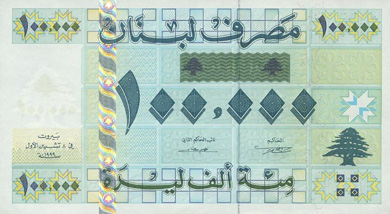
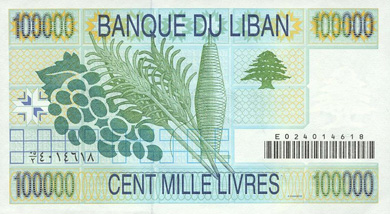
Banknotes
Budget & Public Finance
- Fiscal Year
- calendar year
- Annual Budget
- $6,595,000,000 (USD)
- Public Debt (% of GDP)
- 170%
- External Debt
- $25,920,000,000 (USD)
- Investment (% of GDP)
- 25.5%
- Economic Aid
- $4,200,000,000 (USD)
- Current Account Balance
- -$4,090,000,000 (USD)
- Reserves of Foreign Exchange
- $2,147,483,647 (USD)
Labor, Industry & Trade
- Industries
- banking; food processing; jewelry; cement; textiles; mineral and chemical products; wood and furniture products; oil refining; metal fabricating
- Agriculture Products
- citrus, grapes, tomatoes, apples, vegetables, potatoes, olives, tobacco; sheep, goats
- Export Commodities
- authentic jewelry, inorganic chemicals, miscellaneous consumer goods, fruit, tobacco, construction minerals, electric power machinery and switchgear, textile fibers, paper
- Export Partners
- UAE 11%, Switzerland 9.1%, Saudi Arabia 8.2%, US 6.2%, Jordan 4.2%
- Import Commodities
- petroleum products, cars, medicinal products, clothing, meat and live animals, consumer goods, paper, textile fabrics, tobacco
- Import Partners
- Italy 11.3%, France 10.7%, Germany 8.3%, US 5.6%, Syria 5.4%, China 4.8%, Belgium 4.5%, UK 4.2%
Energy
- Oil Production
- 0 bbl/day
- Oil Consumption
- 102,000 bbl/day
- Oil Reserves
- 0 bbl/day
- Natural Gas Production
- 0 cu m
- Natural Gas Consumption
- 0 cu m
- Natural Gas Imports
- 0 cu m
- Natural Gas Exports
- 0 cu m
- Natural Gas Reserves
- 0 cu m
Communications
- Telephone System
- general assessment: repair of the telecommunications system, severely damaged during the civil war, now complete domestic: two mobile-cellular networks provide good service; combined fixed-line and mobile-cellular subscribership roughly 100 per 100 persons international: country code - 961; submarine cable links to Cyprus, Egypt, and Syria; satellite earth stations - 2 Intelsat (1 Indian Ocean and 1 Atlantic Ocean); coaxial cable to Syria
- Internet Country Code
- .lb
News & Weather
News & Weather
Current Weather
Latest News
Lebanon’s military starts ‘pilot zone’ takeover in south - Al Jazeera
Al Jazeera · 3h ago
Lebanon's Aoun to meet Trump at White House, hoping to generate pressure on Israel - Reuters
Reuters · 1d ago
I Was In Lebanon—The Humanitarian Crisis Needs Ceasefire That's More Than 'On Paper Only': OxFam CEO - Forbes
Forbes · 2h ago
Lebanon: Israeli Forces Surround Hezbollah Fighters In Tunnel Network - i24NEWS
i24NEWS · 10h ago
Hezbollah’s “Land of Tunnels” in Lebanon – An Investment of Billions of Dollars - Alma Research and Education Center
Alma Research and Education Center · 1d ago
'Immoral': Likud MK blasts IDF fire restrictions in Lebanon - Israel National News
Israel National News · 7h ago
Saudi crown prince calls Aoun and voices support for Lebanon - Naharnet
Naharnet · 9h ago
Why Lebanon’s Trilateral Framework Is a Recipe for Disaster - The National Interest
The National Interest · 5h ago
News via Google News
Climate Overview
From May through October, sunny weather prevails and rain is infrequent. Temperatures rarely go above 90°F in the summer. Fall and spring are relatively short. Winters are mild (in the city, winter temperatures rarely drop below 40°F and damp. Most of the country's annual rainfall (about 36 inches) occurs from December through March. Winter storms frequently are accompanied by high winds, lightning, and thunder.
Frequently Asked Questions
Frequently Asked Questions
What is the population of Lebanon?
How do people greet each other in Lebanon?
What are the dining customs in Lebanon?
What should I know about hospitality and visiting etiquette in Lebanon?
What should I wear in Lebanon?
Which gestures should I use or avoid in Lebanon?
What are family, dating, and marriage customs like in Lebanon?
What do people do for recreation in Lebanon?
What should travelers know before visiting Lebanon?
What is the capital of Lebanon?
Where is Lebanon located?
What countries border Lebanon?
What religion is practiced in Lebanon?
What currency is used in Lebanon?
What language is spoken in Lebanon?
What is Lebanon known for?
What is the terrain and geography of Lebanon like?
Last reviewed 2026