
 English
 Español
 中文
中文 हिन्दी
 Français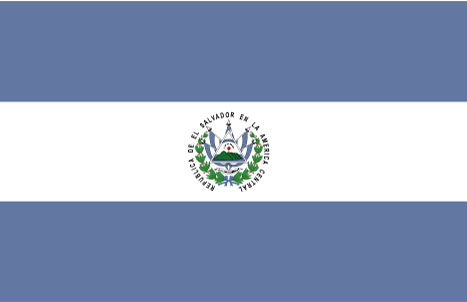
El Salvador
El Salvador
Declare Your Relationship to El Salvador
CountryReports Community
- Studying2
- From El Salvador1
- El Salvador heritage2
- Visited1
- Want to visit0
Customs and Culture
Customs and Culture
About the People
Salvadorans are known for their hospitality to visitors. The people love their country and are proud of its accomplishments. Salvadorans are hardworking individuals who care for others.
Cultural Attributes
Salvadorans work hard. They are very creative when it comes to finding a way to make money. They do not give up easily when things become difficult. Instead, they fight to find the way, and usually they take refuge in God.
Most of the people are Christian, being the two more predominant religions the Protestantism and the Catholicism.
Faith has been a resource that has helped the people to go through varied tough situations, making them tough as well.
The endurance of the people of El Salvador has been tested many times, the more prominent of which being the twelve years civil war, followed by the several natural disasters that have hit the region, like earthquakes and hurricanes. Unfortunately, when this is combined with the difficult social environment that Salvadorans need to face daily, plagued by economic uncertainty and the physical insecurity generated by the crimes committed by the unlawful social groups known locally as "maras", it has made the people to be mildly negative in their expectations.
Salvadorans tend to overestimate the bad things, and to minimize the good ones. Nevertheless, they never give up, and still preserve the human warmth and natural joy that characterize their people.
At first glance, citizens living in the urban areas seem to be self-centered and indifferent to others, but once the ice is broken between two strangers, by means of a natural gesture like a smile, or a casual incident like a belonging being dropped, the Salvadorans let their friendliness to emerge, and within a couple of minutes, the two strangers become acquainted, help each other, and disclose themselves a little.
In the rural areas, people tend to be more open, and show immediately a natural interest to others, to help them, to share with them their own limited resources.

Land of Volcanoes and Resilient Spirit
Greetings, Gestures & Visiting
Male to male greeting usually involves handshaking with the right hand. But, if the two people are close friends or relatives that have not seen each other for a long time, the protocol could also include a hug or a half-hug.
Hugs among men are customarily reserved for very close friends or relatives, or for the greeting of a man and a male child which is a relative of a close friend or a relative, or for special circumstances, like in funerals or to show some emotional support. The rest of the time, men usually give half-hugs to other men, i.e., one person puts his left arm around the shoulders of the other person, while handshakes him with the right hand at the same time.
Men kissing each other are only seen mainly between father and son, specially, but not only, when the son is still underage, or when the father is elder. This kissing involves closed mouth to cheek or to forehead contact.
Typical verbal formulas accompanying the handshake or the hug vary depending on how close the two man involved are. Two first-time acquaintances would say "Hello, how are you? I'm So-and-so, nice to meet you". Two friends who see each other frequently would say "Hey, what's up?" and two old friends who have not seen each other in a while would say "Hey man, how are you! It has been a while..."
Adult to kid greeting would include expressions from the adult like "Hey champion, how are u doing?", and then, a quick comment to the adult accompanying the kid could follow, like "It is incredible how much your kid has grown so far".
The protocol for male to female greeting generally includes a cheek kiss, or a soft handshaking, but that depends on whether the encounter is social or more formal. For instance, a young male would kiss in the cheek to a female friend of his, or to a young female first introduced to him by a mutual friend, or by her boyfriend, but would handshake an older woman, like a professor, or a woman with whom the encounter is supposed to be sparsely, like the wife of a coworker.
When kissing the cheek of females, males usually also hold their right hand on the left shoulder of the female. Couples customarily greet with a rapid kiss, with a closed mouth to closed mouth contact.
Male adult to female child greeting usually involves no physical contact, and a short sweet expression like "Hello young lady". Verbal formulas accompanying the greeting between a male and a female are similar to the ones described for the male to male case, but the message and the expressions tend to be softer, like when a guy greets a female friend and says "Hey, how are you! It is very nice to see you again".
When two females meet, they usually always kiss each other in one cheek. This kiss typically does not include mouth to cheek contact, but instead, cheek to cheek contact, plus a kiss sound, made by the mouth of the two females. If they are first being introduced, or if they are not close acquaintances, the kiss is preceded by a soft handshake with the right hand. If the two women are close friend or relatives, they add a hug after the kiss. The formulas for the greeting between two women are similar to the ones described for the male to male case, except that these tend to be longer and more expressive.
It is poor manners to use extensive hand or head gestures in conversation or to express feelings. Yawns should be avoided or covered with the hand. It is not appropriate to point feet or fingers at anyone. Only close friends are beckoned with a hand wave.
When a friend or relative is invited over to someone's house, it is customary for the person being invited to bring over something to eat, generally a traditional dessert, like "quezadilla" (a type of baked bread made of cheese), "repostera" (pieces of sweet bakery), a "brazo gitano" (an elongated semi cylindrical shaped piece of cake), or something more conventional like ice cream, or even fruit, like a papaya, a watermelon, several mangoes or lemons, etc.
The adults generally gather together to chat, while they drink coffee accompanied with the bread being brought by the visitors. For this purpose, the living room is barely used. Instead, and especially if the visitors are very familiar with the hosts, it is customary to gather in a back or a front deck. Children are served a soft drink, like a soda or a drink made of fruit and water. Children from the two families go and separate from the adults to play together.
If the visit is in progress by the time of a main meal, the host invites the visitors to join them for the meal. If the visitors have no intentions to stay for the meal, maybe because lack of closeness, it is accepted for them to politely reject the invitation, but usually this is followed by them leaving the house and ending the visit. This is because it is not considered polite for the hosts to have a main meal while they have guests, if the guests will not join them for that meal.
After a reasonable period of time, the visitors start to try to close the conversation, and prepare to leave. When this happens, the visitors are walked to the door by the hosts, when all of them have a last small talk before the visitors leave.
It is not uncommon for the host to give something away to the visitors, like something among the examples of desserts cited before, but different from what the visitors brought.
Climate in El Salvador is tropical, and that dictates the type of clothes worn by its inhabitants. In urban areas, typical outfit for male young adults is jeans and camp shirts, polo shirts, or T-shirts, plus loafers, brogues, deck shoes or tennis for casual needs. For the office, they turn to pleated pants and button-down shirts, with or without a tie, and dress shoes.
Dressing behavior for women varies depending on fashion. There is a marked influence from the American styles in this respect. Jeans are common in the female population, but they also wear a variety of other type of clothes like short and long skirts, shorts, casual and cocktail dresses, dress pants, among others. Young women also wear casual shirts and tops, career shirts, dressy shirts and blouses. Currently, the most common type of shoes that women wear are sandals, but they also use platform shoes, boots, ankle boots, tennis, May Jane shoes, mule shoes, wedge shoes, open toe shoes and pumps. For the working environment, women generally wear working suits, with a combination of pants or skirts, career shirts, and blazers.
In El Salvador, students in all public and most private schools wear uniforms during school time, but for the rest of the day, dressing habits for boys and girls vary depending on current trends. Nowadays, boys wear tight jeans and tight button-down long-sleeve shirts, or long-sleeve T-shirts, and tennis. The previous generation, though, had the opposite trend, consisting of loose pants, and loose shirts. Young girls usually wear miniskirts, tops or strap blouses, and sandals. Male kids wear jeans, stamped T-shirts and tennis. Female kids wear jeans, tops and sandals but also shorts and spandex pants and shorts with long T-shirts, with colorful short socks and tennis.
Male babies are dressed with diapers and little T-shirts, while female babies usually are dressed with little dresses.
Old male adults generally wear the clothes that were common when they where young adults, like old fashioned suits consisting of pants, button-down long-sleeve shirts and jackets, but also tennis and maybe a hat. Old female adults usually wear old fashioned dresses or suits consisting of pants, button-down long-sleeve shirts and blazers, and low heels.
In rural areas, men typically wear button-down long-sleeve shirts, casual pants and half boots, while women wear blouses and long skirts with rustic sandals. Boys and girls usually are dressed with the same type of clothes as their parents, but generally wear no shoes, and little kids and babies are naked most of the time. Old male adults in the rural areas generally wear just pants and rustic sandals, with no shirts, while old female adults are dressed no differently from the younger women.
Diet
Salvadorian food is more spicy that of many other Latin American countries. Most people eat black beans (frijoles), refried beans, thick tortillas, rice, eggs and fruit. A typical lunch is pupusa & chilate.
It is polite for guests to try some of every dish that is served. Leaving a little food on the plate is considered good manners. Men generally stand when a woman leaves the table. Guests compliment the host or hostess on the meal, something which assures the hosts that the guests feel welcome.
Salvadorian food is more spicy that of many other Latin American countries. Most people eat black beans (frijoles), refried beans, thick tortillas, rice, eggs and fruit. A typical lunch is pupusa & chilate.

Family
Family structure and its traditions are different for people living in the city and for people living in towns, or in rural areas.
The basic family structure for people from the cities consists of father, mother, and from one to three sons and daughters. Having a grandfather or a grandmother, but not both, living together with the basic family is common. If both grandparents are alive and relatively independent, they usually live alone in their own house, though their sons and daughters are usually in close contact with them.
There are also a lot of families that miss the father, mainly because he has migrated out of the country to provide financial support, or because he has another home which he considers to be his primary concern. Yet another group of families miss the two parents, maybe because both of them are working abroad to support the financial needs of their children. In this later case, the children usually live with their grandparents, or with an uncle or an aunt. The most popular country for Salvadorans to go to work at is the United States, but there are people from El Salvador working in plenty of other countries around the world.
In El Salvador, It is very common for both parents to work in order to supply the required income for the family. Nevertheless, the mother is still considered as the responsible for the caring of the children and the home, but daughters are taught to be independent, to study and pursue a career.
Salvadorans tend to have a dual standard regarding sex education towards their children, because on the one hand, parents want both sons and daughters to get married before starting to be sexually active, but on the other hand, they educate differently their sons and their daughters, because sons are often expected to meet several female partners before getting married, and to be sexually active, while on the contrary, daughters are expected to meet very few partners before getting married, and not to be sexually active but until they get married.
Parents in middle to upper classes expect their sons and daughters to go to school, then to go to the university to get a degree, and then to get married and leave the parental home. But in recent years, there has been an increasing tendency for some young male adults after they get a job, to leave the home of their parents earlier and to live alone, becoming sexually active and possibly later to cohabitate with their couple. Some couples also do not get married, but just cohabitate.
Children from lower classes are not always expected to go to school, but rather to learn an occupation, and to work as soon as possible to help with the financial support for the parental family. They also usually do not get married, but instead, they get together in cohabitation.
Families in the towns tend to be more numerous than the families in the cities, with the amount of children ranging from two to five. Another difference is in the role taught to the sons and daughters, because the later ones are expected to be dependent, to be focused mainly on the care of the children and the home, and not to work, or to work but in commercial activities done at home, like in meals or "tortillas" preparation, or in a store at home, while the male is considered to be the support for the family. And like in the case for the middle and upper classes in the urban areas, people in the towns usually leave the parental home until they get married.
Families in rural areas behave very similar to the ones living in towns. For instance, both types of families have numerous children and both have traditional roles for male and female. But they also have some differences. For example, they live together with both the grandparents, and they usually do not get married, but get together in cohabitation.
Dating Customs
In past generations, when two young adults, male and female, were attracted to each other, and wanted to make official their relationship, the male visited the home of the female, to talk to her parents, in order to get their consent. The boyfriend was then allowed to start visiting his girlfriend at her home, watched by her parents. If the relationship went along in good terms, after a reasonable length of time, the couple had a formal talk with the parents of the girlfriend, to request their consent to get married. If the consent was granted, the couple got married first by civil marriage, and a week later, by church wedding, moment after which the bride used to leave the house of her parents, and went to live with her husband. It was customary for the groom's family to afford the civil marriage, and for the bride's family to afford the church wedding.
Nowadays, these traditions are in progressive decay. Instead for the boyfriend to go and talk with the parents of his girlfriend, the girlfriend talks to her mother privately to let her know about her boyfriend. The mother is then supposed to talk to her husband, to make him accept the relationship. After this private negotiation takes place, the boyfriend is allowed to visit her girlfriend at her home. Then, if the relationship goes along in good terms, after a reasonable length of time, the boyfriend proposes to his girlfriend, gives her an engagement ring, and if the girlfriend accepts, the civil marriage takes place, and a week later, the church wedding. It is no longer a strong tradition for the boyfriend's family to afford the civil marriage, and for the girlfriend's family to afford the civil wedding. Instead, usually both ceremonies are afforded by the boyfriend, or by both boyfriend and girlfriend. An increasing number of couples are opting to get married just by the civil marriage, and not to do the church wedding, while some others do not get married at all, and instead live in cohabitation.
The civil marriage ceremony usually takes place in a house or in a reception room. Usually few people are invited; just close family and friends of groom and bride. The ceremony is lead by a public notary. Days or weeks before to the ceremony, a meeting must be held by the notary and the couple, to establish the conditions and options under which the marriage is going to be arranged. On the ceremony itself, one witness is required for the groom, and one for the bride. Groom's witness is usually male, and brides's witness is usually female, but this is not mandatory. The notary conducts the ceremony according to national regulations in this matter, explaining the purpose and importance of the marriage, and the duties and rights of the wife and the husband. To the end of the ceremony, the notary asks the groom and the bride weather they accept to get married, and then they sign the marriage deed, followed by their witnesses signing the deed too. After the signatures, the notary declares the couple man and wife, and the newlywed kiss in front of the audience, act to which them respond with an applause. Then, they are congratulated by the public, and the banquet and the music starts.
The church marriage ceremony usually takes place at church, but it can be done also in a reception room, especially in the case of Protestant ceremonies. Instead of a best man and a matron of honor, it is typical that a married couple close to the groom and the bride is chosen to act as godparents of the newlyweds, to advise them in life on marriage subjects. They stay next to the couple during the ceremony. They are also responsible of putting and removing the cord that interlaces the couple, and that symbolizes the union between them. This is done before and after the ceremony. A kid is there also to be the page boy, and his responsibility is to hold and later give the rings to the couple. Generally, the bridge is dressed in white, and the groom in a dark suit. The groom is supposed to be at the altar waiting for the bride to arrive, and the bride is supposed to be walked to the altar by her father or, in his absence, some other paternal figure, or her mother, while the wedding march is played. A baby girl and a baby boy usually are in charge of holding the tail of the dress of the bride while she walks towards the altar.
The ceremony is lead by a priest or a pastor, and its content is similar to the civil marriage ceremony, with the addition that everything is explained based on biblical or doctrinal concepts. The priest or the pastor then asks the groom and the bride if they accept to get married, and then declares them man and wife. After this, the young couple interchanges the wedding rings, and then the bride gives the groom the weeding coins, while states that the coins represent the prosperity and the resources of the marriage. The groom receives the wedding coins from the bride, stating that he will take care of them in the benefit of the marriage. This act is followed by the newlyweds kissing each other and the audience applauding. Then the priest or the pastor ends the ceremony with a general blessing and the guests come closer to congratulate the young couple. In Catholic ceremonies, the wedding may be put in between the mass. Generally, after a church wedding, the guests and the newlyweds go to a reception room to celebrate the weeding party.
Some other traditions related to weddings include separate bachelor's parties for the fiance and the fiancee, the honey moon after the wedding, and one or two wedding tea receptions before the day of the wedding.
Recreation
Football soccer is, by far, the most played sport in the country. It is the unofficial national sport, played by kids and adults, by male and female population, though male players are more common, especially in the adult community. Football games are played daily, from the informal gathering of boys in the neighborhood who play in the street, to local and national tournaments throughout the year. It is common for workers from several companies to join and set teams to play on competitions taking place on weekends.
Another entertaining activity for kids and young adults is video gaming. Nowadays, it is becoming increasingly popular for middle class families to have a video game console as part of the household devices, or a computer that kids use also as a game console. Kids are also into the portable game players' tendency.
On the other hand, outdoor games for kids are becoming less and less common. Previous generations of kids enjoyed playing street games in the neighborhood, like hide-and-seek, tag, and cops and robbers. They also used to play with toys that required some level of physical ability from the kids, like spinning tops, yo-yo, kites, bicycles, skateboards, rollers, marbles, jacks, etc.
The preferred activities that people carry on during vacation may depend on when those vacations take place. Pupils in public schools and those in private but non-bilingual institutions are given vacations at the end of the year, from the second half of October, to the first half of January of the following year. So, during this long period of vacation, in urban areas, it is customary for parents to send their children to summer lessons, like swimming, languages, football, music, arts, dance and academic reinforcement. Youngsters may get a temporal job like as sellers in stores.
In rural areas, sons are sent to work with their father in farming activities, though this is becoming less common because of the progressive drop of the agriculture in the country during the last decade.
Pupils also have vacations for the Holy Week, and for the Patron Saint's Day of their municipality. These one-week vacations are commonly employed to go to the beach, or to go hiking and camping. They may also use this time for church activities or to go to the fairs.
Most of the employees in the government and in some private companies get their vacations on fixed periods throughout the year, that is, in Holy Week, Patron Saint's Day of their municipality, and Christmas. A high percentage of this part of the population prefers to go to the beach during Holy Week. People from San Salvador may also choose to go to the beach on August, when they get some days of vacation because of the celebration of the patron saint of the city.
At the end of the year, several people like to go outside of the country for tourism, but specially to visit the family members or friends that live abroad, being the United States their main destination.
Other activities carried on during these periods may be attending religious events, visiting tourist towns, or simply resting at home.
Another group of the workers get their vacations on varied occasions, depending on the employee's interests and the company's needs. These periods might not coincide with the common intervals of Holy Week, Patron Saint's Day on August, or Christmas, but the activities that they carry on are similar to the ones of the rest of the working population.
Holidays
Independence Day
9/15Independence Day
Christmas
12/25Christmas
The Christmas season begins with the Feast of the Immaculate Conception followed by the Feast of Our Lady of Guadalupe on December 12th which celebrates the appearance of the Virgin Mary to the Indian Juan Deigo, believed to occurred in 1531. These festivities include fireworks, dances and soccer tournaments. Las Posadas (The Lodgings) is celebrated on Christmas Eve. Christmas Day activities include church services and beach activities.
Christmas trees, poinsettias, and Presbres (Nativity Scenes) are the most common decorations. Children receive gifts from Santa Claus, who places them under the Christmas tree or under the children’s beds.
Christmas Eve dinner features tamales, turkey, chicken, pork, rice, green vegetables, and assorted deserts and liquors.
Dates of Interest
- December 31st
This is the second most celebrated holiday besides Christmas Eve, and it is a holiday for students and government employees, and half-holiday for private companies. As for Christmas Eve, families get reunited to hold a special dinner, wearing new clothes. The same comments apply here regarding firecrackers and fireworks. There are also a special mass for Catholics and a special cult for Protestants in the afternoon or early at night. At midnight, everybody hog each other to celebrate the coming New Year. After midnight, party, friends visiting each other, as for Christmas Eve.
How do people greet each other in El Salvador?
Men typically shake hands with the right hand, using half-hugs or full hugs for close friends and relatives. Male-to-female greetings involve a cheek kiss in social settings or a handshake in formal ones, and women usually greet each other with a cheek-to-cheek kiss.
Do
- Shake hands with the right hand when meeting men
- Offer a cheek kiss to female friends in social settings, holding your right hand on her left shoulder
- Use a handshake for older or formal female contacts, like a professor or a coworker's wife
- Adjust verbal greetings to closeness, from formal introductions to casual 'Hey, what's up?'
Don’t
- Don't hug men you aren't very close to; use a half-hug instead
- Don't make physical contact when greeting a female child; use a short sweet phrase instead
Good to know
- Couples greet with a quick closed-mouth kiss
- Women who are close friends add a hug after the cheek kiss
What are the dining customs in El Salvador?
Salvadoran food is spicier than in many other Latin American countries, with staples like beans, thick tortillas, rice, eggs and fruit, and a typical lunch of pupusa and chilate. Guests are expected to sample every dish and compliment the host.
Do
- Try some of every dish that is served
- Leave a little food on your plate as good manners
- Compliment the host or hostess on the meal
Good to know
- Men generally stand when a woman leaves the table
- Expect black beans, refried beans, thick tortillas, rice, eggs and fruit
What etiquette should I know when visiting a home in El Salvador?
When invited to someone's home, guests customarily bring something to eat, usually a traditional dessert, and adults gather to chat over coffee and bread, often on a back or front deck.
Do
- Bring a traditional dessert like quezadilla, reposteria, brazo gitano, or fruit
- Accept the host's invitation to join a meal if the visit runs into mealtime, or politely leave
- Have a last small talk at the door before departing
Don’t
- Don't expect the hosts to eat a main meal while guests stay who won't join them
Good to know
- Hosts often give guests something to take home, different from what the guests brought
- Children are served a soft drink and go off to play together
How should I dress in El Salvador?
The tropical climate shapes clothing, with casual jeans and shirts common in urban areas, and more formal office attire like pleated pants and button-down shirts for men and working suits for women. Rural dress is more traditional.
Good to know
- Urban men wear jeans with camp, polo or T-shirts casually; pleated pants and button-down shirts for the office
- Urban women wear jeans, skirts, dresses and a variety of shoes, with working suits for the office
- Rural men wear button-down long-sleeve shirts, casual pants and half boots; women wear blouses and long skirts with rustic sandals
- Students wear uniforms during school time
What gestures should I be careful with in El Salvador?
Restraint with gestures is valued; excessive hand or head movements are considered poor manners.
Do
- Cover yawns with your hand
- Beckon only close friends with a hand wave
Don’t
- Don't use extensive hand or head gestures in conversation
- Don't point your feet or fingers at anyone
What is family life like in El Salvador?
Family structure differs between cities and rural areas, with urban families typically smaller and rural or town families more numerous. Both parents commonly work, though the mother is still seen as responsible for the children and home.
Good to know
- Urban families usually have one to three children; town and rural families have two to five
- A grandparent often lives with the family, especially in rural areas where both grandparents may live with them
- Many families have a parent working abroad, most commonly in the United States
- Daughters are increasingly taught to be independent and pursue a career in cities
What do people do for recreation in El Salvador?
Football (soccer) is by far the most popular sport and the unofficial national sport, played by kids and adults alike. Vacations are often spent at the beach, hiking, camping, or visiting family abroad.
Good to know
- Football is played daily, from neighborhood street games to national tournaments
- Video gaming is increasingly popular among kids and young adults
- Holy Week and Patron Saint's Day breaks are commonly used for the beach, hiking or camping
- Many travel abroad at year's end, mainly to visit family in the United States
Last updated: 2026-07-12 · Sources: CountryReports
Photos of El Salvador
Photos of El Salvador
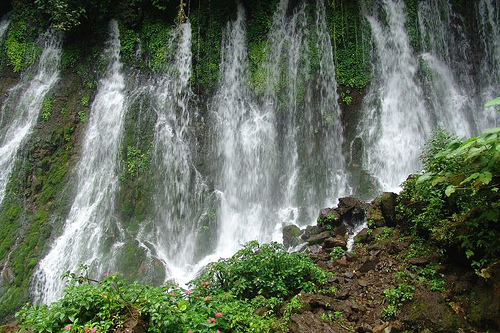
Waterfall near Juayua
Street Market in San Salvador
Church dome in San Salvador
Girl in Santa Ana
Shopping district in El Salvador
Bus in El Salvador
Streetside grocery store in El Salvador
Streetside grocery store in El Salvador
Church in El Salvador
El Salvador Creche -- Figures in a Wooden Manager
El Salvador Creche -- Painted on Courbaril Seed
Local kids playing soccer on a small plaza


Travel and Tourism
Travel and Tourism
- Travel Alert Status
- Level 3: Reconsider Travel
- Currency
- US dollar (USD)
- Time Difference
- UTC-6 (1 hour behind Washington, DC, during Standard Time)
- Climate
- El Salvador's tropical climate has pronounced wet and dry seasons. The dry season, "verano" or summer, from December to April is dusty, especially in rural areas. The hottest months of the year, March and April, immediately precede the rainy season, "invierno" (winter). During the May-November rainy season, mornings are usually clear, with heavy rains in early evening and at night. Thunder and strong winds occasionally accompany the rain, and some June and September mornings are overcast. Occasional 2- to 3-day rainy spells occur. The average annual rainfall is 66 inches. The three geographic zones have distinct climatic characteristics. The narrow coastal belt is a hot tropical savanna with lush vegetation and temperatures that average 80°F. The central highlands, where San Salvador lies, are slightly cooler, with an average temperature of 73°F. San Salvador's temperatures range from 50°F to 90°F throughout the year. Incoming polar air infrequently causes cold nights and even frost. The highlands in the extreme north of El Salvador are consistently cool. Earthquakes and volcanic eruptions have littered El Salvador's history. Earthquakes ranging from 6.5 to 7.9 on the Richter Scale have struck the country at least 15 times since 1700. The most serious recent earthquakes occurred on January 13 and February 13, 2001. Although damage in San Salvador was slight, schools, hospitals, businesses, and public buildings throughout the country were damaged or destroyed. These two powerful quakes resulted in 1,300 deaths and left more than one million homeless. Infrastructure damages are estimated at $1.6 billion, or 12% of the country's GDP. Of the volcanoes located within the metropolitan area of San Salvador, Volcano San Salvador erupted last in 1917 and Volcano Ilopango in 1879. Although hurricanes do not usually threaten El Salvador directly, strong Caribbean storms can generate heavy winds and rains. Hurricane Mitch hit El Salvador in November 1998, generating extreme rainfall which caused widespread flooding.
- Airports
- 73
Read the full travel guide — health, safety, vaccinations, disease risk, sanitation, and transit details.
View full travel guideRecipes
Recipes
History
History
Historical Eras
Pre-Columbian Era
2000 BCE – 1524
El Salvador's territory was inhabited by successive Mesoamerican peoples, including the Maya and, most prominently, the Pipil, a Nahuatl-speaking group descended from the Toltec-Aztec tradition. These agricultural societies cultivated maize, cacao, and other crops across the fertile volcanic valleys. The Pipil established the region of Cuzcatlán, which formed the cultural and political core of the territory at the time of Spanish contact.
Spanish Conquest & Colony
1524 – 1821
Pedro de Alvarado led the Spanish conquest beginning in 1524, and by 1540 indigenous resistance had been crushed, integrating El Salvador into the colonial Captaincy General of Guatemala. The colonial system vested land title in the Crown, concentrating agricultural wealth among a small elite and laying the foundations for enduring inequality. The indigenous population declined sharply through disease and forced labor, gradually giving rise to a mestizo majority.
Independence & Federation
1821 – 1840
El Salvador declared independence from Spain in 1821 and joined the United Provinces of Central America in 1823, a federal experiment that proved politically unstable. Chronic rivalries between liberal and conservative factions, as well as tensions among member states, caused the federation to disintegrate. El Salvador emerged as a fully sovereign republic in 1840, though political instability and elite land dominance persisted.
Oligarchic Republic
1840 – 1932
The nineteenth and early twentieth centuries were dominated by a landed oligarchy whose wealth was built first on indigo and then, decisively, on coffee cultivation. Land consolidation into large haciendas dispossessed much of the rural population, generating deep social tensions. A rural uprising in 1833 under Anastasio Aquino was violently suppressed, foreshadowing a pattern in which elite-hired or state forces crushed agrarian dissent.
Military Rule & La Matanza
1932 – 1979
The Marxist-inspired peasant insurrection of 1932 led by Agustín Farabundo Martí was met with a brutal government massacre — la matanza — in which an estimated 10,000–30,000 Salvadorans were killed. This event entrenched military control of the state for decades, with the armed forces acting as guarantors of oligarchic power while periodically gesturing toward limited reform. A brief but costly war with Honduras in 1969 and growing guerrilla activity through the 1970s signaled the deepening crisis.
Civil War & Peace Process
1979 – 1992
The assassination of Archbishop Óscar Romero in 1980 and the formation of the FMLN guerrilla coalition that same year marked the onset of a devastating civil war that lasted twelve years and claimed approximately 75,000 lives. The conflict drew Cold War powers into a proxy struggle, with the United States backing the government and Cuba, Nicaragua, and the Soviet Union supporting the FMLN. A UN-brokered peace accord signed in January 1992 ended hostilities and mandated sweeping military and democratic reforms.
Democratic Modern Era
1992 – present
The post-war period saw El Salvador transition to multiparty democracy, with the FMLN transforming into a legitimate political party and competing in free elections. Economic reforms, dollarization in 2001, and significant emigration to the United States — generating substantial remittances — reshaped Salvadoran society. Persistent challenges including gang violence, poverty, and inequality have continued to define national life, while the country's political landscape shifted dramatically with the rise of Nayib Bukele to the presidency in 2019.
Overview
Timeline of Key Events
1524
Spanish adventurer Pedro de Alvarado conquers El Salvador.
Spanish adventurer Pedro de Alvarado conquers El Salvador.
1540
Indigenous resistance is crushed and El Salvador becomes a Spanish colony.
Indigenous resistance is crushed and El Salvador becomes a Spanish colony.
1823
El Salvador becomes part of the United Provinces of Central America.
El Salvador becomes part of the United Provinces of Central America, which also includes Costa Rica, Guatemala, Honduras and Nicaragua.
1840
El Salvador becomes fully independent.
El Salvador becomes fully independent following the dissolution of the United Provinces of Central America.
1969
El Salvador attacks and fights a brief war with Honduras
El Salvador attacks and fights a brief war with Honduras following the eviction of thousands of Salvadoran illegal immigrants from Honduras.
1977
Jesuit priest Rutilio Grande, S.J. is assassinated by the death squad.
Jesuit priest Rutilio Grande, S.J. is assassinated by the death squad.
1977
Anti-government guerrilla activities intensif
Anti-government guerrilla activities intensify amid reports of increased human rights violations by government troops and death squads; General Carlos Romero elected president.
Read the full history profile — narrative overview, defining eras, and the complete timeline in one place.
View expanded historyInteresting Facts
Interesting Facts
When a child loses a tooth they put the tooth under their pillow. The father says that during the night a rabbit will come. It will take the tooth and leave some money.
The name El Salvador means “the savior.”
El Salvador is the most densely populated country in Central America, with an average of over 290 persons per square kilometre; by contrast, Canada's population density is less than three persons per square kilometre.
The Montecristo Nature Reserve in northern El Salvador is a breeding ground for the quetzal, a bird with brilliant plumage and a long tail.
El Salvador’s tropical vegetation includes more than 200 species of orchids, which bloom between February and April.
Archbishop Oscar Arnulfo Romero gained enormous popularity in El Salvador as an outspoken leader in human rights. He was nominated forthe Nobel Peace Prize in 1980. The well-known film, Romero (1988), dramatizes his life.
See every fact — trivia, oddities, and curious tidbits gathered from across the country.
View all interesting factsGeography and Environment
Geography and Environment
- Terrain
- mostly mountains with narrow coastal belt and central plateau
- Climate
- El Salvador’'s tropical climate has pronounced wet and dry seasons. The dry season, *quot;verano" or summer, from December to April is dusty, especially in rural areas. The hottest months of the year, March and April, immediately precede the rainy season, "invierno" (winter). During the May–November rainy season, mornings are usually clear, with heavy rains in early evening and at night. Thunder and strong winds occasionally accompany the rain, and some June and September mornings are overcast. Occasional 2- to 3-day rainy spells occur. The average annual rainfall is 66 inches. The three geographic zones have distinct climatic characteristics. The narrow coastal belt is a hot tropical savanna with lush vegetation and temperatures that average 80ºF. The central highlands, where San Salvador lies, are slightly cooler, with an average temperature of 73ºF. San Salvador’s temperatures range from 50ºF to 90ºF throughout the year. Incoming polar air infrequently causes cold nights and even frost. The highlands in the extreme north of El Salvador are consistently cool. Earthquakes and volcanic eruptions have littered El Salvador’s history. Earthquakes ranging from 6.5 to 7.9 on the Richter Scale have struck the country at least 15 times since 1700. The most serious recent earthquakes occurred on January 13 and February 13, 2001. Although damage in San Salvador was slight, schools, hospitals, businesses, and public buildings throughout the country were damaged or destroyed. These two powerful quakes resulted in 1,300 deaths and left more than one million homeless. Infrastructure damages are estimated at $1.6 billion, or 12% of the country's GDP. Of the volcanoes located within the metropolitan area of San Salvador, Volcano San Salvador erupted last in 1917 and Volcano Ilopango in 1879. Although hurricanes do not usually threaten El Salvador directly, strong Caribbean storms can generate heavy winds and rains. Hurricane Mitch hit El Salvador in November 1998, generating extreme rainfall which caused widespread flooding.
- Natural Hazards
- known as the Land of Volcanoes; frequent and sometimes very destructive earthquakes and volcanic activity; extremely susceptible to hurricanes
- Current Environmental Issues
- deforestation; soil erosion; water pollution; contamination of soils from disposal of toxic wastes
Read the full geography and environment profile — terrain, climate, natural resources, hazards, land use, and international agreements.
View full geographyPeople & Demographics
People & Demographics
Religion
Languages Spoken
Spanish, Nahua (among some Amerindians)
- Spanish
Population
- Population
- 6,052,064
- Population: Male/Female
- male: 3,172,244 female: 3,456,458
- Population Distribution
- athough it is the smallest country in land area in Central America, El Salvador has a population that is 18 times larger than Belize; at least 20% of the population lives abroad; high population density country-wide, with particular concentration around the capital of San Salvador
- Urban Population
- urban population: 75.4% of total population rate of urbanization: 1.33% annual rate of change
- Population in Major Urban Areas
- 1.116 million SAN SALVADOR (capital)
- Nationality Noun
- noun: Salvadoran(s) adjective: Salvadoran
- Ethnic Groups
- Mestizo 86.3%, White 12.7%, Indigenous 0.2% (includes Lenca, Kakawira, Nahua-Pipil), Black 0.1%, other 0.6%
- Language Note
- Spanish (official), Nawat (among some Indigenous)
Demographic Profile
El Salvador is the smallest and most densely populated country in Central America. It is well into its demographic transition, experiencing slower population growth, a decline in its number of youths, and the gradual aging of its population. The increased use of family planning has substantially lowered El Salvador's fertility rate, from approximately 6 children per woman in the 1970s to replacement level today. A 2008 national family planning survey showed that female sterilization remained the most common contraception method in El Salvador - its sterilization rate is among the highest in Latin America and the Caribbean - but that the use of injectable contraceptives is growing. Fertility differences between rich and poor and urban and rural women are narrowing.
Salvadorans fled during the 1979 to 1992 civil war mainly to the United States but also to Canada and to neighboring Mexico, Guatemala, Honduras, Nicaragua, and Costa Rica. Emigration to the United States increased again in the 1990s and 2000s as a result of deteriorating economic conditions, natural disasters (Hurricane Mitch in 1998 and earthquakes in 2001), and family reunification. At least 20% of El Salvador's population lives abroad. The remittances they send home account for close to 20% of GDP, are the second largest source of external income after exports, and have helped reduce poverty.
Education
- Literacy Definition
- age 15 and over can read and write
Health Information
- Life Expectancy at Birth
- total population: 75.9 years male: 72.4 years female: 79.5 years
- Major Infectious Diseases — degree of risk
- degree of risk: high food or waterborne diseases: bacterial and protozoal diarrhea vectorborne diseases: dengue fever
- Alcohol consumption per capita
- total: 2.94 liters of pure alcohol beer: 1.5 liters of pure alcohol wine: 0.06 liters of pure alcohol spirits: 1.37 liters of pure alcohol other alcohols: 0 liters of pure alcohol
- Tobacco Use
- total: 7.9% male: 14.1% female: 1.7%
- Child Marriage
- women married by age 15: 4.3% women married by age 18: 19.7%
- Infant Mortality Rate
- total: 11.7 deaths/1,000 live births male: 13.3 deaths/1,000 live births female: 10 deaths/1,000 live births
Life Expectancy
- Life Expectancy at Birth
- total population: 75.9 years male: 72.4 years female: 79.5 years
- Median Age
- total: 29.7 years male: 28.2 years female: 31.2 years
- Age Structure
- 0-14 years: 25.3% (male 855,841/female 818,642) 15-64 years: 66.3% (male 2,077,745/female 2,317,416) 65 years and over: 8.4% (male 238,658/female 320,400)
- Infant Mortality Rate
- total: 11.7 deaths/1,000 live births male: 13.3 deaths/1,000 live births female: 10 deaths/1,000 live births
Read the full people and society profile — demographics, health, education, religion, languages, and notable people.
View full people and societyGovernment & Politics
Government & Politics
Country Identity
- Country Name
- ElSalvador
- Full Country Name
- Republic of El Salvador
- Local - Long
- Republica de El Salvador
- Local - Short
- El Salvador
Government Structure
- Government Type
- republic
- Legal System
- based on civil and Roman law, with traces of common law; judicial review of legislative acts in the Supreme Court; accepts compulsory ICJ jurisdiction, with reservations
- Executive Branch
- chief of state: President Nayib BUKELE Ortez (since 1 June 2019, reelected 1 June 2024); Vice President Félix ULLOA (since 1 June 2019, reelected 1 June 2024); note - the president is both the chief of state and head of government head of government: President Nayib BUKELE Ortez (since 1 June 2019, reelected 1 June 2024); Vice President Félix ULLOA (since 1 June 2019, reelected 1 June 2024); note - the president is both the chief of state and head of government cabinet: Council of Ministers selected by the president elections: president and vice president elected on the same ticket by popular vote for five-year terms; election last held 4 February 2024 (next to be held in 2029) election results: Nayib BUKELE Ortez reelected president; percent of vote - Nayib BUKELE Ortez (Nuevas Ideas) 84.7%, Manuel FLORES (FMLN) 6.0%, Joel SANCHEZ (ARENA) 4.7%, other 4.6%
- Legislative Branch
- unicameral Legislative Assembly or Asamblea Legislativa (84 seats; members are elected by direct, popular vote to serve three-year terms) elections: last held 16 March 2003 (next to be held March 2006) election results: percent of vote by party - NA%; seats by party - FMLN 31, ARENA 28, PCN 15, PDC 5, CD 5
- Judicial Branch
- Supreme Court or Corte Suprema (judges are selected by the Legislative Assembly)
- Suffrage
- 18 years of age; universal
- Constitution
- 23-Dec-83
- Independence
- 15 September 1821 (from Spain)
- National Holiday
- Independence Day, 15 September (1821)
Capital City
- Capital Name
- San Salvador
- Capital - geographic coordinate
- 13 42 N, 89 12 W
- Capital Time Difference
- UTC-6 (1 hour behind Washington, DC, during Standard Time)
Spanish for "Holy Savior" (referring to Jesus Christ)
Military
Branches: Salvadoran Armed Forces (Fuerza Armada de El Salvador, FAES): Salvadoran Army (Ejercito de El Salvador, ES), Salvadoran Navy (Fuerza Naval de El Slavador, FNES), Salvadoran Air Force (Fuerza Aerea Salvadorena, FAS)
Embassy / Diplomatic Mission
U.S. Embassy San Salvador
Final Boulevard Santa Elena Sur
Urbanización Santa Elena, Antiguo Cuscatlán
La Libertad
Telephone: 503-2501-2999
Fax: 503-2278-6020
Email: ACSSanSal@state,gov
The Consular Section is open for services to U.S. citizens from 8:15 a.m. to 11:30 a.m. weekdays, excluding U.S. and Salvadoran holidays and the first Friday of each month. U.S. citizens with emergencies may come to the Embassy any weekday between 8:00 a.m. and 4:30 p.m. After business hours, the Embassy can be contacted by telephone at 503-2501-2316 or 503-2501-2253.
Read the full government profile — flag symbolism, national anthem, and other national symbols.
View full government detailsEconomy
Economy
Since adopting the US dollar as its official currency in 2001, El Salvador has ceded control over monetary policy and must rely on fiscal discipline to maintain economic stability. In 2021, the country took the unprecedented step of also adopting Bitcoin as legal tender, though public adoption has remained limited and the policy has drawn scrutiny from international financial institutions. GDP per capita remains among the lowest in Central America and well below regional peers such as Brazil, Argentina, and Chile, while income inequality continues to be a persistent challenge. The trade deficit is largely offset by remittances from Salvadorans living abroad, which now exceed $8 billion annually and account for roughly a quarter of GDP. The government continues to pursue efforts to attract foreign investment, expand export markets, modernize tax and healthcare systems, and revive economic growth, while also negotiating financing arrangements with the International Monetary Fund to address mounting public debt and fiscal pressures.
Snapshot
- Currency Name and Code
- US Dollar (USD)
- GDP — official exchange rate
- $16,520,000,000 (USD)
- GDP Real Growth Rate
- 2.8%
- Gini Index
- 52.5
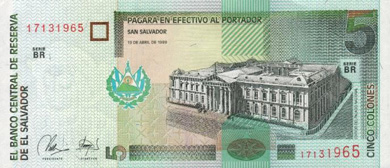
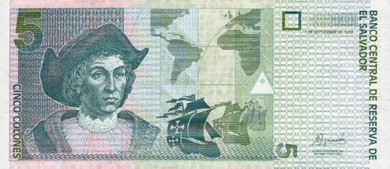
Banknotes
Budget & Public Finance
- Fiscal Year
- calendar year
- Annual Budget
- $3,167,000,000 (USD)
- Public Debt (% of GDP)
- 45.8%
- External Debt
- $8,273,000,000 (USD)
- Investment (% of GDP)
- 15.8%
- Economic Aid
- $252,000,000 (USD)
- Current Account Balance
- -$858,000,000 (USD)
- Reserves of Foreign Exchange
- $2,003,000,000 (USD)
Labor, Industry & Trade
- Labor Force by Occupation
- agriculture 30%; industry 15%; services 55%
- Household Income — highest 10%
- 39.3%
- Industries
- food processing, beverages, petroleum, chemicals, fertilizer, textiles, furniture, light metals
- Agriculture Products
- coffee, sugar, corn, rice, beans, oilseed, cotton, sorghum; shrimp; beef, dairy products
- Export Commodities
- offshore assembly exports, coffee, sugar, shrimp, textiles, chemicals, electricity
- Export Partners
- US 62.9%, Guatemala 11.9%, Honduras 6.8%, Nicaragua 4.4%
- Import Commodities
- raw materials, consumer goods, capital goods, fuels, foodstuffs, petroleum, electricity
- Import Partners
- US 38.2%, Guatemala 9.9%, Mexico 6.1%
Energy
- Oil Production
- 0 bbl/day
- Oil Consumption
- 40,000 bbl/day
- Oil Reserves
- 0 bbl/day
- Natural Gas Production
- 0 cu m
- Natural Gas Consumption
- 0 cu m
- Natural Gas Imports
- 0 cu m
- Natural Gas Exports
- 0 cu m
- Natural Gas Reserves
- 0 cu m
Communications
- Telephone System
- general assessment: multiple mobile-cellular providers are expanding services rapidly and in 2011 teledensity exceeded 135 per 100 persons; growth in fixed-line services has slowed in the face of mobile-cellular competition domestic: nationwide microwave radio relay system international: country code - 503; satellite earth station - 1 Intelsat (Atlantic Ocean); connected to Central American Microwave System
- Internet Country Code
- .sv
News & Weather
News & Weather
Current Weather
Latest News
The new oligarchs of El Salvador: How Bukele’s inner circle got rich - EL PAÍS English
EL PAÍS English · 2d ago
Mexico Teams Up With Costa Rica, El Salvador, Brazil, Dominican Republic And More Countries In Unveiling A Massive Tourism Revolution As New Piers, Airports, Coastal Upgrades And Sustainable Infrastructure Projects Transform Travel Across The Ameri - Travel And Tour World
Travel And Tour World · 1d ago
Funding Opportunity for Climate Resilience and Agricultural Sustainability Projects (El Salvador) - fundsforNGOs
fundsforNGOs · 1d ago
Pacific Ocean earthquake is felt from Mexico to El Salvador - upi.com
upi.com · 3d ago
El Salvador vs Bahamas - Class. 7-8 - FIBA Centrobasket Women's Championship 2026 - FIBA Basketball
FIBA Basketball · 3d ago
El Salvador: The human cost of the state of exception could amount to crimes against humanity - Amnesty International
Amnesty International · 6d ago
Powerful earthquake in Mexico shakes Guatemala and El Salvador - CNN
CNN · 3d ago
First came the dead fish, then invasive plants. A year later and Lake Suchitlán’s pollution remains a mystery - The Guardian
The Guardian · 7d ago
News via Google News
Climate Overview
El Salvador's tropical climate has pronounced wet and dry seasons. The dry season, "verano" or summer, from December to April is dusty, especially in rural areas. The hottest months of the year, March and April, immediately precede the rainy season, "invierno" (winter). During the May-November rainy season, mornings are usually clear, with heavy rains in early evening and at night. Thunder and strong winds occasionally accompany the rain, and some June and September mornings are overcast. Occasional 2- to 3-day rainy spells occur. The average annual rainfall is 66 inches.
The three geographic zones have distinct climatic characteristics. The narrow coastal belt is a hot tropical savanna with lush vegetation and temperatures that average 80°F. The central highlands, where San Salvador lies, are slightly cooler, with an average temperature of 73°F. San Salvador's temperatures range from 50°F to 90°F throughout the year. Incoming polar air infrequently causes cold nights and even frost. The highlands in the extreme north of El Salvador are consistently cool.
Earthquakes and volcanic eruptions have littered El Salvador's history. Earthquakes ranging from 6.5 to 7.9 on the Richter Scale have struck the country at least 15 times since 1700. The most serious recent earthquakes occurred on January 13 and February 13, 2001. Although damage in San Salvador was slight, schools, hospitals, businesses, and public buildings throughout the country were damaged or destroyed. These two powerful quakes resulted in 1,300 deaths and left more than one million homeless. Infrastructure damages are estimated at $1.6 billion, or 12% of the country's GDP.
Of the volcanoes located within the metropolitan area of San Salvador, Volcano San Salvador erupted last in 1917 and Volcano Ilopango in 1879.
Although hurricanes do not usually threaten El Salvador directly, strong Caribbean storms can generate heavy winds and rains. Hurricane Mitch hit El Salvador in November 1998, generating extreme rainfall which caused widespread flooding.
Videos
Videos
1 curated YouTube videos.
Source: YouTube
Frequently Asked Questions
Frequently Asked Questions
How do people greet each other in El Salvador?
What are the dining customs in El Salvador?
What etiquette should I know when visiting a home in El Salvador?
How should I dress in El Salvador?
What gestures should I be careful with in El Salvador?
What is family life like in El Salvador?
What do people do for recreation in El Salvador?
What is the capital of El Salvador?
Where is El Salvador located?
What countries border El Salvador?
What is the predominant religion in El Salvador?
What currency is used in El Salvador?
What languages are spoken in El Salvador?
What is notable about El Salvador's geography and population density?
What is El Salvador known for?
Last reviewed 2026