
 English
 Español
 中文
中文 हिन्दी
 Français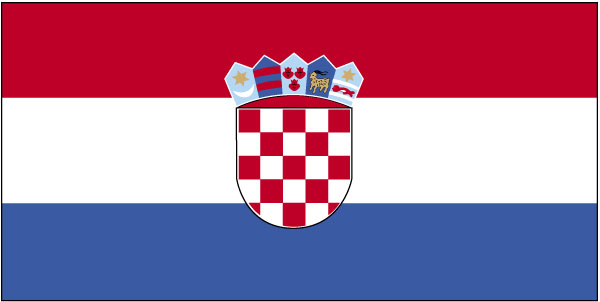
Croatia
Hrvatska
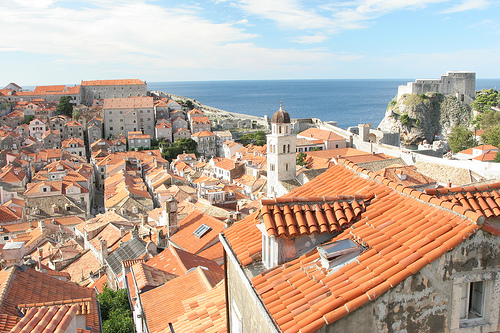
Declare Your Relationship to Croatia
CountryReports Community
- Studying1
- From Croatia0
- Croatia heritage0
- Visited2
- Want to visit1
Customs and Culture
Customs and Culture
Cultural Attributes
Croatia's culture reflects a rich blend of Mediterranean, Central European, and Balkan influences, shaped by centuries of contact with Venetian, Ottoman, Austro-Hungarian, and Slavic traditions. This layered history is visible in everything from architecture and cuisine to music and social customs. Family remains central to Croatian society, with multi-generational ties playing an important role in daily life. Extended family gatherings, especially around religious holidays and celebrations, are common and deeply valued. Catholicism is the dominant religion, practiced by roughly 86 percent of the population, and it shapes the cultural calendar significantly. Feast days such as Christmas, Easter, and the feast of a patron saint (known as krsno ime in some regions) are observed with communal meals, church attendance, and local festivities. Croatia has a strong tradition of folk culture, with regional variations in music, dance, and dress. The Dalmatian klapa, a form of unaccompanied choral singing rooted in the coastal region, has been recognized by UNESCO as an intangible cultural heritage. Similarly, the lace-making traditions of Lepoglava and Hvar are UNESCO-listed crafts still practiced by local artisans. The tamburica, a stringed folk instrument, is especially popular in the Slavonia region of eastern Croatia. Croatian cuisine varies by region. Along the Adriatic coast, seafood, olive oil, and grilled meats reflect Mediterranean influences, while inland areas favor hearty stews, roasted pork, and freshwater fish dishes. The truffle harvest in Istria has gained international attention, and local wines from Dalmatia and the Pelješac Peninsula enjoy a growing global reputation. Croatians tend to be proud of their national identity, particularly given the country's relatively recent independence in 1991 following the dissolution of Yugoslavia. Sports — especially football and handball — serve as powerful expressions of national unity and cultural pride. The national football team's runner-up finish at the 2018 FIFA World Cup generated enormous collective celebration and reinforced a strong sense of national identity both at home and among the Croatian diaspora worldwide.

Land of Adriatic Stone and Habsburg Grace
Greetings, Gestures & Visiting
A handshake is the most common greeting in Croatia. Along with a phrase such as Dobro jutro (good morning), Dobar dan (good day), or Dobra vecer (good evening). When friends and relatives greet, they embrace and kiss each other on both cheeks. In formal situations, a man waits for a woman to extend her hand. In formal greetings, the family name is preceded by gospodine (Mr.), gospodjo (Mrs.), gospodjice (Miss.), or a professional title. The younger person commonly greets first.
Croatians enjoy visiting one another to socialize. Most visits are arranged in advance, but unexpected guests are also welcomed. When invited to a home, guests bring a gift to the hosts. It is usually a bottle of wine, sweets, or an odd number of flowers. Gifts are unwrapped in the presence of the giver, whom the hosts thank. It is impolite not to accept refreshments.
It is important for clothing to be neat and clean. In general, adults do not wear shorts in public, except for recreation or on the coast. Women typically wear skirts and dresses more often than pants. In the workplace, it is customary for women to wear dresses. Urban men wear suits and ties for special occasions as do many professionals and businessmen.
Diet
Seafood and vegetables are most poplar in coastal towns. Dishes made from chicken, beef, fish, pork, and lamb are common throughout Croatia. Wine is the most popular drink with a meal. Also popular are beer, mineral water and fruit drinks.
Breakfast is light and usually accompanied by black coffee. Lunch is the main meal of the day and consists of soup, meat or fish (depending on the region), salad, bread or potatoes, and a dessert. In urban areas, dinner usually consists of cold cuts, bread, and eggs. Rural people might have this or a cooked meal. While eating, hands are kept above the table.
Seafood and vegetables are most poplar in coastal towns. Dishes made from chicken, beef, fish, pork, and lamb are common throughout Croatia. Wine is the most popular drink with a meal. Also popular are beer, mineral water and fruit drinks.

Family
Rural Croatian families traditionally include grandparents, parents, and two or more children. The father or grandfather has a dominant role in the family. Urban families usually have two children. Both husband and wife work and share in the decision making. Children are expected to care for their elderly parents. Adult children often live with their parents until they marry or are able to support themselves.
Dating Customs
The youth begin dating around age 15, beginning with small groups. Rural people get married in their early twenties and urban dwellers in their late twenties to early thirties. To be legally married, one must have a civil ceremony. Having a church wedding before the civil one has become popular since Croatia achieved independence in 1991.
Recreation
Nogomet or soccer is the most popular sport. Other sports include basketball, volleyball, tennis, swimming and hiking. Many young people spend their free time going out. They like to socialize in a cafe or nightclubs. Cafes are seen on the main streets of both the cities and small towns.
Holidays
Statehood Day
7/25Independence
Christmas
12/25Christmas
The Christmas season begins with the Advent and ends with Epiphany. Wheat seeds are traditionally sown in plates either on St. Barbara’s day (December 4th) or on St. Lucia’s Day (December 13th) and should germinate by Christmas eve when the green wheat becomes a centerpiece for the Christmas eve table symbolizing "renewal of life".
A Nativity scene known as Betlehem or Jeruzalem often resides beneath the Christmas tree.
Badnje jelo (Christmas eve meal) consists of hazelnuts, walnuts, almonds, honey, poppy seeds corn, pasta, cured cod or other fish, potatoes and pumpkins. For those family members that are absent, a vacant place is set and a candle or other light is kept burning all Christmas eve night. Christmas day meal consists of roasted goose or turkey, and cakes in the north and pork or lamb and cakes in the south.
At midnight men shoot firearms to dispel evil spirits. After Midnight Mass, red apples exchanged beforehand between friends or sweethearts are thrown into wells as gifts to the water. Christmas day is spent with immediate family at home.
Dates of Interest
- December 25th
The Christmas season begins with the Advent and ends with Epiphany. Wheat seeds are traditionally sown in plates either on St. Barbara’s day (December 4th) or on St. Lucia’s Day (December 13th) and should germinate by Christmas eve when the green wheat becomes a centerpiece for the Christmas eve table symbolizing "renewal of life". A Nativity scene known as Betlehem or Jeruzalem often resides beneath the Christmas tree. Badnje jelo (Christmas eve meal) consists of hazelnuts, walnuts, almonds, honey, poppy seeds corn, pasta, cured cod or other fish, potatoes and pumpkins. For those family members that are absent, a vacant place is set and a candle or other light is kept burning all Christmas eve night. Christmas day meal consists of roasted goose or turkey, and cakes in the north and pork or lamb and cakes in the south. At midnight men shoot firearms to dispel evil spirits.
How do people greet each other in Croatia?
A handshake with a phrase such as Dobro jutro (good morning), Dobar dan (good day), or Dobra vecer (good evening) is the most common greeting. Close friends and relatives embrace and kiss on both cheeks.
Do
- Use the family name preceded by gospodine (Mr.), gospodjo (Mrs.), gospodjice (Miss), or a professional title in formal settings
- As a man, wait for a woman to extend her hand in formal situations
- If you're the younger person, greet first
What are Croatian dining and eating customs?
Lunch is the main meal, typically soup, meat or fish, salad, bread or potatoes, and dessert, while breakfast is light with black coffee. Wine is the most popular drink with meals.
Do
- Keep your hands above the table while eating
- Try seafood and vegetables in coastal towns
Good to know
- Dishes from chicken, beef, fish, pork, and lamb are common throughout the country
- Urban dinners are often cold cuts, bread, and eggs
- Beer, mineral water, and fruit drinks are also popular
What should I know about visiting a Croatian home?
Croatians enjoy socializing and welcome guests, though most visits are arranged in advance. When invited to a home, bring a gift for the hosts.
Do
- Bring a bottle of wine, sweets, or an odd number of flowers
- Accept refreshments when offered
Don’t
- Don't refuse refreshments, as it is impolite
Good to know
- Gifts are unwrapped in front of the giver, so expect to be thanked on the spot
- Unexpected guests are also welcomed
How should I dress in Croatia?
Clothing should be neat and clean. Adults generally avoid shorts in public except for recreation or on the coast.
Do
- Keep clothing neat and clean
- Wear suits and ties (men) for special occasions and professional settings
Don’t
- Don't wear shorts in public except for recreation or on the coast
Good to know
- Women typically wear skirts and dresses more often than pants, and dresses are customary in the workplace
What is family life like in Croatia?
Family is central, with strong multi-generational ties. Rural families traditionally include grandparents, parents, and two or more children, while urban families usually have two children.
Good to know
- Children are expected to care for their elderly parents
- Adult children often live with parents until they marry or can support themselves
- In urban families, both spouses work and share decision making
What do Croatians do for recreation?
Nogomet (soccer) is the most popular sport, alongside basketball, volleyball, tennis, swimming, and hiking. Many young people socialize at cafes and nightclubs.
Good to know
- Cafes line the main streets of both cities and small towns and are popular gathering spots
Last updated: 2026-07-12 · Sources: CountryReports
Photos of Croatia
Photos of Croatia


Travel and Tourism
Travel and Tourism
- Travel Alert Status
- Level 1: Exercise Normal Precautions
- Currency
- 6.971
- Time Difference
- UTC+1 (6 hours ahead of Washington, DC, during Standard Time)
- Climate
- Zagreb's climate is predominately continental, with hot and dry summers and cold winters. Rainy weather, with accompanying fog, is common in the fall from October through December. In winter, from December to March, snowfalls are common, occasionally heavy, and temperatures often dip below freezing. On the coast, the climate is typically Mediterranean with long, hot, dry summers and moderate but windy winters.
- Airports
- 68
- Recommended Vaccinations
- How important is it to do your research about vaccinations? It might just save your life! Make yourself aware of the different types of vaccinations and which ones you may need to travel to your destination. Schedule an appointment with your doctor at least four to six weeks before you travel to ensure you receive all important shots. Be sure that you and your family are up to date on your routine vaccinations. Which vaccinations you need will depend on a number of factors including your destination, whether you will be spending time in rural areas, the season of the year you are traveling, your age, health status, and previous immunizations.
Read the full travel guide — health, safety, vaccinations, disease risk, sanitation, and transit details.
View full travel guideRecipes
Recipes
History
History
Historical Eras
Early Slavic Settlement
600 – 925
Slavic tribes, believed to have migrated from present-day Ukraine, settled the Dalmatian coast and Pannonian plains during the 7th century. The region gradually coalesced into distinct Croatian principalities, navigating pressures from Byzantium, the Franks, and neighboring peoples. Duke Branimir achieved de facto international recognition from Pope John VIII in 879, marking a formative step toward Croatian statehood.
Medieval Croatian Kingdom
925 – 1102
Tomislav united Croatian lands and was recognized as the first king of Croatia around 925, establishing one of medieval Europe's notable early monarchies. The kingdom reached its territorial and cultural peak under kings such as Petar Krešimir IV in the 11th century. The Pacta Conventa of 1102 brought Croatia into a personal union with Hungary, ending fully independent Croatian rule while preserving certain noble privileges.
Habsburg & Ottoman Era
1102 – 1918
Following the Hungarian union, Croatia faced existential pressure from Ottoman expansion, prompting the Croatian Assembly to invite the Habsburgs under Archduke Ferdinand to assume sovereignty in 1527. For two centuries Croatia served as the Antemurale Christianitatis — the bulwark of Christendom — suffering devastating raids and territorial losses before the 1699 Treaty of Karlowitz largely freed the region from Ottoman control. The 1868 Croatian-Hungarian Settlement granted Croatia domestic autonomy, and a national revival movement fostered a distinct Croatian cultural and political identity within the empire.
Yugoslavia Period
1918 – 1991
After the collapse of Austria-Hungary in 1918, Croatia joined the Kingdom of Serbs, Croats, and Slovenes, renamed Yugoslavia in 1929. World War II brought a brutal Nazi-installed Ustasha puppet state and fierce partisan resistance led by Josip Broz Tito, who subsequently ruled a unified communist Federal Socialist Republic of Yugoslavia until his death in 1980. Economic stagnation and rising nationalism in the 1980s eroded the federation's cohesion, culminating in Croatia's first free multi-party elections in 1990.
Independence & Homeland War
1991 – 1998
Croatia declared independence in June 1991 under President Franjo Tuđman, triggering a brutal war as Yugoslav federal forces and Serb paramilitaries seized roughly one-third of Croatian territory, including the self-proclaimed Republic of Krajina. A series of UN-brokered ceasefires repeatedly broke down before Croatia's Operation Storm in August 1995 recaptured the Krajina and the Erdut Agreement provided for the peaceful reintegration of Eastern Slavonia. Full territorial integrity was restored in 1998 when the last UN-administered Serb-held enclave was returned.
Democratic & European Integration
1998 – present
Following Tuđman's death in 1999, a reformist coalition government under Prime Minister Ivica Račan accelerated democratization, refugee returns, and cooperation with the International Criminal Tribunal. Croatia joined NATO in 2009 and became the 28th member state of the European Union on 1 July 2013, completing its post-war transformation into a consolidated democracy and market economy. The country adopted the euro and entered the Schengen Area in January 2023, cementing its full integration into the European mainstream.
Overview
In 1868, Croatia gained domestic autonomy while remaining under Hungarian authority. Following World War I and the demise of the Austro-Hungarian Empire, Croatia joined the Kingdom of Serbs, Croats, and Slovenes (the Kingdom of Serbs, Croats, and Slovenes became Yugoslavia in 1929). Yugoslavia changed its name once again after World War II. The new state became the Federal Socialist Republic of Yugoslavia and united Croatia and several other states together under the communistic leadership of Marshall Tito (born Josip Broz).
After the death of Tito and with the fall of communism throughout eastern Europe, the Yugoslav federation began to crumple. Croatia held its first multi-party elections since World War II in 1990. Long-time Croatian nationalist Franjo Tudjman was elected President, and one year later, Croatians declared independence from Yugoslavia. Conflict between Serbs and Croats in Croatia escalated, and one month after Croatia declared independence, civil war erupted.
The United Nations mediated a cease-fire in January 1992, but hostilities resumed the next year when Croatia fought to regain one-third of the territory lost the previous year. A second cease-fire was enacted in May 1993, followed by a joint declaration the next January between Croatia and Yugoslavia. However, in September 1993, the Croatian Army led an offensive against the Serb-held Republic of Krajina. A third cease-fire was called in March 1994, but it, too, was broken in May and August 1995 after Croatian forces regained large portions of Krajina, prompting an exodus of Serbs from this area. In November 1995, Croatia agreed to peacefully reintegrate Eastern Slavonia, Baranja, and Western Dirmium under terms of the Erdut Agreement. In December 1995, Croatia signed the Dayton peace agreement, committing itself to a permanent cease-fire and the return of all refugees.
The death of President Tudjman in December 1999, followed by the election of a coalition government and President in early 2000, brought significant changes to Croatia. The government, under the leadership of Prime Minister Racan, progressed in implementation of the Dayton Peace Accords, regional cooperation, refugee returns, national reconciliation, and democratization.
On November 23, 2003, national elections were held for Parliament. The new government, headed by Prime Minister Ivo Sanader, took office in December 2003. The Sanader government has continued to build upon the changes first set forth under the Racan government. Presidential elections were held in January 2005. President Mesic was re-elected to a second term in office, defeating HDZ candidate Jadranka Kosor in two rounds of balloting. The inauguration of President Mesic was February 18, 2005.
Timeline of Key Events
601 – 700
Slavs settled the region.
Slavs settled the region.
1001 – 1200
The nation of Hungary controlled Croatia.
The nation of Hungary controlled Croatia.
1433
The beginning of defense against the Turks.
The beginning of defense against the Turks, who through time occupy the larger part of Croatian territory.
1463
The Ottoman Turks conquered the region.
The Ottoman Turks conquered the region.
1527
The dynasty of Habsburg comes to the Croatian throne.
By a decision of the Croatian Assembly, the dynasty of Habsburg comes to the Croatian throne.
1699
Croatia is largely liberated of Turkish rule.
Croatia is largely liberated of Turkish rule; continental Croatia remains under the rule of Habsburg, and the largest part of the Adriatic coast and islands are under Venice; only Dubrovnik Republic remains completely independent.
1815
Almost the whole of present-day Croatia enters into the Habsburg Monarch.
After the short-term rule of the French under Napoleon, who abolished Venice and Dubrovnik Republic, almost the whole of present-day Croatia enters into the Habsburg Monarch.
Read the full history profile — narrative overview, defining eras, and the complete timeline in one place.
View expanded historyInteresting Facts
Interesting Facts
Two Croatian sailors, Ivan Malogrudic from Senj and Marino Masalarda from Dubrovnik, came to Canada with the expedition of Jacques Cartier in 1534.
The bura is a cold, dry, northeast wind that blows across the central European plain into northwestern Croatia. The wind can be so strong as to overturn cars.
Croatia's white-headed griffon vulture has a wingspan of 2.5 metrersand can live up to 60 years. The vulture feeds on carrion and can spot a carcass from a distance of six kilometers.
Signed in 1214, the Statute of the Island of Korcula was the first such document in Europe to prohibit trading in slaves. Korcula is also the birthplace of Marco Polo, the renowned explorer.
Croatians have a spectacular variety of traditional costumes, which creatively co-ordinate fabrics, leather, shapes and colours and an abundance of lace. Golden and multicoloured threads depict the prosperity of the various regions.
Much of the marble used in the White House in Washington D.C. comes from the Croatian island of Brac.
See every fact — trivia, oddities, and curious tidbits gathered from across the country.
View all interesting factsGeography and Environment
Geography and Environment
- Terrain
- geographically diverse; flat plains along Hungarian border, low mountains and highlands near Adriatic coastline and islands
- Climate
- Zagreb’s climate is predominately continental, with hot and dry summers and cold winters. Rainy weather, with accompanying fog, is common in the fall from October through December. In winter, from December to March, snowfalls are common, occasionally heavy, and temperatures often dip below freezing. On the coast, the climate is typically Mediterranean with long, hot, dry summers and moderate but windy winters.
- Natural Hazards
- destructive earthquakes
- Current Environmental Issues
- air pollution (from metallurgical plants) and resulting acid rain is damaging the forests; coastal pollution from industrial and domestic waste; landmine removal and reconstruction of infrastructure consequent to 1992-95 civil strife
Read the full geography and environment profile — terrain, climate, natural resources, hazards, land use, and international agreements.
View full geographyPeople & Demographics
People & Demographics
Religion
Languages Spoken
Croatian 96%, other 4% (including Italian, Hungarian, Czech, Slovak, and German)
- Croatian
- German
- Hungarian
- Slovak
Population
- Population
- 4,486,881
- Population in Major Urban Areas
- ZAGREB (capital) 686,000
- Nationality Noun
- Croat(s), Croatian(s)
- Ethnic Groups
- Croat 89.6%, Serb 4.5%, Bosniak 0.5%, Hungarian 0.4%, Slovene 0.3%, Czech 0.2%, Roma 0.2%, Albanian 0.1%, Montenegrin 0.1%, others 4.1%
- Language Note
- The Croatian language has thirty letters, each with a distinct sound.
Education
- Literacy Definition
- age 15 and over can read and write
Health Information
- Major Infectious Diseases — degree of risk
- Intermediate
Read the full people and society profile — demographics, health, education, religion, languages, and notable people.
View full people and societyGovernment & Politics
Government & Politics
Country Identity
- Country Name
- Croatia
- Full Country Name
- Republic of Croatia
- Local - Long
- Republika Hrvatska
- Local - Short
- Hrvatska
Government Structure
- Government Type
- presidential/parliamentary democracy
- Legal System
- based on civil law system
- Executive Branch
- chief of state: President Zoran MILANOVIC (since 18 February 2020) head of government: Prime Minister Andrej PLENKOVIC (since 19 October 2016); Deputy Prime Ministers Ranko OSTOJIC, Davor BOZINOVIC, and others as appointed within the coalition cabinet cabinet: Council of Ministers named by the prime minister and approved by the Croatian Parliament (Hrvatski Sabor) elections: president elected by popular vote for a five-year term; election last held in January 2020 (next to be held in January 2025); the leader of the majority party or the leader of the majority coalition is usually appointed prime minister by the president and then approved by the Assembly election results: Zoran MILANOVIC elected president in the second round; percent of vote - Zoran MILANOVIC (SDP) approximately 52.7%, Kolinda GRABAR-KITAROVIC (HDZ) approximately 47.3%
- Legislative Branch
- unicameral Assembly or Sabor (152 seats; note - one seat was added in the November 2003 parliamentary elections; members elected from party lists by popular vote to serve four-year terms) elections: last held 23 November 2003 (next to be held in 2007) election results: percent of vote by party - NA; number of seats by party - HDZ 66, SDP 34, HSS 10, HNS 10, HSP 8, IDS 4, Libra 3, HSU 3, SDSS 3, other 11 note: minority government coalition - HDZ, DC, HSLS, HSU, SDSS
- Judicial Branch
- Supreme Court; Constitutional Court; judges for both courts appointed for eight-year terms by the Judicial Council of the Republic, which is elected by the Assembly
- Suffrage
- 18 years of age; universal (16 years of age, if employed)
- Constitution
- adopted on 22 December 1990
- Independence
- 25 June 1991 (from Yugoslavia)
- National Holiday
- Statehood Day, 25 June (1991)
Capital City
- Capital Name
- Zagreb
- Capital - geographic coordinate
- 45 48 N, 16 00 E
- Capital Time Difference
- UTC+1 (6 hours ahead of Washington, DC, during Standard Time)
The name seems to be related to "digging"; archeologists suggest that the original settlement was established beyond a water-filled hole or graba and that the name derives from this; za in Slavic means "beyond"; the overall meaning may be "beyond the trench (fault, channel, ditch)"
Military
Branches: Armed Forces of the Republic of Croatia (Oruzane Snage Republike Hrvatske, OSRH) consists of five major commands directly subordinate to a General Staff: Ground Forces (Hrvatska Kopnena Vojska, HKoV), Naval Forces (Hrvatska Ratna Mornarica, HRM; includes coast guard), Air Force and Air Defense Command (Hrvatsko Ratno Zrakoplovstvo I Protuzracna Obrana), Joint Education and Training Command, Logistics Command; Military Police Force supports each of the three Croatian military forces
Embassy / Diplomatic Mission
U.S. Embassy Zagreb
Ulica Thomasa Jeffersona br. 2
10010 Zagreb
Telephone: 385 (1) 661-2200
Emergency After-Hours Telephone: 385 (1) 661-2400
Facsimile: 385 (1) 665-8933
E-mail: ZagrebACS@state.gov
The U.S. Embassy Zagreb is located in the southern outskirts of Zagreb, near the airport.
Read the full government profile — flag symbolism, national anthem, and other national symbols.
View full government detailsEconomy
Economy
Croatia, once among the most prosperous and industrialized republics of the former Yugoslavia, has developed into a high-income, service-based economy and is now fully integrated into the European Union. The country joined the EU in July 2013, entered the Schengen Area in January 2023, and adopted the euro as its official currency on January 1, 2023, replacing the kuna. These milestones have strengthened investor confidence and deepened economic ties with the rest of Europe.
Tourism remains the cornerstone of the Croatian economy, accounting for roughly one-fifth of GDP and making the country one of the most tourism-dependent in the EU. The Adriatic coast, with its historic cities and islands, draws tens of millions of visitors annually. Other important sectors include shipbuilding, food processing, pharmaceuticals, information technology, and agriculture.
Croatia's economy rebounded strongly after the COVID-19 pandemic, posting robust growth in 2021 and 2022 before moderating in 2023 and 2024 amid higher interest rates and weaker external demand across Europe. Unemployment, long a structural weakness, has fallen substantially from the double-digit highs of the past decade to historically low single-digit levels, though labor shortages and emigration of skilled workers to Western Europe have become pressing concerns. Inflation surged following the energy crisis tied to the war in Ukraine but has since eased.
Persistent challenges include a sizable public debt, demographic decline, regional development gaps, slow judicial processes, and the need for further reforms in public administration, healthcare, and state-owned enterprises. Absorption of EU structural funds and resources from the Next Generation EU recovery package is expected to support investment in green and digital transitions in the coming years.
Snapshot
- Currency Name and Code
- kuna (HRK)
- GDP — official exchange rate
- $34,940,000,000 (USD)
- GDP Real Growth Rate
- 4%
- Gini Index
- 29
Banknotes
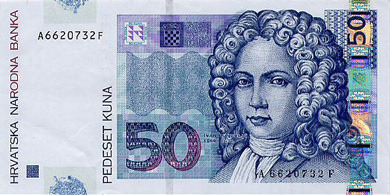
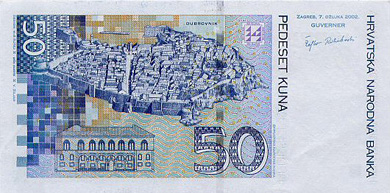
Budget & Public Finance
- Fiscal Year
- calendar year
- Annual Budget
- $19,350,000,000 (USD)
- Public Debt (% of GDP)
- 52.1%
- External Debt
- $29,280,000,000 (USD)
- Investment (% of GDP)
- 28.1%
- Economic Aid
- $66,000,000 (USD)
- Current Account Balance
- -$1,790,000,000 (USD)
- Reserves of Foreign Exchange
- $2,147,483,647 (USD)
Labor, Industry & Trade
- Labor Force by Occupation
- agriculture 13.2%; industry 25.4%; services 46.4%
- Household Income — highest 10%
- 24.5%
- Industries
- chemicals and plastics, machine tools, fabricated metal, electronics, pig iron and rolled steel products, aluminum, paper, wood products, construction materials, textiles, shipbuilding, petroleum and petroleum refining, food and beverages; tourism
- Agriculture Products
- wheat, corn, sugar beets, sunflower seed, barley, alfalfa, clover, olives, citrus, grapes, soybeans, potatoes; livestock, dairy products
- Export Commodities
- transport equipment, textiles, chemicals, foodstuffs, fuels
- Export Partners
- Italy 22.4%, Bosnia and Herzegovina 14.4%, Germany 12.6%, Slovenia 8%, Austria 7.3%
- Import Commodities
- machinery, transport and electrical equipment, chemicals, fuels and lubricants, foodstuffs
- Import Partners
- Italy 16.8%, Germany 16.4%, Slovenia 7.8%, Russia 6.8%, Austria 6.7%, France 5.2%
Energy
- Oil Production
- 20,500 bbl/day
- Oil Consumption
- 90,000 bbl/day
- Oil Reserves
- 93,600,000 bbl/day
- Natural Gas Production
- 1,850,000,000 cu m
- Natural Gas Consumption
- 2,990,000,000 cu m
- Natural Gas Imports
- 1,080,000,000 cu m
- Natural Gas Exports
- 0 cu m
- Natural Gas Reserves
- 24,720,000,000 cu m
Communications
- Telephone System
- General Assessment: The telecommunications network has improved steadily since the mid-1990s, covering much of what were once inaccessible areas; local lines are digital Domestic: Fixed-line teledensity holding steady at about 40 per 100 persons; mobile-cellular telephone subscriptions exceed the population International: Country code - 385; digital international service is provided through the main switch in Zagreb; Croatia participates in the Trans-Asia-Europe (TEL) fiber-optic project, which consists of 2 fiber-optic trunk connections with Slovenia and a fiber-optic trunk line from Rijeka to Split and Dubrovnik; the ADRIA-1 submarine cable provides connectivity to Albania and Greece.
- Internet Country Code
- .hr
News & Weather
News & Weather
Current Weather
Latest News
Morocco strengthens its grip on Africa-Europe air travel after Croatia joins the EU-Morocco Open Skies Agreement - Business Insider Africa
Business Insider Africa · 15h ago
Spain return to World No. 1 as Croatia drops in latest FIFA rankings - Croatia Week
Croatia Week · 13h ago
New Croatia coach begs Luka Modric to keep playing for national team after World Cup upset - Goal.com
Goal.com · 2d ago
India, Croatia, Bulgaria, Cyprus, Malta and Fifty Four More Countries Enter Thailand New Visa Era as Bangkok Approves Thirty Day Visa Free Access to Simplify Entry and Accelerate International Tourism - Travel And Tour World
Travel And Tour World · 1d ago
Croatia Airlines extends select seasonal routes into winter - EX-YU Aviation News
EX-YU Aviation News · 2d ago
Magic Johnson returns to Croatia for another summer holiday - Croatia Week
Croatia Week · 1d ago
Croatia measures microplastics in drinking water for the first time - Croatia Week
Croatia Week · 2d ago
Why Croatia is no longer chasing endless tourism growth - Croatia Week
Croatia Week · 1d ago
News via Google News
Climate Overview
Zagreb's climate is predominately continental, with hot and dry summers and cold winters. Rainy weather, with accompanying fog, is common in the fall from October through December. In winter, from December to March, snowfalls are common, occasionally heavy, and temperatures often dip below freezing. On the coast, the climate is typically Mediterranean with long, hot, dry summers and moderate but windy winters.
Videos
Videos
1 curated YouTube videos.
Source: YouTube
Frequently Asked Questions
Frequently Asked Questions
What is the population of Croatia?
How do people greet each other in Croatia?
What are Croatian dining and eating customs?
What should I know about visiting a Croatian home?
How should I dress in Croatia?
What is family life like in Croatia?
What do Croatians do for recreation?
What is the capital of Croatia?
Where is Croatia located?
What countries border Croatia?
What is the predominant religion in Croatia?
What currency is used in Croatia?
What language is spoken in Croatia?
What is Croatia's geography like?
What is Croatia known for?
Last reviewed 2026