
 English
 Español
 中文
中文 हिन्दी
 Français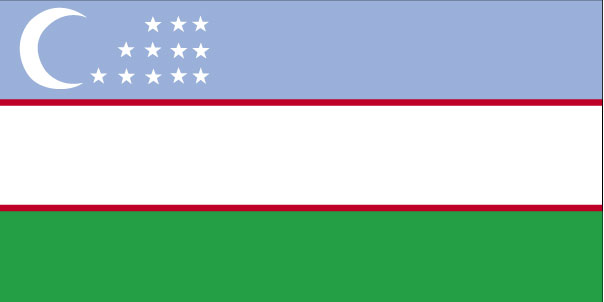
Uzbekistan
Ozbekiston
Declare Your Relationship to Uzbekistan
CountryReports Community
- Studying1
- From Uzbekistan0
- Uzbekistan heritage1
- Visited1
- Want to visit0
Customs and Culture
Customs and Culture
About the People
The Uzbeks have a strong sense of duty to the elderly. Children are taught that it is wrong to openly confront an adult.
Cultural Attributes
Uzbekistan has a rich and diverse cultural heritage, influenced by its location along the Silk Road trading route and the history of different empires and dynasties that have ruled the region. Here are some cultural attributes that are unique to Uzbekistan:
Traditional clothing: The traditional clothing in Uzbekistan includes colorful and ornate dresses and robes, often adorned with intricate embroidery, beadwork, and other decorations. Men's traditional clothing includes the distinctive Uzbek cap called the "tubeteika".
Music and dance: Uzbekistan has a vibrant music and dance scene, with a range of traditional instruments such as the dombra, tanbur, and doira. The dances are often performed in groups and feature elaborate costumes and movements.
Crafts and art: Uzbekistan is known for its skilled craftsmen and artisans who produce exquisite ceramics, textiles, jewelry, and wood carvings. The traditional art of Suzani embroidery, which features intricate patterns and motifs, is particularly famous.
Hospitality: Uzbekistan is known for its hospitality, with guests often welcomed with open arms and treated to generous meals, tea, and sweets. Hospitality is seen as a key value in Uzbek culture and is deeply ingrained in everyday life.
Religion: Islam is the dominant religion in Uzbekistan, and the practice of Islam is an important cultural attribute. Mosques and other religious buildings are common throughout the country, and many traditional rituals and customs are associated with Islam.
Respect for elders: Respect for elders is an important cultural value in Uzbekistan, with older people often given great respect and authority in families and communities.
Literature and poetry: Uzbekistan has a rich literary tradition, with famous poets and writers such as Ali-Shir Nava'i, Abdulla Qodiriy, and Zulfiya Isroilova. Poetry is particularly celebrated, and recitations of poems are often part of cultural events and gatherings.
Children are taught that it is wrong to openly confront an adult.

Crossroads of the Silk Road
Greetings, Gestures & Visiting
Close friends or family members of the same sex will often greet each other with a more vibrant display of affection than a simple handshake. Kissing is the most common greeting seen among people of the region. However, when a pair is exceptionally happy to see each other, or when one is showing a deep respect for the other, the exchange will most definitely continue past the requisite two- or three-kiss norm. As a sign of respect, elders will often receive a kiss from their less mature counterparts, whether acquainted or not.
Often accompanying the handshake, is a silent bow, men will place their left hand over their hearts and offer a slight, almost indiscernible, bow to their counterpart in a gesture of deep respect. This subtle bow or slight inclination of the head is also displayed in a variety of other exchanges among people. However, when not shaking hands, it is the right hand that is placed on the chest. You will most definitely encounter this when someone is offering thanks, saying goodbye or parting ways, or even when a younger man passes an elder in the street and wants to show his respect.
Men will always shake hands with other men. Even if you are not introduced to everyone, a simple handshake substitutes a formal introduction. A woman visitor may not be receiving a handshake unless she herself stretches out her hand. For the woman traveler, do not feel offended that you do not receive the same attention as the males in your group. As odd as it may seem to us in the West, it is only out of respect that you are not included in the hand-shaking ritual. Women will often greet you with a big hug, definitely with a handshake. For the winter traveler gloves should be removed when shaking hands.
Western style clothing is worn and by many combined with the traditional Uzbek styles. Traditional clothing for men includes the doppilar (a small square black skullcap. Doppilars are embroidered with fancy patterns that indicate the family ties, place of birth or other significant information. The chopan (long quilted robe) is worn by some. Traditional clothes for women include dyed brightly colored dresses.
Diet
Every guest takes his turn as toast master. The toast master stands up, his glass of vodka in hand and delivers a short speech, which ideally includes the following elements: thank you, praise to the host, something witty, best wishes to all for health and prosperity. Then everybody clink their glasses in the center of the table and drink (you may be expected to not leave anything in your glass). When invited to a banquet it is advisable to rapidly lay a strong foundation of bread and cheese since the first toast will be spoken within minutes.

Family
Many household include more than one generation and it is customary for the youngest son and his wife to live permanently in his father's home. kelin toi</span or the wedding, is an important occasion in Ubezk culture. A new Ubezk wife usually moves in with her husband and his family until the next son is ready to marry.
Recreation
Soccer is the most popular sport. Kyrash, a type of wrestling is enjoyed by Uzbek boys. Another sport that is like polo but where hundreds of horsemen try to capture the carcass of a goat and toss it into the opponents goal is also popular. Payr is an unrehearsed debate where two people try to exchange comments about the other. The first person who fails to respond quick enough is considered the loser. Bakka (tightrope walking) is a favorite entertainment for celebrations.
Student Life
Children in Uzbekistan usually attend school from Monday to Friday, with classes starting in the morning and ending in the afternoon. The school year starts in September and ends in June, with breaks for holidays such as New Year's Day and Navruz.
Children in Uzbekistan are often given homework assignments to complete after school. This can include reading, writing, and math exercises. Children in Uzbekistan are often expected to help with household chores, such as cleaning, cooking, and taking care of younger siblings.
Many children in Uzbekistan participate in extracurricular activities such as sports, music lessons, or dance classes after school. These activities are often held in community centers or sports clubs.
Holidays
Independence Day
9/1Independence Day
Christmas
12/25Christmas
Christmas in the nation of Uzbekistan is virtually non-existent. The culture of the country is predominantly Muslim. This means that Christmas in Uzbekistan does not have the traditional fanfare and festive ambiance as most other countries. The Orthodox Christian minority community tend to spend Christmas in solemnity in the privacy of their own homes, without any fanfare. Even if they would like to purchase a Christmas tree or decorations, no stores sell them. The celebrated festival of this period is New Year, which features fireworks and community gatherings.
Dates of Interest
- March 8th
This holiday is celebrated on March 8th and is a day to celebrate the achievements and contributions of women in Uzbekistan and around the world.
How do people greet each other in Uzbekistan?
Men always shake hands with other men, and a handshake can substitute for a formal introduction. Close friends and family of the same sex often greet with kisses, and elders commonly receive a kiss as a sign of respect.
Do
- Men: shake hands with other men, even without a formal introduction
- Women: extend your hand first if you want a handshake
- Remove gloves when shaking hands in winter
- Greet women with a hug and handshake
Don’t
- Don't feel offended as a female traveler if you're not included in the handshaking—it's a sign of respect
Good to know
- Kissing is the most common greeting in the region, sometimes exceeding the usual two or three kisses when showing deep respect or joy
What are the dining and toasting customs in Uzbekistan?
Toasting is central to a banquet, with each guest taking a turn as toast master, standing with a glass of vodka to deliver a short speech before everyone clinks glasses and drinks.
Do
- Include in your toast: thanks, praise to the host, something witty, and best wishes for health and prosperity
- Lay a strong foundation of bread and cheese quickly, as the first toast comes within minutes
- Be prepared to take your turn as toast master
Good to know
- You may be expected to finish your entire glass when drinking
What etiquette should I keep in mind in Uzbekistan?
Uzbeks have a strong sense of duty to elders, and openly confronting an adult is considered wrong. Hospitality is a deeply held value, with guests welcomed generously.
Do
- Show great respect to older people, who hold authority in families and communities
- Accept the generous meals, tea, and sweets offered to guests
Don’t
- Don't openly confront an adult
What should I wear in Uzbekistan?
Western-style clothing is common, often combined with traditional Uzbek styles. Traditional men's wear includes the doppilar (small square black skullcap) and the chopan (long quilted robe), while women wear brightly colored dresses.
Good to know
- Doppilar caps are embroidered with patterns indicating family ties or place of birth
- Islam is the dominant religion, and religious buildings are common throughout the country
What gestures are meaningful in Uzbekistan?
A subtle bow with a hand placed over the heart is a common gesture of deep respect, often accompanying a handshake.
Do
- When shaking hands, men place the left hand over the heart with a slight bow
- When not shaking hands, place the right hand on the chest—used when thanking, saying goodbye, or a younger man passing an elder
Good to know
- The bow is subtle, an almost indiscernible inclination of the head
What is family life like in Uzbekistan?
Many households include more than one generation, and it is customary for the youngest son and his wife to live permanently in his father's home. The wedding (kelin toi) is an important occasion.
Good to know
- A new wife usually moves in with her husband's family until the next son is ready to marry
What sports and recreation are popular in Uzbekistan?
Soccer is the most popular sport, alongside traditional pastimes like kyrash wrestling and a polo-like game where horsemen compete over a goat carcass.
Good to know
- Payr is an unrehearsed debate where the first to fail to respond quickly loses
- Bakka (tightrope walking) is a favorite entertainment for celebrations
Last updated: 2026-07-12 · Sources: CountryReports
Photos of Uzbekistan
Photos of Uzbekistan
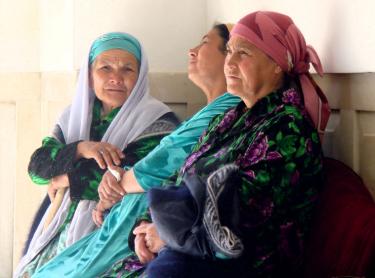
Women visiting
Uzbekistan Creche -- Ceramic Hand Painted Ornament
A young boy playing
Chor Minor (Four Minarets), Bukhara
After Work, Samarkand
Abu Bakr Mohammed Kaffal Shashi Mausoleum, Tashkent
Market
Pakhlavan Mahmoud Mausoleum with Islam Khodja Minaret, Khiva
Khiva
Gur Emir (Tamerlane’s Mausoleum), Samarkand
Food
Rooftops


Travel and Tourism
Travel and Tourism
- Travel Alert Status
- Level 1: Exercise Normal Precautions
- Currency
- Uzbekistani sum (UZS)
- Time Difference
- UTC+5 (10 hours ahead of Washington, DC, during Standard Time)
- Climate
- The area has a severe continental climate that is dry and hot in summer and cool and wet in winter. In the long summer, daytime temperatures often reach or surpass 40°C (104°F), but humidity is low. During the short winter, daytime temperatures usually stay above freezing, but can dip well below, and snow is not unusual. Spring and fall are the most comfortable seasons.
- Airports
- 247
Read the full travel guide — health, safety, vaccinations, disease risk, sanitation, and transit details.
View full travel guideRecipes
Recipes
History
History
Historical Eras
Ancient & Silk Road
500 BCE – 700
The territory of modern Uzbekistan formed the core of ancient Sogdia and Bactria, traversed by Achaemenid Persian and then Macedonian conquerors — Alexander the Great passed near Samarkand in 327 BCE. The region flourished as a nexus of the Silk Road, with cities like Samarkand and Bukhara serving as major commercial and cultural hubs linking China, Persia, and the Mediterranean world.
Islamic & Samanid Era
700 – 1220
Arab armies conquered Central Asia in the eighth century, introducing Islam and absorbing the region into the Abbasid Caliphate. The indigenous Samanid dynasty reasserted local rule in the ninth century, presiding over a brilliant Persian-Islamic cultural renaissance centered on Bukhara. This era produced major scholars including Ibn Sina (Avicenna) and established Sunni Islam as the enduring faith of the region.
Mongol & Timurid Period
1220 – 1500
Genghis Khan's Mongol forces devastated the region in 1220, sacking Samarkand and Bukhara and depopulating much of the settled heartland. Recovery came under Timur (Tamerlane), the Turkic-Mongol conqueror who made Samarkand the glittering capital of a vast empire in the fourteenth century. The Timurid dynasty that followed sponsored extraordinary architectural monuments — including the Registan and Gur-e-Amir — that remain Uzbekistan's defining cultural heritage.
Khanates & Emirates
1500 – 1865
Following Timurid decline, the region fragmented into competing Uzbek Khanates — Bukhara, Khiva, and Kokand — ruled by dynasties with strong ties to Persian culture and Sunni Islamic tradition. These city-states sustained sophisticated urban civilizations but engaged in chronic internecine warfare and the slave trade, weakening their capacity to resist outside pressure. By the early nineteenth century, all three khanates were in structural decline as Russian imperial power advanced from the north.
Russian & Soviet Rule
1865 – 1991
Russia occupied Tashkent in 1865 and completed its conquest of Central Asia by the 1880s, dissolving the Khanate of Kokand (1876) and reducing Bukhara and Khiva to protectorates. After the Bolshevik Revolution, the Soviet Socialist Republic of Uzbekistan was formally constituted in 1924, with Stalin redrawing borders to fracture ethnic cohesion. Moscow subjected the republic to intensive cotton monoculture, producing severe environmental devastation including the near-total destruction of the Aral Sea.
Independent Uzbekistan
1991 – present
Uzbekistan declared independence on September 1, 1991, under President Islam Karimov, who ruled with authoritarian consolidation until his death in 2016. The country has pursued gradual economic diversification away from cotton, developing its substantial mineral, natural gas, and petroleum reserves, while facing persistent challenges including Islamic militancy, endemic corruption, and constrained civil liberties. Shavkat Mirziyoyev's presidency, beginning in 2016, introduced cautious liberalization and a more open regional diplomacy.
Overview
Timeline of Key Events
601 – 800
Arabs conquer Uzbekistan and introduce Islam.
Arabs conquer Uzbekistan and introduce Islam.
1141
Battle of Samarkand (Uzbekistan): Yelutashi defeated Islams.
Battle of Samarkand (Uzbekistan): Yelutashi defeated Islams.
1201 – 1400
Uzbekistan and the rest of Central Asia conquered by Genghis Khan.
Uzbekistan and the rest of Central Asia conquered by Genghis Khan and becomes part of Mongol empire.
1301 – 1400
Uzbekistan part of Turkic ruler Tamerlane’s empire with Samarkand as its capital.
Uzbekistan part of Turkic ruler Tamerlane’s empire with Samarkand as its capital.
1701 – 1900
Uzbekistan comes under independent emirates.
Uzbekistan comes under independent emirates and khanates of Bukhara, Kokand and Samarkand.
1917
Tashkent soviet established following Bolshevik revolution in Russia.
Tashkent soviet established following Bolshevik revolution in Russia.
1924
Stalin divided remnants of Turkestan into the current Central Asian republics.
Stalin divided remnants of Turkestan into the current Central Asian republics.
Read the full history profile — narrative overview, defining eras, and the complete timeline in one place.
View expanded historyInteresting Facts
Interesting Facts
In 2002 it was reported that Russian and Uzbek archaeologists discovered a number of ancient pyramids in the Kashkadarya and Samarkand regions of Uzbekistan. The pyramids which have a flat surface, similar to those found in Central America, are fifteen metres high and thought to be up to two thousand, seven hundred years old.
Over the centuries, parts of present-day Uzbekistan were known as Bactria and Sogdiana, and Maverannahr, and later, Turkestan.
See every fact — trivia, oddities, and curious tidbits gathered from across the country.
View all interesting factsGeography and Environment
Geography and Environment
- Terrain
- mostly flat-to-rolling sandy desert with dunes; broad, flat intensely irrigated river valleys along course of Amu Darya, Syr Darya (Sirdaryo), and Zarafshon; Fergana Valley in east surrounded by mountainous Tajikistan and Kyrgyzstan; shrinking Aral Sea in
- Climate
- The area has a severe continental climate that is dry and hot in summer and cool and wet in winter. In the long summer, daytime temperatures often reach or surpass 40°C (104°F), but humidity is low. During the short winter, daytime temperatures usually stay above freezing, but can dip well below, and snow is not unusual. Spring and fall are the most comfortable seasons.
- Natural Hazards
- NA
- Current Environmental Issues
- shrinkage of the Aral Sea is resulting in growing concentrations of chemical pesticides and natural salts; these substances are then blown from the increasingly exposed lake bed and contribute to desertification; water pollution from industrial wastes and the heavy use of fertilizers and pesticides is the cause of many human health disorders; increasing soil salination; soil contamination from buried nuclear processing and agricultural chemicals, including DDT
Read the full geography and environment profile — terrain, climate, natural resources, hazards, land use, and international agreements.
View full geographyPeople & Demographics
People & Demographics
Religion
Languages Spoken
Uzbek 74.3%, Russian 14.2%, Tajik 4.4%, other 7.1%
- Russian
- Uzbek
Population
- Population
- 27,865,738
- Population in Major Urban Areas
- TASHKENT (capital) 2.227 million
- Nationality Noun
- Uzbekistani
- Ethnic Groups
- Uzbek 80%, Russian 5.5%, Tajik 5%, Kazakh 3%, Karakalpak 2.5%, Tatar 1.5%, other 2.5%
Education
- Literacy Definition
- age 15 and over can read and write
Read the full people and society profile — demographics, health, education, religion, languages, and notable people.
View full people and societyGovernment & Politics
Government & Politics
Country Identity
- Country Name
- Uzbekistan
- Full Country Name
- Republic of Uzbekistan
- Local - Long
- Ozbekiston Respublikasi
- Local - Short
- Ozbekiston
- Former Name
- Uzbek Soviet Socialist Republic
Government Structure
- Government Type
- republic; authoritarian presidential rule, with little power outside the executive branch
- Legal System
- evolution of Soviet civil law; still lacks independent judicial system
- Executive Branch
- chief of state: President Shavkat MIRZIYAYEV (since 14 December 2016) head of government: Prime Minister Abdulla ARIPOV (since 14 December 2016) cabinet: Cabinet of Ministers appointed by the president with approval of the Legislative Chamber elections: president elected by popular vote for a seven-year term; election last held on 9 July 2023 (next to be held in 2030); prime minister, ministers, and deputy ministers appointed by the president election results: Shavkat MIRZIYAYEV reelected president; percent of vote - Shavkat MIRZIYAYEV 87.7%, with other candidates dividing the remainder of the vote
- Legislative Branch
- bicameral Supreme Assembly or Oliy Majlis consists of an Upper House or Senate (100 seats; 84 members are elected by regional governing councils to serve five-year terms and 16 are appointed by the president) and a Lower House or Legislative Chamber (120 seats; elected by popular vote to serve five-year terms) elections: last held 26 December 2004 and 9 January 2005 (next to be held December 2009) election results: Senate - percent of vote by party - NA%; seats by party - NA; Legislative Chamber - percent of vote by party - NA%; seats by party - LDPU 41, NDP 32, Fidokorlar 17, MTP 11, Adolat 9, unaffiliated 10 note: all parties in the Supreme Assembly support President KARIMOV
- Judicial Branch
- Supreme Court (judges are nominated by the president and confirmed by the Supreme Assembly)
- Suffrage
- 18 years of age; universal
- Constitution
- new constitution adopted 8 December 1992
- Independence
- 1 September 1991 (from Soviet Union)
- National Holiday
- Independence Day, 1 September (1991)
Capital City
- Capital Name
- Tashkent (Toshkent)
- Capital - geographic coordinate
- 41 19 N, 69 15 E
- Capital Time Difference
- UTC+5 (10 hours ahead of Washington, DC, during Standard Time)
tash means "stone" and kent means "city" in Turkic languages, so the name simply denotes "stone city"
Military
Branches: Uzbek Armed Forces: Army, Air and Air Defense Forces
Embassy / Diplomatic Mission
The U.S. Embassy in Tashkent, Uzbekistan
#3, Moyqorghon Street
5th Block, Yunusobod District
Tashkent- 100093
Republic of Uzbekistan
Telephone: 998-71-120-5450
Fax: 998-71-120-5448
Contact the American Citizens Services section by email at consulartashkent@state.gov
If you are a U.S. citizen with an after-hours emergency, please call our hotline at: (99871) 120-5450
Read the full government profile — flag symbolism, national anthem, and other national symbols.
View full government detailsEconomy
Economy
Uzbekistan is a dry, landlocked country in Central Asia, with roughly 10% of its land consisting of intensely cultivated, irrigated river valleys. Although urbanization has accelerated in recent decades, about half of the population still lives in rural communities. Uzbekistan ranks among the world's leading cotton producers and exporters, though the government has shifted policy in recent years toward processing cotton domestically rather than exporting it raw. The country is also a major producer of gold, natural gas, uranium, and copper, and a regionally significant producer of chemicals, automobiles, and machinery.
Following independence in December 1991, the government initially maintained a Soviet-style command economy supported by subsidies and tight controls on production, prices, and foreign exchange. This insular approach persisted for more than two decades, leaving Uzbekistan relatively isolated from global markets. Since the election of President Shavkat Mirziyoyev in 2016, however, the country has undertaken sweeping economic reforms, including the liberalization of the currency in 2017, tax and tariff reform, the dismantling of state monopolies in key sectors, and renewed efforts to attract foreign direct investment. The government has also pursued World Trade Organization accession and strengthened regional trade ties.
Despite these reforms, the state continues to play a dominant role in the economy, and challenges remain in improving the business climate, reducing corruption, and addressing income inequality. GDP growth has been robust, averaging around 5–6% annually in recent years, supported by remittances, mining, and an expanding services sector. Poverty reduction and job creation for a young, rapidly growing population remain central policy priorities.
Snapshot
- Currency Name and Code
- Uzbekistan Sum (UZS)
- GDP — official exchange rate
- $9,860,000,000 (USD)
- GDP Real Growth Rate
- 7.2%
- Gini Index
- 26.8
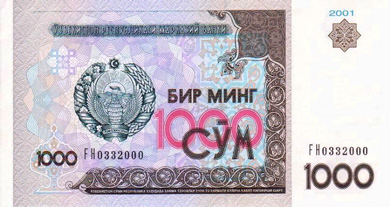
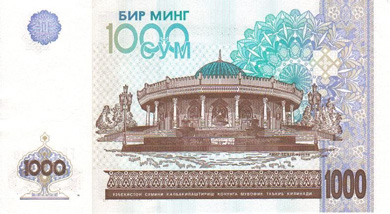
Banknotes
Budget & Public Finance
- Fiscal Year
- calendar year
- Annual Budget
- $2,917,000,000 (USD)
- Public Debt (% of GDP)
- 39%
- External Debt
- $5,184,000,000 (USD)
- Economic Aid
- $87,400,000 (USD)
- Current Account Balance
- $831,900,000 (USD)
- Reserves of Foreign Exchange
- $2,123,000,000 (USD)
Labor, Industry & Trade
- Labor Force by Occupation
- agriculture 44%; industry 20%; services 36%
- Household Income — highest 10%
- 22%
- Industries
- textiles, food processing, machine building, metallurgy, natural gas, chemicals
- Agriculture Products
- cotton, vegetables, fruits, grain; livestock
- Export Commodities
- cotton 41.5%, gold 9.6%, energy products 9.6%, mineral fertilizers, ferrous metals, textiles, food products, automobiles
- Export Partners
- Russia 19.9%, Italy 8.6%, Tajikistan 7.7%, South Korea 5.6%, Kazakhstan 5.1%, US 4.7%, Turkey 4.4%, Japan 4.3%
- Import Commodities
- machinery and equipment 49.8%, foodstuffs 16.4%, chemicals, metals
- Import Partners
- Russia 24%, Germany 10.8%, South Korea 10%, US 7.3%, China 5.5%, Kazakhstan 5.3%, Turkey 4.9%
Energy
- Oil Production
- 152,000 bbl/day
- Oil Consumption
- 120,000 bbl/day
- Oil Reserves
- 600,000,000 bbl/day
- Natural Gas Production
- 55,800,000,000 cu m
- Natural Gas Consumption
- 49,300,000,000 cu m
- Natural Gas Imports
- 0 cu m
- Natural Gas Exports
- 6,500,000,000 cu m
- Natural Gas Reserves
- 1,875,000,000,000 cu m
Communications
- Telephone System
- general assessment: digital exchanges in large cities and in rural areas domestic: the state-owned telecommunications company, Uzbektelecom, owner of the fixed line telecommunications system, has used loans from the Japanese government and the China Development Bank to upgrade fixed-line services including conversion to digital exchanges; mobile-cellular services are provided by 3 private and 1 state-owned operator with a total subscriber base of 19 million as of January 2014 international: country code - 998; linked by fiber-optic cable or microwave radio relay with CIS member states and to other countries by leased connection via the Moscow international gateway switch; the country also has a link to the Trans-Asia-Europe (TAE) fiber-optic cable; Uzbekistan has supported the national fiber optic backbone project of Afghanistan since 2008
- Internet Country Code
- .uz
News & Weather
News & Weather
Current Weather
Latest News
Rare 48C heatwave forces Uzbekistan to adapt to extreme temperatures - Euronews.com
Euronews.com · 17h ago
Portugal vs Uzbekistan LIVE: FIFA World Cup Group K score, team news, prediction, commentary & updates - BBC
BBC · 28d ago
Uzbekistan World Cup 2026 team guide - The Guardian
The Guardian · 41d ago
Ceremony to mark first concrete for Uzbekistan SMR - World Nuclear News
World Nuclear News · 46d ago
Bronze Age 5-year-old's skull found in Uzbekistan is the oldest known evidence of surgery in Central Asia - Live Science
Live Science · 51d ago
World Cup Group K fixtures - Sky Sports
Sky Sports · 27d ago
The lesser-known countries on the rise in 2026 - Euronews.com
Euronews.com · 43d ago
2026 FIFA Men's World Cup: How Uzbekistan missed the Round of 32 - The New York Times
The New York Times · 22h ago
News via Google News
Climate Overview
The area has a severe continental climate that is dry and hot in summer and cool and wet in winter. In the long summer, daytime temperatures often reach or surpass 40°C (104°F), but humidity is low. During the short winter, daytime temperatures usually stay above freezing, but can dip well below, and snow is not unusual. Spring and fall are the most comfortable seasons.
Videos
Videos
2 curated YouTube videos.
Source: YouTube
Source: YouTube
Frequently Asked Questions
Frequently Asked Questions
What is the population of Uzbekistan?
How do people greet each other in Uzbekistan?
What are the dining and toasting customs in Uzbekistan?
What etiquette should I keep in mind in Uzbekistan?
What should I wear in Uzbekistan?
What gestures are meaningful in Uzbekistan?
What is family life like in Uzbekistan?
What sports and recreation are popular in Uzbekistan?
What is the capital of Uzbekistan?
Where is Uzbekistan located?
What countries border Uzbekistan?
What is the predominant religion in Uzbekistan?
What is the currency of Uzbekistan?
What language is spoken in Uzbekistan?
What is Uzbekistan known for?
What is the geography and terrain of Uzbekistan like?
Last reviewed 2026