
 English
 Español
 中文
中文 हिन्दी
 Français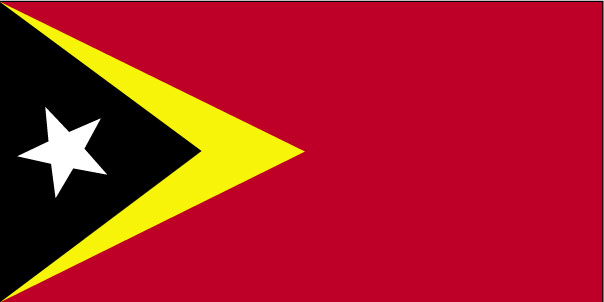
Timor-Leste
Timor Lorosa'e [Tetum]; Timor-Leste [Portuguese]
Declare Your Relationship to Timor-Leste
CountryReports Community
- Studying1
- From Timor-Leste0
- Timor-Leste heritage0
- Visited0
- Want to visit0
Customs and Culture
Customs and Culture
About the People
The East Timorese people are sometimes shy with strangers, but very loyal to people considered friends. As a people, East Timorese are known to be easy-going and casual in their daily work and interactions, with a love of music, dance and children. Older people are respected and revered. It is normal to ask how old a person is, as the older you are the more respect you earn.
Cultural Attributes
The East Timorese people are sometimes shy with strangers, but very loyal to people considered friends. As a people, East Timorese are known to be easy-going and casual in their daily work and interactions, with a love of music, dance, and children. Older people are respected and revered. It is normal to ask how old a person is, as the older you are the more respect you earn.

Ancient Stone Canvas of Southeast Asia
Greetings, Gestures & Visiting
Greeting people, including strangers, is normal. However, first names are not used unless one is considered a friend. 'Mister' is often a form of address for strangers. Hello is ola, and it is common to hear Ba nebe? or 'where are you going?' In the street, the greeting for strangers is Bon dia Good day! Or Boa tarde Good afternoon.
First names or nicknames are not used until familiarity is recognized. It is usual to add Mister or Miss to a first name to show respect. Mana or mama (older brother or sister) is also common. When a nickname is used, it is often created by substituting the first syllable with 'A', for instance, Jose is shortened to Aze. Children usually greet strangers as 'uncle or auntie' tiu or tia, since they may expect everyone they know to be related in a distant way. A nod and a smile are the usual forms of greeting between strangers. Physical contact between people of the opposite sex is not encouraged.
Body language is vital to East Timorese, including facial expressions. While reserved at first, people are animated in the discussion.
Visiting informally between friends and family is enjoyed. An invitation is usual for new acquaintances or strangers. Before entering a room or house, it is polite to ask: 'Can I come in?' or 'kolisensa? ' Greet everyone in the house, paying special attention to older people and children. Any offer to help with cooking, or washing up will be refused. One waits till one is invited to sit down or begin eating and drinking. If you do not wish to eat the food, take one or two bites and then politely refuse. Gifts of sweets for the children, coffee, or cigarettes are welcome.
East Timorese dress casually, including loose pants and patterned shirts for both men and women. In villages, people wear hand-made cotton clothing that suits outdoor work. Dresses for special occasions are sometimes woven and embroidered. In rural areas for formal occasions, women wear woven sarongs and shawls ‘tais’. In the city, formal Western dress is favored. Western suits and slacks are worn in government offices, but the heat keeps men’s dress to shirts and pants; skirts and tops for women.
Diet
The East Timor diet is affected by short supply of many staples since the conflict. The cuisine shares elements of Chinese, Portuguese, and Indonesian. Rice accompanies most meals. Other staples commonly found are cassava, potato, yam and corn. Many meals are spicy, and coconut milk is used. A popular meal is beans and corn. A meat meal on the menu is tukir, consisting of lamb traditionally cooked inside bamboo with lots of spices. A dish traditional to villages along the coast outside Dili is called saboko.
Saboko is made from sardines mixed with tamarind sauce and spices, firmly wrapped in palm leaves and cooked on a fire. There are some local fruit without English names.
Palm wine and palm alcohol are consumed in local bars and in villages. Restaurants are mainly frequented by tourists and officials.
Typically, breakfast is served by 7 AM, lunch between noon and 2: 00 PM, and dinner between 6 and 8pm. The fork is often held in the right hand to eat. It is improper to eat or hand things to people with the left hand. Coconut juice and lemonade are common drinks, along with coffee. Most people eat at home or at the houses of friends or family. Street stalls are common in the larger towns.
The East Timor diet is affected by short supply of many staples since the conflict. The cuisine shares elements of Chinese, Portuguese, and Indonesian. Rice accompanies most meals. Other staples commonly found are cassava, potato, yam and corn. Many meals are spicy, and coconut milk is used. A popular meal is beans and corn. A meat meal on the menu is tukir, consisting of lamb traditionally cooked inside bamboo with lots of spices. A dish traditional to villages along the coast outside Dili is called saboko. Saboko is made from sardines mixed with tamarind sauce and spices, firmly wrapped in palm leaves and cooked on a fire. There are some local fruit without English names. Palm wine and palm alcohol are consumed in local bars and in villages. Restaurants are mainly frequented by tourists and officials.
Family
The extended family is paramount in the lives of East Timorese, though families have been split by the recent conflict, and many fathers are not present. Children are cared for by many family members. Older people are looked after when they are too frail to garden and clean. God-parents are also very important members of the family. The baptism of a child is a very important ceremony for the whole family.
Dating Customs
Young people do not generally date couples until they are engaged. They go out in groups together, or with a sibling to chaperone. It is almost unknown to live together before marriage. Marriage is the norm, and de facto relationships are frowned on. The Catholic Church does not permit divorce. However, de facto relationships occur, especially in rural areas. The person concerned is politely referred to as a ‘second’ wife or husband.
Weddings are celebrated with a church ceremony, and in the villages, the tradition may include the system of dowry or berlaki. Traditionally a man's family gave several head of horses or buffalo. However, since the stock numbers are depleted, giving a dowry is no longer required. It is also acceptable to turn to the family for assistance after marriage. Women carry the responsibility for household cleaning, cooking, and child care.
Recreation
he people of Timor-Leste engage in a variety of recreational activities, including:
Traditional dances and music: Timor-Leste has a rich cultural heritage, and traditional dances and music are an integral part of their culture. People often gather to perform or watch these traditional performances during festivals and celebrations.
Sports: Football (soccer) is a popular sport in Timor-Leste, and the country has its own national football team. Other popular sports include volleyball, basketball, and futsal.
Beach activities: With a long coastline and beautiful beaches, Timor-Leste is a popular destination for swimming, surfing, and fishing. Scuba diving and snorkeling are also popular activities for tourists.
Hiking and trekking: Timor-Leste has a rugged terrain and beautiful natural landscapes that are ideal for hiking and trekking. The country's highest peak, Mount Ramelau, is a popular destination for hikers and climbers.
Shopping and dining: In Timor-Leste's capital city of Dili, there are several shopping centers and restaurants that offer a variety of local and international cuisine.
Visiting historic sites: Timor-Leste has a rich history, and there are several historic sites that people can visit, such as the Forte de Nossa Senhora da Conceição, a 16th-century fort located in Dili, and the Resistance Museum, which documents the country's struggle for independence.
Holidays
Independence Day
11/28Independence Day
Dates of Interest
- November 12th
This public holiday commemorates the Santa Cruz massacre of 1991, in which Indonesian troops opened fire on peaceful protesters in Dili. The day is marked with ceremonies and remembrance events.
How do people greet each other in Timor-Leste?
Greeting people, including strangers, is normal, usually with a nod and a smile. Common greetings include 'ola' (hello), 'Bon dia' (Good day), and 'Boa tarde' (Good afternoon).
Do
- Add 'Mister' or 'Miss' to a first name to show respect
- Use 'Mana' or 'mama' (older brother or sister) as a common form of address
- Expect to be greeted by children as 'tiu' or 'tia' (uncle or auntie)
Don’t
- Don't use first names or nicknames until familiarity is recognized
- Avoid physical contact between people of the opposite sex
Good to know
- 'Ba nebe?' means 'where are you going?' and is commonly heard
- Nicknames are often made by replacing the first syllable with 'A' (e.g., Jose becomes Aze)
What are the dining customs in Timor-Leste?
Rice accompanies most meals, and the cuisine blends Chinese, Portuguese, and Indonesian elements, with many dishes spicy and made with coconut milk. Meals are typically eaten at home or at the houses of friends and family.
Do
- Hold the fork in the right hand to eat
- Wait until you are invited to sit down or begin eating and drinking
- If you don't wish to eat the food, take one or two bites and then politely refuse
Don’t
- Don't eat or hand things to people with the left hand
Good to know
- Breakfast is served by 7 AM, lunch between noon and 2 PM, and dinner between 6 and 8 PM
- Try local dishes like tukir (lamb cooked in bamboo) and saboko (sardines in tamarind wrapped in palm leaves)
- Coconut juice, lemonade, and coffee are common drinks; palm wine and palm alcohol are available in local bars and villages
- Street stalls are common in larger towns; restaurants are mainly frequented by tourists and officials
What etiquette should I follow when visiting a home in Timor-Leste?
Visiting informally between friends and family is enjoyed, but new acquaintances or strangers usually need an invitation. Politeness and respect for elders and children are important.
Do
- Ask 'kolisensa?' ('Can I come in?') before entering a room or house
- Greet everyone in the house, paying special attention to older people and children
- Bring gifts of sweets for children, coffee, or cigarettes
Don’t
- Don't expect your offer to help with cooking or washing up to be accepted
Good to know
- It is normal to ask a person's age, as older people earn more respect
- People are shy with strangers at first but very loyal once you are considered a friend
How should I dress in Timor-Leste?
East Timorese dress casually, with loose pants and patterned shirts for both men and women. In cities, formal Western dress is favored.
Good to know
- Western suits and slacks are worn in government offices; heat keeps men to shirts and pants, and women to skirts and tops
- In rural areas, women wear woven sarongs and shawls ('tais') for formal occasions
- Villagers wear hand-made cotton clothing suited to outdoor work
How important is body language in Timor-Leste?
Body language, including facial expressions, is vital to the East Timorese. Though reserved at first, people become animated in discussion.
Don’t
- Don't hand things to people with the left hand
What is family life like in Timor-Leste?
The extended family is paramount, with children cared for by many family members and older people looked after when frail. God-parents are also very important family members.
Good to know
- The baptism of a child is a very important ceremony for the whole family
- Young people generally don't date until engaged, going out in groups or with a chaperone
- Women carry responsibility for household cleaning, cooking, and child care
- Marriage is the norm; the Catholic Church does not permit divorce
What do people do for recreation in Timor-Leste?
Traditional dances and music are integral to the culture, and football (soccer) is a popular sport. The coastline and rugged terrain make beach activities and hiking popular too.
Good to know
- Football, volleyball, basketball, and futsal are popular sports
- Beaches are great for swimming, surfing, fishing, scuba diving, and snorkeling
- Mount Ramelau, the country's highest peak, is popular for hiking and climbing
- Visit historic sites like the Forte de Nossa Senhora da Conceição and the Resistance Museum in Dili
Last updated: 2026-07-12 · Sources: CountryReports
Photos of Timor-Leste
Photos of Timor-Leste
Travel and Tourism
Travel and Tourism
- Travel Alert Status
- Level 2: Exercise Increased Caution
- Currency
- US dollar (USD)
- Time Difference
- UTC+9 (14 hours ahead of Washington, DC, during Standard Time)
- Climate
- tropical; hot, humid; distinct rainy and dry seasons
- Airports
- 8
Read the full travel guide — health, safety, vaccinations, disease risk, sanitation, and transit details.
View full travel guideHistory
History
Historical Eras
Pre-Colonial Timor
For centuries before sustained European presence, Timor was inhabited by Austronesian and Melanesian peoples organized into small kingdoms and chiefdoms known as liurais. The island's abundant sandalwood attracted sporadic visits from Portuguese and Dutch traders from the early 16th century onward, but no colonial power exercised firm territorial control until the mid-17th century.
Portuguese Colonial Era
1642 – 1942
Portugal moved into Timor in force in 1642, establishing Dili as its colonial capital and exploiting sandalwood, coffee, and other resources. After prolonged rivalry with the Dutch, the present border between Portuguese East Timor and Dutch West Timor was formally demarcated in 1906. Colonial rule was marked by periodic Timorese uprisings and the imposition of forced labor and taxation.
Japanese Occupation
1942 – 1945
Imperial Japan invaded and occupied East Timor in February 1942, triggering a brutal guerrilla campaign in which Australian and Dutch commandos fought alongside Timorese fighters. The occupation was devastatingly costly for the Timorese population, with an estimated 40,000 to 70,000 civilian deaths. Portugal resumed colonial authority following Japan's defeat in 1945.
Indonesian Occupation
1975 – 1999
Following Portugal's hasty decolonization and FRETILIN's declaration of independence on 28 November 1975, Indonesia launched a full-scale military invasion on 7 December 1975 and formally annexed East Timor as its 27th province in July 1976. The occupation was characterized by severe military repression, forced displacement, and famine, resulting in an estimated 100,000 to 250,000 deaths. The 1991 Santa Cruz massacre, in which Indonesian troops killed unarmed mourners, drew significant international condemnation.
UN Transitional Period
1999 – 2002
A UN-supervised referendum on 30 August 1999 saw 78 percent of East Timorese vote for independence, prompting pro-Indonesian militias to unleash a scorched-earth campaign that killed approximately 1,300 people and displaced 300,000. The United Nations Transitional Administration in East Timor (UNTAET) assumed governance and oversaw the rebuilding of institutions destroyed during the militia violence. Constituent assembly elections were held in August 2001 in preparation for formal independence.
Independent Timor-Leste
2002 – present
On 20 May 2002, Timor-Leste was internationally recognized as a sovereign state, becoming the world's first new nation of the 21st century, with Xanana Gusmão elected as its first president. The young nation faced significant challenges including a political and security crisis in 2006, ongoing poverty, and dependence on revenues from the Timor Sea oil and gas fields. Timor-Leste joined the United Nations in 2002 and has pursued membership in ASEAN as a cornerstone of its foreign policy.
Overview
Following a military coup in Lisbon in April 1974, Portugal began a rapid and disorganized decolonization process in most of its overseas territories, including East Timor. Political tensions--exacerbated by Indonesian involvement--heated up, and on August 11, 1975, the Timorese Democratic Union Party (UDT) launched a coup d’état in Dili. The putsch was followed by a brief but bloody civil war in which the Revolutionary Front for an Independent East Timor (FRETILIN) pushed UDT forces into Indonesian West Timor. Shortly after the FRETILIN victory in late September, Indonesian forces began incursions into East Timor. On October 16, five journalists from Australia, Britain, and New Zealand were murdered in the East Timorese town of Balibo shortly after they had filmed regular Indonesian army troops invading East Timorese territory. On November 28, FRETILIN declared East Timor an independent state, and Indonesia responded by launching a full-scale military invasion on December 7. On December 22, 1975 the UN Security Council called on Indonesia to withdraw its troops from East Timor.
Declaring a provisional government made up of Timorese allies on January 13, 1976, the Indonesian Government said it was acting to forestall civil strife in East Timor and to prevent the consolidation of power by the FRETILIN party. The Indonesians claimed that FRETILIN was communist in nature, while the party’s leadership described itself as social democratic. Coming on the heels of the communist victories in Vietnam, Cambodia, and Laos, the Indonesian claims were accepted by many in the West. Major powers also had little incentive to confront Indonesia over a territory seen as peripheral to their security interests. Nonetheless, the widespread popular support shown for the guerilla resistance launched by the Timorese made clear that the Indonesian occupation was not welcome. The Timorese were not permitted to determine their own political fate via a free vote, and the Indonesian occupation was never recognized by the United Nations.
The Indonesian occupation of Timor was initially characterized by a program of brutal military repression. Beginning in the late 1980s, however, the occupation was increasingly characterized by programs to win the "hearts-and-minds" of the Timorese through the use of economic development assistance and job creation while maintaining a strict policy of political repression, although serious human rights violations – such as the 1991 Santa Cruz massacre -- continued. Estimates of the number of Timorese who lost their lives to violence and hunger during the Indonesian occupation range from 100,000 to 250,000. On January 27, 1999, Indonesian President B.J. Habibie announced his government’s desire to hold a referendum in which the people of East Timor would chose between autonomy within Indonesia and independence. Under an agreement among the United Nations, Portugal, and Indonesia, the referendum was held on August 30, 1999. When the results were announced on September 4--78% voted for independence with a 98.6% turnout--Timorese militias organized and supported by the Indonesian military commenced a large-scale, scorched-earth campaign of retribution. While pro-independence FALINTIL guerillas remained cantoned in UN-supervised camps, the militia killed approximately 1,300 Timorese and forcibly pushed 300,000 people into West Timor as refugees. The majority of the country’s infrastructure, including homes, irrigation systems, water supply systems, and schools, and nearly 100% of the country’s electrical grid were destroyed. On September 20, 1999 the Australian-led peacekeeping troops of the International Force for East Timor (INTERFET) deployed to the country, bringing the violence to an end.
Timeline of Key Events
1600
Portuguese invade Timor, set up trading post and use island as source of sandalwood.
Portuguese invade Timor, set up trading post and use island as source of sandalwood.
1749
Timor split following battle between Portuguese and Dutch. Portuguese take the eastern half.
Timor split following battle between Portuguese and Dutch. Portuguese take the eastern half.
1942
Japanese invade, fighting battles with Australian troops.
Japanese invade, fighting battles with Australian troops. Up to 60,000 East Timorese are killed. Japan in control until 1945.
1975
After brief civil war, Fretilin declares East Timor independent.
After brief civil war, Fretilin (Revolutionary Front for an Independent East Timor) declares East Timor independent.
1993
Groups of East Timorese enter foreign embassies in Jakarta seeking political asylum.
Groups of East Timorese enter foreign embassies in Jakarta over the next few years seeking political asylum.
2001
East Timor, Australia sign memorandum of understanding over future revenues from oil.
East Timor, Australia sign memorandum of understanding over future revenues from oil, gas fields in Timor Sea under which East Timor would get 90% of revenues.
2002
Independence.
Independence. VIP guests including former US president Bill Clinton and Indonesian President Megawati Sukarnoputri join celebrations in Dili.
Read the full history profile — narrative overview, defining eras, and the complete timeline in one place.
View expanded historyInteresting Facts
Interesting Facts
Paintings of animals, dancers and symbols, estimated to be five thousand years old, can be seen in the caves of O Hi and Ile Kere Kere, near to Lena Hara.
See every fact — trivia, oddities, and curious tidbits gathered from across the country.
View all interesting factsGeography and Environment
Geography and Environment
- Terrain
- mountainous
- Climate
- tropical; hot, humid; distinct rainy and dry seasons
- Natural Hazards
- floods and landslides are common; earthquakes, tsunamis, tropical cyclones
- Current Environmental Issues
- widespread use of slash and burn agriculture has led to deforestation and soil erosion
Read the full geography and environment profile — terrain, climate, natural resources, hazards, land use, and international agreements.
View full geographyPeople & Demographics
People & Demographics
Religion
Languages Spoken
Tetum (official), Portuguese (official), Indonesian, English
note: there are about 16 indigenous languages; Tetum, Galole, Mambae, and Kemak are spoken by significant numbers of people
- Indonesian
- Portuguese
- Tetum
Population
- Population
- 1,154,625
- Population in Major Urban Areas
- DILI (capital) 180,000
- Nationality Noun
- Timorese
- Ethnic Groups
- Austronesian (Malayo-Polynesian), Papuan, small Chinese minority
- Language Note
- Portuguese and Tetum, the local language, are both official languages. Bahasa-Indonesia and English are also used in commercial and government spheres. English is often used in academic and non-government spheres. In school, it is still debated whether to focus on written Tetum, or Portuguese.
Education
- Literacy Definition
- age 15 and over can read and write
Health Information
- Major Infectious Diseases — degree of risk
- very high
Read the full people and society profile — demographics, health, education, religion, languages, and notable people.
View full people and societyGovernment & Politics
Government & Politics
Country Identity
- Country Name
- TimorLeste
- Full Country Name
- Democratic Republic of Timor-Leste
- Local - Long
- Republika Demokratika Timor Lorosa'e [Tetum]; Republica Democratica de Timor-Leste [Portuguese]
- Local - Short
- Timor Lorosa'e [Tetum]; Timor-Leste [Portuguese]
- Former Name
- Portuguese Timor
Government Structure
- Government Type
- republic
- Legal System
- UN-drafted legal system based on Indonesian law (2002)
- Executive Branch
- chief of state: President José RAMOS-HORTA (since 20 May 2022); note - the president plays a largely symbolic role but is able to veto legislation, dissolve parliament, and call national elections head of government: Prime Minister Kay Rala Xanana GUSMAO (since 1 June 2023); note - Xanana GUSMAO, a founding father of the nation and its first president, returned to the role of prime minister following his party's victory in the 2023 legislative elections cabinet: Council of Ministers nominated by the prime minister and appointed by the president elections: president elected by popular vote for a five-year term (eligible for a second term); election last held on 19 March 2022, with a runoff on 19 April 2022; following legislative elections, the leader of the majority party or majority coalition is appointed prime minister by the president election results: José RAMOS-HORTA elected president in second round; percent of vote in runoff - José RAMOS-HORTA 62.1%, Francisco GUTERRES 37.9%
- Legislative Branch
- unicameral National Parliament (number of seats can vary, minimum requirement of 52 and a maximum of 65 seats; members elected by popular vote to serve five-year terms); note - for its first term of office, the National Parliament is comprised of 88 members on an exceptional basis elections: (next to be held in 2006); direct elections for national parliament were never held; elected delegates to the national convention adopted a constitution and named themselves legislators instead of having elections; hence the exceptional numbers for this term of the national parliament. election results: percent of vote by party - FRETILIN 57.37%, PD 8.72%, PSD 8.18%, ASDT 7.84%, UDT 2.36%, PNT 2.21%, KOTA 2.13%, PPT 2.01%, PDC 1.98%, PST 1.78%, independents/other 5.42%; seats by party - FRETILIN 55, PD 7, PSD 6, ASDT 6, PDC 2, UDT 2, KOTA 2, PNT 2, PPT 2, UDC/PDC 1, PST 1, PL 1, independent 1
- Judicial Branch
- Supreme Court of Justice - constitution calls for one judge to be appointed by National Parliament and rest appointed by Superior Council for Judiciary; note - until Supreme Court is established, Court of Appeals is highest court
- Suffrage
- 17 years of age; universal
- Constitution
- 22 March 2002 (based on the Portuguese model)
- Independence
- 28 November 1975 (date of proclamation of independence from Portugal); note - 20 May 2002 is the official date of international recognition of East Timor's independence from Indonesia
- National Holiday
- Independence Day, 28 November (1975)
Capital City
- Capital Name
- Dili
- Capital - geographic coordinate
- 8 35 S, 125 36 E
- Capital Time Difference
- UTC+9 (14 hours ahead of Washington, DC, during Standard Time)
Military
Branches: Timor-Leste Defense Force (Falintil-Forcas de Defesa de Timor-L'este, Falintil (F-FDTL)): Army, Navy (Armada)
Embassy / Diplomatic Mission
The U.S. Embassy in Dili
Avenida de Portugal
Praia dos Coqueiros
Dili
Timor-Leste
tel: (670) 332-4684
fax: (670) 331-3206.
Read the full government profile — flag symbolism, national anthem, and other national symbols.
View full government detailsEconomy
Economy
Timor-Leste's economy has undergone significant transformation since the destruction of about 70% of its infrastructure during the violence surrounding the 1999 independence vote, when Indonesian troops and anti-independence militias displaced hundreds of thousands of people. International reconstruction efforts in the early 2000s helped rebuild basic infrastructure and establish a functioning state, though the country remains one of the least developed in Southeast Asia.
The economy is heavily dependent on offshore oil and gas revenues, which flow into the Petroleum Fund—a sovereign wealth fund established in 2005 that has grown to roughly 18 billion US dollars. However, production from the Bayu-Undan field, long the primary source of government revenue, ceased in 2023, raising urgent concerns about fiscal sustainability. Government budgets continue to draw heavily on the Petroleum Fund, and at current withdrawal rates the fund risks depletion within the coming decades unless new revenue sources are developed.
The proposed Greater Sunrise project, a major offshore gas field jointly held with Australia, remains central to long-term economic planning, though disputes over pipeline routing and processing locations have delayed development. Outside the petroleum sector, the economy is dominated by subsistence agriculture, with coffee remaining the leading non-oil export. Tourism, fisheries, and agribusiness have been identified as priority areas for diversification.
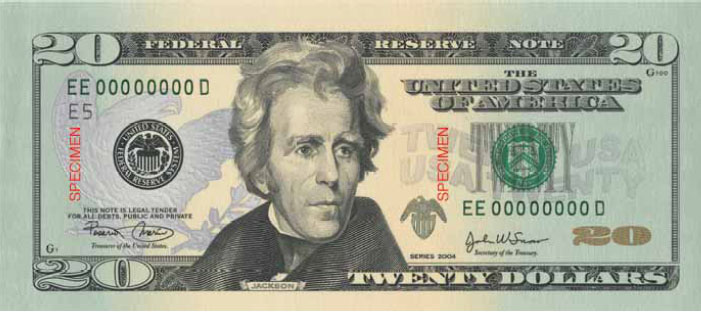
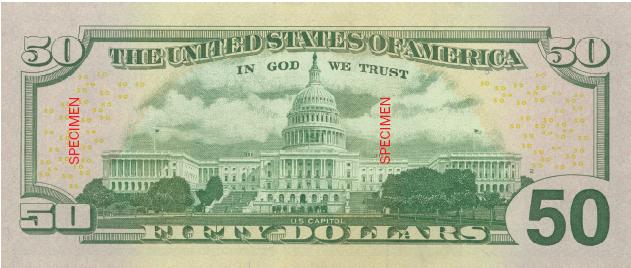
Persistent challenges include high youth unemployment, widespread poverty, malnutrition, weak infrastructure outside Dili, and limited private sector development. Timor-Leste's accession to ASEAN, formally advanced in 2022 with full membership anticipated, is expected to support regional integration and investment. The country also adopted the US dollar as its official currency, which has provided monetary stability but limits flexibility in economic policy.
Snapshot
- Currency Name and Code
- US dollar (USD)
- GDP Real Growth Rate
- 1%
- Gini Index
- 38
Banknotes
Budget & Public Finance
- Fiscal Year
- 1 July - 30 June
- Annual Budget
- $73,000,000 (USD)
- Economic Aid
- $22,000,000 (USD)
Labor, Industry & Trade
- Industries
- printing, soap manufacturing, handicrafts, woven cloth
- Agriculture Products
- coffee, rice, maize, cassava, sweet potatoes, soybeans, cabbage, mangoes, bananas, vanilla
- Export Commodities
- coffee, sandalwood, marble; note - the potential for oil and vanilla exports
- Export Partners
- NA
- Import Commodities
- mainly food 0
Energy
- Oil Production
- 0 bbl/day
- Oil Consumption
- 0 bbl/day
- Oil Reserves
- 0 bbl/day
- Natural Gas Production
- 0 cu m
- Natural Gas Consumption
- 0 cu m
- Natural Gas Imports
- 0 cu m
- Natural Gas Exports
- 0 cu m
- Natural Gas Reserves
- 0 cu m
Communications
- Telephone System
- general assessment: rudimentary service in urban and some rural areas, which is expanding with the entrance of new competitors domestic: system suffered significant damage during the violence associated with independence; limited fixed-line services; mobile-cellular services have been expanding and are now available in urban and most rural areas international: country code - 670; international service is available
- Internet Country Code
- .tp
News & Weather
News & Weather
Current Weather
Latest News
APHR Letters to ASEAN Chair and Timor-Leste Renew Call for Proof of Life as AMM Week Begins in Manila - ASEAN Parliamentarians for Human Rights
ASEAN Parliamentarians for Human Rights · 20h ago
Fugro Deploys AUV Technology For Deepwater Survey Off Timor-Leste - Ocean News & Technology
Ocean News & Technology · 3d ago
Science Education and Timor-Leste’s Future - UNESCO
UNESCO · 5d ago
GROUP A PREVIEW: VIETNAM LAUNCH ASEAN HYUNDAI CUP™ 2026 CHALLENGE AGAINST TIMOR-LESTE - ASEAN United FC
ASEAN United FC · 2h ago
Fugro Secures Timor-Leste Offshore Survey Job - Marine Technology News
Marine Technology News · 3d ago
Fugro to start offshore survey program in Timor-Leste this year - Offshore-Energy.biz
Offshore-Energy.biz · 3d ago
Fugro wins Timor-Leste pipeline survey gig - Upstream Online
Upstream Online · 3d ago
Fugro lands Timor-Leste offshore survey campaign - Splash247
Splash247 · 1d ago
News via Google News
Climate Overview
tropical; hot, humid; distinct rainy and dry seasons
Videos
Videos
1 curated YouTube videos.
Source: YouTube
Frequently Asked Questions
Frequently Asked Questions
What is the population of Timor-Leste?
How do people greet each other in Timor-Leste?
What are the dining customs in Timor-Leste?
What etiquette should I follow when visiting a home in Timor-Leste?
How should I dress in Timor-Leste?
How important is body language in Timor-Leste?
What is family life like in Timor-Leste?
What do people do for recreation in Timor-Leste?
What is the capital of Timor-Leste?
Where is Timor-Leste located?
What countries border Timor-Leste?
What is the main religion of Timor-Leste?
What currency is used in Timor-Leste?
What languages are spoken in Timor-Leste?
What is the geography of Timor-Leste like?
What is Timor-Leste known for?
Last reviewed 2026