
 English
 Español
 中文
中文 हिन्दी
 Français
Monaco
Monaco
Declare Your Relationship to Monaco
CountryReports Community
- Studying0
- From Monaco0
- Monaco heritage0
- Visited0
- Want to visit0
Customs and Culture
Customs and Culture
About the People
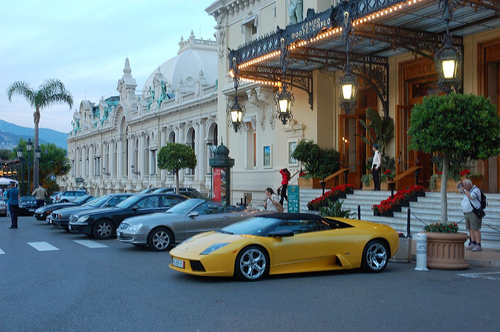
Monaco is one of the smallest countries in the world and one of the wealthiest countries of Europe. It is know for its beauty, glamor and sophistication and as a playground for the rich. Many wealthy people from other counties make Monaco home because their is no income tax.
Monaco is a center of learning and culture with some of the world's greatest singers and ballet dancers performing their.
Cultural Attributes
Monaco is one of the smallest countries in the world and one of the wealthiest countries in Europe. It is known for its beauty, glamor and sophistication and as a playground for the rich. Many wealthy people from other countries make Monaco home because their is no income tax.
Monaco is a center of learning and culture with some of the world's greatest singers and ballet dancers performing there.

The Riviera's Crown Jewel
Greetings, Gestures & Visiting
Men and women greet each other with handshakes and sometimes a kiss on both cheeks.
Monaco has many wealthy residents, which can be seen wearing the latest in high fashion, especially in the evenings. On most beaches in Monaco, topless sunbathing is the norm, but off the beach, conservative dress is standard.
Diet
Monaco food includes plenty of olive oil, fresh tomatoes, garlic, black olives and anchovies. Fresh fish is plentiful and eaten often. Fresh vegetables are also eaten often as salads are popular. Champagne is a national beverage.

Family
Most Monégasques families have one or two children. Due to the size of the population all adult Monégasques
are invited to the palace to celebrate major events of the royal family. All Monégasques
children under 12 are invited to an annual Christmas party with a gift for each child.
Recreation
Monaco is famous for auto racing. Golf and tennis are popular leisure activities. Like most seaside countries,
all of the popular water sports are available. The main public beach in Monte Carlo is called Larvotto Beach, where anyone can go and enjoy the sand and surf.
There are also a few private beaches. The most famous is the Monte Carlo Beach Club, which has been an integral part
of the social life for decades. On most beaches in Monaco, topless sunbathing is the norm.
Holidays
National Day
11/19Independence
(Prince of Monaco Holiday)
Dates of Interest
- November 19th
Prince of Monaco Holiday
How do people greet each other in Monaco?
Men and women greet each other with handshakes, and sometimes a kiss on both cheeks.
Do
- Offer a handshake when meeting someone
- Be prepared for a kiss on both cheeks in some situations
What are the eating customs and typical foods in Monaco?
Monégasque cuisine features plenty of olive oil, fresh tomatoes, garlic, black olives and anchovies, with fresh fish eaten often and salads popular.
Good to know
- Fresh fish is plentiful and eaten often
- Salads and fresh vegetables are common
- Champagne is a national beverage
How should I dress in Monaco?
Off the beach, conservative dress is standard, while wealthy residents often wear the latest high fashion, especially in the evenings.
Do
- Dress conservatively away from the beach
- Consider dressing up in the evenings
Good to know
- Topless sunbathing is the norm on most beaches
What is family life like in Monaco?
Most Monégasque families have one or two children, and the small population means Monégasques are closely involved in royal celebrations.
Good to know
- All adult Monégasques are invited to the palace for major royal events
- Monégasque children under 12 are invited to an annual Christmas party with a gift for each child
What do people do for recreation in Monaco?
Monaco is famous for auto racing, with golf, tennis and water sports also popular.
Good to know
- Larvotto Beach in Monte Carlo is the main public beach open to anyone
- The Monte Carlo Beach Club is a famous private beach and social hub
- Topless sunbathing is the norm on most beaches
Last updated: 2026-07-12 · Sources: CountryReports
Photos of Monaco
Photos of Monaco


Travel and Tourism
Travel and Tourism
- Currency
- euro (EUR)
- Time Difference
- UTC+1 (6 hours ahead of Washington, DC, during Standard Time)
- Climate
- Mediterranean with mild, wet winters and hot, dry summers
- Airports
- none; linked to the airport at Nice, France by helicopter service (2003) (2003 est.)
Read the full travel guide — health, safety, vaccinations, disease risk, sanitation, and transit details.
View full travel guideRecipes
Recipes
History
History
Historical Eras
Ancient & Genoese Roots
500 BCE – 1297
Ligurian tribes inhabited the rocky promontory before Phoenician and Greek traders established outposts. Genoa formally claimed sovereignty over the area in 1162, using the strategic port as a Mediterranean foothold. Civil conflict between Guelf and Ghibelline factions in Genoa ultimately set the stage for the Grimaldi family's dramatic seizure of power.
Grimaldi Lordship
1297 – 1633
In 1297, François Grimaldi captured Monaco's fortress disguised as a Franciscan monk, founding a dynasty that endures to this day. Charles Grimaldi consolidated Guelf control by 1331, and the family expanded its domain to include Menton and Roquebrune by 1346. Monaco navigated shifting alliances between Savoy, France, and Spain, receiving formal recognition of its lordship from the French crown in 1512.
Principality & Spanish Alliance
1633 – 1793
The Spanish Chancellery officially recognized the title of Prince of Monaco in 1633, elevating the Grimaldis to sovereign princely status within the European order. Subsequent decades saw a gradual reorientation toward France, and by 1641 the Treaty of Péronne placed Monaco under French protection. The principality functioned as an absolute monarchy under successive Grimaldi princes until the upheaval of the French Revolution.
French Revolution & Sardinian Protectorate
1793 – 1861
The French Revolutionary government deposed the Grimaldis in 1793 and annexed Monaco, incorporating it into the département of Alpes-Maritimes. The fall of Napoleon restored the dynasty in 1814, but the Congress of Vienna placed Monaco under Sardinian protection until 1860. The Franco-Monegasque Treaty of 1861 finally restored full sovereignty, though Monaco ceded Menton and Roquebrune to France in the process.
Belle Époque & Constitutional Reform
1861 – 1962
The opening of the Société des Bains de Mer casino in 1865 and the arrival of the railway transformed Monaco into a celebrated resort destination for European aristocracy and tourists alike. Prince Albert I earned international renown as an oceanographic pioneer, while a constitution promulgated in 1911 curtailed absolute princely rule. A 1918 treaty formally aligned Monegasque policy with French political and military interests, a provision acknowledged in the Treaty of Versailles.
Modern Monaco
1962 – present
A landmark constitution in 1962 abolished capital punishment, introduced female suffrage, and established a Supreme Court to protect civil liberties. Monaco gained full United Nations membership in 1993 and joined the Council of Europe in 2004, cementing its standing as a fully sovereign micro-state. Prince Albert II, who acceded to the throne in 2005 following the death of his father Rainier III, has steered the principality toward environmental advocacy and continued economic diversification.
Overview
In July 1918, a treaty was signed providing for limited French protection over Monaco. The treaty, formally noted in the Treaty of Versailles, established that Monegasque policy would be aligned with French political, military, and economic interests.
A new constitution, proclaimed in 1962, abolished capital punishment, provided for female suffrage, and established a Supreme Court to guarantee fundamental liberties.
In 1993, Monaco became an official member of the United Nations with full voting rights. It joined the Council of Europe in 2004.
Prince Albert II acceded to the throne following the death of his father, Prince Rainier III, in April 2005.
Timeline of Key Events
500
A Ligurian tribe inhabited the area.
In the sixth century B.C. a Ligurian tribe inhabited the area leaving behind their name to what would become Monaco. Following the Phoenician era, the Romans occupied this region from the second century B.C. to the fifth century A.D. They named the harbor Portus Herculis Monoeci. Beginning in the sixth century through the end of the tenth century, the area witnessed numerous invasions. It wasn’t until 975 that the Count of Provence succeeded in driving out the Sarrasins, marking the beginning of a new era.
1162
Genoa’s rule
Emperor Frederic Barberousse 1st extended Genoa’s rule on the Ligurian coast, from Port Venere to Monaco. In 1191 Emperor Henry VI conceded Monaco’s Rocher, the port and neighboring land to Genoa. The Genovese set up their own colony on the Rocher and in 1215 build a fortress marking the western most border of their republic.
1270
Civil war broke out in Genoa between the Guelf families.
Civil war broke out in Genoa between the Guelf families, supporters of the Pope, and the Ghibelines, supporters of the Roman-Germanic Emperor. When the Ghibelines claimed victory, the Guelfs, which included the Grimaldis, went into exile. By sheer perseverance, the powerful Guelfs were to later change the course of history by seizing the Rocher and putting down permanent roots.
1297
François Grimaldi overtook Monaco’s fortress.
François Grimaldi, known as “Malizia”, overtook Monaco’s fortress in response to the exile imposed upon the Guelfs.
1331
Charles Grimaldi, head of the Guelfs, installed himself on the Rocher.
Charles Grimaldi, head of the Guelfs, installed himself on the Rocher. In 1342 he took the title of "Lord of Monaco”.
1346
Grimaldis acquired the lordships and feifdoms from Menton to Roquebrune.
In 1346 and 1355 the Grimaldis acquired the lordships and feifdoms from Menton to Roquebrune. The Principality was comprised of these lordships, together with Monaco, from 1633 to 1861.
1494
Rights of succession in the House of Monaco for the next five centuries
Before dying in 1454, Jean 1st made provisions in his will which laid down the rights of succession in the House of Monaco for the next five centuries. He decreed that rule would pass to the first born male. In the case that no son was produced, title could pass to a daughter on condition that her heirs take the Grimaldi name.
Read the full history profile — narrative overview, defining eras, and the complete timeline in one place.
View expanded historyInteresting Facts
Interesting Facts
Monaco has the world's most hospitals per capita and the most hospital beds per person with 163 for every 10,000 people.
See every fact — trivia, oddities, and curious tidbits gathered from across the country.
View all interesting factsGeography and Environment
Geography and Environment
- Terrain
- hilly, rugged, rocky
- Climate
- Mediterranean with mild, wet winters and hot, dry summers
- Natural Hazards
- NA
- Current Environmental Issues
- NA
Read the full geography and environment profile — terrain, climate, natural resources, hazards, land use, and international agreements.
View full geographyPeople & Demographics
People & Demographics
Religion
Languages Spoken
French (official), English, Italian, Monegasque
- English
- French
- Italian
Population
- Population
- 30,586
- Nationality Noun
- Monegasque(s) or Monacan(s)
- Ethnic Groups
- French 47%, Monegasque 16%, Italian 16%, other 21%
Education
- Literacy Definition
- NA
Read the full people and society profile — demographics, health, education, religion, languages, and notable people.
View full people and societyGovernment & Politics
Government & Politics
Country Identity
- Country Name
- Monaco
- Full Country Name
- Principality of Monaco
- Local - Long
- Principaute de Monaco
- Local - Short
- Monaco
Government Structure
- Government Type
- constitutional monarchy
- Legal System
- based on French law; has not accepted compulsory ICJ jurisdiction
- Executive Branch
- chief of state: Prince ALBERT II (since 6 April 2005) head of government: Minister of State Didier Guillaume (since 5 September 2024) cabinet: Council of Government is under the authority of the monarch elections: none; the monarchy is hereditary; the Minister of State is appointed by the monarch from a list of three French national candidates presented by the French Government
- Legislative Branch
- unicameral National Council or Conseil National (24 seats; 16 members elected by list majority system, 8 by proportional representation; to serve five-year terms) elections: last held 9 February 2003 (next to be held February 2008) election results: percent of vote by party - NA%; seats by party - UNAM 21, UND 3
- Judicial Branch
- Supreme Court or Tribunal Supreme (judges appointed by the monarch on the basis of nominations by the National Council)
- Suffrage
- 21 years of age; universal
- Constitution
- 17-Dec-62
- Independence
- 1419 (beginning of the rule by the House of Grimaldi)
- National Holiday
- National Day (Prince of Monaco Holiday), 19 November
Capital City
- Capital Name
- Monaco
- Capital - geographic coordinate
- 43 44 N, 7 25 E
- Capital Time Difference
- UTC+1 (6 hours ahead of Washington, DC, during Standard Time)
founded as a Greek colony in the 6th century B.C., the name derives from two Greek words monos (single, alone) and oikos (house) to convey the sense of a people "living apart" or in a "single habitation"
Military
Branches: no regular military forces; Directorate of Public Security
Embassy / Diplomatic Mission
The local point of contact for U.S. citizens in Monaco is the U.S. Consular Agency in Nice.
U.S. Consular Agency Nice
7, Avenue Gustave V
3rd floor
Tel. 33 (4) 93 88 89 55
Fax 33 (4) 93 87 07 38
Website: http://marseille.usconsulate.gov/nice.html
Read the full government profile — flag symbolism, national anthem, and other national symbols.
View full government detailsEconomy
Economy
Monaco, bordering France on the Mediterranean coast, is a prosperous principality renowned for its luxury tourism, casino, yachting harbors, and the annual Formula 1 Grand Prix. Ongoing development projects, including the Mareterra land reclamation extension completed in 2024, have expanded the territory to accommodate new residential, commercial, and public spaces. The principality has successfully diversified its economy into financial services, real estate, scientific research, and small, high-value-added, nonpolluting industries.
Monaco does not levy personal income tax on most residents and maintains low business taxes, making it a magnet for wealthy individuals and international companies. However, in line with international transparency standards, Monaco has signed agreements on the automatic exchange of tax information and is no longer classified as an uncooperative tax jurisdiction. The state retains monopolies in several sectors, including tobacco and postal services, while telecommunications have been partially liberalized.
Living standards are among the highest in the world, and Monaco has one of the highest GDP per capita figures globally, exceeding $240,000. The economy is heavily reliant on tourism, banking, and real estate, with the property market consistently ranking as the most expensive in the world. Despite its small size and population of around 39,000, Monaco maintains a stable, service-oriented economy closely integrated with that of France and the European Union through customs and monetary agreements, using the euro as its official currency.
Snapshot
- Currency Name and Code
- Euro (EUR)
- GDP Real Growth Rate
- 0.9%
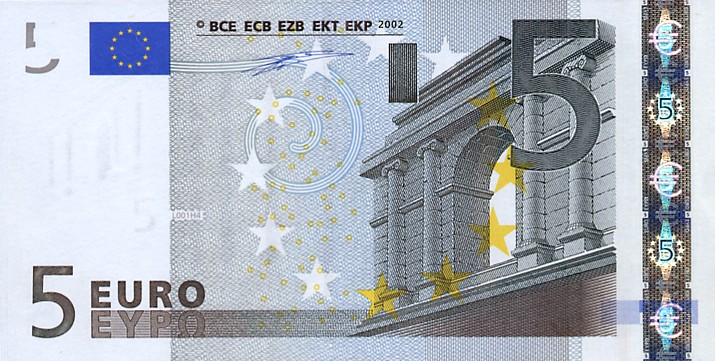
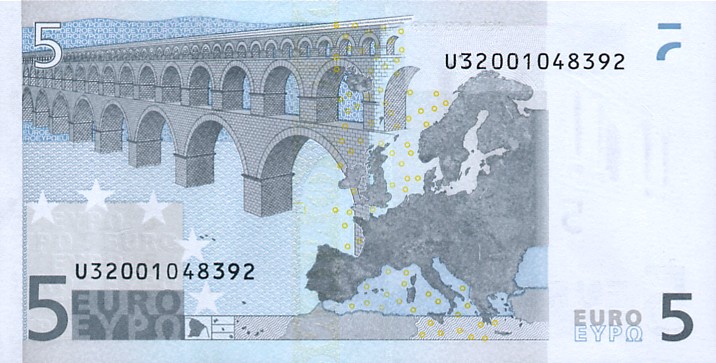
Banknotes
Budget & Public Finance
- Fiscal Year
- calendar year
- Annual Budget
- $864,100,000 (USD)
- External Debt
- $18,000,000,000 (USD)
Labor, Industry & Trade
- Industries
- tourism, construction, small-scale industrial and consumer products
- Agriculture Products
- none
Energy
- Oil Production
- 0 bbl/day
- Oil Consumption
- 0 bbl/day
- Oil Reserves
- 0 bbl/day
- Natural Gas Production
- 0 cu m
- Natural Gas Consumption
- 0 cu m
- Natural Gas Imports
- 0 cu m
- Natural Gas Exports
- 0 cu m
- Natural Gas Reserves
- 0 cu m
Communications
- Telephone System
- general assessment: modern automatic telephone system; the country's sole fixed line operator offers a full range of services to residential and business customers domestic: combined fixed-line and mobile-cellular teledensity exceeds 200 per 100 persons international: country code - 377; no satellite earth stations; connected by cable into the French communications system
- Internet Country Code
- .mc
News & Weather
News & Weather
Current Weather
Latest News
Charlène of Monaco Chose Gleaming Gold For The 77th Red Cross Gala - Vanity Fair
Vanity Fair · 1d ago
Princess Charlene Glitters in a Gold Elie Saab Gown at Monaco’s Red Cross Ball - Town & Country Magazine
Town & Country Magazine · 17h ago
Grace Kelly’s granddaughter Camille Gottlieb shines at the Monaco Gala - HOLA
HOLA · 2d ago
Jason Bateman Details Arrest in Monaco While Dressed in Leopard Outfit - E! News
E! News · 6h ago
Ukrainian prosecutors release video of the Monaco bombing that injured a tycoon - AP News
AP News · 2d ago
From Grace Kelly to Charlotte Casiraghi: 6 Historic Monaco Ball looks - HOLA
HOLA · 2d ago
New video emerges of bomb assassination attempt in Monaco - CNN
CNN · 3d ago
New footage shows assassination attempt on Ukrainian businessman in Monaco – video - The Guardian
The Guardian · 2d ago
News via Google News
Climate Overview
Mediterranean with mild, wet winters and hot, dry summers
Videos
Videos
1 curated YouTube videos.
Source: YouTube
Frequently Asked Questions
Frequently Asked Questions
What is the population of Monaco?
How do people greet each other in Monaco?
What are the eating customs and typical foods in Monaco?
How should I dress in Monaco?
What is family life like in Monaco?
What do people do for recreation in Monaco?
What is the capital of Monaco?
Where is Monaco located?
What countries border Monaco?
What religion is practiced in Monaco?
What currency does Monaco use?
What language is spoken in Monaco?
What is the geography of Monaco like?
What is Monaco known for?
Last reviewed 2026