
 English
 Español
 中文
中文 हिन्दी
 Français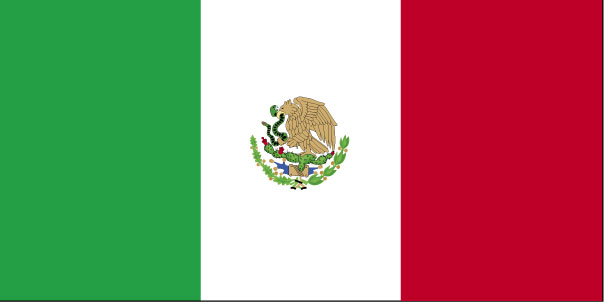
Mexico
Mexico
Declare Your Relationship to Mexico
CountryReports Community
- Studying6
- From Mexico2
- Mexico heritage4
- Visited3
- Want to visit4
Customs and Culture
Customs and Culture
About the People
Generally, Mexicans feel individuals are more important than schedules. The Mexican people are generally proud of their country. A wealthy person would be defined as somebody who lives in a big house in a nice neighborhood, their children attend expensive schools, drive the latest year cars and women normally will not work, but will socialize. The poorer people want money to buy expensive possessions and to buy any kind of real estate.
Cultural Attributes
Generally, Mexicans feel individuals are more important than schedules. The Mexican people are generally proud of their country. A wealthy person would be defined as somebody who lives in a big house in a nice neighborhood, their children attend expensive schools, drive the latest year cars, and women normally will not work but will socialize. The poorer people want money to buy expensive possessions and to buy any kind of real estate.
Mexico is the most populous Spanish-speaking country in the world and the second most populous country in Latin America, after Brazil, where Portuguese is spoken. About 70% of the inhabitants live in urban areas. Many Mexicans migrate from rural areas that do not offer employment opportunities, such as the underdeveloped southern states and the heavily populated central plateau, to industrialized urban centers and developed areas along the US border.
By some estimates, the population of the area surrounding Mexico City is 18 million, which is the largest concentration of inhabitants in the Western Hemisphere. Cities that border the United States, such as Tijuana and Ciudad Juárez, and cities in the interior of the republic, such as Guadalajara, Monterrey, and Puebla, have experienced strong population growth in recent years.

Land of Ancient Empires, Living Traditions
Greetings, Gestures & Visiting
The usual greeting is a handshake or a nod of the head, although a hug between friends is not uncommon. Mexicans typically stand close to each other while talking, sometimes touching their friend's clothing. Mexicans are generally very friendly and polite in their greetings. Women will often greet one another with a kiss on the cheek.
Mexicans Formally greet each other in the morning by saying “buenos dias”, at noon and before 7:p.m. “buenas tardes” and in the night they say “buenas noches”. Young people who are friends might say “que onda, wey?” Adults might say “quibole!”
To get someone's attention one might say “disculpa (excuse me)” When someone is leaving they might say “cuidate mucho!” (take care), “saludos a todos” (say hi to everyone else), or “ahi nos vemos”(see ya later!)
Items are handed, not tossed, to another person. Tossing an item shows a lack of manners and is offensive. Hand and arm gestures are often used in conversation.
Mexicans are very accommodating. Visitors are usually welcomed and served refreshments even though they arrive unannounced. It is impolite to refuse refreshments. Mexicans enjoy socializing with friends and relatives. First-time visitors usually receive a tour of the host's home.
Most Mexicans wear clothing that is also common in other Western countries, especially in urban areas. But there are also many types of traditional clothing worn in rural areas-either daily or for festivals. People from various regions of Mexico wear many different kinds of clothing, but color and beauty are two common features for all of them.
The Mexican sombrero, a recognizable icon of Mexican culture and labor, traces back to the vaquero who works with horses, the peasant farmer, and the mariachi musician. The sombrero is designed to protect the wearer from sunlight on long days of desert work. The sombrero has come to be associated, also, with the official folk dance of Mexico, the “jarabe tapatio” or the Mexican Hat dance.
A common accessory in women's clothing is the shawl. The shawl is a rectangular-shaped feminine garment that is made of cotton, wool, silk, or artisela. It is used as a scarf or as a shawl, however, women often use it to carry their children or to carry items to the market.
Diet
Staple foods include corn, beans, rice, and chillies. They are combined with spices, vegetables, and meats or fish in the daily meals. Tortillas (made from cornmeal or flour) are cooked on a skillet or hotplate, and are eaten everywhere. They are eaten as bread, or filled with beans, potatoes, meat and cheese (torta). Some popular foods include frijoles refritos (refried beans), and posole (white corn boiled with pork.
Children usually eat breakfast at school but they have their lunch time at 12:00 pm where they eat snacks or sandwiches. Workers, eat at factories or some stands where they sell burritos or lonches. Dinner it's often at home, depending of the family schedules. Normally, the father eats in the “head” of the table, but it's not always.
When eating, both hands are kept above the table. Guests do not leave directly after the meal, but stay for conversation. Lunch is usually the main meal of the day. Dinner might be light or heavy, depending on the family. It is inappropriate for adults to eat while walking on the street. Some foods are eaten with utensils, others with the hand. Tortillas are often used as scoops for sauces.
Staple foods include corn, beans, rice, and chillies. They are combined with spices, vegetables, and meats or fish in the daily meals. Tortillas (made from cornmeal or flour) are cooked on a skillet or hotplate, and are eaten everywhere. They are eaten as bread, or filled with beans, potatoes, meat and cheese (torta). Some popular foods include frijoles refritos (refried beans), and posole (white corn boiled with pork.
Breakfast is usually eaten by children at school. For lunch, at about 12 p.m., children eat snacks or sandwiches. Workers eat at the factories where they work, or at stands where they sell burritos or lonches. Dinner is often at home, depending on the family’s schedule. Normally, the father eats at the “head” of the table.

Family
Mexican families are usually large (three or more children). Families that live in urban areas usually have smaller families. The family unit is very important to society. Divorce is relatively low compared to other countries, due in part to a significant portion of the population belonging to the Catholic religion. Traditionally, the father has been the leader of the family, while the mother runs the household. However, as women go out to work more, and sometimes fathers look after children, this is changing.
Dating Customs
When dating, a young man frequently meets a young woman at a prearranged place, rather than at her home. Parental approval of the young man, however, is important to obtain. It is common for Mexican males to make "piropos" (flattering personal comments) to passing females, to which the females generally do not respond. Marriage customs follow Catholic traditions. The marriage is legally registered first with a civil ceremony, often followed by a church ceremony with many guests.
Recreation
Children love to play Soccer (Futbol) and you can see them in schools, streets, and parks. Also, but to a lesser degree, basketball (schools and parks) and volleyball (schools and parks) are sports children enjoy.
A popular game among children is known as “lotería”. It is played in groups at fairs and in homes. Each player receives a sheet with 20 squares with illustrations and bean seeds or other objects to mark the squares of the illustrations that have been named. A person is selected to be in charge of saying or singing the name of the images as they come out. That person has a deck of 52 cards with all the images in the game, but it is not only a matter of saying the name of the image but also rhyming about each figure that comes out. Sometimes the rhymes are so clever that players have to guess which card it refers to. The first person to fill all the boxes in any direction (across, across, or diagonally) wins a prize.
In the 19th century, bullfighting was the quintessential Mexican sport. Whether the matadors were Spanish or Mexican, large numbers of fans thronged the bullrings to cheer their exploits. Bullfighting remains part of Mexican culture, however, with the introduction of baseball at the turn of the century, many Mexicans switched their allegiance from bullfighting. Bullfighting has also become increasingly controversial over the years, as many activists strive to make the sport illegal due to animal welfare concerns. As of 2022, 5 of the 32 Mexican states have banned bullfighting, and a court in Mexico City ruled that no more bullfights may take place in the city - closing the largest bullring in the world, The Monumental Plaza de Toros de Mexico.
The main forest reserve is the Desierto de los Leones, which was declared a national park in 1917 by President Venustiano Carranza.
Student Life
Breakfast will vary by family preferences and regional access to produce. A light breakfast will consist of a hot beverage and bread. A heavier breakfast might include any of the following: egg dishes (such as huevos rancheros), meats, beans, tortillas, pastries, fruit (such as bananas, oranges, pineapples, mangos, papayas, guava, and strawberries), vegetables (peppers, tomatoes, and beans), or menuido (a tripe stew).
Some children ride bikes to school or walk, some ride buses provided by the school, and others with more money will ride in taxi-type cars and pay for the ride (several families might hire together someone to drive the children to and from school).
Private schools tend to have lots of money for nice facilities and books. The buildings are in good shape, and the teachers have plenty of funding for support materials, including modern computers. Teachers in these schools also tend to emphasize bilingual instruction. Public schools can have much less funding, although government programs now provide free books to 90% of the public schools in Mexico. In poorer towns, it is not uncommon for schools to be missing windows and have bare cement floors. Supplies and other resources are also lacking. The average classroom size will vary between 22 and 32 students per teacher, with some indigenous community schools having as high as 40 or more students per teacher.
Schoolchildren are required to wear uniforms. Though many families buy their children’s uniforms, government programs are working to help provide the poorest families with free uniforms so their children can attend school. Private schools are more likely to have computers available for students than public schools, but the prevalence of Internet cafés allows almost all children sufficient access to computers to support their schooling. The school day lasts four hours. Mid-morning is a break to have a snack and play outside. Many children eat molletes at the break, which is a bread roll split in two and covered with beans and cheese. The classes tend to be more informal than classrooms in the United States, and much of the learning takes place with group activities. Despite the informality, students are expected to respect the teacher (maestro or maestra), and parents do not interfere in school matters for the most part. Children receive grades for their performance in class. The grading scale is usually 1-10. Teachers give exams five times a year, with a national exam at the end of the year. Students who score less than 6 on that exam do not move on to the next grade level. Kindergarten begins at age four and continues until age six. In kindergarten, children learn to color, sing songs, and play with other children. Toward the end of kindergarten and in the first grade, they will learn to count and learn the alphabet. Common courses taught in elementary school are math, social studies, grammar, writing, reading, and physical education. Some children begin learning English as early as the sixth grade. Learning English is getting more attention than ever before, and private language schools are available nearly everywhere. Growing numbers of students who finish elementary school progress on to middle school (grades 7-9) and then to high school (10-12). Although the government provides free texts to elementary students, those who progress past that point must buy their own books. Not all families can afford this, so many children do not advance. The latter years in high school require a student to choose classes that direct the student towards either business or a vocation. Mexico has a rich cultural tradition in the arts. The degree to which a school may support artistic education usually has more to do with the number of funds available than any established curriculum. Similarly, children of wealthier families tend to have more time for developing such talents than children of poorer families, who often must sacrifice personal wants in order to work for family survival. Because so much of Mexico is agricultural, it is not uncommon for a child to work in the fields, along with many of their friends.
Private schools tend to offer more for students to do after hours, when students may stay to work on the computers, play sports (such as soccer or basketball), or stay for private lessons in subjects that may be more difficult. The majority of the children, however, do not have the time or the means to support extracurricular commitments.
Outside of school time, children love to play soccer, or go boating or bicycling, even in Mexico City, one of the largest cities in the world. Unfortunately, for most of the poorer children in the country, there is little time for such activities as they must go to work right after school. As a result, it can be difficult to even find time to do their homework.
Families are close in Mexico and they gather together for their evening meals. Staples for these meals include chili, corn, tortillas, tamales, pozolel (corn chowder), fruits, and vegetables. For more information, see “Family” in the “Culture and Customs” information for Mexico.
The school year in Mexico runs from September to June. Social class and economic status determine the school that a child will attend. Children of wealthy families will likely go to private schools; others attend public schools. Children must attend school through the sixth grade, although many poorer families are forced to have their children work instead of going to school so that they can earn enough money to survive. The Mexican government is working to improve this situation. Nearly 25% of the budget is now being spent on educational support and reform. Because of these efforts to improve educational opportunities, the percentage of children starting school and making it through sixth grade improved from 74% in 1994 to approximately 90% today. Nine out of every 10 children in Mexico from age 6 to 14 is enrolled in school, a significant improvement. Further, more than 8 million students are enrolled in schools beyond the primary level. Although nearly 80% of all adults in Mexico between the ages of 25 and 34 have not received high school diplomas, that trend is for more young people to complete secondary education. Unfortunately, educational expenditures are growing faster than government budgets can handle. So while education is seen as very important to the country’s future, and much is being done to promote it, the growth rate cannot be sustained, and educational issues will be critical for years to come.
Holidays
Independence Day
9/16Independence Day
Birth date - Frida Kahlo
7/6Birthday
Birth date - Frida Kahlo, Mexican artist, was born on July 6, 1907 in Mexico City.
Dia de los Muertos (Day of the Dead)
11/1Other
Dia de los Muertos (Day of the Dead)
Noche de Rabanos (Night of the Radishes)
12/23Birthday
Dec. 23 - Noche de Rabanos (Night of the Radishes)
A uniquely Oaxaca expression of the Christmas season is the Noche de Rabanos (Night of the Radishes) on the evening of December 23rd, an evening in which the zocalo becomes the scene of a huge exhibition of figures sculpted from radishes . Often these figures are in scenes of the birth of Jesus or other scenes expressing the history and culture of Oaxacans. A contest is held with everyone vying for the first prize and having their picture in the morning paper.
Christmas -- Navidad
12/25Christmas
Las Posadas is the most important Christmas custom for Mexicans. It is an eight day ritual beginning December 16 until Christmas Eve. Pastorleas are another custom in many areas of Mexico. Farolitos, also called luminaries are another tradition. On Christmas day families go to church. The also get together to eat things like empanadas, enchiladas, and flan. The poinsettia originated in Mexico.
Dates of Interest
- Mid-August
Throughout Mexico, there are special masses, parades, and gatherings filled with song and dance to honor Our Lady. The most famous celebration is in Huamantla where streets are laid with intricate patterns of flower blossoms, moss, and dyed sawdust. Fireworks begin at midnight on August 15th and a girl (representing the town's patron saint, the Virgin of Charity) leads a procession through town to the main church. After mass, there are bands and dancing and sand paintings to enjoy. The festivities continue for another couple weeks as the Huamantla Fair brings visitors from all the surrounding areas to participate in activities that include running bulls, a rodeo, donkey and car racing, craft exhibitions, livestock shows, concerts, rides, and food.
How do people greet each other in Mexico?
The usual greeting is a handshake or a nod of the head, with hugs common between friends and women often greeting each other with a kiss on the cheek. Mexicans are generally friendly and polite, and stand close while talking.
Do
- Use "buenos días" in the morning, "buenas tardes" at noon and before 7 p.m., and "buenas noches" at night
- Say "disculpa" (excuse me) to get someone's attention
- Expect friends to stand close and sometimes touch your clothing while talking
Good to know
- Young friends may say "que onda, wey?"; adults may say "quibole!"
- When leaving, people say "cuídate mucho", "saludos a todos", or "ahí nos vemos"
What are the dining customs in Mexico?
Staple foods include corn, beans, rice, and chillies, with tortillas eaten everywhere. Lunch, around 12 p.m., is usually the main meal, and dinner is at home depending on the family's schedule.
Do
- Keep both hands above the table while eating
- Stay for conversation after a meal rather than leaving directly
- Use tortillas as scoops for sauces
- Eat some foods with utensils and others with the hand, as appropriate
Don’t
- Don't eat while walking on the street if you are an adult
Good to know
- Popular dishes include frijoles refritos (refried beans) and posole (white corn boiled with pork)
- The father normally eats at the head of the table
What should I know about visiting a Mexican home?
Mexicans are very accommodating and welcome visitors, even unannounced, serving refreshments. First-time visitors usually receive a tour of the host's home.
Do
- Accept refreshments when offered
- Expect a tour of the home on a first visit
Don’t
- Don't refuse refreshments, as it is considered impolite
How do people dress in Mexico?
Most Mexicans, especially in urban areas, wear clothing common in other Western countries, while traditional clothing is worn in rural areas for daily use or festivals, valuing color and beauty.
Good to know
- The sombrero is an iconic garment linked to the vaquero, peasant farmer, and mariachi, and protects from the sun
- The shawl (rebozo) is a common women's accessory used as a scarf, shawl, or to carry children or market items
Are there gestures I should be aware of in Mexico?
Hand and arm gestures are often used in conversation, and items should be handed, not tossed, to another person.
Don’t
- Don't toss an item to someone, as it shows a lack of manners and is offensive
What is family life like in Mexico?
The family unit is very important, and families are usually large, though smaller in urban areas. Traditionally the father leads the family and the mother runs the household, though this is changing as more women work.
Good to know
- Divorce is relatively low, partly due to the Catholic population
- When dating, a young man often meets a young woman at a prearranged place, and parental approval is important
- Marriage follows Catholic traditions, with a civil ceremony first followed by a church ceremony
What do people do for fun in Mexico?
Soccer (fútbol) is hugely popular among children, along with basketball and volleyball to a lesser degree. Traditional games like "lotería" and sports such as baseball and bullfighting are also part of the culture.
Good to know
- "Lotería" is a group game played at fairs and in homes using illustrated sheets and markers
- Bullfighting was once the quintessential sport but is now controversial; as of 2022, 5 of 32 states have banned it and Mexico City closed its bullring
- Baseball drew many fans away from bullfighting at the turn of the century
- The Desierto de los Leones is the main forest reserve, declared a national park in 1917
Last updated: 2026-07-12 · Sources: CountryReports
Photos of Mexico
Photos of Mexico


Travel and Tourism
Travel and Tourism
- Travel Alert Status
- Do Not Travel To: Colima state due to crime and kidnapping. Guerrero state due to crime. Michoacan state due to crime and kidnapping. Sinaloa state due to crime and kidnapping Tamaulipas state due to crime and kidnapping. Zacatecas state due to crime and kidnapping. Reconsider Travel To: Baja California state due to crime and kidnapping. Chihuahua state due to crime and kidnapping. Durango state due to crime. Guanajuato state due to crime and kidnapping. Jalisco state due to crime and kidnapping. Morelos state due to crime. Sonora state due to crime and kidnapping.
- Currency
- 19.63
- Time Difference
- UTC-6 (1 hour behind Washington, DC, during Standard Time) time zone note: Mexico has four time zones
- Climate
- With a climate that varies from tropical to desert, the terrain ranges from high rugged mountains to low coastal plains and high plateaus to desert. Mexican natural hazards include tsunamis on the Pacific coast, volcanoes and destructive earthquakes at the center and south, and hurricanes on the Gulf of Mexico and Caribbean coasts.
- Airports
- 1724
Read the full travel guide — health, safety, vaccinations, disease risk, sanitation, and transit details.
View full travel guideRecipes
Recipes
Red Enchiladas
Main Dish
Main Dish
Flautas (Stuffed Corn Tortillas)
Main Dish
Machaca con Huevo (Eggs with Beef Jerky)
Main Dish
Entomatadas (Tomato Tortillas)
Main Dish
Mole Poblano (Mexican Hot Sauce Served with Meat)
Main Dish
(White Cheese Enchiladas with Green Salsa))
Main Dish
Red Enchiladas
Side Dish
Premium(Mexican Rice)
Side Dish
PremiumGuacamole (Avocado Dip)
Side Dish
PremiumFrijoles (Beans)
History
History
Historical Eras
Pre-Columbian Era
1500 BCE – 1519
Mesoamerica gave rise to successive complex civilizations, including Teotihuacán, the Zapotec culture centered at Monte Albán, the Classic Maya of the Yucatán, and finally the Aztec Empire, which dominated central Mexico from the 14th century. These societies built monumental architecture, developed writing and calendrical systems, and sustained large urban populations. The Aztec capital Tenochtitlán, founded around 1325, became one of the largest cities in the world by the early 16th century.
Colonial New Spain
1519 – 1810
Hernán Cortés conquered the Aztec Empire between 1519 and 1521, establishing the Viceroyalty of New Spain under the Spanish Crown. Over three centuries, a stratified mestizo society emerged from the blending of indigenous, European, and African populations. Spanish mercantilist policies, the Catholic Church, and a rigid caste system shaped colonial life, while silver mining drove the economy and fueled resentment among creole and mestizo inhabitants increasingly excluded from power.
Independence & Early Republic
1810 – 1876
Miguel Hidalgo y Costilla's 1810 Grito de Dolores ignited the independence movement; formal independence was achieved in 1821 under Agustín de Iturbide, who briefly declared himself emperor. The subsequent decades were marked by chronic instability, conservative-liberal conflicts, the catastrophic loss of roughly half the national territory to the United States after the Mexican-American War (1846–48), and the Reform War, culminating in Benito Juárez's liberal republic and the French-imposed reign of Emperor Maximilian (1864–67).
Porfiriato
1876 – 1910
General Porfirio Díaz dominated Mexico for over three decades, imposing political order while aggressively modernizing the economy through foreign investment, railroad construction, and industrial expansion. His regime achieved notable growth but at the cost of civil liberties, suppression of indigenous and peasant land rights, and extreme concentration of wealth. The polarization between a privileged elite and an impoverished rural majority laid the groundwork for revolutionary upheaval.
Revolution & Reform
1910 – 1940
The Mexican Revolution began in 1910 as a coalition of forces including Francisco Madero, Emiliano Zapata, and Pancho Villa overthrew Díaz and then fought one another in a decade of devastating factional warfare. The Constitution of 1917 enshrined land reform, labor rights, and national sovereignty over natural resources. President Lázaro Cárdenas (1934–40) implemented sweeping agrarian redistribution and nationalized the oil industry in 1938, consolidating the revolution's social promises under the dominant PRI political structure.
Modern Mexico
1940 – present
Decades of PRI-managed rule produced sustained economic growth through the mid-20th century, but also entrenched corruption, inequality, and semiauthoritarian governance. The 1994 peso crisis and the Zapatista uprising in Chiapas exposed deep structural weaknesses. Democratic transition accelerated with Vicente Fox's historic 2000 electoral victory, ending 70 years of PRI dominance, though Mexico continues to grapple with poverty, narco-violence, income inequality, and the marginalization of indigenous communities in the south.
Overview
Preconquest Mexico
Despite Mexico’s rich pre-Columbian history, following the Spanish conquest in 1519, the country’s new rulers made a concerted attempt to erase all things related to indigenous cultures. Conquerors and missionaries felt divinely inspired to "civilize and evangelize" the native peoples of the New World. The attempts to Europeanize and Christianize MexicoTimeline of Key Events
1500 BCE
Villages appear, and inhabitants produce clay products.
Villages appear, and inhabitants produce clay products.
200 BCE – 100
Monte Albán civilization in southern Mexico.
Monte Albán civilization in southern Mexico.
1 – 650
Teotihuacán civilization in central Mexico.
Teotihuacán civilization in central Mexico.
600 – 900
Classic Mayan civilization in the Yucatan peninsula.
Classic Mayan civilization in the Yucatan peninsula.
1300
Aztec arrive in the Valley of Mexico.
Aztec arrive in the Valley of Mexico.
1376
First Aztec king crowned.
First Aztec king crowned.
1500
Early sixteenth century Colonial administration established.
Early sixteenth century Colonial administration established. European settlers pour into colony seeking wealth. Native population decimated by disease and harsh labor practices.
Read the full history profile — narrative overview, defining eras, and the complete timeline in one place.
View expanded historyInteresting Facts
Interesting Facts
When a child loses a tooth they leave the tooth in a box on the bedside table. El Raton, the magic mouse will take the tooth and bring some money. He leaves more money for a front tooth.
Mexico consumes the most Coca Cola at 412 (8 oz. serving)per person each year.
To the Mexicans, Mexico really means Mexico City. It is referred to as La republica Mexicana.
The meaning of the colours of the Mexican flag are: green for hope and fertility of the soil, white for purity and red for the blood shed during the fight for independence.
A special handshake which is very firm, is a sign of great favour in Mexico.
In keeping with Spanish tradition, a Mexican usually has two family names, for example, Juan Perez Lopez. Perez is the family name of Juan's father and Lopez is his mother's family name.
See every fact — trivia, oddities, and curious tidbits gathered from across the country.
View all interesting factsGeography and Environment
Geography and Environment
- Terrain
- high, rugged mountains; low coastal plains; high plateaus; desert
- Climate
- With a climate that varies from tropical to desert, the terrain ranges from high rugged mountains to low coastal plains and high plateaus to desert. Mexican natural hazards include tsunamis on the Pacific coast, volcanoes and destructive earthquakes at the center and south, and hurricanes on the Gulf of Mexico and Caribbean coasts.
- Natural Hazards
- tsunamis along the Pacific coast, volcanoes and destructive earthquakes in the center and south, and hurricanes on the Pacific, Gulf of Mexico, and Caribbean coasts
- Current Environmental Issues
- scarcity of hazardous waste disposal facilities; rural to urban migration; natural fresh water resources scarce and polluted in north, inaccessible and poor quality in center and extreme southeast; raw sewage and industrial effluents polluting rivers in urban areas; deforestation; widespread erosion; desertification; deteriorating agricultural lands; serious air and water pollution in the national capital and urban centers along US-Mexico border; land subsidence in Valley of Mexico caused by groundwater depletion
Read the full geography and environment profile — terrain, climate, natural resources, hazards, land use, and international agreements.
View full geographyPeople & Demographics
People & Demographics
Religion
Languages Spoken
Spanish only 92.7%, Spanish and indigenous languages 5.7%, indigenous only 0.8%, unspecified 0.8%
Note: indigenous languages include various Mayan, Nahuatl, and other regional languages
- Spanish
Population
- Population
- 112,468,855
- Population: Male/Female
- male: 63,899,138 female: 66,840,789
- Population Distribution
- most of the population is found in the middle of the country between the states of Jalisco and Veracruz; approximately a quarter of the population lives in and around Mexico City
- Urban Population
- urban population: 81.6% of total population rate of urbanization: 1.4% annual rate of change
- Population in Major Urban Areas
- 22.281 million MEXICO CITY (capital), 5.420 million Guadalajara, 5.117 million Monterrey, 3.345 million Puebla, 2.626 million Toluca de Lerdo, 2.260 million Tijuana
- Nationality Noun
- noun: Mexican(s) adjective: Mexican
- Ethnic Groups
- Mestizo (Indigenous-Spanish) 62%, predominantly Indigenous 21%, Indigenous 7%, other 10% (mostly European)
- Language Note
- Spanish only 93.8%, Spanish and indigenous languages 5.4%, indigenous only 0.6%, unspecified 0.2%; note - indigenous languages include various Mayan, Nahuatl, and other regional languages
Education
- Literacy Definition
- age 15 and over can read and write
Private schools tend to have lots of money for nice facilities and books. The buildings are in good shape, and the teachers have plenty of funding for support materials, including modern computers. Teachers in these schools also tend to emphasize bilingual instruction.
Public schools can have much less funding, although government programs now provide free books to 90% of the public schools in Mexico. In poorer towns, it is not uncommon for schools to be missing windows and have bare cement floors. Supplies and other resources are also lacking.
The average classroom size will vary between 22 and 32 students per teacher, with some indigenous community schools having as high as 40 or more students per teacher.
Health Information
- Life Expectancy at Birth
- total population: 74.6 years male: 71.6 years female: 77.7 years
- Major Infectious Diseases — degree of risk
- degree of risk: intermediate food or waterborne diseases: bacterial diarrhea and hepatitis A vectorborne diseases: dengue fever
- Alcohol consumption per capita
- total: 4.25 liters of pure alcohol beer: 3.72 liters of pure alcohol wine: 0.19 liters of pure alcohol spirits: 0.19 liters of pure alcohol
- Tobacco Use
- total: 13.1% male: 19.9% female: 6.2%
- Child Marriage
- women married by age 15: 3.6% women married by age 18: 20.7%
- Infant Mortality Rate
- total: 12.1 deaths/1,000 live births male: 13.4 deaths/1,000 live births female: 10.9 deaths/1,000 live births
Life Expectancy
- Life Expectancy at Birth
- total population: 74.6 years male: 71.6 years female: 77.7 years
- Median Age
- total: 30.8 years male: 28.8 years female: 32.7 years
- Age Structure
- 0-14 years: 23.3% (male 15,647,805/female 14,754,004) 15-64 years: 68.6% (male 43,651,105/female 45,983,174) 65 years and over: 8.2% (male 4,600,228/female 6,103,611)
- Infant Mortality Rate
- total: 12.1 deaths/1,000 live births male: 13.4 deaths/1,000 live births female: 10.9 deaths/1,000 live births
Read the full people and society profile — demographics, health, education, religion, languages, and notable people.
View full people and societyGovernment & Politics
Government & Politics
Country Identity
- Country Name
- Mexico
- Full Country Name
- United Mexican States
- Local - Long
- Estados Unidos Mexicanos
- Local - Short
- Mexico
Government Structure
- Government Type
- federal republic
- Legal System
- mixture of US constitutional theory and civil law system; judicial review of legislative acts; accepts compulsory ICJ jurisdiction, with reservations
- Executive Branch
- chief of state: President Claudia Sheinbaum (since October 2024); note - the president is both the chief of state and head of government head of government: President Claudia Sheinbaum (since October 2024); note - the president is both the chief of state and head of government cabinet: Cabinet appointed by the president; note - appointment of the attorney general requires consent of the Senate elections: president elected by popular vote for a single six-year term (sexenio); no re-election permitted; election last held on June 2, 2024 (next to be held in 2030); Claudia Sheinbaum of the Morena party won with approximately 59% of the vote, becoming Mexico's first female president
- Legislative Branch
- bicameral National Congress or Congreso de la Union consists of the Senate or Camara de Senadores (128 seats; 96 are elected by popular vote to serve six-year terms, and 32 are allocated on the basis of each party's popular vote) and the Federal Chamber of Deputies or Camara Federal de Diputados (500 seats; 300 members are directly elected by popular vote to serve three-year terms; remaining 200 members are allocated on the basis of each party's popular vote, also for three-year terms) elections: Senate - last held 2 July 2000 for all of the seats (next to be held 2 July 2006); Chamber of Deputies - last held 6 July 2003 (next to be held 2 July 2006) election results: Senate - percent of vote by party - NA%; seats by party - PRI 60, PAN 46, PRD 16, PVEM 5, unassigned 1; Chamber of Deputies - percent of vote by party - NA%; seats by party - PRI 222, PAN 151, PRD 95, PVEM 17, PT 6, CD 5, unassigned 4; note - special elections were held in December 2003; the PRI and the PRD each won one seat and were each assigned one additional proportional representation seat
- Judicial Branch
- Supreme Court of Justice or Suprema Corte de Justicia Nacional (justices or ministros are appointed by the president with consent of the Senate)
- Suffrage
- 18 years of age; universal and compulsory (but not enforced)
- Constitution
- 5-Feb-17
- Independence
- 16 September 1810 (from Spain)
- National Holiday
- Independence Day, 16 September (1810)
Capital City
- Capital Name
- Mexico City (Ciudad de Mexico)
- Capital - geographic coordinate
- 19 26 N, 99 08 W
- Capital Time Difference
- UTC-6 (1 hour behind Washington, DC, during Standard Time) time zone note: Mexico has four time zones
named after the Mexica, the largest and most powerful branch of the Aztecs; the meaning of the name is uncertain
Military
Branches: Secretariat of National Defense (Secretaria de Defensa Nacional, Sedena): Army (Ejercito), Mexican Air Force (Fuerza Aerea Mexicana, FAM); Secretariat of the Navy (Secretaria de Marina, Semar): Mexican Navy (Armada de Mexico (ARM); includes Naval Air Force (FAN), Mexican Naval Infantry Corps (Cuerpo de Infanteria de Marina, Mexmar or CIM))
Embassy / Diplomatic Mission
Embassy Location: The U.S. Embassy is located in Mexico City at Paseo de la Reforma 305, Colonia Cuauhtémoc; telephone from the United States: 011-52-55-5080-2000; telephone within Mexico City: 5080-2000; telephone long distance within Mexico 01-55-5080-2000. You may contact the Embassy by e-mail or visit the Embassy website. The U.S. Embassy in Mexico City is also on Facebook & Twitter.
The Embassy serves a consular district encompassing the Federal District of Mexico; the states of Guanajuato, Querétaro, Hidalgo, Veracruz, Michoacán, the State of Mexico (Estado de México), Tlaxcala, Morelos, Puebla, Guerrero, Oaxaca, Tabasco, and Chiapas; and the city of Tampico, Tamaulipas. In addition to the Embassy, there are nine United States consulates and ten separate consular agencies located throughout Mexico. In the list below you will find the consular district covered by each consulate.
CONSULATES (with consular districts defined by Mexican state):
Ciudad Juárez (Chihuahua): Paseo de la Victoria 3650, telephone (011) (52) (656) 227-3000. Facebook & Twitter
Guadalajara (Nayarit, Jalisco, Aguascalientes, and Colima): Progreso 175, Col. Americana; telephone (011) (52) (333) 268-2100. Facebook & Twitter
Hermosillo (Sinaloa and the southern part of Sonora): Calle Monterrey 141 Poniente, Col. Esqueda; telephone (011) (52) (662) 289-3500. Facebook
Matamoros (most of the state of Tamaulipas with the exception of a northwest section and the city of Tampico): Avenida Primera 2002 y Azaleas; telephone (011) (52) (868) 812-4402. Facebook & Twitter
Mérida (Campeche, Yucatán, and Quintana Roo): Calle 60 No. 338 K x 29 y 31, Col. Alcalá Martín; telephone (011) (52) (999) 942-5700. Facebook & Twitter
Monterrey (Nuevo León, Durango, Zacatecas, San Luis Potosí, and the southern part of Coahuila): Avenida Constitución 411 Poniente; telephone (011) (52) (818) 047-3100. Facebook & Twitter
Nogales (the northern part of Sonora): Calle San José, Fraccionamiento "Los Álamos"; telephone (011) (52) (631) 311-8150. Facebook & Twitter
Nuevo Laredo (the northern part of Coahuila and the northwestern part of Tamaulipas): Calle Allende 3330, Col. Jardín; telephone (011) (52) (867) 714-0512. Facebook & Twitter
Tijuana (Baja California Norte and Baja California Sur): Paseo de Las Culturas s/n Mesa de Otay, telephone (011) (52) (664) 977-2000. Facebook
CONSULAR AGENCIES (mainly serving the location city only):
Acapulco: Hotel Emporio, Costera Miguel Alemán 121 – Suite 14; telephone (011)(52)(744) 481-0100 or (011)(52)(744) 484-0300.
Los Cabos: Tiendas de Palmilla, Carretera Transpeninsular Km 27.5
Local B221, San José del Cabo, Baja California Sur, C.P. 23406: Telephone: (624) 143-3566 Fax: (624) 143-6750
Cancún: Blvd. Kukulcán Km 13, Torre La Europea, Despacho 301 ZH; telephone (011)(52)(998) 883-0272.
Cozumel: Plaza Villa Mar en El Centro, Plaza Principal (Parque Juárez between Melgar and 5th Ave.), 2nd floor, Locales #8 and 9; telephone (011)(52)(987) 872-4574.
Mazatlán: Hotel Playa Mazatlán, Playa Gaviotas 202, Zona Dorada; telephone (011)(52)(669) 916-5889.
Oaxaca: Macedonio Alcalá No. 407, Interior 20; telephone (011)(52)(951)514-3054 or (011)(52)(951) 516-2853.
Piedras Negras: Abasolo 211, Local 3, Col. Centro; telephone (011)(52)(878) 782-5586 or (011)(52)(878) 782-8664.
Playa del Carmen: The Palapa, Calle 1 Sur, between Avenida 15 and Avenida 20; telephone (011)(52)(984) 873-0303.
Puerto Vallarta : Paseo de Los Cocoteros 85 Sur, Paradise Plaza – Local L-7, Nuevo Vallarta, Nayarit C.P. 63732; telephone (011)(52)(322) 222-0069 or 322-223-3301.
San Miguel de Allende: Centro Comercial La Luciernaga, Libramiento Manuel Zavala (Pepe KBZON), telephone (011)(52)(415) 152-2357.
Read the full government profile — flag symbolism, national anthem, and other national symbols.
View full government detailsEconomy
Economy
Mexico has a free market economy that blends modern and traditional industry and agriculture, with the private sector playing an increasingly dominant role. Successive administrations have expanded competition in seaports, railroads, telecommunications, electricity generation, natural gas distribution, and airports. As the world's 12th-largest economy by nominal GDP and Latin America's second-largest, Mexico has a per capita income roughly one-third that of the United States, though income distribution remains highly unequal and regional disparities between the industrialized north and the poorer south persist.
Trade with the United States and Canada has more than tripled since the North American Free Trade Agreement (NAFTA) took effect in 1994, and in 2020 NAFTA was replaced by the United States-Mexico-Canada Agreement (USMCA), which modernized rules on digital trade, labor standards, automotive content, and intellectual property. Mexico has free trade agreements with more than 50 countries, including the European Union, the United Kingdom, Japan, and members of the Pacific Alliance and the Comprehensive and Progressive Agreement for Trans-Pacific Partnership (CPTPP), placing the vast majority of its trade under preferential terms.
Manufacturing—particularly automobiles, electronics, aerospace components, and medical devices—is central to the export economy, and Mexico has emerged as a major beneficiary of nearshoring as global companies relocate supply chains closer to the U.S. market. Remittances, primarily from workers in the United States, have become a critical source of foreign income, surpassing $60 billion annually in recent years. Persistent challenges include the need to upgrade infrastructure, strengthen the rule of law, address insecurity, modernize the tax system and labor laws, and attract investment in the energy sector, where state-owned firms Pemex and CFE continue to play a dominant role.
Snapshot
- Currency Name and Code
- Mexican Peso (MXN)
- GDP — official exchange rate
- $693,000,000,000 (USD)
- GDP Real Growth Rate
- 3%
- Gini Index
- 54.6
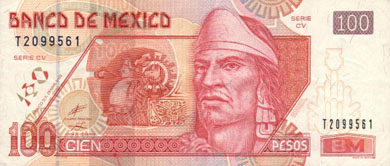
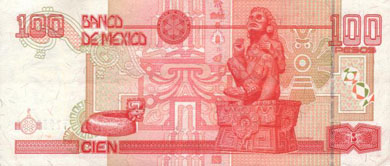
Banknotes
Budget & Public Finance
- Fiscal Year
- calendar year
- Annual Budget
- $184,000,000,000 (USD)
- Public Debt (% of GDP)
- 39.1%
- External Debt
- $174,300,000,000 (USD)
- Investment (% of GDP)
- 21.1%
- Economic Aid
- $1,166,000,000 (USD)
- Current Account Balance
- -$8,970,000,000 (USD)
- Reserves of Foreign Exchange
- $2,147,483,647 (USD)
Labor, Industry & Trade
- Labor Force by Occupation
- agriculture 18%; industry 24%; services 58%
- Household Income — highest 10%
- 35.6%
- Industries
- food and beverages, tobacco, chemicals, iron and steel, petroleum, mining, textiles, clothing, motor vehicles, consumer durables, tourism
- Agriculture Products
- corn, wheat, soybeans, rice, beans, cotton, coffee, fruit, tomatoes; beef, poultry, dairy products; wood products
- Export Commodities
- manufactured goods, oil and oil products, silver, fruits, vegetables, coffee, cotton
- Export Partners
- US 89%, Canada 1.7%, Spain 0.9%
- Import Commodities
- metalworking machines, steel mill products, agricultural machinery, electrical equipment, car parts for assembly, repair parts for motor vehicles, aircraft, and aircraft parts
- Import Partners
- US 63.2%, Japan 5.5%, China 3.7%
Energy
- Oil Production
- 3,420,000 bbl/day
- Oil Consumption
- 1,752,000 bbl/day
- Oil Reserves
- 33,310,000,000 bbl/day
- Natural Gas Production
- 47,300,000,000 cu m
- Natural Gas Consumption
- 55,100,000,000 cu m
- Natural Gas Imports
- 7,850,000,000 cu m
- Natural Gas Exports
- 0 cu m
- Natural Gas Reserves
- 424,300,000,000 cu m
Communications
- Telephone System
- General Assessment: adequate telephone service for business and government; improving quality and increasing mobile cellular availability, with mobile subscribers far outnumbering fixed-line subscribers; domestic satellite system with 120 earth stations; extensive microwave radio relay network; considerable use of fiber-optic cables and coaxial cables Domestic: despite the opening to competition in January 1997, Telmex remains dominant; Fixed-line teledensity is less than 20 per 100 persons; mobile-cellular teledensity is about 80 per 100 persons International: country code - 52; Columbus-2 fiber-optic submarine cable with access to the US, Virgin Islands, Canary Islands, Spain, and Italy; the Americas Region Caribbean Ring System (ARCOS-1) and the MAYA-1 submarine cable system together provide access to Central America, parts of South America and the Caribbean, and the US; satellite earth stations - 120 (32 Intelsat, 2 Solidaridad (giving Mexico improved access to South America, Central America, and much of the US as well as enhancing domestic communications), 1 PanAmSat, numerous Inmarsat mobile earth stations); linked to Central American Microwave System of trunk connections
- Internet Country Code
- .mx
News & Weather
News & Weather
Current Weather
Latest News
‘She was almost a Batman figure’: Mexico’s avenging Mother Courage - The Guardian
The Guardian · 3h ago
Trump looks past Canada and Mexico for Gianni Infantino - Politico
Politico · 9h ago
Mexico’s hosting of World Cup wins praise all around - Mexico News Daily
Mexico News Daily · 7h ago
Congress, Mexico and Canada hold a USMCA trump card - The Hill
The Hill · 2d ago
How Mexico’s ‘El Mayo’ went from feared cartel boss to life imprisonment in the US - CNN
CNN · 10h ago
Tropical Storm Bertha forms in Gulf of Mexico, treks west - Chron
Chron · 7h ago
Eyes on the Gulf of Mexico as a new tropical storm is likely coming - The Weather Network
The Weather Network · 1d ago
Tropical Storm Bertha drifts toward land as Hurricane Fausto forms in the eastern Pacific - AP News
AP News · 4h ago
News via Google News
Climate Overview
With a climate that varies from tropical to desert, the terrain ranges from high rugged mountains to low coastal plains and high plateaus to desert. Mexican natural hazards include tsunamis on the Pacific coast, volcanoes and destructive earthquakes at the center and south, and hurricanes on the Gulf of Mexico and Caribbean coasts.
Videos
Videos
2 curated YouTube videos.
Source: YouTube
Source: YouTube
Frequently Asked Questions
Frequently Asked Questions
What is the population of Mexico?
How do people greet each other in Mexico?
What are the dining customs in Mexico?
What should I know about visiting a Mexican home?
How do people dress in Mexico?
Are there gestures I should be aware of in Mexico?
What is family life like in Mexico?
What do people do for fun in Mexico?
What is the capital of Mexico?
Where is Mexico located?
What countries border Mexico?
What religion is practiced in Mexico?
What is the currency of Mexico?
What language is spoken in Mexico?
What is Mexico known for?
What is the geography and terrain of Mexico like?
Last reviewed 2026