
 English
 Español
 中文
中文 हिन्दी
 Français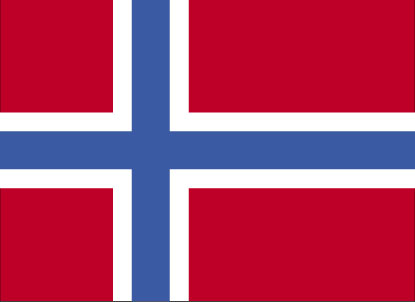
Norway
Norge
Declare Your Relationship to Norway
CountryReports Community
- Studying2
- From Norway0
- Norway heritage2
- Visited3
- Want to visit0
Customs and Culture
Customs and Culture
About the People
Norwegians cherish their freedom and independence. Although the country has a king, his role is mainly ceremonial. Norway's love of freedom stems from its long history of domination by Sweden and Denmark.
Most peoples lifestyles include sufficient money for food, leisure activities and to find fulfillment with life. Norway is a wealthy country and many Norwegians spend money on housing, including refurnishing older homes.
Most Norwegians have blond hair, blue eyes and the same ethnic origins. The largest minority group in Norway is the Sami. The Sami were Norway's first inhabitants. Norway is ranked as having the highest standard of living in the world.
Norwegian cities are very clean. Many parks are found within the cities and wilderness areas are close by. Oslo is Norway's busiest city. Because Norway is mountainous, some areas are isolated from each other. The distances between people have caused many different communities and dialects to develop. Some of the people living in the Norwegian countryside still lead a traditional way of life and farm for a living.
Cultural Attributes
Norwegians cherish their freedom and independence. Although the country has a king, his role is mainly ceremonial. Norway's love of liberty stems from its long history of domination by Sweden and Denmark.
Most people's lifestyles include sufficient money for food, leisure activities, and to find fulfillment in life. Norway is a wealthy country, and many Norwegians spend money on housing, including refurbishing older homes
Most Norwegians have blond hair, blue eyes and the same ethnic origins. The largest minority group in Norway is the Sami. The Sami were Norway's first inhabitants. Norway is ranked as having the highest standard of living in the world.
Norwegian cities are very clean. Many parks are found within the cities, and wilderness areas are nearby. Oslo is Norway's busiest city. Because Norway is mountainous, some areas are isolated from each other. The distances between people have caused many different communities and dialects to develop. Some people living in the Norwegian countryside still lead a traditional way of life and farm for a living.

Land of the Midnight Sun and Free Spirit
Greetings, Gestures & Visiting
When meeting someone shaking hands is the normal way in any matter and situation. It is not uncommon to hug after shaking hands. In the morning, one might say "god morgen". "Bokmal" is the more popular of the two official forms of the Norwegian language. Most books and magazines are written in Bokmål. There are three extra letters in the Norwegian alphabet æ, ø, å
When guests leave a hug is appropriate.
Norwegians feel they have a “border” around their heads that is about three feet, which is their “intimate zone,” which should not be violated during conversation.
Norwegians take vacation during Easter week. Many people camp, hike, stay in a cabin, or go skiing. Some go to church on Easter Sunday. Norwegians call Christmas "Jul (YOOL)". A tradition called ringe julen (REEN-geh YOOL-ehn) means ringing in Christmas. Church bells ring at five o'clock on Christmas Eve to start the signal of Christmas. People celebrate on Christmas Eve with a traditional dinner. After which they exchange gifts. They may also attend church. Christmas trees in Norway are sometimes decorated with small Norwegian flags.
Norwegian clothing style can vary depending on location, weather, occasion, and personal preference. However, there are some general trends and traditional elements that characterize Norwegian fashion:
Practicality: Norway's climate can range from cold winters to mild summers, so practical clothing is essential. This often includes layers, waterproof outerwear, and sturdy footwear suitable for outdoor activities like hiking or skiing.
Outdoor Gear: Norway emphasizes outdoor activities and nature, so outdoor gear brands like Norrøna, Bergans, and Helly Hansen are popular. You'll often see people wearing functional jackets, pants, and accessories from these brands.
Casual and Comfortable: Norwegians generally prefer a casual and comfortable style. This can include jeans, sweaters, t-shirts, and sneakers for everyday wear. Neutral colors like black, gray, navy, and earth tones are common.
Traditional Clothing: While not worn daily, traditional Norwegian clothing like the bunad (folk costume) is still worn for special occasions such as weddings, confirmations, and national holidays. Bunads vary by region and are richly decorated with intricate patterns and embroidery.
Scandinavian Minimalism: Norway, like other Scandinavian countries, is known for its minimalist aesthetic. Clean lines, simple designs, and high-quality materials characterize many Norwegian fashion brands and the everyday style of their people.
Seasonal Adaptations: Warm clothing like wool sweaters, scarves, hats, and gloves is essential in winter. In summer, lighter layers and breathable fabrics are more common, particularly in coastal areas with milder temperatures.
Sustainable Fashion: Norway strongly emphasizes sustainability, so you'll often see people opting for eco-friendly and ethically made clothing. Second-hand shopping and clothing swaps are also popular ways to reduce environmental impact.
Diet
Norwegians typically eat four meals a day. Frokost (Breakfast) is usually eaten at home and may consist of porridge or other cereals and open-faced sandwiches. Lunch or Lunsj (LOON-sh) is usually eaten at school or work and may be a large snack. The only hot meal is dinner or middag (MIH-dawg) which is eaten at home but it is usually eaten about four in the afternoon It often includes soup, bread, and a main course of seafood. Some people also eat a late meal called kveldsmat (keh-VELL-dis-mawt) with tea or coffee.
Bread is a main part of Norwegian diet. People in Norway often eat open-faced sandwiches. They eat bread with salted herring, brown goat cheese, cold meats and spreads made of vegetables, shrimp, or sweets. Flatbrød (FLAWT-brohd) is a thin, crisp bread often eaten with stews. Gomme (GOO-meh) is a popular sweet milk dish that people eat with waffles. A sour cream porridge called rømmegrøt (ROHM-meh-groht) is often served at weddings.

Family
In many families both parents work, but family relationships are very important. Families in Norway are usually small, often with just two children. People in Norway pay high taxes to help fund the welfare system, which includes programs that provide for the needs of families and children.
Recreation
Soccer, Handball, and Gymnastics are the sports played by kids, usually on sports teams; school teams are rare. Kids also enjoy swimming and skiing. Norwegians enjoy skiing in winter. The Holmenkollen Ski Jump is one of the most difficult ski jumps in the world is in Norway. School children hike on nature trails and learn how to camp in snow.
During summer, Norwegians swim, fish, and sail in many waters. Many people own cabins in remote places and reach them by hiking. Norwegians love to spend time with their friends. They often visit each other at home because eating at restaurants can be expensive.
The first Birkebeiner race was held in Norway in 1932 to challenge skiers' endurance and honor the brave peasant who saved Prince Håakon IV in 1205 after his father's death. Today, Norwegian skiers still carry a pack representing the weight of the infant prince in the 58K race near Lillehammer.
Student Life
All children in Norway must complete ten years of basic education in three stages: lower primary, upper primary and lower secondary. They study subjects such as religion, Norwegian and English, they can also study a third language. After lower secondary school, students may go on to upper secondary school. They can choose either general or vocational studies. General studies prepare students for higher learning at a university, Vocational studies help them learn skills that enable them to work. Admission to a university is based on performance in upper secondary school. Norway has one of the highest literacy rates in the world. Schoolwork is not graded for primary school students. Students only start to receive grades when they go to secondary school.
Holidays
Constitution Day
5/17Independence
Christmas
12/25Christmas
Dates of Interest
- February 6th
Sami National Day commemorates the first Sami National Assembly held in 1917 and celebrates Sami culture, language, and heritage. It is observed with cultural events, reindeer races, traditional joik singing, and exhibitions in Sami communities across Norway.
How do people greet each other in Norway?
Shaking hands is the normal greeting in any situation, and hugging after a handshake is common.
Do
- Shake hands when meeting someone
- Say "god morgen" in the morning
Good to know
- A hug is also appropriate when guests leave
- Bokmål is the more popular of the two official forms of Norwegian; the alphabet has three extra letters: æ, ø, å
What are the dining customs in Norway?
Norwegians typically eat four meals a day, with dinner (middag) being the only hot meal, usually eaten at home around four in the afternoon.
Do
- Expect open-faced sandwiches, often with salted herring, brown goat cheese, cold meats, or spreads
- Try flatbrød (thin, crisp bread) with stews
Good to know
- Breakfast (frokost) is eaten at home; lunch (lunsj) is usually at school or work
- Dinner often includes soup, bread, and a seafood main course
- Some people eat a late meal called kveldsmat with tea or coffee
- Gomme is a popular sweet milk dish eaten with waffles, and rømmegrøt is often served at weddings
What etiquette should I know when visiting Norwegians?
Norwegians value personal space, keeping an "intimate zone" of about three feet around them during conversation. They often visit each other at home rather than dining out.
Don’t
- Don't stand too close during conversation; respect the roughly three-foot personal space
Good to know
- Norwegians take vacation during Easter week, often camping, hiking, staying in cabins, or skiing
- Christmas (Jul) is celebrated on Christmas Eve with a traditional dinner followed by exchanging gifts
- Church bells ring at five o'clock on Christmas Eve to signal the start of Christmas
- Christmas trees are sometimes decorated with small Norwegian flags
How should I dress in Norway?
Norwegians generally prefer a casual, comfortable, and practical style, favoring minimalist designs, neutral colors, and clothing suited to the weather and outdoor activities.
Do
- Dress in layers with waterproof outerwear and sturdy footwear for the variable climate
- Bring warm clothing like wool sweaters, scarves, hats, and gloves in winter
- Opt for lighter, breathable layers in summer, especially in coastal areas
Good to know
- Everyday wear often includes jeans, sweaters, t-shirts, and sneakers in neutral colors
- Outdoor gear brands like Norrøna, Bergans, and Helly Hansen are popular
- Traditional clothing like the bunad is worn for special occasions such as weddings, confirmations, and national holidays
- Sustainability matters; second-hand shopping and clothing swaps are popular
What gestures are common in Norway?
A hug is an appropriate gesture when guests leave.
Good to know
- Be mindful of personal space during conversation
What is family life like in Norway?
Family relationships are very important, and families are usually small, often with just two children, with both parents commonly working.
Good to know
- High taxes fund a welfare system that includes programs for families and children
What do Norwegians do for recreation?
Norwegians love the outdoors, enjoying skiing, hiking, swimming, fishing, and sailing, and often spend time with friends at home.
Good to know
- Kids play soccer, handball, and gymnastics on sports teams, and enjoy swimming and skiing
- Many people own cabins in remote places reached by hiking
- The Holmenkollen Ski Jump is one of the world's most difficult ski jumps
- The Birkebeiner is a 58K endurance ski race near Lillehammer, first held in 1932
- Norwegians often visit each other at home since eating at restaurants can be expensive
Last updated: 2026-07-12 · Sources: CountryReports
Photos of Norway
Photos of Norway
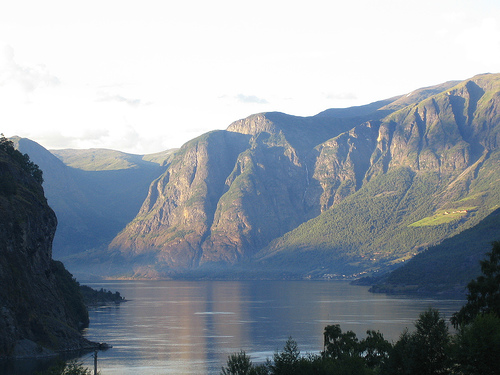
Sunset at Aurlandsfjord, Norway
Ringebu stave church 12th-century
Sunrise over gudbrandsdalen valley
Farms on hillside by Ringebu
Glacier near Styggevatnet, Norway
Glacier near Styggevatnet, Norway
View from the Breheimsenter, Jostedal
Building along the Norwegian coastline
Marina in Balestrand, Norway
Kvikne&rsquos Hotel in Balestrand, the Norwegian coast.
View of mountains near Balestrand, Norway
Boat in Aurlandsfjord


Travel and Tourism
Travel and Tourism
- Travel Alert Status
- Level 1: Exercise Normal Precautions
- Currency
- Norwegian krone (NOK)
- Time Difference
- UTC+1 (6 hours ahead of Washington, DC, during Standard Time)
- Climate
- Many people expect Norway's climate to be bitterly cold. The latitude of the country certainly suggests this would be true. The Arctic Circle cuts through Norway about halfway up the length of the country. Oslo lies in the southern part of the country but is at the same latitude as Anchorage, Alaska. Hammerfest, on the northern tip of the Norwegian mainland, is the world's most northerly town. Still, the climate of cities along the Norwegian coast is much milder than might be expected at such northerly latitudes, even during midwinter, because of the warming effect of the Gulf Stream. Summer in the southern part of the country can last from early May to late August or, in a bad year, for only a week in late June. There are about 20 hours of daylight during June and July in Oslo. (Note: In northern Norway, the midnight sun shines for nearly two months during this period!) Summer days rarely get warmer than 80 F and can be quite cool in the 50s and 60s. Winter brings only about six hours of daylight in Oslo and none in areas north of the Arctic Circle. Snow brightens the landscape considerably, even during the shortest days. However, some people find the darkness oppressive. Norwegians seem to have found numerous ways to combat the depression of winter such as utilizing the many (often lit) cross-country trails and downhill slopes within the Oslo city limits or keeping things cozy and bright inside, using lots of candlelight for cheer and warmth.
- Airports
- 101
Read the full travel guide — health, safety, vaccinations, disease risk, sanitation, and transit details.
View full travel guideRecipes
Recipes
History
History
Historical Eras
Viking Age
793 – 1066
Harald Fairhair unified the Norwegian petty kingdoms around 872, establishing the first Norwegian monarchy. Norse seafarers raided, traded, and settled across Europe, the North Atlantic, and as far as North America, reached by Leif Erikson around 1000. King Olav Tryggvason's conversion to Christianity in 994 and Olav II's subsequent evangelization reshaped Norwegian society, culminating in Olav's martyrdom at Stiklestad in 1030.
Medieval Kingdom
1066 – 1397
Norway consolidated as a Christian kingdom under a succession of Scandinavian rulers, reaching its medieval apex under Haakon IV and Magnus VI in the 13th century, when Norwegian law was codified and Iceland and Greenland came under the crown. The catastrophic Black Death of 1350 killed roughly half the population, decimating the nobility and administrative capacity and severely weakening the kingdom's independence.
Danish Union
1397 – 1814
The Union of Kalmar in 1397 brought Norway, Denmark, and Sweden under one crown; after Sweden's departure in 1523, Norway remained firmly subordinated to Denmark. By 1536–37, Norway was formally reduced to a Danish province, its church reformed to Evangelical Lutheranism under Christian III. Four centuries of Danish rule reshaped Norwegian language, culture, and governance, ending only when the Napoleonic-era Treaty of Kiel ceded Norway to Sweden in 1814.
Swedish Union & Constitution
1814 – 1905
Norwegian patriots drafted a liberal constitution at Eidsvoll on May 17, 1814, asserting self-governance before a Swedish invasion forced a compromise union under the Swedish crown. Norway retained its constitution and Storting, fostering growing national consciousness throughout the 19th century. A peaceful referendum in 1905 dissolved the union, and Danish Prince Carl ascended as King Haakon VII, restoring full Norwegian sovereignty.
World Wars & NATO
1905 – 1949
Independent Norway maintained neutrality during World War I but was nonetheless drawn into the conflict through its large merchant fleet. Nazi Germany invaded in April 1940 despite a declared neutrality; Haakon VII and the government fled into exile while resistance movements fought a five-year occupation. The trauma of occupation extinguished faith in neutrality, leading Norway to become a founding member of NATO in 1949 and of the United Nations, whose first Secretary-General was Norwegian Trygve Lie.
Modern Norway
1949 – present
Post-war Norway rebuilt rapidly under a social democratic model, developing one of the world's most comprehensive welfare states. The discovery of North Sea oil and gas in the late 1960s transformed the economy, with petroleum revenues channeled into the Government Pension Fund to secure long-term prosperity. Norway today ranks consistently among the highest nations in human development and quality of life, while maintaining a prominent role in international diplomacy and the awarding of the Nobel Peace Prize.
Overview
The Norwegian Government offered the throne of Norway to Danish Prince Carl in 1905. After a plebiscite approving the establishment of a monarchy, the Parliament unanimously elected him king. He took the name of Haakon VII, after the kings of independent Norway. Haakon died in 1957 and was succeeded by his son, Olav V, who died in January 1991. Upon Olav’s death, his son Harald was crowned as King Harald V.
Norway was a nonbelligerent during World War I, but as a result of the German invasion and occupation during World War II, Norwegians generally became skeptical of the concept of neutrality and turned instead to collective security. Norway was one of the signers of the North Atlantic Treaty in 1949 and was a founding member of the United Nations. The first UN General Secretary, Trygve Lie, was a Norwegian. Under the terms of the will of Alfred Nobel, the Storting (Parliament) elects the five members of the Norwegian Nobel Committee who award the Nobel Peace Prize to champions of peace.
Timeline of Key Events
700 – 800
Vikings began arriving to the Orkney Islands
Vikings began arriving to the Orkney Islands.
850 – 870
Viking King Harold Fairhair united Norway into one Kingdom
Viking King Harold Fairhair united Norway into one Kingdom.
1000
Leif Erikson discovered North America
Leif Erikson discovered North America.
1015
Olaf II Haraldsson, declared himself King of Norway
Olaf II Haraldsson, declared himself King of Norway after returning from war with the Danes. In time, he converted his people to Christianity.
1028
King Olav II forced to flee Norway
King Olav II forced to flee Norway by Canute, King of England and Denmark; thus Canute the Great became King of Norway.
1030
King Olav II killed at battle of Stiklestad
King Olav II killed at battle of Stiklestad.
1066
Battle of Stampford Bridge
King Harold Godwinson II marched north and attacked the Vikings at the Battle of Stampford Bridge in Yorkshire.
Read the full history profile — narrative overview, defining eras, and the complete timeline in one place.
View expanded historyInteresting Facts
Interesting Facts
When a child loses a tooth they put their tooth in a glass of water when they go to bed. The next morning there are coins in the glass of water.
Olav Haraldsson's body was taken to Trondheim where a cathedral was built over his grave. Trondheim became an important place of pilgrimage.
In the middle of the fourteenth century the Plague (Black Death) swept through Norway killing over a third of the population.
One birthday tradition is the birthday child stands out in front of their class and chooses a friend to share a little dance while the rest of the class sings a happy birthday song.
See every fact — trivia, oddities, and curious tidbits gathered from across the country.
View all interesting factsGeography and Environment
Geography and Environment
- Terrain
- glaciated; mostly high plateaus and rugged mountains broken by fertile valleys; small, scattered plains; coastline deeply indented by fjords; arctic tundra in north
- Climate
- Many people expect Norway's climate to be bitterly cold. The latitude of the country certainly suggests this would be true. The Arctic Circle cuts through Norway about halfway up the length of the country. Oslo lies in the southern part of the country but is at the same latitude as Anchorage, Alaska. Hammerfest, on the northern tip of the Norwegian mainland, is the world's most northerly town. Still, the climate of cities along the Norwegian coast is much milder than might be expected at such northerly latitudes, even during midwinter, because of the warming effect of the Gulf Stream. Summer in the southern part of the country can last from early May to late August or, in a bad year, for only a week in late June. There are about 20 hours of daylight during June and July in Oslo. (Note: In northern Norway, the midnight sun shines for nearly 2 months during this period!) Summer days rarely get warmer than 80°F and can be quite cool—in the 50s and 60s. Winter brings only about 6 hours of daylight in Oslo and none in areas north of the Arctic Circle. Snow brightens the landscape considerably, even during the shortest days. However, some people find the darkness oppressive. Norwegians seem to have found numerous ways to combat the depression of winter such as utilizing the many (often lit) cross-country trails and downhill slopes within the Oslo city limits or keeping things cozy and bright inside, using lots of candlelight for cheer and warmth.
- Natural Hazards
- rockslides, avalanches
- Current Environmental Issues
- water pollution; acid rain damaging forests and adversely affecting lakes, threatening fish stocks; air pollution from vehicle emissions
Read the full geography and environment profile — terrain, climate, natural resources, hazards, land use, and international agreements.
View full geographyPeople & Demographics
People & Demographics
Religion
Languages Spoken
Bokmal Norwegian (official), Nynorsk Norwegian (official)
- Norwegian
Population
- Population
- 4,676,305
- Population in Major Urban Areas
- OSLO (capital) 915,000
- Nationality Noun
- Norwegian(s)
- Ethnic Groups
- Norwegian, Sami 20,000
Education
- Literacy Definition
- age 15 and over can read and write
Read the full people and society profile — demographics, health, education, religion, languages, and notable people.
View full people and societyGovernment & Politics
Government & Politics
Country Identity
- Country Name
- Norway
- Full Country Name
- Kingdom of Norway
- Local - Long
- Kongeriket Norge
- Local - Short
- Norge
Government Structure
- Government Type
- constitutional monarchy
- Legal System
- mixture of customary law, civil law system, and common law traditions; Supreme Court renders advisory opinions to legislature when asked; accepts compulsory ICJ jurisdiction, with reservations
- Executive Branch
- chief of state: King HARALD V (since 17 January 1991); Heir Apparent Crown Prince HAAKON MAGNUS, son of the monarch (born 20 July 1973) head of government: Prime Minister Jonas Gahr STØRE (since 14 October 2021) cabinet: State Council appointed by the monarch with the approval of parliament elections: none; the monarch is hereditary; following parliamentary elections, the leader of the majority party or the leader of the majority coalition is usually appointed prime minister by the monarch with the approval of the parliament
- Legislative Branch
- modified unicameral Parliament or Storting (169 seats; members are elected by popular vote by proportional representation to serve four-year terms) elections: last held 12 September 2005 (next to be held September 2009) election results: percent of vote by party - Labor Party 32.7%, Progress Party 22.1%, Conservative Party 14.1%, Socialist Left Party 8.8%, Christian People's Party 6.8%, Center Party 6.5%, Liberal Party 5.9%, Red Electoral Alliance 1.2%, other 1.9%; seats by party - Labor Party 61, Progress Party 38, Conservative Party 23, Socialist Left Party 15, Christian People's Party 11, Center Party 11, Liberal Party 10 note: for certain purposes, the parliament divides itself into two chambers and elects one-fourth of its membership to an upper house or Lagting
- Judicial Branch
- Supreme Court or Hoyesterett (justices appointed by the monarch)
- Suffrage
- 18 years of age; universal
- Constitution
- 17 May 1814, modified in 1884
- Independence
- 7 June 1905 Norway declared the union with Sweden dissolved; 26 October 1905 Sweden agreed to the repeal of the union
- National Holiday
- Constitution Day, 17 May (1814)
Capital City
- Capital Name
- Oslo
- Capital - geographic coordinate
- 59 55 N, 10 45 E
- Capital Time Difference
- UTC+1 (6 hours ahead of Washington, DC, during Standard Time)
the medieval name was spelt "Aslo"; the as component refered either to the Ekeberg ridge southeast of the town ("as" in modern Norwegian), or to the Aesir (Norse gods); lo refered to "meadow," so the most likely interpretations would have been either "the meadow beneath the ridge" or "the meadow of the gods"; both explanations are considered equally plausible
Military
Branches: Norwegian Army (Haeren), Royal Norwegian Navy (Kongelige Norske Sjoeforsvaret, RNoN; includes Coastal Rangers and Coast Guard (Kystvakt)), Royal Norwegian Air Force (Kongelige Norske Luftforsvaret, RNoAF), Home Guard (Heimevernet, HV)
Embassy / Diplomatic Mission
U.S. Embassy Oslo
Henrik Ibsensgate 48
Telephone: (47) 2244-8550 (24 hours)
Fax: (47) 2256-2751
Read the full government profile — flag symbolism, national anthem, and other national symbols.
View full government detailsEconomy
Economy
The Norwegian economy is a prosperous bastion of welfare capitalism, featuring a combination of free market activity and government intervention. The government controls key areas, such as the vital petroleum sector, through large-scale state enterprises like Equinor. The country is richly endowed with natural resources — petroleum, natural gas, hydropower, fish, forests, and minerals — and remains highly dependent on its energy production and international oil and gas prices. Following the disruption of Russian gas supplies to Europe after 2022, Norway became the largest supplier of natural gas to the European Union, and oil and gas now account for over 60% of total export value. Norway is among the world's top fifteen oil producers and one of the leading exporters of natural gas globally.
Norway opted to stay out of the EU during referendums in 1972 and 1994, though it participates in the European single market through the European Economic Area agreement. With one of the highest qualities of life worldwide and consistently ranking at or near the top of the UN Human Development Index, Norwegians have long prepared for the eventual decline of oil and gas revenues. To that end, the country channels its petroleum surpluses into the Government Pension Fund Global, often called the Oil Fund, which is invested abroad and has grown into the world's largest sovereign wealth fund, valued at approximately $1.7 trillion in 2024.
After contracting during the COVID-19 pandemic, the economy rebounded strongly in 2021 and 2022, buoyed by surging energy prices. Mainland GDP growth slowed to around 0.7% in 2023 amid high inflation and tighter monetary policy, with modest growth expected to continue as inflation eases and the labor market remains resilient.
Snapshot
- Currency Name and Code
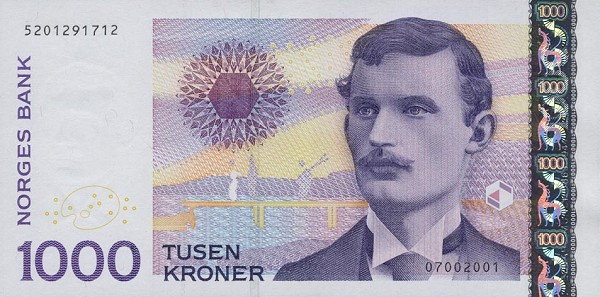
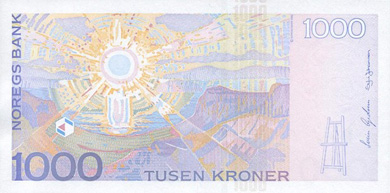
- Norwegian Krone (NOK)
- GDP — official exchange rate
- $246,900,000,000 (USD)
- GDP Real Growth Rate
- 3.9%
- Gini Index
- 25.8
Banknotes
Budget & Public Finance
- Fiscal Year
- calendar year
- Annual Budget
- $131,300,000,000 (USD)
- Public Debt (% of GDP)
- 36%
- External Debt
- $281,000,000,000 (USD)
- Investment (% of GDP)
- 18.6%
- Current Account Balance
- $51,500,000,000 (USD)
- Reserves of Foreign Exchange
- $2,147,483,647 (USD)
Labor, Industry & Trade
- Labor Force by Occupation
- services 74%; industry 22%; agriculture; forestry; and fishing 4%
- Household Income — highest 10%
- 21.8%
- Industries
- petroleum and gas, food processing, shipbuilding, pulp and paper products, metals, chemicals, timber, mining, textiles, fishing
- Agriculture Products
- barley, wheat, potatoes; pork, beef, veal, milk; fish
- Export Commodities
- petroleum and petroleum products, machinery and equipment, metals, chemicals, ships, fish
- Export Partners
- UK 19.4%, Germany 12.4%, France 11.5%, Netherlands 9.3%, US 8.6%, Sweden 7.3%
- Import Commodities
- machinery and equipment, chemicals, metals, foodstuffs
- Import Partners
- Sweden 15.7%, Germany 13.4%, Denmark 8.1%, UK 7.4%, US 6.2%, France 4.8%, Netherlands 4.8%
Energy
- Oil Production
- 3,220,000 bbl/day
- Oil Consumption
- 257,200 bbl/day
- Oil Reserves
- 9,859,000,000 bbl/day
- Natural Gas Production
- 73,400,000,000 cu m
- Natural Gas Consumption
- 4,140,000,000 cu m
- Natural Gas Imports
- 0 cu m
- Natural Gas Exports
- 50,500,000,000 cu m
- Natural Gas Reserves
- 2,118,000,000,000 cu m
Communications
- Telephone System
- general assessment: modern in all respects; one of the most advanced telecommunications networks in Europe domestic: Norway has a domestic satellite system; the prevalence of rural areas encourages the wide use of mobile-cellular systems international: country code - 47; 2 buried coaxial cable systems; submarine cables provide links to other Nordic countries and Europe; satellite earth stations - NA Eutelsat, NA Intelsat (Atlantic Ocean), and 1 Inmarsat (Atlantic and Indian Ocean regions); note - Norway shares the Inmarsat earth station with the other Nordic countries (Denmark, Finland, Iceland, and Sweden)
- Internet Country Code
- .no
News & Weather
News & Weather
Current Weather
Latest News
The lonely road to Europe's Arctic edge - BBC
BBC · 19h ago
Norway’s other World Cup campaign: Getting Israel kicked out of soccer - Politico
Politico · 10d ago
7,000-year-old fish traps show hunter-gatherers brought fish to Norway's mountains centuries before farming - Archaeology News Online Magazine
Archaeology News Online Magazine · 20h ago
NRI Reveals The One Thing That Sets Norway Apart From India, And It's Not Wealth - NDTV
NDTV · 5h ago
Norway: Huge fire destroys 100 homes, sparks evacuations - DW.com
DW.com · 2d ago
The Norwegian case for mediocracy - Financial Times
Financial Times · 3d ago
Spain top new FIFA World Ranking, Norway biggest risers as top 10 reshuffles - Flashscore.com
Flashscore.com · 16h ago
XPENG L03 Launches With Strong German Pricing & Shocking Prices In Norway - CleanTechnica
CleanTechnica · 1d ago
News via Google News
Climate Overview
Many people expect Norway's climate to be bitterly cold. The latitude of the country certainly suggests this would be true. The Arctic Circle cuts through Norway about halfway up the length of the country.
Oslo lies in the southern part of the country but is at the same latitude as Anchorage, Alaska. Hammerfest, on the northern tip of the Norwegian mainland, is the world's most northerly town. Still, the climate of cities along the Norwegian coast is much milder than might be expected at such northerly latitudes, even during midwinter, because of the warming effect of the Gulf Stream.
Summer in the southern part of the country can last from early May to late August or, in a bad year, for only a week in late June. There are about 20 hours of daylight during June and July in Oslo. (Note: In northern Norway, the midnight sun shines for nearly two months during this period!) Summer days rarely get warmer than 80 F and can be quite cool in the 50s and 60s.
Winter brings only about six hours of daylight in Oslo and none in areas north of the Arctic Circle. Snow brightens the landscape considerably, even during the shortest days. However, some people find the darkness oppressive. Norwegians seem to have found numerous ways to combat the depression of winter such as utilizing the many (often lit) cross-country trails and downhill slopes within the Oslo city limits or keeping things cozy and bright inside, using lots of candlelight for cheer and warmth.
Videos
Videos
1 curated YouTube videos.
Source: YouTube
Frequently Asked Questions
Frequently Asked Questions
What is the population of Norway?
How do people greet each other in Norway?
What are the dining customs in Norway?
What etiquette should I know when visiting Norwegians?
How should I dress in Norway?
What gestures are common in Norway?
What is family life like in Norway?
What do Norwegians do for recreation?
What is the capital of Norway?
Where is Norway located?
What countries border Norway?
What is the predominant religion in Norway?
What currency does Norway use?
What languages are spoken in Norway?
What is the geography of Norway like?
What is Norway known for?
Last reviewed 2026