
 English
 Español
 中文
中文 हिन्दी
 Français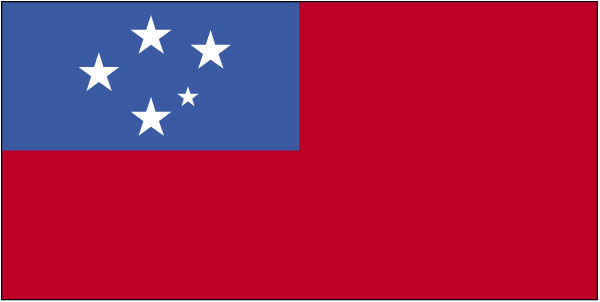
Samoa
Declare Your Relationship to Samoa
CountryReports Community
- Studying0
- From Samoa0
- Samoa heritage0
- Visited0
- Want to visit0
Customs and Culture
Customs and Culture
About the People
Samoans approach life in a friendly and playful way, with a strong sense of 'fa'a Samoa' or 'the Samoan way'. This indicates a relaxed way of life with respect for family and tradition. Qualities of respect, cooperation, consensus, a sense of humor, hospitality are all valued highly. The individual gives way for the good of the group. Sharing is more prized than ownership. Oral skills are praised and cultivated, and people tend to solve disputes through verbal negotiation.
Cultural Attributes
Samoans approach life in a friendly and playful way, with a strong sense of 'fa'a Samoa' or 'the Samoan way'. This indicates a relaxed way of life with respect for family and tradition. Respect, cooperation, consensus, a sense of humor, and hospitality are all valued highly. The individual gives way for the good of the group. Sharing is more prized than ownership. Oral skills are praised and cultivated, and people tend to solve disputes through verbal negotiation.

Island of the Fa'a Samoa
Greetings, Gestures & Visiting
Family and friends usually hug and kiss on the cheek. Others are greeted with a handshake and a warm smile, or by raising the eyebrows and smiling. First names are used for friends, but strangers or community leaders are greeted respectfully by a title. Professional people or chiefs can be greeted by Lau Susuga. Before opening a conversation, Samoans may say: Susu mai or Afio mai meaning 'Welcome'.
Hand gestures are used dramatically in oratory speech, it not generally to accompany conversation. Beckoning by waving all fingers with palm down is reserved for small children. Samoans point with the chin, as pointing with the index finger is rude. Lifting the eyebrows signals 'yes', while furrowing the brow indicates 'no'. Scratching the head during conversation is a hostile gesture, expressing inferiority, uncertainty or shyness. If walking in front of someone, Samoans may bow from the waist. Public display of physical affection between the sexes is generally regarded as inappropriate.
When entering a Samoan home, wait until the mats have been spread upon the floor before entering. Leave your shoes at the door and then sit cross-legged on the mat. Conversation takes place once you are seated. The national beverage of Samoa is "kava" and it is appropriate to rop a few drops of it on the ground before drinking it.
Visiting people takes place in the home, on the road or at church. Women visit while weaving, making handicrafts. Visiting unannounced is common, and people may stay till long into the night.
When a guest enters the home, the host makes a speech of welcome and the guest makes a formal response. The best floor mats are laid out for visitors in traditional homes. It is customary to leave shoes outside, and sit cross-legged on the mat. Legs should be tucked behind the person. Legs should only be stretched out if they are covered properly, and pointing feet at someone is rude. Refreshments such as coconut, biscuits and soft drinks may be served. Speaking to someone in the home while standing, is considered impolite.
Traditional attire is still commonly worn in Samoa, though Western clothing is gaining popularity. Men wear a straight wraparound lavalava along with a shirt. A shirt with pockets and a lavalava may be worn to church or official gatherings. It is forbidden for women to wear pants except in athletic events. Women wear a puletasi (short skirt over a longer dress) or a muumuu (wraparound skirt). Women style their hair in a bun with a stick securing it. Rubber flip-flops or sandals are the common footwear. People tend to take pride in neat, well-pressed clothing.
Diet
The original staple food was taro, but it was destroyed by blight. It has been replaced by a larger root called ta'amu, green bananas and yams. Rice, seafood and breadfruit are other basic foods. Coconut cream (Pe'epe'e) is popular as a sauce. The traditional underground oven umu is still used for ceremonial occasions.
Samoan cuisine reflects the islands' Pacific heritage, with food playing a central role in cultural ceremonies, family gatherings, and daily life. Meals are typically communal affairs, and hospitality toward guests is considered a fundamental social obligation.
The foundation of the Samoan diet is built around starchy staples such as taro, breadfruit, bananas, and coconuts. These are complemented by fresh fish, shellfish, and other seafood caught from surrounding Pacific waters. Pork and chicken are the most commonly eaten meats, while beef is reserved for more significant occasions. Coconut cream, known locally as pe'epe'e or used broadly as supo esi, appears in many dishes as a cooking base and flavor enhancer.
One of the most iconic elements of Samoan dining is the umu, a traditional earth oven in which food is cooked on hot volcanic stones. The umu is typically prepared on Sundays and for feasts, with whole families coming together for the preparation process. Foods such as taro leaves wrapped around coconut cream and meat, called palusami, are classic umu dishes and considered a national staple.
Chop suey, introduced through Chinese and broader Pacific migration influences, has become widely popular and is a common feature at family feasts and celebrations. Similarly, canned corned beef, locally called pisupo, has been absorbed into everyday cooking since its introduction during the colonial era and remains a widely consumed ingredient.
Koko Samoa, a thick and slightly bitter hot chocolate made from locally grown cacao, is the traditional national drink and is consumed daily by many Samoans, often alongside bread or crackers at breakfast. Cocoa farming remains an important part of Samoan agriculture, and locally produced koko carries cultural significance beyond its role as a simple beverage.
Fresh fruit is abundant, with papaya, mango, and pineapple widely available. Market stalls and small roadside vendors are common throughout Apia, the capital, offering fresh produce, cooked snacks, and local favorites at accessible prices.

Family
Children are taught to respect their elders, avoid shaming their families, and sustain the culture. They are expected to support their parents when they are old. However, if both parents work outside the home, grand-parents care for the grand-children. Discipline is strict; an adult relative may freely scold a child as required. In the extended family, a male or female chief holds authority. The matai (chief) is selected based on loyalty and service to the group. This hierarchy is the basis of Samoan social and political life. A Samoan village is typically made up of several families. Each matai is responsible for the well-being of each member of the village group.
Dating Customs
Samoan youth generally meet at church activities or in the village. Dating as in the Western world is not shared. Messages may be sent back and forth through a friend. Wedding receptions are extravagant affairs, with a large party and plentiful food, singing, dance and speeches. After the reception, the tradition is for the bride's family to offer mats (ulumoeaga) to the groom's family. The groom's family reciprocates with money at least equal to the value of the mats.
Recreation
Rugby football is a popular sport. Entire villages sometimes play kirikiti, which is similar to cricket but involves teams of unrestricted size; games are social and sporting events. Samoans have used outrigger canoes since establishing their first island settlements. Most canoes are confined to lagoons, but many are paddled in ocean races. Footracing, cockfighting, tiak (darts), and spear throwing are also traditional sports.
Holidays
Independence Day Celebration
6/1Independence
1 January 1962 is the date of independence from the New Zealand-administered UN trusteeship, 1 June 1962 is the date that independence is celebrated
Dates of Interest
- June 1st
Fiafia Night is a cultural dinner and entertainment experience offered at resorts and hotels throughout Samoa. Visitors can enjoy a buffet of traditional Samoan cuisine, including roasted pig (umu), fresh seafood, taro, and tropical fruits, accompanied by live music, dance performances, and fire dancing.
How do people greet each other in Samoa?
Family and friends hug and kiss on the cheek, while others are greeted with a handshake and warm smile, or by raising the eyebrows and smiling. Strangers and community leaders are addressed respectfully by title.
Do
- Use first names for friends
- Address chiefs or professionals with a title like Lau Susuga
- Say 'Susu mai' or 'Afio mai' ('Welcome') before opening a conversation
Good to know
- Raising eyebrows with a smile is a friendly way to greet someone
What are dining customs like in Samoa?
Meals are communal and central to family life and ceremonies, with hospitality toward guests considered a fundamental social obligation. Staples include taro, breadfruit, bananas, coconut and fresh seafood.
Do
- Enjoy classic dishes like palusami (taro leaves with coconut cream and meat)
- Try Koko Samoa, the traditional national drink
- Drop a few drops of kava on the ground before drinking it
Good to know
- The umu (earth oven) is used on Sundays and for feasts, with whole families joining preparation
- Chop suey and pisupo (corned beef) are common at family feasts
- Market stalls and roadside vendors in Apia offer fresh produce and cooked snacks
What etiquette should I know when visiting a Samoan home?
Wait until the mats are spread before entering, leave your shoes at the door and sit cross-legged on the mat. The host makes a welcome speech and the guest gives a formal response.
Do
- Leave shoes outside the door
- Sit cross-legged with legs tucked behind you
- Wait to be seated before beginning conversation
Don’t
- Don't speak while standing in the home
- Don't stretch out your legs unless they are properly covered
- Don't point your feet at anyone
Good to know
- Best floor mats are laid out for visitors in traditional homes
- Refreshments like coconut, biscuits and soft drinks may be served
- Visiting unannounced is common, and guests may stay late into the night
How should I dress in Samoa?
Traditional attire is still common, with men wearing a wraparound lavalava and shirt, and women wearing a puletasi or muumuu. People take pride in neat, well-pressed clothing.
Do
- Wear a shirt with pockets and a lavalava for church or official gatherings
- Wear rubber flip-flops or sandals as everyday footwear
Don’t
- Women should not wear pants except in athletic events
Good to know
- Western clothing is gaining popularity
Which gestures matter in Samoa?
Gestures carry strong meaning: lifting the eyebrows means 'yes' and furrowing the brow means 'no'. Samoans point with the chin rather than the index finger.
Don’t
- Don't point with your index finger
- Don't beckon adults by waving fingers palm down (reserved for small children)
- Don't scratch your head during conversation, as it is a hostile gesture
- Avoid public displays of affection between the sexes
Good to know
- Bow from the waist if walking in front of someone
What is family life like in Samoa?
Family and hierarchy are central, with children taught to respect elders and support parents in old age. A matai (chief), chosen for loyalty and service, holds authority over the extended family and village.
Good to know
- Grandparents care for grandchildren when both parents work
- Discipline is strict, and an adult relative may freely scold a child
- A village is typically made up of several families, each led by a matai
- Youth generally meet at church activities or in the village
What sports and recreation are popular in Samoa?
Rugby football is popular, and entire villages sometimes play kirikiti, a cricket-like game with teams of unrestricted size. Traditional pastimes include canoe racing and more.
Good to know
- Kirikiti games are social as well as sporting events
- Outrigger canoes are paddled in ocean races
- Footracing, cockfighting, tiak (darts) and spear throwing are traditional sports
Last updated: 2026-07-12 · Sources: CountryReports
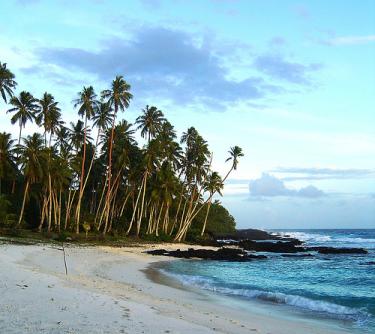
Photos of Samoa
Photos of Samoa


Travel and Tourism
Travel and Tourism
- Travel Alert Status
- Level 1: Exercise Normal Precautions
- Currency
- tala (SAT)
- Time Difference
- UTC+13 (18 hours ahead of Washington, DC, during Standard Time)
- Climate
- Samoa's proximity to the Equator results in hot and humid conditions throughout most of the year. There are two distinct seasons, the dry season (winter) between May and October and the wet season (summer) between November and April. The average annual temperature is 26.5 °C in coastal areas, with a decrease in temperature as the land rises inland. Southeasterly trade winds make April to October the more pleasant months. Samoa lies in the cyclone belt and is periodically buffeted and bruised by cyclones, the majority of which occur between November and April.
- Airports
- 4
Read the full travel guide — health, safety, vaccinations, disease risk, sanitation, and transit details.
View full travel guideRecipes
Recipes
Creamed Breadfruit Vegetable Dish With Meat
Side Dish
Main Dish
Palusami (Coconut Cream Baked in Taro Leaves)
Main Dish
Oka (Mussels or Fish)
Main Dish
Koko Araisa (Cocoa Rice)
Main Dish
Pani Popo (Samoan Rolls)
Main Dish
Pisupo (Corned Beef Wrapped in Taro Leaves)
Side Dish
Creamed Breadfruit Vegetable Dish With Meat
History
History
Historical Eras
Polynesian Settlement
1000 BCE – 1722
Migrants from Southeast Asia arrived in the Samoan archipelago over 3,000 years ago, establishing one of the cradles of Polynesian civilization. From these islands, voyagers spread eastward to settle much of the Pacific. Samoan society developed complex chiefly systems, oral traditions, and a distinctive culture centered on the concept of fa'asamoa — the Samoan way.
European Contact
1722 – 1899
Dutch navigator Jacob Roggeveen became the first European to sight Samoa in 1722, followed by French and British explorers later in the century. English missionaries and traders arrived in the 1830s, profoundly reshaping religious and economic life. Rival European powers — Britain, Germany, and the United States — competed for influence throughout the 19th century, culminating in the 1899 Tripartite Convention that divided the islands.
German Colonial Era
1899 – 1914
Following the 1899 partition, Germany formally annexed Western Samoa and governed it as a colonial protectorate. German administration introduced plantation agriculture, particularly copra production, and imposed significant economic and political changes on indigenous Samoans. The Mau resistance movement had early roots in this period as Samoans chafed under foreign rule.
New Zealand Administration
1914 – 1962
New Zealand occupied Western Samoa at the outbreak of World War I in 1914 and subsequently governed it under a League of Nations mandate and later a UN trusteeship. The period was marked by the devastating 1918 influenza pandemic, which killed roughly 20% of the population, and the Mau nonviolent independence movement, which suffered its darkest moment on Black Saturday in 1929 when New Zealand police killed paramount chief Tupua Tamasese Lealofi III.
Independence & Nation-Building
1962 – 1997
On January 1, 1962, Western Samoa became the first Pacific Island nation to gain independence in the 20th century, with Malietoa Tanumafili II and Tupua Tamasese Mea'ole serving as joint heads of state. The new constitutional framework uniquely blended parliamentary democracy with traditional Samoan chiefly governance, requiring most voters and candidates to hold matai (chiefly) titles. The country joined the United Nations in 1976 and steadily built its international relationships.
Modern Samoa
1997 – present
In 1997 the constitution was amended to officially shorten the country's name from Western Samoa to simply Samoa, reflecting its identity as the cultural heartland of the Samoan people. The death of Malietoa Tanumafili II in 2007 ended the last lifetime head-of-state tenure, transitioning the role to a five-year elected term. Samoa continues to navigate challenges of climate vulnerability, emigration, and economic development while maintaining strong cultural traditions.
Overview
In July 1997 the Constitution was amended to change the country’s name from Western Samoa to Samoa. Samoa had been known simply as Samoa in the United Nations since joining the organization in 1976. The neighboring U.S. territory of American Samoa protested the move, feeling that the change diminished its own Samoan identity. American Samoans still use the terms Western Samoa and Western Samoans.
Timeline of Key Events
1722
Dutch navigator Jacob Roggeveen is the first European to explore Samoa.
Dutch navigator Jacob Roggeveen is the first European to explore Samoa.
1899
Germany annexes Western Samoa.
Germany annexes Western Samoa, the US takes over eastern Samoa and Britain withdraws its claim to the islands in accordance with treaty between Germany, Britain and the US.
1914
New Zealand occupies Western Samoa during World War I.
New Zealand occupies Western Samoa during World War I and continues to administer it after the war by virtue of a League of Nations mandate (and a United Nations mandate after World War II).
1939 – 1945
US troops stationed in Western Samoa during World War II.
US troops stationed in Western Samoa during World War II, but no battles are fought on the islands.
1962
Western Samoa becomes independent, the first Pacific island nation to do so.
Western Samoa becomes independent, the first Pacific island nation to do so.
1962
Western Samoa becomes independent, the first Pacific island nation to do so.
Western Samoa becomes independent, the first Pacific island nation to do so.
1997
Western Samoa changes its name to Samoa.
Western Samoa changes its name to Samoa, a move which causes some tension with American Samoa.
Read the full history profile — narrative overview, defining eras, and the complete timeline in one place.
View expanded historyInteresting Facts
Interesting Facts
Evidence suggests that Samoa has been inhabited for over three thousand years.
In 2009, Samoa switched to driving on the left side of the road. The government brought about the change to bring Samoa in line with other South Pacific countries.
See every fact — trivia, oddities, and curious tidbits gathered from across the country.
View all interesting factsGeography and Environment
Geography and Environment
- Terrain
- two main islands (Savaii, Upolu) and several smaller islands and uninhabited islets; narrow coastal plain with volcanic, rocky, rugged mountains in interior
- Climate
- Samoa's proximity to the Equator results in hot and humid conditions throughout most of the year. There are two distinct seasons, the dry season (winter) between May and October and the wet season (summer) between November and April. The average annual temperature is 26.5 °C in coastal areas, with a decrease in temperature as the land rises inland. Southeasterly trade winds make April to October the more pleasant months. Samoa lies in the cyclone belt and is periodically buffeted and bruised by cyclones, the majority of which occur between November and April.
- Natural Hazards
- occasional typhoons; active volcanism
- Current Environmental Issues
- soil erosion, deforestation, invasive species, overfishing
Read the full geography and environment profile — terrain, climate, natural resources, hazards, land use, and international agreements.
View full geographyPeople & Demographics
People & Demographics
Religion
Languages Spoken
Samoan (Polynesian), English
- English
- Samoan
Population
- Population
- 192,001
- Population in Major Urban Areas
- APIA (capital) 37,000
- Nationality Noun
- Samoan(s)
- Ethnic Groups
- Samoan 92.6%, Euronesians 7% (persons of European and Polynesian blood), Europeans 0.4%
- Language Note
- Samoan is probably the oldest Polynesian language, and it is the official language of both Independent Samoa and American Samoa. English is the second official language. Samoans are proud of their language.
Education
- Literacy Definition
- age 15 and over can read and write
Read the full people and society profile — demographics, health, education, religion, languages, and notable people.
View full people and societyGovernment & Politics
Government & Politics
Country Identity
- Country Name
- Samoa
- Full Country Name
- Independent State of Samoa
- Former Name
- Western Samoa
Government Structure
- Government Type
- constitutional monarchy under native chief
- Legal System
- based on English common law and local customs; judicial review of legislative acts with respect to fundamental rights of the citizen; has not accepted compulsory ICJ jurisdiction
- Executive Branch
- chief of state: Head of State Tuimalealiifano Va'aletoa Sualauvi II (since 21 July 2017); note - upon the death of Chief Tanumafili II Malietoa on 11 May 2007, the Legislative Assembly elected a new head of state; the position is now elected by the Legislative Assembly for a five-year term head of government: Prime Minister Fiame Naomi Mata'afa (since 24 May 2021); note - Fiame Naomi Mata'afa is Samoa's first female prime minister, having led the Fa'atuatua i le Atua Samoa ua Tasi (FAST) party to a narrow election victory; former long-serving Prime Minister Sailele Malielegaoi Tuilaepa, who had held office since 1998, conceded defeat following a ruling by the Supreme Court confirming the election result cabinet: Cabinet consists of no more than 12 members, appointed by the head of state on the advice of the prime minister elections: the head of state is elected by the Legislative Assembly for a five-year term; following legislative elections, the leader of the majority party or coalition is usually appointed prime minister by the head of state with the approval of the Legislative Assembly
- Legislative Branch
- unicameral Legislative Assembly or Fono (49 seats - 47 elected by voters affiliated with traditional village-based electoral districts, 2 elected by independent, mostly non-Samoan or part-Samoan, voters who cannot, (or choose not to) establish a village affiliation; only chiefs (matai) may stand for election to the Fono from the 47 village-based electorates; members serve five-year terms) elections: election last held 3 March 2001 (next election to be held not later than March 2006) election results: percent of vote by party - NA%; seats by party - HRPP 30, SNDP 13, independents 6
- Judicial Branch
- Supreme Court; Court of Appeal; Land and Titles Court
- Suffrage
- 21 years of age; universal
- Constitution
- 1-Jan-62
- Independence
- 1 January 1962 (from New Zealand-administered UN trusteeship)
- National Holiday
- Independence Day Celebration, 1 June (1962); note - 1 January 1962 is the date of independence from the New Zealand-administered UN trusteeship, 1 June 1962 is the date that independence is celebrated
Capital City
- Capital Name
- Apia
- Capital - geographic coordinate
- 13 49 S, 171 46 W
- Capital Time Difference
- UTC+13 (18 hours ahead of Washington, DC, during Standard Time)
name derives from the native village around which the capital was constructed in the 1850s; the village still exists within the larger modern capital
Military
Branches: no regular military forces; Samoa Police Force
Embassy / Diplomatic Mission
The U.S. Embassy in Apia
Accident Compensation Corporation Building (ACB)
Fifth Floor
P.O. Box 3430
Apia, Samoa
Ph: +685 21436
Emergency after-hours telephone: (685) 777-1776
Fax: +685 22030
The Embassy is open for public inquiries from 9:00 – 11:00 am, Monday – Friday, and by appointment.
Read the full government profile — flag symbolism, national anthem, and other national symbols.
View full government detailsEconomy
Economy
Samoa's economy has traditionally depended on development aid, family remittances from overseas, agriculture, and fishing. The country remains highly vulnerable to natural disasters, including cyclones, tsunamis, and the effects of climate change. Agriculture employs roughly two-thirds of the labor force and contributes a significant share of exports, with key products including coconut cream, coconut oil, copra, nonu (noni) fruit and juice, taro, and fish. The manufacturing sector is small and primarily processes agricultural products, although the Yazaki automotive components plant historically played a major role before its closure in 2017.
Tourism has become the largest source of foreign exchange, typically accounting for around 20 to 25 percent of GDP and welcoming over 200,000 visitors annually in pre-pandemic years. The sector was severely impacted by COVID-19 border closures, but has been recovering steadily since Samoa reopened to international travelers in 2022. Remittances from Samoans living abroad, particularly in New Zealand, Australia, and the United States, remain a vital pillar of household income and consistently represent more than 20 percent of GDP.
The Samoan government continues to pursue financial sector reform, encourage foreign investment, maintain fiscal discipline, and prioritize environmental sustainability and climate resilience. Challenges include declining fish stocks, exposure to external shocks, a narrow export base, and high public debt, much of it owed to China. Foreign reserves remain at adequate levels, inflation has eased after global price pressures in 2022–2023, and GDP growth has rebounded strongly with the return of tourism.
Snapshot
- Currency Name and Code
- Tala (WST)
- GDP Real Growth Rate
- 5%
Banknotes
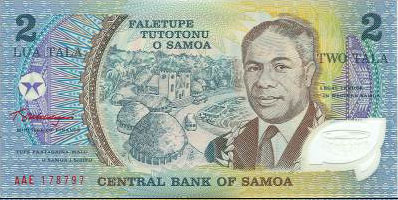
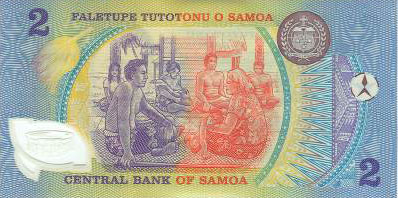
Budget & Public Finance
- Fiscal Year
- June 1 - May 31
- Annual Budget
- $119,000,000 (USD)
- External Debt
- $197,000,000 (USD)
- Economic Aid
- $42,900,000 (USD)
Labor, Industry & Trade
- Industries
- food processing, building materials, auto parts
- Agriculture Products
- coconuts, bananas, taro, yams, coffee, cocoa
- Export Commodities
- fish, coconut oil and cream, copra, taro, automotive parts, garments, beer
- Export Partners
- Australia 61%, Hong Kong 10.4%, US 9.1%
- Import Commodities
- machinery and equipment, industrial supplies, foodstuffs
- Import Partners
- New Zealand 23.7%, Fiji 20.9%, Australia 16.4%, Japan 13.6%, US 4.5%
Energy
- Oil Production
- 0 bbl/day
- Oil Consumption
- 1,000 bbl/day
- Oil Reserves
- 0 bbl/day
- Natural Gas Production
- 0 cu m
- Natural Gas Consumption
- 0 cu m
- Natural Gas Imports
- 0 cu m
- Natural Gas Exports
- 0 cu m
- Natural Gas Reserves
- 0 cu m
Communications
- Telephone System
- general assessment: adequate domestic: combined fixed-line and mobile-cellular teledensity roughly 100 telephones per 100 persons international: country code - 685; satellite earth station - 1 Intelsat (Pacific Ocean)
- Internet Country Code
- .ws
News & Weather
News & Weather
Current Weather
Latest News
Trump Administration Announces American Samoa Deep-Sea Mining Lease Sale - Earthjustice
Earthjustice · 4d ago
The US plans to auction off sections of water around American Samoa in a push for deep-sea mining - AP News
AP News · 3d ago
Australia, New Zealand and American Samoa compete for WBSC U-15 Women's Softball World Cup berth - World Baseball Softball Confederation (WBSC)
World Baseball Softball Confederation (WBSC) · 16h ago
Press Release: Amata Reaffirms Opposition to Seabed Mining in American Samoa Waters - Quiver Quantitative
Quiver Quantitative · 9h ago
US government announces plans to lease deep-sea mining rights in American Samoa - news - Mongabay
news - Mongabay · 3d ago
USGS: M5.0 earthquake hits 141 km SSW of Gataivai, Samoa - news.cgtn.com
news.cgtn.com · 7h ago
Feds propose first mining leases off coast of American Samoa - E&E News by POLITICO
E&E News by POLITICO · 4d ago
Deep-sea mining plan off American Samoa draws criticism - Hawaii News Now
Hawaii News Now · 4d ago
News via Google News
Climate Overview
Samoa's proximity to the Equator results in hot and humid conditions throughout most of the year. There are two distinct seasons, the dry season (winter) between May and October and the wet season (summer) between November and April. The average annual temperature is 26.5 °C in coastal areas, with a decrease in temperature as the land rises inland. Southeasterly trade winds make April to October the more pleasant months. Samoa lies in the cyclone belt and is periodically buffeted and bruised by cyclones, the majority of which occur between November and April.
Videos
Videos
2 curated YouTube videos.
Source: YouTube
Source: YouTube
Frequently Asked Questions
Frequently Asked Questions
What is the population of Samoa?
How do people greet each other in Samoa?
What are dining customs like in Samoa?
What etiquette should I know when visiting a Samoan home?
How should I dress in Samoa?
Which gestures matter in Samoa?
What is family life like in Samoa?
What sports and recreation are popular in Samoa?
What is the capital of Samoa?
Where is Samoa located?
What ocean and seas surround Samoa?
What is the predominant religion in Samoa?
What is the currency of Samoa?
What languages are spoken in Samoa?
What is Samoa known for?
How long has Samoa been inhabited?
Last reviewed 2026