
 English
 Español
 中文
中文 हिन्दी
 Français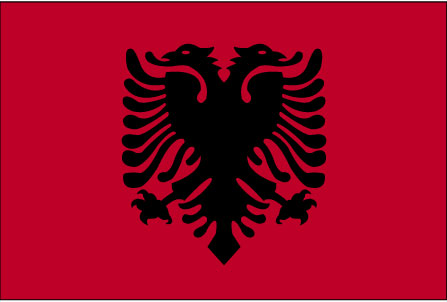
Albania
Shqiperia
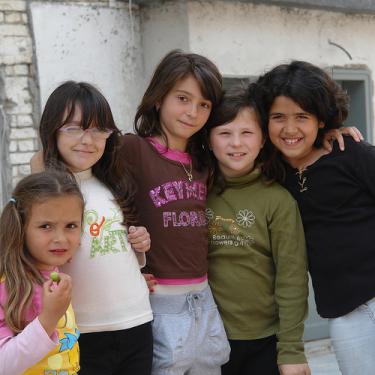
Declare Your Relationship to Albania
CountryReports Community
- Studying1
- From Albania0
- Albania heritage2
- Visited1
- Want to visit3
Customs and Culture
Customs and Culture
About the People
For Albanians, the family and ethnic heritage is of high value. Personal honor is also valued. Northern Albanians, particularly in the mountains, are known to be resourceful, courageous and hardy. They honor a tradition called the besa, (sworn truce). Continued social and economic turmoil has wearied the people.
Cultural Attributes
Northern Albanians are known to be resourceful. They honor a tradition called the "besa", (truce). For Albanians, the family and ethnic heritage are of high value. Personal honor is also valued. Social and economic turmoil has impacted the people over the past decades.

Land of the Eagles and Mountain Honor
Greetings, Gestures & Visiting
Albanians greet each other with a handshake. Women greet with a kiss on each cheek. Except for friends, the Albanians use Zonja (Mrs), Zonjusje (Miss), or Zoteri (Mr).
Albanians frequently use their hands and heads when interacting with someone.
In Albania, there are several customs and cultural norms relating to visiting that reflect hospitality, respect, and social etiquette. Here are some customs and practices associated with visiting in Albanian culture:
Warm Hospitality: Albanians are known for their warm hospitality and welcoming nature. When visiting someone's home, expect to be greeted with genuine warmth and hospitality. Guests are often considered a blessing, and hosts go out of their way to make visitors feel comfortable and valued.
Offering Refreshments: It is customary for hosts to offer refreshments to their guests. This usually includes traditional Albanian coffee (kafe turke) or tea, accompanied by snacks such as pastries, cookies, or fruit. Accepting these offerings is a sign of appreciation and respect.
Removing Shoes: It is common practice to remove your shoes upon entering someone's home in Albania. Guests are expected to take off their shoes at the entrance or upon the host's request. This gesture shows respect for the cleanliness of the home.
Bringing Gifts: Bringing a small gift for the host is considered a thoughtful gesture when visiting an Albanian home. It can be something simple such as flowers, chocolates, or a token of appreciation. The gift is typically presented upon arrival.
Dressing Respectfully: Albanians value modesty and respect in appearance. When visiting someone's home, it is appreciated to dress modestly and neatly. Avoid wearing overly casual or revealing attire, especially if visiting for a formal occasion or meeting elders.
Prolonged Farewells: In Albanian culture, saying goodbye can be a prolonged process. Expect multiple rounds of farewell greetings, expressions of gratitude, and well wishes before leaving. It is considered polite to show appreciation for the hospitality and to express your desire to visit again.
Observing Elders and Host's Guidance: Respect for elders is an important aspect of Albanian culture. When visiting someone's home, pay special attention to the guidance and instructions of the host, particularly if there are older family members present. Showing deference and following their lead is highly valued.
Communication and Engagement: Engaging in conversation and socializing is an integral part of Albanian visits. Guests are expected to actively participate in discussions, share stories, and show interest in the lives of the hosts. Polite and friendly conversation contributes to the overall enjoyment of the visit.
Time and Punctuality: Albanians generally have a more relaxed approach to time and punctuality, and visits can be flexible in terms of duration. However, it is still important to be respectful of the agreed-upon meeting time or approximate schedule discussed with the host.
Expressing Gratitude: After the visit, it is customary to express gratitude and appreciation to the host for their hospitality. A phone call, a thank-you note, or a small gift as a follow-up gesture is often appreciated.
Young people wear Western-style clothing. Traditional, hand-made clothing is still worn in villages. Cotton and wool are preferred. Women in the north wear a headscarf and a "fustancelle" (multi-colored dress). Men wear a "xhamadan" (vest made from wool).
Urban professional men wear suits and ties, while women wear dresses and skirts more than pants.
Diet
The Albanian diet is strongly influenced by Greek, Turkish and Italian cuisine. Traditional dishes include fasule (boiled dried beans) cooked with onion, tomatoes and dried salt mutton or pasterma. Dairy products include yogurt, cottage cheese, feta and kach kavall cheeses. Local fruits include apples, pears, peaches, figs and grapes. The alcoholic drink raki is often served before the main meal, and wine is served during or after a meal. Burek (bread stuffed with cheese and spinach) common throughout the region probably originated in Albania. “Akullore” or ice-cream is also popular, and Albanians living elsewhere are well known as ice-cream vendors.
Breakfast is usually bread and jam with tea and milk and sometimes eggs. The midday meal is the main meal of the day.
An Albanian breakfast consists of bread and butter, milk, eggs, jam, cheese and Turkish or espresso coffee. Lunch is usually the main meal, (1-2 pm). Vegetables are followed by rice soup flavor with veal or chicken, and salad. The main course may be gjelle (boiled beans with meat) or stuffed eggplants or peppers. Albanians eat with a fork in the left hand and a knife in the right hand. The first toast is made to everyone's health and friendship.
The Albanian diet is strongly influenced by Greek, Turkish and Italian cuisine. Traditional dishes include fasule (boiled dried beans) cooked with onion, tomatoes and dried salt mutton or pasterma. Dairy products include yogurt, cottage cheese, feta and kach kavall cheeses. Local fruits include apples, pears, peaches, figs and grapes. The alcoholic drink raki is often served before the main meal, and wine is served during or after a meal. Burek (bread stuffed with cheese and spinach) common throughout the region probably originated in Albania. “Akullore” or ice-cream is also popular, and Albanians living elsewhere are well known as ice-cream vendors.

Family
Men and women have equal social rights, and both parents usually work. Adult children often live with their parents and take responsibility for the care of the elderly parents.
Albanian society was once governed by a set of rules known as the Code of Leke Dukagjini, drawn up in the 15th century. The Code established rules for land ownership, marriages, and dowries, even hospitality. Under the Code, men were the heads of their families, and women were expected to obey them.
Traditional Albanian houses have a ground floor that is used for storage or, in rural areas, to house animals. The upper floor is the family's living quarters with a fireplace for cooking, an eating area, and two or three bedrooms. In urban areas, a third floor may be added for sleeping quarters and for entertaining friends and family.
Many traditional houses have a loom, which is kept in a room close to the kitchen. The loom is used to weave wool from sheep and goats into clothing, carpets, and blankets. Clothing is also made from cotton and linen grown in the lowlands.
Dating Customs
Young people are able to select their own spouses. In some places, families are involved in the spouse selection. Traditionally a bride gives her mother-in-law a "qilim", a carpet woven either by her or her mother.
Recreation
Soccer is the most popular sport in Albania. Swimming in the Adriatic Sea on hot summer days is a favorite activity. Albania has many uncrowded, beautiful beaches. Sarande, the largest seaport, has the best beaches in the country and is a great place for water sports and boating. The many lakes in Albania also allow for good fishing. In Tirana, families enjoy visiting the National Park (Parku Kombetar), which has an artificial lake and a zoo.
Children play a variety of games, including skipping rope, tag, and hide and seek. Boys play soccer anytime and anywhere. A finger game that children like is "Fly, Fly, Fly". The children put their index fingers on a table. They take turns saying a word. If the word represents something that flies, such as a wasp or a bird, the children must raise their fingers. If the word is something that does not fly, such as potato or book, and one of the children mistakenly raises a finger, then he or she must do a penalty, such as hop on one foot 12 times.
Holidays
Independence Day
8/19Independence Day
Christmas
12/25Christmas
Albania is a nation that is classified as mostly non-religious since there is no dominant religion that sets the culture of the celebrations for Christmas in the country. Hence, there is a freedom for Christians to celebrate with fervor and excitement the occasion of Christmas.
About 40 percent of Albanians are Christian. Traditionally, Christmas is one of the biggest festivals that is celebrated by the local community in the area. A traditional Christmas greeting of the Albanians for the season is “Gezur Krislinjden,’ pronounced ‘geh-zhurcris-lin-den.’
The country is situated in southeastern Europe. Thus, the name of Santa Claus is well known in the country. Saint Nicholas is a name they often call the long white bearded figure and symbol of Christmas that give gifts to little children from all over.
Children in the country believe that if they do something good for others, they will be repaid when Saint Nicholas comes during Christmas Eve. Traditions are for the children to place their shoes outside their bedroom doors or stockings by their windows during Christmas Eve. In the morning when they wake up their shoes or stockings would be filled with sweets and candies and little toys.
Christmas starts when the month of December begins. Tradition during this time is for the Albanians to decorate their homes with garlands, glitter and lights that sparkle and give an aura of joy and life. Christmas caroling is also a primary tradition during this time as concerts and sing-along choirs are singing in every corner.
The season officially ends when the New Year celebrations are over. The Yuletide season ends with fireworks and dancing until the wee hours of the morning. In some areas, the season ends when the Feast of Epiphany is over.
The traditional Midnight Mass is also available and most often is attended by the thousands of Christians in the country. The gift giving tradition is also observed during both Christmas Eve and Christmas Day.
A traditional feast is part of the celebrations of every family in the country. Dishes like roast turkey, French pies, salads, meat dishes, and Bakllava are prepared.
Christmas trees are most abundant in the shops and malls of the country. Christmas ribbons, ceramic ornaments and embroidered crocheted Christmas figures are widely used as decorations in the Christmas tree.
Dates of Interest
- November 28th
This festival takes place in Kruja, the birthplace of Albania's national hero, Gjergj Kastrioti Skanderbeg. It commemorates Skanderbeg's legacy through historical reenactments, traditional music, dance, medieval tournaments, and cultural exhibitions.
How do people greet each other in Albania?
Albanians greet with a handshake, while women greet with a kiss on each cheek. Titles are used except among friends.
Do
- Shake hands when greeting
- Use Zonja (Mrs), Zonjusje (Miss), or Zoteri (Mr) except with friends
- Expect women to greet with a kiss on each cheek
What are dining customs like in Albania?
Lunch (around 1-2 pm) is the main meal, often starting with vegetables, rice soup with veal or chicken, and salad, followed by dishes like gjelle or stuffed eggplants and peppers. Raki is served before the meal and wine during or after.
Do
- Eat with the fork in your left hand and the knife in your right
- Join the first toast, made to everyone's health and friendship
- Try traditional dishes like fasule, burek, and akullore (ice-cream)
Good to know
- Breakfast typically includes bread, butter, milk, eggs, jam, cheese, and Turkish or espresso coffee
- Local fruits include apples, pears, peaches, figs, and grapes
- The Albanian diet is influenced by Greek, Turkish, and Italian cuisine
What should I know about visiting an Albanian home?
Albanians are known for warm hospitality and treat guests as a blessing, offering refreshments and going out of their way to make visitors comfortable.
Do
- Remove your shoes upon entering the home
- Bring a small gift such as flowers or chocolates, presented on arrival
- Accept offered refreshments like Turkish coffee, tea, and snacks
- Actively engage in conversation and follow the host's guidance
Don’t
- Don't rush your goodbye — farewells are often prolonged with rounds of thanks and well wishes
- Don't ignore elders; show deference to older family members
Good to know
- Albanians take a relaxed approach to time, but respect the agreed meeting time
- Express gratitude after the visit with a call, note, or small gift
How should I dress in Albania?
Albanians value modesty and neatness; young people wear Western-style clothing while traditional hand-made clothing is still worn in villages.
Do
- Dress modestly and neatly, especially when visiting homes or meeting elders
- Dress up for formal occasions
Don’t
- Avoid overly casual or revealing attire
Good to know
- Urban professional men wear suits and ties; women wear dresses and skirts more than pants
- Cotton and wool are preferred fabrics
How do Albanians use gestures?
Albanians frequently use their hands and heads when interacting with others.
What is family life like in Albania?
Family and ethnic heritage are highly valued, men and women have equal social rights, and both parents usually work. Adult children often live with their parents and care for elderly relatives.
Good to know
- Young people generally choose their own spouses, though families are sometimes involved
- Respect for elders is an important part of the culture
What do people do for fun in Albania?
Soccer is the most popular sport, and swimming in the Adriatic Sea is a favorite summer activity along Albania's uncrowded, beautiful beaches.
Good to know
- Sarande, the largest seaport, has the best beaches for water sports and boating
- Lakes offer good fishing
- In Tirana, families visit the National Park (Parku Kombetar), with an artificial lake and a zoo
Last updated: 2026-07-12 · Sources: CountryReports
Photos of Albania
Photos of Albania


Travel and Tourism
Travel and Tourism
- Travel Alert Status
- Level 2: Exercise Increased Caution
- Currency
- 121.9
- Time Difference
- UTC+1 (6 hours ahead of Washington, DC during Standard Time)
- Climate
- The plain of Albania, where the capital city Tirana is located, has a typical Mediterranean climate with hot summers and generally mild winters with abundant rainfall. In the mountains, winters can be very severe with low temperatures and high snowfall. On average, temperatures range from -3°C in January to a maximum of 35°C in July. Parts of Albania are on a fault line and experience earthquakes and tremors.
- Airports
- 11
- Recommended Vaccinations
- How important is it to do your research about vaccinations? It might just save your life! Make yourself aware of the different types of vaccinations and which ones you may need to travel to your destination. Schedule an appointment with your doctor at least four to six weeks before you travel to ensure you receive all important shots. Be sure that you and your family are up to date on your routine vaccinations. Which vaccinations you need will depend on a number of factors including your destination, whether you will be spending time in rural areas, the season of the year you are traveling, your age, health status, and previous immunizations.
Read the full travel guide — health, safety, vaccinations, disease risk, sanitation, and transit details.
View full travel guideRecipes
Recipes
Baba Ghanoush
Appetizer
Appetizer
Baba Ghanoush
Main Dish
Albanian Roasted Chicken with Rice
Main Dish
Tavë Kosi (Baked Lamb and Yogurt)
Main Dish
Gjellë me Arra të Ellit (Veal or Chicken with Walnuts)
Main Dish
Chimichurri
Side Dish
Jani me Fasule (Bean Jahni Soup)
Soup
PremiumLamb soup with parsley
Dessert
PremiumHoshaf me fiq të thatë (Stewed Dry Figs Dessert)
Dessert
PremiumPavlova
History
History
Historical Eras
Illyrian Antiquity
1000 BCE – 9
The Illyrians settled the western Balkans around 1000 BCE, forming tribal kingdoms that clashed repeatedly with Greeks, Macedonians, and Thracians. Philip II of Macedon defeated them in 358 BCE, and Rome steadily encroached from the 3rd century BCE, finally subjugating the region under Emperor Tiberius by 9 CE. Illyrian cultural and ethnic identity nonetheless endured, forming the likely ancestral foundation of the Albanian people.
Roman & Byzantine Rule
9 – 1385
Incorporated into the Roman province of Illyricum, the region passed to the Byzantine Empire after Rome's division in 395 CE. Successive waves of Goths, Huns, Avars, Slavs, and Bulgars swept through the territory, yet the Albanian proto-population survived in mountainous refuges. Venice, the Normans, the Angevins of Naples, and Serbian rulers all contested control during the medieval period, fragmenting the region among competing feudal lords.
Ottoman Conquest & Rule
1385 – 1912
Ottoman forces first entered Albanian lands in 1385, and despite the legendary resistance of Gjergj Kastrioti (Skanderbeg), who united Albanian lords against the sultan from 1443 until his death in 1468, the Ottomans consolidated full control by 1479. Over five centuries, roughly two-thirds of Albanians converted to Islam, and many rose to prominence within the empire as soldiers and administrators. Albanian national consciousness crystallized in the late 19th century, exemplified by the Prizren League of 1878, which demanded autonomy and cultural rights.
Independence & Interwar
1912 – 1939
Albania declared independence on November 28, 1912, following the Ottoman defeat in the First Balkan War, and the Great Powers formally recognized its borders after the Second Balkan War in 1913. Political instability plagued the young state until Ahmet Zogu consolidated power, declaring himself King Zog I in 1928. Despite modernizing reforms, Zog grew increasingly dependent on Fascist Italy, which Mussolini ultimately exploited to justify the full military occupation and annexation of Albania in April 1939.
Communist Albania
1939 – 1991
Italian and later German occupation during World War II ended with communist partisans under Enver Hoxha seizing power in 1944, establishing one of the most repressive Stalinist regimes in the world. Hoxha severed ties successively with Yugoslavia, the Soviet Union, and China, declaring Albania the world's first atheist state in 1967 and sealing the country in near-total isolation. His death in 1985 and the broader collapse of Eastern European communism by 1989–1991 brought the regime to an irreversible end.
Democratic Transition
1991 – present
Albania abandoned communist rule between 1990 and 1992, establishing a multiparty democracy, though the transition proved turbulent—most dramatically during the 1997 collapse of fraudulent pyramid schemes that triggered a near-civil war. Successive governments have contended with high unemployment, widespread corruption, organized crime, and emigration, while gradually orienting the country toward European integration. Albania joined NATO in 2009 and has been an official EU candidate country, marking its clearest institutional commitments to the Western democratic order.
Overview
Timeline of Key Events
1000 BCE
Illyrians settled in western part of the Balkan Peninsula.
Illyrians, descendants of ancient Indo-European peoples, settled in western part of the Balkan Peninsula.
358 BCE
Illyrians defeated by Philip II of Macedonia.
Illyrians defeated by Philip II of Macedonia.
312 BCE
King Glaucius of Illyria expels Greeks from Durrës.
King Glaucius of Illyria expels Greeks from Durrës.
229 BCE
Roman soldiers overrun Illyrian settlements in Neretva River valley.
Roman soldiers overrun Illyrian settlements in Neretva River valley.
165 BCE
Roman forces capture Illyria’s King Gentius at Shkodër.
Roman forces capture Illyria’s King Gentius at Shkodër.
9
Romans, under Emperor Tiberius, subjugate Illyrians and divide present-day Albania.
Romans, under Emperor Tiberius, subjugate Illyrians and divide present-day Albania between Dalmatia, Epirus, and Macedonia.
301 – 800
Goths, Huns, Avars, Serbs, Croats, and Bulgars successively invade Illyrian lands.
Goths, Huns, Avars, Serbs, Croats, and Bulgars successively invade Illyrian lands in present-day Albania.
Read the full history profile — narrative overview, defining eras, and the complete timeline in one place.
View expanded historyInteresting Facts
Interesting Facts
The Albanian word for the country is Shqiperia, meaning The Land of the Eagles.
The word Albania comes from Albanoi, which was the name of an Illyrian tribe in the 2nd century B.C.
A rare fish called koran is found in only two places in the world. One is Russia, the other is Lake Ohrid near Shkodra. It is similar to trout or carp, with a delicate, delicious flavor
Butrint, near the town of Sarandë, is an ancient Roman city dating from the 2nd century B.C. It is recognized as a world archaeological treasure. UNESCO contributes funds for its preservation.
In the mountains of Albania, announcements of a death, birth or marriage are passed from one house to another by a gunshot or a shout that echoes through the mountains.
About 20% of the Albanian work force lives and works in Greece or Italy. They send money home to support their relatives.
See every fact — trivia, oddities, and curious tidbits gathered from across the country.
View all interesting factsGeography and Environment
Geography and Environment
- Terrain
- mostly mountains and hills; small plains along coast
- Climate
- The plain of Albania, where the capital city Tirana is located, has a typical Mediterranean climate with hot summers and generally mild winters with abundant rainfall. In the mountains winters can be very severe with low temperatures and high snowfall. On average, temperatures range from -3 C in January to a maximum of 35 C in July. Parts of Albania are on a fault line and experience earthquakes and tremors.
- Natural Hazards
- destructive earthquakes; tsunamis occur along southwestern coast; floods; drought
- Current Environmental Issues
- deforestation; soil erosion; water pollution from industrial and domestic effluents
Read the full geography and environment profile — terrain, climate, natural resources, hazards, land use, and international agreements.
View full geographyPeople & Demographics
People & Demographics
Religion
Languages Spoken
Albanian (official - Tosk is the official dialect), Greek
- Albanian
- Greek
Population
- Population
- 3,659,616
- Population: Male/Female
- male: 1,531,063 female: 1,576,037
- Population Distribution
- a fairly even distribution, with somewhat higher concentrations of people in the western and central parts of the country
- Urban Population
- urban population: 64.6% of total population rate of urbanization: 1.29% annual rate of change
- Population in Major Urban Areas
- 520,000 TIRANA (capital)
- Nationality Noun
- noun: Albanian(s) adjective: Albanian
- Ethnic Groups
- Albanian 82.6%, Greek 0.9%, other 1% (including Vlach, Romani, Macedonian, Montenegrin, and Egyptian), unspecified 15.5%
- Language Note
- Albanian 98.8% (official - derived from Tosk dialect), Greek 0.5%, other 0.6% (including Macedonian, Romani, Vlach, Turkish, Italian, and Serbo-Croatian), unspecified 0.1%
Demographic Profile
Albania has a population of approximately 2.8 million people, though this figure reflects significant demographic shifts resulting from decades of emigration. Since the fall of communism in the early 1990s, an estimated 1.4 to 1.7 million Albanians have left the country, making emigration one of the most defining demographic forces in the nation's modern history. Major destination countries include Italy, Greece, Germany, and the United States.
The population is relatively young, with a median age of around 36 years, though the country is aging as birth rates decline and younger generations continue to seek opportunities abroad. The total fertility rate has dropped to approximately 1.6 children per woman, below the replacement level of 2.1, contributing to gradual natural population decline.
Albanians constitute the vast majority of the population at roughly 82–83 percent. Greeks represent the largest recognized minority, concentrated primarily in the southern regions near the Greek border, and account for approximately 1 percent of the population. The Roma and Balkan Egyptians are also present, though their numbers are difficult to verify precisely due to historical undercounting. A small Macedonian minority exists in the southeast.
The official language is Albanian, which belongs to its own distinct branch of the Indo-European language family. Two main dialects are spoken: Gheg in the north and Tosk in the south, with Standard Albanian based largely on the Tosk dialect. Greek is spoken in the southern minority communities.
In terms of religious identity, Islam is the most widely practiced faith, followed by roughly 57 percent of the population, a legacy of Ottoman rule. Albanian Orthodox Christians account for about 10 percent, concentrated in the south, while Roman Catholics make up approximately 10 percent, primarily in the north. Albania has a strong secular tradition and is known historically for its interreligious tolerance.
Urban migration within the country has accelerated, with Tirana, the capital, growing substantially to house over 800,000 residents in its metropolitan area. Coastal cities such as Durrës and Vlorë have also expanded, while rural and mountainous interior regions have experienced population decline.
Education
- Literacy Definition
- age 15 and over can read and write
Health Information
- Life Expectancy at Birth
- total population: 79.9 years male: 77.3 years female: 82.8 years
- Alcohol consumption per capita
- total: 4.4 liters of pure alcohol beer: 1.75 liters of pure alcohol wine: 1.15 liters of pure alcohol spirits: 1.43 liters of pure alcohol other alcohols: 0.08 liters of pure alcohol
- Tobacco Use
- total: 22.4% male: 38.8% female: 6%
- Child Marriage
- women married by age 15: 1.4% women married by age 18: 11.8% men married by age 18: 1.2%
- Infant Mortality Rate
- total: 10.3 deaths/1,000 live births male: 11.3 deaths/1,000 live births female: 9.2 deaths/1,000 live births
Life Expectancy
- Life Expectancy at Birth
- total population: 79.9 years male: 77.3 years female: 82.8 years
- Median Age
- total: 36.3 years male: 34.8 years female: 37.8 years
- Age Structure
- 0-14 years: 18% (male 292,296/female 267,052) 15-64 years: 66.9% (male 1,023,515/female 1,055,388) 65 years and over: 15.1% (male 215,252/female 253,597)
- Infant Mortality Rate
- total: 10.3 deaths/1,000 live births male: 11.3 deaths/1,000 live births female: 9.2 deaths/1,000 live births
Read the full people and society profile — demographics, health, education, religion, languages, and notable people.
View full people and societyGovernment & Politics
Government & Politics
Country Identity
- Country Name
- Albania
- Full Country Name
- Republic of Albania
- Local - Long
- Republika e Shqiperise
- Local - Short
- Shqiperia
- Former Name
- People's Socialist Republic of Albania
Government Structure
- Government Type
- emerging democracy
- Legal System
- has a civil law system; has not accepted compulsory ICJ jurisdiction; has accepted jurisdiction of the International Criminal Court for its citizens
- Executive Branch
- chief of state: President of the Republic Bajram BEGAJ (since 24 July 2022) head of government: Prime Minister Edi RAMA (since 10 September 2013) cabinet: Council of Ministers proposed by the prime minister, nominated by the president, and approved by parliament elections: president elected by the Assembly of Albania for a five-year term; election last held on 4 June 2022 (next to be held in 2027); prime minister appointed by the president and approved by parliament election results: Bajram BEGAJ elected president; Assembly of Albania vote — total votes cast 104, for 78, against 4, abstentions 22
- Legislative Branch
- unicameral People's Assembly or Kuvendi Popullor (140 seats; 100 are elected by direct popular vote and 40 by proportional vote for four-year terms) elections: last held 3 July 2005 (next to be held in 2009) election results: percent of vote by party - NA; seats by party - PD 56, PS 42, PR 11, PSD 7, LSI 5, other 19
- Judicial Branch
- onstitutional Court, Supreme Court (chairman is elected by the People's Assembly for a four-year term), and multiple appeals and district courts
- Suffrage
- 18 years of age; universal
- Constitution
- a constitution was adopted by popular referendum on 28 November 1998
- Independence
- 28 November 1912 (from Ottoman Empire)
- National Holiday
- Independence Day, 28 November (1912). The National Holiday of the Republic of Albania is Flag Day, November 28 as defined by Article 14 of the Albanian Constitution.
Capital City
- Capital Name
- Tirana (Tirane)
- Capital - geographic coordinate
- 41 19 N, 19 49 E
- Capital Time Difference
- UTC+1 (6 hours ahead of Washington, DC during Standard Time)
the name Tirana first appears in a 1418 Venetian document; the origin of the name is unclear, but may derive from Tirkan Fortress, whose ruins survive on the slopes of Dajti mountain and which overlooks the city
Military
Branches: Land Forces Command, Navy Force Command, Air Forces Command
Embassy / Diplomatic Mission
U.S. Embassy Tirana
Rruga Elbasanit 103
Tirana, Albania
Telephone: (355)(4) 224 7285
Facsimile: (355) (04) 237 4957
E-mail: ACSTirana@state.gov
Read the full government profile — flag symbolism, national anthem, and other national symbols.
View full government detailsEconomy
Economy
Albania has made significant progress in transitioning from a centrally planned economy to a more open, market-oriented one, though challenges remain by European standards. The government has pursued reforms to strengthen institutions, reduce informal economic activity, and attract foreign investment. The economy continues to benefit from remittances sent by Albanians living abroad, primarily in Italy, Greece, and Germany, which contribute well over a billion dollars annually and help offset a persistent trade deficit. Tourism has grown into one of the most important sectors of the economy, with the Albanian Riviera, national parks, and cultural heritage sites drawing record numbers of visitors. Foreign arrivals surpassed 11 million in 2023 and continued climbing in 2024, making Albania one of the fastest-growing tourist destinations in Europe.
Agriculture remains a meaningful part of the economy but underperforms its potential due to fragmented land ownership, outdated equipment, and vulnerability to drought. The services sector has expanded considerably and now accounts for the largest share of GDP, while industry and construction also contribute significantly. Albania has worked to address longstanding energy infrastructure weaknesses, investing in hydropower capacity and expanding into wind and solar energy, including the large Karavasta and Spitalla solar plants, though the sector remains sensitive to climatic variability and the country still depends heavily on electricity imports in dry years. Efforts to modernize road and rail networks have advanced with support from European Union funding and international financial institutions, gradually reducing one of the country's key barriers to sustained growth. Albania officially received EU candidate status in 2014 and opened accession negotiations in 2022, with the first cluster of negotiating chapters opened in 2024, which continues to serve as a key driver of institutional and economic reform. Unemployment, particularly among youth, and a continuing trend of emigration remain notable concerns for long-term economic development.
Snapshot
- Currency Name and Code
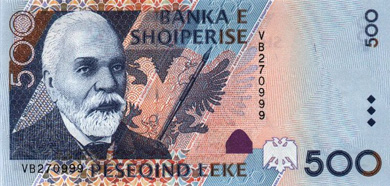
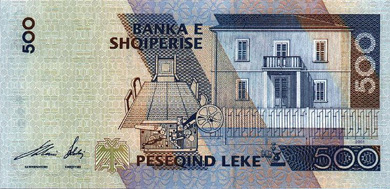
- leke (ALL)
- GDP — official exchange rate
- $8,657,000,000 (USD)
- GDP Real Growth Rate
- 5.5%
- GDP by Sector
- agriculture: 46.2% industry: 25.4% services: 28.4%
- Gini Index
- 28.2
Banknotes
Budget & Public Finance
- Fiscal Year
- calendar year
- Annual Budget
- $2,377,000,000 (USD)
- External Debt
- $1,550,000,000 (USD)
- Investment (% of GDP)
- 22.6%
- Economic Aid
- $315,000,000 (USD)
- Current Account Balance
- -$410,000,000 (USD)
- Reserves of Foreign Exchange
- $1,300,000,000 (USD)
Labor, Industry & Trade
- Labor Force by Occupation
- agriculture 57%, non-agricultural private sector 20%, public sector 23%
- Industries
- food processing, textiles and clothing; lumber, oil, cement, chemicals, mining, basic metals, hydropower
- Agriculture Products
- wheat, corn, potatoes, vegetables, fruits, sugar beets, grapes; meat, dairy products
- Export Commodities
- textiles and footwear; asphalt, metals and metallic ores, crude oil; vegetables, fruits, tobacco
- Export Partners
- Italy 71.7%, Canada 4.3%, Germany 4.3%
- Import Commodities
- machinery and equipment, foodstuffs, textiles, chemicals
- Import Partners
- Italy 34.8%, Greece 19.8%, Turkey 7.7%, Germany 5.3%
Energy
- Oil Production
- 3,600 bbl/day
- Oil Consumption
- 25,200 bbl/day
- Oil Reserves
- 185,500,000 bbl/day
- Natural Gas Production
- 30,000,000 cu m
- Natural Gas Consumption
- 30,000,000 cu m
- Natural Gas Imports
- 0 cu m
- Natural Gas Exports
- 0 cu m
- Natural Gas Reserves
- 2,832,000,000 cu m
Communications
- Telephone System
- General Assessment: despite new investment in fixed lines, teledensity remains low with roughly 10 fixed lines per 100 people; mobile-cellular telephone use is widespread and generally effective Domestic: offsetting the shortage of fixed-line capacity, mobile-cellular phone service has been available since 1996; by 2011 multiple companies were providing mobile services and mobile teledensity had reached 100 per 100 persons; Internet broadband services were initiated in 2005 but growth has been slow; Internet cafes are popular in Tirana and have started to spread outside the capital International: Country Code - 355; submarine cable provides connectivity to Italy, Croatia, and Greece; the Trans-Balkan Line, a combination submarine cable and land fiber-optic system, provides additional connectivity to Bulgaria, Macedonia, and Turkey; international traffic carried by fiber-optic cable and, when necessary, by microwave radio relay from the Tirana exchange to Italy and Greece
- Internet Country Code
- .al
News & Weather
News & Weather
Current Weather
Latest News
Albania's big bet on Kushner-Trump: Who wins? - DW.com
DW.com · 2d ago
Flamingos Against Autocrats - Foreign Policy
Foreign Policy · 19h ago
Portugal Aligns with Turkey, Albania, Hungary, Poland and Others in Driving Budget Travel Amid Rising Costs and Inflation Offering Affordable Beach Escapes, Cultural Experiences and More in 2026 - Travel And Tour World
Travel And Tour World · 1d ago
In a pitch-black cave on the border of Greece and Albania, more than 100,000 spiders share a single web the size of half a tennis court — and two species that everywhere else on Earth are predator and prey have somehow called a truce inside it - ScienceBlog.com
ScienceBlog.com · 1d ago
Internal Disputes Emerge as Albania's Anti-Government Protest Enters 49th Day - Albanian Daily News
Albanian Daily News · 2d ago
Albania Mirrors Andorra, Armenia, Azerbaijan, Belarus and Several Other Countries As Qatar Visa-Free Entry Framework Leaves Several European Nations Outside The Latest Travel Access Expansion to Explore Alternative Visa Routes - Travel And Tour World
Travel And Tour World · 2d ago
Ivanka Trump plans a luxury resort on a protected beach. Locals and conservationists aren’t thrilled. - CNN
CNN · 45d ago
Look at the protests Jared Kushner has caused in Albania. This could be a shining light for Europe | Lea Ypi - The Guardian
The Guardian · 43d ago
News via Google News
Climate Overview
The plain of Albania, where the capital city Tirana is located, has a typical Mediterranean climate with hot summers and generally mild winters with abundant rainfall. In the mountains, winters can be very severe with low temperatures and high snowfall. On average, temperatures range from -3°C in January to a maximum of 35°C in July. Parts of Albania are on a fault line and experience earthquakes and tremors.
Videos
Videos
1 curated YouTube videos.
Source: YouTube
Frequently Asked Questions
Frequently Asked Questions
What is the population of Albania?
How do people greet each other in Albania?
What are dining customs like in Albania?
What should I know about visiting an Albanian home?
How should I dress in Albania?
How do Albanians use gestures?
What is family life like in Albania?
What do people do for fun in Albania?
What is the capital of Albania?
Where is Albania located?
What countries border Albania?
What is the predominant religion in Albania?
What is the currency of Albania?
What language is spoken in Albania?
What is Albania's geography and terrain like?
What is Albania known for?
Last reviewed 2026