
 English
 Español
 中文
中文 हिन्दी
 Français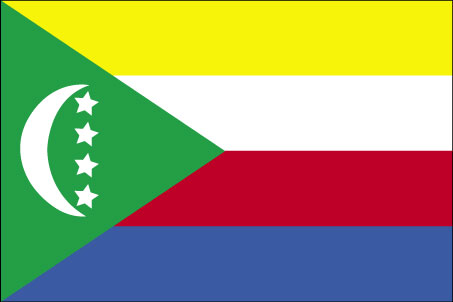
Comoros
Comores
Declare Your Relationship to Comoros
CountryReports Community
- Studying0
- From Comoros0
- Comoros heritage0
- Visited0
- Want to visit0
Customs and Culture
Customs and Culture
About the People
Comoros is one of the world's poorest nations. It has no major industry and no valuable minerals. The economy is based on agriculture and most people work on a farm for a living. Most of the people have mixed ancestry. They are descends of Arabs, and black Africans. Most Comorans are Muslims.
Boys are raised and taught that it is the responsibility of men to provide for the family and meet all their physical needs. This is something they learn from their earliest days and house work is left for the girls and women.
Cultural Attributes
Comoros is one of the world's poorest nations. It has no major industry and no valuable minerals. The economy is based on agriculture and most people work on a farm for a living. Most of the people have mixed ancestry. They are descends of Arabs, and black Africans. Most Comorans are Muslims.
Boys are raised and taught that it is the responsibility of men to provide for the family and meet all their physical needs. This is something they learn from their earliest days and house work is left for the girls and women.

Spice Islands of the Indian Ocean
Greetings, Gestures & Visiting
Children are taught to respect all elders irrespective of their social status.
Diet
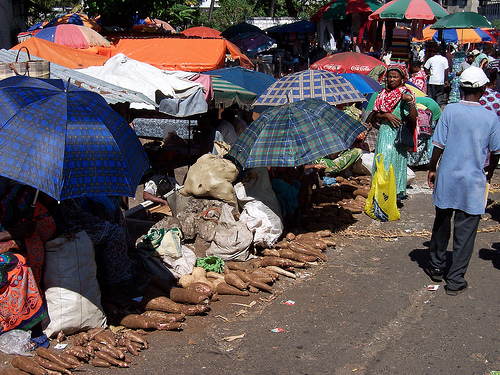
Coconuts, bananas, and cassava are the main food crops. The best land is used for commercial crops such as vanilla, cloves and perfume plants so much of the food must be imported. During meal times, the husband usually eats alone at the dinner table or living room whereas the children and their mothers eat from the kitchen. The man may eat with a parent or friend at the table. Males eating seperate from females is a show of dignity as well as authority.

Family
Families usually have many children and many marriages are polygamous in nature. A high percentage of the population still lives in straw huts .
Student Life
Comorosis considered to be a Muslim country and therefore many homes are polygamous with one man having as many as four wives with not less than 20 children. A typical day for a child especially in rural Comoros begins long before sunrise in order to prepare for the day. A high percentage of the population lives in straw huts. Classes run for five days a week and they begin promptly at about 7:30 am. The first item in the daily school calendar is usually an assembly where any announcements and notices are passed on to the children, usually done in French. Koranic schools are an age-old institution; they are the schools most accessible to Comorian children because they are firmly established throughout the country (there are several in each village). Their purpose is to provide religious instruction with a view to strengthening Islamic culture and faith. They are entirely independent and are established on the initiative of a teacher who admits children to his own house or a place designated by the local community. He determines the organization of the establishment, which operates outside the State hierarchy and State control. Children attend these establishments from the age of 4 until they attain their "spiritual" majority. The languages of instruction are Shikomori and Arabic.
The teachers will always be present during the assembly before the children break into the various classes. Classes run throughout the day until 3:30 p.m. when the school breaks for the day and the children go back home. Children get to school by walking because there is nothing like organized school transport since the schools are not usually too far from their homes. After the normal school day there will be about an hour for extra curricula activities where children will play ball or participate in any club activities that are available in each individual school they attend When it comes to schooling, all children from the age of three must attend Quranic School where they are taught the tenets of Islam and some form of classical Arabic. In the rural areas when children attend these schools, they may be at times forced to stay with the teacher and help out with work at the school and also assist in working on the teacher’s farm during the free times.
Young people and children take part in religious festivities. This often provides an opportunity for Koranic teachers to show off their competence which is measured by the extent of their pupils' knowledge. Children are asked to sing poems in honor of the Prophet and his glorious companions. The fact that all kinds of cakes and drinks are liberally distributed at these ceremonies ensures their willing attendance. However, these traditional and religious activities alone do not satisfy young people, who are also very eager to form all kinds of associations centered around music, theater and sports, in particular. These very numerous, well-attended and active associations have become an essential ingredient in national cultural life, particularly during the school holidays.
The government provides free primary school education for children up to the age of 10 and this tends to increase enrollment in schools. However the schools are greatly hampered with lack of facilities, equipment, qualified personnel to teach as well as important materials like text books. School buildings often lack washrooms and toilet facilities. There In some of the islands the local governments have had to suspend payment of fees because many parents could not afford to pay fees for their children, and they instead opted to send their kids to Quranic schools which are usually free. The educational system in Comoros is mirrored on the French school system and primary schools last up to five years. The percentage of girls enrolling in school is lower than that of boys and the ration between teachers and students is about one teacher for every fifty students.
Holidays
Independence Day
7/6Independence Day
Dates of Interest
- July 6th
What are the dining customs in Comoros?
Meals are commonly eaten with men and women separated, with the husband typically eating alone or with a parent or friend at the table while children and mothers eat in the kitchen. Males eating separately from females is a show of dignity and authority.
Good to know
- Coconuts, bananas, and cassava are the main food crops
- Much food is imported because the best land is used for commercial crops such as vanilla, cloves, and perfume plants
What should I know about etiquette in Comoros?
Respect for elders is highly valued, and children are taught to respect all elders regardless of social status.
Do
- Show respect to elders regardless of their social status
Good to know
- Most Comorans are Muslims, and mixed Arab and black African ancestry is common
What is family life like in Comoros?
Families are usually large, and many marriages are polygamous. Men are raised to see providing for the family as their responsibility, while housework is left to girls and women.
Good to know
- A high percentage of the population still lives in straw huts
- The economy is based on agriculture and most people work on a farm
Last updated: 2026-07-12 · Sources: CountryReports
Photos of Comoros
Photos of Comoros


Travel and Tourism
Travel and Tourism
- Travel Alert Status
- Level 1: Exercise Normal Precautions
- Currency
- 449.1
- Time Difference
- UTC+3 (8 hours ahead of Washington, DC, during Standard Time)
- Climate
- Tropical marine; rainy season (November to May)
- Airports
- 4
- Recommended Vaccinations
- How important is it to do your research about vaccinations? It might just save your life! Make yourself aware of the different types of vaccinations and which ones you may need to travel to your destination. Schedule an appointment with your doctor at least four to six weeks before you travel to ensure you receive all important shots. Be sure that you and your family are up to date on your routine vaccinations. Which vaccinations you need will depend on a number of factors including your destination, whether you will be spending time in rural areas, the season of the year you are traveling, your age, health status, and previous immunizations.
Read the full travel guide — health, safety, vaccinations, disease risk, sanitation, and transit details.
View full travel guideHistory
History
Historical Eras
Early Settlement & Arab Trade
800 – 1500
Austronesian and Bantu-speaking peoples first settled the Comoros archipelago, followed by Arab and Shirazi traders who established a network of sultanates and introduced Islam. By the medieval period, the islands served as a key southern node on the Indian Ocean trade routes, linking East Africa, Madagascar, and the Arabian Peninsula. Islamic culture, architecture, and governance took deep root, shaping Comorian identity for centuries.
Sultanate Era
1500 – 1886
Rival Shirazi-descended sultanates dominated each island, engaging in inter-island warfare, the slave trade, and commerce with Arab, Swahili, and later European merchants. Portuguese, Dutch, and French navigators made contact with the islands from the 16th century onward. French influence gradually expanded through treaties with local sultans during the early 19th century, culminating in the formal establishment of a protectorate over all four main islands.
French Colonial Period
1886 – 1975
Comoros became a French protectorate in 1886 and was formally annexed as a colony in 1912, administered from Madagascar. After World War II the islands were redesignated a French overseas territory in 1947, and internal autonomy was granted in 1961. Cash crops such as ylang-ylang, vanilla, and cloves became the economic foundation under French direction, while political agitation for independence grew through the early 1970s.
Independence & Instability
1975 – 1999
Grande Comore, Moheli, and Anjouan unilaterally declared independence on July 6, 1975, while Mayotte voted to remain French. The new republic proved acutely unstable: President Ahmed Abdallah was overthrown within weeks, mercenary-backed coups restored and later killed him in 1989, and Ali Soilih's radical regime was itself ousted in 1978. By 1997, Anjouan and Moheli had declared their own secession from Comoros, deepening the constitutional crisis.
Federal Transition
1999 – 2004
Colonel Azali Assoumani seized power in a 1999 coup and brokered the Fomboni Accord of 2000, crafting a confederal framework to resolve the secessionist crisis. A new constitution approved by referendum in December 2001 reconstituted the country as the Union of Comoros, granting each island its own presidency and legislature. The union's first civilian president was inaugurated on May 26, 2002, marking a fragile but significant step toward constitutional governance.
Modern Union Era
2004 – present
The Union of Comoros has continued to grapple with coup attempts, economic underdevelopment, and reliance on foreign aid, while Mayotte's 2009 vote to fully integrate with France closed off prospects for reunification of the archipelago. Volcanic eruptions from Mount Karthala and recurring political crises have periodically destabilized the islands. Comoros remains one of the world's poorest nations, dependent on cash-crop exports and remittances, yet the federal constitutional order established in 2002 has provided greater continuity than any previous political arrangement.
Overview
Timeline of Key Events
1886
Comoros becomes a French protectorate.
Comoros becomes a French protectorate.
1912
Comoros formally become a French colony administered from Madagascar.
Comoros formally become a French colony administered from Madagascar.
1942
British forces invade the Comoros and Madagascar.
British forces invade the Comoros and Madagascar, toppling the pro-Vichy administration and handing the territories over to the Free French government of Charles de Gaulle.
1947
Comoros become an overseas territory of France,
Comoros become an overseas territory of France and are given representation in the French parliament.
1961
Comoros given autonomy.
Comoros given autonomy.
1974
Three of the islands making up the Comoros vote for independence.
Three of the islands making up the Comoros vote for independence, but a fourth island, Mayotte, votes to stay with France.
1975
The islands of Grande Comore, Moheli and Anjouan become independent.
The islands of Grande Comore, Moheli and Anjouan become independent with Ahmed Abdallah as president.
Read the full history profile — narrative overview, defining eras, and the complete timeline in one place.
View expanded historyInteresting Facts
Interesting Facts
In Comoros certain landholdings called magnahouli are controlled by women and inherited through the female line, apparently in observance of a surviving matriarchal African tradition.
In Comoros certain landholdings called magnahouli are controlled by women and inherited through the female line, apparently in observance of a surviving matriarchal African tradition.
See every fact — trivia, oddities, and curious tidbits gathered from across the country.
View all interesting factsGeography and Environment
Geography and Environment
- Terrain
- volcanic islands, interiors vary from steep mountains to low hills
- Climate
- tropical marine; rainy season (November to May)
- Natural Hazards
- cyclones possible during rainy season (December to April); Le Kartala on Grand Comore is an active volcano
- Current Environmental Issues
- soil degradation and erosion results from crop cultivation on slopes without proper terracing; deforestation
Read the full geography and environment profile — terrain, climate, natural resources, hazards, land use, and international agreements.
View full geographyPeople & Demographics
People & Demographics
Religion
Languages Spoken
Arabic (official), French (official), Shikomoro (a blend of Swahili and Arabic)
- Arabic
- French
Population
- Population
- 773,407
- Population in Major Urban Areas
- MORONI (capital) 54,000
- Nationality Noun
- Comoran(s)
- Ethnic Groups
- Antalote, Cafre, Makoa, Oimatsaha, Sakalava
- Language Note
- Even though, Arabic and French are the official languages, most people speak Comoran, a mixture of Arabic and Swahili.
Education
- Literacy Definition
- age 15 and over can read and write
Read the full people and society profile — demographics, health, education, religion, languages, and notable people.
View full people and societyGovernment & Politics
Government & Politics
Country Identity
- Country Name
- Comoros
- Full Country Name
- Union of the Comoros
- Local - Long
- Union des Comores
- Local - Short
- Comores
Government Structure
- Government Type
- independent republic
- Legal System
- French and Sharia (Islamic) law in a new consolidated code
- Executive Branch
- chief of state: President AZALI Assoumani (since 26 May 2016, reelected 24 March 2019, and again in January 2024); note - AZALI first came to power following a 1999 military coup and subsequently won the April 2002 presidential election; under the rotating presidency system established by the 2001 constitution, he was again elected in 2016; following a controversial 2018 constitutional referendum that abolished the rotating island presidency and allowed him to reset his term limits, AZALI was reelected in March 2019; he won a third term in the January 2024 presidential election; the president is both the chief of state and the head of government head of government: President AZALI Assoumani (since 26 May 2016); the president is both the chief of state and the head of government; there is no prime minister position under the current constitutional structure cabinet: Council of Ministers appointed by the president elections: under the 2001 constitution, the presidency originally rotated every four years among the three main islands of the Union (Ngazidja/Grande Comore, Ndzuwani/Anjouan, and Mwali/Mohéli); a 2018 constitutional referendum abolished the rotating island system and allowed for standard multi-year terms; presidential elections are now held every five years; the most recent election was held in January 2024, with the next scheduled for 2029 election results: President AZALI Assoumani reelected in the January 2024 presidential election with approximately 57% of the vote, though the results were disputed by opposition candidates who alleged irregularities
- Legislative Branch
- unicameral Assembly of the Union (33 seats; 15 deputies are selected by the individual islands' local assemblies and the 18 by universal suffrage; deputies serve for five years); elections: last held 18 and 25 April 2004 (next to be held in 2009) election results: percent of vote by party - NA; seats by party - CdIA 12, CRC 6; note - 15 additional seats are filled by deputies from local island assemblies
- Judicial Branch
- Supreme Court or Cour Supremes (two members appointed by the president, two members elected by the Federal Assembly, one elected by the Council of each island, and others are former presidents of the republic)
- Suffrage
- 18 years of age; universal
- Constitution
- 23-Dec-01
- Independence
- 6 July 1975 (from France)
- National Holiday
- Independence Day, 6 July (1975)
Capital City
- Capital Name
- Moroni
- Capital - geographic coordinate
- 11 42 S, 43 14 E
- Capital Time Difference
- UTC+3 (8 hours ahead of Washington, DC, during Standard Time)
Moroni derives from "mroni," which means "at the river" in Shingazidja, the Comorian language spoken on Grande Comore (N'gazidja)
Military
Branches: Army of National Development (l'Armee du Developpement Nationale, AND): Comoran Security Force (also called Comoran Defense Force (Force Comorienne de Defense, FCD), includes Gendarmerie), Comoran Coast Guard, Comoran Federal Police
Embassy / Diplomatic Mission
The U.S. Embassy in Antananarivo is located at Lot 207A, Point Liberty, Andranoro-Antehiroka, Antananarivo (105), Madagascar. The mailing address is B.P. 5253, Antananarivo (105) Madagascar. The telephone number is [261] (20) 23-480-00; the fax number is [261] (20) 23-480-35.
Read the full government profile — flag symbolism, national anthem, and other national symbols.
View full government detailsEconomy
Economy
One of the world's poorest and smallest economies, Comoros is an archipelago of three islands hampered by inadequate transportation infrastructure, a young and rapidly growing population, and limited natural resources. The low educational level of the labor force contributes to subsistence-level economic activity, high unemployment, and heavy dependence on foreign aid and technical assistance. Agriculture, including fishing, hunting, and forestry, accounts for roughly 35% of GDP, employs about 80% of the labor force, and provides the bulk of exports, with vanilla, cloves, and ylang-ylang serving as the main cash crops. The country is not self-sufficient in food production, and rice—the main staple—accounts for a significant share of imports.
The government continues to struggle with chronic political instability and weak institutions while attempting to upgrade education and technical training, privatize commercial and industrial enterprises, improve health services, diversify exports, develop tourism, and address rapid population growth. Comoros reached the Heavily Indebted Poor Countries (HIPC) completion point in 2012, securing substantial debt relief, but growth has remained modest, averaging around 2–3% annually in recent years. The economy was further strained by the COVID-19 pandemic and global commodity price shocks. Remittances from the large Comorian diaspora, particularly in France, remain a critical source of household income and foreign exchange, typically equivalent to about 12–15% of GDP. Sustained foreign assistance and investment remain essential for achieving higher growth and reducing poverty.
Snapshot
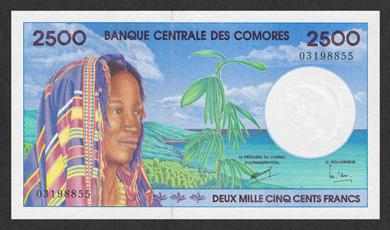
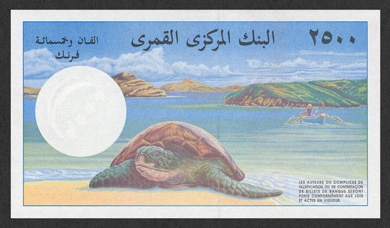
- Currency Name and Code
- Comoran francs (KMF)
- GDP — official exchange rate
- $402,000,000 (USD)
- GDP Real Growth Rate
- 3%
Banknotes
Budget & Public Finance
- Fiscal Year
- calendar year
- External Debt
- $232,000,000 (USD)
- Economic Aid
- $10,000,000 (USD)
- Current Account Balance
- -$17,000,000 (USD)
Labor, Industry & Trade
- Labor Force by Occupation
- agriculture 80%
- Industries
- tourism, perfume distillation
- Agriculture Products
- vanilla, cloves, perfume essences, copra, coconuts, bananas, cassava (tapioca)
- Export Commodities
- vanilla, ylang-ylang, cloves, perfume oil, copra
- Export Partners
- France 31%, Germany 17.2%, US 17.2%, Singapore 10.3%, Netherlands 6.9%
- Import Commodities
- rice and other foodstuffs, consumer goods; petroleum products, cement, transport equipment
- Import Partners
- France 34.1%, South Africa 11.4%, Japan 5.7%, Kenya 5.7%, UAE 5.7%, Mauritius 4.5%, Thailand 4.5%
Energy
- Oil Production
- 0 bbl/day
- Oil Consumption
- 700 bbl/day
- Oil Reserves
- 0 bbl/day
- Natural Gas Production
- 0 cu m
- Natural Gas Consumption
- 0 cu m
- Natural Gas Imports
- 0 cu m
- Natural Gas Exports
- 0 cu m
- Natural Gas Reserves
- 0 cu m
Communications
- Telephone System
- General Assessment: sparse system of microwave radio relay and HF radiotelephone communication stations Domestic: fixed-line connections only about 3 per 100 persons; mobile cellular usage about 30 per 100 persons International: country code - 269; landing point for the EASSy fiber-optic submarine cable system connecting East Africa with Europe and North America; HF radiotelephone communications to Madagascar and Reunion
- Internet Country Code
- .km
News & Weather
News & Weather
Current Weather
Latest News
Comoros advances roadmap for National Maritime Information Sharing Centre - International Maritime Organization
International Maritime Organization · 13d ago
Comoros vs Rwanda Box Score - June 06, 2026 - The Athletic - The New York Times
The New York Times · 8d ago
Zelensky appoints Ukraine’s ambassador to Kenya as concurrent envoy to Comoros - Межа. Новини України.
Межа. Новини України. · 5d ago
Mr. Mohamed El-Amine Souef of the Comoros - Special Representative for Central Africa and Head of the United Nations Regional Office for Central Africa (UNOCA) - Welcome to the United Nations
Welcome to the United Nations · 56d ago
Stitching heritage: UNESCO supports safeguarding of living heritage in Comoros - UNESCO
UNESCO · 29d ago
Comoros forest restoration offers a lesson in climate resilience - UNEP - UN Environment Programme
UNEP - UN Environment Programme · 103d ago
In Comoros, journalist arrested for report on jailed ex-president’s health - Committee to Protect Journalists
Committee to Protect Journalists · 41d ago
Rafiki Said: Wolverhampton Wanderers sign Standard Liege winger - BBC
BBC · 10d ago
News via Google News
Climate Overview
Tropical marine; rainy season (November to May)
Videos
Videos
1 curated YouTube videos.
Source: YouTube
Frequently Asked Questions
Frequently Asked Questions
What is the population of Comoros?
What are the dining customs in Comoros?
What should I know about etiquette in Comoros?
What is family life like in Comoros?
What is the capital of Comoros?
Where is Comoros located?
What are the ocean and sea borders of Comoros?
What religion is practiced in Comoros?
What is the currency of Comoros?
What languages are spoken in Comoros?
What is the geography of Comoros like?
What is Comoros known for?
Last reviewed 2026