
 English
 Español
 中文
中文 हिन्दी
 Français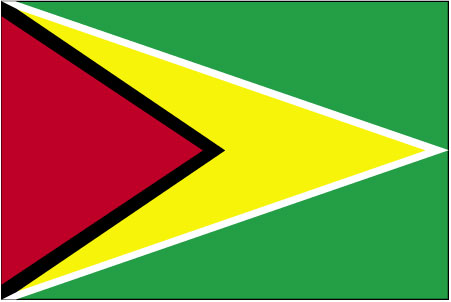
Guyana
Declare Your Relationship to Guyana
CountryReports Community
- Studying0
- From Guyana2
- Guyana heritage0
- Visited1
- Want to visit0
Customs and Culture
Customs and Culture
About the People
Guyanese have a great sense of humor and love to tease one another. This is seen at social gatherings and even on solemn occasions such as funerals. Their humor is not meant to be unkind or to ridicule. It is intended to break the ice, cover up more serious emotions or simply to have fun.
Religion is central to Guyanese people's lives
Cultural Attributes
Guyanese have a great sense of humor and love to tease one another. This is seen at social gatherings and even on solemn occasions such as funerals. Their humor is not meant to be unkind or to ridicule. It is intended to break the ice, cover up more serious emotions or simply to have fun. Religion is central to Guyanese people's lives.

Land of Many Waters
Greetings, Gestures & Visiting
Guyanese love to illustrate what they say through proverbs. The proverbs are a rich legacy from the many different cultures for example:
"Cat ta ketch rat but ee teef ee masta fish"- The same person is capable of both good and evil deeds.
"Every best friend's gat a next best friend"- Your secrets are spread from one best friend to another.
"You can't plant plantain and reap cassava"- You reap what you sow.
"When Mumma dead family done"- A mother keeps the family together. When she dies the members tend to scatter.
"When coconut fall from tree he can't fasten back"- What's done cannot be undone.
"Nah mine how bird vex, ee cann vex wid tree"- Even if you are frustrated with your job or home, sometimes you have no choice but to stay with it.
"All cassava get same skin but all nah taste same way"- Though people may look alike because of their mode of dress, they are different in their ways.
"Every rope gat two ends"- Every story has two sides.
"If yuh finger get sore, nah tek am and throw way"- A member of your family may turn delinquent but that does not mean that you must disown him or refuse to help him.
Guyanese talk with their hands.
It is customary for whole families to drop in unexpectedly to visit relatives. The visitors are always welcomed and are invariably offered food and drink.
Business dress is moderately casual, appropriate for a tropical climate, usually shirt and tie or “shirtjac” for men and light business suits for women.
Diet
Pepperpot is traditionally served during the Christmas holiday.
Breakfast usually consists of homemade bread with eggs, cheese, butter or a cooked vegetable and tea or coffee.
Rice is a staple of the midday meal. It is eaten with beans, vegetables and meat. Poultry and seafood are popular.
The evening meal is more elaborate. The staple may again be rice, roti, which is a flat bread, or root vegetables such as cassavas and yams. Other vegetables, meat or seafood are also eaten with the evening meal. Fresh cow's milk may be part of the morning or evening meal. Guyanese cuisine is enriched by traditional foods from every ethnic group in the country: East Indian, African, Native, Chinese and Portuguese. These dishes have been adapted to Guyanese tastes, often by the addition of spices.
Pepperpot is traditionally served during the Christmas holiday.
Breakfast usually consists of homemade bread with eggs, cheese, butter or a cooked vegetable and tea or coffee.
Rice is a staple of the midday meal. It is eaten with beans, vegetables and meat. Poultry and seafood are popular.
The evening meal is more elaborate. The staple may again be rice, roti, which is a flat bread, or root vegetables such as cassavas and yams. Other vegetables, meat or seafood are also eaten with the evening meal. Fresh cow's milk may be part of the morning or evening meal. Guyanese cuisine is enriched by traditional foods from every ethnic group in the country: East Indian, African, Native, Chinese and Portuguese. These dishes have been adapted to Guyanese tastes, often by the addition of spices.

Family
Guyanese consider family to mean an extended family of parents, children, grandchildren, uncles, aunts and cousins. Families often picnic in scenic places such as the banks of one of Guyana's many rivers. The family outing includes a "cook up" and bathing in the river. The outing may include several families related by blood or marriage as well as friends and neighbors.
Recreation
Cricket is the national sport of Guyana and is played and enjoyed by both men and women. Football (soccer), is the next most popular field game for both children and young adults. Guyanese children also engage in other sports such as volleyball, basketball, North American-style football, golf, badminton, tennis, field hockey, cycling and boxing.
The game of dominoes is almost a national passion. Men and women play this game at social gatherings and in organized competitions. A card game called trump is popular as well.
Another favorite activity for people in Georgetown is walking on the kokers, which are the dykes or sea walls built by the Dutch in the 1600's.
Holidays
Republic Day
2/23Independence
Christmas
12/25Christmas
From the second week of December until Christmas day masquerade street bands clad in colorfully ornate costumes dominate festivities with street dancers and dancers on stilts.
Dates of Interest
- December 25th
From the second week of December until Christmas day masquerade street bands clad in colorfully ornate costumes dominate festivities with street dancers and dancers on stilts.
How do people communicate and greet each other in Guyana?
Guyanese love to illustrate what they say through proverbs, a rich legacy from the country's many different cultures, and they have a great sense of humor, enjoying teasing one another.
Good to know
- Humor and teasing appear even at solemn occasions such as funerals
- Teasing is meant to break the ice or cover more serious emotions, not to ridicule
- Expect proverbs like "Every rope gat two ends" (every story has two sides)
What are meals and eating customs like in Guyana?
Rice is a staple of the midday meal, while the evening meal is more elaborate and may feature rice, roti (a flat bread), or root vegetables such as cassava and yams with meat or seafood.
Good to know
- Breakfast usually includes homemade bread with eggs, cheese, butter or a cooked vegetable and tea or coffee
- Pepperpot is traditionally served during the Christmas holiday
- Cuisine blends East Indian, African, Native, Chinese and Portuguese traditions, often enriched with spices
- Poultry and seafood are popular, and fresh cow's milk may accompany the morning or evening meal
What should I know about visiting and hospitality in Guyana?
Whole families often drop in unexpectedly to visit relatives, and visitors are always welcomed and invariably offered food and drink.
Do
- Welcome unexpected family visitors warmly
- Offer guests food and drink
What should I wear in Guyana?
Business dress is moderately casual and suited to the tropical climate.
Good to know
- Men typically wear a shirt and tie or a "shirtjac"
- Women wear light business suits
How do Guyanese use gestures?
Guyanese talk with their hands.
Good to know
- Expect expressive hand movements during conversation
What is family life like in Guyana?
Guyanese consider family to mean an extended family of parents, children, grandchildren, uncles, aunts and cousins.
Good to know
- Families often picnic in scenic places such as riverbanks, with a "cook up" and bathing in the river
- Outings may include several related families along with friends and neighbors
What do people do for recreation in Guyana?
Cricket is the national sport, played and enjoyed by both men and women, and dominoes is almost a national passion.
Good to know
- Football (soccer) is the next most popular field game
- Other sports include volleyball, basketball, golf, tennis, cycling and boxing
- A card game called trump is popular
- In Georgetown, walking on the kokers (Dutch-built sea walls) is a favorite activity
Last updated: 2026-07-12 · Sources: CountryReports
Photos of Guyana
Photos of Guyana


Travel and Tourism
Travel and Tourism
- Travel Alert Status
- Level 3: Reconsider Travel
- Currency
- Guyanese dollar (GYD)
- Time Difference
- UTC-4 (1 hour ahead of Washington, DC, during Standard Time)
- Climate
- Guyana's climate is typical of most tropical countries. Humidity ranges from an average low of 68% in October to 77% in May, and an average high of 79% in October to 86% in May through August. The average annual mean (AAM) is 73% in the afternoons and 83% in the mornings. Minimum temperatures in Georgetown, on the coast, range between 22-26°C (71-80°F) year around, with an AAM low of 75. Maximum temperatures range between 28-32°C (83-90°F), year around, with an AAM high of 86. The sea breezes (east-northeast trade winds) significantly mitigate the heat on the coast. The coastal area typically has two wet seasons: May to mid-August, when about 40% of the total annual precipitation falls, and December to mid-January, which receive another 20%. However, occasional rain may fall at any time of the year. Georgetown and the coast average 90 inches of rainfall annually; in the interior, 60-150 inches occur.
- Airports
- 49
Read the full travel guide — health, safety, vaccinations, disease risk, sanitation, and transit details.
View full travel guideRecipes
Recipes
History
History
Historical Eras
Amerindian Era
5000 BCE – 1616
For thousands of years before European contact, the Guiana region was inhabited by Arawak, Carib, and other Amerindian peoples who developed complex societies along its rivers and coasts. Christopher Columbus sighted the territory in 1498, but Spanish explorers largely bypassed it. The Amerindian population was devastated by disease, conflict, and displacement following sustained European contact.
Dutch Colonial Period
1616 – 1814
The Dutch established the first permanent European settlement at Essequibo in 1616, followed by the colonies of Berbice and Demerara. Dutch engineers drained the swampy coastline with an elaborate system of dikes and canals, enabling a plantation economy built on sugarcane and enslaved African labor. The three colonies changed hands repeatedly among British, French, and Dutch powers during the Napoleonic Wars before final British conquest in 1803.
British Guiana
1814 – 1966
The Treaty of Paris in 1814 formally ceded the colonies to Britain, and they were consolidated into British Guiana in 1831. The abolition of slavery in 1834–1838 prompted the large-scale importation of indentured laborers from India, China, and elsewhere, fundamentally reshaping the colony's ethnic composition. The early twentieth century saw rising political consciousness among Afro-Guyanese and Indo-Guyanese communities, culminating in the turbulent path to self-government in the 1950s and eventual independence in 1966.
Burnham Era
1966 – 1985
Linden Forbes Burnham led Guyana as Prime Minister and later executive President, steering the country toward a socialist-cooperative republic model declared in 1970. His government nationalized major industries, including the sugar and bauxite sectors, and adopted a Marxist-Leninist economic framework that produced prolonged economic decline and shortages. Political repression, electoral fraud, and deepening ethnic polarization between Afro-Guyanese and Indo-Guyanese communities defined this authoritarian period.
Transition & Reform
1985 – 1992
Following Burnham's death in 1985, Desmond Hoyte assumed the presidency and began cautiously reversing the failed socialist policies, reopening Guyana to foreign investment and IMF-guided economic reform. Despite these shifts, political dominance by the People's National Congress and widespread allegations of electoral manipulation persisted. This period represented an unstable interlude between authoritarianism and genuine democratic competition.
Democratic Modern Era
1992 – present
The 1992 election of Cheddi Jagan is recognized as Guyana's first free and fair election since independence, marking a democratic turning point. Subsequent governments under Janet Jagan and Bharrat Jagdeo maintained democratic succession while navigating persistent ethnic tensions and economic underdevelopment. The early twenty-first century brought renewed optimism, culminating in major offshore oil discoveries that positioned Guyana as one of the world's fastest-growing economies.
Overview
Timeline of Key Events
1498
Christopher Columbus sights Guyana.
Christopher Columbus sights Guyana.
1581
Dutch begin settling on the Pomeroon River
Dutch begin settling on the Pomeroon River
1581
Dutch begin settling on the Pomeroon River
Sir Walter Raleigh explored the South American coast from the Orinoco River to the mouth of the Amazon, an area that he called “Guiana.”
1616
The Dutch became the first to establish colonies in Guyana with Essequibo.
The Dutch became the first to establish colonies in Guyana with Essequibo. Berbice followed in 1627, and then Demerara in 1752.
1620
Dutch West India Company establishes a foothold in Guyana.
Dutch West India Company establishes a foothold in Guyana, including armed bases, and imports slaves from Africa to work on the sugar plantations.
1781
British temporarily seize all 3 of the Dutch colonies.
British temporarily seize all 3 of the Dutch colonies; Essequibo, Demerara and Berbice.
1783
French temporarily seize the colonies.
French temporarily seize the colonies.
Read the full history profile — narrative overview, defining eras, and the complete timeline in one place.
View expanded historyInteresting Facts
Interesting Facts
The word Guyana takes its name from a Native word, Guyana, meaning, land of many waters.
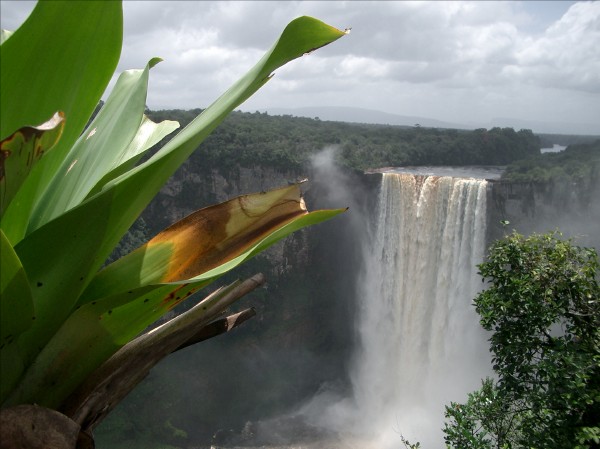
Guyana's most famous tourist attraction, the Kaieteur Falls, is among the five biggest waterfalls in the world. It is 250 m high, higher than Niagara Falls, and 100 m wide in the rainy season. It is surrounded by thick forest.
The famous English explorer, Sir Walter Raleigh, visited Guyana in 1595. He believed that El Dorado, a legendary city where even the streets were made of gold, existed somewhere in Guyana. His book describing Guyana's riches inspired many Europeans to seek their fortunes there.
Guyana has the most unusual racial mix in South America. It is woven into every aspect of life in Guyana. For example, there are places with Dutch and Spanish names. Hindu temples and mosque domes can be seen, and you can hear calypso music, which is a blend of African rhythm and Spanish and native melodies.
Guyana's Omai Gold Mine is the largest open-pit gold mine in South America.
Canada is currently the number one foreign investor in Guyana. It has been trading with Guyana since the 1920s.
See every fact — trivia, oddities, and curious tidbits gathered from across the country.
View all interesting factsGeography and Environment
Geography and Environment
- Terrain
- mostly rolling highlands; low coastal plain; savanna in south
- Climate
- Guyana's climate is typical of most tropical countries. Humidity ranges from an average low of 68% in October to 77% in May, and an average high of 79% in October to 86% in May through August. The average annual mean (AAM) is 73% in the afternoons and 83% in the mornings. Minimum temperatures in Georgetown, on the coast, range between 22-26°C (71-80°F) year around, with an AAM low of 75. Maximum temperatures range between 28-32°C (83-90°F), year around, with an AAM high of 86. The sea breezes (east-northeast trade winds) significantly mitigate the heat on the coast. The coastal area typically has two wet seasons: May to mid-August, when about 40% of the total annual precipitation falls, and December to mid-January, which receive another 20%. However, occasional rain may fall at any time of the year. Georgetown and the coast average 90 inches of rainfall annually; in the interior, 60-150 inches occur.
- Natural Hazards
- flash floods are a constant threat during rainy seasons
- Current Environmental Issues
- water pollution from sewage and agricultural and industrial chemicals; deforestation
Read the full geography and environment profile — terrain, climate, natural resources, hazards, land use, and international agreements.
View full geographyPeople & Demographics
People & Demographics
Religion
Languages Spoken
English, Amerindian dialects, Creole, Hindi, Urdu
- Creole
- Hindi
- Urdu
Population
- Population
- 748,486
- Population in Major Urban Areas
- GEORGETOWN (capital) 127,000
- Nationality Noun
- Guyanese (singular and plural)
- Ethnic Groups
- East Indian 50%, black 36%, Amerindian 7%, white, Chinese, and mixed 7%
Education
- Literacy Definition
- Age 15 and over has ever attended school
Health Information
- Major Infectious Diseases — degree of risk
- Very high
Read the full people and society profile — demographics, health, education, religion, languages, and notable people.
View full people and societyGovernment & Politics
Government & Politics
Country Identity
- Country Name
- Guyana
- Full Country Name
- Co-operative Republic of Guyana
- Former Name
- British Guiana
Government Structure
- Government Type
- republic within the Commonwealth
- Legal System
- based on English common law with certain admixtures of Roman-Dutch law; has not accepted compulsory ICJ jurisdiction
- Executive Branch
- chief of state: President Irfaan ALI (since 2 August 2020); note - ALI won the March 2020 general elections after a prolonged electoral dispute; the People's Progressive Party/Civic (PPP/C) returned to power following a recount process overseen by international observers head of government: President Irfaan ALI serves as both chief of state and head of government; Prime Minister Mark PHILLIPS (since 2 August 2020), appointed by the president, assists in executive functions cabinet: Cabinet of Ministers appointed by the president, responsible to the National Assembly elections: president elected by popular vote as leader of a party list in parliamentary elections, which must be held at least every five years; elections last held on 2 March 2020 (next to be held by 2025); prime minister appointed by the president election results: Irfaan ALI elected president; the PPP/C received approximately 50.7% of the vote, defeating the incumbent A Partnership for National Unity/Alliance for Change (APNU/AFC) coalition
- Legislative Branch
- unicameral National Assembly (65 members elected by popular vote, also not more than four non-elected non-voting ministers and two non-elected non-voting parliamentary secretaries appointed by the president; members serve five-year terms) elections: last held 19 March 2001 (next to be held by 4 August 2006) election results: percent of vote by party - PPP/C 52.9%, PNC/R 41.9%, GAP/WPA 2.4%, ROAR 0.9%, TUF 0.7%, other 1.2%; seats by party - PPP/C 34, PNC/R 27, GAP/WPA 2, ROAR 1, TUF 1
- Judicial Branch
- Supreme Court of Judicature, consisting of the High Court and the Judicial Court of Appeal, with right of final appeal to the Caribbean Court of Justice
- Suffrage
- 18 years of age; universal
- Constitution
- 6-Oct-80
- Independence
- 26 May 1966 (from UK)
- National Holiday
- Republic Day, 23 February (1970)
Capital City
- Capital Name
- Georgetown
- Capital - geographic coordinate
- 6 48 N, 58 09 W
- Capital Time Difference
- UTC-4 (1 hour ahead of Washington, DC, during Standard Time)
When the British took possession of the town from the Dutch in 1812, they renamed it Georgetown in honor of King GEORGE III (1738-1820)
Military
Branches: Guyana Defense Force: Army (includes Air Corps, Coast Guard)
Embassy / Diplomatic Mission
The U.S. Embassy in Georgetown
100 Young & Duke Streets
Georgetown, Guyana
Telephone: 011-592-225-4900
Emergency after-hours telephone: 011-592-623-1992
Facsimile: 011-592- 227-0221
Read the full government profile — flag symbolism, national anthem, and other national symbols.
View full government detailsEconomy
Economy
Guyana's economy has undergone a significant transformation in recent years, driven primarily by the rapid development of its offshore oil and gas sector. Following the start of commercial oil production in late 2019 from the prolific Stabroek Block operated by ExxonMobil, Guyana has become one of the fastest-growing economies in the world. GDP growth reached approximately 62 percent in 2022 and an estimated 33 percent in 2023, with continued double-digit expansion projected as additional production vessels come online.
Beyond the petroleum boom, the economy remains supported by traditional sectors including gold and bauxite mining, agriculture (notably rice and sugar), forestry, and fisheries. The government has channeled growing oil revenues into infrastructure modernization, healthcare, education, and energy projects, including the Gas-to-Energy initiative aimed at lowering electricity costs.
Despite the windfall, Guyana faces persistent challenges. These include a shortage of skilled labor, infrastructure deficiencies, vulnerability to climate change and flooding, and the risk of Dutch disease, where the oil sector could overshadow non-oil industries. Managing inflation, ensuring transparent use of the Natural Resource Fund, and promoting inclusive growth remain key policy priorities. Income inequality and poverty reduction also continue to require sustained attention as the country navigates its unprecedented economic expansion.
Snapshot
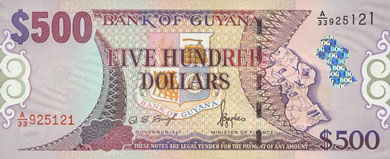
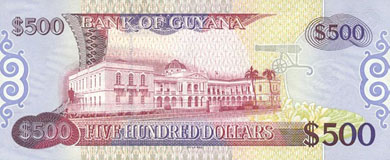
- Currency Name and Code
- Guyana Dollar (GYD)
- GDP — official exchange rate
- $782,000,000 (USD)
- GDP Real Growth Rate
- -2.5%
Banknotes
Budget & Public Finance
- Fiscal Year
- calendar year
- Annual Budget
- $362,600,000 (USD)
- External Debt
- $1,200,000,000 (USD)
- Investment (% of GDP)
- 36.2%
- Economic Aid
- $253,000,000 (USD)
- Current Account Balance
- -$92,720,000 (USD)
- Reserves of Foreign Exchange
- $248,800,000 (USD)
Labor, Industry & Trade
- Labor Force by Occupation
- agriculture NA%; industry NA%; services NA%
- Industries
- bauxite, sugar, rice milling, timber, textiles, gold mining
- Agriculture Products
- sugar, rice, wheat, vegetable oils; beef, pork, poultry, dairy products; fish (shrimp)
- Export Commodities
- sugar, gold, bauxite/alumina, rice, shrimp, molasses, rum, timber
- Export Partners
- Canada 26.3%, US 22.3%, UK 13%, Jamaica 5.1%, Portugal 5.1%, Belgium 4.2% 0
- Import Commodities
- manufactures, machinery, petroleum, food
- Import Partners
- US 25.1%, Trinidad and Tobago 16%, Netherlands Antilles 13.7%, Italy 6.6%, UK 5.5%, Cuba 4.4% 0
Energy
- Oil Production
- 0 bbl/day
- Oil Consumption
- 11,300 bbl/day
- Oil Reserves
- 0 bbl/day
- Natural Gas Production
- 0 cu m
- Natural Gas Consumption
- 0 cu m
- Natural Gas Imports
- 0 cu m
- Natural Gas Exports
- 0 cu m
- Natural Gas Reserves
- 0 cu m
Communications
- Telephone System
- General assessment: Fair system for long-distance service; microwave radio relay network for trunk lines; many areas still lack fixed-line telephone services Domestic: Fixed-line teledensity is about 20 per 100 persons; mobile-cellular teledensity about 70 per 100 persons in 2011 International: Country code - 592; tropospheric scatter to Trinidad; satellite earth station - 1 Intelsat (Atlantic Ocean)
- Internet Country Code
- .gy
News & Weather
News & Weather
Current Weather
Latest News
Dozens feared dead after passenger ferry sinks off coast of Guyana - Reuters
Reuters · 1d ago
Nicaragua vs Guyana - Class. 5-6 - FIBA Centrobasket Women's Championship 2026 - FIBA Basketball
FIBA Basketball · 3d ago
Guyana launches criminal probe as crews scour waters for survivors after ferry capsizes - ABC News - Breaking News, Latest News and Videos
ABC News - Breaking News, Latest News and Videos · 16h ago
Guyana ferry capsizes, leaving dozens dead and scores missing - France 24
France 24 · 8h ago
Twenty-seven bodies recovered after ferry capsizes off Guyana - Reuters
Reuters · 8h ago
Bodies recovered after passenger ferry carrying over 100 people sinks off Guyana - CNN
CNN · 16h ago
A ferry carrying 133 people capsizes off Guyana, leaving dozens missing - Los Angeles Times
Los Angeles Times · 1d ago
A ferry carrying 133 people capsizes off Guyana’s coast, leaving dozens missing - AP News
AP News · 1d ago
News via Google News
Climate Overview
Guyana's climate is typical of most tropical countries. Humidity ranges from an average low of 68% in October to 77% in May, and an average high of 79% in October to 86% in May through August. The average annual mean (AAM) is 73% in the afternoons and 83% in the mornings. Minimum temperatures in Georgetown, on the coast, range between 22-26°C (71-80°F) year around, with an AAM low of 75. Maximum temperatures range between 28-32°C (83-90°F), year around, with an AAM high of 86. The sea breezes (east-northeast trade winds) significantly mitigate the heat on the coast.
The coastal area typically has two wet seasons: May to mid-August, when about 40% of the total annual precipitation falls, and December to mid-January, which receive another 20%. However, occasional rain may fall at any time of the year. Georgetown and the coast average 90 inches of rainfall annually; in the interior, 60-150 inches occur.
Videos
Videos
1 curated YouTube videos.
Source: YouTube
Frequently Asked Questions
Frequently Asked Questions
What is the population of Guyana?
How do people communicate and greet each other in Guyana?
What are meals and eating customs like in Guyana?
What should I know about visiting and hospitality in Guyana?
What should I wear in Guyana?
How do Guyanese use gestures?
What is family life like in Guyana?
What do people do for recreation in Guyana?
What is the capital of Guyana?
Where is Guyana located?
What countries border Guyana?
What is the main religion practiced in Guyana?
What is the currency of Guyana?
What language is spoken in Guyana?
What is the geography of Guyana like?
What is Guyana known for?
Last reviewed 2026