
 English
 Español
 中文
中文 हिन्दी
 Français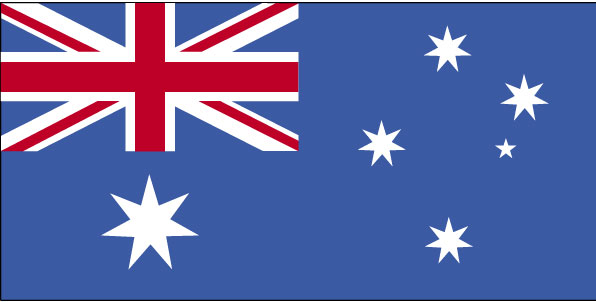
Australia
Australia
Declare Your Relationship to Australia
CountryReports Community
- Studying13
- From Australia5
- Australia heritage2
- Visited3
- Want to visit4
Customs and Culture
Customs and Culture
About the People
Australians have a good sense of humor and anything is a topic for humor. Australians have a sense of national Pride especially on Anzac day (April 25th National Holiday) where in most towns you will find men and boys wearing the traditional Digger slouch hat. “Digger” is the name for the Australian soldier.
Most people are working for leisure opportunities with increasing amounts working for investment opportunities - real estate etc. Most people regard wealth in terms of real estate. Owning more than one house seems to put you into the “well off” category. Most households have plenty of spare cash for cars and entertainment.
Cultural Attributes
Australians have a good sense of humor and anything is a topic for humor. Australians have a sense of national pride, especially on Anzac day (April 25th National Holiday) where in most towns you will find men and boys wearing the traditional Digger slouch hat. “Digger” is the name for the Australian soldier.
Most people are working for leisure opportunities with increasing amounts working for investment opportunities - real estate etc. Most people regard wealth in terms of real estate. Owning more than one house seems to put you into the “well off” category. Most households have plenty of spare cash for cars and entertainment.

Land of the Great Barrier Reef
Greetings, Gestures & Visiting
A typical greeting in the morning would include “Hi”, “Hello” or “Good Morning” or Just “'Morning”. During the day one would say “Hi”, “Hello” or “Gday”. “Gday” is more or less restricted to the working class and males.
Greetings are usually accomplished with a handshake - especially between males and especially if you have not seen each other in more than a few weeks. When someone leaves they might shake hands if they are male, and kiss on the cheek if they are female.
Pointing at someone with the index finger is rude, One usually points with the open hand. Forming a “V” with the index and middle fingers, palm facing in is considered vulgar. Many times it is considered impolite to touch people during conversation. During a conversation with Aussies, you should stand back - most Aussies like a bit of personal space. Eye contact is good, but do not stare. When sitting, sit back, without folding your arms.
Australian men are not expressively emotional. To be overly physically demonstrative is sometimes seen as unmanly.
When yawning, always cover your mouth and say, "Excuse me". When drinking in some Australian pubs, you can signal that you can win a fight with anyone in the bar simply by finishing your drink, turning the glass upside down, and placing the glass squarely on the bar.
Australians are very much into sports, thus, any type of sportsmanlike gestures, such as congratulating a good performance or being a good loser, are appreciated. Good sportsmanship is highly respected in Australia.
Australian catchphrases include “G'day mate!”, “no worries”, “not a problem” and “Good on yer!”. Visiting without a prior appointment is common but be careful about timing. The atmosphere can tense up if you call on people shortly before “Te”, the evening meal or dinner time. Only newer homes have more than one “Loo” or bathroom. Older homes might have the bathroom outside in a shed or “Dunny”
The most popular way to socialize is at a pub or club. Usually, this involves beer and often gambling (poker machines are at most clubs and many pubs). Impromptu visits are usually met with an invitation to join which one should decline or at least answer with “are you sure”. After that, it is okay to visit.
Australians will frequently dress in styles that are popular in Europe and other western countries. In winter, jumpers or sweaters are common in many homes due to a lack of central heating. During the summer shorts and a T-shirt are popular for both males and females. Females often wear running shoes or sandals with skirts.
Diet
“Tucker” is the aussie word for food. Because of Australia's many immigrant communities, many of the dishes have European and Asian influences including Asian, Greek, Italian and Thai dishes. The unofficial national dish is the Great Australian Meat Pie. A variation of this is found in Adelaide called a “Pie Floater” or “Adelaide Floater” made from a meat pie floating in a small sea of split pea soup. Surprisingly good, this dish is associated with Adelaide, and not common throughout Australia. The Aborigines traditionally ground various seeds to make flour for a type of bread. Early settlers learned the technique and called the bread "damper." Kangaroo meat is another Aboriginal delicacy.
Australians' eating habits reflect their British heritage. A traditional breakfast may include fruit or juice, cold cereal or hot porridge, fried eggs and sausages, with hot tea or coffee. Toast may be spread with Vegemite, a concentrated yeast extract. For more leisurely breakfasts, some people enjoy baked beans, spaghetti or minced meat on toast.
The noon meal is usually quite light. Most people eat sandwiches during the work week. Other lunch foods include Australian meat pies (a flaky pastry filled with ground beef mixed in spices) and sausage rolls with hot chips (French fries). Children enjoy milk flavored with vanilla, strawberry, chocolate, peppermint or spearmint. An afternoon snack may feature lamingtons (small sponge cakes with chocolate frosting and coconut) or pikelets (small pancakes) and tea.
A typical dinner consists of meat, potatoes and vegetables. Most families have barbecues and often grill their meat. One specialty is steak stuffed with oysters. The array of available seafood includes lobsters, Sydney rock oysters, barramundi fish, mud crabs, crayfish, prawns and snapper.
Dessert is often fresh fruit, such as bananas, mangoes, pawpaws (papayas), pineapples, pears, apples and citrus fruit. Custard is also a popular dessert. Another well-known dessert is pavlova, made with meringue, cream and fruit. The name honors the ballerina Anna Pavlova, who visited Australia in the 1920's.

Family
More than 85% of Australians live in urban areas, mostly on the east coast. Sydney and Melbourne are home to almost a third of the total population. Further inland, there are enormous distances between the small towns. Sheep farmers may live on isolated farms, known as sheep stations, many kilometers from their nearest neighbors. A typical Australian home is a one-story dwelling made of brick with a tile roof. A two-story home is considered a luxury. Most houses have their own plot of land with a garden. Many rural homes have a backyard dunny, or outhouse. In the warm northern area of Australia, homes are built on stilts, allowing airflow beneath the building and acting as protection against flooding.
Australia is an aging society. The number of people over 65 is expected to double during the next few decades. Elderly people, who receive government pensions after the age of 65, may live on their own or in retirement homes. Australia once had a reputation as a "macho" country, where men expected women to take a subordinate role and remain at home as wives and mothers. However, in recent years, this reputation has changed. In the 1970s, Germaine Greer, a leading feminist thinker, and other Australian women demanded greater rights for women. Women now enjoy a larger range of career opportunities and increased political influence.
It is a common misconception that Australia's indigenous peoples, the Aborigines, and the Torres Strait Islanders, live in remote or nomadic communities. In fact, Aborigines live in every state and territory of Australia, both in highly urbanized locations and in remote rural areas. Although in the past, Aborigines were nomadic people, few Aborigines today have a traditional tribal lifestyle.
Recreation
The national sport Australian-rules football ( "Aussie Rules") a combination of rugby and soccer was invented in Melbourne about 1858. It is played with an oval ball on a huge oval field. Each team has eighteen players and each end has four goalposts. Aussie Rules football attracts more spectators than any other sporting event in the country. Cricket is also a popular national sport with the Melbourne Cricket Club being established about 1838. The first “Test” match between Australian and English cricketers was won by Australia at the Melbourne Cricket Ground in 1878. Since then the Test trophy has been nicknamed the “Ashes” A modified form of the game, called "Kanga Cricket," is played by children, using plastic equipment.
Netball is the most popular women's sport in Australia. Netball is a fast, skillful team game based on running, jumping, throwing, and catching. Teams may include up to twelve players but only seven may take the court at any one time.
With children, soccer is popular, but they switch over to rugby or Australian Rules football around the age of 7 or 8. Handball is a popular game among children: a tennis or rubber ball is bounced off the hand of one player into the court of the opponent. Many girls enjoy playing netball.
Among older Australians, lawn bowling is popular, and most cities have lawn bowling clubs. Australians enjoy games of chance. Unique betting games include "two-up," a game that involves spinning pennies and is legal on only one day of the year-ANZAC Day.
Australians have almost unlimited recreational choices. The mountains provide opportunities for hiking during the summer and alpine skiing during the winter. National parks and wildlife reserves attract nature lovers. Australia's beaches, including the famous Bondi Beach near Sydney and Surfer's Paradise, a resort near Brisbane, offer opportunities for "boogie boarding," surfing, swimming, sailing, scuba diving, fishing, and sailing. Because strong currents along the coast make swimming dangerous, specially trained lifesavers patrol Australia's beaches. Lifesaving clubs, first formed in Sydney, are staffed with volunteers.
Student Life
Breakfast will vary by family preferences and culture. Twenty percent of Australia’s inhabitants were not born in the country, and another 20% have at least one parent who was born outside of Australia. Many families are diligent in preserving their own subculture and its foods.
Children usually take public transportation to and from school. Unlike North American schools, there is no bus system dedicated solely to the schools, but public transportation supports the needs of students, as regulated by each state.
Education is a priority in Australia and is regulated by each state or territory. The teaching tends to be interactive and challenging, with much student participation. The schools place much emphasis on technology, ensuring access for students and teachers to multimedia materials, Internet access, and general computer usage. An average school lunch costs no more than US$3-4. Traditional lunches include meat pies, sausage rolls, and hotdogs, although health-conscious menus are tending more toward foods such as sushi, noodles with vegetables, sandwiches, and watermelon slices. School lunch shops are run by the Parents and Citizens’ Association, whose volunteers create menus and prepare the food.
Australian schools are rigorous and expect their students to work hard in school. Most school days begin at about 9:00 a.m. and run until 3:00 or 3:30 in the afternoon, Monday through Friday. Most Australian schools require their students to wear a conservative uniform, determined by a local school council. Nearly all elementary schools will teach the core subjects of mathematics, science, arts, technology, languages, and English. Education is demanding, and most students understand that they will have a significant amount of homework regularly. Although the last two years of secondary school are not required, they do play a significant role in preparing students who desire to attend a university or advance towards a specific career. During those years, students will focus their studies on particular disciplines such as digital media, agriculture, performing arts, or applied mathematics rather than being required to study general topics. Approximately 99% of all students complete the mandatory first 10 years of school and earn a School Leaving Certificate, with slightly over 70% continuing on to finish the final two years offered.
A variety of extracurricular activities are usually available to students in secondary schools, including performing arts (choir, drama, orchestra, band), publishing (school magazine), and athletics (cricket, swimming, tennis, basketball, and other sports).
Children in Australia love to spend time outdoors after school and on weekends. Many join sports clubs for health, fun, and the thrill of competition. As they become teens, evenings may find them watching movies or hanging out at disco clubs. Because much of the population lives close to the coast, swimming is not only a pastime but also a way of life for many.
Australians are well known for their hospitality and openness. Most parents work outside the home, and evening meals are a perfect time to gather the family together, catch up on the day’s events, and share stories. Despite their openness, parents are quite protective of their children and are often quite strict about family rules. Families are important in Australia, and so is family time. Although many people around the world perceive Australians to be rugged outdoors people who spend much of their time surviving in the Outback, riding horses in the Smokey Mountains, or exploring the Great Barrier Reef, 85% of the country’s population lives in urban areas.
Australia offers two general types of schools: government and private. Government schools provide “free” education to the children, but families and others are encouraged to make donations to enhance what each school has to offer in both its curriculum and its extracurricular activities. Private schools charge tuition fees that range widely and are often founded on alternative educational philosophies, including religious ones. Though there is some diversity between states and territories concerning the school year, most follow a general calendar of four terms with breaks in between called holidays. The longest holiday extends over Christmas, which is the major summer holiday, and usually lasts for five or more weeks. Children are required to attend school in Australia until age 15. Preschool, which is offered beginning at age 3, is not obligatory. Attendance is usually not very high until the year before entering primary school, which serves as a preparatory year. Most children participate in that year. Primary school, which covers ages 6 to 12 or 13, is mandatory. This is followed by secondary school, from ages 12 or 13 to 17 or 18, depending on the regulations of the local state or territory.
Holidays
Australia Day
1/26Independence
Birth date - Pamela Lyndon (P.L.) Travers
8/9Birthday
Birth date - Pamela Lyndon (P.L.) Travers, the author of Mary Poppins series, was born Helen Lyndon Goff in Maryborough, Queensland, on 9th August, 1899.
Christmas
12/25Christmas
Australia observed its first Christmas in 1788 in Sydney.
Christmas arrives at the beginning of summer vacation with figures of Santa and Father Christmas clad in shorts and T-Shirts. Children write letters to Santa and gifts are exchanged on Christmas. Local tradition has Swag Man, a figure like Santa who lives under Uluru (Ayers Rock, the largest monolith in the world) and comes out at Christmastime with his dingoes to deliver gifts.
Some Australians have Christmas trees from the cuttings of native eucaluptus or gum trees, but most have Artificial christmas trees decorated with western ornaments or natural elements such as seed pods, gum nuts or berries.
Costal Australians have recently replaced the traditional indoor sit-down Christmas dinner with an outdoor dinner at the seaside or an outdoor buffet with a menu of cold meats, seafood, salads, chocolates and the traditional mince pie or plum pudding. The mince pie or plum pudding is usually served with a coin, a ring, or a thimble inside and whoever finds the item will have wealth, marriage or spinsterhood in the coming year. For those living in the remote interior of Australia Santa usually appears via small aircraft or by train.
Dates of Interest
- April 25
Australian and New Zealand Army Corps (ANZAC) Day marks the day when Australian and New Zealand troops arrived on Turkey's Gallipoli Peninsula during World War I on April 25, 1915.
How do people greet each other in Australia?
Common greetings are "Hi," "Hello," "Good Morning" or just "'Morning," and "Gday" during the day; a handshake usually accompanies greetings, especially between males.
Do
- Shake hands, especially with males or if you haven't met in a few weeks
- Kiss on the cheek when a woman is leaving
Good to know
- "Gday" is more or less restricted to the working class and males
- Catchphrases include "G'day mate!", "no worries", "not a problem" and "Good on yer!"
What is eating like in Australia?
Food ("tucker") reflects British heritage with European and Asian influences; meals range from light lunches like sandwiches and meat pies to dinners of meat, potatoes and vegetables, often barbecued.
Good to know
- The unofficial national dish is the Great Australian Meat Pie
- In Adelaide try the "Pie Floater" (meat pie in split pea soup)
- Toast may be spread with Vegemite, a concentrated yeast extract
- Well-known desserts include pavlova, lamingtons, pikelets and custard
- Seafood is abundant: lobsters, Sydney rock oysters, barramundi, mud crabs, crayfish, prawns and snapper
What should I know about visiting and social etiquette in Australia?
Impromptu visits are common but be mindful of timing; the most popular way to socialize is at a pub or club, often over beer and gambling.
Do
- Cover your mouth and say "Excuse me" when yawning
- Show good sportsmanship, such as congratulating a good performance or being a good loser
- When first invited to join an impromptu visit, decline or answer with "are you sure" before accepting
Don’t
- Don't call on people shortly before "Tea" (the evening meal), as the atmosphere can tense up
Good to know
- Older homes might have the bathroom outside in a shed or "Dunny"
- Good sportsmanship is highly respected
How should I dress in Australia?
Australians dress in styles popular in Europe and other western countries, with practical seasonal clothing.
Good to know
- In winter, jumpers or sweaters are common indoors due to a lack of central heating
- In summer, shorts and a T-shirt are popular for both males and females
- Females often wear running shoes or sandals with skirts
What gestures should I be careful about in Australia?
Australians value personal space and reserved body language; some gestures are considered rude or vulgar.
Do
- Point with an open hand
- Maintain good eye contact without staring
- Stand back and give people personal space
- Sit back without folding your arms
Don’t
- Don't point at someone with your index finger
- Don't form a "V" with index and middle fingers, palm facing in (considered vulgar)
- Don't touch people during conversation
- Don't be overly physically demonstrative, which can be seen as unmanly
What are families and society like in Australia?
More than 85% of Australians live in urban areas, mostly on the east coast, though some live on isolated rural sheep stations; women now enjoy expanded career opportunities and political influence.
Good to know
- A typical home is a one-story brick dwelling with a tile roof; a two-story home is considered a luxury
- In warm northern areas homes are built on stilts for airflow and flood protection
- Aborigines live in every state and territory, in both urban and rural areas
- Elderly people receive government pensions after age 65
What do Australians do for recreation?
Australians love sports and the outdoors, with Australian-rules football, cricket and netball among the most popular, plus abundant beach and mountain activities.
Don’t
- Don't swim unsupervised—strong coastal currents make swimming dangerous, so stay near patrolling lifesavers
Good to know
- "Aussie Rules" football attracts more spectators than any other sport
- Cricket is popular, with the Test trophy nicknamed the "Ashes"
- Netball is the most popular women's sport
- Beaches like Bondi and Surfer's Paradise offer surfing, swimming, sailing, scuba diving and fishing
Last updated: 2026-07-12 · Sources: CountryReports
Photos of Australia
Photos of Australia
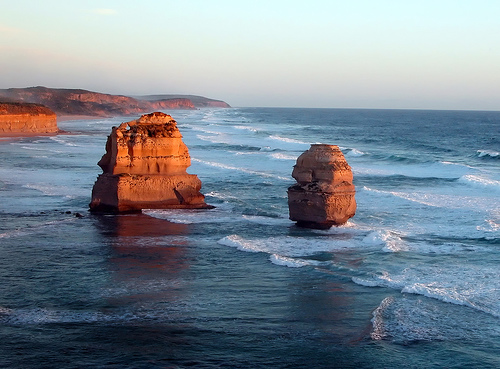
The Twelve Apostles, Australia
Black Cockatoo
Koala on Kangaroo Island
Seal Bay, Kangaroo Island
Glenelg, South Australia
Sydney Harbour
Wallabys in South Australia
Le Bon Cake Shop Melbourne Australia
The Twelve Apostles beach, Australia
Flinders Street Station, Melbourne
Melbourne, Austrlia
Weekend market in Manly, Australia


Travel and Tourism
Travel and Tourism
- Travel Alert Status
- Level 1: Exercise Normal Precautions
- Currency
- 1.352
- Time Difference
- UTC+10 (14 hours ahead of Washington, DC, during Standard Time) time zone note: Australia has four time zones, including Lord Howe Island (UTC+10:30)
- Climate
- Australia is a large, comparatively dry, and sparsely inhabited continent, almost as large as the 48 contiguous U.S. states. Australia, the only continent that consists of a single nation, is also the only inhabited continent that is isolated from all others (total coastline exceeds 22,000 miles). The average elevation is about 985 feet, which makes it the flattest continent on earth. This is among the prime reasons for sparse annual rainfall--16.5 inches, which is less than two-thirds of the world average (26 inches). Further, the rain falls mainly on coastal regions: forty percent of the surface gets less than 10 inches per year, and annual evaporation exceeds annual rainfall on about three-quarters of the land. Overall runoff is less than half that of the Mississippi basin; Australia has no navigable rivers of any commercial significance. In general, the country is warmer than the U.S. (the northern one-third is in the Tropics, the rest in the Temperate Zone). Temperature extremes are much less pronounced. Sydney's average daytime temperature in the coldest month (July) is 59°F; in the warmest month (January), 81°F.
- Airports
- 444
- Recommended Vaccinations
- How important is it to do your research about vaccinations? It might just save your life! Make yourself aware of the different types of vaccinations and which ones you may need to travel to your destination. Schedule an appointment with your doctor at least four to six weeks before you travel to ensure you receive all important shots. Be sure that you and your family are up to date on your routine vaccinations. Which vaccinations you need will depend on a number of factors including your destination, whether you will be spending time in rural areas, the season of the year you are traveling, your age, health status, and previous immunizations.
Read the full travel guide — health, safety, vaccinations, disease risk, sanitation, and transit details.
View full travel guideRecipes
Recipes
Fruit Cordial
Beverage
Main Dish
Fruity Seafood
Main Dish
Australian Meat Pie
Main Dish
Kangaroo Tail Soup
Main Dish
Beef Nambour
Side Dish
Roseville Tea Sandwiches
Side Dish
Potato Salad
Side Dish
PremiumPasta Salad
Side Dish
PremiumPatio Salad
Side Dish
PremiumCream of Carrot and Honey Soup
History
History
Historical Eras
Aboriginal Australia
40000 BCE – 1770
For over 40,000 years, Aboriginal peoples inhabited the Australian continent, developing hundreds of distinct languages, rich spiritual traditions, and sophisticated land management practices. Arriving from Southeast Asia in successive migrations, these communities built enduring cultures tied to the land through the concept of the Dreamtime. Portuguese, Spanish, and Dutch navigators made contact with the coastline before sustained European engagement began.
Colonial Era
1770 – 1901
Captain James Cook claimed the eastern coastline for Great Britain in 1770, and in January 1788 the First Fleet under Captain Arthur Phillip established the Colony of New South Wales at Sydney Cove, initially populated largely by transported convicts. Six separate colonies were founded across the continent through the 19th century, and the gold rush of 1851 dramatically accelerated population growth, wealth, and demands for self-governance. By the 1850s most colonies had achieved responsible government, laying the groundwork for federation.
Federation & Early Commonwealth
1901 – 1945
The Commonwealth of Australia was proclaimed on January 1, 1901, uniting the six colonies under a federal parliament that opened in Melbourne before relocating to the purpose-built capital of Canberra in 1927. Australia fought alongside Britain in both World Wars, suffering enormous losses at Gallipoli in 1915 that forged a distinct national identity. The Statute of Westminster Adoption Act of 1942 formally confirmed Australia's full legislative autonomy from Britain.
Post-War & Migration
1945 – 1983
Following World War II, Australia launched an ambitious mass immigration program under the slogan "populate or perish," dramatically reshaping the country's demographics with arrivals from Britain, southern Europe, and later Asia. Economic expansion fueled rapid urbanization and industrialization, while the White Australia Policy was progressively dismantled between the 1950s and its formal abolition in 1973 under Prime Minister Gough Whitlam. This era also saw significant advances in Aboriginal rights, culminating in the 1967 referendum granting the federal government power to legislate for Indigenous Australians.
Modern Australia
1983 – present
The Hawke and Keating Labor governments of the 1980s and 1990s floated the Australian dollar, deregulated the economy, and introduced compulsory superannuation, transforming Australia into a globally integrated market economy. The Australia Act of 1986 severed the last formal British legal ties, and a 1999 republican referendum, though defeated, signaled ongoing debate over national identity. Australia entered the 21st century as a prosperous, multicultural nation grappling with Indigenous reconciliation, climate change, and its strategic role in the Asia-Pacific.
Overview
Timeline of Key Events
4000 BCE
The first Aborigines arrive
The first Aborigines arrive from south-east Asia. By 20,000 BC they have spread throughout the mainland and Tasmania.
1770
Lieutenant James Cook charts the easter coastline
Lieutenant James Cook charts the Easter coastline of the continent aboard the Endeavour and claims the land as a British possession.
1787
New South Wales Courts Act
New South Wales Courts Act established. An Act to keep the convicts on the straight and narrow.
1788
Britain establishes the Colony of New South Wales at Sydney Cove
Britain establishes the Colony of New South Wales at Sydney Cove.
1801
Lieutenant John Murray lands at bay he names Port Phillip
Lieutenant John Murray lands at bay he names Port Phillip.
1804
David Collins establishes convict settlement at Hobart on the Derwent River
David Collins establishes convict settlement at Hobart on the Derwent River in Van Diemen’s Land. William Paterson establishes second settlement in Van Diemen’s Land, named Gworge Town on Tamar River.
1810
Governor Lachlan Macquarie takes office, Ellis Bent becomes deputy judge advocate
Governor Lachlan Macquarie takes office and Ellis Bent becomes the Colony’s third deputy judge advocate.
Read the full history profile — narrative overview, defining eras, and the complete timeline in one place.
View expanded historyInteresting Facts
Interesting Facts
When a child loses a tooth they put their tooth under thier pillow and wait for the Tooth Fairy to take their tooth and bring them money.
When an Aborigianl child loses a tooth thier family helps them put their tooth inside the shoot of a pandanus plant so that when the pandanus grows into a tree, their tooth will grow too. There are spirits in the pandanus leaves that will look after them while their tooth is growing.
The Great Barrier Reef is the longest coral reef in the world. It lies beneath the shallow ocean waters of Australia's east coast.
The roof of the Sydney Opera House looks like sails on a boat.
Ayers Rock rises from the desert in the middle of Australia. It is far from any large city.
Australia is a federation of six states (New South Wales, Victoria, Tasmania, Queensland, South Australia and Western Australia) and two territories (the Northern Territory and the Capital Territory, where Canberra is located).
See every fact — trivia, oddities, and curious tidbits gathered from across the country.
View all interesting factsGeography and Environment
Geography and Environment
- Terrain
- mostly low plateau with deserts; fertile plain in southeast
- Climate
- Australia is a large, comparatively dry, and sparsely inhabited continent, almost as large as the 48 contiguous U.S. states. Australia, the only continent that consists of a single nation, is also the only inhabited continent which is isolated from all others (total coastline exceeds 22,000 miles). Average elevation is about 985 feet, which makes it the flattest continent on earth. This is among the prime reasons for sparse annual rainfall—16.5 inches, which is less than two-thirds the world average (26 inches). Further, the rain falls mainly on coastal regions: forty percent of the surface gets less than 10 inches per year, and annual evaporation exceeds annual rainfall on about three quarters of the land. Overall runoff is less than half that of the Mississippi basin; Australia has no navigable rivers of any commercial significance. In general, the country is warmer than the U.S. (the northern one-third is in the Tropics, the rest in the Temperate Zone). Temperature extremes are much less pronounced. Sydney’s average daytime temperature in the coldest month (July) is 59°F; in the warmest month (January), 81°F.
- Natural Hazards
- cyclones along the coast; severe droughts; forest fires
- Current Environmental Issues
- soil erosion from overgrazing, industrial development, urbanization, and poor farming practices; soil salinity rising due to the use of poor quality water; desertification; clearing for agricultural purposes threatens the natural habitat of many unique animal and plant species; the Great Barrier Reef off the northeast coast, the largest coral reef in the world, is threatened by increased shipping and its popularity as a tourist site; limited natural fresh water resources
Read the full geography and environment profile — terrain, climate, natural resources, hazards, land use, and international agreements.
View full geographyPeople & Demographics
People & Demographics
Religion
Languages Spoken
English, native languages
- English
Population
- Population
- 21,515,754
- Population: Male/Female
- male: 13,305,110 female: 13,463,488
- Population Distribution
- population is primarily located on the periphery, with the highest concentration of people residing in the east and southeast; a secondary population center is located in and around Perth in the west; of the States and Territories, New South Wales has, by far, the largest population; the interior, or "outback", has a very sparse population
- Urban Population
- urban population: 86.6% of total population rate of urbanization: 1.27% annual rate of change note: data include Christmas Island, Cocos Islands, and Norfolk Island
- Population in Major Urban Areas
- 5.235 million Melbourne, 5.121 million Sydney, 2.505 million Brisbane, 2.118 million Perth, 1.367 million Adelaide, 472,000 CANBERRA (capital)
- Nationality Noun
- noun: Australian(s) adjective: Australian
- Ethnic Groups
- English 33%, Australian 29.9%, Irish 9.5%, Scottish 8.6%, Chinese 5.5%, Italian 4.4%, German 4%, Indian 3.1%, Australian Aboriginal 2.9%, Greek 1.7%, unspecified 4.7%
- Language Note
- English 72%, Mandarin 2.7%, Arabic 1.4%, Vietnamese 1.3%, Cantonese 1.2%, other 15.7%, unspecified 5.7%
Education
- Literacy Definition
- Age 15 and over can read and write
Education is a priority in Australia and is regulated by each state or territory. The teaching tends to be interactive and challenging, with much student participation. The schools place much emphasis on technology, ensuring access for students and teachers to multimedia materials, Internet access, and general computer usage.
An average school lunch costs no more than US$3-4. Traditional lunches include meat pies, sausage rolls, and hotdogs, although health-conscious menus are tending more toward foods such as sushi, noodles with vegetables, sandwiches, and watermelon slices. School lunch shops are run by the Parents and Citizens’ Association, whose volunteers create menus and prepare the food.
Health Information
- Life Expectancy at Birth
- total population: 83.5 years male: 81.3 years female: 85.7 years
- Alcohol consumption per capita
- total: 9.51 liters of pure alcohol beer: 3.71 liters of pure alcohol wine: 3.67 liters of pure alcohol spirits: 1.32 liters of pure alcohol other alcohols: 0.81 liters of pure alcohol
- Tobacco Use
- total: 13.6% male: 15.6% female: 11.5%
- Infant Mortality Rate
- total: 2.9 deaths/1,000 live births male: 3.2 deaths/1,000 live births female: 2.7 deaths/1,000 live births
Life Expectancy
- Life Expectancy at Birth
- total population: 83.5 years male: 81.3 years female: 85.7 years
- Median Age
- total: 38.1 years male: 36.9 years female: 39.2 years
- Age Structure
- 0-14 years: 18.3% (male 2,526,772/female 2,369,425) 15-64 years: 64.7% (male 8,688,023/female 8,640,671) 65 years and over: 17% (male 2,090,315/female 2,453,392)
- Infant Mortality Rate
- total: 2.9 deaths/1,000 live births male: 3.2 deaths/1,000 live births female: 2.7 deaths/1,000 live births
Read the full people and society profile — demographics, health, education, religion, languages, and notable people.
View full people and societyGovernment & Politics
Government & Politics
Country Identity
- Country Name
- Australia
- Full Country Name
- Commonwealth of Australia
- Local - Long
- Commonwealth of Australia
- Local - Short
- Australia
Government Structure
- Government Type
- democratic, federal-state system recognizing the British monarch as sovereign
- Legal System
- based on English common law; accepts compulsory ICJ jurisdiction, with reservations
- Executive Branch
- chief of state: King of Australia CHARLES III (since 8 September 2022), represented by Governor General Sam MOSTYN (since 1 July 2024) head of government: Prime Minister Anthony ALBANESE (since 23 May 2022); Deputy Prime Minister Richard MARLES (since 23 May 2022) cabinet: prime minister nominates, from among members of Parliament, candidates who are subsequently sworn in by the governor general to serve as government ministers elections: none; the monarch is hereditary; governor general appointed by the monarch on the recommendation of the prime minister; following legislative elections, the leader of the majority party or leader of a majority coalition is sworn in as prime minister by the governor general note: the ruling government coalition consists of the Australian Labor Party, which holds a majority in the House of Representatives
- Legislative Branch
- bicameral Federal Parliament consists of the Senate (76 seats - 12 from each of the six states and 2 from each of the two mainland territories; one-half of state members are elected every three years by popular vote to serve six-year terms while all territory members are elected every three years) and the House of Representatives (150 seats; members elected by popular preferential voting to serve terms of up to three-years; no state can have fewer than 5 representatives) elections: Senate - last held 9 October 2004 (next to be held no later than June 2008); House of Representatives - last held 9 October 2004 (next to be called no later than November 2007) election results: Senate - percent of vote by party - NA%; seats by party - Liberal Party-National Party coalition 39, Australian Labor Party 28, Democrats 4, Australian Greens 4, Family First Party 1; House of Representatives - percent of vote by party - NA%; seats by party - Liberal Party-National Party coalition 87, Australian Labor Party 60, independents 3
- Judicial Branch
- High Court (the chief justice and six other justices are appointed by the governor general)
- Suffrage
- 18 years of age; universal and compulsory
- Constitution
- 9 July 1900, effective 1 January 1901
- Independence
- 1 January 1901 (federation of UK colonies)
- National Holiday
- Australia Day, 26 January (1788)
Capital City
- Capital Name
- Canberra
- Capital - geographic coordinate
- 35 16 S, 149 08 E
- Capital Time Difference
- UTC+10 (14 hours ahead of Washington, DC, during Standard Time) time zone note: Australia has four time zones, including Lord Howe Island (UTC+10:30)
the name is claimed to derive from either Kambera or Camberry, which are names corrupted from the original native designation for the area "Nganbra" or "Nganbira"
Military
Branches: Australian Defense Force (ADF): Australian Army; Royal Australian Navy (includes Naval Aviation Force); Royal Australian Air Force; Joint Operations Command (JOC)
Embassy / Diplomatic Mission
Australian Capital Territory (ACT) or Queanbeyan:
U.S. Embassy in Canberra
Moonah Place
Yarralumla, ACT 2600
Telephone: (61) (2) 6214- 5600
Emergency after-hours telephone: (61) (2) 411-424-608
Facsimile: (61) (2) 6214-5970
NOTE: The U.S. Embassy in Canberra only provides emergency assistance for U.S. citizens in the ACT. The U.S. Embassy does not issue U.S. passports or visas. Passports and other routine citizen services for Canberra and the rest of the ACT are provided by the U.S. Consulate General in Sydney (see contact information below).
New South Wales, Norfolk Island, Lord Howe Island, and Queensland:
U.S. Consulate General Sydney
Level 10, MLC Centre, 19-29 Martin Place, Sydney, NSW 2000
Telephone: (61) (2) 9373-9200
Emergency after-hours telephone: (61) (2) 4422-2201
Facsimile: (61) (2) 9373-9184
Email: SydneyACS@state.gov
NOTE: The Consulate General offers an online appointment system for U.S. citizens seeking routine non-emergency services such as registration, passport, and other consular services. To make an appointment, visit their website. Hours open to the public: 8:00 a.m. to 11:30 a.m., Monday to Friday (except U.S. and Australian holidays and the first Wednesday of each month). For emergency services (e.g., the arrest, death, or serious injury of a U.S. citizen) after 5:00 p.m. on weekdays, holidays and weekends, please call (61) (2) 4422-2201.
Victoria, Tasmania, South Australia, and the Northern Territory:
U.S. Consulate General Melbourne
553 St. Kilda Road, Melbourne, VIC 3004
Telephone: (61) (3) 9526-5900
Emergency after-hours telephone: (61) (3) 9389-3601
Facsimile: (61) (3) 9525-0769
Email: MelbourneACS@state.gov
NOTE: The U.S. Consulate General offers an online appointment system for U.S. citizens seeking routine non-emergency services such as registration, passport, and other consular services. To make an appointment, visit their website. Hours open to the public: 8:00 am – 3:30 pm Monday to Friday. All services other than emergencies require an appointment. For emergency services (e.g., the arrest, death, or serious injury of a U.S. citizen) after 4:30 p.m. or on holidays and weekends, please call (61) (3) 9389-3601.
Western Australia:
U.S. Consulate General Perth
16 St. Georges Terrace, Perth WA 6000
Telephone: (61)(8) 6144- 5100
Emergency after-hours telephone: (61) (8) 9476-0081
Facsimile: (61)(8) 9231-9444
Email: PerthACS@state.gov
NOTE: The Consulate General offers an online appointment system for U.S. citizens seeking routine non-emergency services such as registration, passport, and other consular services. To make an appointment, please visit the Consulate's website. Hours open to the public for American Citizen Services: 8:30 to 11:30 a.m., Monday through Thursday. For emergency services (e.g., the arrest, death, or serious injury of a U.S. citizen) outside of business hours, please call (61) (8) 9476-0081.
Read the full government profile — flag symbolism, national anthem, and other national symbols.
View full government detailsEconomy
Economy
Australia has a prosperous, open-market economy and one of the most resilient in the developed world, consistently ranking among the top nations for GDP per capita. The economy is underpinned by a strong services sector, which accounts for around two-thirds of GDP, significant natural resource exports, and a stable financial system that weathered the 2008 global financial crisis without falling into recession. Australia's ongoing commitment to economic reform, sound fiscal management, and trade liberalization has been central to its long-term growth. The country is a major exporter of iron ore, coal, natural gas, and agricultural products, with China remaining by far its largest trading partner. In recent years, Australia has navigated headwinds including elevated inflation and higher interest rates, prompting the Reserve Bank of Australia to lift the cash rate to 4.35 percent by late 2023 before holding it steady through much of 2024 and beginning a cautious easing cycle in 2025 as inflation moderated back toward the 2–3 percent target band. GDP growth slowed markedly through 2023 and 2024, with per capita output contracting for several quarters as higher borrowing costs weighed on household consumption and housing investment, though aggregate growth was supported by strong population gains and public spending. Despite these pressures, unemployment has remained historically low at around 4 percent, and the labor market has stayed broadly resilient. The government has prioritized diversifying the economy through its Future Made in Australia agenda, expanding critical minerals processing and renewable energy industries, and reducing reliance on a narrow set of commodity exports to build long-term economic stability.
Snapshot
- Currency Name and Code
- Australian Dollar (AUD)
- GDP — official exchange rate
- $612,800,000,000 (USD)
- GDP Real Growth Rate
- 2.5%
- GDP by Sector
- agriculture: 3% industry: 25% services: 72%
- Gini Index
- 35.2
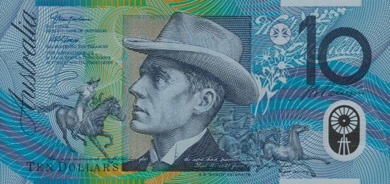
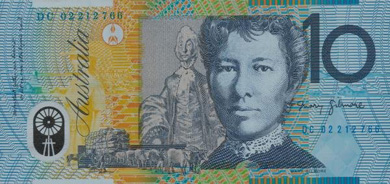
Banknotes
Budget & Public Finance
- Fiscal Year
- 1 July - 30 June
- Annual Budget
- $240,200,000,000 (USD)
- External Debt
- $509,600,000,000 (USD)
- Investment (% of GDP)
- 24.8%
- Current Account Balance
- -$41,100,000,000 (USD)
- Reserves of Foreign Exchange
- $2,147,483,647 (USD)
Labor, Industry & Trade
- Labor Force by Occupation
- services 73%; industry 22%; agriculture 5%
- Household Income — highest 10%
- 25.4%
- Industries
- mining, industrial and transportation equipment, food processing, chemicals, steel
- Agriculture Products
- wheat, barley, sugarcane, fruits; cattle, sheep, poultry
- Export Commodities
- coal, gold, meat, wool, alumina, iron ore, wheat, machinery and transport equipment
- Export Partners
- Japan 18.5%, US 9.6%, South Korea 8.3%, China 6.9%, New Zealand 6.5%, UK 4.7%, Singapore 4.1%, Taiwan 4%
- Import Commodities
- machinery and transport equipment, computers and office machines, telecommunication equipment and parts; crude oil and petroleum products
- Import Partners
- US 18.3%, Japan 12.3%, China 10.1%, Germany 5.7%, UK 4.6%
Energy
- Oil Production
- 530,000 bbl/day
- Oil Consumption
- 875,600 bbl/day
- Oil Reserves
- 3,664,000,000 bbl/day
- Natural Gas Production
- 35,600,000,000 cu m
- Natural Gas Consumption
- 25,080,000,000 cu m
- Natural Gas Imports
- 0 cu m
- Natural Gas Exports
- 9,744,000,000 cu m
- Natural Gas Reserves
- 2,549,000,000,000 cu m
Communications
- Telephone System
- General Assessment: excellent domestic and international service Domestic: domestic satellite system; significant use of radiotelephone in areas of low population density; rapid growth of mobile telephones International: country code - 61; landing point for the SEA-ME-WE-3 optical telecommunications submarine cable with links to Asia, the Middle East, and Europe; the Southern Cross fiber optic submarine cable provides links to New Zealand and the United States; satellite earth stations - 10 Intelsat (4 Indian Ocean and 6 Pacific Ocean), 2 Inmarsat, 2 Globalstar, 5 other)
- Internet Country Code
- .au
News & Weather
News & Weather
Current Weather
Latest News
Rare identical quadruplets born in Australia - BBC
BBC · 19h ago
Australian ski resorts smash July climate records with temperatures 12C above average - The Guardian
The Guardian · 10h ago
Watch Australia Wants China 'Transparency' on Military Buildup - Bloomberg.com
Bloomberg.com · 1h ago
‘Disturbing parallels’: Holocaust survivors president says exclusion of Jews from public life similar to Nazi Germany - The Guardian
The Guardian · 2h ago
Sydney Sweeney shares bikini and underwear photos in Instagram dump from Australia trip - Fox News
Fox News · 7h ago
KPMG Australia taps insider as CEO in wake of audit leak scandal - Reuters
Reuters · 6h ago
See it: Rare footage captures elusive blue-ringed octopus carrying her eggs off Australian coast - FOX Weather
FOX Weather · 14h ago
Revolut to challenge Australia’s Big Four banks - Financial Times
Financial Times · 5h ago
News via Google News
Climate Overview
Australia is a large, comparatively dry, and sparsely inhabited continent, almost as large as the 48 contiguous U.S. states. Australia, the only continent that consists of a single nation, is also the only inhabited continent that is isolated from all others (total coastline exceeds 22,000 miles). The average elevation is about 985 feet, which makes it the flattest continent on earth. This is among the prime reasons for sparse annual rainfall--16.5 inches, which is less than two-thirds of the world average (26 inches). Further, the rain falls mainly on coastal regions: forty percent of the surface gets less than 10 inches per year, and annual evaporation exceeds annual rainfall on about three-quarters of the land. Overall runoff is less than half that of the Mississippi basin; Australia has no navigable rivers of any commercial significance.
In general, the country is warmer than the U.S. (the northern one-third is in the Tropics, the rest in the Temperate Zone). Temperature extremes are much less pronounced. Sydney's average daytime temperature in the coldest month (July) is 59°F; in the warmest month (January), 81°F.
Videos
Videos
2 curated YouTube videos.
Source: YouTube
Source: YouTube
Frequently Asked Questions
Frequently Asked Questions
What is the population of Australia?
How do people greet each other in Australia?
What is eating like in Australia?
What should I know about visiting and social etiquette in Australia?
How should I dress in Australia?
What gestures should I be careful about in Australia?
What are families and society like in Australia?
What do Australians do for recreation?
What is the capital of Australia?
Where is Australia located?
What are Australia's ocean and sea borders?
What is the primary religion in Australia?
What currency does Australia use?
What language is spoken in Australia?
What is the geography of Australia like?
What is Australia known for?
Last reviewed 2026