
 English
 Español
 中文
中文 हिन्दी
 Français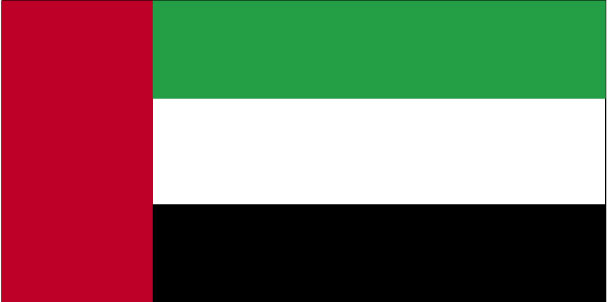
United Arab Emirates
Declare Your Relationship to United Arab Emirates
CountryReports Community
- Studying3
- From United Arab Emirates0
- United Arab Emirates heritage1
- Visited0
- Want to visit0
Customs and Culture
Customs and Culture
About the People
The giving and receiving of hospitality is an important part of Arab and Bedouin culture. Politeness and courtesy to guests, whether friends or business contacts, is a noticeable feature of life in the UAE.
Cultural Attributes
The giving and receiving of hospitality is an important part of Arab and Bedouin culture. Politeness and courtesy to guests, whether friends or business contacts, is a noticeable feature of life in the UAE.

Land of Ancient Pearls and Desert Hospitality
Greetings, Gestures & Visiting
Greetings are elaborate and extended, with numerous references to Allah (the Muslim name for God). Common expressions include Al-hamdu-lilah (all praise is due to Allah) and Subhan-Allah (glory be to Allah).
It is considered polite to take off your shoes before entering a private home.
In traditional Arab society, men and women do not socialize or eat together, although modern Arabs may not observe this tradition within the family. Incense is burned to welcome guests into an Emirati home. The smell fills the air with a sweet fragrance. According to tradition, rosewater may also be sprinkled on guests' head and hands as they leave someone's home.
Men wear the "dishdasha" or "khandura" an ankle length robe, usually while. Dishdashas are usually worn with a with or red checkered head cloth "gutra" and a twisted black rope-like coil, an "agla" which holds the gutra in place; under the headdress is a skull cap called a "gafir" Most women wear a black "abaya" a long loose black robe that covers their normal clothes plus a headscarf, called a "shayla".
Some women also wear a thin black veil covering their face, while some older women wear a small mask made of fabric known as a "burkha" which covers the nose, brow, and cheekbones.
Diet
At mealtimes, guests may be invited to join in the traditional mansaf of whole lamb and spiced rice. The meal is laid out on trays and people help themselves from the trays. Arabic coffee, known as ghawah, is served after the meal. Reception rooms where meals are eaten are known as majlis. Majlis are reserved for celebrating special occasions or entertaining important guests. These rooms are spacious, decorated with carpets and cushions.
Before meals a mezze, or appetizer, is served. The most famous mezze dish is hummus, a puree of spices and chickpeas. Another popular dish is tabbouleh, a salad of cracked wheat and parsley with tomatoes, cucumbers, onions and olive oil. Vine leaves stuffed with rice are also widely enjoyed.
Every imaginable spice can be found in the spice streets known as atarinehs of UAE's markets. Spices are sold in paper cones called dukkahs. One of the most popular mixtures is made up of cinnamon, cayenne pepper and paprika. Other popular ingredients in Emirati cuisine include sesame oil, pine nuts, walnuts, almonds and parsley.
At mealtimes, guests may be invited to join in the traditional mansaf of whole lamb and spiced rice. The meal is laid out on trays and people help themselves from the trays. Arabic coffee, known as ghawah, is served after the meal. Reception rooms where meals are eaten are known as majlis. Majlis are reserved for celebrating special occasions or entertaining important guests. These rooms are spacious, decorated with carpets and cushions.
Before meals a mezze, or appetizer, is served. The most famous mezze dish is hummus, a puree of spices and chickpeas. Another popular dish is tabbouleh, a salad of cracked wheat and parsley with tomatoes, cucumbers, onions and olive oil. Vine leaves stuffed with rice are also widely enjoyed.
Every imaginable spice can be found in the spice streets known as atarinehs of UAE's markets. Spices are sold in paper cones called dukkahs. One of the most popular mixtures is made up of cinnamon, cayenne pepper and paprika. Other popular ingredients in Emirati cuisine include sesame oil, pine nuts, walnuts, almonds and parsley.

Family
The life of the family is kept extremely private. In the traditional Arab world the family is a tight unit where children respect their parents and the roles of men and women are clearly defined.
In traditional culture, when a man wants to get married, he must ask his prospective bride's father for permission. The two then agree on a bride-price or mahr. When the mahr is settled, a lawyer or religious leader draws up a marriage contract. Although the couple is legally married after the marriage contract has been completed, they do not live together as partners until after the wedding ceremony.
Weddings are occasions for some of the most colorful celebrations in the Emirates. The bride's house is often decorated with thousands of lights. Feasts are held that may continue for several days. For members of prominent families, the celebration extends beyond family and friends. Public entertainment is usually arranged, including dances, camel races, and musical performances.
Recreation
Camel racing, horse racing, and falconry are traditional pastimes in the UAE. Soccer is the most popular sport. Other sports include cricket, rugby, bowling, tennis, and squash.
Some Emirati children still play traditional games. Al Meryeihana is a skipping game usually played by young girls. Hawari is a game involving toy ships made from palm leaves. Al Ghomaid is like blind man's bluff.
Student Life
Students who complete their secondary education have the opportunity to continue their studies at universities in the UAE or abroad. The UAE has several reputable universities, and many students choose to study abroad in countries like the United States or the United Kingdom.
There are plenty of extracurricular activities available for students in the UAE, including sports, music, arts, and drama. Many schools have after-school clubs and activities that students can participate in. The education system in the UAE is modeled after the western education system, with the medium of instruction being English. The system is divided into primary, secondary and tertiary education. All students are required to attend primary and secondary education, which is free in government schools.
Education is a top priority in the UAE, and the government has invested heavily in developing a modern education system. All children in the country have access to free education up to the university level, and the literacy rate is high.
Holidays
Independence Day
12/2Independence Day
Dates of Interest
- February
Held annually in February, this festival features light installations and projections on various landmarks in Sharjah, transforming the city into a vibrant art gallery.
How do people greet each other in the United Arab Emirates?
Greetings are elaborate and extended, with numerous references to Allah.
Good to know
- Common expressions include Al-hamdu-lilah (all praise is due to Allah)
- Subhan-Allah (glory be to Allah) is also used
What are dining customs like in the United Arab Emirates?
Guests may be invited to share the traditional mansaf of whole lamb and spiced rice, laid out on trays from which people help themselves.
Do
- Help yourself from the shared trays
- Enjoy the mezze appetizers served before the meal, such as hummus and tabbouleh
Good to know
- Arabic coffee, known as ghawah, is served after the meal
- Meals are eaten in reception rooms called majlis, reserved for special occasions or important guests
- Vine leaves stuffed with rice are widely enjoyed
- Spices are sold in paper cones called dukkahs in the spice streets (atarinehs)
What etiquette should I know when visiting a home in the United Arab Emirates?
Hospitality is central to Emirati culture, and homes welcome guests with fragrant incense.
Do
- Take off your shoes before entering a private home
Good to know
- Incense is burned to welcome guests, filling the air with a sweet fragrance
- Rosewater may be sprinkled on guests' head and hands as they leave
- In traditional society, men and women do not socialize or eat together, though modern families may not observe this
How do people dress in the United Arab Emirates?
Men wear an ankle-length robe called a dishdasha or khandura, while women wear a black abaya and headscarf (shayla).
Good to know
- Men's dishdashas are worn with a white or red checkered head cloth (gutra), held by a black coil (agla), over a skull cap (gafir)
- Some women wear a thin black face veil, and some older women wear a fabric mask called a burkha
What is family life like in the United Arab Emirates?
Family life is kept extremely private, forming a tight unit where children respect parents and gender roles are clearly defined.
Good to know
- Traditionally a man asks his prospective bride's father for permission to marry and agrees on a bride-price (mahr)
- A marriage contract is drawn up by a lawyer or religious leader, but the couple lives together only after the wedding ceremony
- Weddings are colorful, with lights, multi-day feasts, and sometimes public entertainment like camel races and dances
What do people do for recreation in the United Arab Emirates?
Traditional pastimes include camel racing, horse racing, and falconry, while soccer is the most popular sport.
Good to know
- Other sports include cricket, rugby, bowling, tennis, and squash
- Traditional children's games include Al Meryeihana (skipping), Hawari (toy palm-leaf ships), and Al Ghomaid (like blind man's bluff)
Last updated: 2026-07-12 · Sources: CountryReports
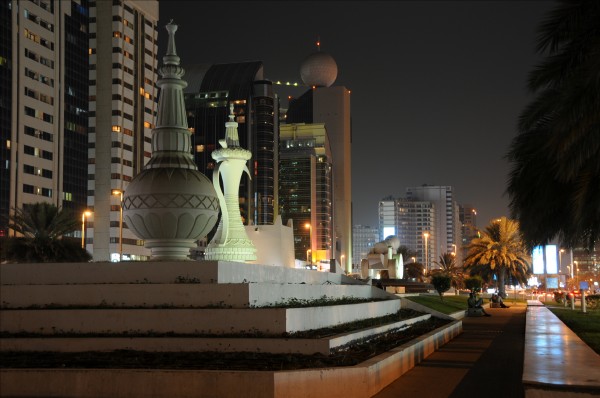
Photos of United Arab Emirates
Photos of United Arab Emirates


Travel and Tourism
Travel and Tourism
- Travel Alert Status
- Level 3: Reconsider Travel
- Currency
- Emirati dirham (AED)
- Time Difference
- UTC+4 (9 hours ahead of Washington, DC during Standard Time)
- Climate
- Rainfall is low; but humidity is uncomfortably high. May to October is extremely hot, with shade temperatures of 29°C (85°F) to 50°C (122°F) and frequent 100% humidity. During the cool season (December-February) the weather is damp and seems colder than the 10°C (50°F) the thermometer sometimes indicates. During the rest of the year, the climate is pleasant, except for occasional sandstorms and hot, dry winds, which blow off the Empty Quarter of Arabia.
- Airports
- 35
Read the full travel guide — health, safety, vaccinations, disease risk, sanitation, and transit details.
View full travel guideRecipes
Recipes
History
History
Historical Eras
Ancient & Medieval
4000 BCE – 1500
The coastal and interior regions of present-day UAE have been inhabited since at least the fourth millennium BCE, with evidence of Bronze Age settlements at sites such as Hili. The area participated in ancient Gulf trade networks, and from roughly the 7th century CE Islam transformed the region's society and political organization. Maritime trade, fishing, pearling, and camel caravan routes underpinned the economies of the small tribal polities that gradually coalesced along the coast.
Pearling & Trade Era
1500 – 1820
Portuguese, then later Dutch and British commercial interests competed for influence over the strategically vital Persian Gulf coast. Dubai and other coastal settlements emerged as significant entrepôts on international trading routes, while pearling became the dominant industry. The Al Qasimi confederation's attacks on British and allied shipping in the early 19th century brought British military retaliation and ultimately forced a fundamental reshaping of the region's political order.
Trucial States
1820 – 1971
Britain imposed a series of maritime truces beginning in 1820, culminating in the 1892 Exclusive Agreements by which the seven sheikhdoms—collectively called the Trucial Coast—ceded control of foreign affairs and defense to Britain in exchange for protection. This arrangement froze the internal political map while external trade and pearling continued until the pearl market collapsed in the 1930s. The 1958 discovery of oil in Abu Dhabi, with exports beginning in 1962, transformed the region's economic prospects on the eve of independence.
Independence & Federation
1971 – 1985
Britain's 1968 announcement that it would withdraw from the Gulf by 1971 spurred negotiations among the nine Trucial sheikhdoms; Bahrain and Qatar chose separate independence, while six emirates federated as the UAE on December 2, 1971, with Ras al-Khaimah joining in 1972. Sheikh Zayed bin Sultan Al Nahyan of Abu Dhabi became the federation's first president, steering oil revenues into infrastructure, education, and social services. Iran's simultaneous seizure of the islands of Greater and Lesser Tunb and Abu Musa created a territorial dispute that persists to the present day.
Oil Boom & Gulf Crisis
1985 – 2000
Sustained oil revenues enabled rapid urbanization, massive infrastructure investment, and the recruitment of a large expatriate labor force that soon outnumbered UAE nationals. The federation joined coalition forces during the 1991 Gulf War to reverse Iraq's invasion of Kuwait, demonstrating both its regional security commitments and its ability to project military force. Dubai began deliberately diversifying its economy away from oil dependency through finance, trade, and real estate, laying the groundwork for its emergence as a global commercial hub.
Modern UAE
2000 – present
The accession of Sheikh Khalifa bin Zayed Al Nahyan as UAE president in 2004 following the death of Sheikh Zayed marked a generational transition, and the first-ever national elections were held in 2006. Dubai's spectacular construction boom—including the Burj Khalifa and Palm Jumeirah—was followed by a significant property crash in 2008–09, prompting Abu Dhabi to underwrite Dubai's debt obligations. The UAE has since pursued ambitious economic diversification, space exploration, and an active foreign policy, including the 2020 Abraham Accords normalization of relations with Israel.
Overview
Timeline of Key Events
1400
From about this time Dubai became a major crossing point on international trading routes
From about this time Dubai became a major crossing point on international trading routes in silk, pearls, spices and gold.
1820
The British enforced an end to piracy.
The British enforced an end to piracy.
1892
Seven Emirates ceded right over foreign representation to Britain.
Seven Emirates ceded right over foreign representation to Britain.
1958
Oil discovered in Abu Dhabi.
Oil discovered in Abu Dhabi.
1962
Oil is exported for the first time from Abu Dhabi.
Oil is exported for the first time from Abu Dhabi.
1970
The seven Emirates were released into independence.
The seven Emirates were released into independence.
1971
Iran occupies the islands of Greater and Lesser Tunb and Abu Musa.
Iran occupies the islands of Greater and Lesser Tunb and Abu Musa.
Read the full history profile — narrative overview, defining eras, and the complete timeline in one place.
View expanded historyInteresting Facts
Interesting Facts
Pearls have been harvested by Gulf fisheries for more than 5,000 years.
The earliest evidence of the domestication of the camel has been found in Umm an-Nar and dates back more than 4,000 years.
The UAE has created a Marriage Fund to enable Emirati men to meet the high costs of marrying Emirati women.
Strikes and labour unions are illegal in the Emirates.
The containers used to store oil are called khazzans. Each is big enough to cover a 15-storey building and holds 75 million litres of oil.
Women's groups throughout the country have been at the forefront of the campaign to educate women. Today two- thirds of the students at the Emirates National University are women.
See every fact — trivia, oddities, and curious tidbits gathered from across the country.
View all interesting factsGeography and Environment
Geography and Environment
- Terrain
- flat, barren coastal plain merging into rolling sand dunes of vast desert wasteland; mountains in east
- Climate
- Rainfall is low; but humidity is uncomfortably high. May to October is extremely hot, with shade temperatures of 29 °C (85 °F) to 50 °C (122 °F) and frequent 100% humidity. During the cool season (December-February) the weather is damp and seems colder than the 10 °C (50 °F) the thermometer sometimes indicates. During the rest of the year, the climate is pleasant, except for occasional sandstorms and hot, dry winds, which blow off the Empty Quarter of Arabia.
- Natural Hazards
- frequent sand and dust storms
- Current Environmental Issues
- lack of natural freshwater resources compensated by desalination plants; desertification; beach pollution from oil spills
Read the full geography and environment profile — terrain, climate, natural resources, hazards, land use, and international agreements.
View full geographyPeople & Demographics
People & Demographics
Religion
Languages Spoken
Arabic (official), Persian, English, Hindi, Urdu
- Arabic
- Hindi
- Persian
- Urdu
Population
- Population
- 4,975,593
- Population in Major Urban Areas
- ABU DHABI (capital) 942,000; Dubai 1.978 million; Sharjah 983,000
- Nationality Noun
- Emirati(s)
- Ethnic Groups
- Emirati 19%, other Arab and Iranian 23%, South Asian 50%, other expatriates (includes Westerners and East Asians) 8%
Education
- Literacy Definition
- age 15 and over can read and write
Read the full people and society profile — demographics, health, education, religion, languages, and notable people.
View full people and societyGovernment & Politics
Government & Politics
Country Identity
- Country Name
- UnitedArabEmirates
- Full Country Name
- United Arab Emirates
- Local - Long
- Al Imarat al Arabiyah al Muttahidah
- Former Name
- Trucial Oman, Trucial States
Government Structure
- Government Type
- federation with specified powers delegated to the UAE federal government and other powers reserved to member emirates
- Legal System
- federal court system introduced in 1971; all emirates except Dubayy (Dubai) and Ra's al Khaymah are not fully integrated into the federal system; all emirates have secular and Islamic law for civil, criminal, and high courts
- Executive Branch
- chief of state: President MUHAMMAD bin Zayid al-Nuhayyan (since 14 May 2022), ruler of Abu Dhabi (since 13 May 2022); Vice President and Prime Minister MUHAMMAD bin Rashid al-Maktum (since 5 January 2006), ruler of Dubai head of government: Prime Minister and Vice President MUHAMMAD bin Rashid al-Maktum (since 5 January 2006); Deputy Prime Minister SAIF bin Zayid al-Nuhayyan (since 2009); Deputy Prime Minister MANSUR bin Zayid al-Nuhayyan (since 2009) cabinet: Council of Ministers appointed by the president note: there is also a Federal Supreme Council (FSC) composed of the seven emirate rulers; the FSC is the highest constitutional authority in the UAE; establishes general policies and sanctions federal legislation; meets four times a year; the rulers of Abu Dhabi and Dubai hold effective veto power elections: president and vice president are elected by the FSC for five-year terms (no term limits); MUHAMMAD bin Zayid al-Nuhayyan was elected president on 14 May 2022 following the death of President KHALIFA bin Zayid al-Nuhayyan on 13 May 2022; the prime minister and deputy prime ministers are appointed by the president election results: MUHAMMAD bin Zayid al-Nuhayyan elected president by a unanimous vote of the FSC; MUHAMMAD bin Rashid al-Maktum unanimously reaffirmed as vice president and prime minister
- Legislative Branch
- unicameral Federal National Council (FNC) or Majlis al-Ittihad al-Watani (40 seats; members appointed by the rulers of the constituent states to serve two-year terms) elections: President KHALIFA in December 2005 announced that indirect elections would be held in early 2006 for half of the seats in the FNC; the other half would be filled by appointment note: reviews legislation, but cannot change or veto
- Judicial Branch
- Union Supreme Court (judges are appointed by the president)
- Suffrage
- none
- Constitution
- 2 December 1971 (made permanent in 1996)
- Independence
- 2 December 1971 (from UK)
- National Holiday
- Independence Day, 2 December (1971)
Capital City
- Capital Name
- Abu Dhabi
- Capital - geographic coordinate
- 24 28 N, 54 22 E
- Capital Time Difference
- UTC+4 (9 hours ahead of Washington, DC during Standard Time)
in Arabic, abu means "father" and dhabi refers to "gazelle"; the name may derive from an abundance of gazelles that used to live in the area, as well as a folk tale involving the "Father of the Gazelle," Shakhbut BIN DHIYAB AL NAHYAN, whose hunting party tracked a gazelle to a spring on the island where Abu Dhabi was founded
Military
Branches: United Arab Emirates Armed Forces: Critical Infrastructure Coastal Patrol Agency (CNIA), Land Forces, Navy, Air Force and Air Defense, Border and Coast Guard Directorate (BCGD)
Embassy / Diplomatic Mission
U.S. Embassy in Abu Dhabi
Physical Address: Embassies District, Plot 38, Sector W59-02, Street No. 4.
Mailing Address: US Embassy in Abu Dhabi, P.O. Box 4009, Abu Dhabi, UAE
Telephone: (971) (2) 414-2200
Emergency after-hours telephone: (971) (2) 414-2200
Facsimile: (971) (2) 414-2241
U.S. Consulate General in Dubai
Physical address: At the corner of Al Seef Rd. and Sheikh Khalifa bin Zayed Rd, Dubai, U.A.E. Mailing address: U.S. Consulate General Dubai, P.O. Box 121777, Dubai, UAE
Telephone: (971) (4) 309-4000
Emergency after-hours telephone: (971) (4) 309-4000
Facsimile (971) (4) 311-6213
The work week for both the Embassy in Abu Dhabi and the Consulate General in Dubai is Sunday through Thursday.
Read the full government profile — flag symbolism, national anthem, and other national symbols.
View full government detailsEconomy
Economy
The UAE has an open economy with a high per capita income and a sizable annual trade surplus. Once heavily dependent on oil and gas, the country has made significant strides in diversification, with the hydrocarbon sector now accounting for roughly 30% of GDP, while non-oil sectors such as tourism, finance, real estate, logistics, and renewable energy contribute the majority of economic output. Since the formation of the federation in 1971, the UAE has undergone a profound transformation from a region of small desert principalities into a modern, globally connected state with one of the highest standards of living in the world. At current production levels, its oil and gas reserves are projected to last for several decades, with Abu Dhabi holding the bulk of these resources.
The government continues to invest heavily in infrastructure, advanced technology, artificial intelligence, and clean energy as part of long-term strategies such as "We the UAE 2031" and the Net Zero by 2050 initiative. Efforts to attract foreign investment have been bolstered by reforms allowing 100% foreign ownership in many sectors, the introduction of long-term residency visas, and the establishment of a federal corporate tax in 2023. Dubai and Abu Dhabi remain key regional hubs for trade, finance, and tourism, while ongoing privatization and public-private partnerships are expanding private sector participation in utilities and state-owned enterprises.
Snapshot
- Currency Name and Code
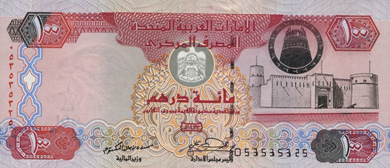
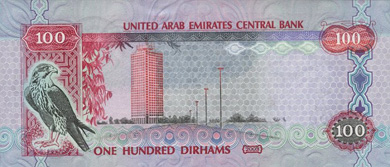
- UAE Dirham (AED)
- GDP — official exchange rate
- $98,100,000,000 (USD)
- GDP Real Growth Rate
- 6.7%
Banknotes
Budget & Public Finance
- Fiscal Year
- calendar year
- Annual Budget
- $29,410,000,000 (USD)
- Public Debt (% of GDP)
- 17.5%
- External Debt
- $30,210,000,000 (USD)
- Investment (% of GDP)
- 20.7%
- Current Account Balance
- $25,660,000,000 (USD)
- Reserves of Foreign Exchange
- $2,147,483,647 (USD)
Labor, Industry & Trade
- Labor Force by Occupation
- services 78%; industry 15%; agriculture 7%
- Industries
- petroleum, fishing, petrochemicals, construction materials, some boat building, handicrafts, pearling
- Agriculture Products
- dates, vegetables, watermelons; poultry, eggs, dairy products; fish
- Export Commodities
- crude oil 45%, natural gas, reexports, dried fish, dates
- Export Partners
- Japan 27.3%, South Korea 9.9%, Iran 4.3%
- Import Commodities
- machinery and transport equipment, chemicals, food
- Import Partners
- Japan 8.7%, China 8.2%, US 7.7%, UK 7.4%, Germany 7.1%, India 6.7%, France 6.6%, South Korea 5.3%, Italy 5.1%
Energy
- Oil Production
- 2,396,000 bbl/day
- Oil Consumption
- 310,000 bbl/day
- Oil Reserves
- 97,800,000,000 bbl/day
- Natural Gas Production
- 44,790,000,000 cu m
- Natural Gas Consumption
- 37,880,000,000 cu m
- Natural Gas Imports
- 0 cu m
- Natural Gas Exports
- 7,190,000,000 cu m
- Natural Gas Reserves
- 6,006,000,000,000 cu m
Communications
- Telephone System
- general assessment: modern fiber-optic integrated services; digital network with rapidly growing use of mobile-cellular telephones; key centers are Abu Dhabi and Dubai domestic: microwave radio relay, fiber optic and coaxial cable international: country code - 971; linked to the international submarine cable FLAG (Fiber-Optic Link Around the Globe); landing point for both the SEA-ME-WE-3 and SEA-ME-WE-4 submarine cable networks; satellite earth stations - 3 Intelsat (1 Atlantic Ocean and 2 Indian Ocean) and 1 Arabsat; tropospheric scatter to Bahrain; microwave radio relay to Saudi Arabia
- Internet Country Code
- .ae
News & Weather
News & Weather
Current Weather
Latest News
The CIA Operative Who Spied on the U.A.E.—and Played a Role in Its AI Win - WSJ
WSJ · 2d ago
‘We will not stop’: the UAE’s trillion-dollar trade detour - South China Morning Post
South China Morning Post · 3d ago
Secret CIA mission reportedly boosted US-UAE AI cooperation - The Jerusalem Post
The Jerusalem Post · 1d ago
UAE trade data exposes hidden gold exports, prompting Cameroon's $524 million tax hunt - Business Insider Africa
Business Insider Africa · 1d ago
Travelling to UAE? Emirates, Etihad cancel flights on Kuwait, Saudi Arabia routes - The Times of India
The Times of India · 1d ago
Sky ends controversial news joint venture in United Arab Emirates - The Guardian
The Guardian · 51d ago
UAE Grants Visa on Arrival to Nationals of Six Countries Residing Outside Their Home Countries - وزارة الخارجية الإماراتية
وزارة الخارجية الإماراتية · 26d ago
United Arab Emirates Purchases Russian S-400 Long Range Air Defences: How Will They Strengthen Its Forces Against Iran? - Military Watch Magazine
Military Watch Magazine · 9d ago
News via Google News
Climate Overview
Rainfall is low; but humidity is uncomfortably high. May to October is extremely hot, with shade temperatures of 29°C (85°F) to 50°C (122°F) and frequent 100% humidity. During the cool season (December-February) the weather is damp and seems colder than the 10°C (50°F) the thermometer sometimes indicates. During the rest of the year, the climate is pleasant, except for occasional sandstorms and hot, dry winds, which blow off the Empty Quarter of Arabia.
Videos
Videos
2 curated YouTube videos.
Source: YouTube
Source: YouTube
Frequently Asked Questions
Frequently Asked Questions
What is the population of United Arab Emirates?
How do people greet each other in the United Arab Emirates?
What are dining customs like in the United Arab Emirates?
What etiquette should I know when visiting a home in the United Arab Emirates?
How do people dress in the United Arab Emirates?
What is family life like in the United Arab Emirates?
What do people do for recreation in the United Arab Emirates?
What is the capital of the United Arab Emirates?
Where is the United Arab Emirates located?
What countries border the United Arab Emirates?
What is the predominant religion in the United Arab Emirates?
What currency is used in the United Arab Emirates?
What languages are spoken in the United Arab Emirates?
What is the United Arab Emirates known for?
What is the government structure of the United Arab Emirates?
Last reviewed 2026