
 English
 Español
 中文
中文 हिन्दी
 Français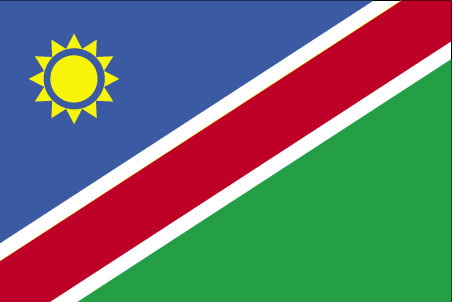
Namibia
Declare Your Relationship to Namibia
CountryReports Community
- Studying3
- From Namibia0
- Namibia heritage0
- Visited0
- Want to visit0
Customs and Culture
Customs and Culture
About the People
Most rural blacks in Namibia fish, grow crops, or raise livestock for a living. There food crops include corn, millet, and vegetables. Cattle and sheep are the important livestock. Most farmers raise enough food for their own use. Much of Namibia's land is dry but the country is rich in minerals including diamonds and uranium. Lead, copper,tin and zinc help make up mining which is the the most important economic active in Namibia.Most men work in the mines.
Whites account for about 7 percent of the population and most whites live in urban areas.
Cultural Attributes
The majority of rural inhabitants in Namibia engage in fishing, crop cultivation, or livestock rearing to sustain their livelihoods. Their agricultural produce typically includes staples like corn, millet, and various vegetables, while cattle and sheep form integral parts of their livestock. Many farmers cultivate sufficient crops to meet their own dietary needs. Although much of Namibia's terrain is arid, the nation boasts abundant mineral resources, including diamonds and uranium. Mining, encompassing resources like lead, copper, tin, and zinc, is Namibia's predominant economic activity. A significant portion of the male population is employed in the mining sector.
Whites constitute approximately 7 percent of Namibia's populace, with the majority residing in urban areas.

Ancient Desert, Modern Spirit
Greetings, Gestures & Visiting
Namibians greet each other as brothers and sisters; handshakes are common, but many also hug their friends. Among some groups, women and youth bend at the knee to show respect to their elders.
To greet someone in Oshivambo, the language most widely used in the north, one would say Nawa (Hello). In Afrikaans you would say Hallo (hello) or Goeie môre (Good Morning). Many Afrikaans sound like German, or a cross between German and Dutch.
In Namibia, as in many cultures, there are certain gestures that may be considered offensive or rude:
1. Pointing with the Finger: Pointing directly at someone with your index finger can be seen as confrontational or disrespectful. It's better to gesture with an open hand or subtly indicate with your whole hand if you need to point something out.
2. Showing the Sole of Your Foot: In many African cultures, including Namibia, showing the sole of your foot or shoe to someone is considered disrespectful. When sitting, try to keep your feet flat on the ground or crossed at the ankles to avoid inadvertently offending someone.
3. Using the Left Hand: In some cultures, including parts of Namibia, the left hand is considered unclean because it's traditionally associated with personal hygiene tasks. Therefore, using your left hand for gestures, especially when interacting with food or giving something to someone, may be perceived as impolite.
4. Public Displays of Affection: Public displays of affection, such as kissing or hugging, are generally frowned upon in more conservative Namibian communities. It's best to reserve such gestures for private settings.
5. Whistling: In some Namibian cultures, whistling indoors is considered bad luck or disrespectful, particularly at night. This belief varies depending on the specific cultural context, but it's wise to avoid whistling in enclosed spaces to be respectful of local customs.
6. Touching Someone's Head: In many African cultures, including Namibia, the head is considered sacred and touching someone's head without permission is disrespectful. This is especially true for elders or religious leaders.
7. Using Obscene Gestures: Obviously, using obscene gestures or gestures that are offensive in nature, regardless of cultural context, should be avoided.
Sure, here's a version without numbers:
When visiting Namibia, it's important to respect local customs and traditions. Start by greeting people warmly with a handshake or a hug, depending on your relationship. Show deference to elders and address them by their title and last name until invited to use their first name.
Dress conservatively, especially in rural areas, and avoid revealing clothing. Namibians value hospitality, so if invited into someone's home, consider bringing a small gift and be gracious when offered food or drink.
Respect the environment and wildlife by following designated trails, refraining from littering, and not disturbing animals. While English is widely spoken, learning a few words of a local language can be appreciated.
Tipping is not mandatory but is appreciated for good service. Always ask for permission before taking photographs, especially of people.
Lastly, be patient and flexible with scheduling, as social gatherings may operate on a more relaxed timetable. By being mindful of these customs, you can ensure a respectful and enjoyable visit to Namibia.
In Namibia, clothing choices often depend on the region and the weather. Since Namibia has diverse climates ranging from desert to semi-arid, what people wear can vary greatly.
In urban areas like Windhoek, the capital city, and other towns, people generally wear modern Western-style clothing such as jeans, t-shirts, dresses, and suits for formal occasions. However, due to the hot climate, lightweight and breathable fabrics are preferred.
In rural areas, traditional clothing is still common among some ethnic groups. For example, the Himba people in northern Namibia traditionally wear clothing made of animal skins and adorn themselves with jewelry and hairstyles that have cultural significance.
For outdoor activities and safaris, lightweight and breathable clothing in neutral colors such as khaki and olive green are recommended to blend in with the natural surroundings and to protect against the sun and insects.
Overall, comfort and practicality are key considerations when choosing clothing in Namibia, given its often hot and dry climate.
Diet
Mealie (corn) is the staple in Namibia. Other foods include beef, mutton, millet, peanuts, and melons. Fish is an important export food but is not a staple in the Namibian diet.

Family
In most Namibian cultures when a man dies his parents and siblings often inherit the property.The practice of having more than one wife is officially forbidden in Namibia and many households are run by women as single parents.
Recreation
In Namibia, recreational activities encompass a diverse range of pursuits, catering to varied interests across its multicultural society. Sports hold a significant place in Namibian recreation, with football (soccer) being immensely popular. Local leagues and tournaments draw enthusiastic participation and spectatorship, fostering a sense of community spirit. Rugby also enjoys a dedicated following, with Namibia's national team, the Welwitschias, competing internationally. Athletics, cricket, and netball further contribute to the nation's sporting landscape, with grassroots initiatives promoting youth participation and talent development.
Beyond organized sports, Namibians embrace outdoor activities that celebrate the country's stunning natural beauty. Adventure sports such as hiking, camping, and wildlife safaris offer opportunities to explore Namibia's diverse landscapes, from the majestic dunes of the Namib Desert to the rugged terrain of Damaraland. Water-based activities like fishing, boating, and kayaking thrive along Namibia's Atlantic coastline and inland waterways, providing recreational outlets for enthusiasts of all ages.
Cultural pursuits also play a vital role in Namibian recreation, with traditional music, dance, and storytelling events showcasing the nation's rich heritage. Festivals such as the Windhoek Carnival and the Annual Cultural Festival in Ovahimba celebrate Namibia's cultural diversity through music, dance performances, and arts and crafts exhibitions. Urban centers like Windhoek also offer a vibrant nightlife scene, with cafes, restaurants, and entertainment venues catering to residents and visitors alike.
Holidays
Independence Day
3/21Independence Day
Dates of Interest
- December 26th
Also known as Day of Goodwill, it is a public holiday in Namibia and is often observed as a day for relaxation and spending time with family and friends.
How do people greet each other in Namibia?
Namibians greet each other warmly as brothers and sisters; handshakes are common and friends often hug. In the north, say "Nawa" (Hello) in Oshivambo, and in Afrikaans "Hallo" or "Goeie môre" (Good Morning).
Do
- Shake hands or hug depending on your relationship
- Learn a few words of a local language, which is appreciated
- Show respect to elders
Good to know
- Among some groups, women and youth bend at the knee to show respect to elders
- Afrikaans often sounds like German or a cross between German and Dutch
What are the food and eating customs in Namibia?
Mealie (corn) is the staple, alongside beef, mutton, millet, peanuts, and melons. Fish is an important export but is not a staple in the diet.
Do
- Be gracious when offered food or drink in someone's home
- Use your right hand when handling food or giving something
Don’t
- Don't use your left hand for food, as it may be seen as impolite
What etiquette should I follow when visiting Namibians?
Namibians value hospitality; show deference to elders and be gracious when hosted. Be patient with a more relaxed sense of scheduling.
Do
- Bring a small gift if invited into someone's home
- Address elders by title and last name until invited to use their first name
- Ask permission before taking photographs, especially of people
- Respect the environment by following trails and not disturbing wildlife
Don’t
- Don't litter or disturb animals
Good to know
- Tipping is not mandatory but appreciated for good service
- Social gatherings may run on a more relaxed timetable
How should I dress in Namibia?
Dress conservatively, especially in rural areas, and choose lightweight, breathable fabrics suited to the hot, dry climate. Modern Western-style clothing is common in urban areas like Windhoek.
Do
- Wear lightweight, breathable clothing due to the heat
- Choose neutral colors like khaki and olive green for safaris and outdoor activities
- Dress conservatively in rural areas
Don’t
- Avoid revealing clothing
Good to know
- Traditional clothing remains common among some ethnic groups, such as the Himba in the north
Which gestures are considered rude in Namibia?
Several gestures can cause offense, including pointing with the finger, showing the sole of your foot, and using the left hand. The head is considered sacred.
Don’t
- Don't point directly with your index finger
- Don't show the sole of your foot or shoe when sitting
- Don't touch someone's head without permission, especially elders
- Avoid public displays of affection in conservative communities
Good to know
- Gesture with an open hand instead of pointing
- Avoid whistling indoors, which some consider bad luck, especially at night
- Keep feet flat on the ground or crossed at the ankles
What is family life like in Namibia?
When a man dies, his parents and siblings often inherit the property, and many households are run by women as single parents.
Good to know
- Having more than one wife is officially forbidden in Namibia
What do people do for fun in Namibia?
Football (soccer) is immensely popular, with rugby, athletics, cricket, and netball also followed. Outdoor adventures like hiking, camping, wildlife safaris, and water sports celebrate the country's natural beauty.
Good to know
- Namibia's national rugby team is the Welwitschias
- Festivals like the Windhoek Carnival celebrate cultural diversity through music and dance
- Windhoek offers a vibrant nightlife with cafes, restaurants, and entertainment venues
Last updated: 2026-07-12 · Sources: CountryReports
Photos of Namibia
Photos of Namibia


Travel and Tourism
Travel and Tourism
- Travel Alert Status
- Level 1: Exercise Normal Precautions
- Currency
- Namibian dollar (NAD); South African rand (ZAR)
- Time Difference
- UTC+1 (6 hours ahead of Washington, DC, during Standard Time)
- Climate
- Namibia’s climate is typical of a semi-desert and high plateau country, with hot days and cool nights. In mid-summer (December–February), daytime temperatures can exceed 100°F in lower elevations. In Windhoek, January average high temperatures are in the 90s. Winter (May–September) sees daytime highs of about 70°F; nights can be cold, dipping below freezing. Windhoek enjoys about 300 sunny days a year. Rains usually come from December through March, peaking in February, for a yearly average rainfall of 12–16 inches in Windhoek. The unrelenting dryness of the rest of the year makes the rains refreshing, welcome, and eagerly anticipated, turning the mountains surrounding Windhoek green for the brief summer months.
- Airports
- 136
Read the full travel guide — health, safety, vaccinations, disease risk, sanitation, and transit details.
View full travel guideRecipes
Recipes
History
History
Historical Eras
Pre-Colonial Era
8000 BCE – 1884
The San people were the earliest inhabitants of the region, followed by the Nama and Damara. Bantu-speaking Ovambo and Herero peoples migrated southward around the 14th century, establishing pastoral societies across the interior. European contact began tentatively with Bartolomeu Dias in 1488, but the Namib Desert's hostility limited sustained incursion until traders, missionaries, and hunters penetrated the region in the late 18th and early 19th centuries.
German Colonial Rule
1884 – 1915
Adolf Lüderitz's 1883 land claim set the stage for Germany to formally annex the territory as German South West Africa in 1884. Colonial consolidation was achieved through brutal force, most infamously during the Herero and Nama wars of 1904–08, in which tens of thousands of indigenous people perished in what is widely recognized as one of the first genocides of the 20th century. Germany's administration ended when South African forces occupied the territory during World War I in 1915.
South African Mandate
1915 – 1966
South Africa assumed administration of South West Africa under a League of Nations mandate formalized in 1920, granting Pretoria sweeping legislative and administrative powers. After the League dissolved in 1946, South Africa refused UN demands to convert the territory to a trusteeship, effectively annexing it and extending apartheid policies to its population. International legal challenges culminated in a 1971 International Court of Justice opinion declaring South Africa's continued presence illegal.
Liberation Struggle
1966 – 1990
SWAPO launched its armed insurgency in 1966 following the UN General Assembly's revocation of South Africa's mandate, intensifying operations after Angola's independence in 1975 provided rear bases in the south. The conflict became entangled in Cold War regional dynamics, with South African forces conducting cross-border raids into Angola and Cuban troops supporting the MPLA government. A negotiated settlement brokered under UN Security Council Resolution 435 led South Africa to agree to Namibian independence in 1988 in exchange for Cuban troop withdrawal from Angola.
Independence & Modern Namibia
1990 – present
Namibia achieved independence on March 21, 1990, following UN-supervised elections in which SWAPO won a commanding majority; Sam Nujoma became the country's first president. The new state adopted a multiparty constitutional democracy and pursued national reconciliation, though land redistribution and economic inequality inherited from the colonial era have remained persistent challenges. SWAPO has governed continuously since independence, presiding over relative political stability while the country has developed its mining, tourism, and fishing sectors.
Overview
The inhospitable Namib Desert constituted a formidable barrier to European exploration until the late 18th century, when successions of travelers, traders, hunters, and missionaries explored the area. In 1878, the United Kingdom annexed Walvis Bay on behalf of Cape Colony, and the area was incorporated into the Cape of Good Hope in 1884. In 1883, a German trader, Adolf Luderitz, claimed the rest of the coastal region after negotiations with a local chief. Negotiations between the United Kingdom and Germany resulted in Germany’s annexation of the coastal region, excluding Walvis Bay. The following year, the United Kingdom recognized the hinterland up to 20 degrees east longitude as a German sphere of influence. A region later known as the Caprivi Strip became a part of South West Africa after an agreement on July 1, 1890, between the United Kingdom and Germany. The British recognized that the strip would fall under German administration to provide access to the Zambezi River and German colonies in East Africa. In exchange, the British received the islands of Zanzibar and Heligoland.
German colonial power was consolidated, and prime grazing land passed to white control as a result of the Herero and Nama wars of 1904-08. German administration ended during World War I following South African occupation in 1915.
On December 17, 1920, South Africa undertook administration of South West Africa under the terms of Article 22 of the Covenant of the League of Nations and a mandate agreement by the League Council. The mandate agreement gave South Africa full power of administration and legislation over the territory. It required that South Africa promote the material and moral well-being and social progress of the people.
When the League of Nations was dissolved in 1946, the newly formed United Nations inherited its supervisory authority for the territory. South Africa refused UN requests to place the territory under a trusteeship agreement. During the 1960s, as the European powers granted independence to their colonies and trust territories in Africa, pressure mounted on South Africa to do so in Namibia, which was then known as South West Africa. In 1966, the UN General Assembly revoked South Africa’s mandate.
Also in 1966, the South West Africa People’s Organization (SWAPO) began its armed struggle to liberate Namibia, in part from bases abroad. After Angola became independent in 1975, SWAPO established bases in the southern part of that country. Hostilities intensified over the years, particularly in the north.
In a 1971 advisory opinion, the International Court of Justice upheld UN authority over Namibia, determining that the South African presence in Namibia was illegal and that South Africa therefore was obligated to withdraw its administration from Namibia immediately. The Court also advised UN member states to refrain from implying legal recognition or assistance to the South African presence.
International Pressure for Independence
In 1977, Western members of the UN Security Council, including Canada, France, the Federal Republic of Germany, the United Kingdom, and the United States (known as the Western Contact Group), launched a joint diplomatic effort to bring an internationally acceptable transition to independence for Namibia. Their efforts led to the presentation in April 1978 of Security Council Resolution 435 for settling the Namibian problem. The proposal, known as the UN Plan, was worked out after lengthy consultations with South Africa, the front-line states (Angola, Botswana, Mozambique, Tanzania, Zambia, and Zimbabwe), SWAPO, UN officials, and the Western Contact Group. It called for the holding of elections in Namibia under UN supervision and control, the cessation of all hostile acts by all parties, and restrictions on the activities of South African and Namibian military, paramilitary, and police.
South Africa agreed to cooperate in achieving the implementation of Resolution 435. Nonetheless, in December 1978, in defiance of the UN proposal, it unilaterally held elections in Namibia which were boycotted by SWAPO and a few other political parties. South Africa continued to administer Namibia through its installed multiracial coalitions. Negotiations after 1978 focused on issues such as supervision of elections connected with the implementation of the UN Plan.
Negotiations and Transition
Intense discussions between the concerned parties continued during the 1978-88 period, with the UN Secretary General’s Special Representative, Martti Ahtisaari, playing a key role. The 1982 Constitutional Principles, agreed upon by the front-line states, SWAPO,
Timeline of Key Events
1488
Portuguese explorer Bartolomeu Dias visits.
Portuguese explorer Bartolomeu Dias visits.
1886 – 1890
Present international boundaries established by German treaties with Portugal and Britain.
Present international boundaries established by German treaties with Portugal and Britain. Germany annexes the territory as South West Africa.
1915
South Africa takes over territory during First World War.
South Africa takes over territory during First World War.
1968
South West Africa officially renamed Namibia by UN General Assembly.
South West Africa officially renamed Namibia by UN General Assembly.
1988
South Africa agrees to Namibian independence in exchange for removal of Cuban troops from Angola.
South Africa agrees to Namibian independence in exchange for removal of Cuban troops from Angola.
1990
Namibia becomes independent, with Sam Nujoma as first president.
Namibia becomes independent, with Sam Nujoma as first president.
2004
Road bridge across Zambezi river between Namibia.
Road bridge across Zambezi river between Namibia, Zambia opens amid hopes for boost to regional trade.
Read the full history profile — narrative overview, defining eras, and the complete timeline in one place.
View expanded historyInteresting Facts
Interesting Facts
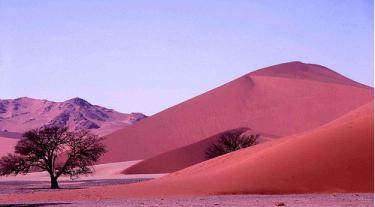
The Namib Desert is said to be the world's oldest desert.
The sand dunes in the Namib Desert are among the highest sand dunes in the world.
See every fact — trivia, oddities, and curious tidbits gathered from across the country.
View all interesting factsGeography and Environment
Geography and Environment
- Terrain
- mostly high plateau; Namib Desert along coast; Kalahari Desert in east
- Climate
- Namibia’s climate is typical of a semi-desert and high plateau country, with hot days and cool nights. In mid-summer (December–February), daytime temperatures can exceed 100°F in lower elevations. In Windhoek, January average high temperatures are in the 90s. Winter (May–September) sees daytime highs of about 70°F; nights can be cold, dipping below freezing. Windhoek enjoys about 300 sunny days a year. Rains usually come from December through March, peaking in February, for a yearly average rainfall of 12–16 inches in Windhoek. The unrelenting dryness of the rest of the year makes the rains refreshing, welcome, and eagerly anticipated, turning the mountains surrounding Windhoek green for the brief summer months.
- Natural Hazards
- prolonged periods of drought
- Current Environmental Issues
- very limited natural fresh water resources; desertification; wildlife poaching; land degradation has led to few conservation areas
Read the full geography and environment profile — terrain, climate, natural resources, hazards, land use, and international agreements.
View full geographyPeople & Demographics
People & Demographics
Religion
Languages Spoken
English 7% (official), Afrikaans common language of most of the population and about 60% of the white population, German 32%, indigenous languages: Oshivambo, Herero, Nama
- Afrikaans
- English
- German
Population
- Population
- 2,128,471
- Population in Major Urban Areas
- WINDHOEK (capital) 380,000
- Nationality Noun
- Namibian(s)
- Ethnic Groups
- black 87.5%, white 6%, mixed 6.5%
Education
- Literacy Definition
- age 15 and over can read and write
Health Information
- Major Infectious Diseases — degree of risk
- high
Read the full people and society profile — demographics, health, education, religion, languages, and notable people.
View full people and societyGovernment & Politics
Government & Politics
Country Identity
- Country Name
- Namibia
- Full Country Name
- Republic of Namibia
- Former Name
- German Southwest Africa, South-West Africa
Government Structure
- Government Type
- republic
- Legal System
- based on Roman-Dutch law and 1990 constitution
- Executive Branch
- chief of state: President Nangolo MBUMBA (since 4 February 2024); note - President Hage GEINGOB died in office on 4 February 2024, and Vice President Mbumba was sworn in to complete the remaining term; MBUMBA was subsequently elected president in the November 2024 general elections head of government: Prime Minister Elijah NGURARE (since March 2025); note - Saara KUUGONGELWA-AMADHILA served as Prime Minister from 2015 until 2025 cabinet: Cabinet appointed by the president from among the members of the National Assembly elections: President elected by popular vote for a five-year term; election last held on 27 November 2024 (next to be held in November 2029) election results: Nangolo MBUMBA elected president; percent of vote - Nangolo MBUMBA (SWAPO) 57.8%, Panduleni ITULA (IPC) 25.5%, McHenry VENAANI (PDM) 5.1%, other 11.6%
- Legislative Branch
- bicameral legislature consists of the National Council (26 seats; 2 members are chosen from each regional council to serve six-year terms) and the National Assembly (72 seats; members are elected by popular vote to serve five-year terms) elections: National Council - elections for regional councils, to determine members of the National Council, held 29-30 November 2004 (next to be held November 2010); National Assembly - last held 15-16 November 2004 (next to be held November 2009) election results: National Council - percent of vote by party - SWAPO 89.7%, UDF 4.7%, NUDO 2.8%, DTA 1.9%; seats by party - SWAPO 24, UDF 1, DTA 1; National Assembly - percent of vote by party - SWAPO 75.1%, COD 7.2%, DTA 5%, NUDO 4.1%, UDF 3.5%, RP 1.9%, MAG 0.8%; seats by party - SWAPO 55, COD 5, DTA 4, NUDO 3, UDF 3, RP 1, MAG 1 note: the National Council is primarily an advisory body
- Judicial Branch
- Supreme Court (judges appointed by the president on the recommendation of the Judicial Service Commission)
- Suffrage
- 18 years of age; universal
- Constitution
- ratified 9 February 1990; effective 12 March 1990
- Independence
- 21 March 1990 (from South African mandate)
- National Holiday
- Independence Day, 21 March (1990)
Capital City
- Capital Name
- Windhoek
- Capital - geographic coordinate
- 22 34 S, 17 05 E
- Capital Time Difference
- UTC+1 (6 hours ahead of Washington, DC, during Standard Time)
may derive from the Afrikaans word "wind-hoek" meaning "windy corner"
Military
Branches: Namibian Defense Force (NDF): Army, Navy, Air Force
Embassy / Diplomatic Mission
The U.S. Embassy Windhoek
Located at: 14 Lossen Street, Ausspannplatz, Windhoek
Mailing address: Private Bag 12029, Ausspannplatz, Windhoek, Namibia
Telephone: (264-61) 295-8500
Consular Section: (264-61) 295-8522
Fax: (264-61) 295-8603
After-hours emergency line: (264-81) 127-4384
Read the full government profile — flag symbolism, national anthem, and other national symbols.
View full government detailsEconomy
Economy
Namibia's economy remains heavily dependent on the extraction and processing of minerals for export, with mining accounting for approximately 12-14% of GDP and over 50% of foreign exchange earnings. Rich alluvial diamond deposits make Namibia a primary source for gem-quality diamonds, and the country is one of the world's largest producers of uranium, ranking among the top three globally alongside Kazakhstan and Canada. Namibia also produces significant quantities of zinc, copper, lead, gold, and lithium, with the latter emerging as a growing sector amid global demand for battery minerals.
The mining sector employs only a small fraction of the workforce, while a large share of the population depends on subsistence agriculture for its livelihood. Namibia typically imports a substantial portion of its cereal requirements, and recurring droughts continue to create serious food security challenges in rural areas. Although Namibia is classified as an upper-middle-income country with one of the higher per capita GDPs in sub-Saharan Africa, this figure masks one of the world's most unequal income distributions, with a Gini coefficient consistently ranking among the highest globally. Unemployment remains high, particularly among youth.
The Namibian economy is closely tied to South Africa through the Common Monetary Area, with the Namibian dollar pegged at parity to the South African rand. Tourism, fisheries, and manufacturing have grown in importance alongside mining. Recent offshore oil and gas discoveries by major international firms in the Orange Basin have generated significant optimism, with potential production expected later this decade positioning Namibia as a possible emerging energy producer. The government has also prioritized green hydrogen development, aiming to leverage the country's solar and wind resources to become a regional renewable energy hub.
Snapshot
- Currency Name and Code
- Namibia Dollar (NAD) and South Afrtican Rand (ZAR)
- GDP — official exchange rate
- $4,976,000,000 (USD)
- GDP Real Growth Rate
- 3.5%
- Gini Index
- 70.7
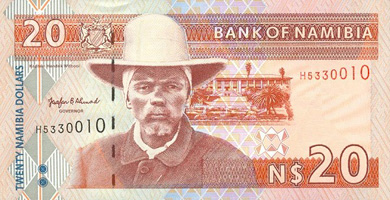
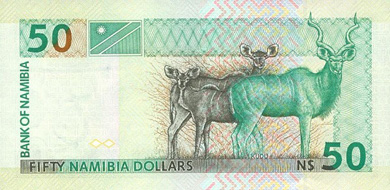
Banknotes
Budget & Public Finance
- Fiscal Year
- 1 April - 31 March
- Annual Budget
- $2,039,000,000 (USD)
- Public Debt (% of GDP)
- 39.6%
- External Debt
- $1,164,000,000 (USD)
- Investment (% of GDP)
- 21.2%
- Economic Aid
- $160,000,000 (USD)
- Current Account Balance
- $579,000,000 (USD)
- Reserves of Foreign Exchange
- $365,000,000 (USD)
Labor, Industry & Trade
- Labor Force by Occupation
- agriculture 47%; industry 20%; services 33%
- Industries
- meatpacking, fish processing, dairy products; mining (diamond, lead, zinc, tin, silver, tungsten, uranium, copper)
- Agriculture Products
- millet, sorghum, peanuts; livestock; fish
- Export Commodities
- diamonds, copper, gold, zinc, lead, uranium; cattle, processed fish, karakul skins
- Export Partners
- EU 79%, US 4%
- Import Commodities
- foodstuffs; petroleum products and fuel, machinery and equipment, chemicals
- Import Partners
- US 50%, EU 31%
Energy
- Oil Production
- 0 bbl/day
- Oil Consumption
- 16,000 bbl/day
- Oil Reserves
- 0 bbl/day
- Natural Gas Production
- 0 cu m
- Natural Gas Consumption
- 0 cu m
- Natural Gas Imports
- 0 cu m
- Natural Gas Exports
- 0 cu m
- Natural Gas Reserves
- 62,300,000,000 cu m
Communications
- Telephone System
- general assessment: good system; core fiber-optic network links most centers and connections are now digital domestic: multiple mobile-cellular providers with a combined subscribership of more than 100 telephones per 100 persons international: country code - 264; fiber-optic cable to South Africa, microwave radio relay link to Botswana, direct links to other neighboring countries; connected to the South African Far East (SAFE) submarine cable through South Africa; satellite earth stations - 4 Intelsat
- Internet Country Code
- .na
News & Weather
News & Weather
Current Weather
Latest News
ReconAfrica produces first onshore Hydrocarbons in Namibia from Kavango West well - Proactive financial news
Proactive financial news · 15h ago
Botswana Unites With Zimbabwe, Mozambique, Namibia and Other Global Destinations as South Africa Tourism Arrivals Strengthen in 2026, With Nearly Two Million Road Movements Driving Regional Travel Growth, Cross-Border Connections, Overnight Sta - Travel And Tour World
Travel And Tour World · 18h ago
Egypt Leads with South Africa, Morocco, Kenya and Namibia in Witnessing a Strong Surge of Travelers from UK, US, Canada, France and Others in 2026 Boosting Africa Tourism with Visa Free Entry, Direct Flights and Budget Travel Deals - Travel And Tour World
Travel And Tour World · 1d ago
‘They are disturbing the dead’: reconstructing the site of the forgotten first genocide of the 20th century - The Guardian
The Guardian · 46d ago
China Tightens Its Grip on Namibia's Next Energy Boom - Crude Oil Prices Today | OilPrice.com
Crude Oil Prices Today | OilPrice.com · 11d ago
Vitol Awarded Namibia Fuel Supply Deal From July to September - Bloomberg.com
Bloomberg.com · 52d ago
Unearthing Namibia’s forgotten genocide through forensic archaeology - The Conversation
The Conversation · 54d ago
Namibia Critical Metals Launches Next Phase of Lofdal Definitive Feasibility Study Including Further Value Addition in Namibia - TMX Newsfile
TMX Newsfile · 9h ago
News via Google News
Climate Overview
Namibia’s climate is typical of a semi-desert and high plateau country, with hot days and cool nights. In mid-summer (December–February), daytime temperatures can exceed 100°F in lower elevations. In Windhoek, January average high temperatures are in the 90s. Winter (May–September) sees daytime highs of about 70°F; nights can be cold, dipping below freezing. Windhoek enjoys about 300 sunny days a year. Rains usually come from December through March, peaking in February, for a yearly average rainfall of 12–16 inches in Windhoek. The unrelenting dryness of the rest of the year makes the rains refreshing, welcome, and eagerly anticipated, turning the mountains surrounding Windhoek green for the brief summer months.
Videos
Videos
1 curated YouTube videos.
Source: YouTube
Frequently Asked Questions
Frequently Asked Questions
What is the population of Namibia?
How do people greet each other in Namibia?
What are the food and eating customs in Namibia?
What etiquette should I follow when visiting Namibians?
How should I dress in Namibia?
Which gestures are considered rude in Namibia?
What is family life like in Namibia?
What do people do for fun in Namibia?
What is the capital of Namibia?
Where is Namibia located?
What countries border Namibia?
What is the predominant religion in Namibia?
What currency is used in Namibia?
What languages are spoken in Namibia?
What is the geography and terrain of Namibia like?
What is Namibia known for?
Last reviewed 2026