
 English
 Español
 中文
中文 हिन्दी
 Français
Italy
Repubblica Italiana
Declare Your Relationship to Italy
CountryReports Community
- Studying10
- From Italy3
- Italy heritage4
- Visited3
- Want to visit8
Customs and Culture
Customs and Culture
About the People
Italians living in the warmer south enjoy a leisurely life and take their time to accomplish business. In contrast, those of industrialized northern Italy feel more pressure and view time as something not to be wasted.
Television and other media unite regions so their identities, dialects and traditions are melting into one. Also, as standards of living rise and traditions disappear, social relations suffer and people find less time for one another.
Cultural Attributes
Italians living in the warmer south enjoy a leisurely life and take their time to accomplish business. In contrast, those in industrialized northern Italy feel more pressure and view time as something not to be wasted.
Television and other media unite regions so their identities, dialects, and traditions are melting into one. Also, as standards of living rise and traditions disappear, social relations suffer and people find less time for one another.

The Art of the Dolce Vita
Greetings, Gestures & Visiting
In Italy, guests are always introduced first. The handshake is the most common greeting. Persons of the same gender often walk arm in arm in public. Good friends may greet each other with a kiss on both cheeks.
The mouth should be covered when a person yawns or sneezes. Men remove their hats when entering buildings. It is impolite to remove one's shoes in the presence of others. Italians are known for their use of hand gestures during conversation, especially in the south. Hands are often used in communication instead of words.
Italians enjoy visiting friends, family, and neighbors, especially on holidays and Sundays. Guests invited to dinner often take a bottle of good wine, a box of chocolates, or flowers to the host. Unless they are told otherwise, guests wait for the hosts to sit before they are seated, and they also wait for the hosts to begin eating before they eat.
Italy is a major center of the European fashion industry and Italians believe it is important to dress well at all times, regardless of where one goes.
Men should wear fashionable, high-quality suits. Shirts may be colored or pin-striped, and they should be paired with a designer tie. Women dress in quiet, expensive elegance. Slacks are generally not worn by either sex.
Weekend casual for men would be jeans with nice dark shoes and a collared shirt, for women a nice pair of jeans or pants and a nice shirt.
For the younger generation, fashion is extremely important with simple but high-quality clothes.
Most important to looking good as an Italian are high-quality accessories such as sunglasses, watches, belts, and shoes. Dark glasses are not worn inside buildings.
Diet
An Italian breakfast is very light, consisting of a cup of coffee, and a roll. Lunch, the main meal, is around 1 p.m. A light dinner is eaten in the evening. Wine is a common drink at meals and is also widely used in cooking. Meat and tomato sauces are popular with various types of pasta. Veal is a favorite meat. Cheese is important in the diet, including ricotta, mozzarella, parmesan. Pasta is usually served as a precursor to the main meal. Pesto originates from the region of Italy known as Liguria
When eating with guests, Italians do not usually hurry; a meal may last one to four hours. Compliments on the home and meal are appreciated by the hosts. It is appropriate for guests to give some attention to children in the family. The continental style of eating is used. During the meal a person's hands are kept above the table ; to have hands in the laps is improper. At the table, it is impolite to stretch, even if the meal is over. Utensils are placed parallel to each other on the plate when a person is finished eating. A person does not leave the table before everyone is finished eating. Guests do not volunteer to help clean up.
An Italian breakfast is very light, consisting of a cup of coffee, and a roll. Lunch, the main meal, is around 1 p.m. A light dinner is eaten in the evening. Wine is a common drink at meals and is also widely used in cooking. Meat and tomato sauces are popular with various types of pasta. Veal is a favorite meat. Cheese is important in the diet, including ricotta, mozzarella, parmesan. Pasta is usually served as a precursor to the main meal. Pesto originates from the region of Italy known as Liguria

Family
Strong, traditional ties bind the Italian family together. Family association is of great importance. A faster pace of life is affecting the extended family. With more family members working, fewer families can care for their elderly members.
Dating Customs
Dating is much the same as in other Western countries and is done either in groups or as couples. Marriage ceremonies follow general Catholic traditions. Divorce is only approved after three years of legal separation.
Recreation
Italy is a nation of soccer enthusiasts. The game is called calcio in Italy. Sunday afternoon league games are televised and are watched in bars and living rooms across the nation. Tiny villages invest in large playing fields with night lighting. In local parks, there are always a few children or adults kicking around a soccer ball.
Cycling is also a popular spectator sport. The most important cycling event is the Giro d'Italia. It covers 2,750 km of alpine terrain, including many of the steepest roads in Italy.
Formula 1 car racing is another sport that draws thousands of fans, who cheer when the Ferrari team wins.
Many Italians enjoy playing bocce. Players roll balls along a court, trying to hit a smaller ball and knock out their opponent's balls. This is the Italian version of lawn bowling.
The Corsa del Palio (Race of the Banner) is a horse race that has been held twice a year in the city of Siena since 1482. Ten horsemen dressed in 15th-century costumes gallop bareback three times around the Piazza del Campo, the city's main square. They are cheered on by crowds in the square and by thousands watching on television.
Italians like to play cards. They play briscola and scopa with a 40-card deck. The cards are unnumbered. Instead of clubs, diamonds, hearts, and spades, they have pictures of royal figures, swords, suns, and goblets. The two different styles of decks are called Napoletane and Piacentine.
They also play a form of bingo called tombola. It uses 90 numbers instead of bingo's 70. Playing tombola is particularly popular at Christmastime.
Student Life
Children must arise fairly early, usually by 6:30 a.m. After showering and dressing, they have a light breakfast, which typically consists of milk-coffee (coffee mixed with an equal amount of hot milk) and some Italian biscuits, or perhaps a bowl of muesli. Muesli is a light breakfast that originated in Switzerland. It is made of rolled oats, dried fruit, nuts, and sometimes seeds. Muesli is often mixed with milk or yogurt and fresh fruit and is known for being a very healthy breakfast.
Students often walk, ride bikes, or ride special school buses, depending on the distance from the school and individual circumstances. School begins at around 8:30 in the morning, and will last until approximately 1:30. Although there is time between classes to have a quick drink and visit the bathroom as needed, students return home for their midday meal, which is the main meal throughout Italy.
The school system in Italy is free to all children. Textbooks are free for primary school, but students must buy their books beginning with the secondary level of school at age 12. The teachers are motivated to be good instructors, and the classes are about the same size as most classes in the United States, averaging about 25 students per class in primary school, and 21 students in secondary school. Italian schools try very hard to keep up with the latest technologies. An important part of their courses includes instruction in both general technology as well as information technology, which focuses on ways to handle modern information, such as with the Internet. Unlike schools in North America or some other areas of the world, Italian schools do not provide lunch for their students. Instead, children return home to eat in the early afternoon. Throughout Italy, the midday meal is the main family meal.
School uniforms are not required for children in Italy, which is known as being a very fashion-conscious country. Thus, what a child wears to school is more likely to reflect what the other kids think is popular (or what their parents like!) and by local fashion than rules set by a school board or government agency. Typical primary schools teach Italian, English, geography, math, science, music, art, physical education, technology (including information technology), and Catholicism. It might seem odd to have a religion class in school to many children in the world, but the Catholic Church has had a big influence on Italy for many, many centuries, and it is still the religion of 90% of the Italian population. Lower secondary schools build on the classes that were taught in primary school, but they become more specialized. These courses are usually religion (Catholicism), Italian, English and other foreign languages, history, geography, science, math, technology, information technology, art, music, and physical education.
Italy has a very rich heritage of fine art, music, and architecture. Italians also love sports. Most of these pursuits are handled through clubs or community groups. For example, a local church might sponsor a children’s choir. Unlike North American schools, sports are associated with clubs rather than schools. International or private schools tend to have more extracurricular activities than public schools, such as music lessons, dramatic performance groups, language lessons, and academic clubs. But public schools tend to emphasize the hours while students are in class and don’t provide much beyond the focus on education.
School and homework can be quite demanding. However, children still find time for other things during some evening hours and on weekends. Italian children are like many other European youth in their love for the game of soccer. However, they are also active in many other sports, including basketball, cycling, and rollerskating. Because of its bootlike shape, Italy has a lot of coastline, and so water sports such as swimming and fishing are also very popular. In the Italian Alps, snow sports are common in the winter. (Twice the winter Olympic games have been held in Italy, including in Turin in 2006.) Traditionally, Italians have loved going to movie theaters, but the increased popularity of television has led to a decline in attendance at the theaters.
Families are very important in Italy, so much of the time after school is spent with family. After school, children return home, which for most people in Italy is an apartment in a large concrete building. (Only wealthy families own their own single-family homes.) Soon after they get home, it is time to eat! Italians love to cook, and they love to eat, and the midday meal is the main meal for the day. It will usually have several courses. For example, they almost always begin with plates of pasta. In the northern part of Italy, this pasta is often flat, ribbon-shaped noodles with a cream sauce. In southern Italy, they usually have macaroni noodles, with a tomato sauce. Soup can also be served instead of pasta, depending on which region of Italy a family is from. When the family finishes eating that, they are served another meal of meat or fish. The most common meats are veal and pork. After that, a third course might consist of something called antipasto, which includes cold cuts and vegetables. Fresh fruit finishes off this midday feast and serves as the dessert. After the midday meal is over, it is time to start on homework. Italian schools can be quite demanding. As children become teenagers, they might find part-time jobs for the evening, which means homework must be done when they return home late in the evening. Often teenagers do not get to sleep until 11:00 or so in the evening because of all the homework they must do. Much of Italy’s social life centers around the family. Children are special and very important to Italian families. In the evenings, it is important for the family to gather together for a light evening meal or snack (such as pizza) and to catch up with each other on the day’s activities. After dinner, the family might go out for a walk to relax and visit with extended family, neighbors, and friends. Children go with their families on these walks and are included in social events. Because adult children live with their parents until they get married, and when they do get married they will often try to find an apartment close to their parents, evening walks or television watching usually includes the entire family, even the older children.
All children in Italy, regardless of their family’s original nationality, are required to attend school between the ages of 6 and 14. More than 90% will attend public schools, with private schools making up the rest. The classes, including the books and educational policies, were originally established and regulated by the national Ministry of Education, but Italy has begun transferring control to the schools themselves. This is a big change for the school system, but one that many people have wanted for a long time. It gives local teachers and leaders control over how their children are taught. Children attend school for five to six hours daily, often six days a week, from September to mid-June. Primary school is for students from 6 to 11 years of age. Here the schooling and books are free. Students aged 12 through 14 attend the next level of school, which is called lower secondary school. Although attending school is free, students must buy their own textbooks. Several years ago, children were only required to attend school until they turned 14, but that has increased in recent years to 16 and will continue to be raised over time until it reaches age 18. After three years in lower secondary school, a student must pass an exam that allows entrance into higher secondary school, which lasts four or five years, depending on the courses the student studies. Each higher secondary school focuses on a particular area of study, such as science, teaching, language, the classics, technical school, or professional school. Art schools are also divided into various disciplines, including art, dance, music, and the dramatic arts. These higher secondary schools do charge tuition, and the courses of study differ with each school. At the end of higher secondary school, students must pass an exam to graduate. After successfully doing so, they will either begin their careers or begin studies at one of Italy’s 63 universities.
Holidays
Republic Day
7/2Independence
Birth date - Galileo Galilei
2/15Birthday
Birth date - Galileo Galilei, Italian astronomer was born in Pisa, Italy on Feb. 15, 1564.
Birthdate - Gioacchino Antonio Rossini
2/29Birthday
Birthdate - Gioacchino Antonio Rossini, Italian composer was born in Pesaro, Italy.
Birth date - Antonio Vivaldi
3/4Birthday
Birth date - Antonio Vivaldi, Italian composer was born in Republic of Venice. [now Venice, Italy] on March 4, 1678.
Birth date - Amerigo Vespucci
3/9Birthday
Birth date - Amerigo Vespucci, Italian explorer, was born in Florence, Italy on March 9, 1454.
Birth date - Leonardo da Vinci
4/15Birthday
Birth date - Leonardo da Vinci, Italian painter and sculptor, was born in Anchiano, Italy, near the town of Vinci on April 15, 1452.
Birth date - Guglielmo Marconi
4/25Birthday
Birth date - Guglielmo Marconi, Italian inventor, was born in Bologna, Italy on April 25, 1874.
Birth date - Florence Nightingale
5/12Birthday
Birth date - Florence Nightingale, founder of modern nursing, was born in Florence, Italy on May 12, 1820.
Birth date - Amedeo Modigliani
7/12Birthday
Birth date - Amedeo Modigliani, Italian artist, was born on July 12, 1884 in Livorno, Italy.
Birth date - Enrico Fermi
9/29Birthday
Birth date - Enrico Fermi, Nobel Prize-winning physicist was born in Rome, Italy on Sept. 29, 1901.
Birth date - Giuseppe Verdi
10/10Birthday
Birth date - Giuseppe Verdi, Italian composer, was born on Oct. 10, 1813 in Roncole, Italy.
Birth date - Carlo Lorenzini (Carlo Collodi)
11/24Birthday
Birth date - Carlo Lorenzini (Carlo Collodi), Italian author of Pinocchio, was born in Florence, Italy on Nov. 24, 1826
Birth date - Giacomo Puccini
12/22Birthday
Birth date - Giacomo Puccini, Italian composer, was born Dec. 22, 1858 in Lucca, Italy.
Christmas -- Natale
12/25Christmas
The First Manger scene was made in Italy by St. Francis of Assisi so that others might worship the infant Jesus. The Italian manger scene is calledpresepio. The presepio remains empty until Christmas eve. On Christmas eve the family gathers and places the Christ child in the manger, They sing songs and have prayers.
Italians begin the holiday season on the first Sunday of Advent.
Novena is the period of nine days before Chrismas.
Dates of Interest
- The Sunday, Monday, and Tuesday of Martedi Grasso (Mardi Gras)
Carnevale de Ivrea – Battaglia delle Arance The Carnival in Ivrea is filled with pageantry and symbolism, history, and tradition. Parades start early in January and continue each Sunday with all the accompanying music, exquisite costumes, and colorful banners. Customary food is served and there are fireworks at night. On the Sunday before Martedi Grasso (Mardi Gras) the excitement escalates. History mingles with legend as participants re-enact the story of Violetta, a newly married bride whom the local baron sought to despoil on her wedding night. Instead of allowing him to have his way with her, the Mugnaia (the miller’s daughter) removed the baron’s head and set fire to the castle, inciting the townspeople to revolt against the feudal system that kept them starving and oppressed. Though Violetta’s story is a medieval one (occurring in 1194), it has been faithfully portrayed every year since 1858 and the spirit of liberty and vitality has not been lost over time. Nowadays, the Mugnaia leads a parade, throwing yellow flowers and candies to the crowds. Dozens of open horse-drawn carts are filled with “guards” wearing masks resembling armor. “Commoners” mass in the streets, on foot, and with no protection. The battle is staged. Beans were the ammunition in the first symbolic revolt, an act of disdain for the small terra cotta pots of beans offered to poor families once a year. But as the battle moved through the streets, maidens began tossing oranges over balcony railings in an attempt to get the attention of certain young men passing below, and soon the young men were throwing them back. Oranges became the weapon of choice and hundreds of tons are now trucked into town for the annual event. Juice and pulp are everywhere along the parade route and pile up in the town squares where the battles are fierce. Eventually, snow removal equipment is brought in to push the remains aside! In 1947, the free for all became more organized. Rules were set and thousands of “townspeople” were organized into nine competitive teams representing different sections of the city. Visitors are welcome to unite with one of these teams, purchase the coinciding uniform, and join the common folk of Ivrea in their struggle for freedom. Onlookers may gather behind special nets and wear the “Phrygian Cap,” a red, stocking-like hat that shows support for the revolt and aspiration for liberty. Wearing this “berretto frigio” indicates you are not to be a target and should ensure you won’t receive a battle bruise, but it doesn’t guarantee you won’t get splattered. On Tuesday awards are given to the top teams (both guards and villagers) recognizing them for things like accuracy, uniforms or trappings, fair play, and preparation. Earlier in the Carnival a newly married couple from each of the five districts used a pick and spade to erect a Scarlo (a pole covered with juniper and heather bushes) in their neighborhood square. Now, as Carnivale comes to an end, the Abba (two children in each quarter, dressed in elegant Renaissance costumes) parade around their Scarlo and set it ablaze. Mugnaia raises her sword to the sky, a grand gesture of freedom from tyranny. If the flames travel up the Scarlo fast and bright, the crowd will cheer and chant. It is the omen of a good year ahead. Finally, as the flames die down, the crowd becomes quiet. The Pipes and Drums play one last song--a funeral march. The Generale dismounts and leads the last procession. The officers allow their swords to drag along the paving stones and the people follow in solemn silence. The last bit of pageantry ends with a final farewell as everyone exchanges the traditional “Arvedze a giobia a ‘n bot,” "We'll see each other [at Carnival next year] on Thursday at one.”
How do people greet each other in Italy?
The handshake is the most common greeting, and guests are always introduced first. Good friends may greet with a kiss on both cheeks.
Do
- Introduce guests first
- Shake hands as the standard greeting
- Kiss both cheeks with good friends
Good to know
- People of the same gender often walk arm in arm in public
What are the dining customs in Italy?
Meals are unhurried and can last one to four hours; lunch around 1 p.m. is the main meal, with a light breakfast and a light dinner in the evening. The continental style of eating is used.
Do
- Wait for hosts to sit and to begin eating before you do
- Keep your hands above the table during the meal
- Compliment the home and the meal
- Give some attention to the children in the family
Don’t
- Don't put your hands in your lap at the table
- Don't stretch at the table, even after the meal
- Don't leave the table before everyone is finished
- Don't volunteer to help clean up
Good to know
- Place utensils parallel on the plate when finished
- Wine is common at meals; pasta is usually served before the main course
- Veal is a favorite meat and cheese (ricotta, mozzarella, parmesan) is important
What etiquette should I know when visiting an Italian home?
Italians enjoy visiting friends, family, and neighbors, especially on holidays and Sundays, and guests typically bring a small gift.
Do
- Bring a bottle of good wine, a box of chocolates, or flowers for the host
How should I dress in Italy?
Italy is a major fashion center and Italians believe it is important to dress well at all times. Men wear high-quality suits with a designer tie, and women dress in quiet, expensive elegance.
Do
- Dress well wherever you go
- Men: wear fashionable, high-quality suits with a designer tie
- Women: choose elegant, high-quality clothing
- Invest in quality accessories such as sunglasses, watches, belts, and shoes
Don’t
- Don't wear slacks (generally avoided by both sexes)
- Don't wear dark glasses inside buildings
Good to know
- Weekend casual for men is jeans with nice dark shoes and a collared shirt; for women, nice jeans or pants with a nice shirt
- Younger Italians favor simple but high-quality clothes
What should I know about gestures and body language in Italy?
Italians are known for expressive hand gestures during conversation, especially in the south, where hands are often used instead of words.
Do
- Cover your mouth when yawning or sneezing
- Men should remove their hats when entering buildings
Don’t
- Don't remove your shoes in the presence of others
How important is family in Italy?
Strong, traditional ties bind the Italian family together and family association is of great importance, though a faster pace of life is affecting the extended family.
Good to know
- With more family members working, fewer families can care for their elderly members
What do Italians do for recreation?
Italy is a nation of soccer (calcio) enthusiasts, and Italians also enjoy cycling, Formula 1 racing, bocce, and card games.
Good to know
- Sunday afternoon league soccer games are widely watched in bars and homes
- The Giro d'Italia is the most important cycling event, covering 2,750 km of alpine terrain
- Formula 1 fans cheer for the Ferrari team
- Bocce is the Italian version of lawn bowling; card games include briscola, scopa, and tombola
Last updated: 2026-07-12 · Sources: CountryReports
Photos of Italy
Photos of Italy


Travel and Tourism
Travel and Tourism
- Travel Alert Status
- Level 2: Exercise Increased Caution
- Currency
- 1.07
- Time Difference
- UTC+1 (6 hours ahead of Washington, DC, during Standard Time)
- Climate
- Italy's climate is generally pleasant. Although summer temperatures can rise into the mid-90s with high humidity, evenings are considerably cooler, allowing people to take to the streets and squares. In the winter, nighttime temperatures often drop to freezing, but snowfall outside the mountains is rare. In all seasons, the south tends to be warmer and drier than the north.
- Airports
- 130
Read the full travel guide — health, safety, vaccinations, disease risk, sanitation, and transit details.
View full travel guideRecipes
Recipes
Insalata Caprese
Appetizer
Appetizer
Insalata Caprese
Main Dish
Angel Hair With Balsamic Tomatoes
Main Dish
Cannelloni Stuffed with Meat
Main Dish
Baked Lasagne with Meat Sauce
Side Dish
Fusilli alla Mediterranean (Pasta with fresh tomato, capers, basil, olives and shaved pecorino romano)
Side Dish
Sicilian Braised Vegetables
Side Dish
PremiumSpaghetti with Clams
Side Dish
PremiumBaked Seafood Spaghetti
Side Dish
PremiumSpaghetti with Mussels
History
History
Historical Eras
Ancient Italy
800 BCE – 476
Greek colonists established city-states across southern Italy while Etruscans dominated the north and center. Rome rose from a small republic to master of the Mediterranean world, unifying the peninsula and its islands by the third century BCE. At its height, the Roman Empire governed much of Europe, North Africa, and the Near East before collapsing under pressure from Germanic invasions in 476 CE.
Medieval Fragmentation
476 – 1000
The fall of the Western Roman Empire ushered in successive waves of invasion — Visigoths, Huns, Ostrogoths, and Lombards — dismantling Italian political unity. The papacy emerged as a major temporal power in central Italy, establishing the Papal States following Pepin the Short's donation in 756. Rivalry between popes and Holy Roman Emperors made the peninsula a persistent battleground, preventing consolidation under any single authority.
City-States & Renaissance
1000 – 1559
Commercial prosperity gave rise to powerful independent city-states — Florence, Venice, Milan, Genoa, and Naples — each developing distinct political and artistic cultures. The Renaissance, flowering from the 14th through 16th centuries, produced transformative achievements in art, architecture, literature, and humanism under patrons such as the Medici of Florence. The period closed with Spanish Habsburg dominance cemented by the Peace of Cateau-Cambrésis in 1559.
Foreign Domination
1559 – 1814
Spain, then Austria, exercised hegemony over much of the peninsula, reducing most Italian states to satellites of foreign powers. Napoleon's campaigns briefly reorganized Italy into client republics and kingdoms, and he declared himself emperor of the Italians in 1804, but his abdication in 1814 restored the fragmented patchwork of kingdoms and duchies. These upheavals nonetheless spread Enlightenment ideas and nationalist sentiment that would fuel the Risorgimento.
Risorgimento & Unification
1814 – 1870
A growing nationalist movement, driven by figures such as Giuseppe Mazzini, Count Cavour, and Giuseppe Garibaldi, sought to unite the fragmented Italian states against Austrian and papal authority. A series of wars and popular uprisings culminated in the proclamation of the Kingdom of Italy in 1861 under Victor Emmanuel II of the House of Savoy. Rome was incorporated in 1870 following the withdrawal of French troops, completing territorial unification.
Liberal & Fascist Kingdom
1870 – 1946
Unified Italy functioned as a constitutional monarchy with a gradually expanding parliamentary system, joining the Allies in World War I and gaining northeastern territories from Austria-Hungary. Economic hardship and political instability allowed Benito Mussolini to seize power in 1922, dismantling democratic institutions and establishing a fascist Corporate State allied with Nazi Germany. Defeat in World War II, Allied invasion in 1943, and liberation in 1945 led to a 1946 plebiscite that abolished the monarchy.
Italian Republic
1946 – present
A constituent assembly drafted a republican constitution enacted in 1948, anchoring Italy in parliamentary democracy and Western alliances including NATO and the founding European Economic Community. The postwar economic miracle transformed Italy into a major industrial nation, though political life was marked by frequent government changes, Cold War polarization, and the turbulence of the 1970s 'Years of Lead.' Italy remains a founding member of the European Union and one of the world's largest economies.
Overview
Greeks settled in the southern tip of the Italian Peninsula in the eighth and seventh centuries B.C.; Etruscans, Romans, and others inhabited the central and northern mainland. The peninsula subsequently was unified under the Roman Republic. The neighboring islands also came under Roman control by the third century B.C.; by the first century A.D., the Roman Empire effectively dominated the Mediterranean world. After the collapse of the Roman Empire in the West in the fifth century A.D., the peninsula and islands were subjected to a series of invasions, and political unity was lost. Italy became an oft-changing succession of small states, principalities, and kingdoms, which fought among themselves and were subject to ambitions of foreign powers. Popes of Rome ruled central Italy; rivalries between the popes and the Holy Roman Emperors, who claimed Italy as their domain, often made the peninsula a battleground.
The commercial prosperity of northern and central Italian cities, beginning in the 11th century, and the influence of the Renaissance mitigated somewhat the effects of these medieval political rivalries. Although Italy declined after the 16th century, the Renaissance had strengthened the idea of a single Italian nationality. By the early 19th century, a nationalist movement developed and led to the reunification of Italy--except for Rome--in the 1860s. In 1861, Victor Emmanuel II of the House of Savoy was proclaimed King of Italy. Rome was incorporated in 1870. From 1870 until 1922, Italy was a constitutional monarchy with a parliament elected under limited suffrage.
20th-Century History
During World War I, Italy renounced its standing alliance with Germany and Austria-Hungary and, in 1915, entered the war on the side of the Allies. Under the postwar settlement, Italy received some former Austrian territory along the northeast frontier. In 1922, Benito Mussolini came to power and, over the next few years, eliminated political parties, curtailed personal liberties, and installed a fascist dictatorship termed the Corporate State. The king, with little or no effective power, remained titular head of state.
Italy allied with Germany and declared war on the United Kingdom and France in 1940. In 1941, Italy--with the other Axis powers, Germany and Japan--declared war on the United States and the Soviet Union. Following the Allied invasion of Sicily in 1943, the King dismissed Mussolini and appointed Marshal Pietro Badoglio as Premier. The Badoglio government declared war on Germany, which quickly occupied most of the country and freed Mussolini, who led a brief-lived regime in the north. An anti-fascist popular resistance movement grew during the last 2 years of the war, harassing German forces before they were driven out in April 1945. A 1946 plebiscite ended the monarchy, and a constituent assembly was elected to draw up plans for the republic.
Under the 1947 peace treaty, minor adjustments were made in Italy’s frontier with France, the eastern border area was transferred to Yugoslavia, and the area around the city of Trieste was designated a free territory. In 1954, the free territory, which had remained under the administration of U.S.-U.K. forces (Zone A, including the city of Trieste) and Yugoslav forces (Zone B), was divided between Italy and Yugoslavia, principally along the zonal boundary. This arrangement was made permanent by the Italian-Yugoslav Treaty of Osimo, ratified in 1977 (currently being discussed by Italy, Slovenia, and Croatia). Under the 1947 peace treaty, Italy also relinquished its overseas territories and certain Mediterranean islands.
The Roman Catholic Church’s status in Italy has been determined, since its temporal powers ended in 1870, by a series of accords with the Italian Government. Under the Lateran Pacts of 1929, which were confirmed by the present constitution, the state of Vatican City is recognized by Italy as an independent, sovereign entity. While preserving that recognition, in 1984, Italy and the Vatican updated several provisions of the 1929 accords. Included was the end of Roman Catholicism as Italy’s formal state religion.
Italy’s Cultural Contri
Timeline of Key Events
485
Italy was invaded by Attila the Hun
Italy was invaded by Attila the Hun. Pope Leo I dissuaded Attila from sacking Rome.
553
The old Roman Empire was reunited
The old Roman Empire was reunited by Justinian, the Byzantine emperor.
568
The Lombards invade Italy
The Lombards, a Germanic tribe, invade Italy which is divided into three regions ruled by the Lombards, the Eastern Roman Empire and the Papal States.
572
The Byzantine rule collapses after an attack by the Lombards
The Byzantine rule collapses after an attack by the Lombards.
756
Pepin the Short conquers the Lombards for the popes
Pepin the Short, a Frankish King, conquers the Lombards for the popes.
756
The Papal States were established in central Italy
The Papal States were established in central Italy.
774
The Lombards defeated by Charlemagne
The Lombards defeated by Charlemagne.
Read the full history profile — narrative overview, defining eras, and the complete timeline in one place.
View expanded historyInteresting Facts
Interesting Facts
Venice is a city in Italy. People there often travel along the city's canals in boats called gondolas.
The Colosseum is the most famous monument of Ancient Rome. Its original name is Flavian Amphitheater. It was started by the Emperor Vespasian between 70 and 76 AD, and completed by his son Titus in 80 AD. The Colosseum was dedicated the year after Vespasian's death by Titus. They celebrated the opening by holding 100 days worth of games there. It was built on the site where Nero had had a huge villa for himself. Vespasian wanted to build something for the people rather than for himself. It got its popular name, the Colosseum, because it was built near where Nero had erected a huge statue, or colossus of himself. It showed him as the god of the sun. It was 100 feet high, and it was the largest gilded bronze statue in antiquity. It was later moved away. It took 24 elephants to move it. All over the empire, Romans enjoyed going to the theater to see concerts and plays, and to the stadium to watch chariot races and the amphitheater to watch bloody sports. Going to the amphitheater (Colosseum) was probably the most popular. Gladiatorial combats, fights with beasts and other fights were held in the Colosseum. The Colosseum was big enough to hold the whole population of a town--as many as 50,000 people would sometimes spend the whole day there watching sports. The games were really bloody and for four centuries, men died as an entertainment for the crowd. Gladiators went to training schools; most of them were slaves and criminals. At first there were fights to the death between wild animals: bear against buffalo, buffalo against elephant, and elephant against rhinoceros. Sometimes there would even be fights between men and tame beasts. These fights were called venationes. The Amphitheater is built of travertine outside, and of tufa and brick in the interior. It had Greek columns decorating the outside, but these did not support the architecture. The Colosseum had a circumference of 527m and it was 50m high. There were 80 entrances, all numbered except for the four main entrances which were wider than the others and were reserved for the Emperor. It was designed so that the crowd could get out in five minutes. The interior was divided into three parts: the arena, the podium, and the cavea. Now more than two-thirds of the original building has been removed and the rows of the seats in the cavea are missing. It is very similar to other amphitheaters except this one is much bigger.
The Tower of Pisa is the bell tower of the Cathedral. It's construction began in the August of 1173 and continued (with two long interruptions) for about two hundred years, in full fidelity to the original project, whose architect is still uncertain. In the past, it was widely believed that the inclination of the Tower was part of the project ever since its beginning, but now we know that it is not so. The Tower was designed to be vertical and started to incline during its construction.
The Northern League, a northern separatist party, wants to separate from the south. They would call their new state Padania. The Northern League does not represent the views of all Northerners.
There is no national child care system in Italy. About 7% of parents use private daycare. The daycare centres are called nidi (nests).
More than 70% of the population of Italy live in urban areas.
See every fact — trivia, oddities, and curious tidbits gathered from across the country.
View all interesting factsGeography and Environment
Geography and Environment
- Terrain
- mostly rugged and mountainous; some plains, coastal lowlands
- Climate
- Italy's climate is generally pleasant. Although summer temperatures can rise into the mid-90s with high humidity, evenings are considerably cooler, allowing people to take to the streets and squares. In the winter, night time temperatures often drop to freezing, but snowfall outside the mountains is rare. In all seasons, the south tends to be warmer and drier than the north.
- Natural Hazards
- regional risks include landslides, mudflows, avalanches, earthquakes, volcanic eruptions, flooding; land subsidence in Venice
- Current Environmental Issues
- air pollution from industrial emissions such as sulfur dioxide; coastal and inland rivers polluted from industrial and agricultural effluents; acid rain damaging lakes; inadequate industrial waste treatment and disposal facilities
Read the full geography and environment profile — terrain, climate, natural resources, hazards, land use, and international agreements.
View full geographyPeople & Demographics
People & Demographics
Religion
Languages Spoken
Italian (official), German (parts of Trentino-Alto Adige region are predominantly German-speaking), French (small French-speaking minority in Valle d'Aosta region), Slovene (Slovene-speaking minority in the Trieste-Gorizia area)
- Italian
- German
- French
Population
- Population
- 58,090,681
- Population: Male/Female
- male: 29,414,065 female: 31,550,866
- Population Distribution
- despite a distinctive pattern with an industrial north and an agrarian south, a fairly even population distribution exists throughout most of the country, with coastal areas, the Po River Valley, and urban centers (particularly Milan, Rome, and Naples), attracting larger and denser populations
- Urban Population
- urban population: 72% of total population rate of urbanization: 0.27% annual rate of change
- Population in Major Urban Areas
- 4.316 million ROME (capital), 3.155 million Milan, 2.179 million Naples, 1.802 million Turin, 913,000 Bergamo, 850,000 Palermo
- Nationality Noun
- noun: Italian(s) adjective: Italian
- Ethnic Groups
- Italian (includes small clusters of German-, French-, and Slovene-Italians in the north, Albanian-Italians, Croat-Italians, and Greek-Italians in the south)
- Language Note
- Italian (official), German (parts of Trentino-Alto Adige region are predominantly German-speaking), French (small French-speaking minority in Valle d'Aosta region), Slovene (Slovene-speaking minority in the Trieste-Gorizia area), Croatian (in Molise)
Education
- Literacy Definition
- age 15 and over can read and write
The school system in Italy is free to all children. Textbooks are free for primary school, but students must buy their books beginning with the secondary level of school at age 12. The teachers are motivated to be good instructors, and the classes are about the same size as most classes in the United States, averaging about 25 students per class in primary school, and 21 students in secondary school.
Italian schools try very hard to keep up with the latest technologies. An important part of their courses includes instruction in both general technology as well as information technology, which focuses on ways to handle modern information, such as with the Internet.
Unlike schools in North America or some other areas of the world, Italian schools do not provide lunch for their students. Instead, children return home to eat in the early afternoon. Throughout Italy, the midday meal is the main family meal.
Health Information
- Life Expectancy at Birth
- total population: 83 years male: 80.7 years female: 85.5 years
- Alcohol consumption per capita
- total: 7.65 liters of pure alcohol beer: 1.99 liters of pure alcohol wine: 4.83 liters of pure alcohol spirits: 0.83 liters of pure alcohol other alcohols: 0 liters of pure alcohol
- Tobacco Use
- total: 23.1% male: 26.6% female: 19.5%
- Infant Mortality Rate
- total: 3.1 deaths/1,000 live births male: 3.2 deaths/1,000 live births female: 2.9 deaths/1,000 live births
Life Expectancy
- Life Expectancy at Birth
- total population: 83 years male: 80.7 years female: 85.5 years
- Median Age
- total: 48.4 years male: 47.4 years female: 49.4 years
- Age Structure
- 0-14 years: 11.9% (male 3,699,167/female 3,531,734) 15-64 years: 64.5% (male 19,378,160/female 19,958,137) 65 years and over: 23.6% (male 6,336,738/female 8,060,995)
- Infant Mortality Rate
- total: 3.1 deaths/1,000 live births male: 3.2 deaths/1,000 live births female: 2.9 deaths/1,000 live births
Read the full people and society profile — demographics, health, education, religion, languages, and notable people.
View full people and societyGovernment & Politics
Government & Politics
Country Identity
- Country Name
- Italy
- Full Country Name
- Italian Republic
- Local - Long
- Italia
- Local - Short
- Repubblica Italiana
- Former Name
- Kingdom of Italy
Government Structure
- Government Type
- republic
- Legal System
- based on civil law system; appeals treated as new trials; judicial review under certain conditions in Constitutional Court; has not accepted compulsory ICJ jurisdiction
- Executive Branch
- chief of state: President Sergio MATTARELLA (since 3 February 2015; re-elected for a second term on 29 January 2022) head of government: Prime Minister (referred to in Italy as the President of the Council of Ministers) Giorgia MELONI (since 22 October 2022) cabinet: Council of Ministers nominated by the prime minister and approved by the president elections: president elected by an electoral college consisting of both houses of parliament and three regional representatives per region (for a total of 58 regional delegates) for a seven-year term (no term limits); election last held 24–29 January 2022 (next to be held in 2029); prime minister appointed by the president and confirmed by parliament election results: Sergio MATTARELLA re-elected president; in the eighth round of voting, he received 759 votes from the electoral college, surpassing the absolute majority threshold required after the first three rounds
- Legislative Branch
- bicameral Parliament or Parlamento consists of the Senate or Senato della Repubblica (315 seats; elected by proportional vote with the winning coalition in each region receiving 55% of seats from that region; members serve five-year terms) and the Chamber of Deputies or Camera dei Deputati (630 seats; elected by popular vote with the winning national coalition receiving 54% of chamber seats; members serve five-year terms); note - electoral vote reform passed in December 2005 elections: Senate - last held 10 April 2006 (next to be held in 2011); Chamber of Deputies - last held 10 April 2006 (next to be held May 2011) election results: Senate - percent of vote by party - NA; seats by party - The Union 158 (DS 62, DL 39, RC 27, Together with the Union 11, other 19), House of Freedoms 154 (FI 79, AN 41, UDC 21, LEGA 13), other 3; Chamber of Deputies - percent of vote by party - NA; seats by party - The Union 348 (DS 220, RC 41, Rose in the Fist 18, Italy of Values 17, PdCI 16, Greens Federation 15, UDEUR 10, other 11), House of Freedoms 276 (FI 140, AN 71, Union of Christian and Center Democrats 39, LEGA 26), other 6
- Judicial Branch
- Constitutional Court or Corte Costituzionale (composed of 15 judges: one-third appointed by the president, one-third elected by parliament, one-third elected by the ordinary and administrative Supreme Courts)
- Suffrage
- 18 years of age; universal (except in senatorial elections, where minimum age is 25)
- Constitution
- 1-Jan-48
- Independence
- 17 March 1861 (Kingdom of Italy proclaimed; Italy was not finally unified until 1870)
- National Holiday
- Republic Day, 2 June (1946)
Capital City
- Capital Name
- Rome
- Capital - geographic coordinate
- 41 54 N, 12 29 E
- Capital Time Difference
- UTC+1 (6 hours ahead of Washington, DC, during Standard Time)
by tradition, named after Romulus, one of the legendary founders of the city and its first king
Military
Branches: Italian Armed Forces: Army (Esercito Italiano, EI), Navy (Marina Militare Italiana, MMI), Italian Air Force (Aeronautica Militare Italiana, AMI), Carabinieri Corps (Arma dei Carabinieri, CC)
Embassy / Diplomatic Mission
U.S. Embassy Rome
Via V. Veneto 119/A, Rome, Italy
Telephone: 39-06-46741
Facsimile: 39-06-4674-2217
Email: uscitizensrome@state.gov
U.S. Embassy to the Holy See
Via delle Terme Deciane 26, Rome, Italy
Telephone: 39-06-4674-3428
Facsimile: 39-06-575-8346
U.S. Consulate General Florence
Lungarno Amerigo Vespucci 38, Florence, Italy
Telephone: 39-055-266-951
Facsimile: 399-055-215-550
Email: uscitizensflorence@state.gov
U.S. Consulate General Milan
Via Principe Amedeo 2/10, Milan, Italy
Telephone: 39-02-290-351
Facsimile: 39-02-290-35-273
Email: uscitizensmilan@state.gov
U.S. Consulate General Naples
Piazza della Repubblica, Naples, Italy
Telephone: 39-081-583-8111
Facsimile: 39-081-583-8275
Email: uscitizensnaples@state.gov
There are U.S. Consular Agents located in the following Italian cities:
Genoa
Via Dante 2, Genoa, Italy
Telephone: 39-010-584-492
Facsimile: 39-010-553-3033
Email: usconsge@libero.it
Palermo
Via Vaccarini 1, Palermo, Italy
Telephone: 39-091-305-857
Facsimile: 39-091-625-6026
Email: uscitizenspalermo@state.gov
Venice
Viale Galileo Galilei 30, Venice, Italy
Telephone: 39-041-541-5944
Facsimile: 39-041-541-6654
Email: uscitizensvenice@state.gov
Read the full government profile — flag symbolism, national anthem, and other national symbols.
View full government detailsEconomy
Economy
Italy possesses one of the world's largest economies, ranking as the third-largest in the European Union and the eighth-largest globally by nominal GDP, with output exceeding $2.1 trillion. As a founding member of the European Union and the eurozone, Italy adopted the euro as its official currency in 2002, replacing the lira.
The Italian economy is characterized by a sharp regional divide. The industrialized north, centered on cities such as Milan, Turin, and Genoa, hosts much of the country's manufacturing base and generates significantly higher per capita income than the largely agricultural and service-oriented south, or Mezzogiorno. This north-south gap remains one of the country's most persistent economic challenges.
Services account for roughly 73 percent of GDP, industry around 24 percent, and agriculture about 2 percent. Italy is a global leader in the production of luxury goods, automobiles, machinery, fashion, and design. Iconic brands such as Ferrari, Fiat, Gucci, Prada, and Armani contribute to the country's strong export profile. Italy is also Europe's second-largest manufacturing economy after Germany, with particular strengths in industrial machinery, precision instruments, pharmaceuticals, and food processing.
Small and medium-sized enterprises (SMEs) form the backbone of Italian industry, often organized into specialized regional clusters known as industrial districts. Agriculture, though a small share of GDP, remains internationally significant, with Italy ranking among the world's top producers of wine, olive oil, tomatoes, cheese, and pasta.
Tourism is a vital sector, contributing approximately 13 percent of GDP when direct and indirect effects are included. Italy attracts more than 60 million international visitors annually, drawn to cities such as Rome, Venice, Florence, and Naples, as well as to its 59 UNESCO World Heritage Sites—the most of any country.
Persistent challenges include high public debt, which exceeds 130 percent of GDP, sluggish growth rates, youth unemployment, demographic decline, and a large informal economy. Structural reforms, EU recovery funds under the Next Generation EU program, and investments in digital and green transitions are central to current efforts to modernize the economy.
Snapshot
- Currency Name and Code
- Euros (EUR)
- GDP — official exchange rate
- $1,710,000,000,000 (USD)
- GDP Real Growth Rate
- 0.1%
- Gini Index
- 36
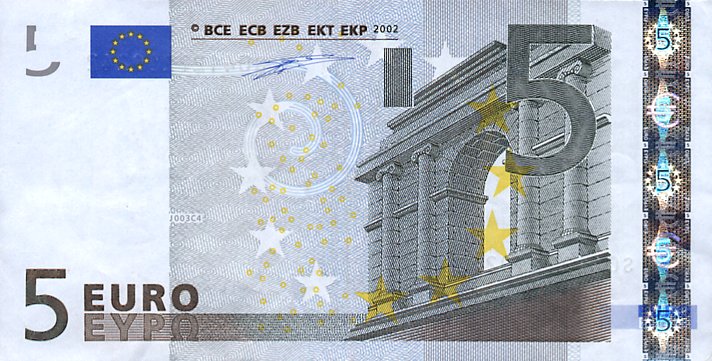
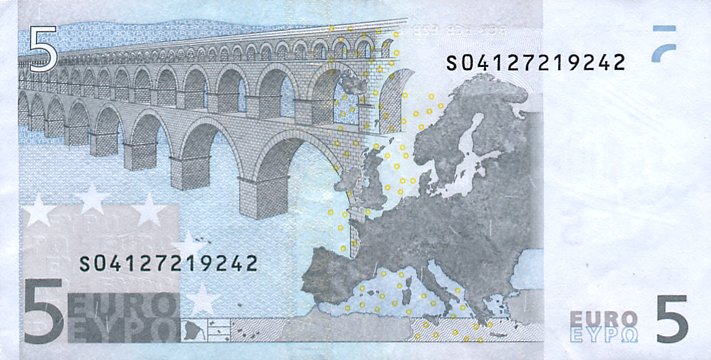
Banknotes
Budget & Public Finance
- Fiscal Year
- calendar year
- Annual Budget
- $861,500,000,000 (USD)
- Public Debt (% of GDP)
- 107.3%
- External Debt
- $1,682,000,000,000 (USD)
- Investment (% of GDP)
- 19.3%
- Current Account Balance
- -$27,620,000,000 (USD)
- Reserves of Foreign Exchange
- $2,147,483,647 (USD)
Labor, Industry & Trade
- Labor Force by Occupation
- services 63%; industry 32%; agriculture 5%
- Household Income — highest 10%
- 26.6%
- Industries
- tourism, machinery, iron and steel, chemicals, food processing, textiles, motor vehicles, clothing, footwear, ceramics
- Agriculture Products
- fruits, vegetables, grapes, potatoes, sugar beets, soybeans, grain, olives; beef, dairy products; fish
- Export Commodities
- engineering products, textiles and clothing, production machinery, motor vehicles, transport equipment, chemicals; food, beverages and tobacco; minerals and nonferrous metals
- Export Partners
- Germany 13.7%, France 12.2%, US 9.8%, UK 6.9%, Spain 6.4%
- Import Commodities
- engineering products, chemicals, transport equipment, energy products, minerals and nonferrous metals, textiles and clothing; food, beverages and tobacco
- Import Partners
- Germany 17.8%, France 11.3%, Netherlands 5.9%, UK 5%, US 4.9%, Spain 4.6%, Belgium 4.4%
Energy
- Oil Production
- 136,200 bbl/day
- Oil Consumption
- 1,874,000 bbl/day
- Oil Reserves
- 586,600,000 bbl/day
- Natural Gas Production
- 13,550,000 cu m
- Natural Gas Consumption
- 76,880,000,000 cu m
- Natural Gas Imports
- 54,780,000,000 cu m
- Natural Gas Exports
- 61,000,000 cu m
- Natural Gas Reserves
- 226,500,000,000 cu m
Communications
- Telephone System
- General Assessment: modern, well-developed, fast; fully automated telephone, telex, and data services Domestic: high-capacity cable and microwave radio relay trunks International: country code - 39; a series of submarine cables provide links to Asia, the Middle East, Europe, North Africa, and the United States; satellite earth stations - 3 Intelsat (with a total of 5 antennas - 3 for the Atlantic Ocean and 2 for the Indian Ocean), 1 Inmarsat (Atlantic Ocean region), and NA Eutelsat
- Internet Country Code
- .it
News & Weather
News & Weather
Current Weather
Latest News
Online forms urged people to report presence of Israeli citizens, Italian Jews in tourist areas - The Jerusalem Post
The Jerusalem Post · 13h ago
Outcry in Italy After Man Dies While Being Restrained by Police - The New York Times
The New York Times · 14h ago
Video of Moroccan man dying while pinned down by Italian police sparks anger, investigation - CBS News
CBS News · 15h ago
Police clash with protesters in Bologna after man dies during arrest attempt - Reuters
Reuters · 10h ago
Source: Italy sound out Pep Guardiola for manager role - ESPN
ESPN · 17h ago
Italian Football Federation holds talks with Pep Guardiola about replacing Gennaro Gattuso as head coach - Sky Sports
Sky Sports · 19h ago
Pep Guardiola in reported talks with Italy - would England come calling? - BBC
BBC · 14h ago
Adele Enjoys Ocean Dip Off Italy’s Amalfi Coast Alongside Tom Ford Ahead of Acting Debut in His Upcoming Film - People.com
People.com · 15h ago
News via Google News
Climate Overview
Italy's climate is generally pleasant. Although summer temperatures can rise into the mid-90s with high humidity, evenings are considerably cooler, allowing people to take to the streets and squares. In the winter, nighttime temperatures often drop to freezing, but snowfall outside the mountains is rare. In all seasons, the south tends to be warmer and drier than the north.
Videos
Videos
2 curated YouTube videos.
Source: YouTube
Source: YouTube
Frequently Asked Questions
Frequently Asked Questions
What is the population of Italy?
How do people greet each other in Italy?
What are the dining customs in Italy?
What etiquette should I know when visiting an Italian home?
How should I dress in Italy?
What should I know about gestures and body language in Italy?
How important is family in Italy?
What do Italians do for recreation?
What is the capital of Italy?
Where is Italy located?
What countries border Italy?
What is the predominant religion in Italy?
What currency does Italy use?
What language is spoken in Italy?
What is the geography of Italy like?
What is Italy known for?
Last reviewed 2026