
 English
 Español
 中文
中文 हिन्दी
 Français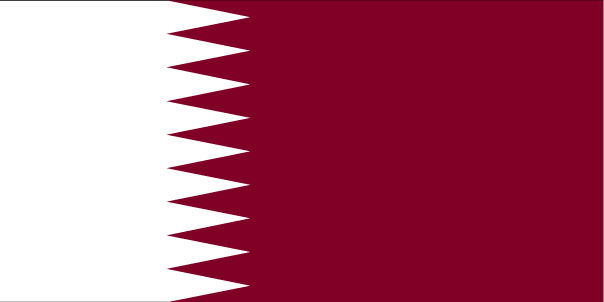
Qatar
Qatar
Declare Your Relationship to Qatar
CountryReports Community
- Studying1
- From Qatar1
- Qatar heritage0
- Visited1
- Want to visit1
Customs and Culture
Customs and Culture
Cultural Attributes
Qatar, a small but wealthy country on the Arabian Peninsula, has a rich and diverse culture shaped by its history, traditions, and modern influences.
Islamic Heritage: Islam plays a central role in Qatari society, influencing various aspects of daily life, including social norms, laws, and customs. The majority of Qatar's population is Muslim, and Islamic traditions and values are deeply ingrained in the culture.
Hospitality: Hospitality, known as "diwaniya" in Arabic, is highly valued in Qatari culture. Qatari families customarily welcome guests warmly into their homes and offer them food, refreshments, and conversation. Hosting guests is seen as a reflection of generosity and social status.
Traditional Dress: Traditional Qatari attire for men includes the "thobe," a long white robe, often worn with a "ghutra" (headscarf) and "agal" (black cord to secure the ghutra). Women typically wear the "abaya," a long black cloak, and may cover their heads with a scarf known as the "shayla." While traditional dress is still common, many Qataris wear Western clothing, especially in urban areas.
Family Values: Family is central to Qatari society, and strong family ties are highly valued. Extended families often live close to one another and gather regularly for meals, celebrations, and social gatherings. Respect for elders and obedience to parents are important cultural values.
Cuisine: Qatari cuisine is influenced by Bedouin and Persian culinary traditions. It features dishes such as "machboos" (spiced rice with meat), "harees" (a porridge-like dish made from wheat and meat), and "balaleet" (sweet vermicelli noodles). Dates, milk, and camel meat are also commonly consumed.
Arts and Literature: Qatar has a burgeoning arts scene, with initiatives like the Qatar Museums Authority and the Doha Film Institute promoting cultural activities and supporting local artists. Traditional Qatari arts and crafts, such as embroidery, calligraphy, and weaving, are also cherished forms of expression.
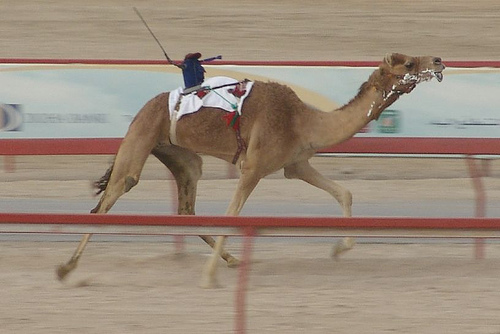
Sports and Recreation: Traditional sports like camel racing and falconry hold cultural significance in Qatar, although modern sports such as football (soccer) have gained widespread popularity. Qatar is set to host the FIFA World Cup in 2022, highlighting the country's growing presence in the global sports arena.
Modernization: Rapid economic development and modernization have significantly changed Qatari society in recent decades. Urbanization, technological advancements, and an influx of expatriate workers have transformed Qatar's cultural landscape, blending traditional and contemporary influences.

The Desert's Pearl Reborn
Greetings, Gestures & Visiting
When Arab men meet, they usually shake hands. However, a man does not shake the hand of a woman's acquaintance. Close friends of the same sex often link arms or hold hands while walking together.
When a Qatari family receives guests, it is traditional to serve “qahwa” (freshly brewed coffee). Qatari qahwa is similar to Turkish coffee. The coffee is served black and unsweetened. Fresh dates are offered to accompany qahwa. The fruit is 55% natural sugar, which refreshes and sweetens the palate between sips of qahwa.
In Qatar, like in many other cultures, gestures play a significant role in communication and social interaction. While some gestures may be similar to those in Western cultures, others may have different meanings or cultural connotations.
Respect for Cultural Norms: Qatar is a conservative society with strong Islamic values, so it's essential to be mindful of cultural norms and customs when making gestures. It's generally advisable to avoid gestures considered rude, offensive, or disrespectful in Islamic culture.
Use of Hand Gestures: Hand gestures are commonly used in Qatar to complement verbal communication and convey emphasis or emotion. For example, nodding the head up and down is generally understood as a sign of agreement, while shaking the head from side to side signifies disagreement.
Greetings: In Qatar, offering a handshake is customary when greeting someone, particularly in professional or formal settings. However, it's essential to be aware that some conservative Muslims, especially women, may prefer not to shake hands with members of the opposite gender. In such cases, waiting for the other person to initiate the greeting is best.
Respect for Personal Space: Qataris typically value personal space and may stand comfortably from others during conversations. While gestures like patting someone on the back or touching their arm may be acceptable among close friends or family members, respecting personal boundaries is essential, especially with individuals of the opposite gender.
Nonverbal Communication: Nonverbal cues such as facial expressions, eye contact, and body language are integral to communication in Qatar. Maintaining eye contact during conversations is generally seen as a sign of attentiveness and respect. However, prolonged eye contact with members of the opposite gender may be considered inappropriate in specific contexts.
Respect for Elders: In Qatari culture, respecting elders is highly valued. When interacting with older individuals, it's customary to greet them politely, use formal language and gestures, and avoid behaviors that may be perceived as disrespectful or rude.
Cultural Sensitivity: It's crucial to exercise cultural sensitivity and avoid making gestures that may be offensive or misunderstood. For example, pointing with the index finger is generally considered impolite in Arab culture, so it's best to use an open hand or gesture with the whole hand instead.
Hospitality is an essential feature of Qatari life. Most Qataris receive male guests at home in a majlis (reception area). Traditionally, according to Bedouin custom, guests were seated on the floor on large cushions. Nowadays, however, the majlis usually has sofas and chairs. Men and women rarely socialize together. Women receive their friends in a separate part of the house.
Traditional Qatari attire reflects the country's cultural heritage, Islamic values, and desert climate.
Thobe (Thawb): Qatari men wear a long, loose-fitting robe called a thobe. It is typically made of lightweight fabric, such as cotton or polyester, to help keep the wearer cool in the desert heat. The thobe is usually white or light-colored, though darker colors may also be worn for special occasions. It is often paired with a head covering called a ghutra (keffiyeh) and an agal, a cord-like headband used to secure the ghutra in place.
Ghutra (Keffiyeh) and Agal: The ghutra is a square-shaped scarf made of cotton or linen folded into a triangle and placed on the head. It is commonly worn to protect the head and face from the sun and sand. The agal is a black cord-like headband worn on top of the ghutra to keep it in place. The style of wearing the ghutra and agal may vary depending on personal preference and cultural traditions.
Dishdasha (Kandura): The dishdasha is a traditional garment worn by Qatari men, similar to the thobe but with slight variations in design and detailing. It is also a long robe, typically worn in white or light colors, and may feature decorative embroidery or embellishments along the neckline, cuffs, and front placket.
Abaya: Qatari women wear a loose-fitting, full-length outer garment called an abaya. It is typically made of black fabric and worn over regular clothing to provide modesty and coverage. The abaya may be plain or adorned with decorative embroidery, sequins, or beadwork, especially for special occasions.
Shayla: Qatari women wear shaylas, rectangular scarves, to cover their hair. They are typically made of lightweight fabric and draped over the head and shoulders, exposing the face. The shayla may be plain or embellished with decorative edges or patterns.
Niqab: Some Qatari women choose to wear a niqab, which is a veil that covers the face, leaving only the eyes visible. The niqab is worn for modesty and is typically made of black fabric, though it may also come in other colors.
Bisht: The bisht is a traditional cloak worn by Qatari men on formal occasions, such as weddings, religious festivals, and ceremonial events. It is typically made of fine fabric, such as silk or wool, and is worn over the thobe or dishdasha. The bisht is often adorned with intricate embroidery and may feature decorative tassels or trim.
Diet
Because the workday begins early, breakfast is usually served at about 6:00 a.m. It is light, consisting of olives, cheese, yogurt and coffee. Lunch is the biggest meal of the day. People eat after 1 PM and then rest before going back to work. Lunch often begins with appetizers, followed by fish or lamb stew, salads, cooked vegetables, bread and fruit. Many people eat without using cutlery; instead, they hold a piece of bread in the right hand and use it to scoop up the food. Dinner is served late in the evening and is usually light, except during Ramadan and on special occasions.
Common dishes include matchbous (spiced lamb with rice), hareis (slow-cooked wheat and tender lamb) and seafood served with seasoned rice. Some favorite desserts include a type of bread pudding called umm Ali (literally “Mother of Ali”), a sweet cheesecake with a cream topping called esh asaraya (meaning “bread of the harem”) and pudding made with rosewater and pistachios, called mehalabiya.
Because the workday begins early, breakfast is usually served at about 6:00 a.m. It is light, consisting of olives, cheese, yogurt and coffee. Lunch is the biggest meal of the day. People eat after 1 PM and then rest before going back to work. Lunch often begins with appetizers, followed by fish or lamb stew, salads, cooked vegetables, bread and fruit. Many people eat without using cutlery; instead, they hold a piece of bread in the right hand and use it to scoop up the food. Dinner is served late in the evening and is usually light, except during Ramadan and on special occasions.
Common dishes include matchbous (spiced lamb with rice), hareis (slow-cooked wheat and tender lamb) and seafood served with seasoned rice. Some favorite desserts include a type of bread pudding called umm Ali (literally “Mother of Ali”), a sweet cheesecake with a cream topping called esh asaraya (meaning “bread of the harem”) and pudding made with rosewater and pistachios, called mehalabiya.

Family
Virtually all marriages are arranged, sometimes even when the concerned parties are quite young. Girls are deemed of marriageable age at about 14 or 15 years old. In the past, girls as young as 12 could be married, but the trend in recent years has been to wait until the girl has completed her education. The groom's family traditionally pays a bride's price to the bride's family before the wedding. Qatari weddings are elaborate affairs, lasting several days. There are separate ceremonies and celebrations for women and men.
Recreation
Boys enjoy playing the “Al Ghomaid” game, in which one boy is blindfolded and has to catch one of the others, who try to avoid him and make noises to confuse him. When the blindfolded boy catches one of the other players, that boy is then blindfolded. Girls play “Umm Al Ial”. One girl plays the role of the mother who defends her children against a wolf, represented by another girl. Qatari children also enjoy visiting Doha's amusement park, Aladdin's Kingdom, known as the Family Fun Park of a Thousand and One Delights.
Soccer, camel racing, and falconry are also popular pastimes.
Holidays
Independence Day
9/3Independence Day
Dates of Interest
- July - August
Celebrated during the middle of Ramadan, Garangao is a traditional Qatari children's festival. Children dress in traditional attire and go door-to-door singing songs and collecting sweets and nuts.
How do people greet each other in Qatar?
Men usually shake hands when they meet, but handshakes across genders are avoided unless initiated by the other person, particularly by conservative women.
Do
- Shake hands with other men, especially in formal or professional settings
- Wait for a woman to initiate a greeting before offering a handshake
- Accept qahwa (black, unsweetened coffee) and fresh dates when received as a guest
Don’t
- Don't shake a woman's hand unless she extends hers first
Good to know
- Close friends of the same sex may link arms or hold hands while walking
- Fresh dates are served with qahwa to sweeten the palate between sips
What are the dining customs in Qatar?
Lunch is the biggest meal, eaten after 1 PM, and many people eat without cutlery, scooping food with bread held in the right hand.
Do
- Use a piece of bread in your right hand to scoop up food
- Expect a light early breakfast around 6:00 a.m. of olives, cheese, yogurt and coffee
Good to know
- Try local dishes like matchbous (spiced lamb with rice) and hareis (slow-cooked wheat and lamb)
- Dinner is usually light, except during Ramadan and special occasions
- Save room for desserts like umm Ali, esh asaraya and mehalabiya
What etiquette should visitors know in Qatar?
Hospitality is central to Qatari life, and guests are received in a majlis (reception area), with men and women rarely socializing together.
Do
- Respect elders by greeting them politely and using formal language
- Maintain eye contact as a sign of attentiveness and respect
- Respect personal space, especially with the opposite gender
Don’t
- Don't expect men and women to socialize together; women receive guests separately
- Avoid prolonged eye contact with members of the opposite gender
Good to know
- Guests are traditionally welcomed warmly with food, refreshments and conversation
What should I wear in Qatar?
Traditional dress reflects Islamic values and the desert climate: men wear the thobe with a ghutra and agal, while women wear the black abaya and shayla.
Good to know
- Men wear a long white thobe, often with a ghutra headscarf secured by a black agal
- Women wear a full-length black abaya and a shayla to cover the hair; some also wear a niqab
- Men wear a bisht cloak over the thobe on formal occasions like weddings
- Many Qataris also wear Western clothing, especially in urban areas
Which gestures matter in Qatar?
Hand gestures accompany speech, but as a conservative Islamic society, avoid anything considered rude or offensive.
Do
- Nod up and down to show agreement
- Gesture with an open or whole hand
Don’t
- Don't point with your index finger, as it is considered impolite
- Avoid touching or patting people of the opposite gender
What is family life like in Qatar?
Family is central to society, with strong ties, respect for elders, and traditionally arranged marriages.
Good to know
- Extended families often live close by and gather regularly for meals and celebrations
- Marriages are typically arranged, and weddings are elaborate affairs lasting several days
- Wedding ceremonies and celebrations are held separately for women and men
What do people do for fun in Qatar?
Popular pastimes include soccer, camel racing, and falconry, alongside traditional children's games.
Good to know
- Children play games like 'Al Ghomaid' (a blindfold catching game) and 'Umm Al Ial'
- Families visit Doha's amusement park, Aladdin's Kingdom
- Traditional sports like camel racing and falconry hold cultural significance
Last updated: 2026-07-12 · Sources: CountryReports
Photos of Qatar
Photos of Qatar
10 km Camal race
Woman clothed in blacj abeyya, in Doha
Muslim man prays in public park, Doha
Girl rides a camal.
Zubara fort, northwst Qatar
Spiral tower near the Corniche, Doha
Ancient carvings for stone throwing game
Major mosque in Al Wakrah
Old meets new, Doha
Modern skyscraper in Doha
Oyster monument at roundabout in Al Wakrah
Growing skyline in Doha, Qatar


Travel and Tourism
Travel and Tourism
- Travel Alert Status
- Level 1: Exercise Normal Precautions
- Currency
- Qatari rial (QAR)
- Time Difference
- UTC+3 (8 hours ahead of Washington, DC, during Standard Time)
- Climate
- Qatar lies outside the area of the annual monsoons. Its seasons are similar to those of the Temperate Zone, although usually much hotter. The winter months from December through February are cool. Intense heat persists at least from May through September. March, April, October, and November normally provide the most agreeable climatic conditions. Average humidity ranges from 32% during the cooler months to highs of 96% and 100% during late summer and early fall. Rainfall is usually very light and averages less than 3 inches per year, mostly in the winter months. Almost no rain falls from May through October. Frequent high winds, especially from March through August, can fill the air with fine dust and create a brownish haze on the horizon. The prevailing desert wind, known as shemal, comes from the north during the spring and summer months. In late summer, when the shemal dies, the humidity rises. The long summer (June through September) is characterized by intense heat and alternating dryness and humidity, with temperatures exceeding 55° C. Temperatures are moderate from November through May, although winter temperatures may fall to 17° C, which is relatively cool for the latitude. Rainfall is negligible, averaging 100 millimeters per year, confined to the winter months, and falling in brief, sometimes heavy storms that often flood the small ravines and the usually dry wadis. Sudden, violent dust storms occasionally descend on the peninsula, blotting out the sun, causing wind damage, and momentarily disrupting transport and other services. The scarcity of rainfall and the limited underground water, most of which has such a high mineral content that it is unsuitable for drinking or irrigation, restricted the population and the extent of agricultural and industrial development the country could support until desalination projects began. Although water continues to be provided from underground sources, most is obtained by desalination of seawater.
- Airports
- 4
Read the full travel guide — health, safety, vaccinations, disease risk, sanitation, and transit details.
View full travel guideRecipes
Recipes
History
History
Historical Eras
Ancient & Pre-Islamic
50000 BCE – 622
Human habitation of the Qatar Peninsula dates back approximately 50,000 years, with Stone Age coastal encampments and flint-working sites among the earliest evidence. Later finds include Al Ubaid pottery from around 5000 BCE, rock carvings, burial mounds, and a substantial settlement dating to roughly 500 BCE. The peninsula sat along ancient Persian Gulf trade routes connecting Mesopotamia, Arabia, and the Indian subcontinent.
Islamic & Ottoman Era
622 – 1783
Following the rise of Islam in the 7th century, the Qatar Peninsula became integrated into the broader Islamic world, passing through periods of Arab tribal control and nominal Ottoman suzerainty from the 16th century onward. The peninsula's small fishing and pearling communities remained largely autonomous in practice, with tribal structures dominating daily life. Portuguese and later Ottoman imperial ambitions in the Gulf touched Qatar only peripherally.
Al Thani Ascendancy
1783 – 1916
Arab migrants, including the Al Thani family, established pearling and trading settlements along Qatar's coast from the early 18th century, with the Al Thani consolidating leadership by the mid-1800s. A destructive conflict with Bahrain in 1867 over territorial claims leveled Doha, prompting British diplomatic intervention and formal recognition of Qatar as a distinct political entity. The Ottoman Empire also exercised nominal authority over the peninsula until World War I reshaped regional power.
British Protectorate
1916 – 1971
In 1916 Qatar formally became a British protectorate under the Al Thani ruler Sheikh Abdullah, ceding control of foreign affairs to Britain in exchange for protection. The discovery of oil in 1939 transformed the peninsula's economic prospects, though full exploitation was delayed by World War II. When Britain announced its withdrawal from the Gulf in 1968, Qatar opted against joining a federation with neighboring sheikhdoms and declared full independence on September 3, 1971.
Early Independence & Oil Wealth
1971 – 1995
Independent Qatar under Amir Khalifa bin Hamad Al Thani rapidly modernized its infrastructure using petroleum revenues, transforming from one of the Gulf's poorest states into a nation with advanced services and industries within two decades. The late 1980s brought economic strain as the amir systematically siphoned petroleum revenues, stalling development projects. Qatar contributed troops to the 1991 coalition to liberate Kuwait and permitted Western air forces to operate from Doha, repositioning itself as a pro-Western regional actor.
Modern Qatar
1995 – present
In 1995 Amir Hamad bin Khalifa Al Thani seized power from his father in a bloodless coup and launched an ambitious program of political and economic reform, including the launch of Al Jazeera in 1996 and Qatar's first written constitution in 2005. Exploitation of the North Field — the world's largest natural gas reservoir — diversified the economy beyond oil and generated extraordinary per capita wealth. Qatar resolved longstanding border disputes with Saudi Arabia and Bahrain in 2001 and has since emerged as a significant diplomatic and cultural force globally.
Overview
Oman has a particular culture and history that distinguish it from its neighbors. It also is the state with the shortest coastline along the Persian Gulf. Most of Oman lies along the Gulf of Oman and the Arabian Sea. The gulf has been an important waterway since ancient times, bringing the people who live on its shores into early contact with other civilizations. In the ancient world, the gulf peoples established trade connections with India; in the Middle Ages, they went as far as China; and in the modern era, they became involved with the European powers that sailed into the Indian Ocean and around Southeast Asia. In the twentieth century, the discovery of massive oil deposits in the gulf made the area once again a crossroads for the modern world. The people are mostly Arabs. Because they live in basically tribal societies, family and clan connections underlie most political and economic activity. The discovery of oil and the increasing contact with the West has led to tremendous material and social changes. In Oman high mountain ranges effectively cut off the country’s hinterland from the rest of the region . Moreover, various tribal loyalties throughout the region are frequently divisive and are exacerbated by religious differences that involve the major sects of Islam-- Sunni and Shia (see Glossary)--and the smaller Kharijite sect as well as Muslim legal procedures. Qatar is a small country dominated by the Persian Gulf’s largest ruling family, the Al Thani. The amir, Shaykh Khalifa ibn Hamad Al Thani, is the country’s ruler, but his son, Shaykh Hamad ibn Khalifa Al Thani, in addition to being the heir apparent and minister of defense, wields considerable power in the day-to-day running of the country. The Al Thani regime tolerates no political opposition. The social mores of the country are shaped by a somewhat milder version of qatar/qa_glos.asp#Wahhabi">Wahhabi (see Glossary) Islam than is found in neighboring Saudi Arabia. Women are permitted to drive if they obtain permits, for example, and non-Qatari women need not veil in public. Occupying a barren peninsula scorched by extreme summer heat, Qatar was transformed between the mid-1960s and the mid-1980s from a poor British protectorate noted mainly for pearling into an independent state with modern infrastructure, services, and industries. The state was built using mostly foreign labor and expertise, with funding from oil revenues. And as in other states where oil dominates the economy, Qatar’s fortunes have followed those of the world oil market. The late 1980s and early 1990s were times of relative austerity, with development projects canceled or delayed. But those years were also a period of significant transition when Qatar began its shift from an economy reliant almost entirely on oil to one that would be supported by the exploitation of natural gas from the North Field, the world’s largest natural gas field. The early 1990s also constituted a watershed period in foreign relations because the invasion of Kuwait by Iraq on August 2, 1990, changed regional and world alignments. Qatar sent troops to fight for Kuwait’s liberation and, reversing its previous opposition to the presence of foreign forces in the region, permitted United States, Canadian, and French air force fighter aircraft to operate from Doha (also seen as Ad Dawhah). This placed Qatar firmly on the anti-Iraq side of the great rift that split the Arab world after the invasion and weakened the full support for the Palestine Liberation Organization that the country had previously shown. Human habitation of the Qatar Peninsula dates as far back as 50,000 years, when small groups of Stone Age inhabitants built coastal encampments, settlements, and sites for working flint, according to recent archaeological evidence. Other finds have included pottery from the Al Ubaid culture of Mesopotamia and northern Arabia (ca. 5000 B.C.), rock carvings, burial mounds, and a large town that dates from about 500 B.C. at Wusail, some twenty kilometers north of Doha. The Qatar Peninsula was close enough to the Dilmun civilization (ca. 4000 to 2000 B.C.) in Bahrain to have felt its influence. A harsh climate, lack of resources, and frequent periods of conflict, however, seem to have made it inevitable that no settlement would develop and prosper for any significant length of time before the discovery of oil. The peninsula was used almost continuously as rangeland for nomadic tribes from Najd and Al Hasa regions in Saudi Arabia, with seasonal encampments around sources of water. In addition, fishing and pearling settlements were esta
Timeline of Key Events
1700
Migrants establish pearling and trading settlements along the coast of present-day Qatar.
Migrants establish pearling and trading settlements along the coast of present-day Qatar.
1867
Conflict with neighboring Bahrain over territorial claims; Doha is all but destroyed.
Conflict with neighboring Bahrain over territorial claims. Doha is all but destroyed.
1900
After Iraq invades Kuwait, Qatar says it will allow foreign forces on its soil.
After Iraq invades Kuwait, Qatar says it will allow foreign forces on its soil. Qatari troops later take part in the liberation of Kuwait.
1939
Oil reserves discovered.
Oil reserves discovered. Exploitation is delayed by World War II, but oil comes to replace pearling and fishing as Qatar’s main source of revenue.
1968
Britain announces that it will withdraw its forces from the Gulf.
Britain announces that it will withdraw its forces from the Gulf. Qatar negotiates with Bahrain and present-day United Arab Emirates on forming a federation.
1971
Qatar becomes independent.
Qatar becomes independent.
2001
Qatar settles long-running border disputes with Saudi Arabia and Bahrain.
Qatar settles long-running border disputes with Saudi Arabia and Bahrain.
Read the full history profile — narrative overview, defining eras, and the complete timeline in one place.
View expanded historyInteresting Facts
Interesting Facts
Qatar is the world's least taxed country.
Only about 30% of the residents of Qatar are actually citizens of Qatar. The population includes large communities of Indians, Pakistanis and Iranians, and smaller communities of Filipinos, Bangladeshis, Sudanese, Afghans, Sri Lankans and Britons.
Qatar is geologically unstable; the land has risen two metres relative to sea level in the past 400 years. Qatar and Bahrain were once joined, but, over the centuries, the two land masses drifted apart.
Qatari troops participated in the Persian Gulf War in 1990-91. Doha served as a base for offensive strikes by American and Canadian aircraft against Iraq and the Iraqi forces.
The separation of men and women in Qatari society extends to places of prayer, government offices, shops and even elevators.
Although the Qatar government provides extensive social services and would provide for any elderly citizen in need, most Qatari children would consider it shameful not to care for elderly parents within the family.
See every fact — trivia, oddities, and curious tidbits gathered from across the country.
View all interesting factsGeography and Environment
Geography and Environment
- Terrain
- mostly flat and barren desert covered with loose sand and gravel
- Climate
- Qatar lies outside the area of the annual monsoons. Its seasons are similar to those of the Temperate Zone, although usually much hotter. The winter months from December through February are cool. Intense heat persists at least from May through September. March, April, October, and November normally provide the most agreeable climatic conditions. Average humidity ranges from 32% during the cooler months to highs of 96% and 100% during late summer and early fall. Rainfall is usually very light and averages less than 3 inches per year, mostly in the winter months. Almost no rain falls from May through October. Frequent high winds, especially from March through August, can fill the air with fine dust and create a brownish haze on the horizon. The prevailing desert wind, known as shemal, comes from the north during the spring and summer months. In late summer, when the shemal dies, the humidity rises. The long summer (June through September) is characterized by intense heat and alternating dryness and humidity, with temperatures exceeding 55° C. Temperatures are moderate from November through May, although winter temperatures may fall to 17° C, which is relatively cool for the latitude. Rainfall is negligible, averaging 100 millimeters per year, confined to the winter months, and falling in brief, sometimes heavy storms that often flood the small ravines and the usually dry wadis. Sudden, violent dust storms occasionally descend on the peninsula, blotting out the sun, causing wind damage, and momentarily disrupting transport and other services. The scarcity of rainfall and the limited underground water, most of which has such a high mineral content that it is unsuitable for drinking or irrigation, restricted the population and the extent of agricultural and industrial development the country could support until desalination projects began. Although water continues to be provided from underground sources, most is obtained by desalination of seawater.
- Natural Hazards
- haze, dust storms, sandstorms common
- Current Environmental Issues
- limited natural fresh water resources are increasing dependence on large-scale desalination facilities
Read the full geography and environment profile — terrain, climate, natural resources, hazards, land use, and international agreements.
View full geographyPeople & Demographics
People & Demographics
Religion
Languages Spoken
Arabic (official), English commonly used as a second language
- Arabic
Population
- Population
- 840,926
- Population in Major Urban Areas
- DOHA (capital) 567,000
- Nationality Noun
- Qatari(s)
- Ethnic Groups
- Arab 40%, Pakistani 18%, Indian 18%, Iranian 10%, other 14%
Education
- Literacy Definition
- age 15 and over can read and write
Read the full people and society profile — demographics, health, education, religion, languages, and notable people.
View full people and societyGovernment & Politics
Government & Politics
Country Identity
- Country Name
- Qatar
- Full Country Name
- State of Qatar
- Local - Long
- Dawlat Qatar
- Local - Short
- Qatar
Government Structure
- Government Type
- traditional monarchy
- Legal System
- discretionary system of law controlled by the amir, although civil codes are being implemented; Islamic law dominates family and personal matters
- Executive Branch
- chief of state: Amir TAMIM bin Hamad al-Thani (since 25 June 2013, when his father, Amir HAMAD bin Khalifa al-Thani, abdicated in his favor); note - Amir TAMIM also serves as Supreme Commander of the Armed Forces head of government: Prime Minister and Minister of Foreign Affairs MUHAMMAD bin Abd al-Rahman bin Jassim al-Thani (since 7 March 2023); Deputy Prime Minister KHALID bin Khalifa bin Abdul Aziz al-Thani served in the role previously (2020–2023) cabinet: Council of Ministers appointed by the Amir elections: none; the monarch is hereditary note: Qatar held elections for its 45-member Advisory Council (Majlis al-Shura) on 2 October 2021, marking the first time citizens directly elected members to the body. The Advisory Council holds legislative powers, including the ability to propose and review legislation, approve the state budget, and question ministers. Previously, all members had been appointed by the Amir. Qatar also continues to hold periodic elections for the 29-member Central Municipal Council (CMC), which exercises consultative powers focused on improving the delivery of municipal services.
- Legislative Branch
- unicameral Advisory Council or Majlis al-Shura (35 seats; members appointed) note: no legislative elections have been held since 1970 when there were partial elections to the body; Council members have had their terms extended every four years since; the new constitution, which came into force on 9 June 2005, provides for a 45-member Consultative Council, or Majlis al-Shura; the public would elect two-thirds of the Majlis al-Shura; the amir would appoint the remaining members; preparations are underway to conduct elections to the Majlis al-Shura in early 2007
- Judicial Branch
- Court of Appeal note: under a judiciary law issued in 2003, the former two court systems, civil and Islamic law, were merged under a higher court, the Court of Cassation, established for appeals
- Suffrage
- 18 years of age; universal
- Constitution
- provisional constitution enacted 19 April 1972; in July 1999 Amir HAMAD issued a decree forming a committee to draft a permanent constitution; in the 29 April 2003 referendum, 96.6% of Qatari voters approved the new constitution
- Independence
- 3 September 1971 (from UK)
- National Holiday
- Independence Day, 3 September (1971)
Capital City
- Capital Name
- Doha
- Capital - geographic coordinate
- 25 17 N, 51 32 E
- Capital Time Difference
- UTC+3 (8 hours ahead of Washington, DC, during Standard Time)
derives from the Arabic term "dohat," meaning "roundness," and refers to the small rounded bays along the area's coastline
Military
Branches: Qatari Emiri Land Force (QELF), Qatari Emiri Navy (QEN), Qatari Emiri Air Force (QEAF)
Embassy / Diplomatic Mission
U.S. Embassy Doha
Al-Luqta District, 22nd February Street, PO Box 2399, Doha
Telephone: (974) 4496-6000, extension 0 or 6600
Emergency after-hours telephone: (974) 4496-6000, extension 0 or 6600,
Facsimile: (974) 4488-4298
E-mail: acsconsulardoha@state.gov
The Embassy observes a Sunday through Thursday workweek. Government offices and most businesses in Qatar also observe a Sunday through Thursday
Read the full government profile — flag symbolism, national anthem, and other national symbols.
View full government detailsEconomy
Economy
Qatar's economy is heavily dependent on hydrocarbons, with oil and natural gas accounting for roughly 60% of GDP, about 85% of export earnings, and approximately 75% of government revenues. This wealth has given Qatar one of the highest per capita incomes in the world, consistently ranking among the top globally. Proved oil reserves stand at approximately 25 billion barrels, while proved natural gas reserves exceed 24 trillion cubic meters—about 13% of the world total and the third largest in the world after Russia and Iran. The North Field, shared with Iran, is the largest non-associated natural gas field on the planet and underpins Qatar's status as one of the world's leading exporters of liquefied natural gas (LNG). Long-term economic strategy, guided by the Qatar National Vision 2030, emphasizes expanding LNG production capacity—targeted to rise from 77 million tonnes per year to 142 million tonnes by 2030—while diversifying the economy into finance, tourism, logistics, and technology. Qatar has consistently posted trade and current account surpluses, supported by strong hydrocarbon revenues and growing global demand for natural gas following shifts in European energy markets.
Snapshot
- Currency Name and Code
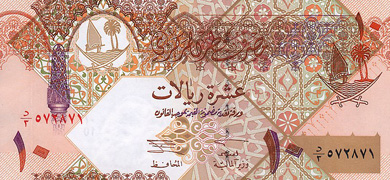
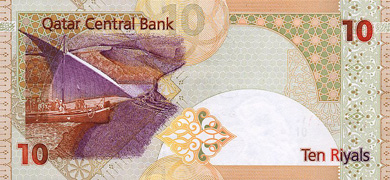
- Qatari Rial (QAR)
- GDP — official exchange rate
- $28,070,000,000 (USD)
- GDP Real Growth Rate
- 8.8%
Banknotes
Budget & Public Finance
- Fiscal Year
- 1 April - 31 March
- Annual Budget
- $11,310,000,000 (USD)
- Public Debt (% of GDP)
- 36.7%
- External Debt
- $20,630,000,000 (USD)
- Investment (% of GDP)
- 20.9%
- Current Account Balance
- $10,530,000,000 (USD)
- Reserves of Foreign Exchange
- $2,147,483,647 (USD)
Labor, Industry & Trade
- Industries
- crude oil production and refining, fertilizers, petrochemicals, steel reinforcing bars, cement
- Agriculture Products
- fruits, vegetables; poultry, dairy products, beef; fish
- Export Commodities
- petroleum products, fertilizers, steel
- Export Partners
- Japan 41.2%, South Korea 17.1%, Singapore 8.4%, US 4.2%
- Import Commodities
- machinery and transport equipment, food, chemicals
- Import Partners
- France 17.8%, Japan 10.1%, US 8.5%, UK 8.3%, Germany 8.2%, Italy 6.7%, UAE 5.1%, Saudi Arabia 4.2%, South Korea 4%
Energy
- Oil Production
- 790,500 bbl/day
- Oil Consumption
- 33,000 bbl/day
- Oil Reserves
- 16,000,000,000 bbl/day
- Natural Gas Production
- 30,800,000,000 cu m
- Natural Gas Consumption
- 11,610,000,000 cu m
- Natural Gas Imports
- 0 cu m
- Natural Gas Exports
- 18,200,000,000 cu m
- Natural Gas Reserves
- 25,770,000,000 cu m
Communications
- Telephone System
- general assessment: modern system centered in Doha domestic: combined fixed and mobile-cellular telephone subscribership exceeds 130 telephones per 100 persons international: country code - 974; landing point for the Fiber-Optic Link Around the Globe (FLAG) submarine cable network that provides links to Asia, Middle East, Europe, and the US; tropospheric scatter to Bahrain; microwave radio relay to Saudi Arabia and the UAE; satellite earth stations - 2 Intelsat (1 Atlantic Ocean and 1 Indian Ocean) and 1 Arabsat
- Internet Country Code
- .qa
News & Weather
News & Weather
Current Weather
Latest News
Trump says Qatari-gifted AF1 to be ‘maxed out’ following questions of security - The Washington Post
The Washington Post · 7h ago
Trump's new Air Force One grounded, as jet donated by Qatar goes for 'upgrades' - Sky News
Sky News · 9h ago
Qatar, Pakistan push Iran-US diplomacy as war escalates - ایران اینترنشنال
ایران اینترنشنال · 9h ago
Qatar Airways Launches 16-Hour Nonstop Flights To Major US City In 2 Weeks [Map] - Simple Flying
Simple Flying · 16h ago
Trump’s Qatar jet likely headed to Texas for security upgrades - San Antonio Express-News
San Antonio Express-News · 6h ago
Qatar and Pakistan propose 10-day Iran-US ceasefire - The New Arab
The New Arab · 15h ago
QFMA Decision No. 3 of 2026: New International License Regime for Qatar Financial Services Firms - Crowell & Moring LLP
Crowell & Moring LLP · 7h ago
Trump Says New Air Force One Will Be Taken Out of Service to Be ‘Maxed Out’ - The New York Times
The New York Times · 1d ago
News via Google News
Climate Overview
Qatar lies outside the area of the annual monsoons. Its seasons are similar to those of the Temperate Zone, although usually much hotter. The winter months from December through February are cool. Intense heat persists at least from May through September. March, April, October, and November normally provide the most agreeable climatic conditions. Average humidity ranges from 32% during the cooler months to highs of 96% and 100% during late summer and early fall. Rainfall is usually very light and averages less than 3 inches per year, mostly in the winter months. Almost no rain falls from May through October. Frequent high winds, especially from March through August, can fill the air with fine dust and create a brownish haze on the horizon. The prevailing desert wind, known as shemal, comes from the north during the spring and summer months. In late summer, when the shemal dies, the humidity rises.
The long summer (June through September) is characterized by intense heat and alternating dryness and humidity, with temperatures exceeding 55° C. Temperatures are moderate from November through May, although winter temperatures may fall to
17° C, which is relatively cool for the latitude. Rainfall is negligible, averaging 100 millimeters per year, confined to the winter months, and falling in brief, sometimes heavy storms that often flood the small ravines and the usually dry wadis.
Sudden, violent dust storms occasionally descend on the peninsula, blotting out the sun, causing wind damage, and momentarily disrupting transport and other services.
The scarcity of rainfall and the limited underground water, most of which has such a high mineral content that it is unsuitable for drinking or irrigation, restricted the population and the extent of agricultural and industrial development the country could support until desalination projects began. Although water continues to be provided from underground sources, most is obtained by desalination of seawater.
Videos
Videos
2 curated YouTube videos.
Source: YouTube
Source: YouTube
Frequently Asked Questions
Frequently Asked Questions
What is the population of Qatar?
How do people greet each other in Qatar?
What are the dining customs in Qatar?
What etiquette should visitors know in Qatar?
What should I wear in Qatar?
Which gestures matter in Qatar?
What is family life like in Qatar?
What do people do for fun in Qatar?
What is the capital of Qatar?
Where is Qatar located?
What countries border Qatar?
What religion is practiced in Qatar?
What is the currency of Qatar?
What language is spoken in Qatar?
What is Qatar known for?
Last reviewed 2026