
 English
 Español
 中文
中文 हिन्दी
 Français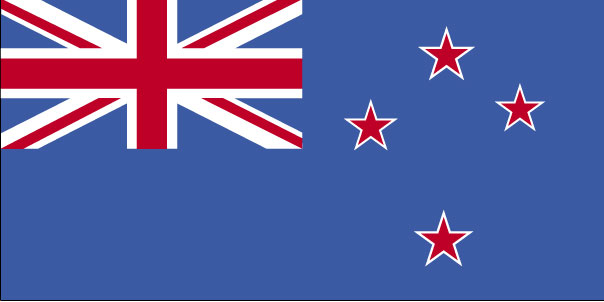
New Zealand
Declare Your Relationship to New Zealand
CountryReports Community
- Studying1
- From New Zealand3
- New Zealand heritage1
- Visited0
- Want to visit2
Customs and Culture
Customs and Culture
About the People
Children must attend school from the age of 6 to 16 however many children start school at 5. Education is free to all students up to the age of 19. The Government provides school bus service for children who live beyond walking are of the school. Most of the people are descendants of British Settlers. The Maori or polynesian people make up about 10 percent of the people. The people have a high standard of living, and are amoung the best fed in the world. They belive in equality and were the first nation in the world to give women the right to vote in 1893. New Zealand was also one of the first nations to provide social security and old age befefits. Currently they have some of the best public health programs in the world.
Most families have a car, refigerator, washing machine, and other modern appliances. The cities have theaters, concert halls, and other forms of entertainment.
New Zealanders enjoy outdoor activities such as camping, hiking, and hunting. They also enjoy sports such as swimming, tennis, skiing and team sports like cricket and rugby.
Cultural Attributes
Children must attend school from the age of 6 to 16 however many children start school at the age of five. Education is free to all students up to the age of 19. The Government provides school bus service for children who live beyond walking are of the school.
Most of the people are descendants of British Settlers. The Maori or Polynesian people make up about 10 percent of the people. The people have a high standard of living, and are among the best fed in the world. They believe in equality and were the first nation in the world to give women the right to vote in 1893. New Zealand was also one of the first nations to provide social security and old age benefits. Currently they have some of the best public health programs in the world.
Most families have a car, refrigerator, washing machine, and other modern appliances. The cities have theaters, concert halls, and other forms of entertainment.
New Zealanders enjoy outdoor activities such as camping, hiking, and hunting. They also enjoy sports such as swimming, tennis, skiing and team sports like cricket and rugby.

Land of the Long White Cloud
Greetings, Gestures & Visiting
A Maori greeting or gesture of welcome "Kia Ora" this can be used both for hello and good-bye. The appropriate physical distance between people during conversation is about an arm's length.
The original inhabitants of the area known as Polynesia were the Maori, whose culture still is present in the nation of New Zealand today. The traditional greeting among members of the Maori tribe is to rub noses. The majority of the New Zealand population is British, thus British customs and gestures prevail. To chew gum and use toothpicks in public is considered quite rude.
When visiting people in New Zealand, there are several local traditions and customs that you may encounter. Here are some key ones:
Maori Traditions: Maori culture plays a significant role in New Zealand society, and visitors may experience various Maori traditions when visiting. This could include a powhiri (welcome ceremony), where visitors are formally welcomed onto a marae (Maori meeting grounds) with speeches, songs, and hongi (traditional Maori greeting involving pressing noses together).
Sharing Food: Food is an essential part of New Zealand's social fabric, and sharing meals is a common tradition. Whether it's a casual barbecue (often referred to as a "kiwi barbecue") or a formal dinner, guests are typically expected to contribute by bringing a dish or drink to share.
Respect for Nature: New Zealanders have a deep respect for their natural environment, and this reverence often extends to visitors as well. It's customary to leave nature as you found it and to follow any guidelines or rules set out in conservation areas.
Friendliness and Hospitality: Kiwis are known for their friendly and hospitable nature. When visiting someone's home, expect to be greeted warmly and made to feel welcome. Politeness and respect for hosts are highly valued.
Casual Dress: New Zealand has a relatively laid-back culture, and casual dress is common in many social settings. Unless specified otherwise, smart casual attire is usually appropriate for social gatherings.
Punctuality: While New Zealanders tend to have a relaxed attitude towards time, it's still considered polite to arrive on time for social engagements. However, being a few minutes late is generally tolerated and not seen as a major breach of etiquette.
Gift Giving: Bringing a small gift, such as a bottle of wine or a box of chocolates, when visiting someone's home is a common gesture of appreciation. However, extravagant gifts are not typically expected or necessary.
No Shoes Indoors: It's customary to remove your shoes before entering someone's home in New Zealand. This helps keep floors clean and is considered a sign of respect for the host's property.
Gratitude: Expressing gratitude for hospitality and kindness is important in New Zealand culture. Whether it's a simple thank you or a handwritten thank-you note, showing appreciation is always appreciated.
Respect for Indigenous Culture: Finally, showing respect for Maori culture and customs is essential when visiting New Zealand. Learning about and acknowledging the significance of Maori traditions demonstrates cultural sensitivity and appreciation.
In New Zealand, the style of dress varies depending on the occasion, location, and individual preferences.
Everyday Wear: New Zealand has a relatively casual dress culture, especially in more laid-back environments like smaller towns and rural areas. For everyday wear, people commonly opt for comfortable clothing such as jeans, t-shirts, sweaters, and sneakers. During the warmer months, shorts and sandals are also popular choices.
Work Attire: The dress code in workplaces can vary widely depending on the industry and company culture. In corporate environments, business attire such as suits, dress shirts, and formal dresses may be expected, particularly in larger cities like Auckland and Wellington. However, in many workplaces, especially those in creative or tech industries, business casual attire is more common.
Formal Occasions: For formal events such as weddings, cocktail parties, or upscale dinners, New Zealanders typically dress more formally. Men often wear suits or dress shirts with ties, while women may opt for dresses or dressy separates. Black tie attire is less common but may be required for particularly formal events.
Outdoor Activities: Given New Zealand's emphasis on outdoor recreation, outdoor-appropriate clothing is essential for activities such as hiking, skiing, and camping. This often includes sturdy hiking boots, waterproof jackets, hiking pants, and thermal layers for colder weather.
Maori Cultural Events: When attending Maori cultural events or ceremonies, it's respectful to dress modestly and conservatively. This may involve wearing clothing that covers the shoulders and knees, as well as removing hats and shoes when entering a marae (Maori meeting ground).
Beachwear: New Zealand has beautiful beaches, especially in the summer months, and beachwear is common attire. This includes swimsuits, boardshorts, sarongs, flip-flops, and sun hats.
Ethnic and Cultural Diversity: New Zealand's population is ethnically diverse, with people from various cultural backgrounds contributing to the country's fashion scene. Traditional clothing from different cultures may be worn on special occasions or as part of cultural celebrations.
Fashion Trends: New Zealanders tend to embrace global fashion trends, but with a unique twist influenced by the country's relaxed lifestyle and outdoor culture. Sustainable fashion and locally made clothing are also growing trends in response to environmental concerns.
Diet
The evening meal dinner is the main meal of the day, it generally consists of some type of meat dish which is often lamb. Breakfast usually consists of eggs and bacon. Lunch is typically a meat pie, hamburger or sandwich. The most popular traditional dinner dish is roast lamb with mint sauce served with roasted potatoes, roast kumara (New Zealand sweet potato) and roast pumpkin. It is also common to have a midmorning snack called "morning tea" and a bedtime snack called "supper" Hangi is a famous Maori tradition. The Hangi is a feast where a pit is dug in the ground in areas where there are hot springs. The pit is lined with rocks and then meats and vegetables are placed on top of the rocks and left to steam for several hours.

Family
Most families have two or three children and enjoy a high standard of living. Maori families are usually larger than non Maori families. In Maori families a person's brothers as well as the male cousins would be called brother and all the female cousins would be called sister.
Recreation
In New Zealand, there are numerous popular recreational activities enjoyed by locals and tourists alike, thanks to the country's diverse landscapes and outdoor opportunities.
Hiking and Tramping: With its breathtaking landscapes, New Zealand offers an abundance of hiking trails, including the famous multi-day hikes such as the Milford Track, Kepler Track, and Tongariro Alpine Crossing.
Skiing and Snowboarding: The South Island's Southern Alps provide excellent skiing and snowboarding opportunities in places like Queenstown, Wanaka, and Canterbury during the winter months.
Water Sports: New Zealand's extensive coastline and numerous lakes offer opportunities for water sports such as surfing, kayaking, sailing, fishing, and diving.
Mountain Biking: There are numerous mountain biking trails throughout the country, ranging from beginner to expert level, offering scenic rides through forests, along coastlines, and in mountainous terrain.
Adventure Tourism: New Zealand is known as the adventure capital of the world, offering adrenaline-pumping activities such as bungee jumping, skydiving, jet boating, and ziplining.
Camping and Wilderness Experiences: With its stunning national parks and conservation areas, camping and wilderness experiences are popular activities for those seeking to connect with nature.
Golf: New Zealand boasts world-class golf courses set amidst stunning scenery, attracting golf enthusiasts from around the globe.
Cycling: Apart from mountain biking, New Zealand offers excellent opportunities for road cycling, with scenic routes winding through picturesque landscapes.
Wine Tours: New Zealand's wine regions, particularly in areas like Marlborough and Central Otago, are popular destinations for wine tours and tastings.
Cultural Experiences: Immersing oneself in Maori culture through traditional performances, food, and art is another popular recreational activity for visitors to New Zealand.
Rugby is the national game. Cricket is also popular as are many types of water sports. In the winter skiing is popular and the ski season runs from June to October. Camping is a summertime activity. Bachs (Beach houses) are also a popular vacation spot in the summer.
Holidays
Waitangi Day
2/6Other
Treaty of Waitangi established British sovereignty over New Zealand
Christmas
12/25Christmas
Christmas in New Zealand is celebrated summer style because it occurs in the southern summer. Aside from the traditional present-buying and parties, families plan for beach escapades and afternoon picnics. Though New Zealand does not have the tradition of snow and ice, this does not stop Santa parades and brightly colored floats displayed by community groups in quaint towns and suburban areas.
Santa Clause is in the persona of Father Christmas, who typified the spirit of good cheer at Christmas, but was neither a gift bringer, nor particularly associated with children. But in the last 30 years, he has come to resemble the Santa of other Western countries, a jolly fat man in red suit who comes bearing gifts for children carried in a sack. The Maoris, the ethnic people of this country, believes in creatures resembling the elves of European Christmas tradition.
New Zealanders greet each other ‘Meri Kirihimete, ‘pronounced ‘ me-ry Kee-ree-met’ New Zealand, being a largely Christian country, celebrates the birth of Jesus with a special service more reminiscent of that first Christmas in Bethlehem since it is mainly a sheep country. Shepherds tend to their flocks, but under the stars of the Southern Cross. New Zealanders have Pohutukawa, a coastal evergreen tree abundant in the North Island and with brilliant scarlet flowers blazing throughout the Christmas season as their Christmas tree.
New Zealand’s Christmas holiday traditions came with the arrival of English settlers in the 18th century. Many people in New Zealand follow the English tradition of having roast turkey glazed with vegetables and rich sauces and fruity liquor spiked plum pudding. Turkey is eaten with cold salad as the weather is hot and sometimes cooked on outdoor barbecues along with a whole variety of typical Kiwi treats, such as lamb chops. The usual Christmas fare would also involve the hangi or the earth oven, the best known traditional form of cooking for Maori.
Boxing Day, a bank holiday or public holiday, is the day after Christmas as in English traditions. People would usually put boxes of gifts or clothes outside the church for the poor people to get what they needed. It was an extension of the Christmas spirit based on the practice of giving to the less fortunate members of society
A New Zealand Christmas would not be complete without a fluffy Pavlova, an airy meringue confection of whipped egg whites and sugar, cooked in slow, low-heated oven and topped with kiwifruit, strawberries and whipped cream.
Dates of Interest
- December 26th
Celebrated in Queenstown, this festival marks the start of winter with a week-long extravaganza of snow sports, live music, comedy, fireworks, and family-friendly activities.
How do people greet each other in New Zealand?
A common Maori greeting is "Kia Ora," used for both hello and good-bye, while the traditional Maori greeting is the hongi, pressing noses together. Keep about an arm's length of distance during conversation.
Do
- Use "Kia Ora" for hello or good-bye
- Keep about an arm's length distance when talking
Good to know
- The traditional Maori greeting (hongi) involves pressing noses together
- You may be formally welcomed onto a marae with a powhiri ceremony
What are dining customs like in New Zealand?
Dinner is the main meal, often a meat dish such as roast lamb with mint sauce, roasted potatoes, kumara and pumpkin. Breakfast is typically eggs and bacon, and lunch a meat pie, hamburger or sandwich.
Do
- Bring a dish or drink to share at barbecues and dinners
Good to know
- "Morning tea" is a midmorning snack and "supper" a bedtime snack
- A Hangi is a Maori feast where meats and vegetables steam in a rock-lined pit
- A casual "kiwi barbecue" is a common social gathering
What etiquette should I know when visiting a home in New Zealand?
Kiwis are friendly and hospitable, and politeness, punctuality and gratitude are valued. Remove your shoes indoors and bring a small gift when visiting a home.
Do
- Remove your shoes before entering someone's home
- Bring a small gift such as wine or chocolates
- Arrive on time and express gratitude for hospitality
- Leave nature as you found it and follow conservation rules
Don’t
- Do not chew gum or use toothpicks in public
- Do not bring extravagant gifts
Good to know
- Being a few minutes late is generally tolerated
- Show respect for Maori culture and customs
How should I dress in New Zealand?
New Zealand has a relatively casual dress culture; smart casual is usually appropriate for social gatherings. Dress up for formal events and dress modestly for Maori cultural events.
Do
- Wear smart casual attire for social gatherings
- Dress modestly and conservatively at Maori events, covering shoulders and knees
- Bring outdoor-appropriate gear like hiking boots and waterproof jackets
Don’t
- Do not wear hats or shoes when entering a marae
Good to know
- Everyday wear includes jeans, t-shirts and sneakers; shorts and sandals in summer
- Business attire may be expected in corporate settings in Auckland and Wellington
Are there gestures to be aware of in New Zealand?
British customs and gestures prevail alongside Maori traditions. Chewing gum and using toothpicks in public is considered quite rude.
Don’t
- Do not chew gum or use toothpicks in public
What is family life like in New Zealand?
Most families have two or three children and enjoy a high standard of living, while Maori families are usually larger.
Good to know
- In Maori families, male cousins are called brother and female cousins sister
What do people do for recreation in New Zealand?
New Zealanders love the outdoors, with hiking, skiing, water sports, mountain biking and adventure tourism all popular. Rugby is the national game and cricket is also popular.
Good to know
- Famous multi-day hikes include the Milford Track and Tongariro Alpine Crossing
- Ski season runs from June to October in the Southern Alps
- Camping is a summertime activity and bachs (beach houses) are popular vacation spots
- Wine tours in Marlborough and Central Otago are popular
Last updated: 2026-07-12 · Sources: CountryReports
Photos of New Zealand
Photos of New Zealand
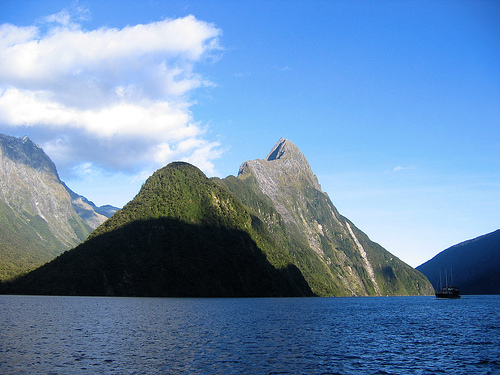
Mitre Peak, Milford Sound, New Zealand
Whangarei Falls, New Zealand
Christchurch tramway
Downtown Christchurch, New Zealand
Church in Christchurch, NZ
Auckland, New Zealand
Bay of Islands, New Zealand
Bay of Islands, New Zealand
Whangarei Falls, New Zealand
World distance sign, Cape Reinga, New Zealand
Silica Beach, Northland, New Zealand
Te Werahi beach, Cape Reinga, New Zealand


Travel and Tourism
Travel and Tourism
- Travel Alert Status
- Level 1: Exercise Normal Precautions
- Currency
- New Zealand dollar (NZD)
- Time Difference
- UTC+12 (17 hours ahead of Washington, DC, during Standard Time) time zone note: New Zealand has two time zones: New Zealand standard time (UTC+12) and Chatham Islands time (45 minutes in advance of New Zealand standard time; UTC+12:45)
- Climate
- New Zealand lies in the Temperate Zone and has a generally mild, invigorating climate although with sharp regional contrasts. The rugged terrain of the country has a dramatic effect on the weather. Many parts of the country are subject to high winds and rains followed by sharp drops in temperature. January and February are New Zealand’s warmest months with July normally the coldest. Spells of cool, damp weather occur even in the summer, from December through February. Rainy winter days of June, July, and August are interspersed with days of brilliant sunshine and crisp, clear air. October, November, and December are particularly windy months. Winds of 60 mph are not unusual, especially in the Wellington area, and on rare occasions they exceed 100 mph. As the mountainous terrain suggests, New Zealand lies in an area of active earthquakes and volcanism ringing the Pacific Plate. A major fault line runs through Wellington. Earthquakes are sometimes felt but rarely cause damage.
- Airports
- 113
Read the full travel guide — health, safety, vaccinations, disease risk, sanitation, and transit details.
View full travel guideRecipes
Recipes
Hokey Pokey
Dessert
Main Dish
New Zealand Pasties
Main Dish
White Fish Fritters
Main Dish
New Zealand Fish Pie
Main Dish
Savory Fish Steaks
Main Dish
Roast Lamb
Main Dish
Banana Sandwiches
Main Dish
PremiumVegemite Quiche Recipe
Main Dish
PremiumBarbecue Marinades for Beef
Main Dish
PremiumWheaty Meat Loaf
History
History
Historical Eras
Māori Settlement
800 – 1642
East Polynesian voyagers, ancestors of the Māori, reached New Zealand around 800 CE, establishing a rich tribal society across both main islands. Known in early scholarship as Moa-hunters, these settlers developed distinct iwi (tribal) structures, oral traditions, and called their homeland Aotearoa — 'land of the long white cloud.' Māori culture flourished in relative isolation for centuries before the first European contact.
European Contact
1642 – 1840
Dutch navigator Abel Tasman made the first recorded European sighting of New Zealand in 1642, and Captain James Cook conducted thorough coastal surveys beginning in 1769, opening the islands to wider Western knowledge. Whalers, sealers, and timber traders gradually established a small but disruptive European presence in the late 18th and early 19th centuries. British missionaries arrived from 1815, accelerating cultural exchange and introducing literacy to Māori communities.
Colonial Era
1840 – 1907
The Treaty of Waitangi, signed in 1840, established British sovereignty while nominally guaranteeing Māori land rights, yet expanding settler colonisation quickly generated violent conflict. The New Zealand Wars (1845–1872) ended in the defeat and significant land dispossession of Māori. Despite this turbulence, the colony developed rapidly: constitutional government emerged in the 1850s, Māori gained reserved parliamentary seats in 1867, and New Zealand became the first country in the world to grant women the vote in 1893.
Dominion & World Wars
1907 – 1947
New Zealand was proclaimed a self-governing dominion within the British Empire in 1907, reflecting its growing maturity as a nation. It contributed disproportionately large forces to both World Wars — the Gallipoli campaign of 1915 became a defining moment of national identity — and its soldiers served with distinction across multiple theatres. A progressive welfare state expanded steadily during this period, cementing New Zealand's reputation as a socially innovative society.
Independent Nation
1947 – 1984
The Statute of Westminster Adoption Act of 1947 formalised full legislative independence from Britain, though the two nations remained closely linked culturally and economically. New Zealand signed the ANZUS security treaty with Australia and the United States in 1951, anchoring itself in Cold War Western alliances, and gained international prestige when Sir Edmund Hillary became the first person to summit Mount Everest in 1953. The economy remained heavily reliant on agricultural exports of wool, meat, and dairy products to British markets.
Modern Era
1984 – present
Sweeping economic liberalisation from 1984 transformed New Zealand from a heavily regulated economy into one of the world's most open market systems. New Zealand adopted an anti-nuclear policy that effectively suspended its obligations under ANZUS, signalling a more independent foreign policy. The Waitangi Tribunal, established in 1975 and given retrospective powers in 1985, became the principal mechanism for addressing longstanding Māori land and sovereignty grievances, reshaping the nation's bicultural identity.
Overview
In 1642, Abel Tasman, a Dutch navigator, made the first recorded European sighting of New Zealand and sketched sections of the two main islands’ west coasts. English Captain James Cook thoroughly explored the coastline during three South Pacific voyages beginning in 1769. In the late 18th and early 19th centuries, lumbering, seal hunting, and whaling attracted a few European settlers to New Zealand. In 1840, the United Kingdom established British sovereignty through the Treaty of Waitangi signed that year with Maori chiefs.
In the same year, selected groups from the United Kingdom began the colonization process. Expanding European settlement led to conflict with Maori, most notably in the Maori land wars of the 1860s. British and colonial forces eventually overcame determined Maori resistance. During this period, many Maori died from disease and warfare, much of it intertribal.
Constitutional government began to develop in the 1850s. In 1867, the Maori won the right to a certain number of reserved seats in parliament. During this period, the livestock industry began to expand, and the foundations of New Zealand’s modern economy took shape. By the end of the 19th century, improved transportation facilities made possible a great overseas trade in wool, meat, and dairy products.
By the 1890s, parliamentary government along democratic lines was well-established, and New Zealand’s social institutions assumed their present form. Women received the right to vote in national elections in 1893. The turn of the century brought sweeping social reforms that built the foundation for New Zealand’s version of the welfare state.
The Maori gradually recovered from population decline and, through interaction and intermarriage with settlers and missionaries, adopted much of European culture. In recent decades, Maori have become increasingly urbanized and have become more politically active and culturally assertive.
New Zealand was declared a dominion by a royal proclamation in 1907. It achieved full internal and external autonomy by the Statute of Westminster Adoption Act in 1947, although this merely formalized a situation that had existed for many years.
Timeline of Key Events
600 – 1300
The Maori, arrive from eastern Polynesia.
The first inhabitants of New Zealand, the Maori, arrive from eastern Polynesia.
1642
Dutch explorer Abel Tasman visits New Zealand.
Dutch explorer Abel Tasman discovers part of the western littoral of New Zealand and names his discovery “Staten Landt”.
1769
James Cook, British explorer, makes his first visit to New Zealand.
James Cook, British explorer, makes his first visit to New Zealand. He claims parts of the country in the name of King George III.
1769
French explorer, Jean-François-Marie de Surville casts anchor at Spirit’s Bay
French explorer, Jean-François-Marie de Surville casts anchor at Spirit’s Bay.
1772
Marion du Fresne lands in the Bay of Islands.
Marion du Fresne lands in the Bay of Islands and, yet again, claims the country for France, calling it France Australe (South France).
1815
First British missionaries arrive.
First British missionaries arrive.
1840
The Maori sign the Treaty of Waitangi.
The Maori sign the Treaty of Waitangi giving control to the British in exchange for protection and guaranteed Maori possession of their lands.
Read the full history profile — narrative overview, defining eras, and the complete timeline in one place.
View expanded historyInteresting Facts
Interesting Facts
New Zealand was the first country in the world to give women the vote.
New Zealand boasts the most southerly railway station in the world.
After the birthday cake is lit, the happy birthday song is sung loudly and often out of tune and then the person birthday person receives a clap for each year they have been alive and then one for good luck.
See every fact — trivia, oddities, and curious tidbits gathered from across the country.
View all interesting factsGeography and Environment
Geography and Environment
- Terrain
- predominately mountainous with some large coastal plains
- Climate
- New Zealand lies in the Temperate Zone and has a generally mild, invigorating climate although with sharp regional contrasts. The rugged terrain of the country has a dramatic effect on the weather. Many parts of the country are subject to high winds and rains followed by sharp drops in temperature. January and February are New Zealand’s warmest months with July normally the coldest. Spells of cool, damp weather occur even in the summer, from December through February. Rainy winter days of June, July, and August are interspersed with days of brilliant sunshine and crisp, clear air. October, November, and December are particularly windy months. Winds of 60 mph are not unusual, especially in the Wellington area, and on rare occasions they exceed 100 mph. As the mountainous terrain suggests, New Zealand lies in an area of active earthquakes and volcanism ringing the Pacific Plate. A major fault line runs through Wellington. Earthquakes are sometimes felt but rarely cause damage.
- Natural Hazards
- earthquakes are common, though usually not severe; volcanic activity
- Current Environmental Issues
- deforestation; soil erosion; native flora and fauna hard-hit by species introduced from outside
Read the full geography and environment profile — terrain, climate, natural resources, hazards, land use, and international agreements.
View full geographyPeople & Demographics
People & Demographics
Religion
Languages Spoken
English (official), Maori (official)
- Maori
- English
Population
- Population
- 4,252,277
- Population in Major Urban Areas
- Auckland 1.452 million; WELLINGTON (capital) 410,000
- Nationality Noun
- New Zealander(s)
- Ethnic Groups
- New Zealand European 74.5%, Maori 9.7%, other European 4.6%, Pacific Islander 3.8%, Asian and others 7.4%
Education
- Literacy Definition
- age 15 and over can read and write
Read the full people and society profile — demographics, health, education, religion, languages, and notable people.
View full people and societyGovernment & Politics
Government & Politics
Country Identity
- Country Name
- NewZealand
Government Structure
- Government Type
- parliamentary democracy
- Legal System
- based on English law, with special land legislation and land courts for the Maori; accepts compulsory ICJ jurisdiction, with reservations
- Executive Branch
- chief of state: King CHARLES III (since 8 September 2022), represented by Governor General Dame Cindy KIRO (since 21 October 2021) head of government: Prime Minister Christopher LUXON (since 27 November 2023) and Deputy Prime Minister Winston PETERS (since 27 November 2023) cabinet: Executive Council appointed by the governor general on the recommendation of the prime minister elections: none; the monarch is hereditary; governor general appointed by the monarch on the advice of the prime minister; following legislative elections, the leader of the majority party or the leader of a majority coalition is usually appointed prime minister by the governor general; deputy prime minister appointed by the governor general
- Legislative Branch
- unicameral House of Representatives - commonly called Parliament (120 seats; 69 members elected by popular vote in single-member constituencies including seven Maori constituencies, and 51 proportional seats chosen from party lists, all to serve three-year terms) elections: last held 17 September 2005 (next to be held not later than 15 November 2008) election results: percent of vote by party - NZLP 41.1%, NP 39.1%, NZFP 5.72%, Green Party 5.3%, Maori 2.12%, UF 2.67%, ACT New Zealand 1.51%, Progressive 1.16%; seats by party - NZLP 50, NP 48, NZFP 7, Green Party 6, Maori 4, UF 3, ACT New Zealand 2, Progressive 1 note: results of 2005 election saw the total number of seats increase to 121 because the Maori Party won one more electorate seat than its entitlement under the party vote
- Judicial Branch
- Supreme Court; Court of Appeal; High Court; note - Judges appointed by the Governor-General
- Suffrage
- 18 years of age; universal
- Constitution
- consists of a series of legal documents, including certain acts of the UK and New Zealand Parliaments and The Constitution Act 1986 which is the principal formal charter
- Independence
- 26 September 1907 (from UK)
- National Holiday
- Waitangi Day (Treaty of Waitangi established British sovereignty over New Zealand), 6 February (1840)
Capital City
- Capital Name
- Wellington
- Capital - geographic coordinate
- 41 18 S, 174 47 E
- Capital Time Difference
- UTC+12 (17 hours ahead of Washington, DC, during Standard Time) time zone note: New Zealand has two time zones: New Zealand standard time (UTC+12) and Chatham Islands time (45 minutes in advance of New Zealand standard time; UTC+12:45)
named in 1840 after Arthur WELLESLEY, the first Duke of Wellington and victorious general at the Battle of Waterloo
Military
Branches: New Zealand Defense Force (NZDF): New Zealand Army; Royal New Zealand Navy; Royal New Zealand Air Force (Te Hokowhitu o Kahurangi, RNZAF)
Embassy / Diplomatic Mission
The U.S. Consulate General in Auckland
Third floor of the Citigroup Centre, 23 Customs Street East
(between Commerce and Queen Streets),
Telephone: (64) (9) 303-2724
Emergency after-hours telephone: (64) (4) 462-6000
Facsimile: (64) (9) 366-0870
The U.S. Embassy in Wellington
29 Fitzherbert Terrace, Thorndon, Wellington
Telephone: (64) (4) 462-6000
Emergency after-hours telephone: (64) (4) 462-6000
Facsimile: (64) (4) 471-2380
Read the full government profile — flag symbolism, national anthem, and other national symbols.
View full government detailsEconomy
Economy
Over the past four decades, successive governments have transformed New Zealand from an agrarian economy reliant on concessionary British market access into a modern, industrialized, free-market economy that competes globally. This shift has lifted real incomes, broadened the technological base of industry, and generally contained inflationary pressures, though income inequality remains a persistent challenge and housing affordability has emerged as a significant concern. Per capita GDP is now broadly comparable to that of many Western European nations, with nominal GDP per capita exceeding US$48,000.
New Zealand remains heavily dependent on trade — particularly exports of dairy, meat, wine, forestry products, and tourism services — to drive growth. China, Australia, the United States, and the European Union are its largest trading partners. The economy proved resilient through the COVID-19 pandemic, supported by aggressive monetary and fiscal stimulus, but subsequently faced elevated inflation, rising interest rates, and a technical recession in 2023 and into 2024. The Reserve Bank of New Zealand has since begun easing monetary policy as inflation has returned toward its 1–3% target band.
The services sector accounts for roughly two-thirds of GDP, while agriculture, though a smaller share of output, continues to dominate exports. Government spending on health, education, and superannuation continues to grow as a share of the budget, reflecting demographic pressures from an aging population. Ongoing policy debates focus on productivity growth, infrastructure investment, climate-related transitions in the agricultural sector, and managing the fiscal deficit.
Snapshot
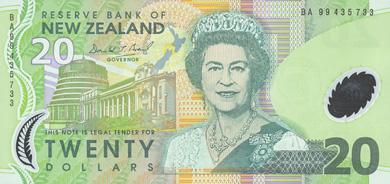
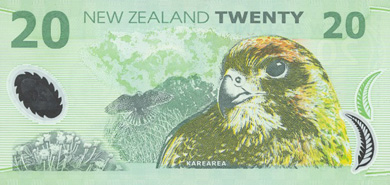
- Currency Name and Code
- New Zealand Dollar (NZD)
- GDP — official exchange rate
- $94,600,000,000 (USD)
- GDP Real Growth Rate
- 2.2%
- Gini Index
- 36.2
Banknotes
Budget & Public Finance
- Fiscal Year
- 1 July - 30 June
- Annual Budget
- $37,570,000,000 (USD)
- External Debt
- $57,670,000,000 (USD)
- Investment (% of GDP)
- 23.6%
- Current Account Balance
- -$8,137,000,000 (USD)
- Reserves of Foreign Exchange
- $2,147,483,647 (USD)
Labor, Industry & Trade
- Labor Force by Occupation
- services 65%; industry 25%; agriculture 10%
- Industries
- food processing, wood and paper products, textiles, machinery, transportation equipment, banking and insurance, tourism, mining
- Agriculture Products
- wheat, barley, potatoes, pulses, fruits, vegetables; wool, beef, dairy products; fish
- Export Commodities
- dairy products, meat, wood and wood products, fish, machinery
- Export Partners
- Australia 20.3%, US 15.6%, Japan 11.5%, UK 4.8%, China 4.6%, South Korea 4.4%
- Import Commodities
- machinery and equipment, vehicles and aircraft, petroleum, electronics, textiles, plastics
- Import Partners
- Australia 22.1%, US 13.7%, Japan 12%, China 8%, Germany 5.2%
Energy
- Oil Production
- 31,740 bbl/day
- Oil Consumption
- 151,900 bbl/day
- Oil Reserves
- 89,620,000 bbl/day
- Natural Gas Production
- 4,773,000,000 cu m
- Natural Gas Consumption
- 4,773,000,000 cu m
- Natural Gas Imports
- 0 cu m
- Natural Gas Exports
- 0 cu m
- Natural Gas Reserves
- 37,380,000,000 cu m
Communications
- Telephone System
- general assessment: excellent domestic and international systems domestic: combined fixed-line and mobile-cellular telephone subscribership exceeds 150 per 100 persons international: country code - 64; the Southern Cross submarine cable system provides links to Australia, Fiji, and the US; satellite earth stations - 8 (1 Inmarsat - Pacific Ocean, 7 other)
- Internet Country Code
- .nz
News & Weather
News & Weather
Current Weather
Latest News
New Zealand’s Second-Quarter Inflation Jumps on Fuel-Price Surge - WSJ
WSJ · 8h ago
New Zealand Q2 inflation at 4.1% y/y, at more than two year high - Reuters
Reuters · 8h ago
New Zealand Inflation Accelerates to 4.1% on Soaring Fuel Costs - Bloomberg.com
Bloomberg.com · 9h ago
New Zealand Central Bank Governor Has Time to Balance a Tricky Economy - WSJ
WSJ · 5h ago
Breaking: New Zealand’s CPI inflation climbs to 4.1% YoY in Q2, vs 4.0% expected - FXStreet
FXStreet · 9h ago
New Zealand gas exploration interest picks up after years in doldrums - Reuters
Reuters · 1d ago
New Zealanders wake to a new major champion, heap praise on Ryan Fox - AP News
AP News · 1d ago
Why Are Some of New Zealand’s Best Artists Joining This New Music Platform? - Rolling Stone Australia
Rolling Stone Australia · 23h ago
News via Google News
Climate Overview
New Zealand lies in the Temperate Zone and has a generally mild, invigorating climate although with sharp regional contrasts. The rugged terrain of the country has a dramatic effect on the weather. Many parts of the country are subject to high winds and rains followed by sharp drops in temperature. January and February are New Zealand’s warmest months with July normally the coldest. Spells of cool, damp weather occur even in the summer, from December through February. Rainy winter days of June, July, and August are interspersed with days of brilliant sunshine and crisp, clear air. October, November, and December are particularly windy months. Winds of 60 mph are not unusual, especially in the Wellington area, and on rare occasions they exceed 100 mph. As the mountainous terrain suggests, New Zealand lies in an area of active earthquakes and volcanism ringing the Pacific Plate. A major fault line runs through Wellington. Earthquakes are sometimes felt but rarely cause damage.
Videos
Videos
1 curated YouTube videos.
Source: YouTube
Frequently Asked Questions
Frequently Asked Questions
What is the population of New Zealand?
How do people greet each other in New Zealand?
What are dining customs like in New Zealand?
What etiquette should I know when visiting a home in New Zealand?
How should I dress in New Zealand?
Are there gestures to be aware of in New Zealand?
What is family life like in New Zealand?
What do people do for recreation in New Zealand?
What is the capital of New Zealand?
Where is New Zealand located?
What are the ocean and sea borders of New Zealand?
What religion is practiced in New Zealand?
What is the currency of New Zealand?
What languages are spoken in New Zealand?
What is the geography and terrain of New Zealand like?
What is New Zealand known for?
Last reviewed 2026