
 English
 Español
 中文
中文 हिन्दी
 Français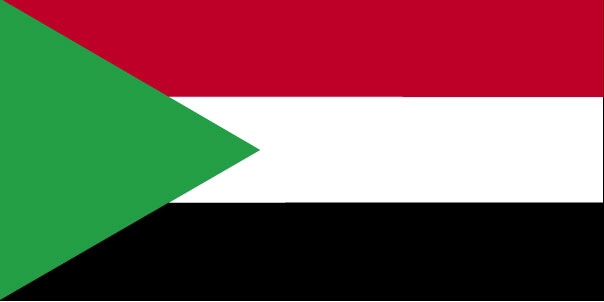
Sudan
As-Sudan
Declare Your Relationship to Sudan
CountryReports Community
- Studying1
- From Sudan1
- Sudan heritage0
- Visited0
- Want to visit0
Customs and Culture
Customs and Culture
About the People
Sudanese from the north are inclined to be polite, reserved, and cautious. They view whatever happens as the will of God presenting challenges. Sudanese value good humor, courtesy and strong family ties. The society is highly stratified , with respect given to those with wealth and status.
Power may be reflected in having a government position, coming from a respected family, being a religious leader or being a chief (in the south). Educated people earn respect as they are likely to obtain good positions in society.
Cultural Attributes
Sudanese from the north are inclined to be polite, reserved, and cautious. They view whatever happens as the will of God presenting challenges. Sudanese value good humor, courtesy, and strong family ties. Society is highly stratified, with respect given to those with wealth and status.
Power may be reflected in having a government position, coming from a respected family, being a religious leader, or being a chief (in the south). Educated people earn respect as they are likely to obtain good positions in society.

Land of the Two Niles and Ancient Kingdoms
Greetings, Gestures & Visiting
The common greeting is "salaam aleykom" (Peace be with you). Good friends sometimes exchange a casual Salaam. Friends or relatives typically shake hands when greeting. Generally, a verbal greeting is used. However, both men and women shake hands. Locally used phrases are "do pure" (good morning) or "do parana" (good afternoon).
Nodding one's head downward means 'yes', and nodding up means 'no'. The left hand is never used for eating, and both hands should be used for passing items between people. Pointing with a finger is not polite. Pointing the sole of one's feet toward someone is considered offensive.
Visiting usually takes place in the home, with close friends and family visiting spontaneously. Arrangements are made if the person is less known. Religious holidays and special events offer the best opportunity for relaxed gatherings. It is considered best to visit mid-morning or evening, because at other times people may be sleeping or eating.
Men and women generally socialize separately. Children are requested to play away from the adults to enable conversation. Guests are served coffee, tea, coffee, water, or soft drinks. When visiting for the first time, short stays are best.
Southern men and women usually wear Western attire, and jewelry is a sign of affluence. Women frequently wear attractive beads and earrings
Western clothing is typically worn by men in the north, but traditional "jalabia" (white robes) and "imma" (turbans) are worn in the towns as well as rural areas. Women need to cover themselves from head to ankle when in public (hijab).
Diet
Where possible, Sudanese people like to eat beef, chicken, goat or mutton to supplement the staples of millet, sorghum, and maize. In higher rainfall areas, cassava, potatoes, peanuts, mangoes and papaya are eaten. Other locally grown foods include guavas, grapes, bananas, okra, carrots, tomatoes, onions, cucumbers, citrus and pineapples. A thinly layered food made from flour paste (kisra) and thin bread with lentils, peas, tomatoes and cheese is called fatta. Although alcohol is officially prohibited, southern Sudanese often drink a sorghum beer called marisa. Many families suffer from malnutrition in some regions.
Two meals a day is the norm in Sudan. Dinner (evening) is the main meal, and it is shared by the family. People wash their hands before and after a meal, and only the right hand is used for eating. Families do not often eat out of the home at restaurants.
Where possible, Sudanese people like to eat chicken, goat, beef, or mutton to supplement the staples of millet, sorghum, and maize. In higher rainfall areas, cassava, potatoes, peanuts, mangoes and papaya are eaten.
Other locally grown foods include guavas, grapes, bananas, okra, carrots, tomatoes, onions, cucumbers, citrus and pineapples. A thinly layered food made from flour paste (kisra) and thin bread with lentils, peas, tomatoes and cheese is called fatta. Although alcohol is officially prohibited, but Sudanese often drink a sorghum beer called "marisa". Many families suffer from malnutrition in some regions.

Family
The Sudanese family is based around the extended family and is headed by males. Men are responsible for the herd, earning an income, and leading the family in discipline. Children are punished harshly if they shame the family. Women clean and cook, look after young children, and help with the farm and garden. Women do not leave the house for 40 days after giving birth. Southern women in general have more equality with men than women in the North.
Dating Customs
Northern marriages are still arranged between cousins within families. A couple may usually, however, refuse the match. The groom's family must pay a dowry to the bride's family, preferably in cash. Both families host wedding feasts and parties which may last for days.
Young people meet at school, shopping places, local dances, and at church. They are often permitted to go out together, but parents become involved when engagement takes place. Grooms also pay a dowry, often cattle or cash. The divorce rate is very low in Sudan.
Recreation
Soccer is popular in Sudan. Volleyball and basketball are also played. Popular traditional sports are wrestling and a kind of martial art performed with long sticks and shields. Women and men enjoy traditional dancing together.
The Sudanese have a game they play at night or at "moon time", called "shelel", which involves stones, sticks, and holes made in a wooden board or in the earth.
Young Sudanese girls enjoy playing with dolls, jump rope and arika (hopscotch). Tawal (backgammon), and a board game called mangala using stones are also played. Men and women have different ways of socializing in urban Sudan. Women entertain friends at home and men socialize with friends elsewhere. In rural areas, men socialize in a diwanya, a hut used as a meeting place.
Holidays
Independence Day
1/1Independence Day
Dates of Interest
- January 7th
This is one of the most important Islamic festivals celebrated by Muslims worldwide, marking the end of Ramadan, the holy month of fasting. People in Sudan celebrate Eid al-Fitr with prayers, feasting, and exchanging gifts.
How do people greet each other in Sudan?
The common greeting is "salaam aleykom" (Peace be with you), and both men and women typically shake hands when meeting friends or relatives.
Do
- Use "salaam aleykom" as a general greeting
- Shake hands with friends and relatives
- Try local phrases like "do pure" (good morning) or "do parana" (good afternoon)
Good to know
- Good friends may exchange a casual Salaam
What are the dining customs in Sudan?
Two meals a day is the norm, with dinner in the evening being the main meal shared by the family; only the right hand is used for eating and families rarely eat out at restaurants.
Do
- Wash your hands before and after a meal
- Eat only with your right hand
Don’t
- Don't use your left hand for eating
- Don't expect families to dine out at restaurants often
Good to know
- Staples include millet, sorghum, and maize, often supplemented with beef, chicken, goat, or mutton
- Kisra (flour paste) and fatta are traditional foods
- Alcohol is officially prohibited, though a sorghum beer called marisa is drunk
What should I know about visiting and hospitality in Sudan?
Visiting usually takes place in the home, and guests are served coffee, tea, water, or soft drinks; men and women generally socialize separately.
Do
- Visit mid-morning or evening
- Keep first visits short
- Make arrangements in advance if you are less known
Don’t
- Don't visit at times when people may be sleeping or eating
Good to know
- Close friends and family may visit spontaneously
- Religious holidays and special events are the best occasions for relaxed gatherings
- Children are asked to play away from adults to allow conversation
How should I dress in Sudan?
Western clothing is common, though northern men also wear traditional "jalabia" (white robes) and "imma" (turbans), and women must cover from head to ankle in public (hijab).
Do
- Women should cover from head to ankle in public (hijab)
Good to know
- Southern men and women usually wear Western attire
- In the south, jewelry and beads signal affluence
Which gestures are important in Sudan?
Nodding the head downward means 'yes' and nodding up means 'no'; the left hand and foot soles carry offensive meanings.
Don’t
- Don't use the left hand for eating
- Don't point with a finger
- Don't point the sole of your feet toward someone
Good to know
- Use both hands when passing items between people
What is family life like in Sudan?
The Sudanese family centers on the extended family and is headed by males, with clearly divided roles for men and women.
Good to know
- Men earn income, manage the herd, and lead family discipline
- Women clean, cook, care for children, and help with the farm and garden
- Women do not leave the house for 40 days after giving birth
- Southern women generally have more equality than women in the north
What do people do for recreation in Sudan?
Soccer is popular, along with volleyball, basketball, wrestling, and a stick-and-shield martial art, while board games and traditional dancing are also enjoyed.
Good to know
- Traditional sports include wrestling and a stick-and-shield martial art
- Games include shelel, tawal (backgammon), and mangala
- Girls enjoy dolls, jump rope, and arika (hopscotch)
- In rural areas men socialize in a diwanya, a meeting hut
Last updated: 2026-07-12 · Sources: CountryReports
Photos of Sudan
Photos of Sudan
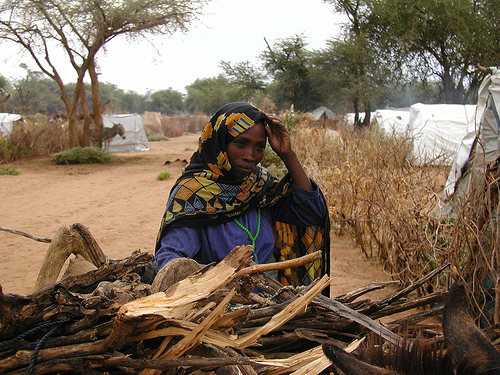
Gathering firewood in camp, Darfur, southern Sudan
Busy road in Khartoum, Sudan
Bridge in Khartoum, Sudan
Road bridgeway in Khartouom, Sudan
Suburb in Omdurman, Khartoum
Khartoum, Sudan
Gadaffi Tower, Khartoum, Sudan
The Sufis, Suda, dervish.
A man sells vegetables in Omdurman, Sudan
Class at Khartoum University full of primary school teachers
Khartoum wedding dance, Sudan
Sudanese show store


Travel and Tourism
Travel and Tourism
- Travel Alert Status
- Level 4: Do Not Travel
- Currency
- Sudanese dinar (SDD)
- Time Difference
- UTC+3 (8 hours ahead of Washington, DC, during Standard Time)
- Climate
- Khartoum is usually hot and dusty. During May, June, and July, daily high temperatures average around 100 F or higher, with frequent dust storms called "haboobs." July, August, and part of September are not as hot, with rare but heavy rainstorms (average 8 inches yearly) and continuing haboobs. From November until April, daily temperatures range around 95 F; nights, around 70 F, are pleasant. Cool weather at night and in the early mornings sometimes requires light sweaters or blankets.
- Airports
- 63
Read the full travel guide — health, safety, vaccinations, disease risk, sanitation, and transit details.
View full travel guideRecipes
Recipes
History
History
Historical Eras
Ancient Nubia & Kush
8000 BCE – 1820
From early Neolithic contact with Egypt through the powerful Kushite kingdoms of Kerma, Napata, and Meroë, the Nile Valley of present-day Sudan sustained sophisticated civilizations that at times ruled Egypt itself. The Christian Nubian kingdoms of Makuria and Alodia later flourished before gradual Islamization transformed the region between roughly the 14th and 16th centuries, laying the cultural and religious foundations of northern Sudanese identity.
Turco-Egyptian Rule
1820 – 1885
In 1820 an Ottoman-commanded Egyptian army under Muhammad Ali's son Ismail invaded and conquered Sudan, establishing a sixty-year period of Turco-Egyptian administration centered in Khartoum. The regime exploited Sudan's resources, particularly through the slave trade, and fueled deep resentment that culminated in the Mahdist uprising of 1881, when Muhammad Ahmad declared himself the Mahdi and led a successful revolt that drove out Egyptian forces and resulted in the fall of Khartoum in 1885.
Mahdist State
1885 – 1899
Following the death of the Mahdi in 1885, his successor the Khalifa Abdallahi ibn Muhammad ruled an independent Islamic theocratic state from Omdurman. The Mahdist state maintained independence against Egyptian and Ethiopian pressures but was ultimately crushed by a British-Egyptian expeditionary force under General Kitchener at the Battle of Omdurman in 1898, ending the only period of fully indigenous Sudanese self-rule in the modern era.
Anglo-Egyptian Condominium
1899 – 1956
Britain and Egypt jointly administered Sudan under a condominium arrangement from 1899, though British authority was effectively dominant. Britain governed the Muslim Arab north and the African south under separate administrative policies, entrenching a regional division that would define Sudan's postcolonial conflicts. Nationalist pressure and the 1952 Egyptian Revolution accelerated Sudanese self-determination, and Sudan achieved full independence on January 1, 1956.
Independence & Civil War
1956 – 1989
Independent Sudan was almost immediately destabilized by a southern mutiny in 1955 and chronic civil war rooted in northern political, economic, and religious domination over non-Arab, non-Muslim southerners. Military coups in 1958 and 1969 brought authoritarian regimes, including Jaafar Numeiri's government, which signed the Addis Ababa peace agreement in 1972 but reignited conflict in 1983 by imposing Islamic law nationwide and repartitioning the south, spawning the Sudan People's Liberation Army rebellion and catastrophic famine.
Islamist Military Rule
1989 – present
A 1989 coup led by General Omar al-Bashir, backed by Hassan al-Turabi's National Islamic Front, installed an Islamist military government that deepened the civil war, drew international isolation, and was accused of harboring global militants including Osama bin Laden in the 1990s. The Comprehensive Peace Agreement of 2005 eventually led to South Sudan's independence in 2011, while successive crises including the Darfur genocide, al-Bashir's indictment by the International Criminal Court, and a 2019 popular uprising followed by renewed military conflict have kept Sudan in prolonged instability.
Overview
Timeline of Key Events
1820
Sudan is conquered by Turkey and Egypt.
Sudan is conquered by Turkey and Egypt.
1881
Revolt against the Turco-Egyptian administration.
Revolt against the Turco-Egyptian administration.
1882
The British invade Sudan.
The British invade Sudan.
1899 – 1955
Sudan is governed by British-Egyptian rule.
Sudan is governed by British-Egyptian rule.
1955
Revolt and start of the civil war.
Revolt and start of the civil war.
1956
Sudan becomes independent.
Sudan becomes independent.
1958
A military coup takes place in Sudan.
A military coup takes place in Sudan. The civilian government is removed.
Read the full history profile — narrative overview, defining eras, and the complete timeline in one place.
View expanded historyInteresting Facts
Interesting Facts
Cushite civilization, which reached its peak between 1750 and 1500 B.C., is thought to be the oldest Black civilization in the world. Its capital was Meroe on the Nile.
Cushite civilization, which reached its peak between 1750 and 1500 B.C., is thought to be the oldest Black civilization in the world. Its capital was Meroe on the Nile.
80% percent of the world's gum arabic, or gum acacia, is produced in Sudan. Harvested from acacia trees, it is used in inks, adhesives, certain types of candy and soft drinks.
Sudan exports many camels and sheep to Saudi Arabia and Egypt.
The longest river in the world, the Nile runs from south to north in Sudan. Since ancient times the historic Nile River has been the main route of travel and communication for Sudanese people to the Mediterranean Sea.
For pre-natal care and giving birth, Sudanese women have traditionally relied on midwives, or geem, a Dinka word, which means literally the “receivers of God's gifts”. Sudanese believe children are gifts from God.
See every fact — trivia, oddities, and curious tidbits gathered from across the country.
View all interesting factsGeography and Environment
Geography and Environment
- Terrain
- generally flat, featureless plain; mountains in far south, northeast and west; desert dominates the north
- Climate
- Khartoum is usually hot and dusty. During May, June, and July, daily high temperatures average around 100 F or higher, with frequent dust storms called "haboobs." July, August, and part of September are not as hot, with rare but heavy rainstorms (average 8 inches yearly) and continuing haboobs. From November until April, daily temperatures range around 95 F; nights, around 70 F, are pleasant. Cool weather at night and in the early mornings sometimes requires light sweaters or blankets.
- Natural Hazards
- dust storms and periodic persistent droughts
- Current Environmental Issues
- inadequate supplies of potable water; wildlife populations threatened by excessive hunting; soil erosion; desertification; periodic drought
Read the full geography and environment profile — terrain, climate, natural resources, hazards, land use, and international agreements.
View full geographyPeople & Demographics
People & Demographics
Religion
Languages Spoken
Arabic (official), Nubian, Ta Bedawie, diverse dialects of Nilotic, Nilo-Hamitic, Sudanic languages, English
- Arabic
Population
- Population
- 41,980,182
- Population in Major Urban Areas
- KHARTOUM (capital) 4.632 million
- Nationality Noun
- Sudanese (singular and plural)
- Ethnic Groups
- black 52%, Arab 39%, Beja 6%, foreigners 2%, other 1%
- Language Note
- Arabic is spoken by about half the people, but it is the official language. Many dialects are spoken throughout the country. Arabic Juba is a unique dialect used in southern urban areas for communicating between different ethnic groups. Other languages spoken are Nubian, Dinka, Azanda, Bari, Nuer and Shilluk. Those with education speak good English.
Education
- Literacy Definition
- age 15 and over can read and write
Health Information
- Major Infectious Diseases — degree of risk
- very high
Read the full people and society profile — demographics, health, education, religion, languages, and notable people.
View full people and societyGovernment & Politics
Government & Politics
Country Identity
- Country Name
- Sudan
- Full Country Name
- Republic of the Sudan
- Local - Long
- Jumhuriyat as-Sudan
- Local - Short
- As-Sudan
- Former Name
- Anglo-Egyptian Sudan
Government Structure
- Government Type
- authoritarian regime - ruling military junta took power in 1989; government is run by an alliance of the military and the National Congress Party (NCP), formerly the National Islamic Front (NIF), which espouses an Islamist platform
- Legal System
- based on English common law and Islamic law; as of 20 January 1991, the now defunct Revolutionary Command Council imposed Islamic law in the northern states; Islamic law applies to all residents of the northern states regardless of their religion; some separate religious courts; accepts compulsory ICJ jurisdiction, with reservations
- Executive Branch
- chief of state: Chairman of the Sovereignty Council General Abdel Fattah al-BURHAN (since 11 November 2019); note - following the military coup of October 25, 2021, al-BURHAN dissolved the Sovereignty Council and the transitional government, though he subsequently reconstituted the Sovereignty Council under his leadership; the position of prime minister has been contested and largely nonfunctional since the coup head of government: Chairman of the Sovereignty Council General Abdel Fattah al-BURHAN serves as de facto head of government; a civilian prime minister role was established under the 2019 transitional framework but has remained unstable; following the April 2023 outbreak of armed conflict between the Sudanese Armed Forces (SAF) and the Rapid Support Forces (RSF), effective governance has been severely disrupted across much of the country cabinet: Council of Ministers; the transitional framework established in 2019 envisioned a civilian-led cabinet, but military influence has dominated governance, particularly following the October 2021 coup; the ongoing civil war beginning in April 2023 has further undermined functioning government institutions elections: no direct presidential elections have been held since April 2010, when Omar al-BASHIR was reelected in a vote criticized as neither free nor fair; transitional governance arrangements have been in place since al-BASHIR was ousted in April 2019; elections under a permanent constitutional framework have not yet been held election results: not applicable under current transitional and conflict conditions note: Omar Hassan Ahmad al-BASHIR, who had ruled Sudan since seizing power in a military coup in June 1989, was removed from office by the Sudanese military on April 11, 2019, following months of widespread popular protests; he was subsequently arrested and faced charges including corruption and crimes against humanity before the International Criminal Court; a Sovereignty Council composed of military and civilian representatives was established in August 2019 to oversee a transitional period, but a military coup in October 2021 reasserted armed forces dominance; in April 2023, fighting erupted between the SAF and the RSF, plunging the country into a severe humanitarian and governance crisis
- Legislative Branch
- bi-cameral body comprising the National Assembly and Council of States (replaced unicameral National Assembly of 360 seats); pending elections and National Election Law, the Presidency appointed 450 members to the National Assembly according to the provisions of the 2005 Comprehensive Peace Agreement: 52% NCP; 28% SPLM; 14% other Northerners; 6% other Southerners; 2 representatives from every state constitute the Council of States; terms in each chamber are five years following the first elections elections: last held 13-22 December 2000 (next to be held 2008-2009 timeframe) election results: NCP 355, others 5; note - replaced by appointments under the 2005 Comprehensive Peace Agreement
- Judicial Branch
- Constitutional Court of nine justices; National Supreme Court; National Courts of Appeal; other national courts; National Judicial Service Commission will undertake overall management of the National Judiciary
- Suffrage
- 17 years of age; universal, but noncompulsory
- Constitution
- 12 April 1973, suspended following coup of 6 April 1985; interim constitution of 10 October 1985 suspended following coup of 30 June 1989; new constitution implemented on 30 June 1998 partially suspended 12 December 1999 by President BASHIR
- Independence
- 1 January 1956 (from Egypt and UK)
- National Holiday
- Independence Day, 1 January (1956)
Capital City
- Capital Name
- Khartoum
- Capital - geographic coordinate
- 15 36 N, 32 32 E
- Capital Time Difference
- UTC+3 (8 hours ahead of Washington, DC, during Standard Time)
several explanations of the name exist; two of the more plausible are that it is derived from Arabic "al-jartum" meaning "elephant's trunk" or "hose," and likely referring to the narrow strip of land extending between the Blue and White Niles; alternatively, the name could derive from the Dinka words "khar-tuom," indicating a "place where rivers meet"
Military
Branches: Sudanese Armed Forces (SAF): Land Forces, Navy (includes Marines), Sudanese Air Force (Sikakh al-Jawwiya as-Sudaniya), Popular Defense Forces
Embassy / Diplomatic Mission
U.S. Embassy Sudan
Kilo 10 - Soba, Khartoum
Telephone: (249) 1-870-22000 (from outside Sudan)
0-187-022000 (from inside Sudan)
ACSKhartoum@state.gov
Read the full government profile — flag symbolism, national anthem, and other national symbols.
View full government detailsEconomy
Economy
Sudan's economy has been in severe distress since the outbreak of armed conflict between the Sudanese Armed Forces (SAF) and the Rapid Support Forces (RSF) in April 2023, which has devastated infrastructure, displaced millions, and triggered one of the world's worst humanitarian crises. GDP is estimated to have contracted by more than 20% in 2023 and continued to shrink sharply in 2024, while inflation has surged to triple digits and the Sudanese pound has lost much of its value against the dollar.
Long before the current war, Sudan faced deep structural challenges. The 2011 secession of South Sudan stripped Khartoum of roughly three-quarters of its oil reserves, eliminating its main source of foreign exchange and government revenue. The transitional government that followed the 2019 ouster of Omar al-Bashir pursued reforms with the IMF and World Bank, secured debt relief under the HIPC initiative in 2021, and removed costly fuel and wheat subsidies. These gains were largely reversed after the October 2021 military coup, which prompted international donors to suspend assistance, and they have been further undone by the ongoing war.
Agriculture remains the backbone of the economy, employing the majority of the workforce and accounting for roughly a third of GDP, though most farming is rain-fed and vulnerable to drought, locust outbreaks, and climate shocks. Gold has become Sudan's most important export, but much of the trade is informal and smuggled abroad. With fighting disrupting harvests, markets, banking, and trade routes, the United Nations warns that famine conditions are spreading and that the majority of Sudan's population requires humanitarian assistance. Recovery prospects depend heavily on a cessation of hostilities, restoration of basic services, and renewed international engagement.
Snapshot
- Currency Name and Code
- Sudanese Point (SDG)
- GDP — official exchange rate
- $22,750,000,000 (USD)
- GDP Real Growth Rate
- 7%
Banknotes
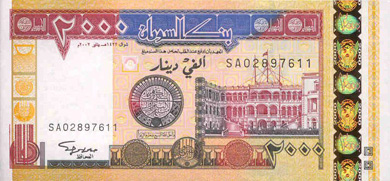
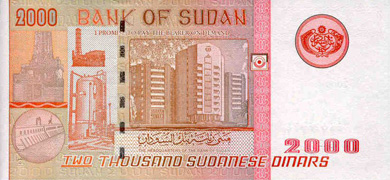
Budget & Public Finance
- Fiscal Year
- calendar year
- Annual Budget
- $5,753,000,000 (USD)
- Public Debt (% of GDP)
- 79%
- External Debt
- $18,150,000,000 (USD)
- Investment (% of GDP)
- 15.4%
- Economic Aid
- $172,000,000 (USD)
- Current Account Balance
- -$658,000,000 (USD)
- Reserves of Foreign Exchange
- $2,147,483,647 (USD)
Labor, Industry & Trade
- Labor Force by Occupation
- agriculture 80%; industry and commerce 7%; government 13%
- Industries
- oil, cotton ginning, textiles, cement, edible oils, sugar, soap distilling, shoes, petroleum refining, pharmaceuticals, armaments, automobile/light truck assembly
- Agriculture Products
- cotton, groundnuts (peanuts), sorghum, millet, wheat, gum arabic, sugarcane, cassava (tapioca), mangos, papaya, bananas, sweet potatoes, sesame; sheep, livestock
- Export Commodities
- oil and petroleum products; cotton, sesame, livestock, groundnuts, gum arabic, sugar
- Export Partners
- China 53.3%, Japan 13.4%, South Africa 4.9%, Saudi Arabia 4.7%
- Import Commodities
- foodstuffs, manufactured goods, refinery and transport equipment, medicines and chemicals, textiles, wheat
- Import Partners
- China 20.1%, Saudi Arabia 7.5%, India 5.6%, UK 5.4%, Germany 5.4%, Indonesia 4.7%, Australia 4%
Energy
- Oil Production
- 401,300 bbl/day
- Oil Consumption
- 70,000 bbl/day
- Oil Reserves
- 1,600,000,000 bbl/day
- Natural Gas Production
- 0 cu m
- Natural Gas Consumption
- 0 cu m
- Natural Gas Imports
- 0 cu m
- Natural Gas Exports
- 0 cu m
- Natural Gas Reserves
- 84,950,000,000 cu m
Communications
- Telephone System
- general assessment: well-equipped system by regional standards and being upgraded; cellular communications started in 1996 and have expanded substantially with wide coverage of most major cities domestic: consists of microwave radio relay, cable, fiber optic, radiotelephone communications, tropospheric scatter, and a domestic satellite system with 14 earth stations international: country code - 249; linked to the EASSy and FLAG fiber-optic submarine cable systems; satellite earth stations - 1 Intelsat (Atlantic Ocean), 1 Arabsat
- Internet Country Code
- .sd
News & Weather
News & Weather
Current Weather
Latest News
‘You cannot hide from a drone strike’: The terror falling from the sky in Sudan - CNN
CNN · 1d ago
As Sudan’s war crosses borders and millions are made refugees, could Ethiopia’s plan solve ‘humanity’s migration issue’? - The Guardian
The Guardian · 4h ago
US slaps new sanctions on Sudan after chlorine gas deployment claims - RFI
RFI · 17h ago
Burhan’s Trip to Eritrea, in Context - horn review
horn review · 1d ago
Sudan rejects U.S. chemical weapons sanctions as illegal - Sudan Tribune
Sudan Tribune · 1d ago
China delivers 3,256 metric tons of food aid to South Sudan - Radio Tamazuj
Radio Tamazuj · 8h ago
CAR PM warns armed groups after attack on town near Sudan border - africanews.com
africanews.com · 2d ago
Why fears are growing that Sudan’s El-Obeid could become the next El-Fasher - Arab News
Arab News · 2d ago
News via Google News
Climate Overview
Khartoum is usually hot and dusty. During May, June, and July, daily high temperatures average around 100 F or higher, with frequent dust storms called "haboobs." July, August, and part of September are not as hot, with rare but heavy rainstorms (average 8 inches yearly) and continuing haboobs. From November until April, daily temperatures range around 95 F; nights, around 70 F, are pleasant. Cool weather at night and in the early mornings sometimes requires light sweaters or blankets.
Videos
Videos
2 curated YouTube videos.
Source: YouTube
Source: YouTube
Frequently Asked Questions
Frequently Asked Questions
What is the population of Sudan?
How do people greet each other in Sudan?
What are the dining customs in Sudan?
What should I know about visiting and hospitality in Sudan?
How should I dress in Sudan?
Which gestures are important in Sudan?
What is family life like in Sudan?
What do people do for recreation in Sudan?
What is the capital of Sudan?
Where is Sudan located?
What countries border Sudan?
What is the predominant religion in Sudan?
What currency is used in Sudan?
What languages are spoken in Sudan?
What is Sudan known for?
Last reviewed 2026