
 English
 Español
 中文
中文 हिन्दी
 Français
Christmas Island
Declare Your Relationship to Christmas Island
CountryReports Community
- Studying0
- From Christmas Island0
- Christmas Island heritage0
- Visited0
- Want to visit0
Customs and Culture
Customs and Culture
About the People
The Australian Bureau of Statistics reports a population of 1508 as of the 2001 Census
Cultural Attributes
Christmas Island's cultural landscape is shaped by its remarkably diverse population, which includes residents of Chinese, Malay, and European — primarily Australian — descent. This multicultural makeup means the island observes an unusually wide range of cultural traditions and public holidays, including Chinese New Year, Hari Raya Aidilfitri, Christmas, and Easter, making it one of the few places in the world where such a variety of religious and cultural celebrations are officially recognized and observed together. The Chinese community, which makes up the largest ethnic group at roughly 70 percent of the population, has significantly influenced the island's cultural identity. Temples dedicated to Taoist and Buddhist practice are found across the island's Settlement area, and traditional lion dance performances and lantern festivals are common communal events. The Malay community contributes Islamic traditions, including mosque worship and the observance of Ramadan, while Australian administrative influence is reflected in governance structures, schooling, and everyday lifestyle patterns. English, Malay, and various Chinese dialects — including Cantonese and Hakka — are spoken across the island, reflecting its layered heritage. Signage and community communications often appear in multiple languages, reinforcing the island's commitment to cultural inclusivity. Food culture on Christmas Island blends these influences naturally. Hawker-style dining offering Chinese, Malay, and Western dishes is common, and communal meals during festivals bring residents of different backgrounds together in a spirit of shared celebration. Despite its small population of around 1,800 people, the island supports a functioning community club, a sports complex, and regular cultural events coordinated by local organizations. The relative isolation of the island — sitting more than 2,600 kilometers from the Australian mainland — has fostered a tight-knit social environment where multicultural coexistence is not merely a formal policy but a lived daily reality. The interplay of Asian and Western influences gives Christmas Island a cultural character that is genuinely distinct within the Australian territory system.
Island of Red Crabs and Red Earth
Holidays
Australia Day
1/26Independence
Dates of Interest
- January 26th
What is dining like on Christmas Island?
Food culture blends Chinese, Malay, and Western influences, with hawker-style dining widely available.
Do
- Try hawker-style Chinese, Malay, and Western dishes
- Join communal festival meals that bring different communities together
Good to know
- Food naturally reflects the island's Chinese, Malay, and Australian heritage
What should I know about local customs and culture on Christmas Island?
The island is highly multicultural, with Chinese (about 70% of the population), Malay, and European/Australian communities coexisting closely in a tight-knit society.
Do
- Respect the wide range of cultural and religious traditions observed together
- Be aware that English, Malay, and Chinese dialects like Cantonese and Hakka are spoken
Good to know
- Signage and community communications often appear in multiple languages
- Multicultural coexistence is a lived daily reality on the island
What is there to do on Christmas Island?
Despite its small population, the island supports a community club, sports complex, and regular cultural events.
Do
- Attend cultural events coordinated by local organizations
- Watch traditional lion dance performances and lantern festivals
Good to know
- Chinese New Year, Hari Raya Aidilfitri, Christmas, and Easter are all observed
What should I know before visiting Christmas Island?
Christmas Island is a remote Australian territory sitting more than 2,600 kilometers from the mainland, with a small population of around 1,800 people.
Good to know
- Taoist and Buddhist temples are found across the Settlement area
- The Malay community observes Islamic traditions including mosque worship and Ramadan
- Australian influence shows in governance, schooling, and daily lifestyle
Last updated: 2026-07-12 · Sources: CountryReports
Travel and Tourism
Travel and Tourism
- Currency
- 1.352
- Time Difference
- UTC+7 (12 hours ahead of Washington, DC, during Standard Time)
- Climate
- tropical with a wet and dry season; heat and humidity moderated by trade winds; wet season December to April
- Airports
- 1
Read the full travel guide — health, safety, vaccinations, disease risk, sanitation, and transit details.
View full travel guideHistory
History
Historical Eras
Pre-Settlement
1643 – 1888
English captain William Mynors named the island on Christmas Day, 1643, though it remained uninhabited and largely unexplored for over two centuries. Occasional visits by passing ships confirmed the island's existence and noted its dense jungle and coastal phosphate deposits, but no permanent population was established during this period.
British Annexation
1888 – 1942
Britain formally annexed Christmas Island in 1888 and initiated settlement, with phosphate extraction beginning in the 1890s becoming the economic foundation of the territory. Administered initially from the Straits Settlements, the island's workforce was drawn largely from Chinese and Malay laborers, shaping its distinctive multicultural character. Mining operations expanded steadily under British colonial administration through the early twentieth century.
Japanese Occupation
1942 – 1945
Japanese forces occupied Christmas Island in 1942 following a mutiny among Indian garrison troops and a brief naval bombardment. The occupation disrupted phosphate mining and resulted in hardship for the resident population. Allied forces reclaimed the island in 1945 as Japanese imperial power collapsed across the Pacific.
Late British Rule
1945 – 1958
Following World War II, Christmas Island was administered under the British Crown, with phosphate mining resuming and the British Phosphate Commission overseeing extraction. Growing strategic and economic interest from Australia prompted negotiations for a transfer of sovereignty. Australia compensated Britain £2.9 million for the island's phosphate rights as part of the handover arrangement.
Australian Territory
1958 – 1987
Australia assumed sovereignty over Christmas Island on October 1, 1958, integrating it as an external territory. Phosphate mining remained the dominant industry, operated by the Christmas Island Phosphate Commission and later a private consortium. Residents gained greater political rights incrementally, including Australian citizenship entitlements, as the territory's governance matured.
Modern Era
1987 – present
The closure of phosphate mines in 1987 prompted Australia to diversify the island's economy, leading to the establishment of a casino in the 1990s and expanding tourism. Christmas Island gained international attention in the 2000s as a focal point of Australia's asylum seeker policy, with detention facilities becoming a significant and controversial presence. Today, nearly two-thirds of the island is protected as a national park, celebrated for its unique biodiversity including the famous annual red crab migration.
Read the full history profile — narrative overview, defining eras, and the complete timeline in one place.
View expanded historyInteresting Facts
Interesting Facts
Named in 1643 for the day of its discovery, the island was annexed and settlement was begun by the UK in 1888. Phosphate mining began in the 1890s.
See every fact — trivia, oddities, and curious tidbits gathered from across the country.
View all interesting factsGeography and Environment
Geography and Environment
- Terrain
- steep cliffs along coast rise abruptly to central plateau
- Climate
- tropical with a wet and dry season; heat and humidity moderated by trade winds; wet season December to April
- Natural Hazards
- the narrow fringing reef surrounding the island can be a maritime hazard
- Current Environmental Issues
- NA
Read the full geography and environment profile — terrain, climate, natural resources, hazards, land use, and international agreements.
View full geographyPeople & Demographics
People & Demographics
Religion
Languages Spoken
English (official), Chinese, Malay
- English
- Malay
Population
- Population
- 1,402
- Nationality Noun
- Christmas Islander(s)
- Ethnic Groups
- Chinese 70%, European 20%, Malay 10%
Education
- Literacy Definition
- NA
Read the full people and society profile — demographics, health, education, religion, languages, and notable people.
View full people and societyGovernment & Politics
Government & Politics
Country Identity
- Country Name
- ChristmasIsland
- Full Country Name
- Territory of Christmas Island
Government Structure
- Government Type
- NA
- Legal System
- under the authority of the governor general of Australia and Australian law
- Executive Branch
- chief of state: King CHARLES III (since 8 September 2022), represented by the Australian Governor-General head of government: Administrator Farzian ZAINAL (since 2 October 2023) elections: none; the monarch is hereditary; the Administrator is appointed by the Governor-General of Australia on the advice of the Australian government and serves as the representative of both the monarch and Australia on the island
- Legislative Branch
- unicameral Christmas Island Shire Council (9 seats; members elected by popular vote to serve four-year terms) elections: held every two years with half the members standing for election; last held in May 2005 (next to be held in May 2007) election results: percent of vote - NA; seats - independents 9
- Judicial Branch
- Supreme Court; District Court; Magistrate's Court
- Constitution
- NA
- Independence
- none (territory of Australia)
- National Holiday
- Australia Day, 26 January (1788)
Capital City
- Capital Name
- The Settlement (Flying Fish Cove)
- Capital - geographic coordinate
- 10 25 S, 105 43 E
- Capital Time Difference
- UTC+7 (12 hours ahead of Washington, DC, during Standard Time)
self-descriptive name for the main locus of population
Read the full government profile — flag symbolism, national anthem, and other national symbols.
View full government detailsEconomy
Economy
Christmas Island's economy has historically depended on phosphate mining, which remains one of the few significant industries on the island today. The Australian Government closed the mine in December 1987, but it was reopened in 1991 under private operation and continues to extract and export phosphate, primarily to markets in Australia, New Zealand, and Southeast Asia. Phosphate reserves are limited, however, and mining activity is expected to wind down in the coming years.
A $34 million casino and resort opened in 1993 with government support but closed in 1998 and has not reopened. Plans announced in 2001 for a commercial space-launching facility on the island were ultimately abandoned and never became operational.
Today, the island's economy is supplemented by tourism, particularly ecotourism centered on the annual red crab migration and the island's unique tropical rainforest environment. The Australian Government is a major employer, providing services in administration, education, and health, and operates the Christmas Island Immigration Detention Centre, which has at various times been a significant source of local employment and economic activity. Efforts continue to diversify the economy away from its dependence on phosphate mining and government spending.
Snapshot
- Currency Name and Code
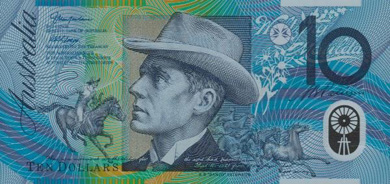
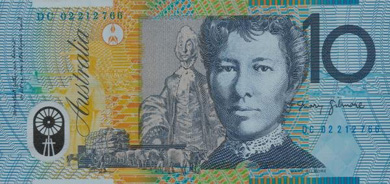
- Australian dollars (AUD)
Banknotes
Budget & Public Finance
- Fiscal Year
- 1 July - 30 June
Labor, Industry & Trade
- Industries
- tourism, phosphate extraction (near depletion)
- Export Commodities
- phosphate
- Export Partners
- Australia, NZ
- Import Commodities
- consumer goods
- Import Partners
- principally Australia
Energy
- Oil Production
- 0 bbl/day
- Natural Gas Reserves
- 0 cu m
Communications
- Telephone System
- General Assessment: Service provided by the Australian network Domestic: GSM mobile-cellular telephone service replaced older analog system in February 2005 International: Country code - 61-8; satellite earth station - 1 (Intelsat provides telephone and telex service)
- Internet Country Code
- .cx
News & Weather
News & Weather
Current Weather
Latest News
Millions of Crawling Baby Crabs Blanket Christmas Island in 'Twice-a-Decade' Event - People.com
People.com · 176d ago
On tiny Christmas Island, Google spurs renewable energy push for Indian Ocean data hub - Reuters
Reuters · 245d ago
In memory of the Christmas Island shrew - news - Mongabay
news - Mongabay · 268d ago
Millions of baby red crabs march on Christmas Island in annual migration - AccuWeather
AccuWeather · 175d ago
New Cable Connections to Christmas Island - Geopolitical Futures
Geopolitical Futures · 235d ago
Christmas Island returns to General Burnside Island State Park - LEX 18 News
LEX 18 News · 255d ago
Google announces plans for subsea cable linking Oman to the Christmas Islands - Data Center Dynamics
Data Center Dynamics · 245d ago
Is Christmas Island the Ideal Spot for Google’s AI Data Hub? - Data Centre Magazine
Data Centre Magazine · 257d ago
News via Google News
Climate Overview
tropical with a wet and dry season; heat and humidity moderated by trade winds; wet season December to April
Videos
Videos
1 curated YouTube videos.
Source: YouTube
Frequently Asked Questions
Frequently Asked Questions
What is the population of Christmas Island?
What is dining like on Christmas Island?
What should I know about local customs and culture on Christmas Island?
What is there to do on Christmas Island?
What should I know before visiting Christmas Island?
What is the capital of Christmas Island?
Where is Christmas Island located?
What are the ocean and sea borders of Christmas Island?
What religions are practiced on Christmas Island?
What currency is used on Christmas Island?
What languages are spoken on Christmas Island?
What is Christmas Island known for?
What is the history and political status of Christmas Island?
Last reviewed 2026