
 English
 Español
 中文
中文 हिन्दी
 Français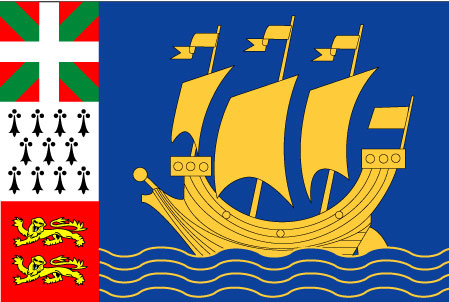
Saint Pierre and Miquelon
Saint-Pierre et Miquelon
Declare Your Relationship to Saint Pierre and Miquelon
CountryReports Community
- Studying1
- From Saint Pierre and Miquelon0
- Saint Pierre and Miquelon heritage0
- Visited0
- Want to visit0
Customs and Culture
Customs and Culture
Cultural Attributes
The culture of Saint Pierre and Miquelon reflects its deep French roots while bearing the unmistakable imprint of its isolated North Atlantic setting. As a French territorial collectivity situated just off the southern coast of Newfoundland, the archipelago has developed a distinct identity shaped by centuries of maritime tradition, Basque and Breton heritage, and close ties to mainland France. French is the sole official language, and residents hold French citizenship, giving the islands a cultural continuity with metropolitan France that is unusual for such a remote community. The legal system, educational curriculum, and administrative structures all mirror those of France, and many young people travel to France or French Canada for higher education. The fishing industry, historically centered on cod, has profoundly shaped local customs, architecture, and community values. Although the collapse of cod stocks in the early 1990s dealt a severe economic blow, the sea remains central to the islands' identity. Annual festivals and community events frequently celebrate maritime heritage, and traditional wooden fishing vessels remain a point of local pride. The architecture of Saint-Pierre, the main town, features colorful wooden and stone buildings reminiscent of small French provincial towns, though adapted to withstand harsh Atlantic winters. The local cuisine leans heavily on French traditions — fresh bread, wine, and cheese are readily available and culturally significant — but also incorporates seafood and influences from neighboring Newfoundland and French Canada. Religion plays a meaningful role in daily life, with Roman Catholicism being the predominant faith. Church feast days and religious holidays are observed with community gatherings and processions. The islands also maintain a small but active arts and cultural scene, including local museums dedicated to fishing history and the Prohibition era, during which Saint Pierre served as a major transshipment hub for alcohol destined for the United States. Despite a small population of roughly 6,000 residents, the community maintains strong cultural cohesion, a sense of French national identity, and a pride in the unique history that sets this tiny archipelago apart from both France and its Canadian neighbors.

France's Last Atlantic Outpost

Holidays
Bastille Day
6/14Other
Dates of Interest
- June 14th
What is the food and dining culture like in Saint Pierre and Miquelon?
Cuisine leans heavily on French traditions, with fresh bread, wine, and cheese being readily available and culturally significant, alongside seafood and influences from neighboring Newfoundland and French Canada.
Do
- Try the fresh bread, wine, and cheese central to French tradition
- Sample local seafood reflecting the islands' maritime heritage
Good to know
- Expect Newfoundland and French Canadian influences in the local cuisine
What should travelers know about local customs and daily life?
The islands hold a strong French national identity with deep maritime roots, and Roman Catholicism plays a meaningful role in daily life.
Do
- Respect church feast days and religious holidays, observed with community gatherings and processions
- Appreciate the pride locals take in traditional wooden fishing vessels and maritime heritage
Good to know
- French is the sole official language
- Visit local museums dedicated to fishing history and the Prohibition era
What cultural activities and events can travelers enjoy?
Annual festivals and community events frequently celebrate the islands' maritime heritage, and there is a small but active arts and cultural scene.
Do
- Attend festivals and community events celebrating maritime heritage
- Explore museums covering fishing history and the Prohibition-era smuggling past
Good to know
- Admire the colorful wooden and stone architecture of Saint-Pierre, reminiscent of small French provincial towns
What should travelers know before visiting Saint Pierre and Miquelon?
This French territorial collectivity off Newfoundland has a distinct identity shaped by French roots, Basque and Breton heritage, and centuries of maritime tradition.
Good to know
- French is the sole official language and residents hold French citizenship
- The legal, educational, and administrative systems mirror those of France
- The community of roughly 6,000 residents maintains strong cultural cohesion
- Roman Catholicism is the predominant faith
Last updated: 2026-07-12 · Sources: CountryReports
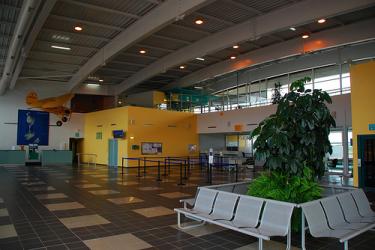
Photos of Saint Pierre and Miquelon
Photos of Saint Pierre and Miquelon


Travel and Tourism
Travel and Tourism
- Currency
- euro (EUR)
- Time Difference
- UTC-3 (2 hours ahead of Washington, DC, during Standard Time)
- Climate
- cold and wet, with much mist and fog; spring and autumn are windy
- Airports
- 2
Read the full travel guide — health, safety, vaccinations, disease risk, sanitation, and transit details.
View full travel guideHistory
History
Historical Eras
Early Fishing Era
1520 – 1604
Basque, Breton, and Norman fishermen frequented the islands as seasonal fishing stations, exploiting the nearby Grand Banks. The islands were named by European explorers, with Miquelon receiving its Basque designation by 1579. No permanent settlements were established, but the archipelago became well known to European maritime powers as a strategic Atlantic outpost.
Early French Settlement
1604 – 1713
France established the first permanent settlements on Saint-Pierre in the early 17th century, integrating the islands into the broader French colonial enterprise in North America. The islands changed hands amid recurring Anglo-French conflicts and served as a base for the cod fishery vital to French commerce. Control remained contested as Britain and France competed for dominance across the northwestern Atlantic.
Treaty of Utrecht Era
1713 – 1763
The Treaty of Utrecht forced France to cede the islands to Britain, effectively ending French settlement and leaving the archipelago largely depopulated. The period was marked by diplomatic tension, periodic reoccupation, and the displacement of Acadian populations from Nova Scotia, some of whom sought refuge in the islands. French fishing interests continued to regard Saint-Pierre and Miquelon as vital grounds despite the loss of sovereignty.
Restored French Territory
1763 – 1816
The Treaty of Paris of 1763, concluding the Seven Years' War, returned the islands to France as the sole remnant of its once vast North American empire. Acadian deportees repopulated the islands, forging the distinct Franco-Atlantic identity that persists today. The era was turbulent, however, as the French Revolution and Napoleonic Wars prompted British forces to depopulate and occupy the islands multiple times before France definitively regained control in 1816.
Prohibition Boom & Fishery
1816 – 1945
The islands settled into a stable French colonial identity built around the Grand Banks cod fishery, which sustained the population through the 19th century. During American Prohibition (1920–1933), Saint-Pierre became a major transshipment hub for alcohol destined for the United States, generating extraordinary prosperity. In 1941, Free French forces under Admiral Muselier seized the islands from the Vichy administration, aligning Saint-Pierre and Miquelon with the Allied cause.
Territorial Collectivity
1945 – present
Following World War II, Saint-Pierre and Miquelon evolved through several administrative statuses, becoming a French territorial collectivity in 1985, its current designation. The collapse of cod stocks in the late 20th century severely damaged the fishing economy, mirroring the crisis experienced in neighboring Newfoundland. Today the islands balance a developing tourism sector with their enduring identity as the last vestige of French imperial North America and a full participant in the European Union.
Overview
Timeline of Key Events
1520
The islands of Saint-Pierre et Miquelon were baptized the Eleven Thousand Virgins.
The islands of Saint-Pierre et Miquelon were baptized the Eleven Thousand Virgins by Joao Alvarez Faguendes of Portugal in 1520, the Green Islands by the Corte Real brothers and the Island of Saint-Pierre by Jacques Cartier in 1536.
1579
The island of Miquelon was given its name by Basque fishermen.
The island of Miquelon was given its name by Basque fishermen.
1604
French settlements begins.
French settlements begins.
1763
The treaty of 1763 returned the islands of Saint-Pierre & Miquelon back to France.
The treaty of 1763 returned the islands of Saint-Pierre & Miquelon back to France, and despite the subsequent deportations of 1778 and 1793, the islands were once again returned to France in 1816.
Read the full history profile — narrative overview, defining eras, and the complete timeline in one place.
View expanded historyInteresting Facts
Interesting Facts
First settled by the French in the early 17th century, the islands represent the sole remaining vestige of France's once vast North American possessions.
See every fact — trivia, oddities, and curious tidbits gathered from across the country.
View all interesting factsGeography and Environment
Geography and Environment
- Terrain
- mostly barren rock
- Climate
- cold and wet, with much mist and fog; spring and autumn are windy
- Natural Hazards
- persistent fog throughout the year can be a maritime hazard
- Current Environmental Issues
- recent test drilling for oil in waters around Saint Pierre and Miquelon may bring future development that would impact the environment
Read the full geography and environment profile — terrain, climate, natural resources, hazards, land use, and international agreements.
View full geographyPeople & Demographics
People & Demographics
Religion
Languages Spoken
French (official)
- French
Population
- Population
- 6,010
- Population in Major Urban Areas
- SAINT-PIERRE (capital) 5,000
- Nationality Noun
- Frenchman(men), Frenchwoman(women)
- Ethnic Groups
- Basques and Bretons (French fishermen)
Education
- Literacy Definition
- age 15 and over can read and write
Read the full people and society profile — demographics, health, education, religion, languages, and notable people.
View full people and societyGovernment & Politics
Government & Politics
Country Identity
- Country Name
- SaintPierreandMiquelon
- Full Country Name
- Territorial Collectivity of Saint Pierre and Miquelon
- Local - Long
- Departement de Saint-Pierre et Miquelon
- Local - Short
- Saint-Pierre et Miquelon
Government Structure
- Government Type
- NA
- Legal System
- French law with special adaptations for local conditions, such as housing and taxation
- Executive Branch
- chief of state: President Emmanuel MACRON of France (since 14 May 2017), represented by Prefect Christian POUGET (since 2023) head of government: President of the Territorial Council Bernard BRIAND (since 2017) cabinet: Territorial Council consisting of 19 members elections: French president elected by popular vote for a five-year term; election last held in April–May 2022 (next to be held in 2027); prefect appointed by the French president on the advice of the French Ministry of Interior; president of the Territorial Council is elected by the members of the council
- Legislative Branch
- unicameral General Council or Conseil General (19 seats - 15 from Saint Pierre and 4 from Miquelon; members are elected by popular vote to serve six-year terms) elections: elections last held 19 and 26 March 2000 (next to be held in April 2006) election results: percent of vote by party - NA%; seats by party - PS 12, PRG 2, UDF-RPR 5 note: Saint Pierre and Miquelon elect 1 seat to the French Senate; elections last held 26 September 2004 (next to be held in September 2013); results - percent of vote by party - NA; seats by party - UMP 1; Saint Pierre and Miquelon also elects 1 seat to the French National Assembly; elections last held, first round - 9 June 2002, second round - 16 June 2002 (next to be held NA 2007); results - percent of vote by party - NA; seats by party - UDF 1
- Judicial Branch
- Superior Tribunal of Appeals or Tribunal Superieur d'Appel
- Suffrage
- 18 years of age; universal
- Constitution
- 28 September 1958 (French Constitution)
- Independence
- none (territorial collectivity of France; has been under French control since 1763)
- National Holiday
- Bastille Day, 14 July (1789)
Capital City
- Capital Name
- Saint-Pierre
- Capital - geographic coordinate
- 46 46 N, 56 11 W
- Capital Time Difference
- UTC-3 (2 hours ahead of Washington, DC, during Standard Time)
named after Saint Peter, the patron saint of fisherman
Read the full government profile — flag symbolism, national anthem, and other national symbols.
View full government detailsEconomy
Economy
The inhabitants of Saint Pierre and Miquelon have traditionally earned their livelihood through fishing and by servicing fishing fleets operating off the coast of Newfoundland. However, the economy has struggled for decades following the 1992 collapse of the North Atlantic cod fishery and ongoing disputes with Canada over fishing quotas and maritime boundaries. That same year, an international arbitration panel awarded the islands an exclusive economic zone of 12,348 sq km, settling a longstanding territorial dispute with Canada, though the area represented only about 25% of what France had sought.
Today, the archipelago remains heavily dependent on subsidies from mainland France, which help sustain relatively high living standards for its roughly 5,800 residents. The public sector is the largest employer, and most consumer goods are imported. Efforts to diversify the economy have focused on expanding tourism, particularly cruise ship visits and eco-tourism, as well as small-scale aquaculture, including scallop and sea cucumber farming. Exploration for offshore hydrocarbons has been discussed for years but has yet to yield commercial development, and prospects remain uncertain amid shifting global energy priorities. The territory continues to seek closer economic ties with neighboring Atlantic Canada to offset its geographic isolation from Europe.
Snapshot
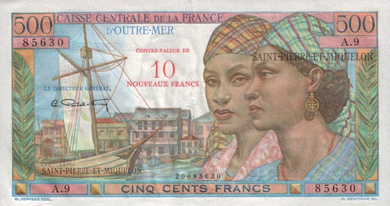
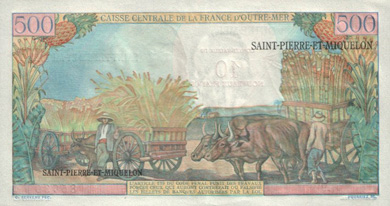
- Currency Name and Code
- Euro (EUR)
Banknotes
Budget & Public Finance
- Fiscal Year
- calendar year
- Annual Budget
- $60,000,000 (USD)
- Economic Aid
- $60,000,000 (USD)
Labor, Industry & Trade
- Labor Force by Occupation
- fishing 18%; industry (mainly fish-processing) 41%; services 41%
- Industries
- fish processing and supply base for fishing fleets; tourism
- Agriculture Products
- vegetables; poultry, cattle, sheep, pigs; fish
- Export Commodities
- fish and fish products, soybeans, animal feed, mollusks and crustaceans, fox and mink pelts
- Export Partners
- US 30%, Zambia 30%, Ecuador 20%, France 10%
- Import Commodities
- meat, clothing, fuel, electrical equipment, machinery, building materials
- Import Partners
- Zambia 62.3%, France 21.7%, Canada 13.2%
Energy
- Oil Production
- 0 bbl/day
- Oil Consumption
- 480 bbl/day
- Oil Reserves
- 0 bbl/day
- Natural Gas Production
- 0 cu m
- Natural Gas Consumption
- 0 cu m
- Natural Gas Imports
- 0 cu m
- Natural Gas Exports
- 0 cu m
- Natural Gas Reserves
- 0 cu m
Communications
- Telephone System
- general assessment: adequate international: country code - 508; radiotelephone communication with most countries in the world; satellite earth station - 1 in French domestic satellite system
- Internet Country Code
- .pm
News & Weather
News & Weather
Current Weather
Latest News
Saint Pierre and Miquelon (SPM) Exports, Imports, and Trade Partners - The Observatory of Economic Complexity
The Observatory of Economic Complexity · 14d ago
People in this Newfoundland town are cheering for France in the World Cup – because they’re neighbours - CBC
CBC · 6d ago
Canada tightens entry requirements for sea arrival from Saint-Pierre-et-Miquelon - CIC News
CIC News · 46d ago
Canada cracking down on asylum claims from St-Pierre and Miquelon ferry to N.L. - Toronto Star
Toronto Star · 36d ago
Saint Pierre and Miquelon, a pioneering example of climate change adaptation - Le Monde.fr
Le Monde.fr · 78d ago
Saint-Pierre review – this gentle cop show is like a Canadian Death in Paradise - The Guardian
The Guardian · 90d ago
This dreamy French Island is just 90 mins from Canada and it's brimming with European magic - Narcity
Narcity · 24d ago
France’s Hidden Transatlantic Gateway: Rare Paris To Saint-Pierre Flight Gives European Travellers A Unique North Atlantic Adventure Without Canada Connections - Travel And Tour World
Travel And Tour World · 8d ago
News via Google News
Climate Overview
cold and wet, with much mist and fog; spring and autumn are windy
Frequently Asked Questions
Frequently Asked Questions
What is the population of Saint Pierre and Miquelon?
What is the food and dining culture like in Saint Pierre and Miquelon?
What should travelers know about local customs and daily life?
What cultural activities and events can travelers enjoy?
What should travelers know before visiting Saint Pierre and Miquelon?
What is the capital of Saint Pierre and Miquelon?
Where is Saint Pierre and Miquelon located?
What are the ocean and sea borders of Saint Pierre and Miquelon?
What religion is practiced in Saint Pierre and Miquelon?
What currency is used in Saint Pierre and Miquelon?
What language is spoken in Saint Pierre and Miquelon?
What is Saint Pierre and Miquelon known for?
Last reviewed 2026